


Equipment that quietly costs you
Five signs worth checking before the next repair bill lands.
Article
Which automatic pool cleaner suits which pool, what each one costs to run, and what neither of them replaces.
If you own a pool in the Foothill Communities of Los Angeles, you already know how quickly debris can build up. Wind, dust, leaves, and hillside runoff in areas like La Cañada Flintridge, La Crescenta, Altadena, and Sierra Madre make consistent pool cleaning essential.
For years, suction side pool cleaners were the standard choice for automatic cleaning. Today, robotic pool cleaners are becoming the preferred solution for many homeowners.
If you are considering upgrading your pool cleaner, here is what you should know about the differences and why more of our clients are choosing robotic systems.
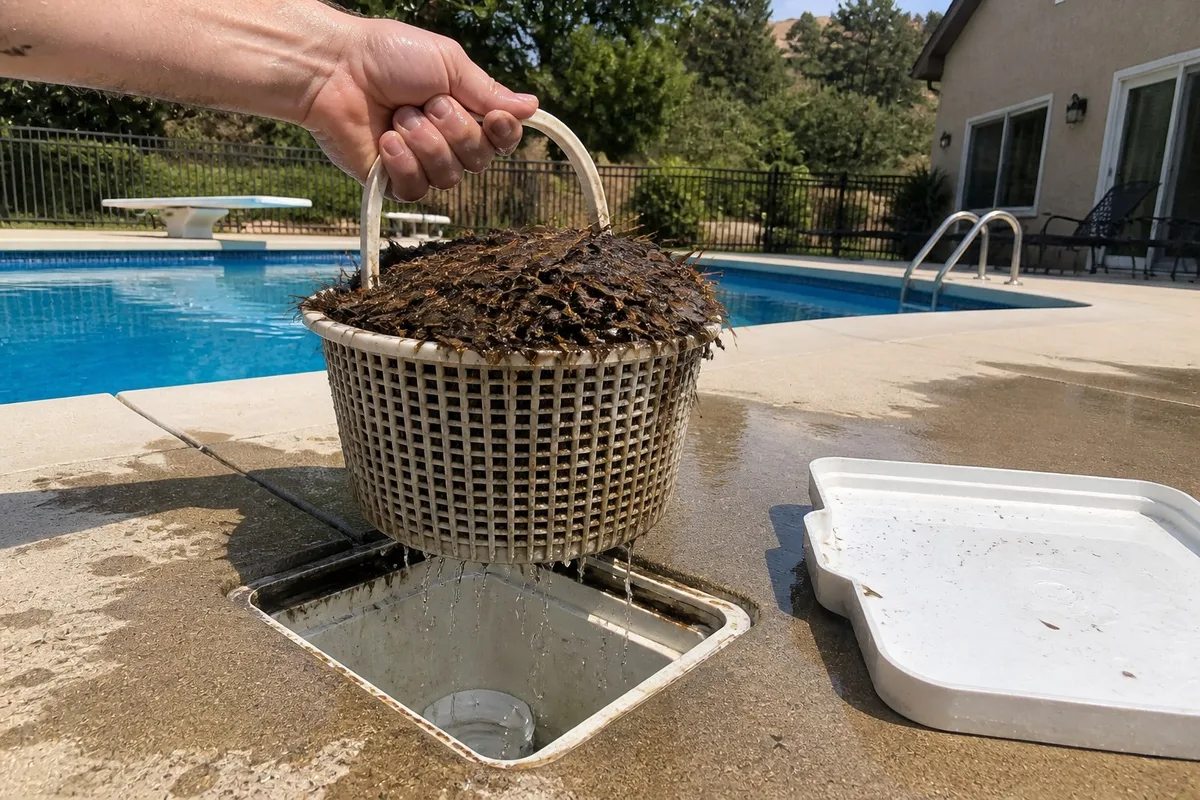
Suction side cleaners connect directly to your pool’s existing filtration system. They use the suction power from your pool pump to move around the pool floor and pull debris into the skimmer or pump basket.
Because they rely on your pool’s pump, they run only when your system is operating.
In the Foothill Communities, where leaves and fine dust are common, suction side cleaners often require more frequent basket emptying and can contribute to faster wear on equipment.
Robotic pool cleaners are self-contained units that operate independently from your pool’s filtration system. They plug into a standard electrical outlet and use their own motor and internal filter to collect debris.
Because they do not rely on your pool pump, they reduce stress on your equipment and often clean more thoroughly.
Robotic cleaners scrub pool floors, walls, and even waterlines more effectively than traditional suction systems.
Since robotic cleaners operate independently, they do not rely on your pool pump. This can extend the life of your pump and filtration system.
Robotic cleaners use less energy than running a full pool pump for extended cleaning cycles.
Their internal cartridges catch particles far finer than a skimmer basket will hold, and that matters here: wind-blown dust and fine grit off the hillsides are what turn foothill water hazy. On dust, a robot genuinely outperforms a suction cleaner.
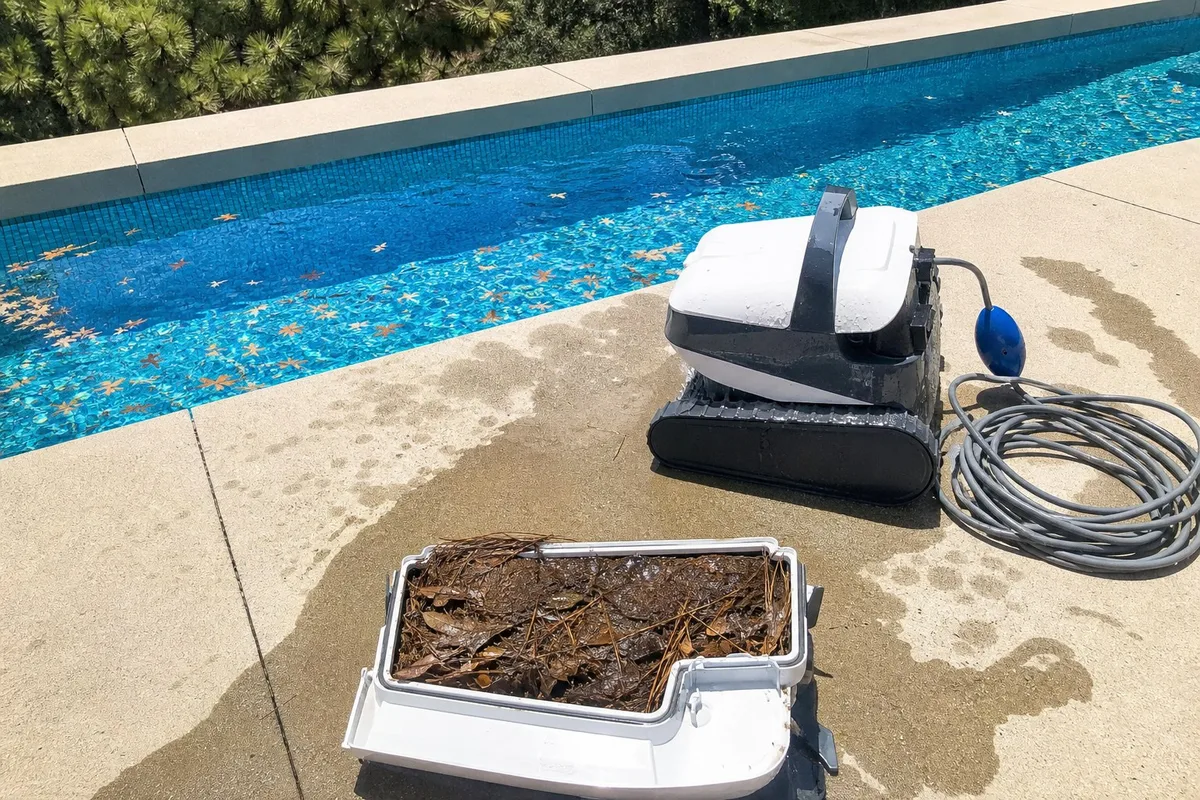
Leaves are the opposite story, and that is the part most comparisons leave out.
Most robot comparisons online are written by people who sell robots. These are the complaints we actually hear from clients who own one, in the order we hear them.
None of that makes a robot a bad buy. It makes it a machine with a job description: it vacuums the floor and scrubs the walls, in a pool whose debris load suits it.
Spread over four years, a good robot works out to something like $25 a month plus the time you spend emptying and lifting it. For the job it does, that is cheap. The question worth asking is what that job actually covers.
We do not sell robotic cleaners and we do not install them — the equipment we do put in is pumps, heaters, filters and salt systems. What follows is simply what we see holding up across several hundred pools, with nothing riding on the answer.
BeatBot is currently the top-of-the-line robotic cleaner we recommend. It offers advanced navigation, strong suction, and superior wall-climbing ability. Clients consistently report cleaner water and less visible debris between service visits.
Polaris robotic cleaners are known for durability and consistent performance. They are a solid choice for homeowners who want dependable results.
Pentair offers reliable robotic options that integrate well with existing pool systems and are easy to maintain.
Dolphin cleaners are popular for their efficient cleaning patterns and user-friendly controls. Many homeowners appreciate their balance of performance and value.
Each pool is different, and the right cleaner depends on pool size, shape, and debris levels.
Suction side or robotic, both machines do one thing: move debris off the floor and the walls. Everything that actually decides whether the water is safe and clear happens somewhere else.
Weekly service here starts at $159 a month for a pool up to 15,000 gallons, and most of our customers pay between $179 and $249 depending on size. The full breakdown is on our pool service pricing page. Please confirm the current figure with us by phone before you budget from it — prices move.
If your current suction side cleaner struggles to keep up, if your pump is working harder than it should, or if you want a more hands-off solution, upgrading to a robotic cleaner may be worth considering.
Homeowners throughout the Foothill Communities of Los Angeles are seeing cleaner pools, improved equipment lifespan, and more consistent results after making the switch.
At Pool Care LA, we help clients evaluate their current system and recommend the best solution for long-term performance.
Contact Us to request a quote or ask about upgrading your pool cleaner today.
For cleaning quality and for the life of your pump, yes — they scrub walls and the waterline, they catch finer particles, and they put no load on your filtration system. Under heavy tree cover the answer is less clear, because a robot carries its own small debris container while a suction cleaner empties into a basket you can make bigger.
A debris container that fills fast under trees, roughly 20 pounds to lift out wet several times a week, a cable that tangles in long pools, shallow entry steps it will not climb, and repairs that out of warranty often cost half a new unit.
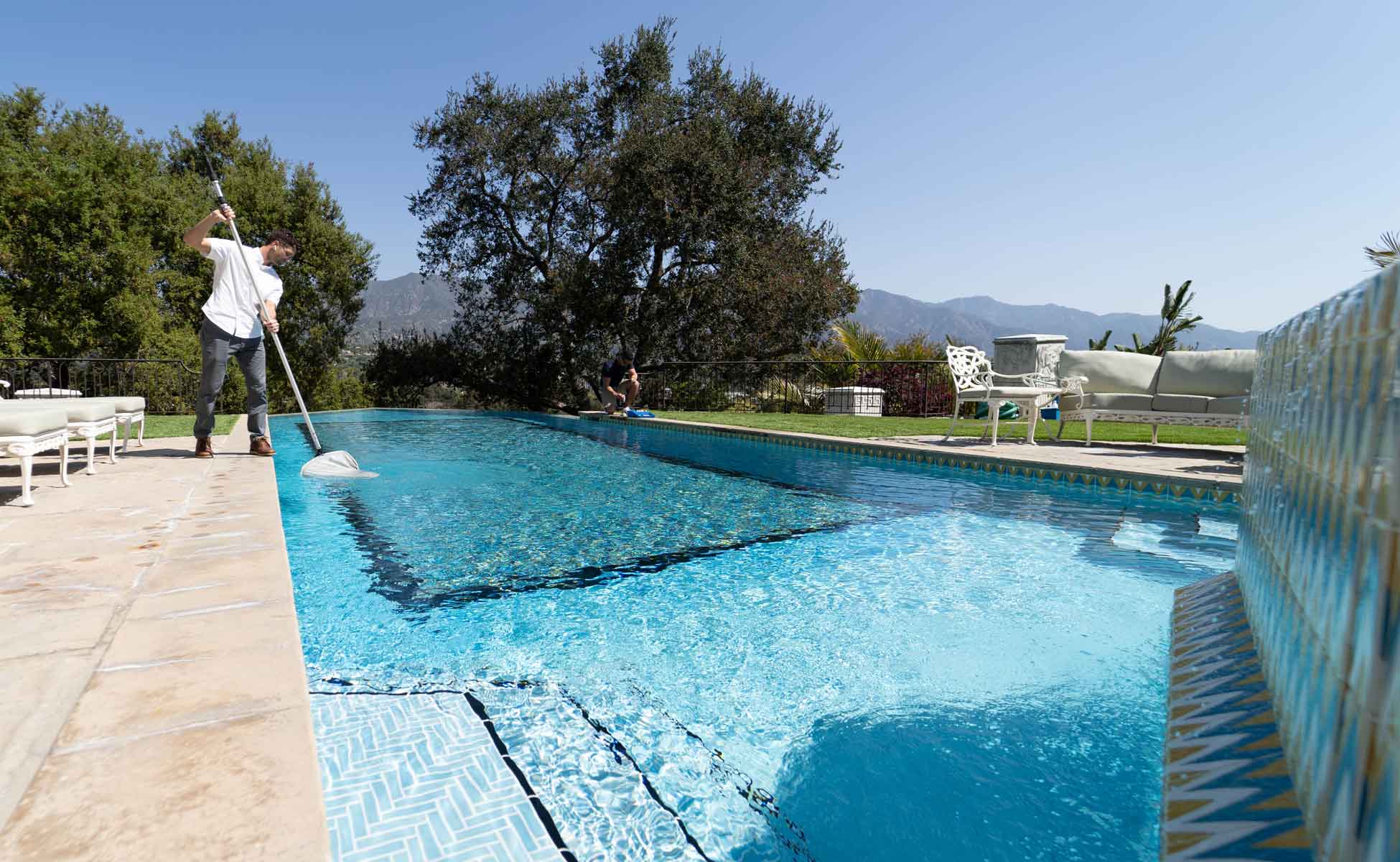
Yes, unless you intend to do the chemistry yourself. A robot vacuums. It does not test or dose the water, clean the filter, empty the baskets or notice a pump bearing going. Our weekly service covers exactly the part a robot cannot.
It depends how much of the work you want to keep. Weekly service starts at $159 a month here and most customers pay $179 to $249; the alternative is testing and dosing weekly, cleaning the filter twice a year and catching equipment problems yourself. Our full price list sets out what is included at each size, and it is worth calling for the current figure.
Pool size and shape, what falls in it, and which cleaner is in there now. Or call (818) 740-6099
Five signs worth checking before the next repair bill lands.

Fine dust is hard on filtration, and the water shows it first.
The pumps, heaters and salt systems we actually put in.
Foothill Communities
We look at the pool, the pad and what actually falls in, and say whether an upgrade pays for itself.