
Coping and paving
Sandstone pavers to the water
Paving cut to the curve, with the overhang held the whole way round.
Eagle Rock
Coping and paving
Stone is the long-lasting way to finish the edge. It sits above the waterline tile and carries over the spillway — and it is doing a job, not just framing the water.

Licensed, insured and family-owned


How we learned this
Coping is the top frame of the pool, so the joints are part of what you look at. Beautiful stone with wide, uneven joints still reads as a bad job — see the Sherman Oaks pool and spa for what a planned set-out looks like.
If the pool needs tile as well as an edge, pool tiling costs and quotes. If the surround is sound and only looks tired, coating it costs less than new stone.
Stone options
Natural stone varies in color through the piece and in thickness between pieces. That is stone, not a supply fault — which is why it is sorted before it is laid.
Where a coping job is won
It is the kind of precision that is invisible until you have seen it done badly once.
The crew
Four of us. The same faces every week, not whoever was free that morning.


Edges, waterlines and whole shells
Paving cut to the curve, with the overhang held the whole way round.
Eagle Rock

Hollow render and rust cut out, then the whole shell tiled.
Glendale
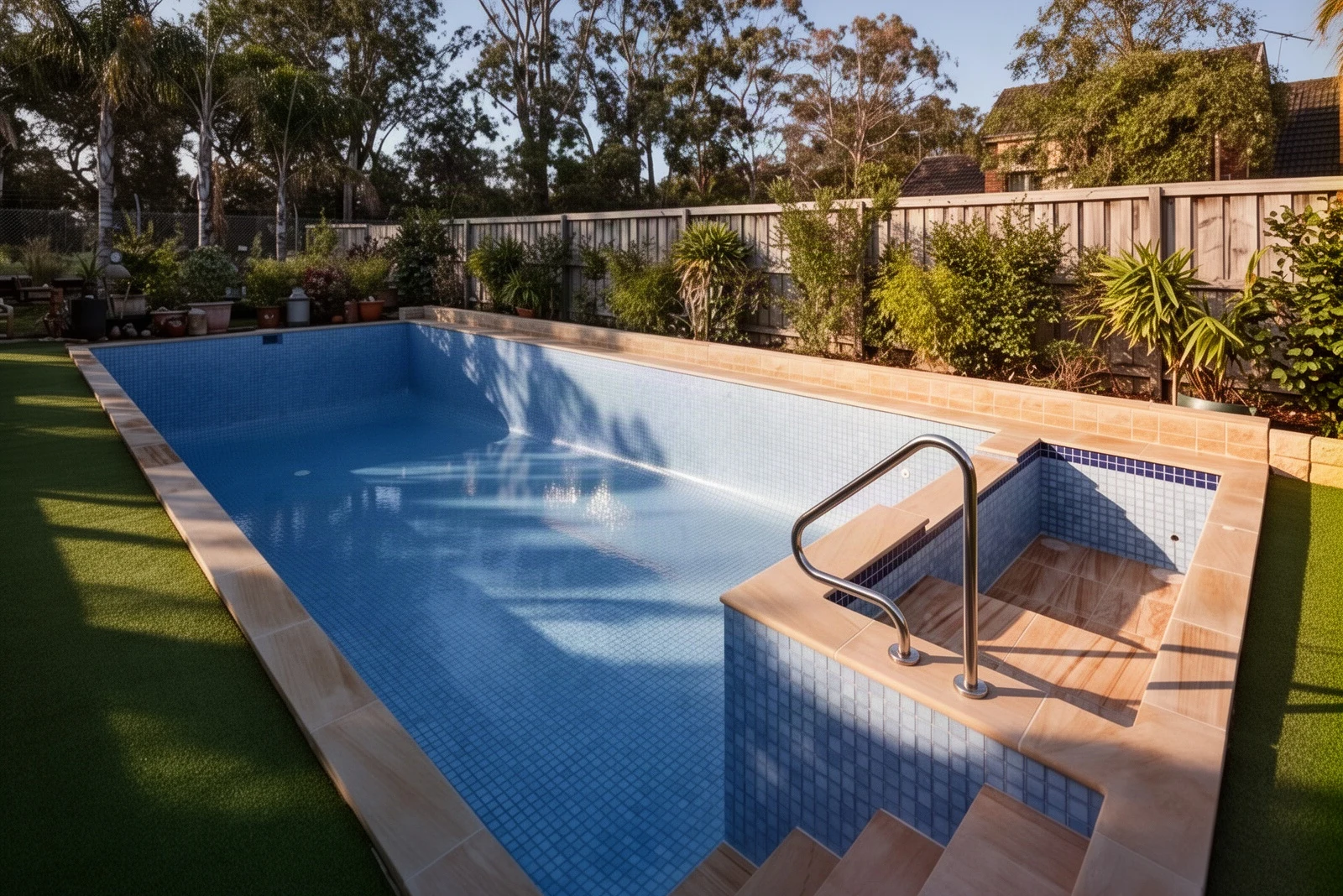
Out of repaints, so retiled, with sandstone paving around it.
Eagle Rock

Grey tile across pool and spa, seen from the air.
La Cañada Flintridge
One restoration in Altadena, no filters
The preparation is where a coping job is won or lost.


Collected from customers on the routes we run every week.
Thomas W.Verified review
Local Guide · 27 reviews · 9 photos
10 February 2025
Raymond K.Verified review
Local Guide · 52 reviews · 26 photos
20 November 2025
Karen V.Verified review
15 August 2026
Diane F.Verified review
6 reviews · 2 photos
6 January 2025
Mark H.Verified review
Local Guide · 42 reviews · 18 photos
3 September 2025

Linda R.Verified review
4 reviews
25 May 2026
Kevin B.Verified review
15 December 2025
Jason T.Verified review
25 February 2026
Great company. Always on time, pool looks amazing and communication is easy. Highly recommend.
Tell us what the pool needs, how big it is and your ZIP — and a price the same day.
Rewards
$100 for every friend you send us, up to two. No code, no form — they call and mention your name.

$100 credit
For every friend who calls and mentions your name
Up to two referrals, $200 in total. The name must come up on the first call. Spend it on any service.
20% off one-time work
For weekly maintenance members
Green-to-clean, acid wash, plaster start-up and repair labor, plus priority on the schedule.
Where we work
Crews leave from Studio City every morning, across the Foothills and the neighborhoods next to them.
Office · Studio City
No two pools set out the same way. Send photographs of the edge and the corners, and we will say what the stone has to do.
4121 Radford Ave, Ste. #214, Studio City, CA 91604Written for Foothill and Valley homeowners.
How long each finish lasts, what it asks of your care, and what the gap costs.
The decisions that are expensive to change afterwards.

Water has no colour of its own — the interior gives it one.
Edges and decks
Nothing staged, nothing bought from a stock library — the same work, filmed while it happened.
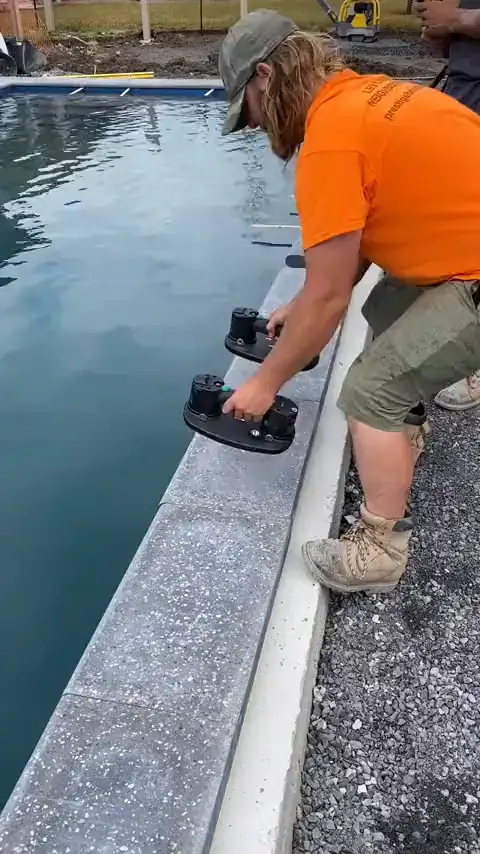
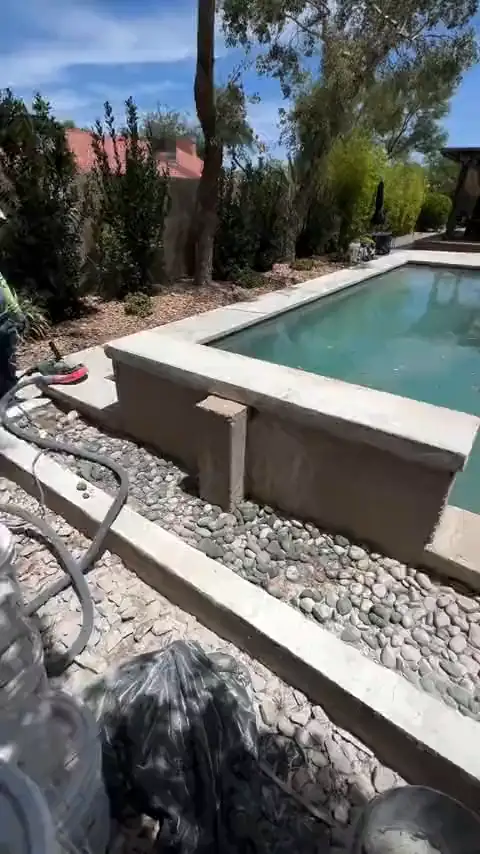

Travertine is the common answer in Los Angeles and for a practical reason: it stays cool enough to stand on barefoot in August, which sandstone and most porcelain do not. Alongside it we lay cast concrete coping including Bellecrete profiles, natural stone, brick, porcelain pavers and NPT's ranges. The material decides how the edge looks and how hot it gets; the profile decides how it feels under a hand and where the water goes.
Bullnose is a rounded front edge — the stone turns over and down instead of stopping square. It is the kinder edge to sit on and to pull yourself out over, and it sheds water back toward the pool rather than under the stone. A square edge reads more modern and costs less to cut. On a pool people actually swim in rather than look at, bullnose is usually worth the difference.
The finished edge that caps the top of the pool. It sits directly above the waterline tile and carries on over a spillway where there is one. It can be concrete, brick, precast or natural stone, and it is doing a job rather than just framing the water.
Yes — tight radiuses and long sweeping curves both. It is one of the most important details on a curved pool, because a curve shows every flaw: a cut slightly off reads as a kink from twenty feet away. The joints are planned around the curve so the spacing stays even.
Coping is the top frame of the pool, so every joint is part of what you look at. You can use beautiful stone and still get a bad result if the joints are wide, uneven or landing in the wrong places. The difference is the set-out, decided before anything is cut.
Natural stone is textured, which is what gives it grip underfoot when wet. Honed stone has the texture taken off and reads smoother but still has enough grip for bare feet. What does not belong at a pool edge is polished stone.
Coping is quoted by the linear foot of pool edge, not by the pool: a 15 by 30 pool has about 90 feet of it, plus whatever a spa adds. The stone is the smaller half of a replacement — cutting the old coping off, making the bond beam underneath good, protecting the waterline tile and trimming the deck edge back to the new stone is where the hours go. That is why a number over the phone is worth nothing: a straight edge on a sound beam and a curved edge on a beam with rust in it are different jobs at the same length. The visit and the quote cost nothing inside the service area.
Usually, yes. The water is dropped a few inches below the tile line, the old coping comes off, and the bond beam underneath is cleaned and made good with the rest of the water still in the pool — which is also what keeps the pool in the ground. A full drain is only needed when the interior or the whole waterline band is being redone at the same time, or when the beam turns out to need structural repair. An empty pool sitting in wet Los Angeles ground is a risk of its own, so it is not done for convenience.
We supply it, which is usually simpler because the profile has to match the cut of your existing edge. If you would rather buy your own, coping comes from stone yards and precast plants around Los Angeles rather than from tile showrooms, and three things decide whether it will fit: it has to be a coping profile with a finished front edge, not a paver cut down; the thickness has to match the deck it meets; and it all has to come from one lot, because travertine and cast concrete both shift color between batches. Order about ten percent over — it covers the cuts and leaves you matching pieces for a repair years later.
For like-for-like work, normally not: replacing plaster, waterline tile or coping is repair rather than construction, and it is not usually permitted work in Los Angeles. A permit comes in when the job changes the pool itself — a raised bond beam, a new spillway, a shape change, or anything that moves plumbing, bonding or electrical. Worth knowing before you plan a remodel: once a permit is pulled for one, California's drowning-prevention rules about barriers and drain covers apply to the job. We say which of the two a project is before it starts, on licence CSLB #970493, classes C-53 and C-61/D-35.
Cleaning, recovery, repair and renovation across Los Angeles.
Send photographs of the edge
Curves, tight step areas, raised walls and spa spillways all need setting out before the first cut.