
Weekly maintenance
The full panel, including calcium hardness and cyanuric acid — the two readings that decide a valley summer — plus seasonal pump and clock adjustment.
Flat lots, valley heat, and pools older than the equipment running them.
Licensed, insured and family-owned


Most calls start here
Four things, and the first causes more bad summers than the rest together.
Water only ever gets added, never removed
Evaporation leaves minerals behind and the auto-fill adds more. Over a hot season calcium hardness and stabilizer both climb while the level never looks wrong.
Weekly serviceThe schedule is set for spring and left there
Chlorine demand roughly doubles between April and August here. The gap does not show as a slow decline — it shows as a green pool three days after a missed visit.
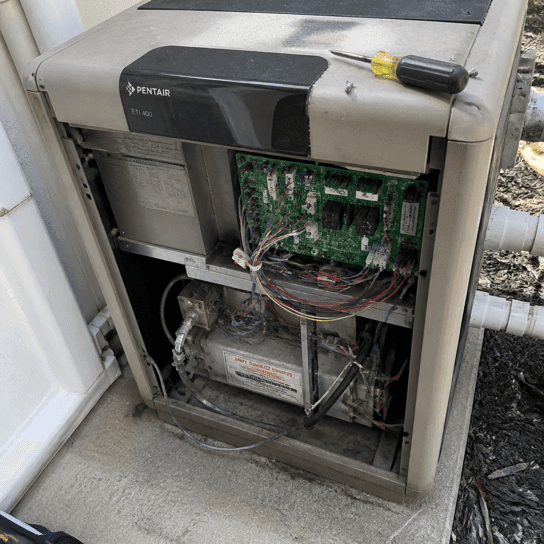
Green pool recoveryThe pad does not agree with itself
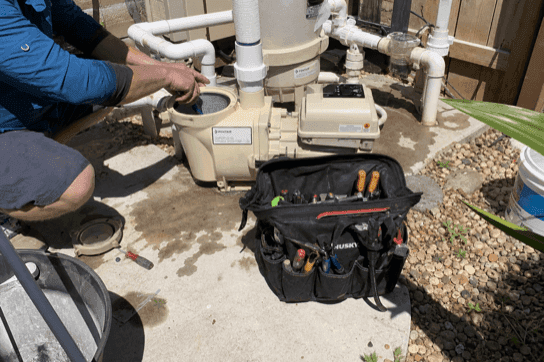
A modern pump on old, undersized suction lines. High pressure, a noisy pump, air in the basket and cartridges that never last are one hydraulic mismatch, not four faults.
Pump repairOld plaster gets treated as a cleaning problem
A wash removes a layer of finish each time, and a pool is built with roughly half an inch to spend. On a 1960 shell the question is whether to wash or resurface.
Acid washWhy Burbank is different
A great many Burbank pools were built in the 1950s and 60s behind studio-era houses. The shell is original, and the pad in front of it has been replaced a piece at a time across sixty years — a pump from one decade, a filter from another.
The valley runs hotter for longer than the Westside, and heat is a chemistry question rather than a comfort one: warm water and hard sun burn chlorine faster, drive evaporation and concentrate whatever is left behind.
A run time that was right in March is wrong by the second week of July. What other companies charge is compared on the cost page.
 After
After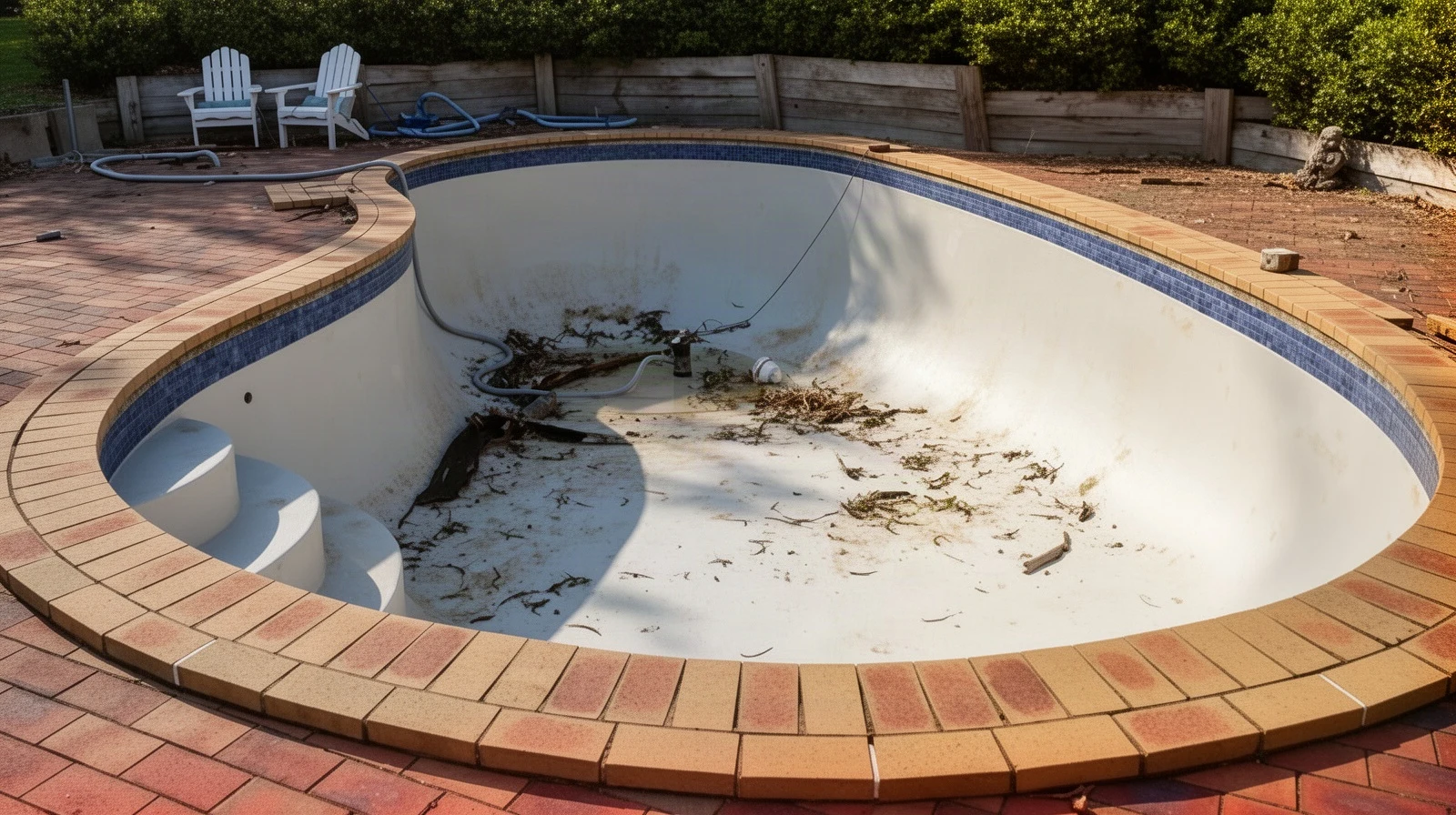 Before
What we do on Burbank pools
Seven jobs cover almost every call on a pad with sixty years of history on it.
The full panel, including calcium hardness and cyanuric acid — the two readings that decide a valley summer — plus seasonal pump and clock adjustment.

Noise, lost prime, leaking seals, or a motor at the end of its life on a pool that has outlived several of them.

Rising pressure and falling flow. In summer a filter here does more work per week than the same filter does in spring.

A July green pool happens in about three days. Recovery without draining, and back in the water roughly two days later.

Drain and clean, acid cut with water fifty-fifty, scheduled around the heat — a drained shell should not bake through a valley afternoon.
Heaters, salt systems, plumbing, electrical components, lights and time clocks. Diagnosed before anything gets replaced.

Seven days of daily attention. In a Burbank July that means brushing a fresh surface daily while the heat works against it.
Pricing
Volume decides chemical demand, so it decides the price. Typical homes land between $179 and $249 a month. Chemicals included, no minimum contract.


Prices as of August 2026, for a pool in normal condition.
One-time work
Quoted on the job, because nobody can price a green pool from a web form.
Worth mentioning when you call
The day stays yours, so the gate, the dogs and the schedule settle down. What changes is what the visit is mostly doing.
The crew
Four of us. The same faces every week, not whoever was free that morning.


A Burbank job, start to finish
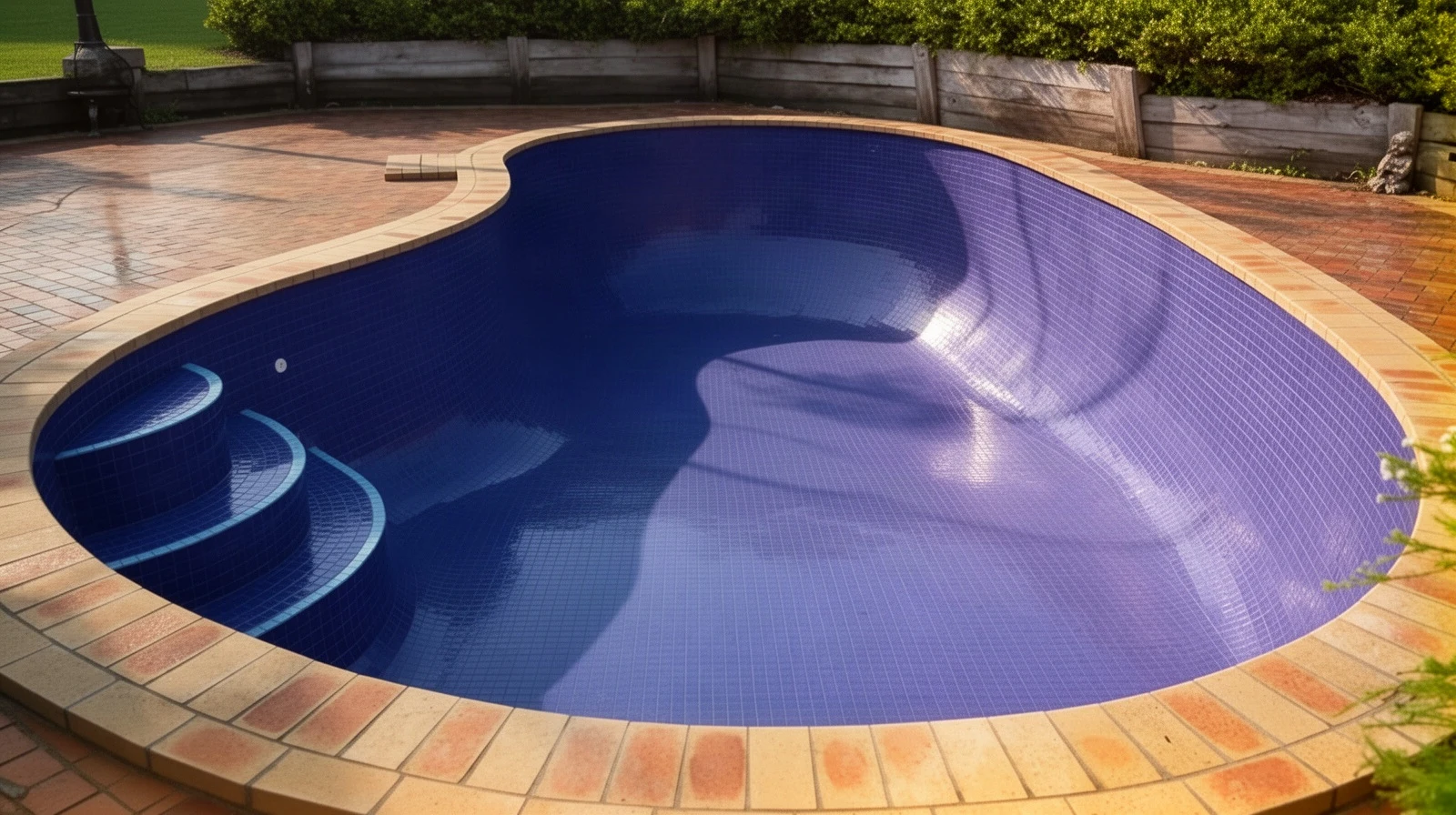
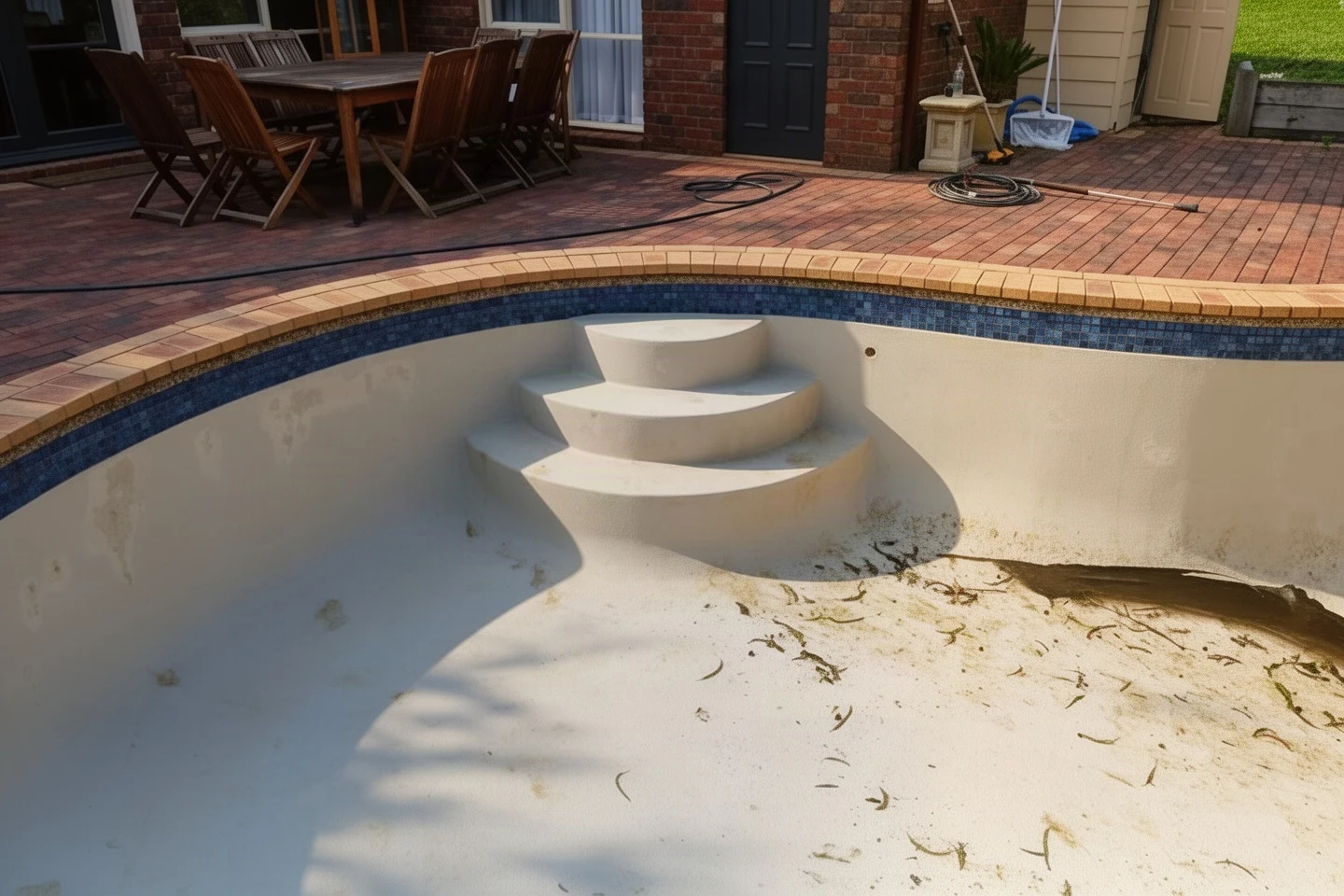
An older concrete pool with a plaster interior, a waterline band, tiled steps and brick paving, converted to a fully tiled interior. Finished around 2011.
A permanent interior instead of another consumable one. On hard water, plaster would have meant the same job again in eight to twelve years.
Nearby, and on the same routes
North Hollywood, Studio City and Glendale share the days that serve Burbank.

Hollow render and rust cut out, then the whole shell tiled.
Glendale
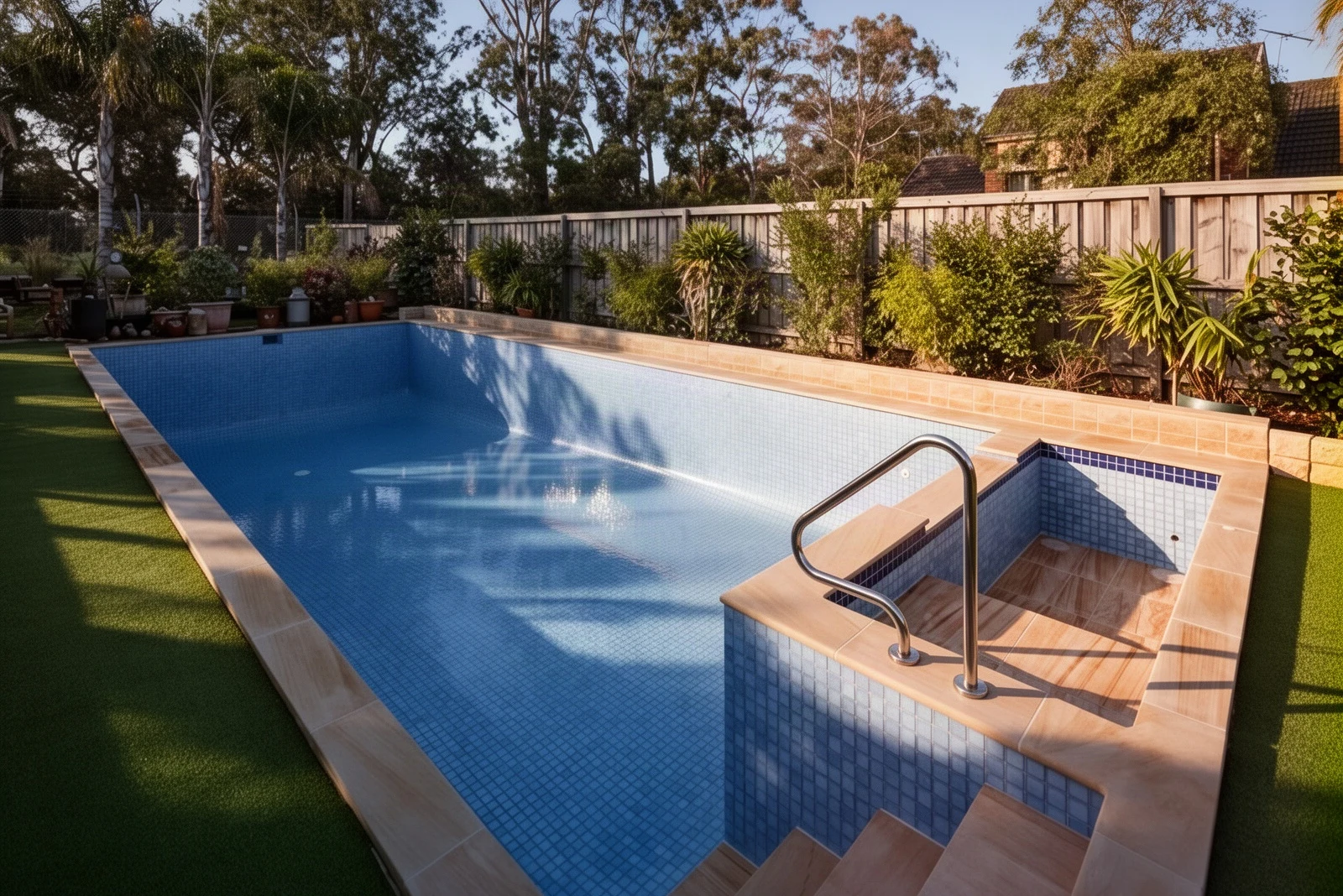
Out of repaints, so retiled, with sandstone paving around it.
Eagle Rock

Grey tile across pool and spa, seen from the air.
La Cañada Flintridge

Step by step
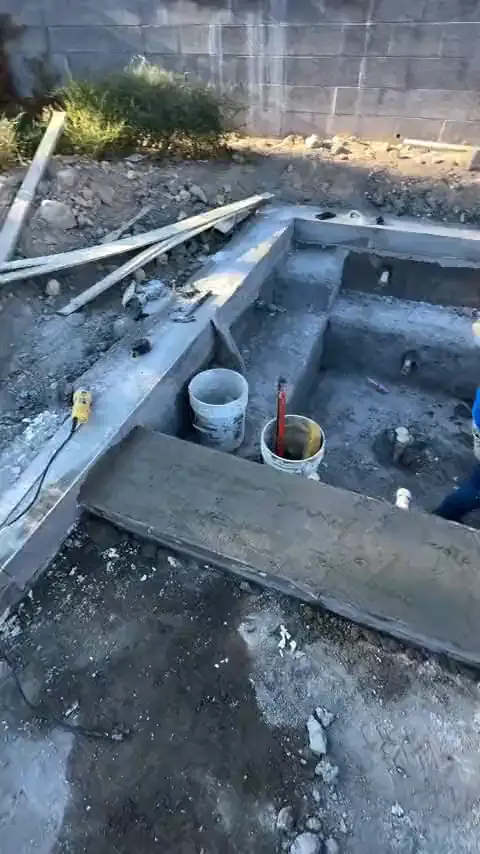
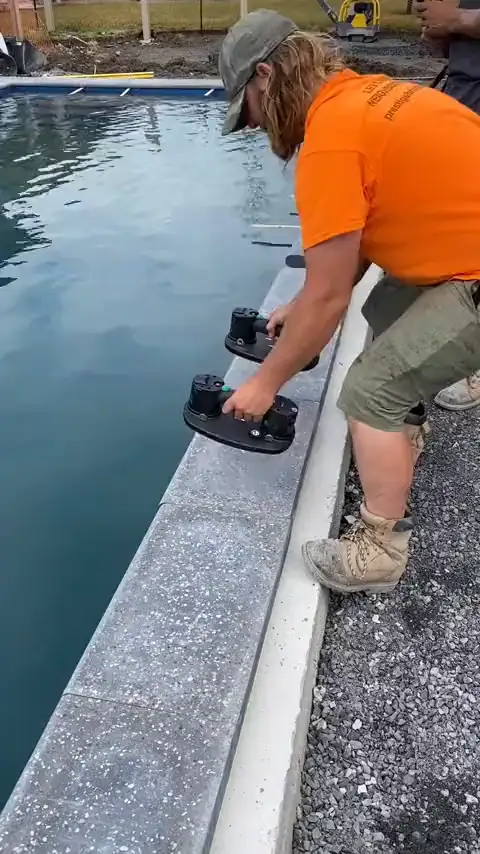
The plaster, the brickwork, the steps and the finished interior, in order.

Jason T.
25 February 2026
Great company. Always on time, pool looks amazing and communication is easy. Highly recommend.
James L.
7 reviews
26 November 2025
Mike T.
8 July 2026
Mark H.
Local Guide · 42 reviews · 18 photos
3 September 2025

Linda R.
4 reviews
25 May 2026
Kevin B.
15 December 2025
Ashley P.
11 reviews
4 March 2026
Thomas W.
Local Guide · 27 reviews · 9 photos
10 February 2025
Want a real number?
Cross streets, pool size, spa, tree cover — enough for a real number and a Burbank service day.
Who picks up
Tell us what the pool needs, how big it is and your ZIP — and a price the same day.
Rewards
$100 for every friend you send us, up to two. No code, no form — they call and mention your name.

$100 credit
For every friend who calls and mentions your name
Up to two referrals, $200 in total. The name must come up on the first call. Spend it on any service.
20% off one-time work
For weekly maintenance members
Green-to-clean, acid wash, plaster start-up and repair labor, plus priority on the schedule.
Where we work
Crews leave from Studio City every morning. Open any area for what is different there.

Send your ZIP or cross streets. We come back the same day with the day we would be there — and what weekly service would cost on your pool.
Or call (818) 740-6099
Scheduled with the forecast in hand, not on the first free date.
Written for Foothill and Valley homeowners.

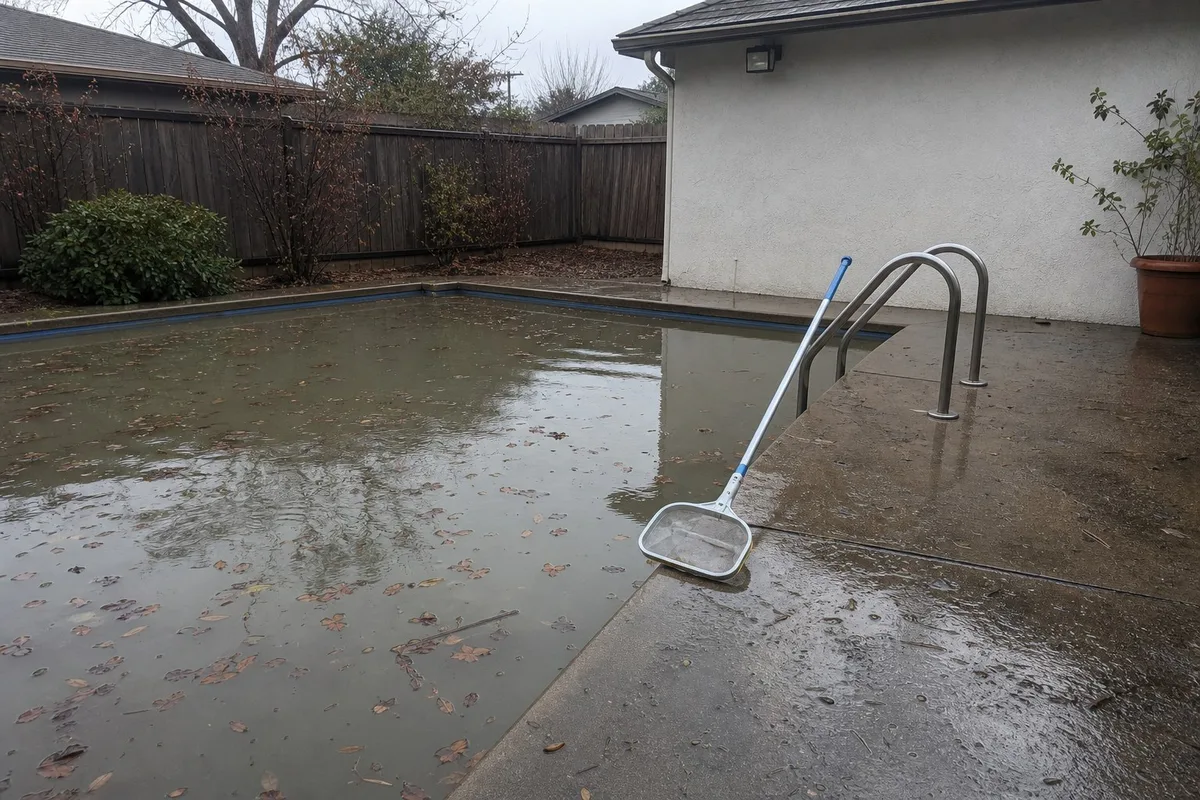
The order to work in after a storm, and where the overflow is allowed to go.
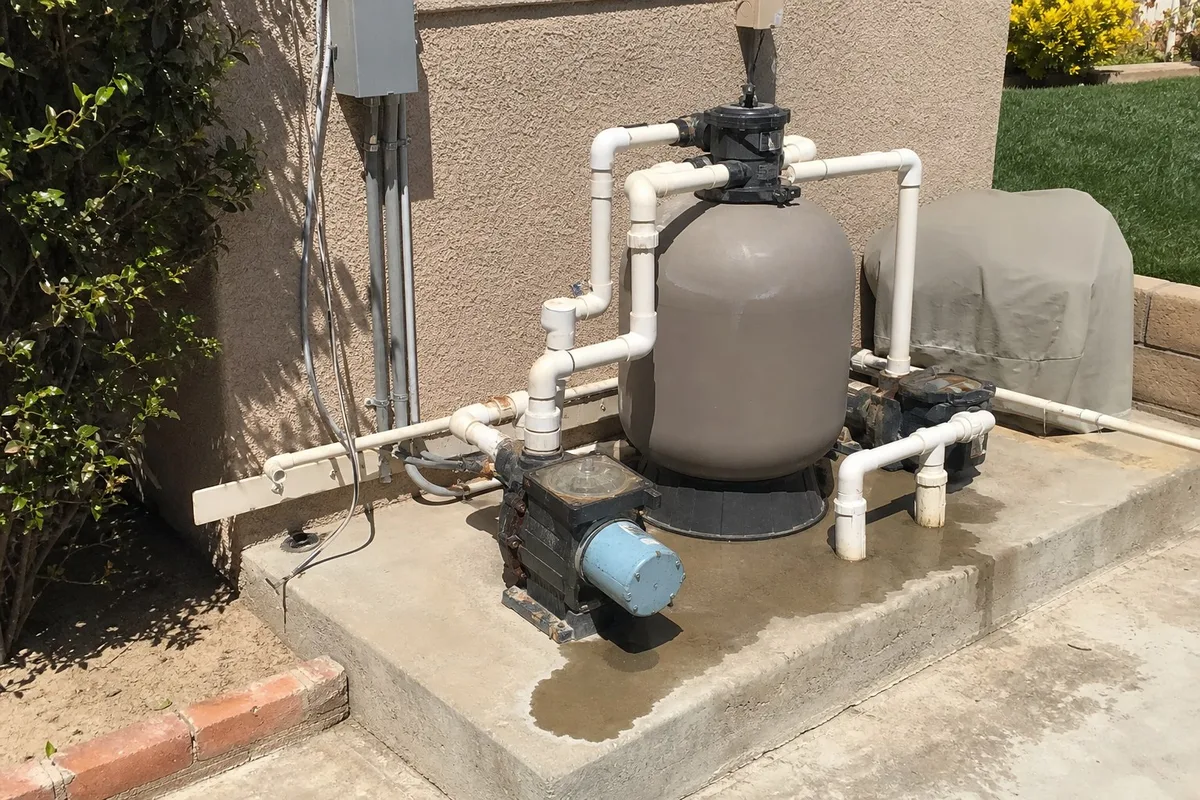
Equipment, labour, and the California rule that picks the pump for you.
Not stock footage
Filmed on the Burbank route and the streets next to it. Nothing staged, nothing bought from a stock library.
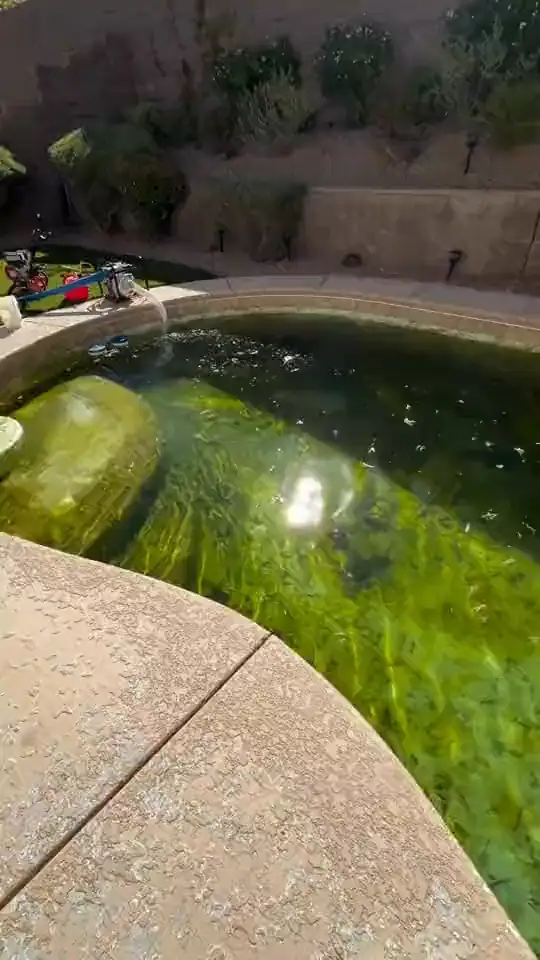

Usually because two readings nobody checks have drifted. Cyanuric acid protects chlorine from sunlight, but too much of it slows the chlorine until a normal reading does very little work — and it builds up every time stabilized chlorine goes in. Calcium hardness climbs the same way.
Worth knowing before it decides for you: replacement pumps sold in California have to meet state efficiency rules, so the like-for-like swap for an old single-speed no longer exists. What goes in is a variable-speed unit, and manufacturers put the saving at up to $1,100 a year.
An acid wash lifts a stained or blotchy top layer and returns the plaster to one color. It does not repair a surface gone rough, chalky or thin, and every wash spends some of the finish — a pool is built with about half an inch to spend.
Yes, though the work changes. Chlorine demand drops, leaves do not, and equipment left unrun through a cold snap is exactly what fails on the first warm weekend in April. Winter visits are mostly baskets, brushing, run-time adjustment and equipment checks.
Weekly service starts at $159 a month for a pool up to 15,000 gallons and runs to $249 a month for pools over 40,000, with standard chemicals included. Most customers pay between $179 and $249. Burbank is priced the same as everywhere else on our routes — the address does not change the number, the pool does. One-time work is quoted on the job: green to clean from $349, acid wash from $749, equipment repair at $175 an hour.
Cleaning, recovery, repair and renovation across Los Angeles.
Nearby, and on the same routes
Roughly when the pool was built, what has been replaced since, and whether anything is making a noise it did not use to.


