
Pool tiling
Rust repair and full tiling
Hollow render and rust cut out, then the whole shell tiled.
Glendale
One-time service
Swimmers back in about two days. And no draining: the water stays where it is, the algae is killed in it and then filtered out of it.

Licensed, insured and family-owned


The recovery, step by step
Draining looks decisive and in Los Angeles it is the option with the most ways to go wrong. Why we do not drain a green pool is worth the minute it takes to read.
Water that has gone from green to milky is dead algae waiting on filtration. If the floor stays stained once it clears, that is an acid wash — a separate job. And there is no chemical route to clear water without circulation, so the equipment gets fixed first.
Pricing
Quoted once we have seen the water: a firm number given without seeing the pool is a guess.

Prices as of August 2026. Size, debris load, and where pH, cyanuric acid and phosphates sit decide how many shocks and filter cleans it takes.
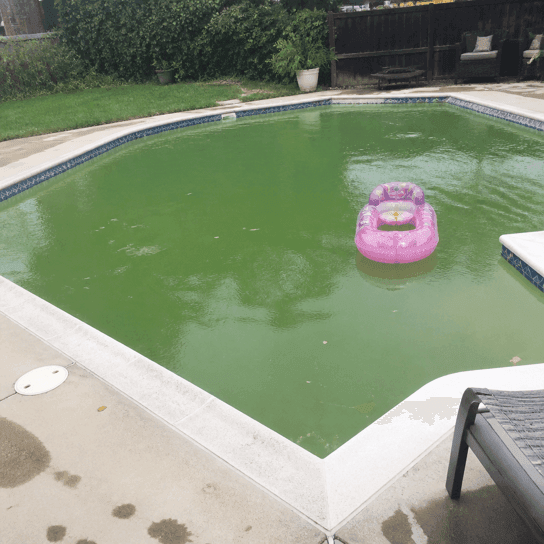
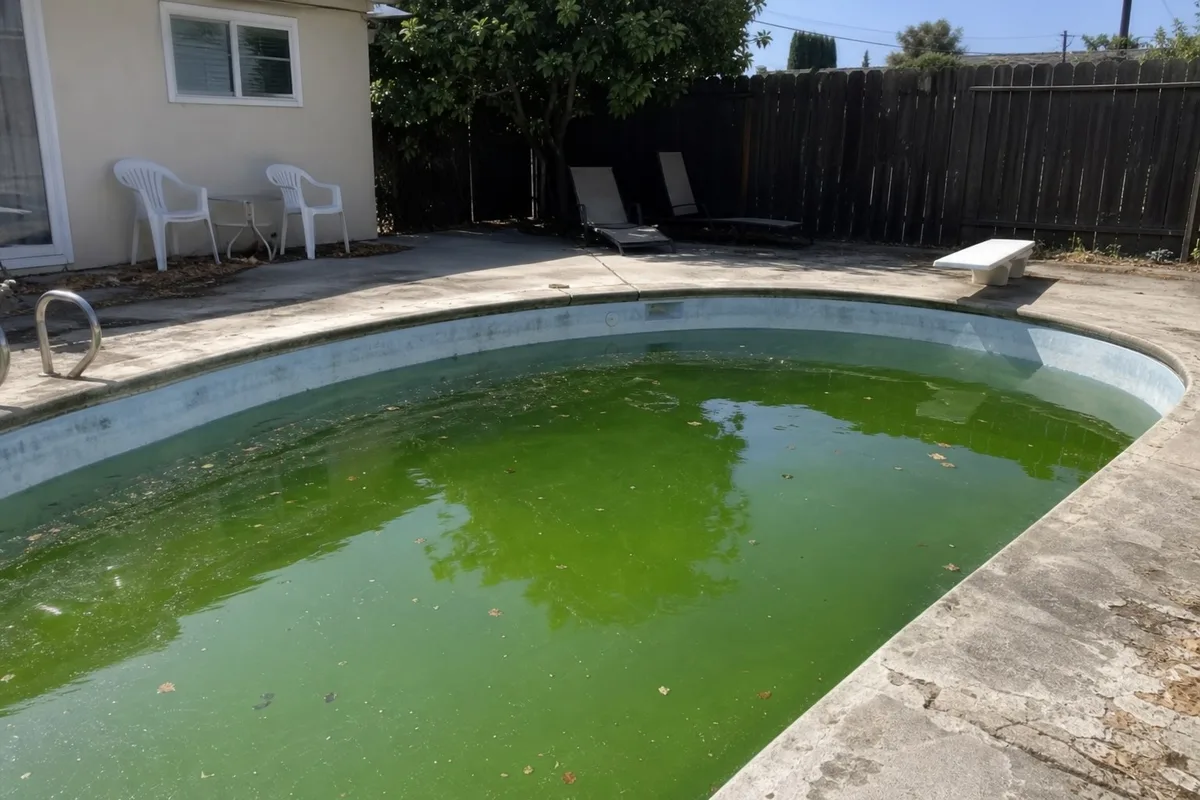
How green is it?
People talk about a green pool as if there were one kind. There are roughly three.
The one thing we will not do
Draining looks like the decisive fix. In Los Angeles it is the expensive one.
The crew
Four of us. The same faces every week, not whoever was free that morning.


Valley Village · full restoration

The same crews run the recoveries
Hollow render and rust cut out, then the whole shell tiled.
Glendale
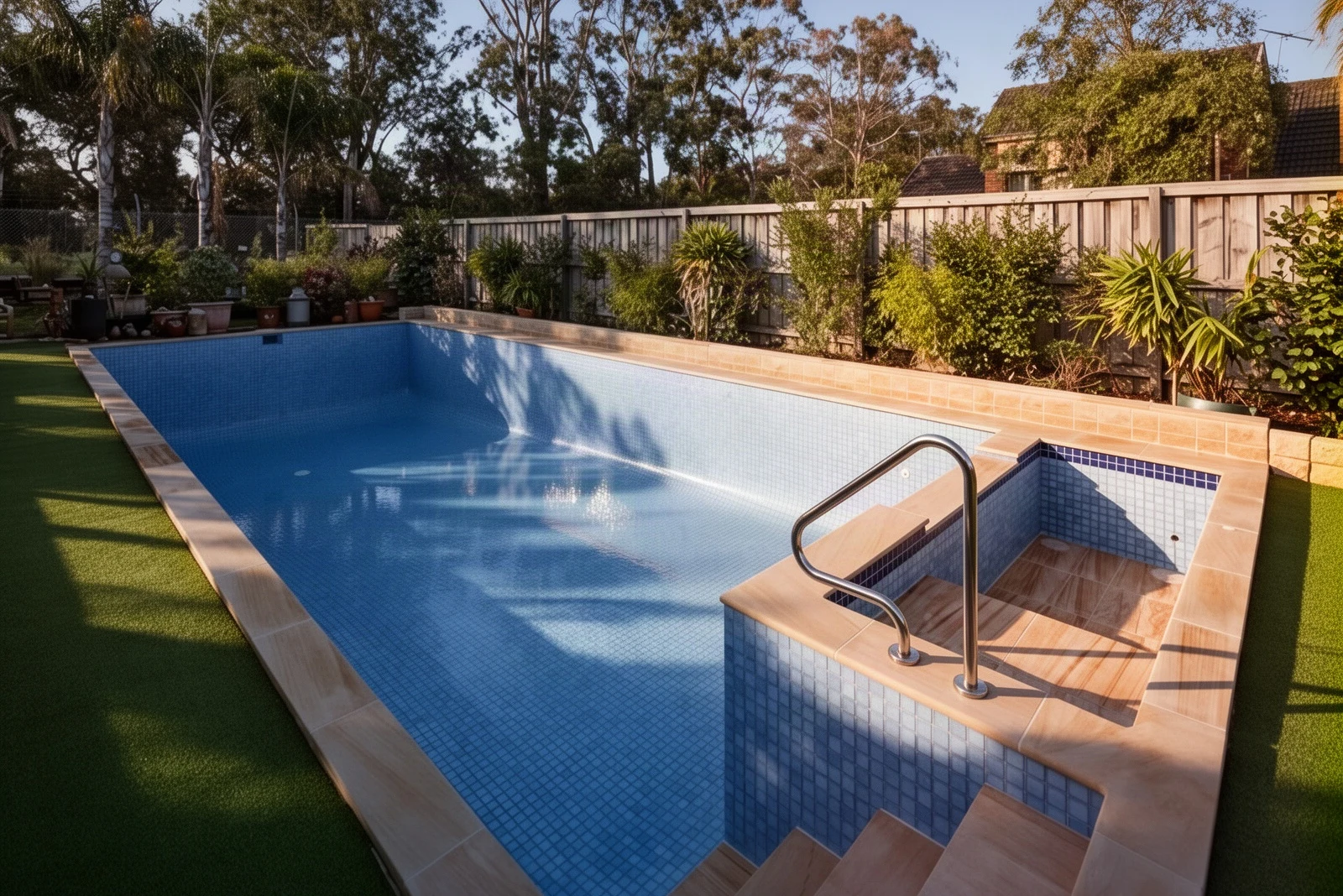
Out of repaints, so retiled, with sandstone paving around it.
Eagle Rock

Grey tile across pool and spa, seen from the air.
La Cañada Flintridge

Collected from customers on the routes we run every week.
Mark H.Verified review
Local Guide · 42 reviews · 18 photos
3 September 2025

Ashley P.Verified review
11 reviews
4 March 2026
I don't usually leave reviews but these guys deserve it. My pool was a mess and I was tired of trying to fix the chemicals myself. They came out and took care of everything. Water is clear now and I don't have to worry anymore.
Chris F.Verified review
Local Guide · 61 review · 30 photos
10 April 2026
After winter our pool needed some serious attention. There was algae around the edges and the water was cloudy. They cleaned everything, balanced the chemicals and got it ready for summer.
Mark D.Verified review
11 May 2026

Nicole W.Verified review
9 July 2026
Kevin T.Verified review
26 April 2026
Ashley B.Verified review
18 March 2026
Melissa C.Verified review
9 reviews
5 April 2026

Tell us what the pool needs, how big it is and your ZIP — and a price the same day.
Rewards
$100 for every friend you send us, up to two. No code, no form — they call and mention your name.

$100 credit
For every friend who calls and mentions your name
Up to two referrals, $200 in total. The name must come up on the first call. Spend it on any service.
20% off one-time work
For weekly maintenance members
Green-to-clean, acid wash, plaster start-up and repair labor, plus priority on the schedule.
Where we work
Crews leave from Studio City every morning, across the Foothills and the neighborhoods next to them.
Office · Studio City
Heavy tree cover in the Foothills makes a green pool likelier and the recovery longer. Send your cross streets and a photo.
4121 Radford Ave, Ste. #214, Studio City, CA 91604Written for Foothill and Valley homeowners.
Shock doses by water colour, how long it takes, and why you should not drain.
Tell it from a stain, scrub it, hold the chlorine, and know when acid wash is next.
The range for chlorine and salt pools, why tablets push it up, and how to bring it down.
Green to clear
Nothing staged, nothing bought from a stock library — the same work, filmed while it happened.
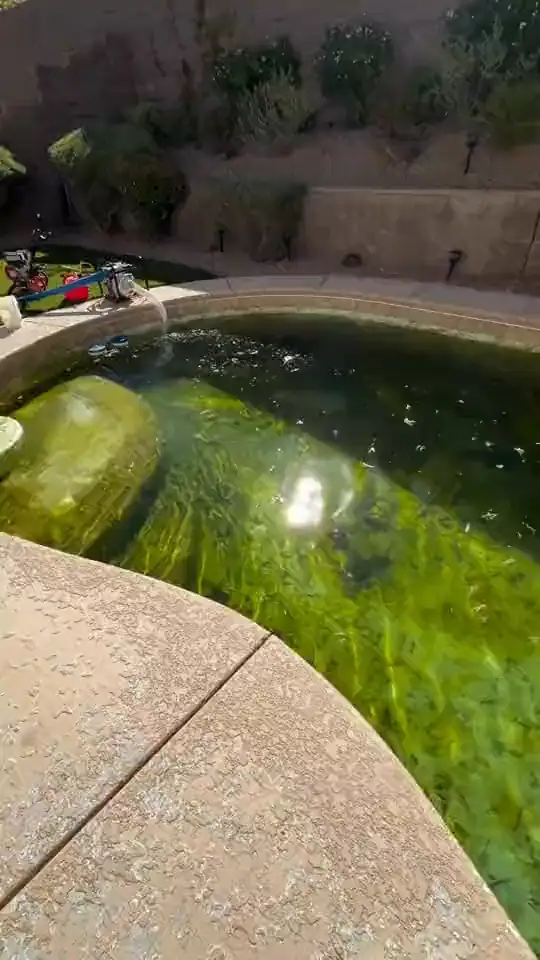
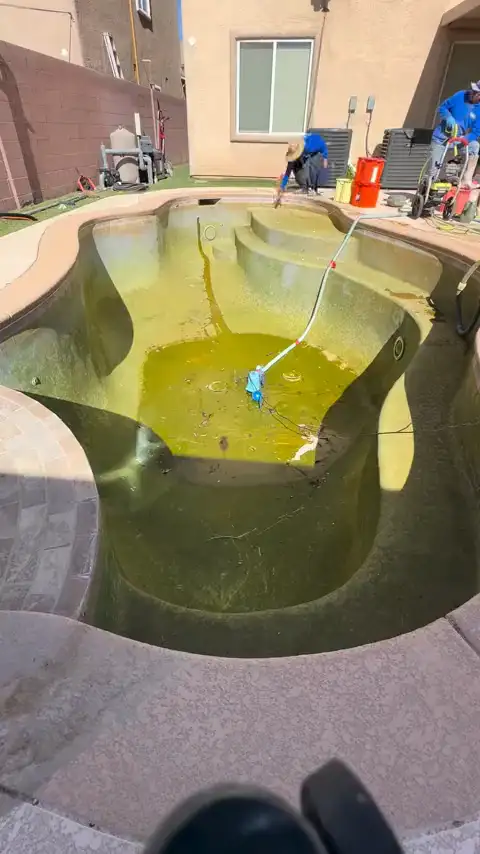
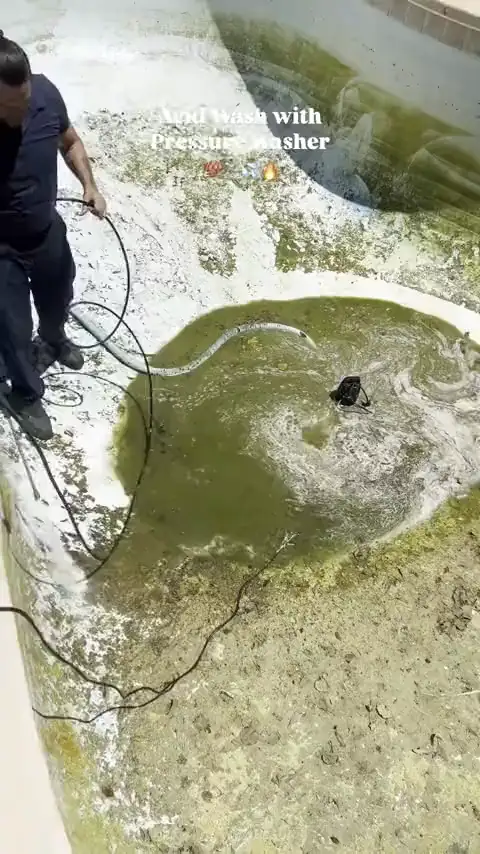

Balance the pH first, brush the walls and floor, shock heavily at dusk so the sun does not destroy the chlorine, then run the filter continuously and clean it as often as it loads up. The order is what makes it fast. Done properly, most pools are swimmable in about two days.
It can almost always be cleaned with the water still in it, and we do not drain pools for algae. Draining risks the shell, dries out the plaster, leaves the spores in the surface anyway, and means paying to refill and rebalance thousands of gallons.
No. Water green enough to see has no effective sanitiser, so bacteria are unchecked, and skin, ear and stomach infections are the usual result. The bigger risk is simpler: if you cannot see the bottom, you cannot see the steps or a person in trouble.
No. Baking soda raises total alkalinity, which is a useful supporting step, but it kills nothing. It is often confused with soda ash, which raises pH, and with chlorine shock, which is what actually destroys algae. Balance first, then shock.
Test free chlorine, correct the pH, brush the walls, shock in the evening and run the filter overnight. If the tinge comes back within days, something is causing it: a short pump schedule, an empty chlorinator, a salt cell that has stopped producing, or stabilizer high enough to lock the chlorine up.
From $349, with a typical private pool between $349 and $749. The band is wide because a week of green and a year of green are different jobs: different numbers of shocks and filter cleans, sometimes new cartridges, sometimes a return visit. Weekly maintenance customers take 20% off.
Balancing and shocking the water until the algae is dead, cleaning or replacing the filter — a badly green pool usually needs more than one filter clean — vacuuming out what settles, and a return visit where one shock is not enough. A week of green and a year of green are different jobs, which is why the price is a range and not a number. Weekly maintenance customers take 20% off.
The same order, just more of it. A pool you cannot see the bottom of almost always has leaves and silt under the algae, so the debris comes out first, and it takes two or three shock cycles instead of one with a filter clean between each. Expect three to five days rather than two, and expect an honest conversation about the floor once the water clears.
Yes, and it is a second job rather than a failed first one. Algae roots in the pores of the plaster and leaves a shadow behind after the water itself is dead clear. Brushing and a week of steady chlorine lift some of it. What is left is an acid wash, which takes a very thin layer off the plaster and starts at $749.
Cleaning, recovery, repair and renovation across Los Angeles.
A photo from the shallow end is enough
How far gone the water is, what is on the floor, and whether the surface underneath will need anything else.