


Pool tiling
Rust repair and full tiling
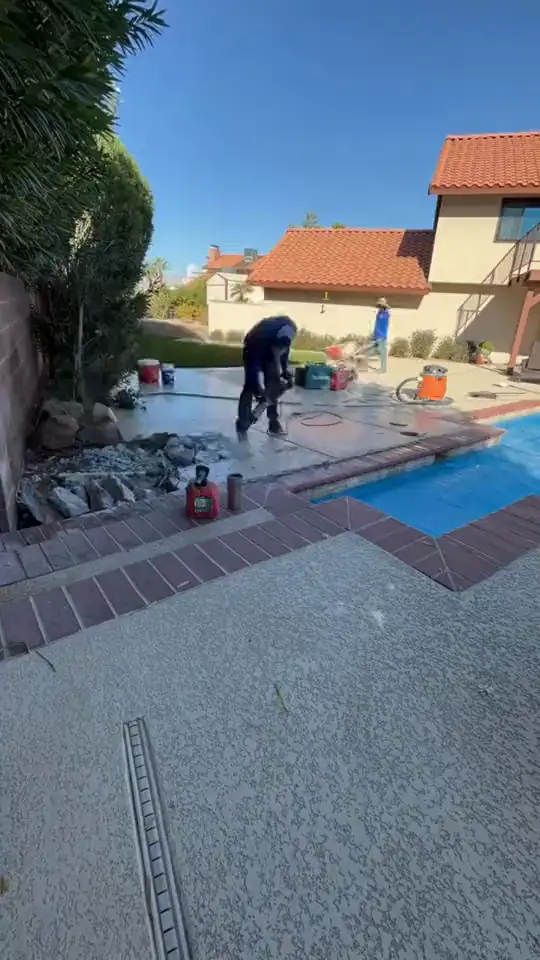
Hollow render and rust cut out, then the whole shell tiled.
Glendale
Equipment repair
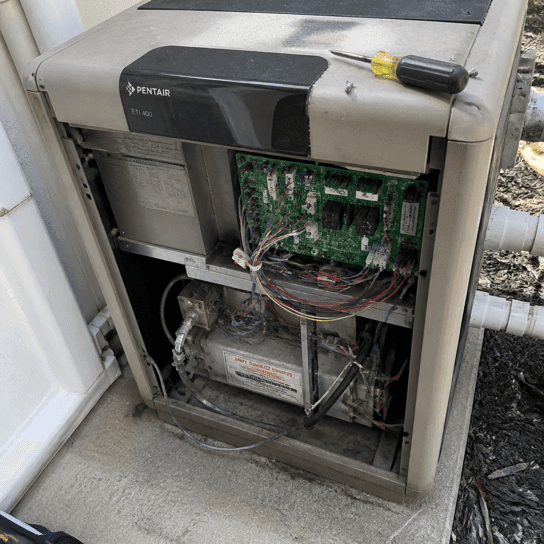
Won't fire, fires and quits, or shows a code you cannot clear. Nearly always too little flow, a fault in the ignition and gas train, or a safety switch doing its job.

Licensed, insured and family-owned


Before you call anyone
Two of them are somebody else's job on the pad: filter cleaning and automation repair. We repair before replacing wherever the part can be saved, as on everything else on the pad.
A typical repair is $300–650 in labor plus parts, quoted as a fixed price before work begins — what sits either side of that band. When replacement is the answer we install the Jandy JXiQ and Pentair MasterTemp.
Scale caught as a rising calcium number is a chemistry adjustment; scale caught as a heater that no longer heats is a heat exchanger. Which is the unglamorous case for weekly service, alongside pumps and the rest.
Pricing
Free standard equipment diagnosis inside our service area: you get the fault and the price before anything is spent.

The part is named on the quote: on a heater it is often the larger half of the bill.
One-time work
Quoted on the job, because nobody can price a green pool from a web form.
Roughly in order
Ranked by how often they turn out to be the answer on a Los Angeles pad.
The crew
Four of us. The same faces every week, not whoever was free that morning.


The same crews service the pads
Hollow render and rust cut out, then the whole shell tiled.
Glendale
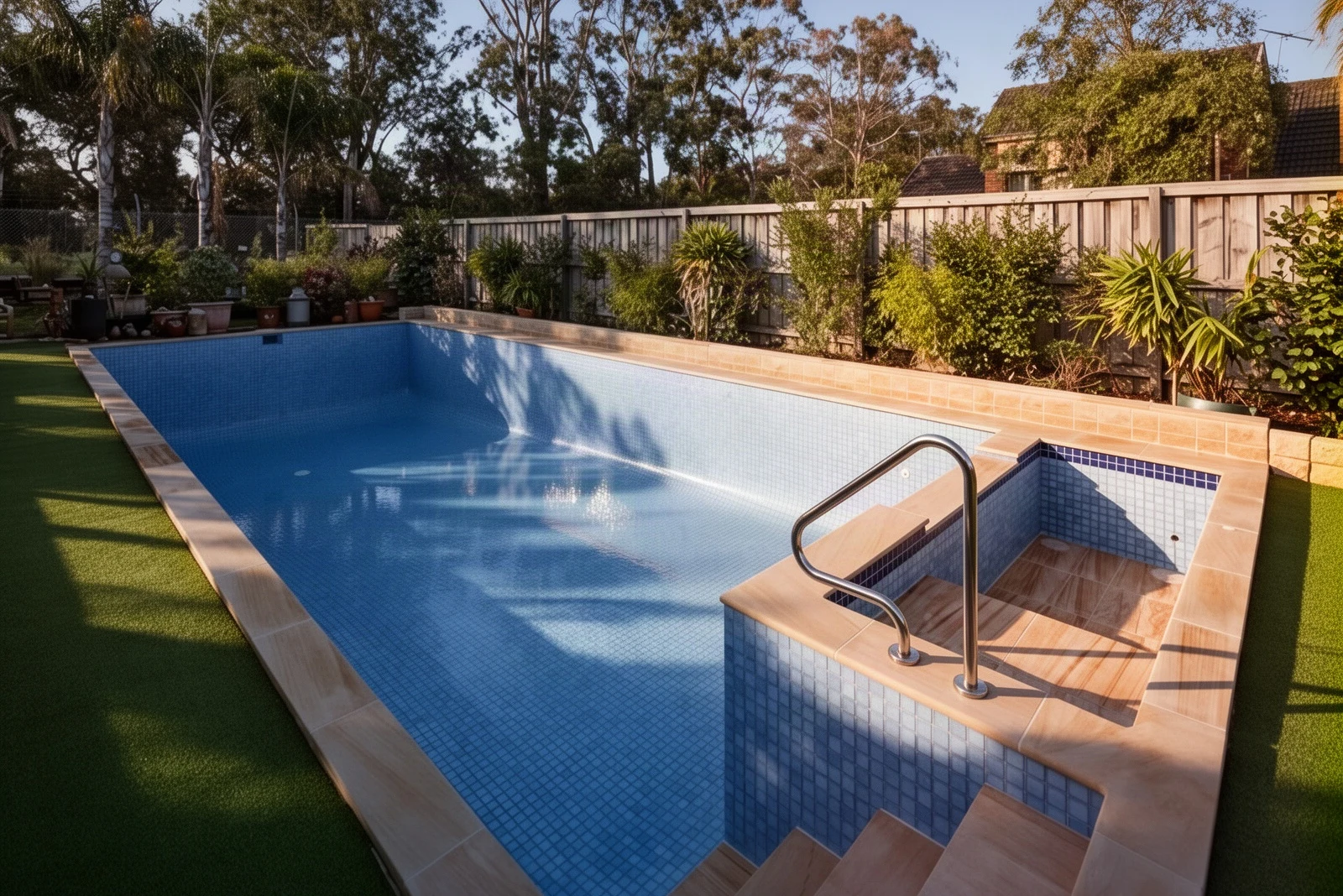
Out of repaints, so retiled, with sandstone paving around it.
Eagle Rock

Grey tile across pool and spa, seen from the air.
La Cañada Flintridge

Collected from customers on the routes we run every week.
James L.Verified review
7 reviews
26 November 2025
Thomas R.Verified review
Local Guide · 56 reviews · 27 photos
25 February 2026
Mark H.Verified review
Local Guide · 42 reviews · 18 photos
3 September 2025

Linda R.Verified review
4 reviews
25 May 2026
Kevin B.Verified review
15 December 2025
Jason T.Verified review
25 February 2026
Great company. Always on time, pool looks amazing and communication is easy. Highly recommend.
Ashley P.Verified review
11 reviews
4 March 2026
I don't usually leave reviews but these guys deserve it. My pool was a mess and I was tired of trying to fix the chemicals myself. They came out and took care of everything. Water is clear now and I don't have to worry anymore.
Thomas W.Verified review
Local Guide · 27 reviews · 9 photos
10 February 2025
Tell us what the pool needs, how big it is and your ZIP — and a price the same day.
Rewards
$100 for every friend you send us, up to two. No code, no form — they call and mention your name.

$100 credit
For every friend who calls and mentions your name
Up to two referrals, $200 in total. The name must come up on the first call. Spend it on any service.
20% off one-time work
For weekly maintenance members
Green-to-clean, acid wash, plaster start-up and repair labor, plus priority on the schedule.
Where we work
Crews leave from Studio City every morning, across the Foothills and the neighborhoods next to them.
Office · Studio City
Send the make, what it does when you switch it on, and anything on the display.
4121 Radford Ave, Ste. #214, Studio City, CA 91604Written for Foothill and Valley homeowners.

The quiet signals that a pump or heater is on its way out.

Every degree of heat costs money and changes the chemistry.
From the truck
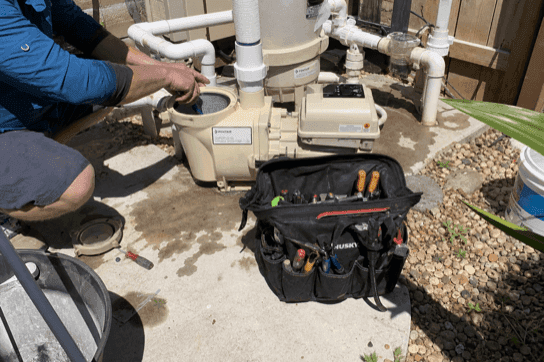
Nothing staged, nothing bought from a stock library — the same work, filmed while it happened.
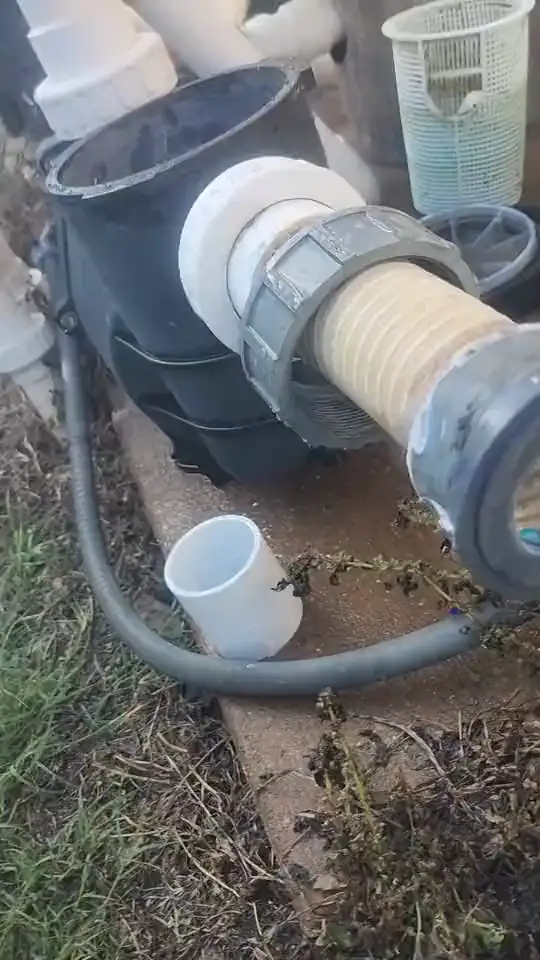

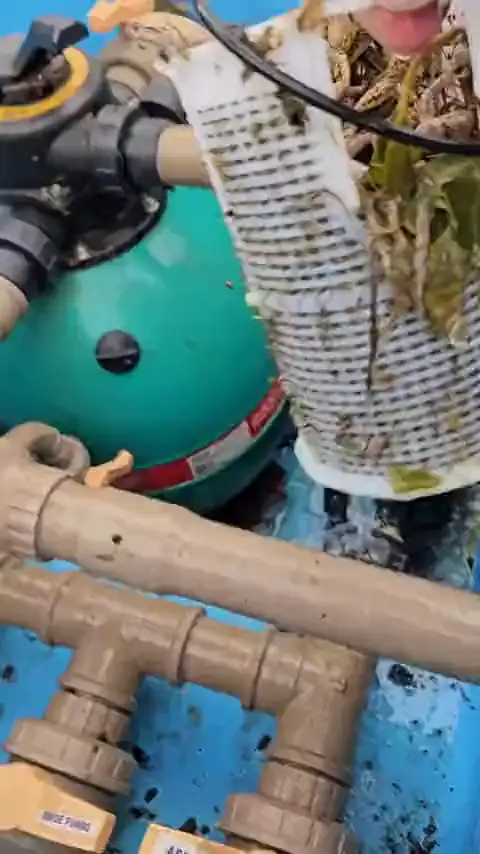
A typical heater repair is $300 to $650 in labor plus parts, quoted as a fixed price before work begins, with labor starting at $175 an hour and a one-hour minimum. Which part failed moves it more than anything else: a heater locked out by a dirty filter costs a filter clean and nothing else, while a heat exchanger is replacement territory and always quoted in writing first. Members on weekly service take 20% off the labor.
Hayward, Raypak, Pentair, Jandy and Lochinvar cover almost every pad in Los Angeles, and parts for all of them sit on local shelves rather than arriving next week from a warehouse. Age decides more than the badge: at twelve to fifteen years a heat exchanger costs more than a new heater of any make, and we say that before ordering the part rather than after fitting it.
All of them. Gas is still the common case here, but electric has grown on pools that run year-round, and it fails differently: a heat pump reports refrigerant, a reversing valve, a fan motor or a defrost fault rather than a gas train, and a resistance heater is usually an element or a contactor. Solar is the third, and there the fault is normally a diverter valve or a split panel on the roof rather than anything on the pad at all.
Only the electrical part. A gas heater puts a gas train, a pressurised water circuit and low-voltage controls in one cabinet, and most failures involve two of the three. An electrician can address the circuit, breaker and wiring — occasionally the whole fault. A gas valve or a scaled exchanger is not.
Roughly seven to twelve years, with water chemistry the biggest variable. Hard water scales the exchanger faster here than in most of the country, and a season of low pH shortens a heater's life measurably.
Most units reset by switching off at the heater, then at the breaker, waiting a minute and restoring power. Once is reasonable; repeatedly is not. A heater that trips again is reporting a real fault, usually a flow restriction or an overheat. Photograph the code first.
Three explanations. Water is moving but too slowly to let it light, so check filter pressure, baskets and valves. Or it lights but the heat never reaches the water, which points at scale on the exchanger tubes. Or it is warming, just slower than you expect.
October is the busiest heater month in Los Angeles: nobody heats a pool here in August, the unit sits off through September, and then half the city reaches for the same switch in the same week. Run yours for a full cycle on a warm afternoon in September and a failure becomes ordinary work instead of a place in a queue. Members on weekly service get priority scheduling, which in that fortnight is what the membership actually buys.
Pool heating is a slow lift over hours; spa heating is a fast lift to a much higher set point, on demand. The same heater cycles harder, runs hotter and scales faster. A heater that still warms the pool but struggles with the spa is usually showing early scale or flow trouble, not a spa fault.
Most of the time, yes. Igniters, flame sensors, gas valves, pressure switches, thermostats and control boards are replaceable parts, and a heater locked out by a dirty filter or a half-shut valve needs no heater parts at all. Two faults end it instead: a corroded or split heat exchanger, and a cabinet rusted through around the burner tray. Age settles the rest — past twelve to fifteen years the exchanger alone costs more than a new heater, so both figures go on the quote and you pick.
California contractor licence #970493, classifications C-53 and C-61/D-35, current to 29 February 2028, with a $25,000 bond and liability cover through The Hartford. Pool and spa heating equipment sits inside the C-53 swimming pool classification, so a heater on the pad is work the licence covers. Check the number on cslb.ca.gov before anyone comes out — it takes a minute, and it is worth doing with whoever you call, not only with us.
Cleaning, recovery, repair and renovation across Los Angeles.
Family owned, based in Studio City
The make, what it does when you switch it on, and anything on the display — usually enough to tell a filter clean from a heat exchanger.