
Pool tiling
Rust repair and full tiling
Hollow render and rust cut out, then the whole shell tiled.
Glendale
Leak detection and repair
Two jobs, and they happen in that order. Detection is charged at our hourly rate with a one-hour minimum. Go on to the repair and that visit becomes part of the job.

Licensed, insured and family-owned


Before the inspection
Repair the source before you renovate. A leak under a new interior undermines it from behind and you find out in year two — so shell repairs come before tiling, before resurfacing and before painting.
What we repair is the concrete: shell cracks and structural joints, skimmer-to-shell separation, return penetrations, light niches and hydrostatic-valve areas. That is structural repair work, and it is priced against what the testing actually found rather than guessed at beforehand.
Common areas
A pool can have more than one leak. Finding the first does not mean the testing is finished, and on an older pool it usually is not.
Quick check first
It costs nothing, takes a day, and a surprising number of suspected leaks turn out to be a hot week.
The crew
Four of us. The same faces every week, not whoever was free that morning.


The same crews test and repair
Hollow render and rust cut out, then the whole shell tiled.
Glendale
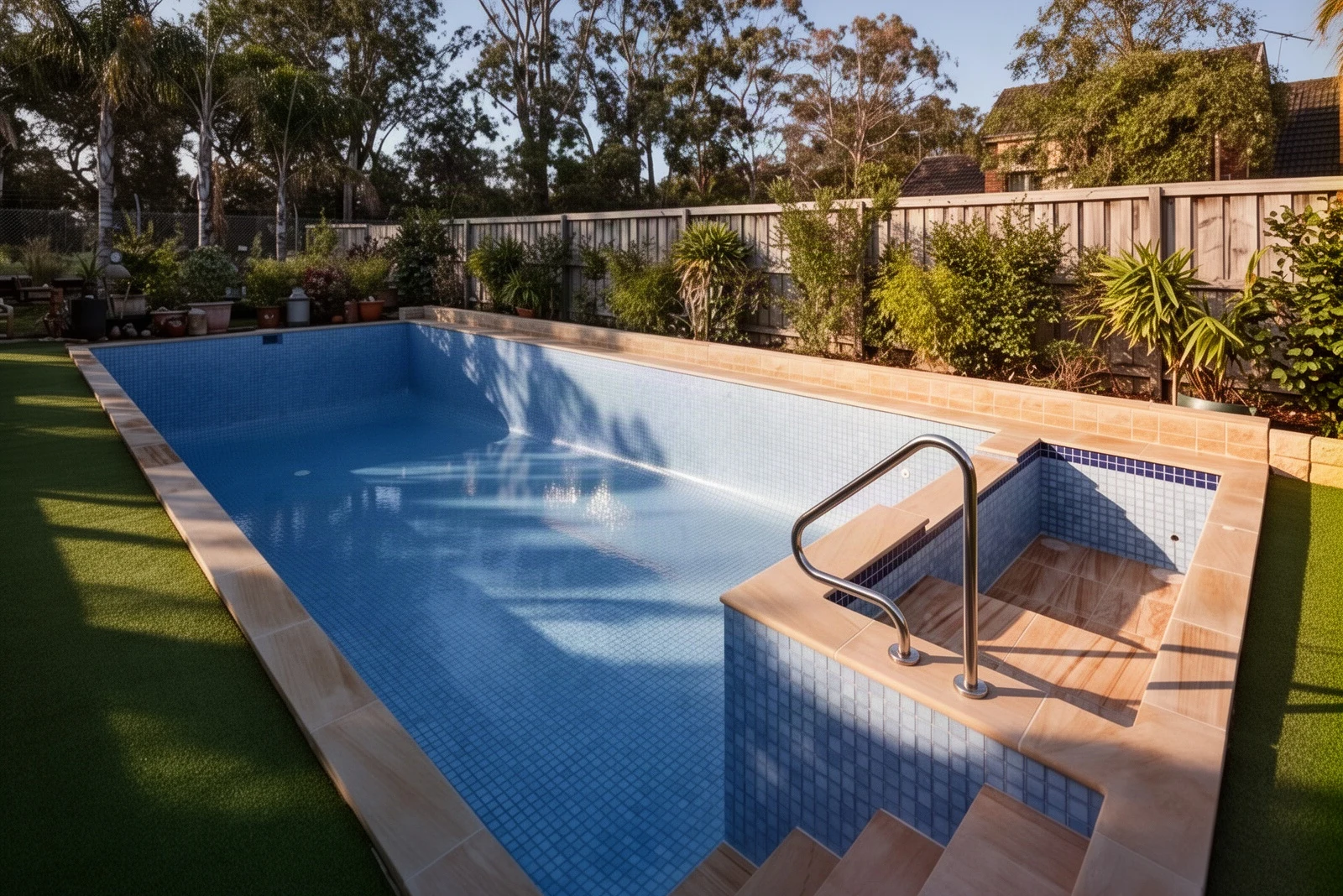
Out of repaints, so retiled, with sandstone paving around it.
Eagle Rock

Grey tile across pool and spa, seen from the air.
La Cañada Flintridge

Opened up
Two of the places that test badly and, once they are opened, explain themselves.

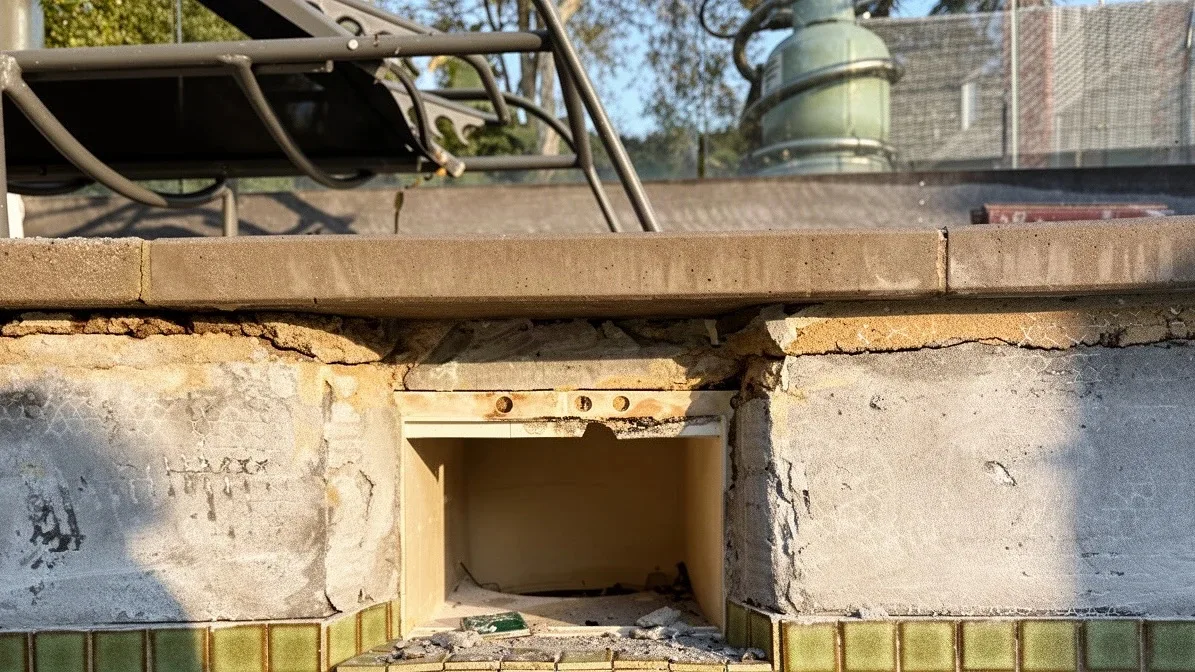
Collected from customers on the routes we run every week.
Amanda V.Verified review
5 December 2024
Noticed my pool level dropping faster than normal. They checked the system and found the issue before it became a bigger problem. Glad we called when we did.
Patricia N.Verified review
7 April 2025

Mark H.Verified review
Local Guide · 42 reviews · 18 photos
3 September 2025

Linda R.Verified review
4 reviews
25 May 2026
Kevin B.Verified review
15 December 2025
Jason T.Verified review
25 February 2026
Great company. Always on time, pool looks amazing and communication is easy. Highly recommend.
Ashley P.Verified review
11 reviews
4 March 2026
I don't usually leave reviews but these guys deserve it. My pool was a mess and I was tired of trying to fix the chemicals myself. They came out and took care of everything. Water is clear now and I don't have to worry anymore.
Thomas W.Verified review
Local Guide · 27 reviews · 9 photos
10 February 2025
Tell us what the pool needs, how big it is and your ZIP — and a price the same day.
Rewards
$100 for every friend you send us, up to two. No code, no form — they call and mention your name.

$100 credit
For every friend who calls and mentions your name
Up to two referrals, $200 in total. The name must come up on the first call. Spend it on any service.
20% off one-time work
For weekly maintenance members
Green-to-clean, acid wash, plaster start-up and repair labor, plus priority on the schedule.
Where we work
Crews leave from Studio City every morning, across the Foothills and the neighborhoods next to them.
Office · Studio City
Already hold a written leak report? Email it with your cross streets and photographs and we will tell you what it points at.
4121 Radford Ave, Ste. #214, Studio City, CA 91604Where this page leads next.


Missed weeks, a full basket, a filter nobody has opened.
Finding it
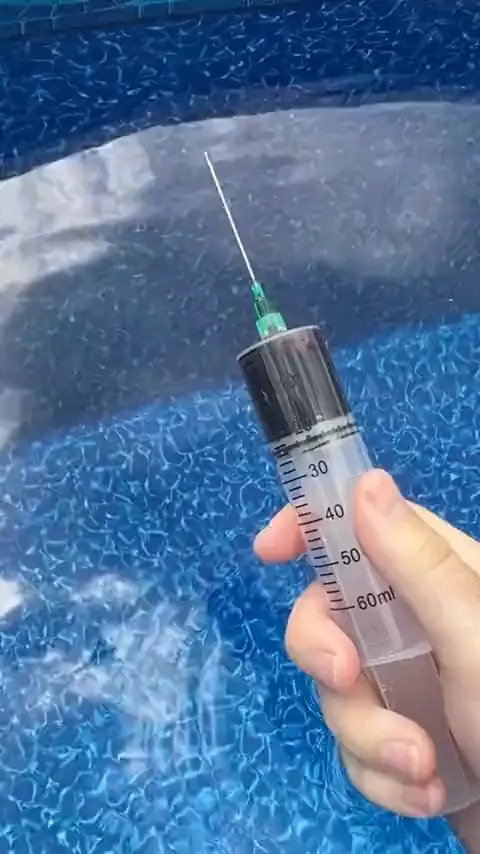
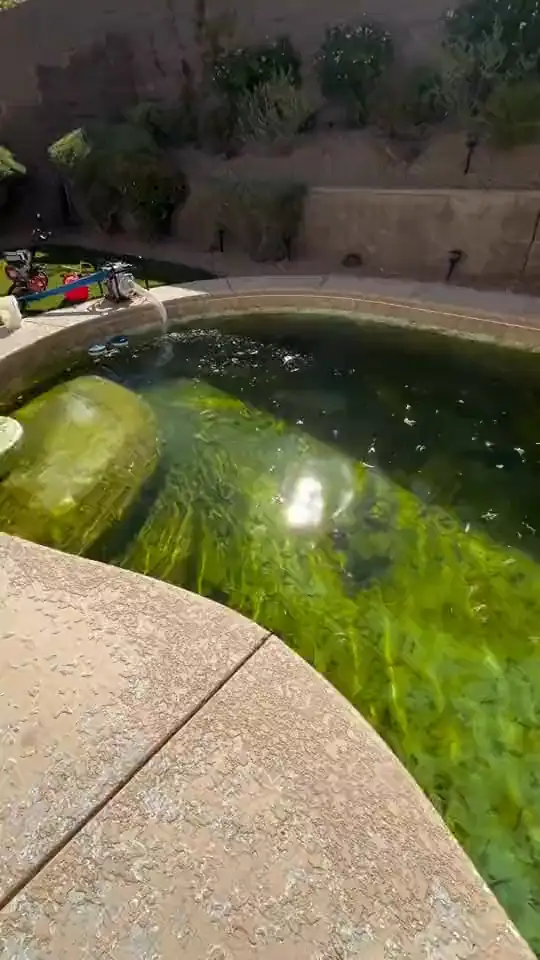
Nothing staged, nothing bought from a stock library — the same work, filmed while it happened.


Both. We locate it, document what was found, and repair it. Call (818) 740-6099 first, and the testing decides what the repair is quoted against.
A written record of what was tested and what was found gives the quote a reliable starting point. It also separates shell repair from plumbing and equipment work, which are different jobs at different prices.
Dye helps around a suspected crack or fitting when the water is completely still, but it is a narrow tool. It confirms a place you already suspect; it does not replace proper testing.
Yes, and older pools often do — particularly where the shell, the equipment and the plumbing are all the same age. Finding one source is not a reason to stop testing.
Whenever a leak is suspected, yes. Finding and fixing it before resurfacing, painting or tiling protects the new work. Paying for a finish over an unresolved leak means paying for it twice.
More loss with the pump running usually points at the pressure side: return lines, fittings, the equipment pad or a separate solar circuit. Loss with the equipment switched off points at the shell or a fitting — the light niche, the skimmer throat, the main drain or the hydrostatic valve.
Yes, though a proper leak dye is denser and holds together in a ribbon where food coloring disperses. The method is the same either way: pump off, wait fifteen to twenty minutes until the water is completely still, then release a little right at the point you suspect — the skimmer throat, a return fitting, the light niche, the end of a crack — and watch whether it gets drawn in. Do it on a calm day. Wind on the surface moves dye around enough to read as a leak that is not there.
The skimmer box, where it meets the shell. A plastic part cast into concrete, the two moving at different rates, and the joint opening between them — which is why a level that drops to the bottom of the skimmer mouth and then holds is the most familiar pattern of all. Light niches and the conduit behind them come next, then the penetrations where the return pipes pass through the shell. Older pools frequently have two of these at once, so finding the first is not a reason to stop testing.
The bucket test costs nothing and you can start it tonight. A standard diagnosis at the equipment pad is free in our service area, which rules out the cheapest thing to be wrong before anyone charges for anything. Full detection — isolating and pressure testing lines, locating acoustically, dye work in the shell — runs at $175 an hour with a one-hour minimum, and that visit becomes part of the job if you go on to the repair.
Cleaning, recovery, repair and renovation across Los Angeles.
Still looking, or ready for the repair?
No test run yet? Start with the bucket test. Already sure it is leaking? We will come and find it.