
Painting and coating
Interior and surrounds done together
Epoxy inside the pool, Poolside Paving Paint around it.
Universal City
Non-slip poolside coating
A refresh, not a replacement. A water-based, rubberised, non-slip coating for concrete, rendered and pebble-textured surrounds that are still sound.

Licensed, insured and family-owned


Preparation matters
It is not meant to pretend an old surface is new stone. If the edge itself is past saving, that is new coping; if the pool interior is the problem, that is resurfacing.
Inside the pool the equivalent job is epoxy pool painting, and the two are often quoted together.
Choose a poolside color
Color images are a guide only: screen settings, lighting, surrounding colors and surface texture all change the finished shade.


Straight advice before you choose
The existing coping and paving still decide the final shape and level of the surface.
The crew
Four of us. The same faces every week, not whoever was free that morning.


Coated surrounds and painted interiors
Epoxy inside the pool, Poolside Paving Paint around it.
Universal City

A pebble interior repainted, with the cracked surround dealt with.
Tujunga

Hollow render and rust cut out, then the whole shell tiled.
Glendale
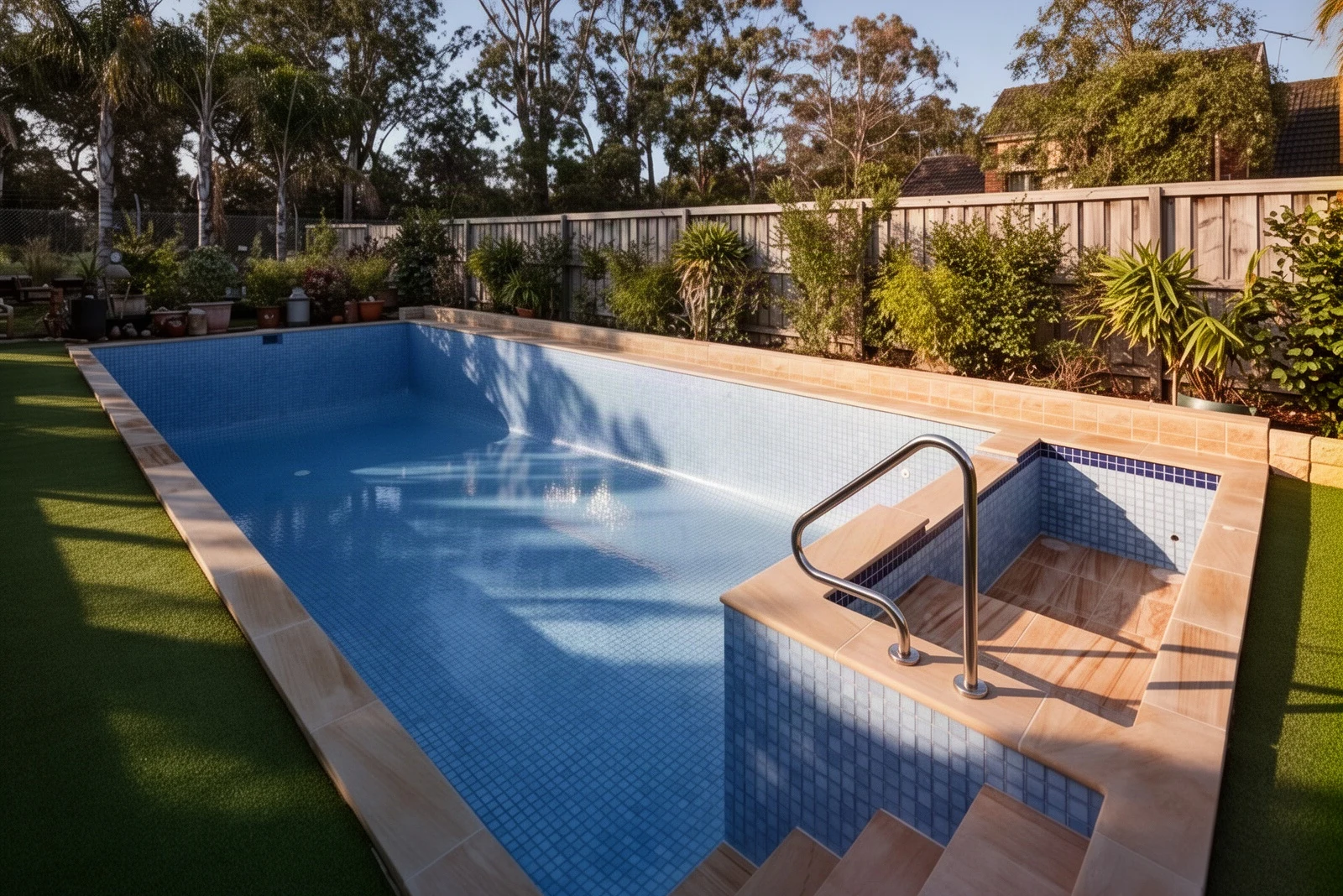
Out of repaints, so retiled, with sandstone paving around it.
Eagle Rock
Collected from customers on the routes we run every week.
Thomas W.Verified review
Local Guide · 27 reviews · 9 photos
10 February 2025
Raymond K.Verified review
Local Guide · 52 reviews · 26 photos
20 November 2025
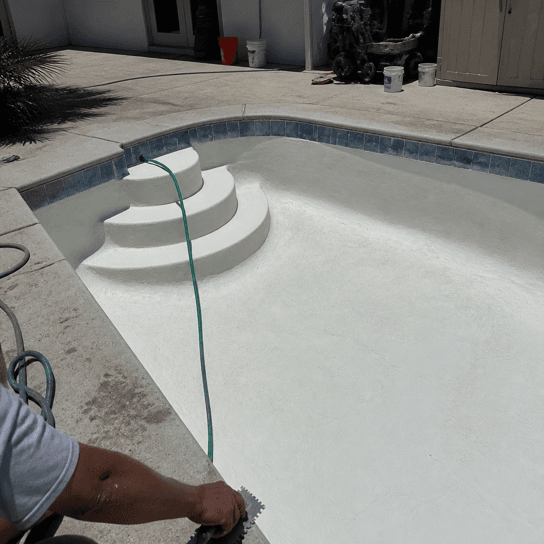
Karen V.Verified review
15 August 2026
Diane F.Verified review
6 reviews · 2 photos
6 January 2025
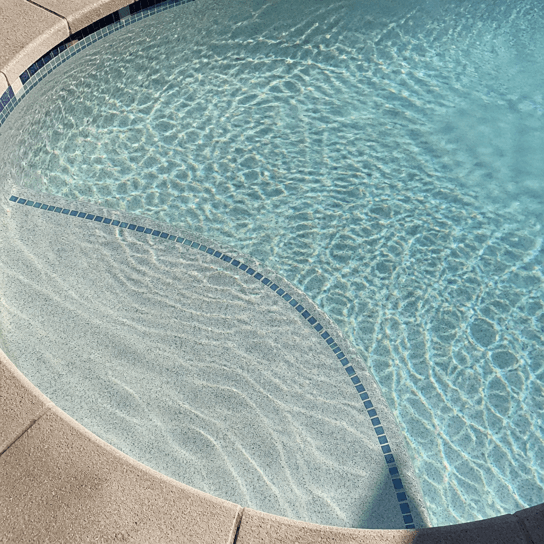
Mark H.Verified review
Local Guide · 42 reviews · 18 photos
3 September 2025

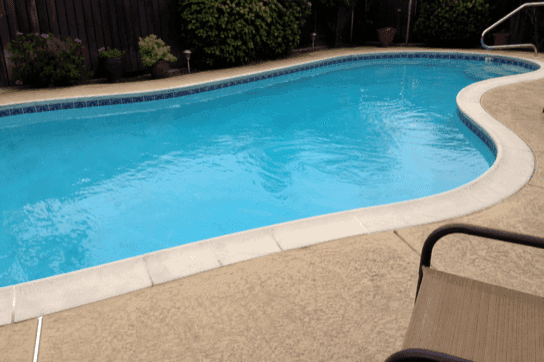
Linda R.Verified review
4 reviews
25 May 2026
Kevin B.Verified review
15 December 2025
Jason T.Verified review
25 February 2026
Great company. Always on time, pool looks amazing and communication is easy. Highly recommend.
Tell us what the pool needs, how big it is and your ZIP — and a price the same day.
Rewards
$100 for every friend you send us, up to two. No code, no form — they call and mention your name.

$100 credit
For every friend who calls and mentions your name
Up to two referrals, $200 in total. The name must come up on the first call. Spend it on any service.
20% off one-time work
For weekly maintenance members
Green-to-clean, acid wash, plaster start-up and repair labor, plus priority on the schedule.
Where we work
Crews leave from Studio City every morning, across the Foothills and the neighborhoods next to them.
Office · Studio City
Send photographs of the surround, or arrange an assessment. We will say whether coating, rendering or new coping is the better result.
4121 Radford Ave, Ste. #214, Studio City, CA 91604Written for Foothill and Valley homeowners.
How long each finish lasts, what it asks of your care, and what the gap costs.

The decisions that are expensive to change afterwards.

Water has no colour of its own — the interior gives it one.
Edges and decks
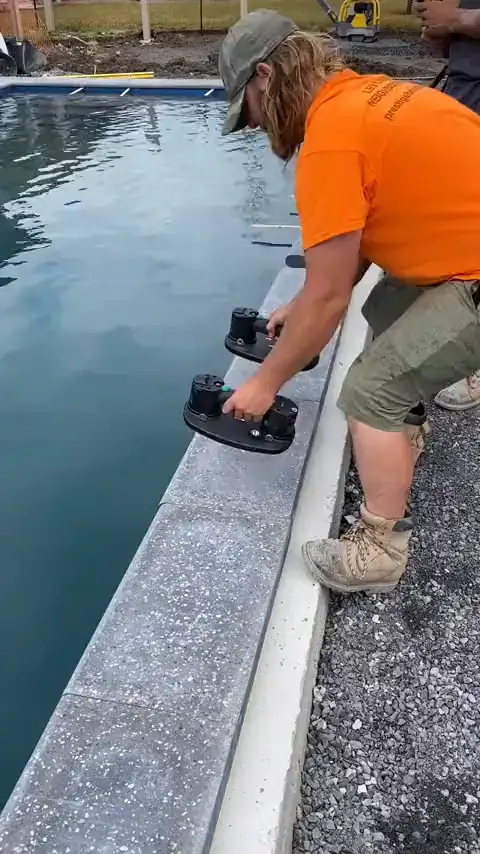
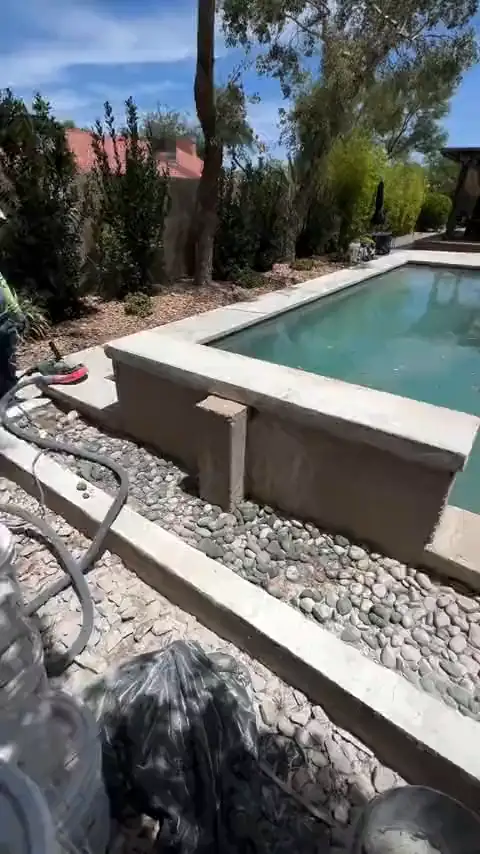
Nothing staged, nothing bought from a stock library — the same work, filmed while it happened.

Sometimes, but not automatically. Brick type, joints and condition vary considerably. Rendering is often required first so the coating has a more suitable and consistent surface to sit on.
It can greatly improve color and overall presentation, but it follows the shape of the existing surface. Repairs and undulations may remain visible, particularly when the original coping is uneven.
In many suitable situations, yes. It is commonly chosen as a budget-conscious alternative to a complete stone coping replacement, especially where the existing substrate can be retained and prepared.
The product is a water-based, rubberised, non-slip coating system for suitable poolside surfaces. Correct preparation, application and ongoing care all remain important to how it performs.
No digital color sample can be exact. The final appearance varies with screen settings, lighting, surrounding materials, texture and the condition of the surface being coated. Narrow it down on screen, then look at real samples on site.
The coating route — an acrylic or elastomeric cool-deck finish over concrete that is still sound, which is what this page is about — is quoted around the city at $6 to $12 a square foot installed, over two or three days on site. A stamped concrete overlay is the next step up at roughly $10 to $18 a square foot, because it is a new layer with a pattern pressed into it rather than a coating. Those are the published Los Angeles ranges, not our quote: ours comes after someone has walked the deck, because preparation is what separates two decks of the same size. The visit and the quote cost nothing inside the service area.
A coating over a slab that is still sound — the bottom of that range, and exactly what this product is for. Cheaper again, if color is the only complaint: a proper clean and a sealer, which buys a season or two for a fraction of the money. The false economy is coating a deck that is moving, delaminating or lifting at its joints. The coating follows the slab, the crack comes back through it inside a year, and the deck gets paid for twice.
No, and this is the thing to be clear about before spending anything. A rubberised coating is measured in thousandths of an inch: it evens out color and hides hairlines, but a slab that has settled, lifted at a joint or cracked because roots and soil movement are still pushing on it will do the same through the new surface. Those decks need lifting, or the failed section cut out and replaced, and then coating is worth doing. We will say which one yours is rather than roll color over the top of it.
That is the inside of the pool rather than the deck, and it is a different order of money: ours starts at $7,500, with most projects between $10,000 and $20,000 depending on size, the old surface and the repairs found under it. The two jobs are often quoted together, because the pool is down for the interior anyway and the deck crew is already on site. The numbers and what moves them are on the pool resurfacing page.
Neither — they are two words for one job, and replastering is a kind of resurfacing. The choice that carries real consequences is what goes back on the shell: white plaster, colored plaster, quartz or pebble, which differ in service life, in how they feel underfoot and in the color the water ends up. None of it touches the deck, which is a separate surface with separate options. The comparison is on the pool resurfacing page.
Cleaning, recovery, repair and renovation across Los Angeles.
Poolside paving paint applicators, Los Angeles
Send photographs of the pool area, and we will say what repairs may still be visible afterwards.