
Pool tiling
Rust repair and full tiling
Hollow render and rust cut out, then the whole shell tiled.
Glendale
Equipment repair
A saltwater pool is a chlorine pool. Salt sanitises nothing — the cell makes chlorine in the plumbing. So no chlorine is a machine that has stopped, not a chemistry problem.

Licensed, insured and family-owned


Start with what the pool is doing
Los Angeles is hard on cells for three reasons that have nothing to do with the brand: hard fill water brings calcium in with every top-up, making chlorine this way pushes pH up by itself, and sun burns chlorine off faster than the cell replaces it. The chemistry that kills a cell is invisible — the water looks perfect throughout.
Fitting a cell is a short job and the cell is the expense, which is exactly why the two cheaper faults get ruled out first. What that costs is just below.
We install and service Jandy AquaPure and Pentair IntelliChlor salt chlorine generators — the equipment we install. On a new pool, salt waits until day 28 of the plaster start-up. Draining a salt pool is a regulated discharge here, which is part of why our green-to-clean recovery works without draining.
What a cell swap costs
The cell is quoted separately, because its price follows pool size and brand.

Old cell out, unions and O-rings checked, new cell in, then output and salt confirmed against an independent test rather than against the panel.
What a salt system call involves
The expensive part is only proposed once the two cheaper ones are gone.
Three faults that look the same
Sold a cell without the first two checks, you may be paying for a part that was working.
The crew
Four of us. The same faces every week, not whoever was free that morning.


The same crews run the routes
Hollow render and rust cut out, then the whole shell tiled.
Glendale
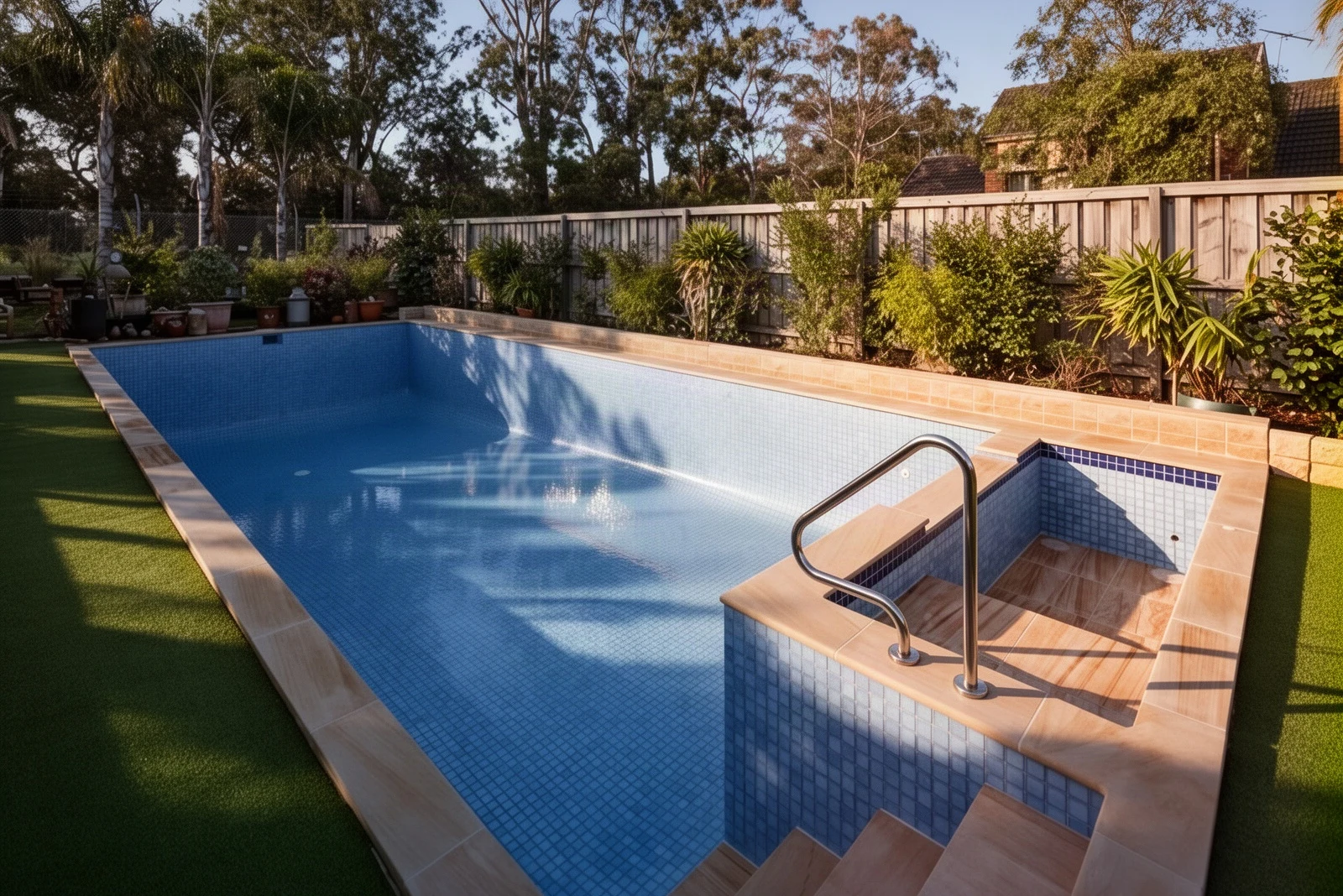
Out of repaints, so retiled, with sandstone paving around it.
Eagle Rock

Grey tile across pool and spa, seen from the air.
La Cañada Flintridge

Collected from customers on the routes we run every week.
Michael A.Verified review
Local Guide · 19 reviews · 6 photos
12 November 2025
Victoria S.Verified review
Local Guide · 73 reviews · 41 photos
12 July 2026
Thomas R.Verified review
Local Guide · 56 reviews · 27 photos
25 February 2026
Greg F.Verified review
16 September 2025
Jonathan K.Verified review
Local Guide · 64 reviews · 33 photos
21 June 2025
David C.Verified review
22 December 2024
Brian N.Verified review
Local Guide · 18 reviews · 5 photos
21 August 2026
Mark H.Verified review
Local Guide · 42 reviews · 18 photos
3 September 2025

Tell us what the pool needs, how big it is and your ZIP — and a price the same day.
Rewards
$100 for every friend you send us, up to two. No code, no form — they call and mention your name.

$100 credit
For every friend who calls and mentions your name
Up to two referrals, $200 in total. The name must come up on the first call. Spend it on any service.
20% off one-time work
For weekly maintenance members
Green-to-clean, acid wash, plaster start-up and repair labor, plus priority on the schedule.
Where we work
Crews leave from Studio City every morning, across the Foothills and the neighborhoods next to them.
Office · Studio City
Brand, model, what the display says and what the water actually tests at — usually enough to name the fault first.
4121 Radford Ave, Ste. #214, Studio City, CA 91604Written for Foothill and Valley homeowners.

A cell run below its range makes less chlorine and wears out sooner.


Missed weeks, a full basket, a filter nobody has opened.
From the truck
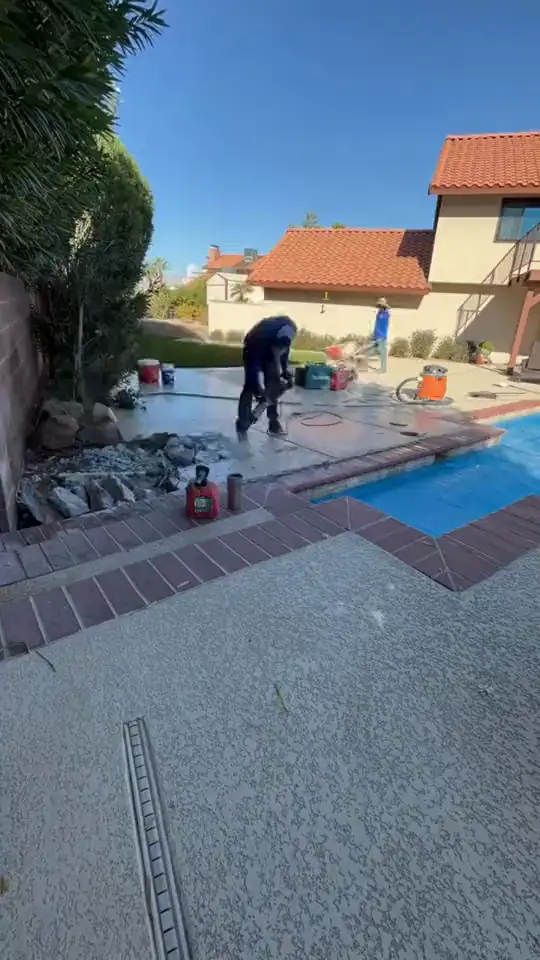
Nothing staged, nothing bought from a stock library — the same work, filmed while it happened.
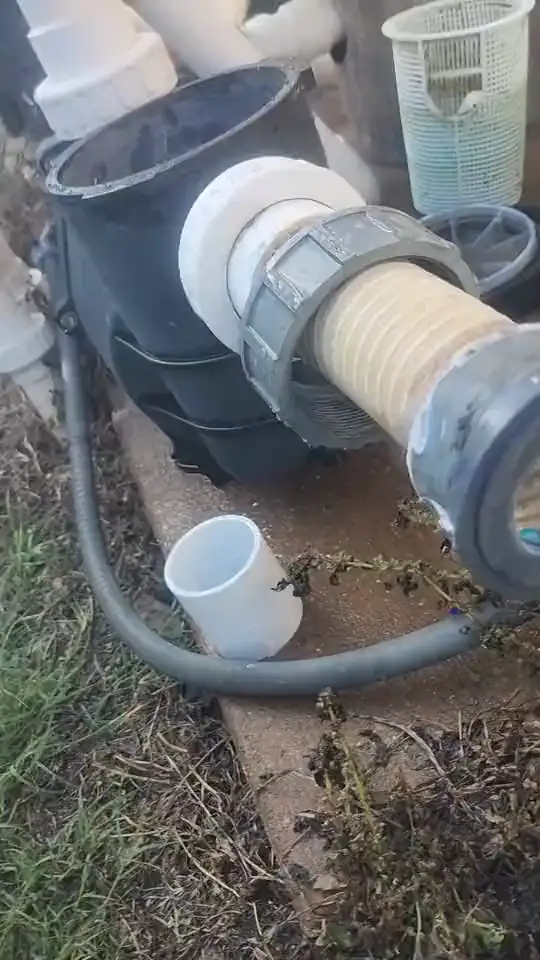

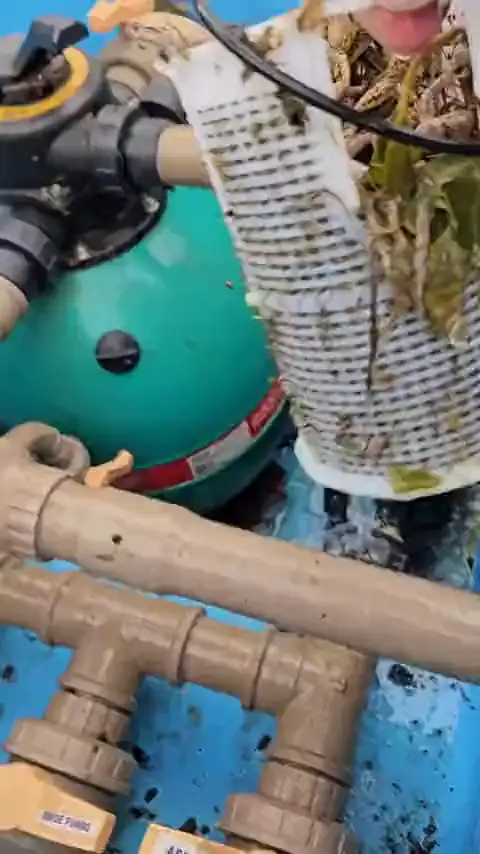
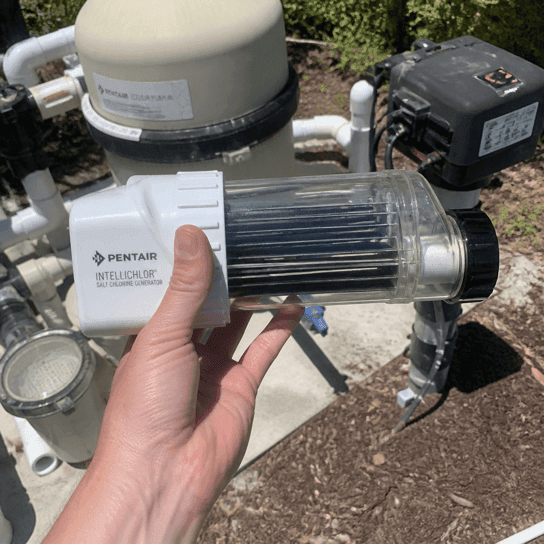
A salt chlorinator — a salt water generator, SWG on most control panels — makes chlorine from salt already dissolved in the water, instead of you carrying it in by the bucket. Salt water chlorination is not a chlorine-free pool and never was: the chlorine is the same molecule, it is simply produced at the pad and consumed continuously rather than dosed twice a week. What you are buying is the errand, not the chemistry.
Fitting is $175–$250 in labor, plus the cell. Labor starts at $175 an hour with a one-hour minimum, and the swap is quoted as a fixed price before work begins. The cell is the expensive half and its price follows pool size and brand, so it is named on the quote rather than guessed at. Before you spend it, confirm the cell is genuinely finished rather than scaled or wrongly reported by the panel.
There is no fixed interval — cells wear by running hours, not by calendar. Published expectations run from one to three years at the pessimistic end to about five for a well-kept cell. What shortens it here is scale from hard top-up water, high output, and pH left to drift.
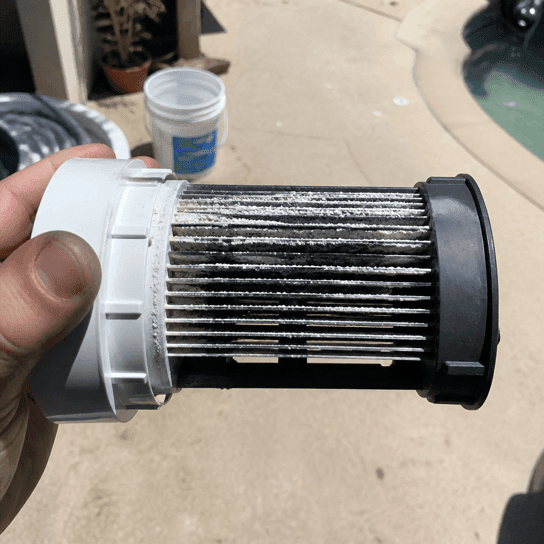
By elimination, in order: clean off scale; confirm salt with a real test rather than the panel; confirm the pump runs long enough and the flow switch works; check cable and connectors. Output still low after all that means the plate coating is spent.
Because most systems do not measure salt directly — they measure how easily current crosses the cell. Anything impeding it reads as low salt: scale, an ageing cell, cold water, a poor connection. Adding salt on that message is how pools end up over-salted, which is its own problem.
The equipment, not the water. You trade buying chlorine for owning a chlorine machine — a cell that wears out, a board that can fail, and a habit of pushing pH up. Salt is also harder on natural stone coping and some metal fittings.
Weekly, like any pool here, but for an extra reason: the visit also protects the cell, because pH and calcium hardness left alone for a fortnight are what scales the plates.
Around Los Angeles replacement cells are commonly quoted at $400 to $900, and a complete salt system installed at $1,500 to $3,500 — market figures rather than ours, because the cell is a part we buy in and its price follows pool size and brand. Ours goes on the quote by model before anything is ordered, on top of the $175–$250 to fit it. One thing worth knowing before you shop: a cell sized under the pool is the cheap purchase that wears out first, because it runs at higher output for longer to keep up.
Three places, in rising order of risk. The cell can come with the job, which is the simple version. Pool supply stores across the Valley stock Hayward, Pentair and Jandy cells off the shelf, and most will test the old one before selling you a new one. Online is cheapest and it is where the aftermarket copies live — they fit the union and they read normally on the panel, but the plate coating is the entire product and it is the part a copy saves money on. Whatever the source, match the model rather than the shape: an IntelliChlor IC40 and an IC20 look identical and are sized for different pools.
Cleaning, recovery, repair and renovation across Los Angeles.
Family owned, based in Studio City
Brand, model, what the display says and what the water actually tests at — usually enough to name which of the three faults you have.