
Weekly maintenance
Full chemical panel including calcium hardness and salt, plus net, vacuum, tile and wall brushing, baskets, and every piece of equipment inspected.
Flats in full sun, canyon lots under oaks — and one hard water supply feeding both.

Licensed, insured and family-owned


Most calls start here
Four things, in the order most owners meet them.
A gray-white band along the tile
Calcium scale sets at the waterline, where evaporation is fastest. Brushing keeps it from spreading; once hardened it will not come off that way.
Acid washSalt cells that quietly stop producing
Calcium plates onto the cell blades, output falls, and the controller reports low salt. Adding salt to a scaled cell fixes nothing.
Salt system repairCalcium hardness that only ever climbs
No chemical lowers it. The only lever is dilution, and the refill is the same hard water — which is why draining should be a decision, not a reflex.
Heaters and filters furring up inside
Hard water plus heat leaves deposits in the heat exchanger, flow drops, and the heater trips its high limit. It looks like failure and is usually scale.
Heater repairWhy Glendale is different
Down on the flats around Adams Hill and Brand, pools sit in level yards in full sun with the equipment on a side slab. Up in Chevy Chase Canyon the ground tilts, pads end up below the pool on longer pipe runs, and oaks hang over the water.
The two ends of 91206 need different visits: one is a sun and chemistry problem, the other debris and plumbing.
What every Glendale pool has in common is what comes out of the hose. The fill water is hard, and a pool concentrates it — you see the result at the tile line first and inside the equipment second.
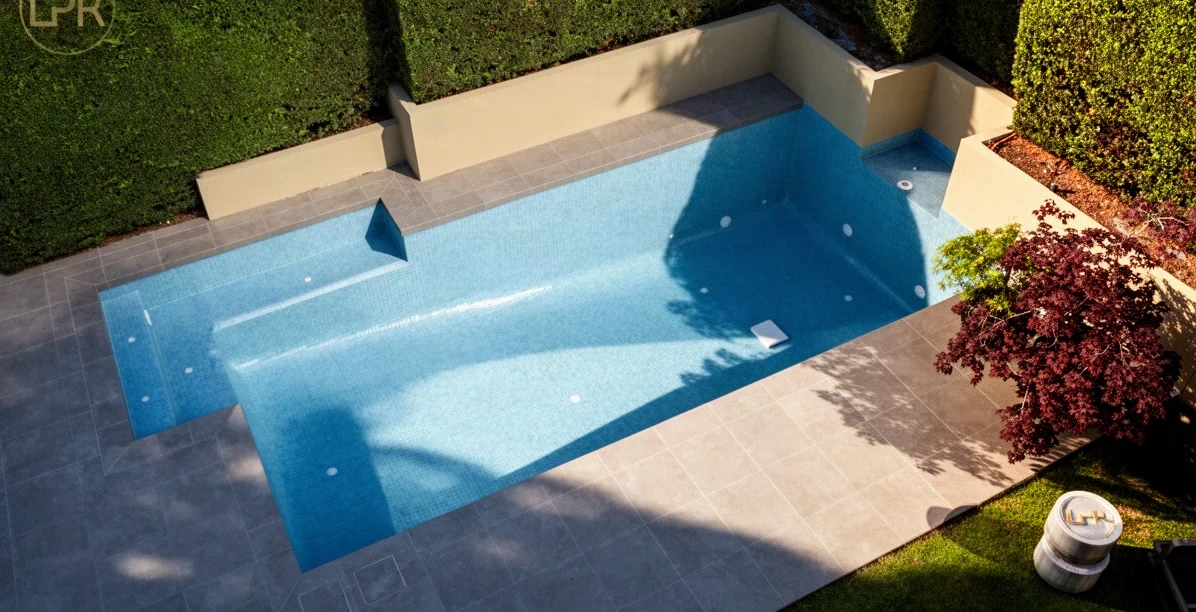 After
After Before
What we do in Glendale
Calcium hardness and salt are the two readings that matter most here.
Full chemical panel including calcium hardness and salt, plus net, vacuum, tile and wall brushing, baskets, and every piece of equipment inspected.

For scale and staining that has gone past the tile onto the plaster. Drained and taken back at 50/50, provided the finish has half an inch to spare.

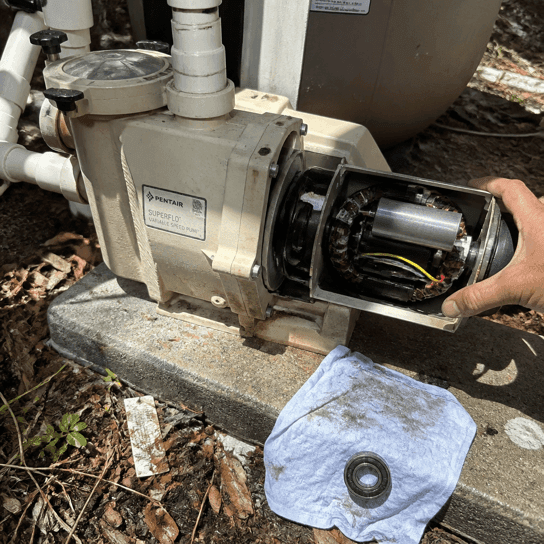
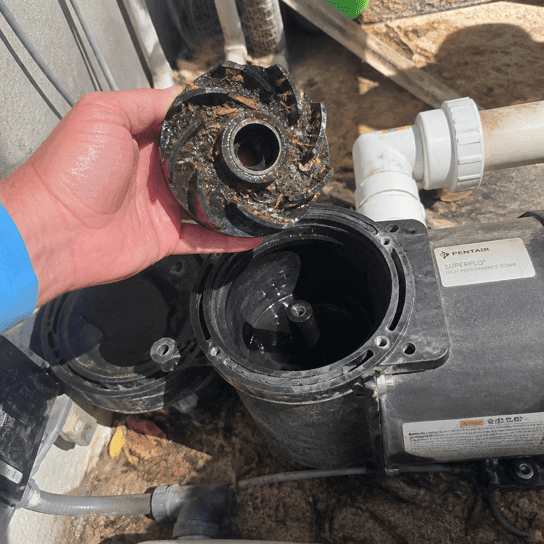
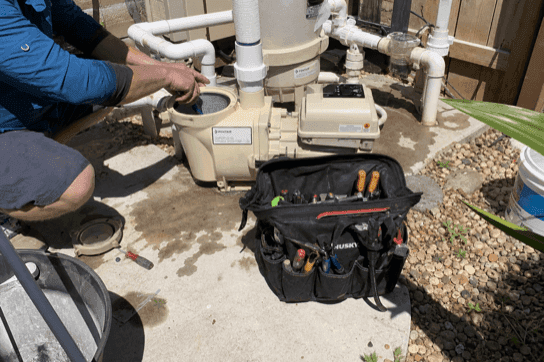
Salt generators, heaters, pumps, filters, plumbing, automation and lights. On the canyon lots the fault is often in the run between pool and pad.

Common on the shaded Verdugo lots and after a salt cell has been failing unnoticed. No draining, and back in the water in about two days.

Where hard water matters most, because the fill decides the first month. Calcium hardness held at 200–400 ppm, and no salt for twenty-eight days.
Pricing
Volume decides chemical demand, so it decides the price. Typical homes land between $179 and $249 a month. Chemicals included, no minimum contract.


Prices as of August 2026, for a pool in normal condition.
One-time work
Quoted on the job, because nobody can price a green pool from a web form.
Worth mentioning when you call
Glendale is large enough, and split enough by terrain, that the question is which day we are on your street.
The crew
Four of us. The same faces every week, not whoever was free that morning.


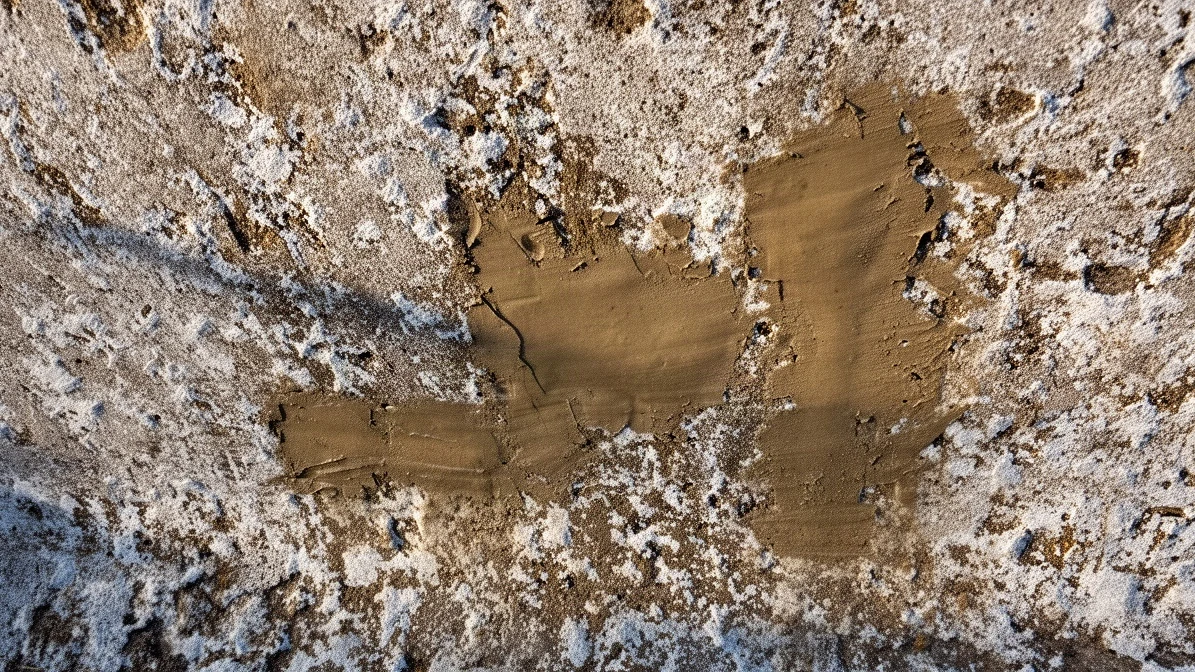
A Glendale job, start to finish
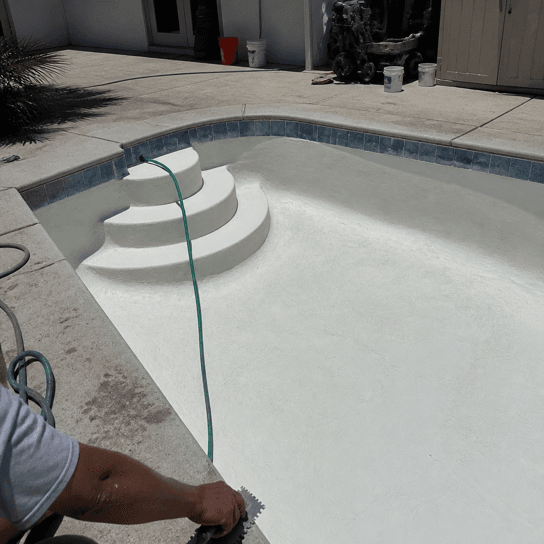
A concrete pool whose reinforcement had started to corrode: the steel was treated and the section rebuilt before a single tile went on.
A fully tiled interior over a shell that was repaired first. Corroding reinforcement expands to several times its own volume, and a new surface over it buys about four years.
Nearby, and on the same routes
Burbank, Eagle Rock and La Crescenta share the days that serve Glendale.
Hollow render and rust cut out, then the whole shell tiled.
Glendale
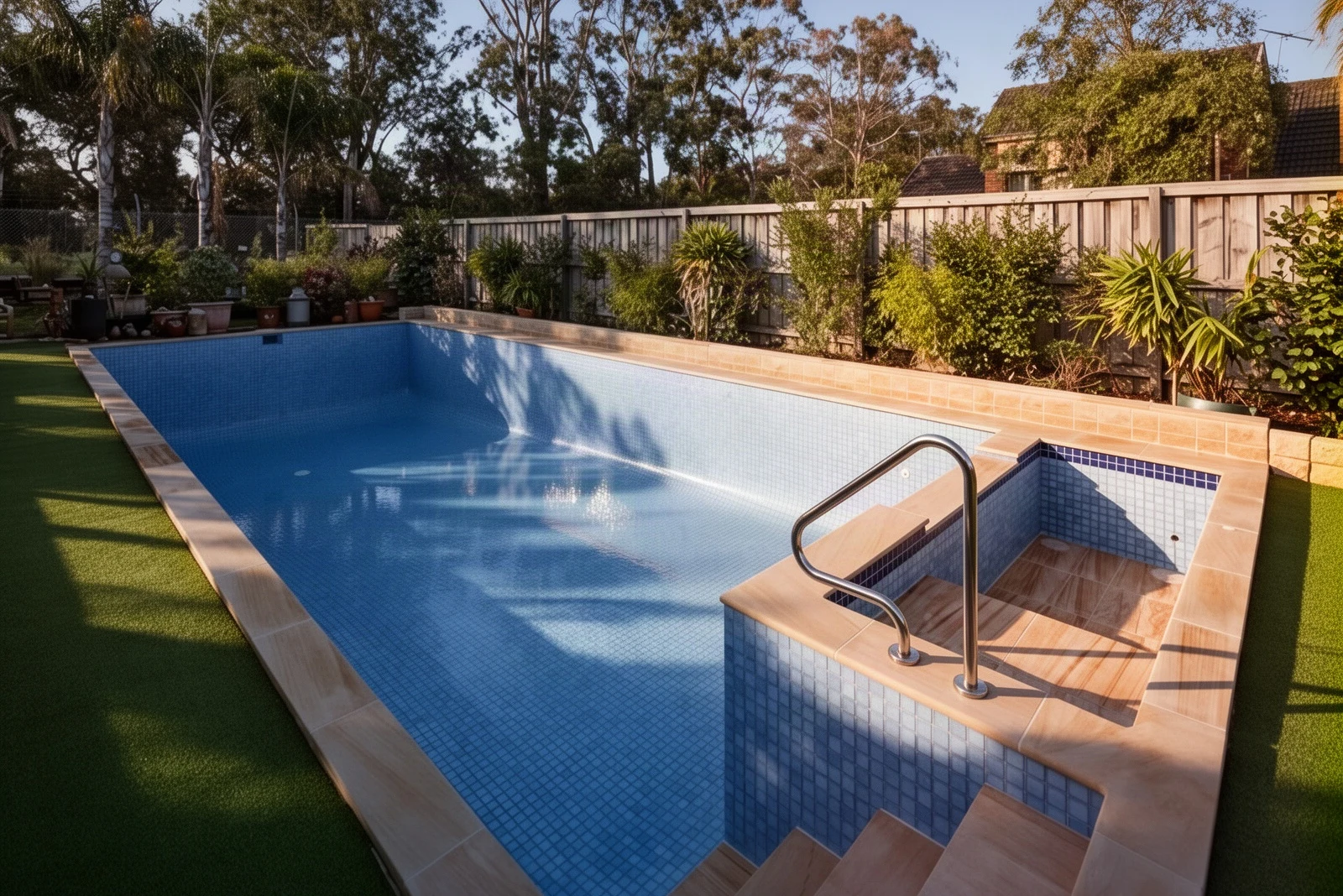
Out of repaints, so retiled, with sandstone paving around it.
Eagle Rock

Grey tile across pool and spa, seen from the air.
La Cañada Flintridge

Step by step
The repairs underneath decide how long a finish lasts.
Daniel S.
18 July 2025
The biggest difference is communication. Our old pool guy would disappear for days. Emily in the office always responds and keeps us updated if there is an issue.
Carlos M.
Local Guide · 48 reviews · 22 photos
4 May 2025
Robert E.
8 March 2025
Sandra T.
2 reviews
17 April 2026
Raymond K.
Local Guide · 52 reviews · 26 photos
20 November 2025
Mark H.
Local Guide · 42 reviews · 18 photos
3 September 2025

Linda R.
4 reviews
25 May 2026
Kevin B.
15 December 2025
Want a real number?
Cross streets, pool size, spa, tree cover — enough for a real number and a Glendale service day.
Who picks up
Tell us what the pool needs, how big it is and your ZIP — and a price the same day.
Rewards
$100 for every friend you send us, up to two. No code, no form — they call and mention your name.

$100 credit
For every friend who calls and mentions your name
Up to two referrals, $200 in total. The name must come up on the first call. Spend it on any service.
20% off one-time work
For weekly maintenance members
Green-to-clean, acid wash, plaster start-up and repair labor, plus priority on the schedule.
Where we work
Crews leave from Studio City every morning. Open any area for what is different there.

Send your ZIP or cross streets. We come back the same day with the day we would be there — and what weekly service would cost on your pool.
Or call (818) 740-6099
Send the address and we will check it against the routes rather than the city line.
Written for Foothill and Valley homeowners.
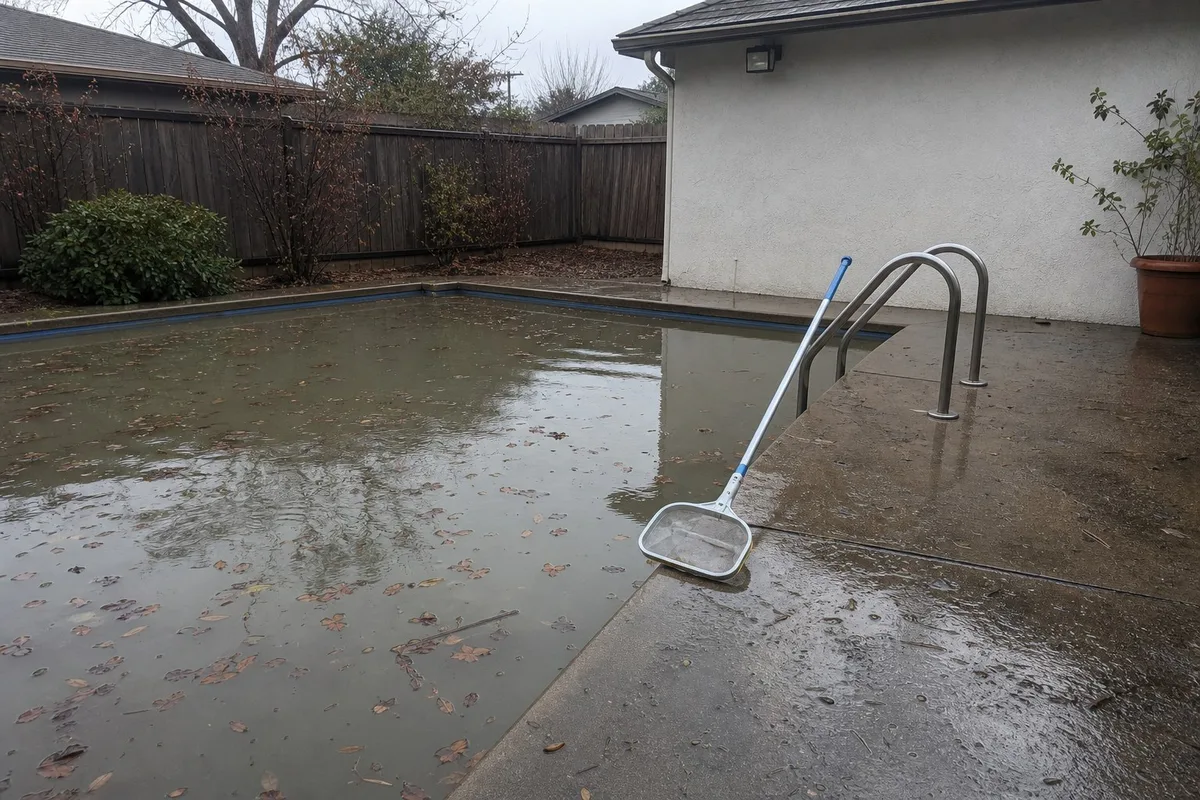
The order to work in after a storm, and where the overflow is allowed to go.
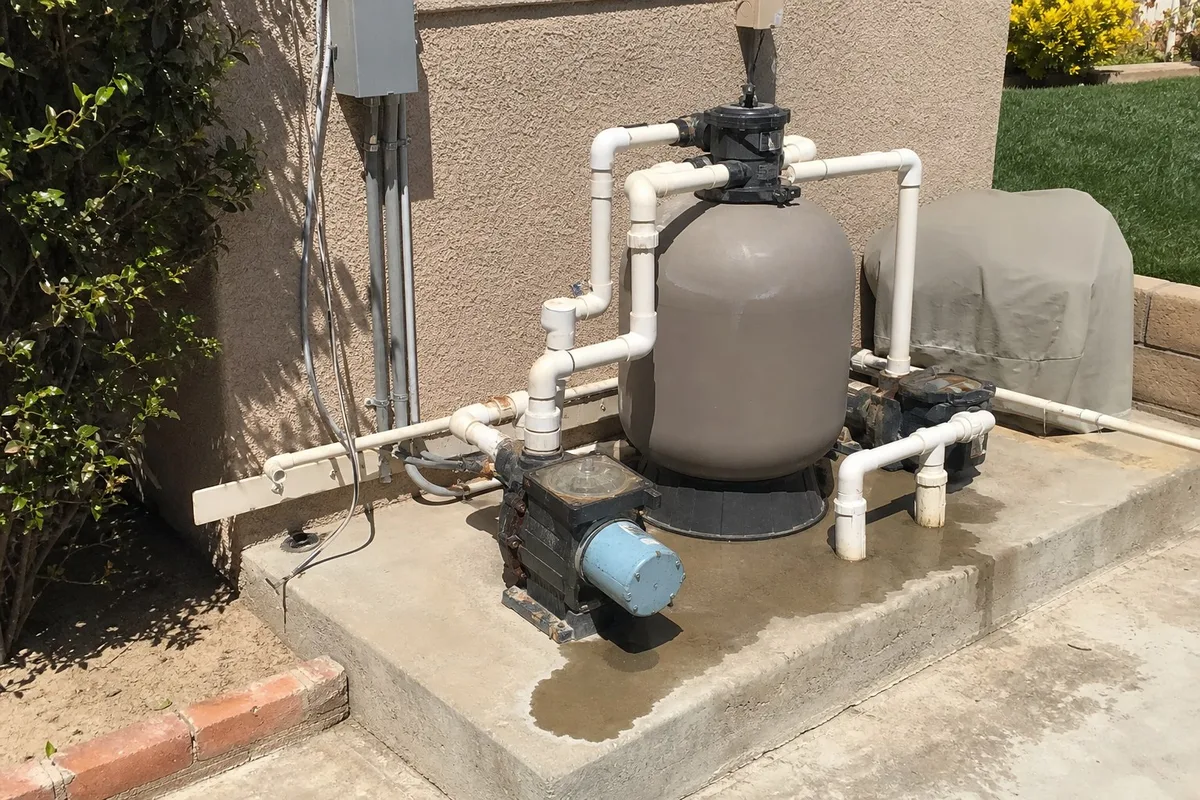
Equipment, labour, and the California rule that picks the pump for you.
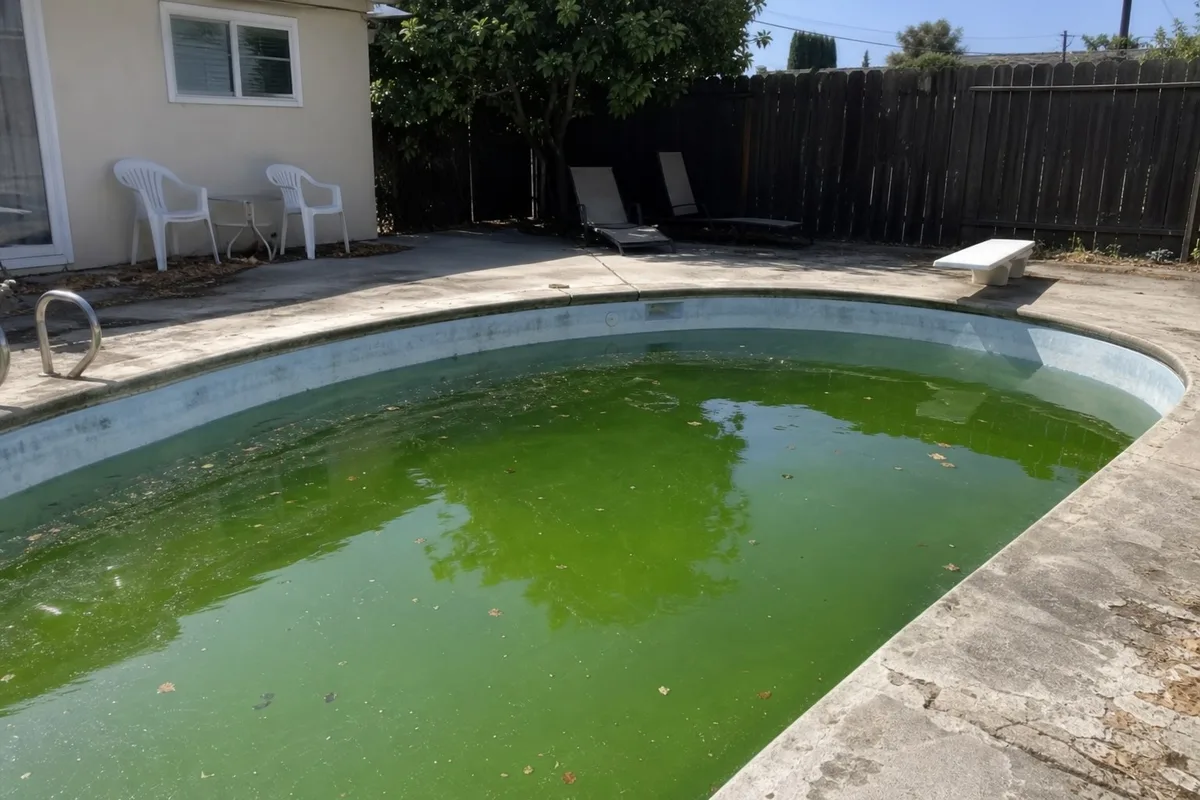
Shock doses by water colour, how long it takes, and why you should not drain.
Not stock footage
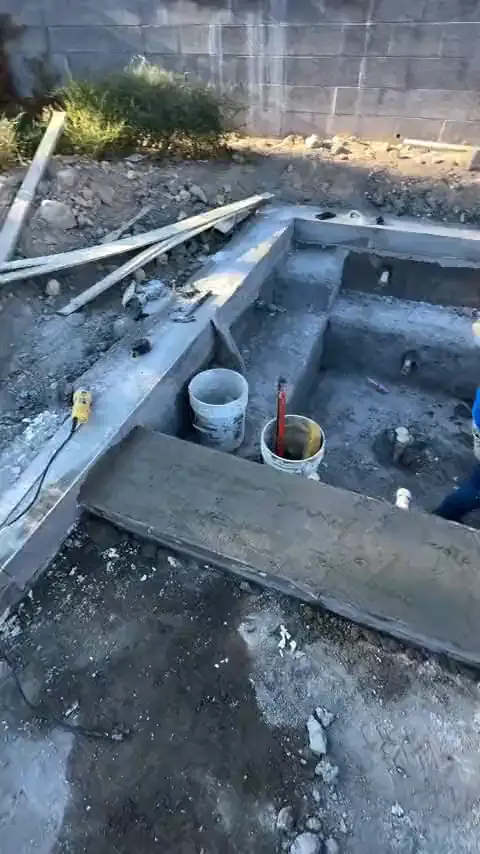
Filmed on the Glendale route and the streets next to it. Nothing staged, nothing bought from a stock library.

Because the fill water keeps supplying calcium and evaporation keeps concentrating it at the surface. Cleaning removes the deposit; it does not change the water. Holding pH and alkalinity in range slows the return, and weekly brushing along the waterline does more than any product sold for the job.
A cell coated in calcium produces less chlorine, and many controllers read that as low salt. Adding more then leaves the water over-salted with the same weak output. The cell needs inspecting and cleaning, or replacing if it has reached the end of its life. That is a repair, not a chemical adjustment.
Partly. Dilution is the only way to lower calcium hardness, but a full drain is not automatically how to do it: an empty shell carries real risk, the refill is hard water again, and the number starts climbing from day one. Worth doing when the readings justify it, and worth planning around the plaster.
Less in chemicals, more in equipment. A salt pool makes its own chlorine, but the cell is a wear part with a life measured in years, and hard water shortens it. Budget for the cell rather than for chlorine.
Weekly service starts at $159 a month for a pool up to 15,000 gallons and runs to $249 a month for pools over 40,000, with standard chemicals included. Most customers pay between $179 and $249. Glendale is priced the same as everywhere else on our routes — the address does not change the number, the pool does. One-time work is quoted on the job: green to clean from $349, acid wash from $749, equipment repair at $175 an hour.
Cleaning, recovery, repair and renovation across Los Angeles.
Nearby, and on the same routes
Gallons, salt or chlorine, how the tile line looks, and whether the pad sits above or below the pool.


