
Pool tiling
Rust repair and full tiling
Hollow render and rust cut out, then the whole shell tiled.
Glendale
Repair
Diagnosis first. If the part can be saved we repair it. If it cannot, we say so rather than repairing something that fails again next season.

Licensed, insured and family-owned


The second step is where the money is
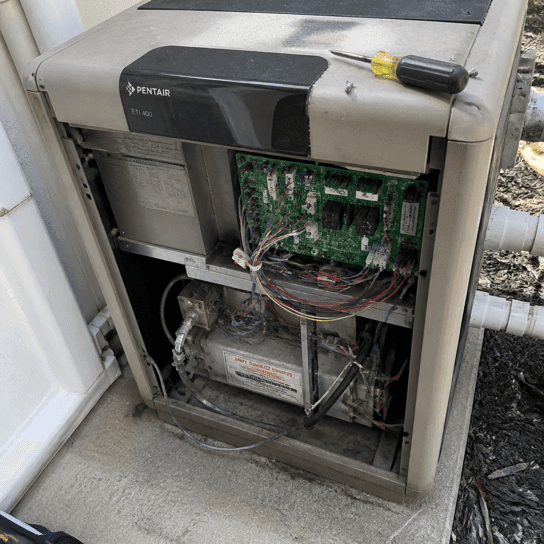
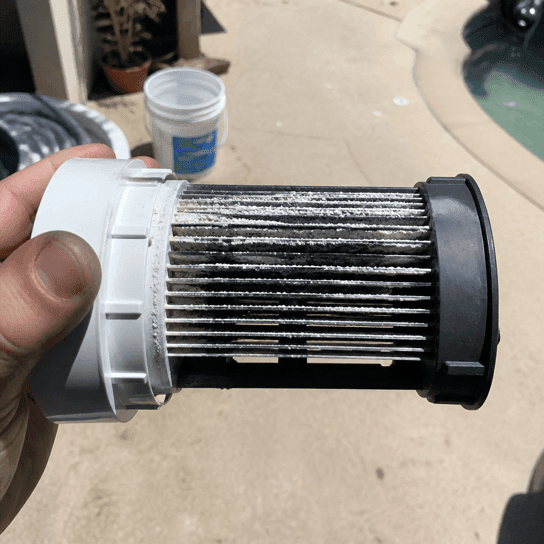
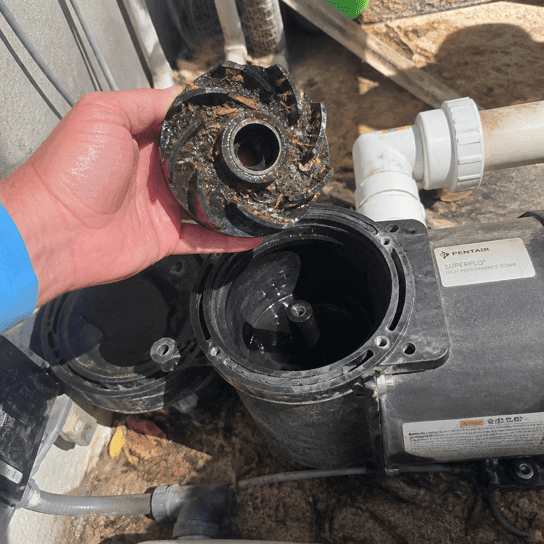
We find what failed and, separately, what made it fail — a pump that seized because the filter was never cleaned, a heater locking out because flow is low. Labor starts at $175 an hour with a one-hour minimum, and common repairs are quoted as a fixed price before work begins. The rates are published below.
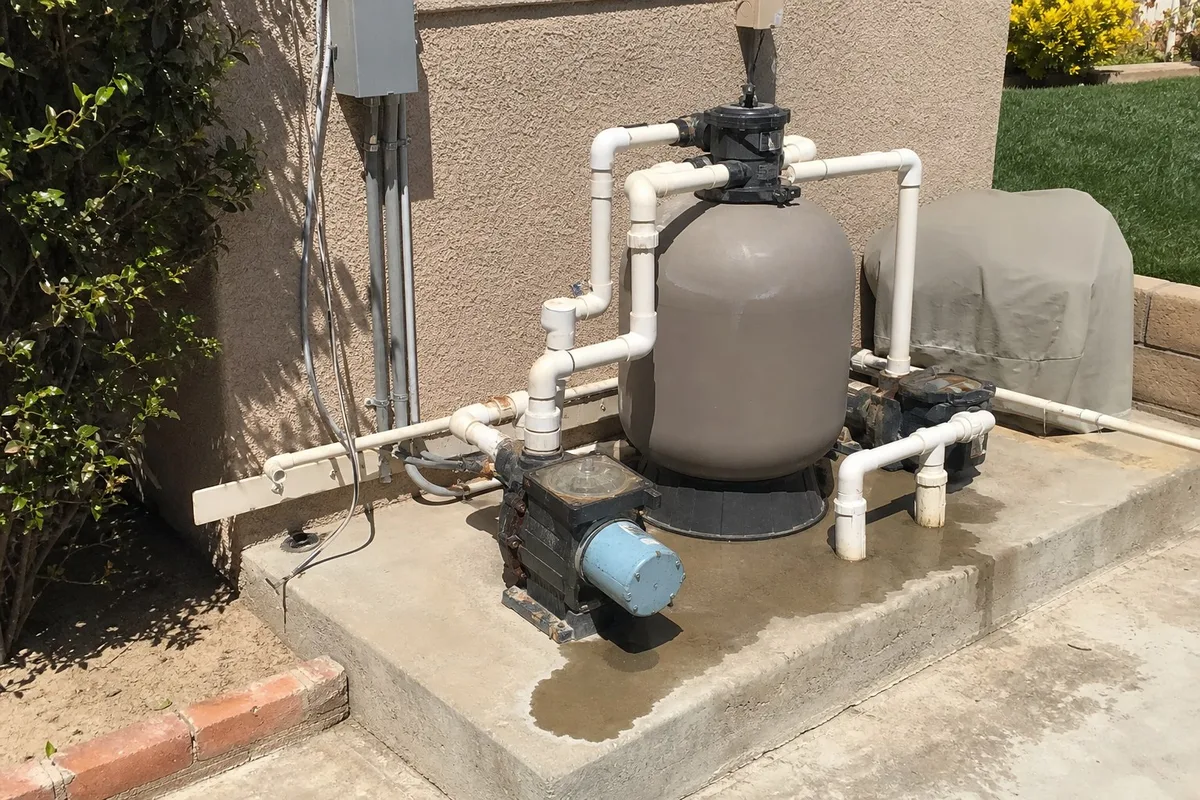
You can buy compatible equipment yourself and have us install it, or have us specify, supply and fit it. We usually suggest the second: it is the only version where we can answer for how the new unit talks to everything already on the pad. Equipment we install.
Repair is one of our one-time services, alongside green to clean, acid wash and new plaster start-up. Most failures are visible weeks before you notice them, which is the real argument for a weekly route — what the weekly inspection covers.
What a repair costs
A shaft seal and a heater control board are not the same shopping trip, so the part goes on the quote instead of into an average.

Labor only; the part is added on the quote. Larger repairs always get a written quote before work starts. Weekly maintenance members take 20% off repair labor.
Start with the thing that stopped
How each one fails, and what the symptoms mean before anyone comes out.


Also repaired, without a page of its own
The crew
Four of us. The same faces every week, not whoever was free that morning.


The same crews run the routes
Hollow render and rust cut out, then the whole shell tiled.
Glendale
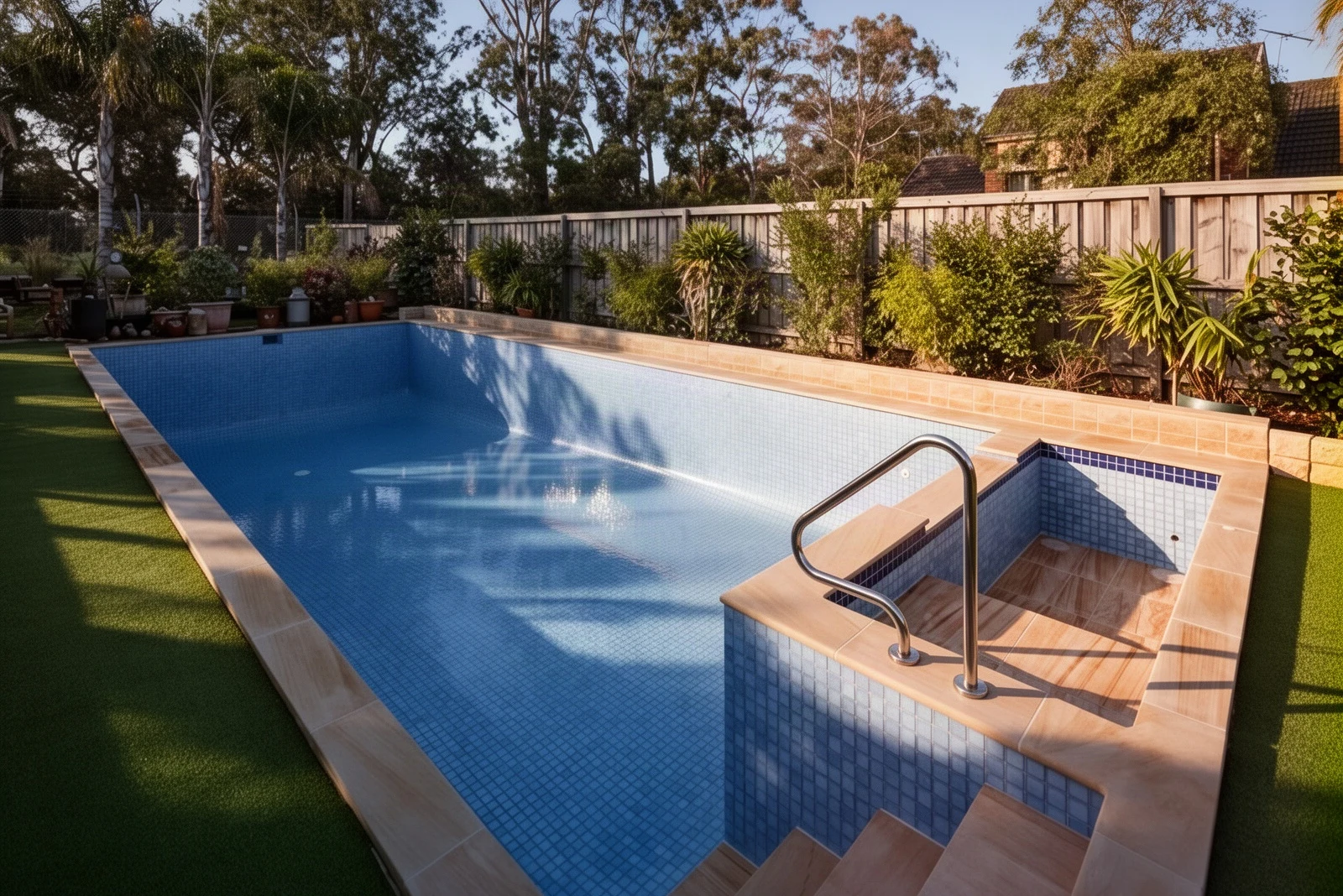
Out of repaints, so retiled, with sandstone paving around it.
Eagle Rock

Grey tile across pool and spa, seen from the air.
La Cañada Flintridge

Collected from customers on the routes we run every week.
Kevin B.Verified review
15 December 2025
Thomas W.Verified review
Local Guide · 27 reviews · 9 photos
10 February 2025
Rachel M.Verified review
17 October 2025
We thought we needed a completely new pool system. Turns out it was just a few issues with the pump and filter. They saved us a lot of money by fixing what actually needed fixing.
Carlos M.Verified review
Local Guide · 48 reviews · 22 photos
4 May 2025
Sandra K.Verified review
10 reviews
13 June 2026
James L.Verified review
7 reviews
26 November 2025
Victoria S.Verified review
Local Guide · 73 reviews · 41 photos
12 July 2026
Robert E.Verified review
8 March 2025
Tell us what the pool needs, how big it is and your ZIP — and a price the same day.
Rewards
$100 for every friend you send us, up to two. No code, no form — they call and mention your name.

$100 credit
For every friend who calls and mentions your name
Up to two referrals, $200 in total. The name must come up on the first call. Spend it on any service.
20% off one-time work
For weekly maintenance members
Green-to-clean, acid wash, plaster start-up and repair labor, plus priority on the schedule.
Where we work
Routes run through 35 communities across the Foothills and the Los Angeles neighborhoods next to them.
Office · Studio City
Tell us the brand and model on the pad. If it is something we cannot work on, we will say so straight away.
4121 Radford Ave, Ste. #214, Studio City, CA 91604Written for Foothill and Valley homeowners.
Equipment, labour, and the California rule that picks the pump for you.

The quiet signals that a pump or heater is on its way out.
From the truck
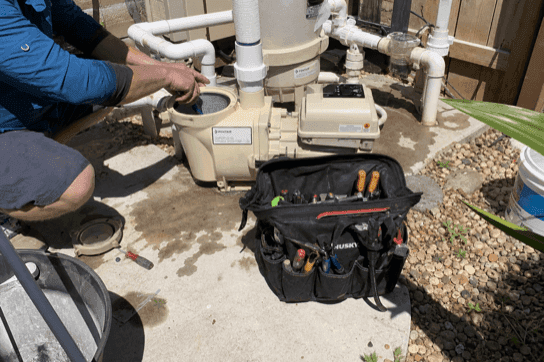
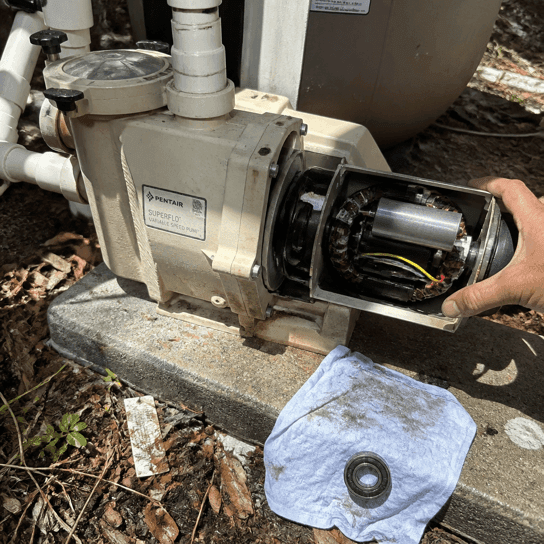
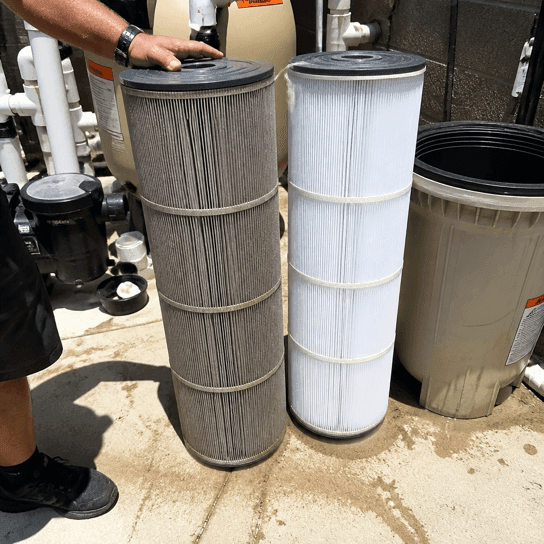
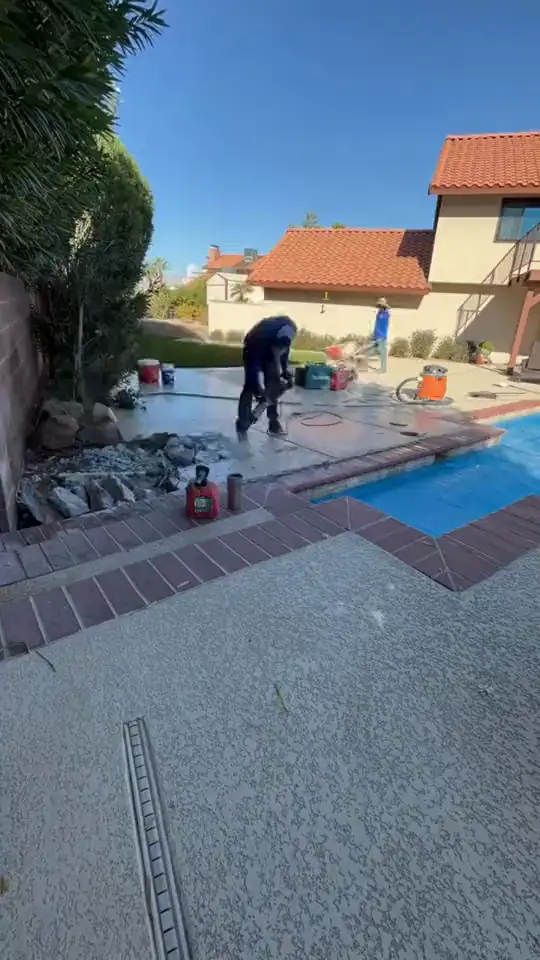
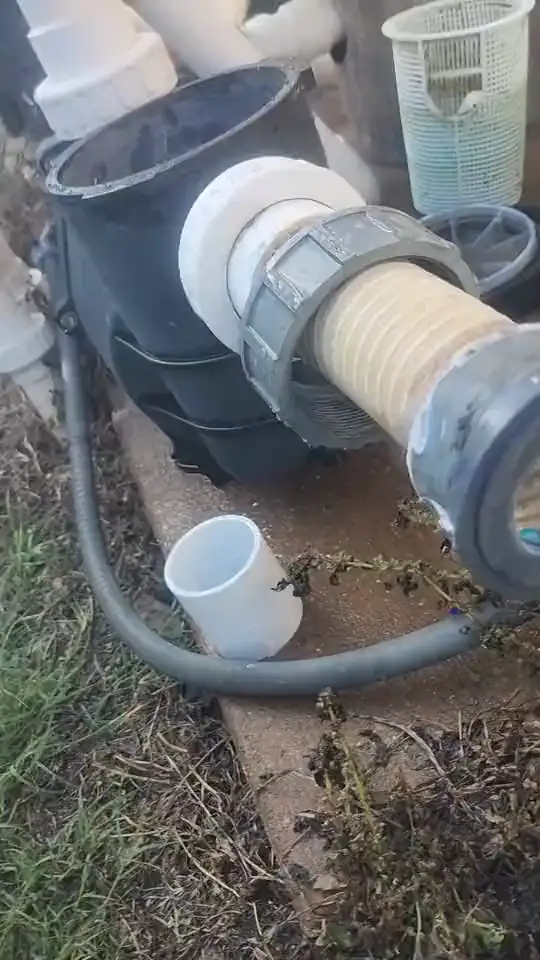
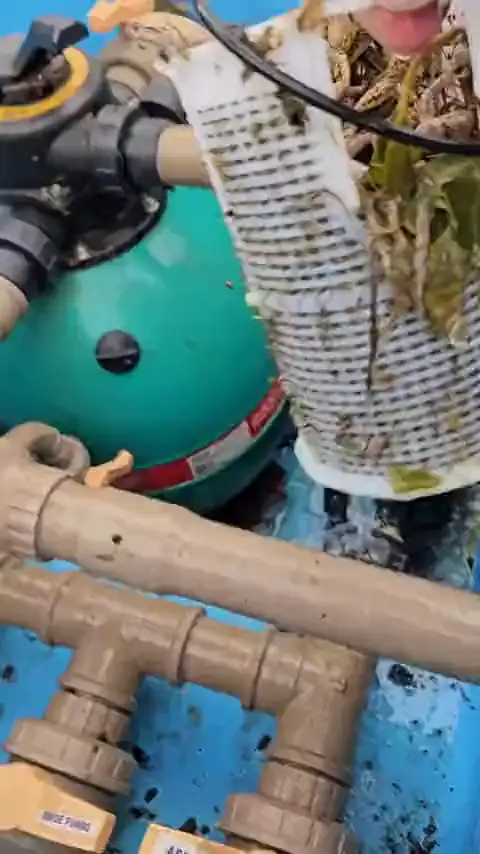
Nothing staged, nothing bought from a stock library — the same work, filmed while it happened.

There is no single average, because pool repair covers a shaft seal and a heater control board in the same phrase. What we publish is the labor: from $175 an hour with a one-hour minimum, with common jobs quoted as a fixed price before work begins — a pump seal, a salt cell or a light bulb at $175–$250 plus the part, a whole pump at $350–$475, a typical heater repair at $300–$650. Members take 20% off the labor.
Usually only for sudden accidental damage from a covered peril, and usually not for wear, corrosion, scale or anything a policy classifies as lack of maintenance — which is what most equipment failures are. Some policies treat pool equipment as part of the dwelling and some as an other structure, which changes both the limit and the deductible. Read your own policy or ask your carrier.
Repair is cheaper on the day, almost always. It stops being cheaper when the unit is near the end of its life, when parts add up to a large share of a new unit, when the part is discontinued, or when a replacement is much cheaper to run — the usual argument on a single-speed pump motor.
No. Equipment repair is available on its own, as a one-time service. Weekly members get 20% off it and priority scheduling, which matters more in the week a heater dies in October than it does in the abstract.
Pentair and Jandy: Pentair IntelliFlo3, MasterTemp, IntelliChlor, Clean & Clear Plus and EasyTouch, and Jandy ePump, JXiQ, AquaPure, CL Series and iAquaLink. If what is on your pad is something else, say so when you get in touch and we will tell you straight away whether we can work on it.
Nobody should replace all of it at once unless a remodel forces it: a pump, a filter, a heater and a salt cell wear out years apart, and pulling a working unit out early buys nothing back. A whole pad done in one go is a written quote after we have seen the plumbing and the electrical supply, because the equipment is the larger half and the pipework nobody can price off a photograph is the half that surprises people. Our labor is published either way — from $175 an hour with a one-hour minimum, $350–$475 to fit a pump — and single equipment repairs around Los Angeles are commonly advertised at $150 to $1,000, which is the spread you are choosing between.
Circulation, cleaning and chemistry — and that is the order to look for a fault in, too. Water that is not moving makes every other problem worse, which is why a heater that will not fire, a cloudy pool and a salt cell reporting low output all start at the pump and the filter rather than at a bottle of anything. Equipment repair is the first C under another name; the second and third are what a weekly visit is for.
Not on a family home, in the ordinary case — a backyard pool is a personal expense and so are its repairs. The exceptions are narrow and have to be documented: a pool at a rental property is a business asset, and a pool built on a doctor's written prescription for a medical condition can count as a medical expense, usually only for the part of the cost above what it adds to the value of the house. Service and repair follow whatever the pool itself is. We repair pools rather than file returns, so put it to a CPA before you count on any of it.
Cleaning, recovery, repair and renovation across Los Angeles.
Family owned, based in Studio City
The brand, the model, what the display says, and what the pool is doing — usually enough to name the fault before anyone drives out.