


Pool tiling
Rust repair and full tiling
Hollow render and rust cut out, then the whole shell tiled.
Glendale
Equipment service
The gauge decides, not the calendar. Clean it at 8 to 10 psi above its clean reading. Weak flow, haze and a heater cutting out are the late symptoms.

Licensed, insured and family-owned


Equipment service
Cloudy water has four common causes, and a loaded filter is one. Low pressure with poor flow is a pump problem instead.
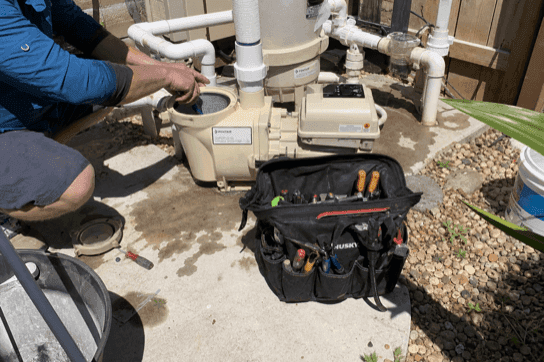
Standard equipment diagnosis is free inside our service area. What we repair on the pad, and the filters we install.
On a pool we already look after, two deep cleans a year sit inside the monthly price: what weekly service includes, and both columns side by side.
Pricing
Two situations: a pool already on weekly service, and a pool that is not.

Repairs are not cleans: diagnosis is free in our service area, repair labor starts at $175 an hour, and members take 20% off.
One-time work
Quoted on the job, because nobody can price a green pool from a web form.
Not maintenance
Washing does not address any of these.
The crew
Four of us. The same faces every week, not whoever was free that morning.


The same crews clean the filters
Hollow render and rust cut out, then the whole shell tiled.
Glendale
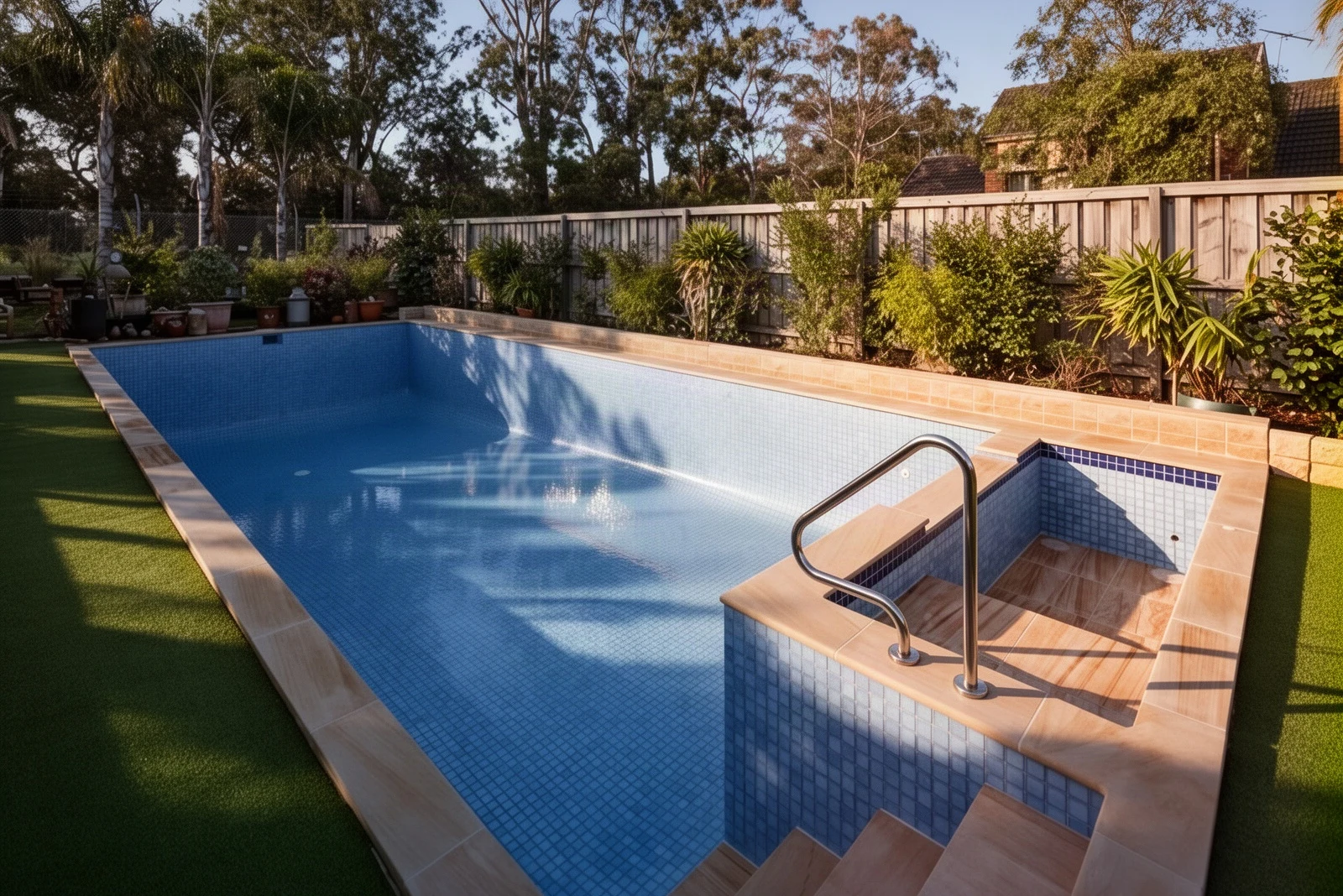
Out of repaints, so retiled, with sandstone paving around it.
Eagle Rock

Grey tile across pool and spa, seen from the air.
La Cañada Flintridge

Collected from customers on the routes we run every week.
Rachel M.Verified review
17 October 2025
We thought we needed a completely new pool system. Turns out it was just a few issues with the pump and filter. They saved us a lot of money by fixing what actually needed fixing.
Sandra K.Verified review
10 reviews
13 June 2026
Rachel G.Verified review
3 March 2026
Sandra T.Verified review
2 reviews
17 April 2026
Mark H.Verified review
Local Guide · 42 reviews · 18 photos
3 September 2025

Linda R.Verified review
4 reviews
25 May 2026
Kevin B.Verified review
15 December 2025
Jason T.Verified review
25 February 2026
Great company. Always on time, pool looks amazing and communication is easy. Highly recommend.
Tell us what the pool needs, how big it is and your ZIP — and a price the same day.
Rewards
$100 for every friend you send us, up to two. No code, no form — they call and mention your name.

$100 credit
For every friend who calls and mentions your name
Up to two referrals, $200 in total. The name must come up on the first call. Spend it on any service.
20% off one-time work
For weekly maintenance members
Green-to-clean, acid wash, plaster start-up and repair labor, plus priority on the schedule.
Where we work
Crews leave from Studio City every morning, across the Foothills and the neighborhoods next to them.
Office · Studio City
Tell us the gauge reading and the filter type, and we will price the clean before we come out.
4121 Radford Ave, Ste. #214, Studio City, CA 91604Written for Foothill and Valley homeowners.
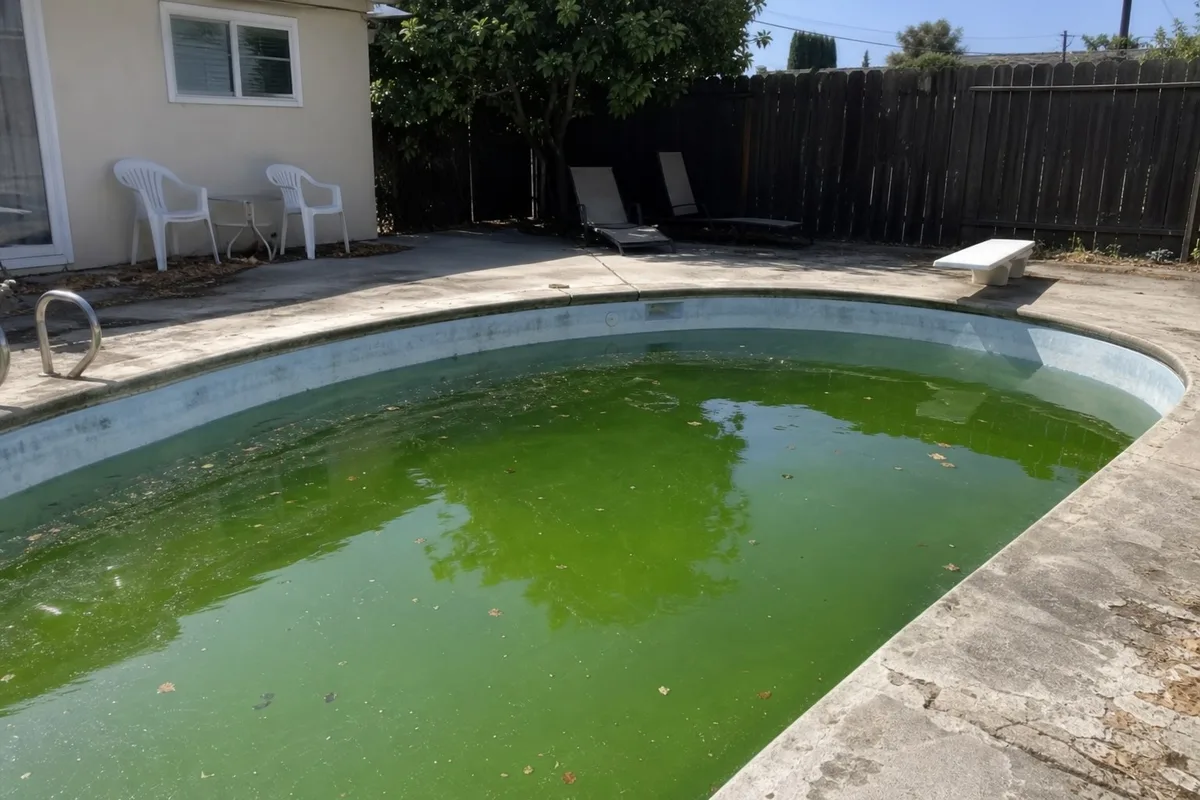
Shock doses by water colour, how long it takes, and why you should not drain.
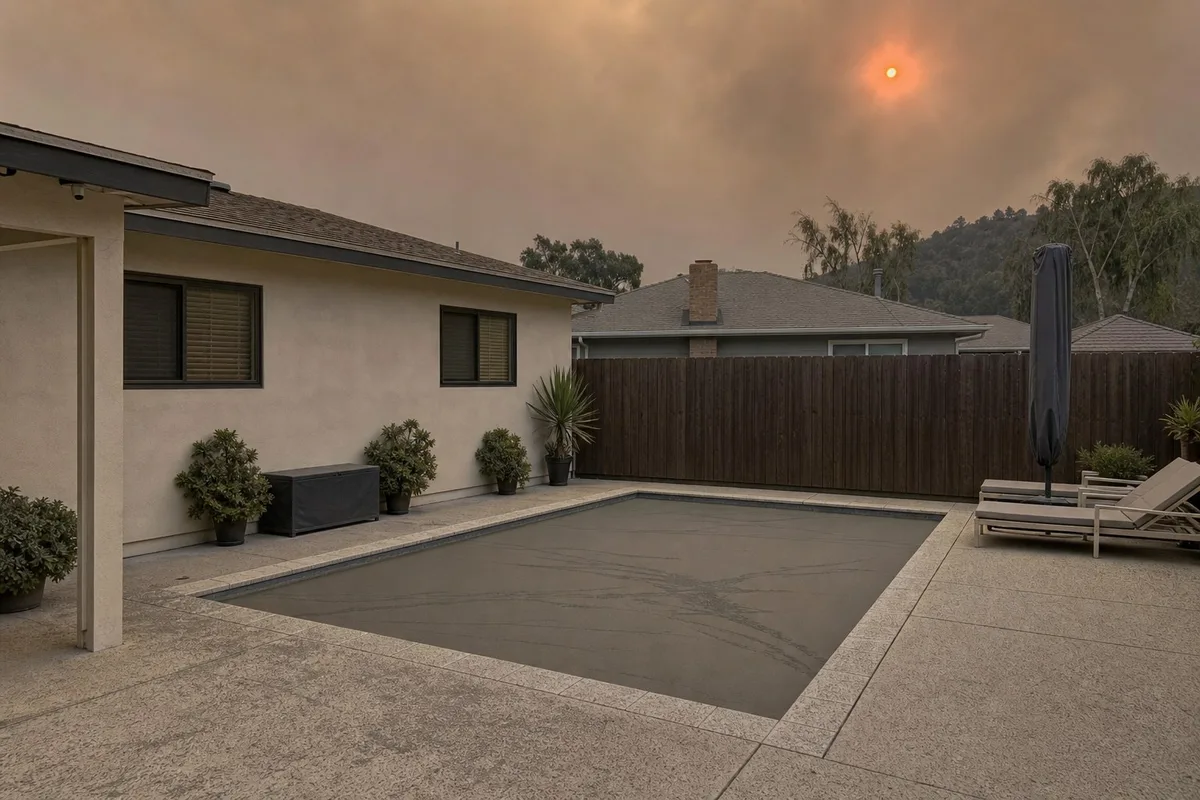
Ash is alkaline and carries phosphate. The order to work in once the air clears.

From the truck
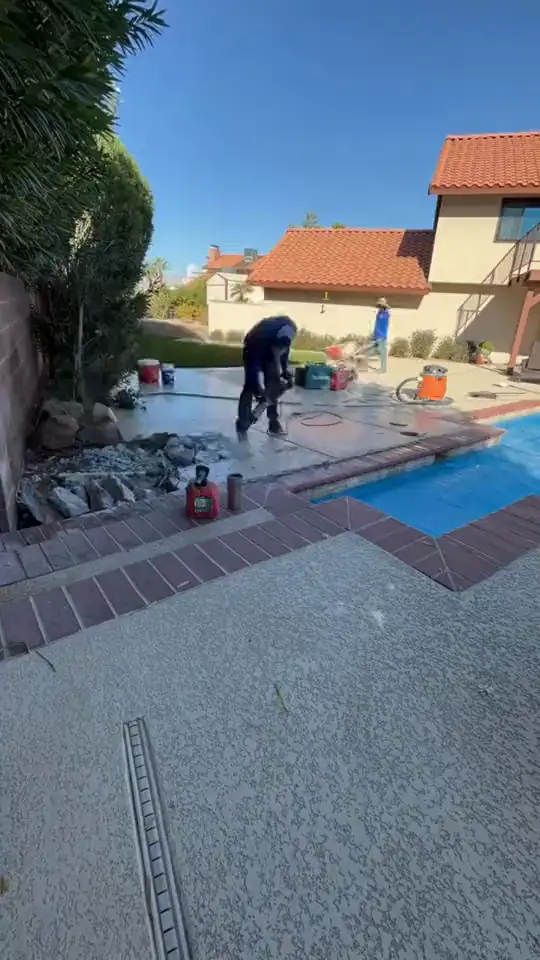
Nothing staged, nothing bought from a stock library — the same work, filmed while it happened.
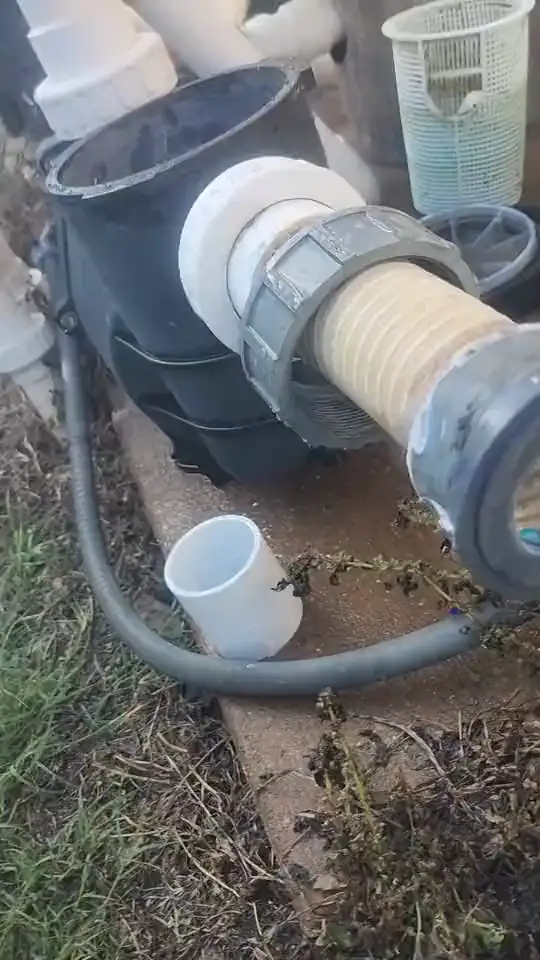

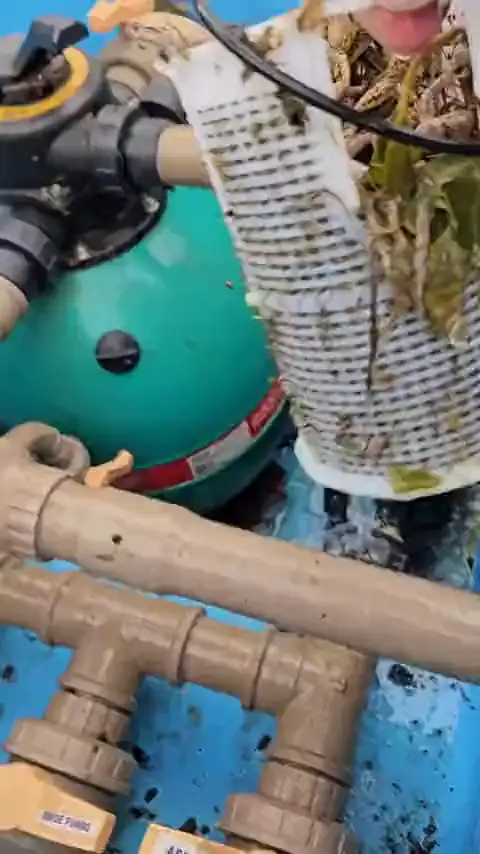
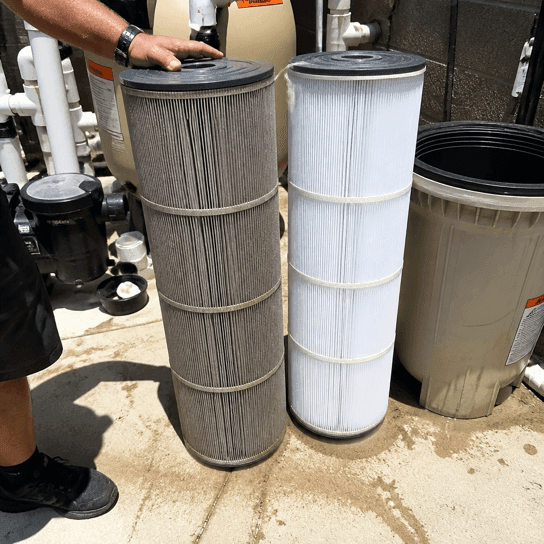
All three, and each is a different job. A cartridge comes out, gets stripped down and soaked overnight. A DE filter has its grids pulled and washed, the manifold checked while the tank is open, and fresh diatomaceous earth charged back in through the skimmer — skip the recharge and the grids blind off within a week. A sand filter is backwashed in service, and every five to seven years the sand itself is replaced: the grains round off with age and stop catching anything smaller than gravel. Hayward, Pentair and Jandy tanks all open the same way; the clamp and the tank O-ring are what differ, and the O-ring is what floods the pad when it is reused one time too many.
A hose first, to move the loose debris, then an overnight soak in a proper filter cleaning solution: a degreaser for sunscreen, body oils and pollen, and an acid rinse afterwards only if the water is hard enough to have left calcium in the pleats. Dish soap is the usual home remedy and the wrong one — it rinses badly and the pool foams for weeks. Acid on its own is worse: it sets the oils into the fabric instead of removing them.
On the gauge, not on a schedule: at roughly 8 to 10 psi above the clean reading. In practice that is three to four cartridge cleans a year on a typical Los Angeles pool, and every six to eight weeks under heavy Foothill tree cover.
The gauge is the honest answer. Weak jets, a slowed cleaner, haze and a heater cutting out are late symptoms. One exception: if pressure is low and flow is poor too, the restriction sits before the filter and cleaning it changes nothing.
Yes, and on a cartridge filter most owners should. One rule outranks the rest: cut power to the pump and open the air relief valve until the tank is depressurised before touching the clamp band. Not DIY: DE or sand in the pool, or high pressure right after a clean.
Cartridges are made to be cleaned and reused, typically for two to five years, and DE grids last until they are physically damaged. Sand is different: the grains wear round and stop catching fine debris. A cartridge is finished when its pressure after a clean no longer returns to the old baseline.
Acid is for chalky calcium scale only, and never before degreasing: on a greasy cartridge it sets the oils into the fabric. When called for, use it well diluted, always acid into water, as a dip of minutes rather than an overnight soak. Never let it meet chlorine, and check your manufacturer's guidance.
Flow falls, and everything downstream of it suffers. Chlorine demand rises, a variable-speed pump eats into the saving it was bought for, and a gas heater starts locking out. Left through a warm spell the pool goes green, and recovery starts at $349 against $149 for the clean that would have prevented it.
A one-off clean is $149 for a cartridge filter, $179 for DE and $199 for a sand deep clean. On a pool we already look after, two deep cleans a year are inside the monthly service price, and any clean beyond those two is $119, $143 or $159 by filter type. Replacing sand media starts at $349 plus the sand.
In two stages, in this order, or it does not come clean at all. Hose the pleats apart first, fanned open and worked down each fold, rather than blasting across the top where the dirt only moves sideways. Then soak it overnight in a degreaser, because the grey in a Los Angeles cartridge is mostly sunscreen and body oil and no amount of water pressure shifts that. A short, well diluted acid dip comes last and only for chalky scale. A cartridge left two years often takes two soaks, and some of them never come back to their old pressure.
The cartridges are the short-lived part: two to five years here, and sooner on a pool run hard or on one cleaned with a pressure washer, which drives the fibres apart. DE grids last until the fabric tears, often eight to ten years. Sand goes five to seven before the grains wear round and stop catching anything fine. The tank outlives all of them — what actually fails on it is the O-ring and the clamp band, which is why both get looked at every time it is opened.
Cleaning, recovery, repair and renovation across Los Angeles.
Family owned, based in Studio City
Ten psi over clean and you know what to do. High straight after a clean, or DE in the pool, and it is a repair.