
Pool tiling
Rust repair and full tiling
Hollow render and rust cut out, then the whole shell tiled.
Glendale
Equipment repair
A dark pool light is not always a bulb. The same fixture can be a failed lamp, a flooded housing, a perished gasket or a damaged cord — none of which look different from the deck.

Licensed, insured and family-owned


Equipment repair
If the GFCI trips when the light goes on, stop switching it on — here is why. Most lights here are still halogen, so the real question is which technology, not which bulb, and two fixtures out of step are a resynchronising job.
Standard equipment diagnosis is free inside our service area. A failed conduit or damage behind the niche turns this into structural work — the same rule as the rest of the equipment pad. When the control panel is at fault it becomes automation repair.
Lights are on the list checked at every weekly maintenance visit, which is how most of the ones we fix get found while they are still flickering. The prices are below.
Pricing
The fixture comes out of the niche before anyone commits to a part, so the choice is between two known numbers.

Both are quoted as a fixed price before work begins, not run on a clock.
Read this one first
It compares the current going out with the current coming back. When they stop matching, some of it is leaving the circuit somewhere else.
Halogen to LED
Most pool lights here are still halogen, so the question is which technology, not which bulb.
The crew
Four of us. The same faces every week, not whoever was free that morning.


The same crews work the niches
Hollow render and rust cut out, then the whole shell tiled.
Glendale
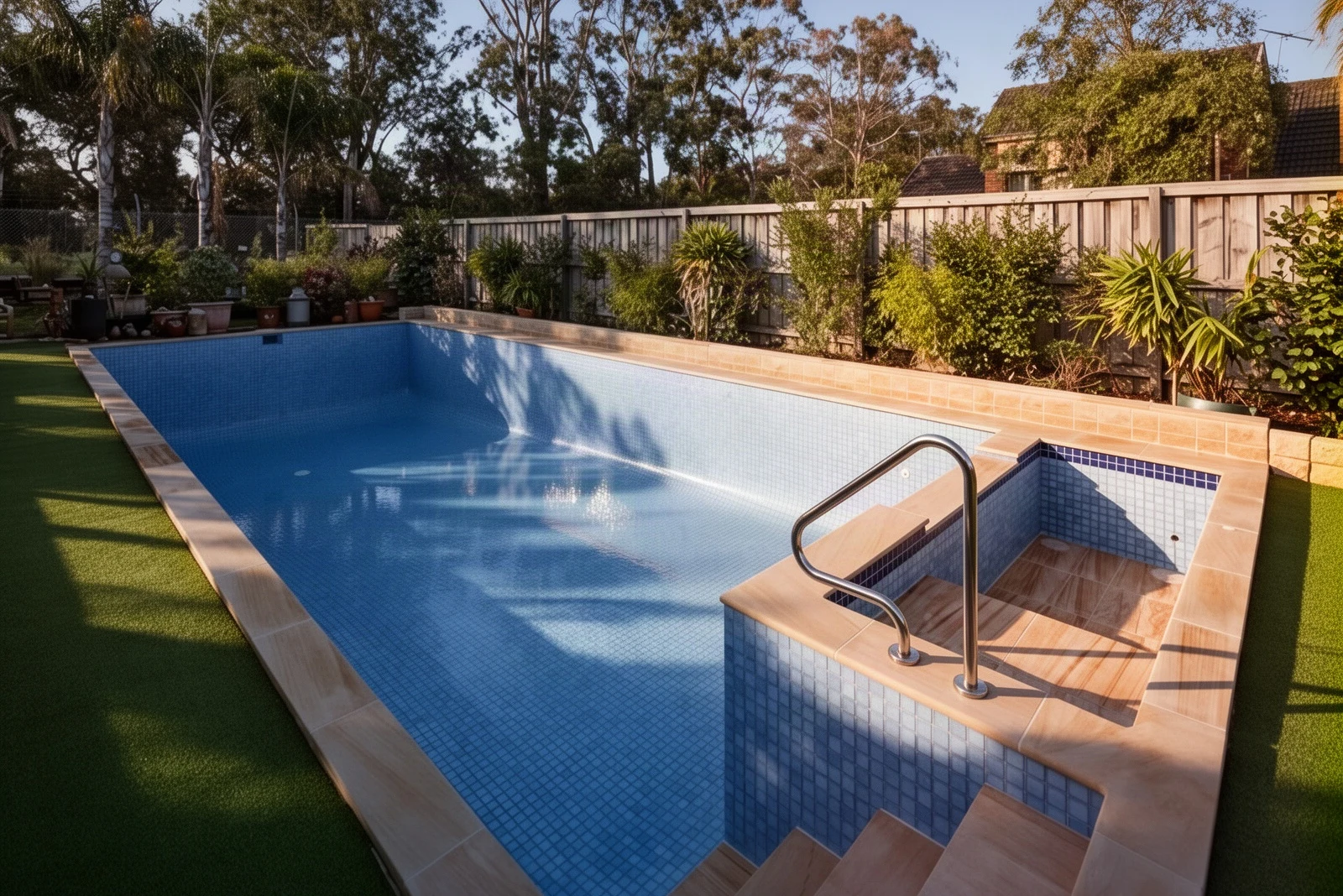
Out of repaints, so retiled, with sandstone paving around it.
Eagle Rock

Grey tile across pool and spa, seen from the air.
La Cañada Flintridge

Collected from customers on the routes we run every week.
Jessica M.Verified review
19 November 2024
Diana H.Verified review
Local Guide · 44 reviews · 21 photos
26 September 2024

Scott A.Verified review
18 May 2025
Paul R.Verified review
6 reviews
21 June 2026
Mark H.Verified review
Local Guide · 42 reviews · 18 photos
3 September 2025

Linda R.Verified review
4 reviews
25 May 2026
Kevin B.Verified review
15 December 2025
Jason T.Verified review
25 February 2026
Great company. Always on time, pool looks amazing and communication is easy. Highly recommend.
Tell us what the pool needs, how big it is and your ZIP — and a price the same day.
Rewards
$100 for every friend you send us, up to two. No code, no form — they call and mention your name.

$100 credit
For every friend who calls and mentions your name
Up to two referrals, $200 in total. The name must come up on the first call. Spend it on any service.
20% off one-time work
For weekly maintenance members
Green-to-clean, acid wash, plaster start-up and repair labor, plus priority on the schedule.
Where we work
Crews leave from Studio City every morning, across the Foothills and the neighborhoods next to them.
Office · Studio City
Dark, flickering, full of water or tripping the breaker — say which, and whether there are one or two.
4121 Radford Ave, Ste. #214, Studio City, CA 91604Written for Foothill and Valley homeowners.
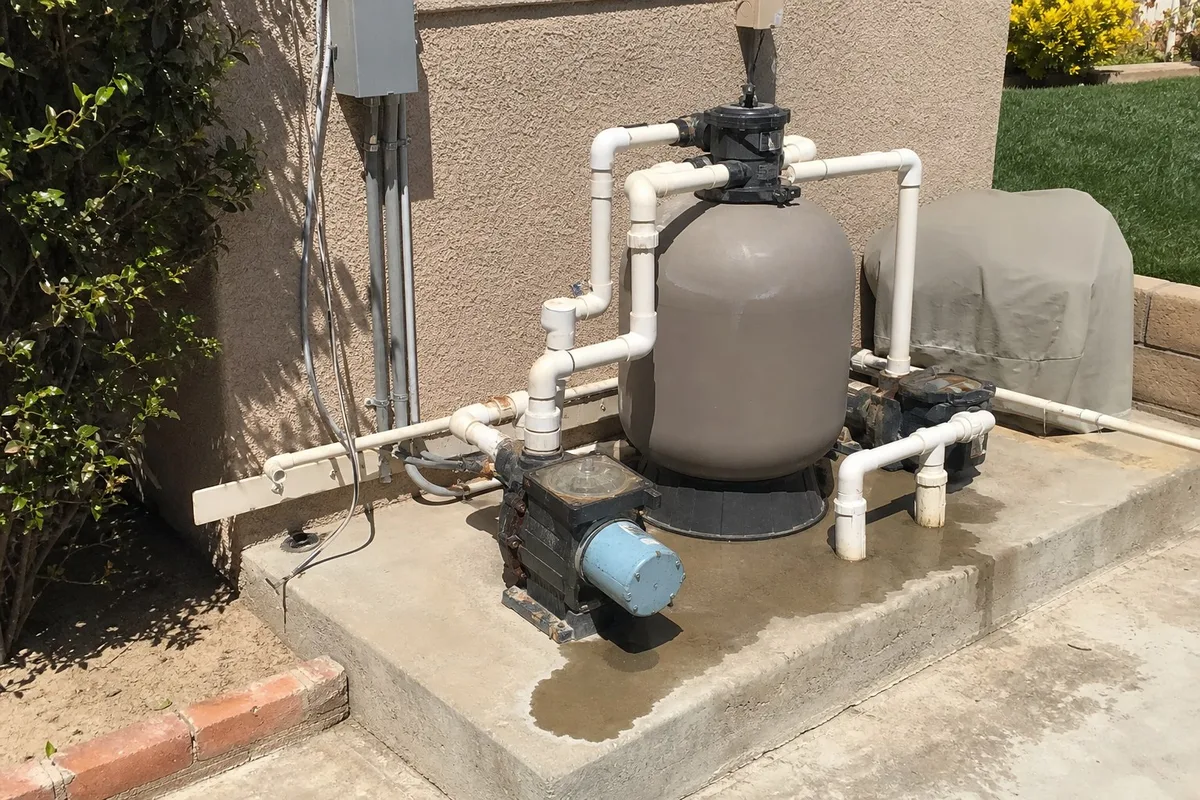
Equipment, labour, and the California rule that picks the pump for you.

The quiet signals that a pump or heater is on its way out.
From the truck
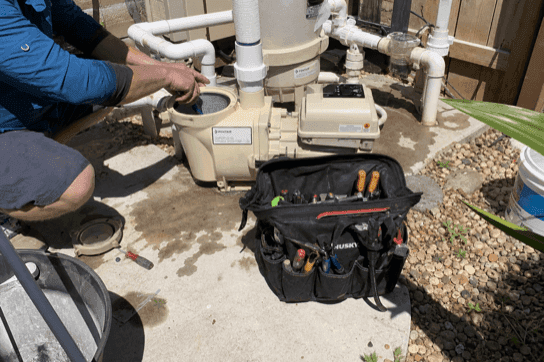
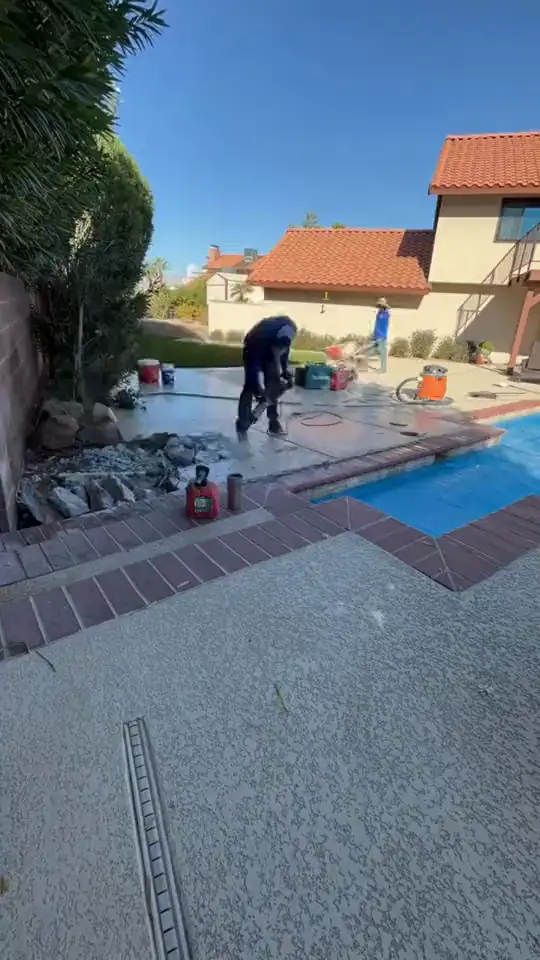
Nothing staged, nothing bought from a stock library — the same work, filmed while it happened.
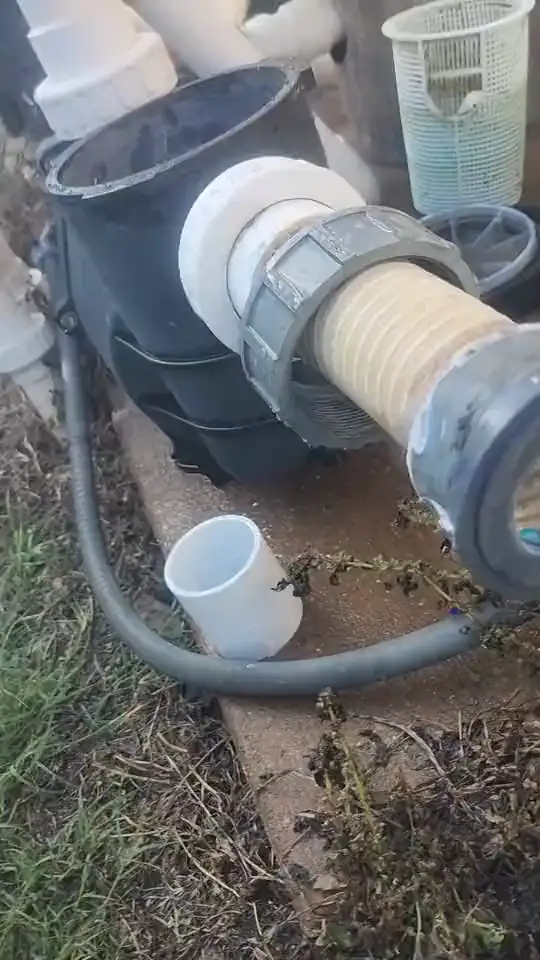


Sometimes, and it is the first thing checked. An older in-ground pool light is a sealed fixture with a replaceable bulb behind a glass globe and a rubber gasket: bulb, gasket and a torque check on the lens ring, and it is done. What rules it out is water inside the fixture, a corroded socket, or an LED unit where the board and the housing are one sealed part — there the whole light comes out, and the niche and conduit get looked at while it is open.
Color LEDs have no data cable. They read power itself, so cycling the circuit steps a fixture to the next color, and one outage leaves two lights counting from different places. The fix is resynchronising them with the sequence for that brand, then checking the controller is sending the right one. When the panel itself is at fault it becomes automation work; we install and service Pentair and Jandy controls, so it stays one visit.
Often. Plenty come back with a lamp, a gasket and a cleaned-up socket. Replacement wins when the housing has corroded, the cord is damaged, or you are moving to LED.
For a standard in-ground fixture that is the normal method. Pool lights are built with a loop of spare cord coiled in the conduit behind them, and that slack lands the fixture on the deck, still connected, with the water untouched.
We would not encourage it, and this is the one part of pool care where we say so plainly. Changing a lamp is not the risky part; judging whether the rest is safe to re-energise is.
Both trades touch this. Pool companies handle the fixture, the niche and the run to the junction box; an electrician is right when the fault is upstream, in the panel or the house wiring.
Two prices, and which one applies is obvious the moment the fixture is out of the niche. A lamp, gasket and reseal is $175 to $250 in labor plus parts. A complete fixture is $350 to $550 in labor plus the fixture. Labor starts at $175 an hour with a one-hour minimum, and both are quoted as a fixed price before work begins. Members take 20% off repair labor.
Ask about the part, not the light. A halogen lamp lasts a season or two of evening use, an LED tens of thousands of hours, and the gasket usually goes before either.
No. Standard equipment diagnosis is free inside our service area, and so is the quote that follows it. We answer seven days a week — 6am to 9pm on weekdays, 8am to 6pm at weekends — and there is no minimum contract to get someone out. Send a photo first if you can: the same number takes texts, and a picture of the fixture, the lens and the transformer usually names the brand and the part before the van is loaded.
Pool Care LA is R R Pools, California contractor licence #970493, classifications C-53 and C-61/D-35, current to 29 February 2028, with a $25,000 bond. The number is public — check it at cslb.ca.gov. That covers the fixture, the niche, the conduit and the run to the junction box. Past that point, in the panel or the house wiring, the right licence is an electrician's, and we will tell you so rather than work around it.
Cleaning, recovery, repair and renovation across Los Angeles.
Family owned, based in Studio City
Dark, flickering, full of water or tripping the breaker — each starts the diagnosis somewhere different.