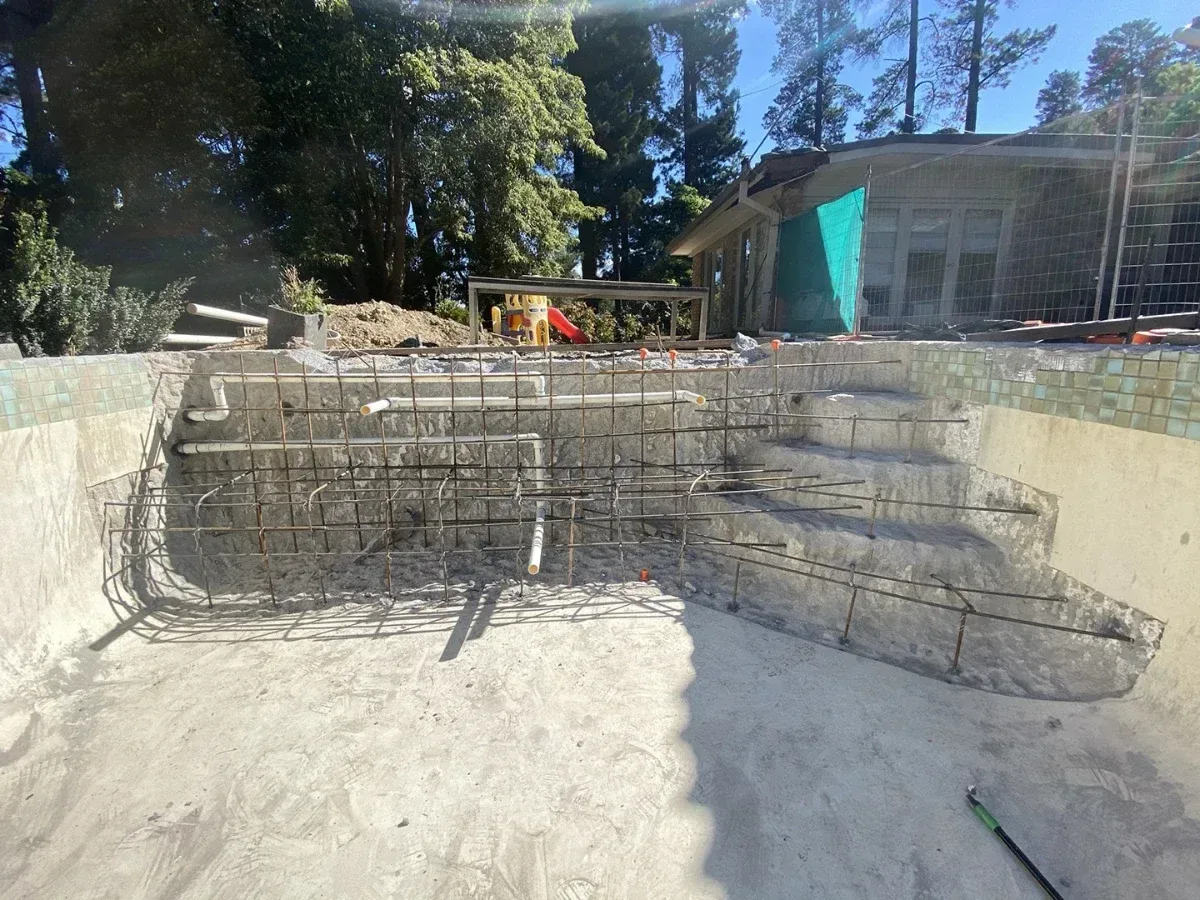
New steps and easier entries
Wider entry steps, corner steps or a new entrance position where the existing shell allows it.
Concrete pool redesign
Yes, when it is a concrete structure. The design depends on the existing shell, its reinforcement, water pressure, access and how new concrete can be tied in and finished.
Licensed, insured and family-owned


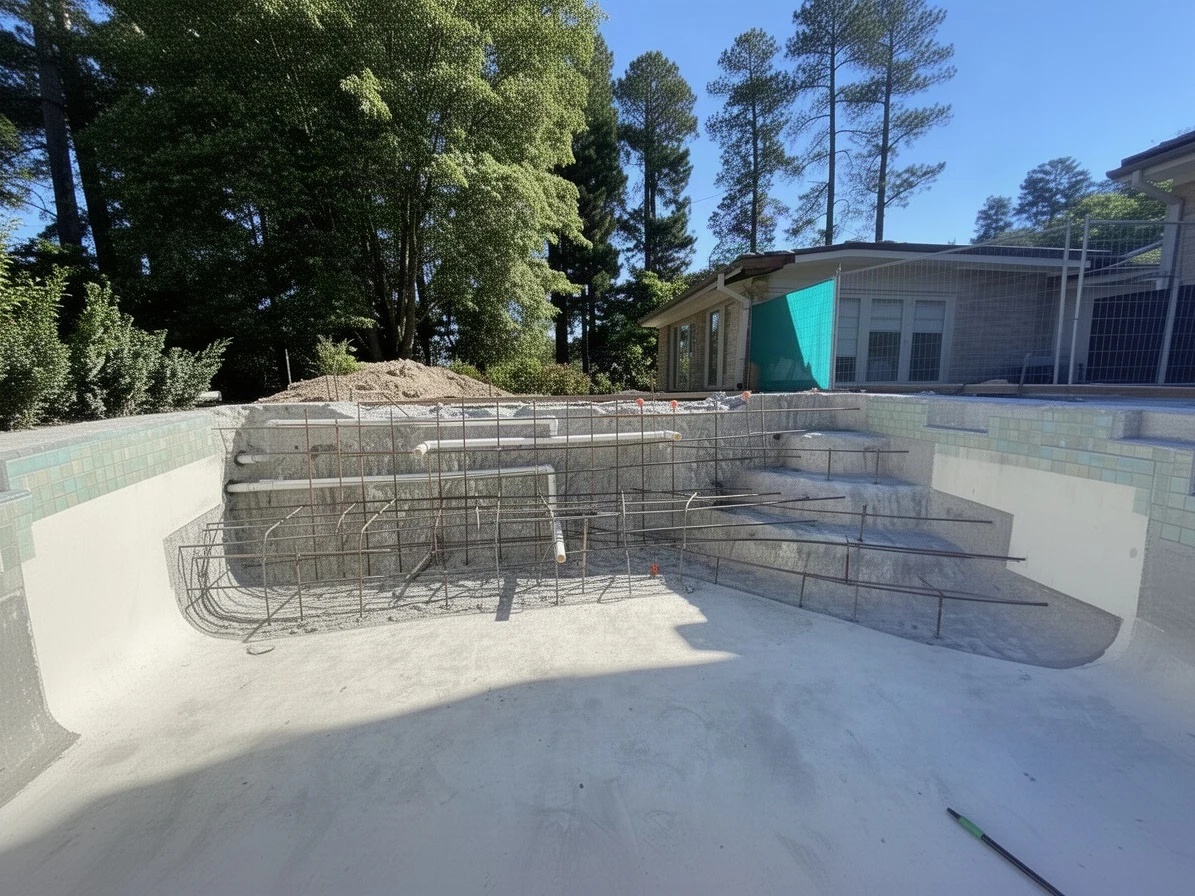 After
After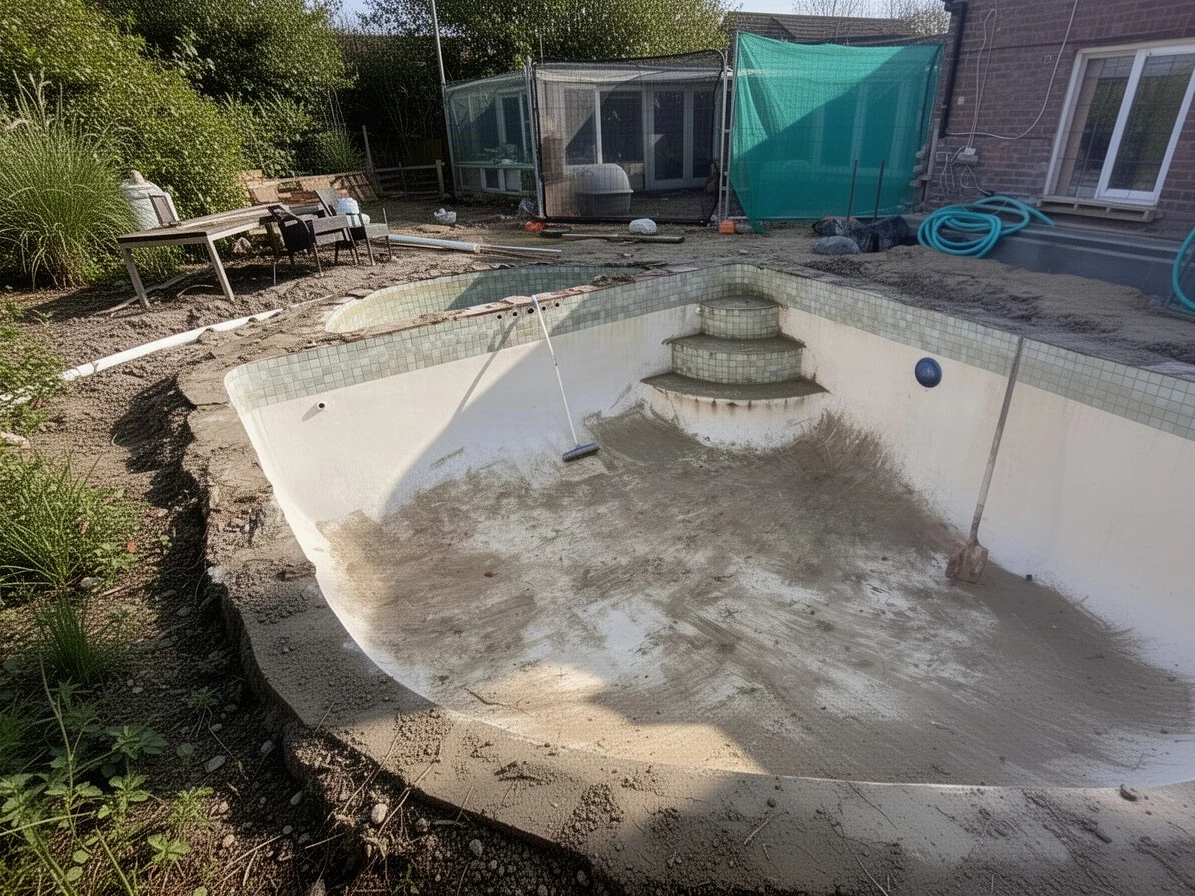 Before
Remodel the pool around the way you use it
Refinements are made inward rather than by cutting the shell open and extending outward. The finished work should look deliberate and original, not like a concrete patch added later.
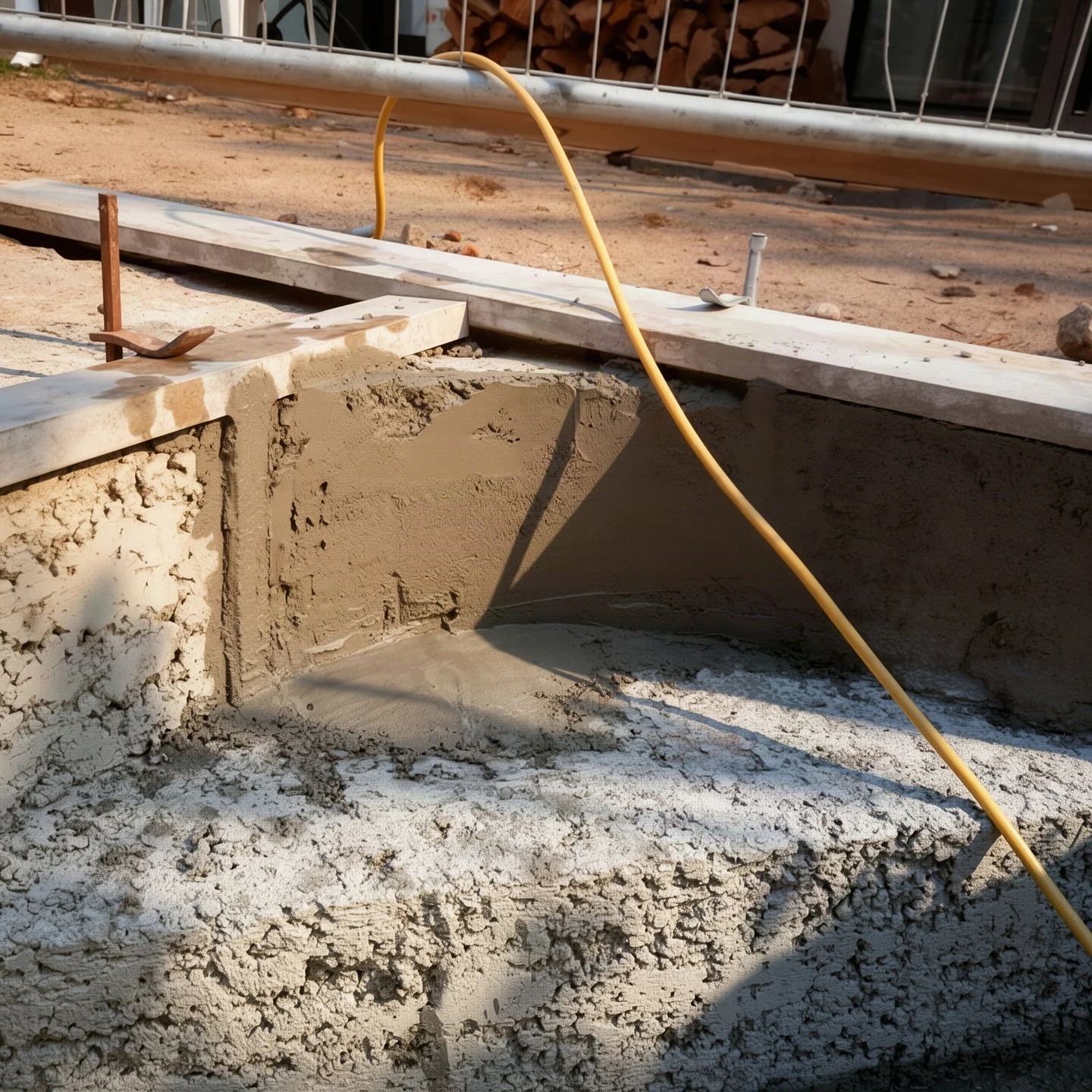
New concrete cannot be left as an isolated patch: the modified and original areas are prepared as one interior. We normally recommend full tiling, because render, waterproofing and tile give several coordinated layers across the cold joint and a small area can be repaired locally later. Read Pool Tiling Los Angeles, or the tiled pool information guide.
Photos and diagrams help explain an idea, but they cannot confirm hidden reinforcement, shell thickness, ground conditions, water-table pressure or the load the original pool can safely carry. The final answer is decided after inspection.
The crew
Four of us. The same faces every week, not whoever was free that morning.


This week on the job
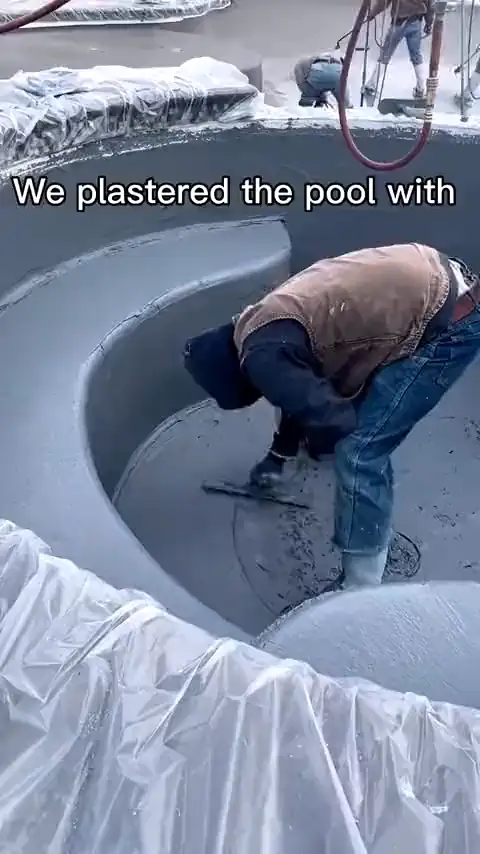
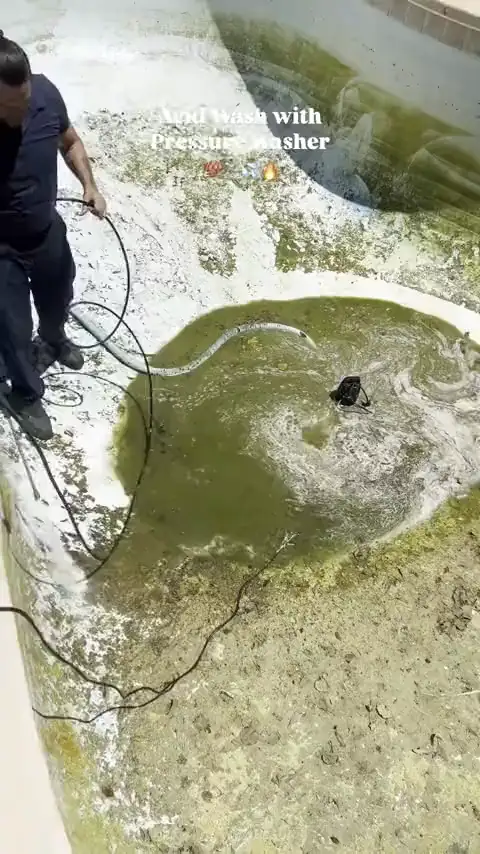
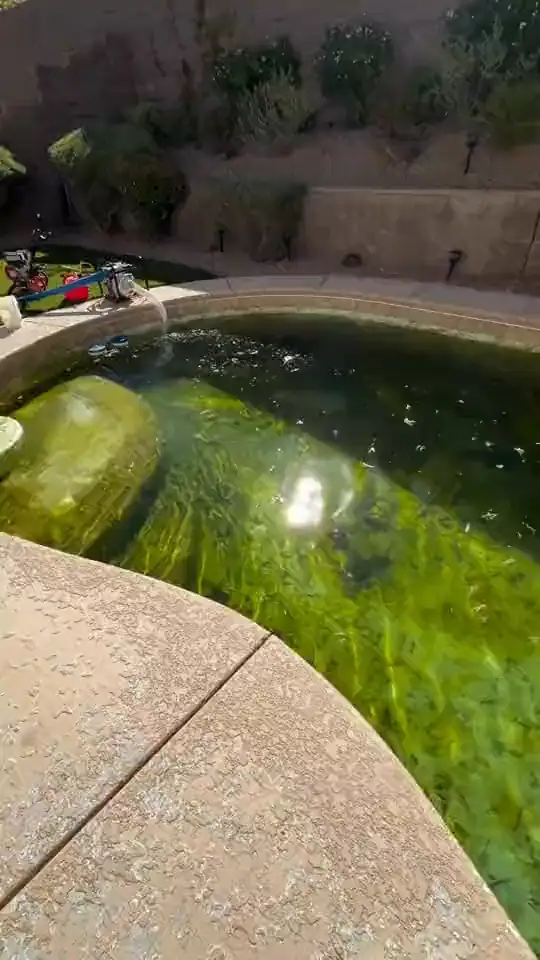
Short clips from real visits. Nothing staged, nothing bought from a stock library.

Shape-change options
Some changes improve access. Others modernise an outdated shape, create a place to sit or reduce unused space.
Wider entry steps, corner steps or a new entrance position where the existing shell allows it.
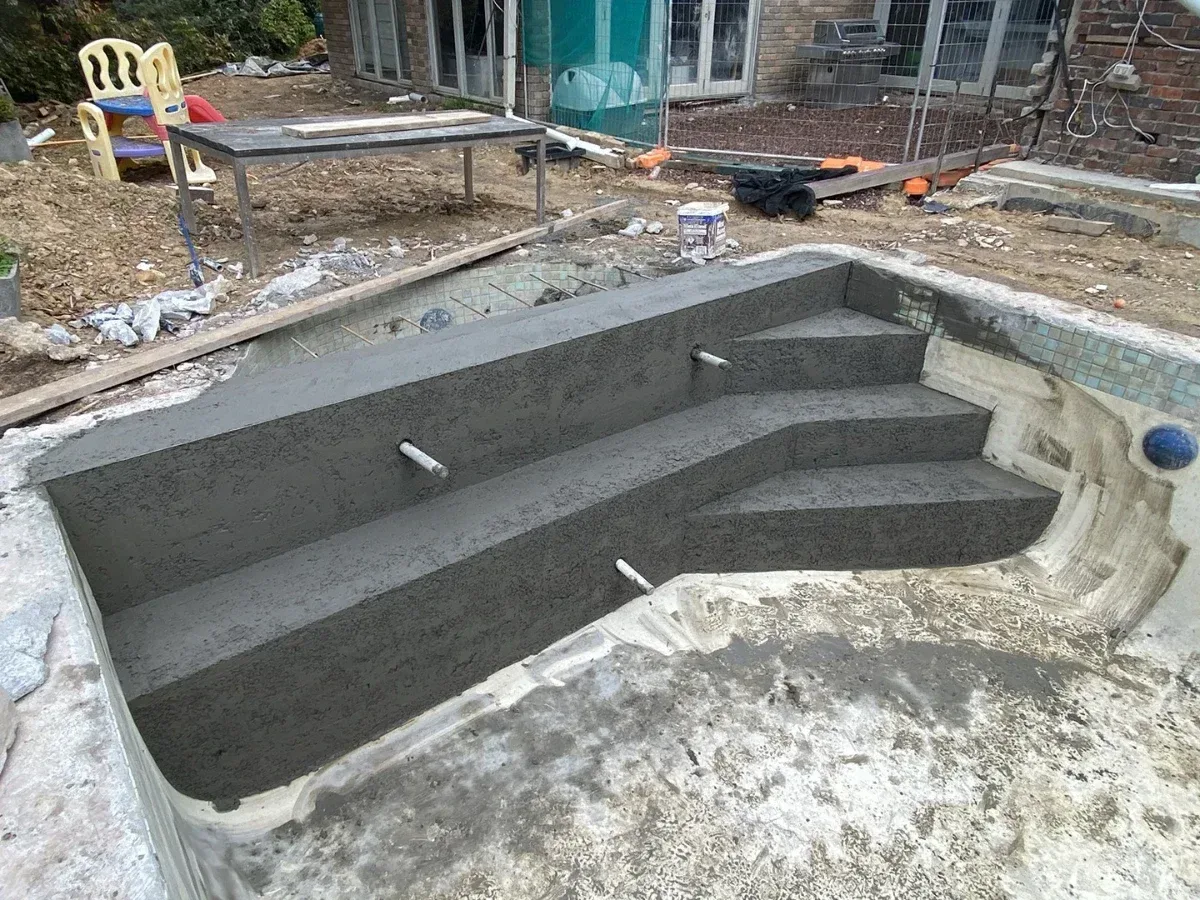
Submerged seating, a relaxation bench, a swim-out or custom concrete bar stools as part of the renovation.
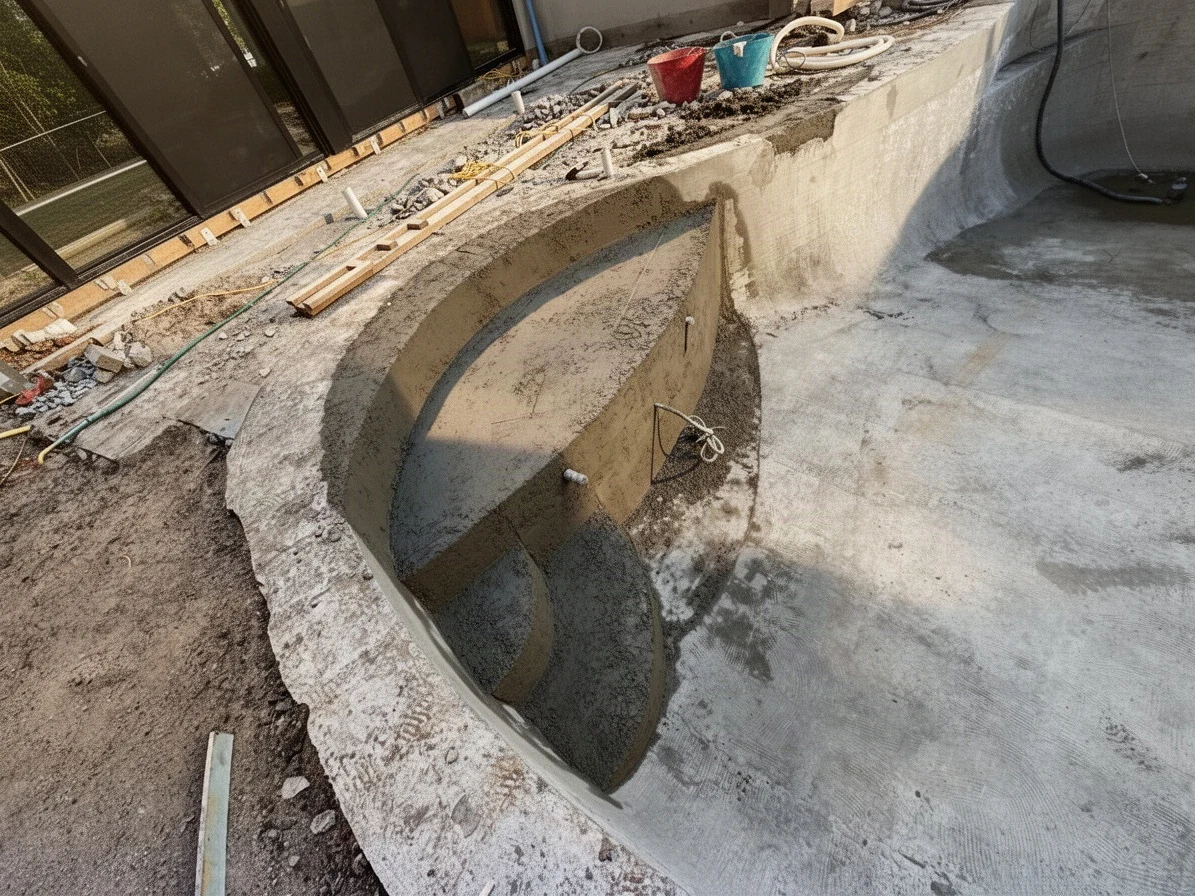
A shallow ledge, Baja shelf, beach area or an Umbrella Lounge with a built-in umbrella sleeve.

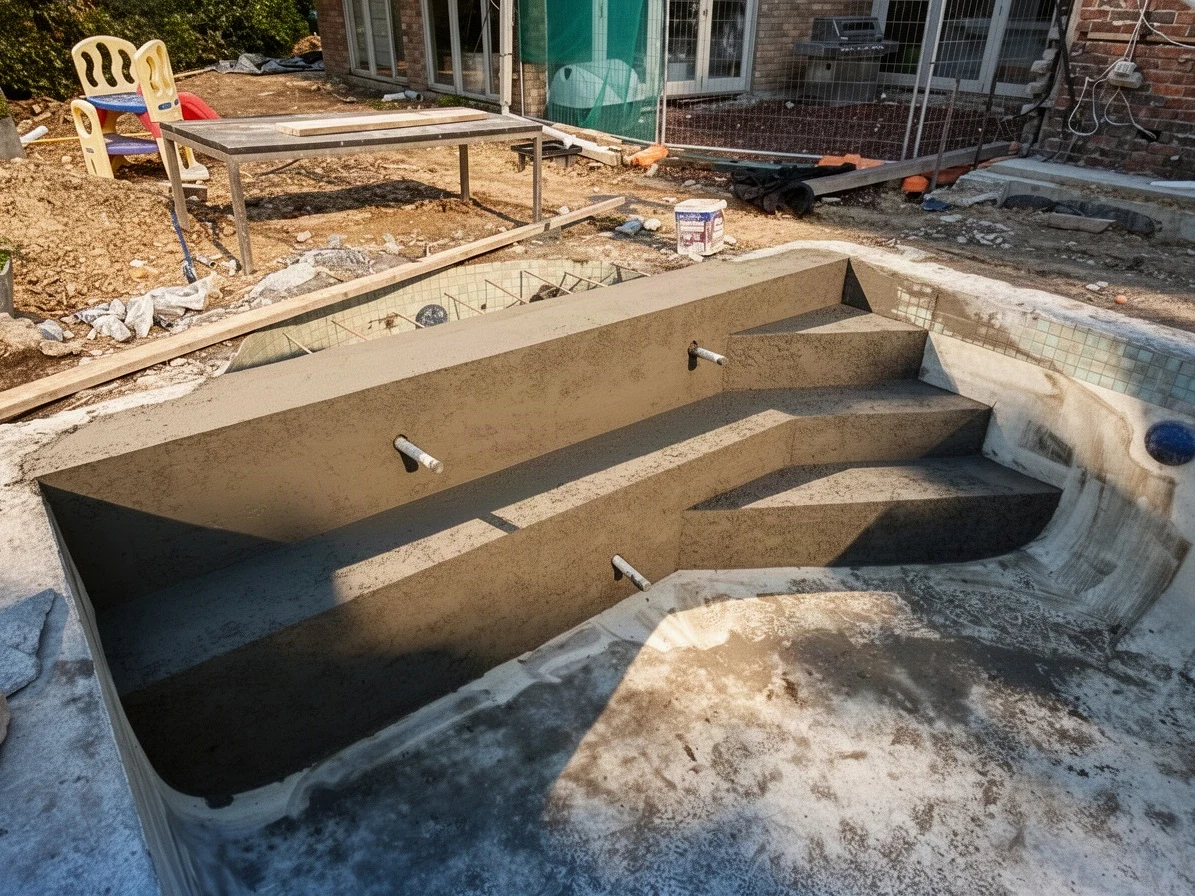
A reinforced wall tied into the original shell, rather than a large mass of concrete poured into one end.

Technically possible, but load transfer and hydrostatic pressure make it a new-build-level project, not a resurfacing job.

The floor can be raised in selected situations. Reinforcement, bonding and waterproofing are designed as one system.
What sits behind the finished shape
The visible shape is only the result. The cold joint between old and new concrete decides how long it holds.
Documented projects
The structural work behind two reshaped pools.
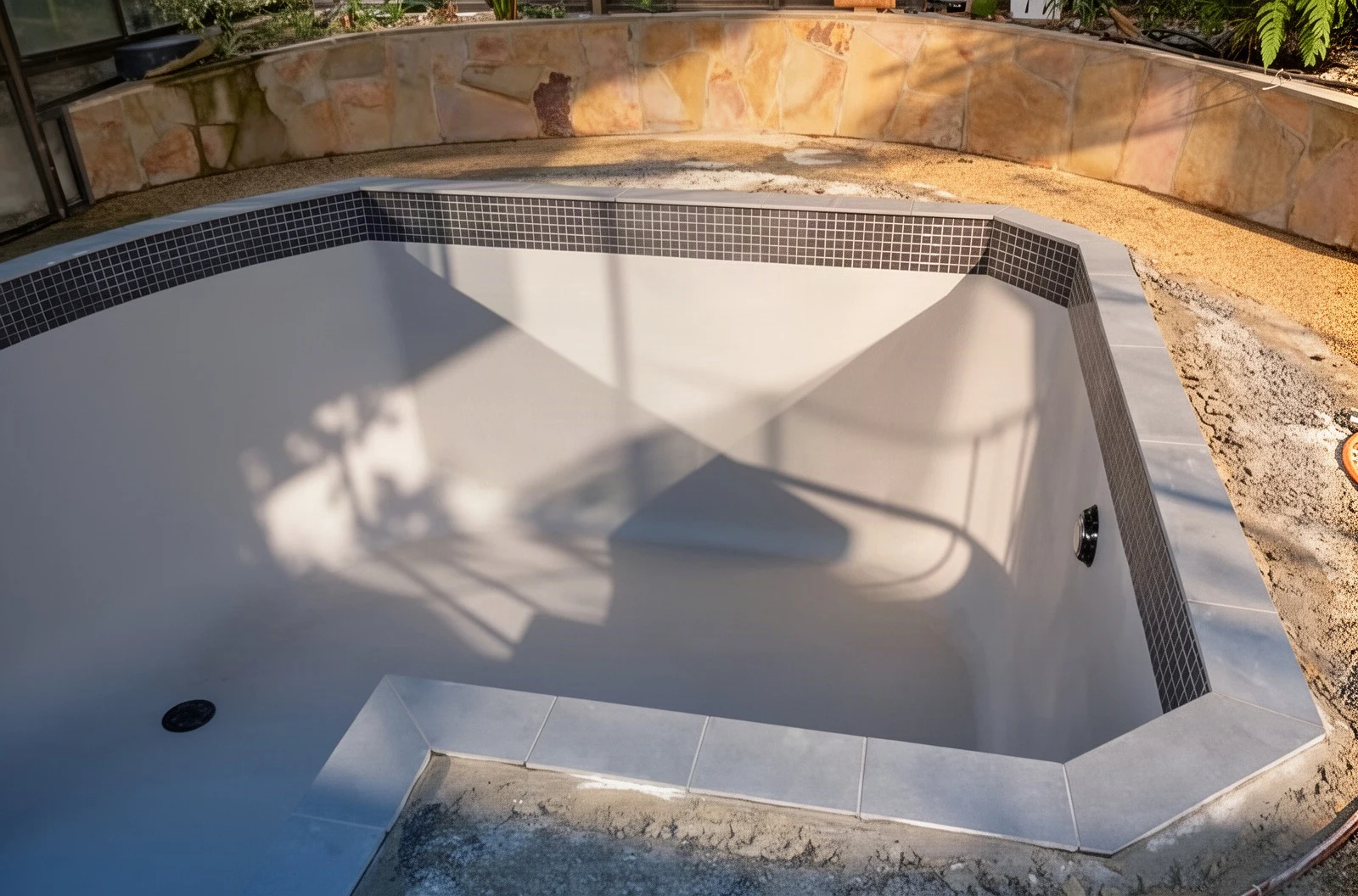
The pool profile changed, then finished in pebble with bluestone around it.
Altadena

Three concrete bar stools poured into the shell, then resurfaced.
West Hollywood
Real Pool Care LA work
The original shell exposed, then the wall, the steel and the finished concrete.
Collected from customers on the routes we run every week.
Thomas W.Verified review
Local Guide · 27 reviews · 9 photos
10 February 2025
Raymond K.Verified review
Local Guide · 52 reviews · 26 photos
20 November 2025
Karen V.Verified review
15 August 2026
Diane F.Verified review
6 reviews · 2 photos
6 January 2025
Mark H.Verified review
Local Guide · 42 reviews · 18 photos
3 September 2025

Linda R.Verified review
4 reviews
25 May 2026
Kevin B.Verified review
15 December 2025
Jason T.Verified review
25 February 2026
Great company. Always on time, pool looks amazing and communication is easy. Highly recommend.
Tell us what the pool needs, how big it is and your ZIP — and a price the same day.
Rewards
$100 for every friend you send us, up to two. No code, no form — they call and mention your name.

$100 credit
For every friend who calls and mentions your name
Up to two referrals, $200 in total. The name must come up on the first call. Spend it on any service.
20% off one-time work
For weekly maintenance members
Green-to-clean, acid wash, plaster start-up and repair labor, plus priority on the schedule.
Where we work
Crews leave from Studio City every morning, across the Foothills and the neighborhoods next to them.
Office · Studio City
Send your name, suburb, pool photos and a clear description of the part you want to change.
4121 Radford Ave, Ste. #214, Studio City, CA 91604The pages that follow a structural change.
The preparation, waterproofing and tiling used after structural changes.

Concise answers about steps, benches, ledges, beach areas and planning.

Clear explanations of entry steps, ledges, swim-outs and pool components.

The service hub for tiling, resurfacing, coping, lights and repairs.
If the idea is closer to a new pool than to reshaping the one you have.
Yes — these are among the most common and practical concrete pool modifications. New steps, wide entries, submerged seats, swim-out benches, ledges, sun shelves, Baja shelves, beach areas and custom bar stools can be added to many existing concrete pools. The feature has to be reinforced and structurally connected to the original shell, and its size and position should suit circulation, water depth and the load the structure can accept.
Often. The usual conversation is a new reinforced wall or feature tied into the original shell, rather than filling a large area with concrete. How much can be reduced is decided from the actual pool construction rather than a generic measurement, and selected changes at both ends sometimes distribute the modification more sensibly than one very large build-up.
Often. Curves can be softened, selected areas straightened, awkward indents removed, and old love seats, beach entries, steps or ledges taken out. These refinements are usually made inward rather than by cutting the shell open and extending outward. Larger build-ups need more conservative structural planning and may require additional engineering.
Sometimes. Opening the spa into the pool can create a relaxation corner, a children's play area, a new entrance or more swimming space. The trade-off is that the spa generally loses its ability to be heated independently, and plumbing, water levels, structural connections and the final interior all need to be considered first.
Yes, but it is more complex than adding a step, seat or ledge. A raised floor has to manage bonding, internal water pressure and rising hydrostatic pressure beneath the work; if water migrates under a new floor, separation or movement can occur. Where the real aim is easier access, wide steps, a seat, a swim-out or a ledge often give the benefit with far less structural intervention.
Not normally. A wall across the pool creates a permanent junction between old and new concrete while resisting water pressure continuously, and different movement between the materials increases the risk of cracking and interior failure. Changing selected ends, curves or internal features is a more reliable way to reduce usable pool size.
Cleaning, recovery, repair and renovation across Los Angeles.
Send the idea before committing to a design
Name, suburb, pool photos and the part you want changed — we will say whether it is a common addition, a complex renovation or a new-build-level idea.