
The full chemical panel
pH, alkalinity, chlorine, cyanuric acid, calcium, phosphates, TDS and salt — adjusted to range.
Maintenance Membership
The same checklist every visit. Chemistry, debris, brushing, baskets, equipment — so nothing quietly drifts out of range between visits.

Licensed, insured and family-owned


 After
After Before
Maintenance Membership
Billed by the month and set first by volume, because gallons decide how much chemical a pool drinks. The table by pool size is the whole of it: most customers pay between $179 and $249.
Every one of the seven points below happens on every visit. Recovery, acid washes, filter tear-downs and repairs are separate jobs, quoted before they start.
Every visit, in the same order
Most of what goes wrong here is a number that drifted for six weeks while the water still looked fine.
pH, alkalinity, chlorine, cyanuric acid, calcium, phosphates, TDS and salt — adjusted to range.

The net takes what floats, the vacuum what has sunk and is already staining the plaster.

Scale comes off in the week it forms; after a season the answer is an acid wash.

Skimmer, pump and leaf canister. A full basket is a pump working against a restriction.

Pumps, filters, heaters, salt cells, lights, timers and valves — a look at each, not a glance.

A schedule that was right in July runs at the wrong hours by November.

Pricing
Volume decides chemical demand, so it decides the price. Typical homes land between $179 and $249 a month. Chemicals included, no minimum contract.

Prices as of August 2026, for a pool in normal condition.
One-time work
Quoted on the job, because nobody can price a green pool from a web form.
The crew
Four of us. The same faces every week, not whoever was free that morning.


The same crews run the weekly routes

Hollow render and rust cut out, then the whole shell tiled.
Glendale
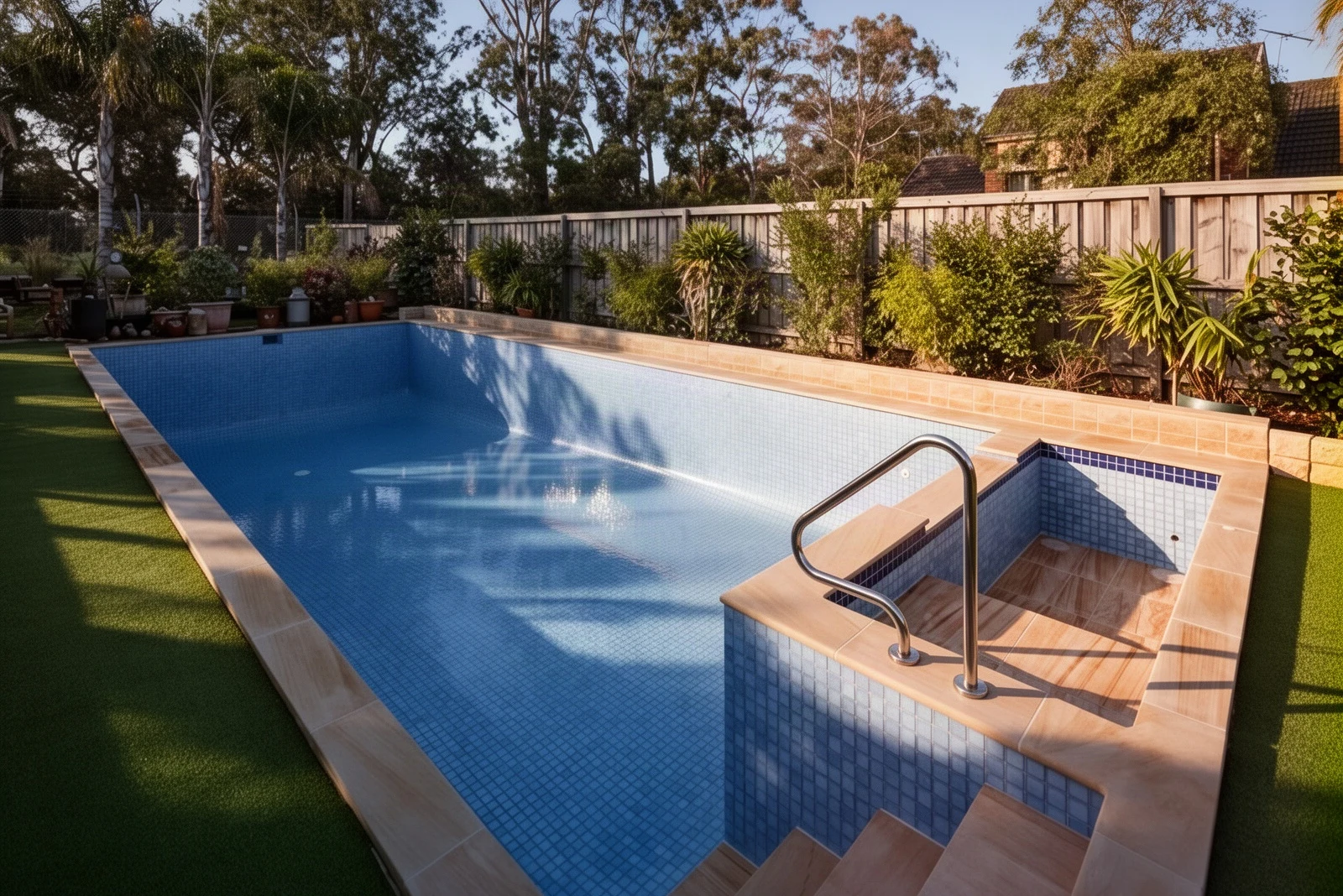
Out of repaints, so retiled, with sandstone paving around it.
Eagle Rock

Grey tile across pool and spa, seen from the air.
La Cañada Flintridge

Collected from customers on the routes we run every week.
Linda R.Verified review
4 reviews
25 May 2026
Ashley P.Verified review
11 reviews
4 March 2026
I don't usually leave reviews but these guys deserve it. My pool was a mess and I was tired of trying to fix the chemicals myself. They came out and took care of everything. Water is clear now and I don't have to worry anymore.
Jennifer C.Verified review
Local Guide · 15 reviews · 4 photos
7 September 2025
We have two kids and keeping the pool safe is important for us. Since switching to Pool Care LA the water has been consistently clean and balanced. It is nice knowing someone is actually paying attention every week.
Daniel S.Verified review
18 July 2025
The biggest difference is communication. Our old pool guy would disappear for days. Emily in the office always responds and keeps us updated if there is an issue.
Chris F.Verified review
Local Guide · 61 review · 30 photos
10 April 2026
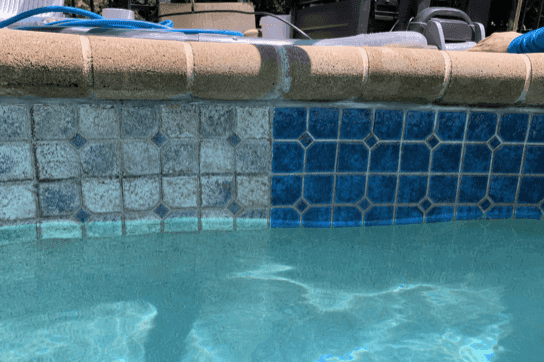
After winter our pool needed some serious attention. There was algae around the edges and the water was cloudy. They cleaned everything, balanced the chemicals and got it ready for summer.
Robert K.Verified review
12 reviews
3 June 2025
We have had several service companies over the years and this is the first one that actually pays attention to details. Small things matter when you take care of a high-end home. The pool always looks ready for guests.
Carol J.Verified review
11 reviews · 2 photos
8 January 2026
I needed someone reliable because I don't want to spend my weekends cleaning and testing the pool anymore. They are friendly, respectful and take care of everything.
Jennifer R.Verified review
Local Guide · 31 reviews · 12 photos
27 August 2026
Tell us what the pool needs, how big it is and your ZIP — and a price the same day.
Rewards
$100 for every friend you send us, up to two. No code, no form — they call and mention your name.

$100 credit
For every friend who calls and mentions your name
Up to two referrals, $200 in total. The name must come up on the first call. Spend it on any service.
20% off one-time work
For weekly maintenance members
Green-to-clean, acid wash, plaster start-up and repair labor, plus priority on the schedule.
Where we work
Crews leave from Studio City every morning, across the Foothills and the neighborhoods next to them.
Office · Studio City
Routes run by day of the week. Send your cross streets and we will say which day is yours.
4121 Radford Ave, Ste. #214, Studio City, CA 91604Written for Foothill and Valley homeowners.

A fuller answer on frequency, and why fortnightly saves less than it looks.

Where 20% off and priority scheduling actually pay for themselves.


The saving is put at up to $1,100 a year — if somebody sets the schedule.

Why the pad matters more than the water, and how often to look at it.

We do not sell one-time routine cleanings at all. Here is the reason.
From the truck
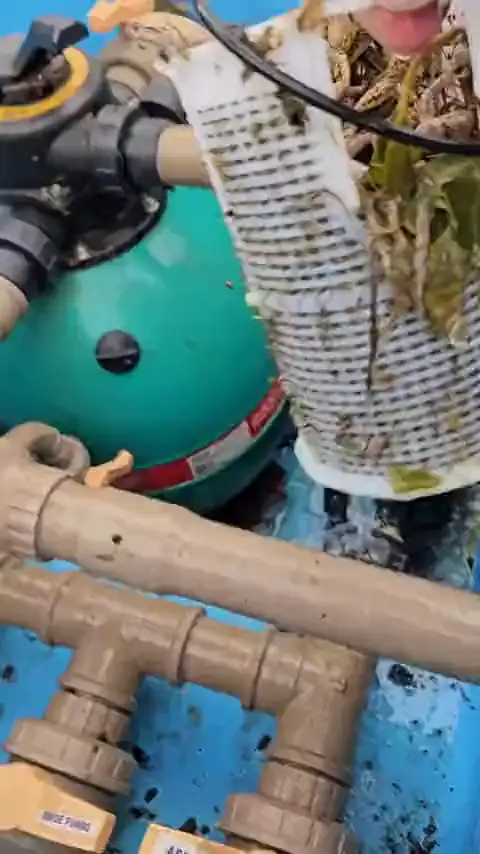
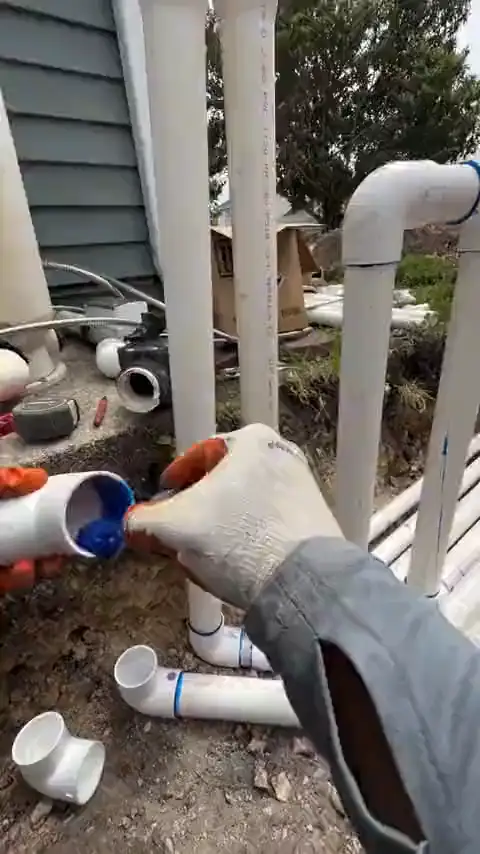
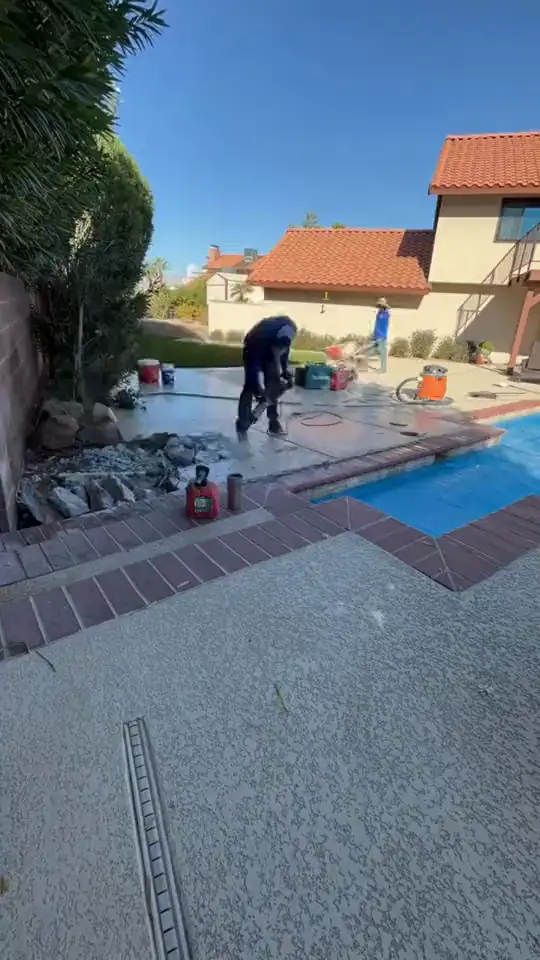
Nothing staged, nothing bought from a stock library — the same work, filmed while it happened.

A fixed seven-point list: the full chemical panel with adjustments to range, netting and vacuuming, brushing the tile line and walls, emptying the skimmer, pump and leaf-canister baskets, inspecting every piece of equipment on the pad, setting pump speeds and time clocks for the season, and closing the gates. Recovery work, acid washes, filter tear-downs and repairs are separate jobs.
Once a week is the standard in Los Angeles and what most pools need. Two visits are worth it under heavy tree cover, on pools swum in every day, and where people entertain around the water through summer. Fortnightly saves less than it appears to, because chlorine demand and pH drift do not halve when the gap doubles.
On the same schedule as the rest of the year. There is no closing season here, so no winterisation and no spring reopening, and a winter storm puts more into a pool in one night than a still summer week does. What changes is the pump run time, not the frequency of the visit.
Most of what a service protects you from is not the water. It is a pump running against a blocked basket, a filter left until the pressure climbs, a salt cell scaling up unnoticed, or stabilizer creeping past the point where chlorine stops working. A year of weekly service costs a fraction of replacing a heater.
It starts at $159 a month for a pool up to 15,000 gallons and $179 for the 15,000 to 25,000 gallon range that most Los Angeles back gardens fall into. Most customers pay between $179 and $249. A second weekly visit is $129 a month on top, and a spa on the property $35.
There are three costs and only one of them is on our invoice. The weekly service is billed monthly from $159 with standard chemicals inside the price. Outside it sit the electricity to run the pump — often the largest of the three on an older single-speed pump — and repairs as equipment ages.
Check the licence yourself before anything else: for pool work in California you want a current C-53, in the same name as the quote, and it is public on cslb.ca.gov. Then ask three questions — are chemicals in the price or extra, is it the same technician every week, and is the equipment actually inspected or only the water. Most complaints about pool services come down to one of those three being assumed rather than agreed.
Twenty to forty minutes on a pool in good order, longer through autumn under heavy tree cover and longer again the week after a storm. Time is not the measure, though — the seven-point list is. A visit that is over in five minutes is a net dragged across the surface and a tablet dropped in the skimmer, with nothing tested and nothing on the pad looked at.
No. There is no start-up fee and no minimum term: the service is billed by the month and stops at the end of one. Cancelling is a phone call, not a notice period. The question underneath that question is usually whether the price moves after a few months, and it does not, unless the pool does — a new spa, a second weekly visit, a bigger body of water.
Cleaning, recovery, repair and renovation across Los Angeles.
Family owned, based in Studio City
Gallons, surface, whether there is a spa, what is on the pad, tree cover, and its condition today.


