
Pool tiling
Rust repair and full tiling
Hollow render and rust cut out, then the whole shell tiled.
Glendale
Equipment repair
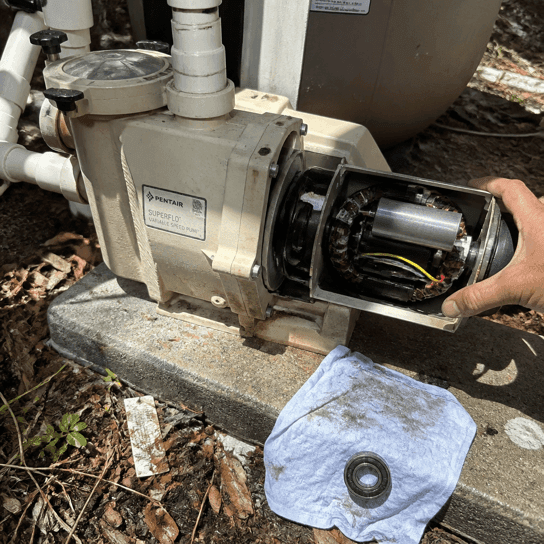
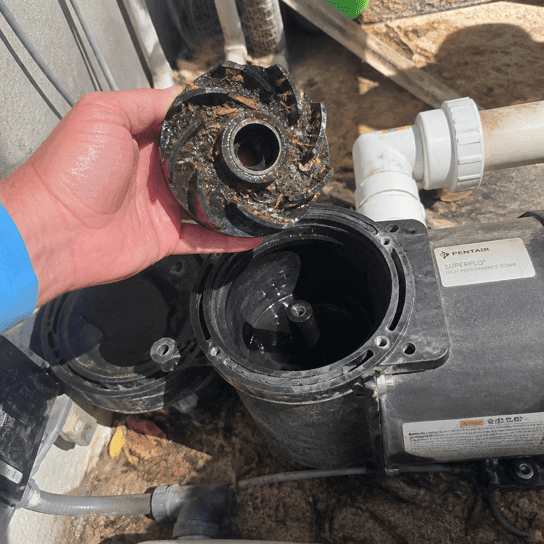
Most “the pump is broken” calls are one of six things. A worn shaft seal, failed bearings, a jammed impeller, a dead capacitor, a suction-side air leak, or no pump fault at all. Four of the six are repairs.

Licensed, insured and family-owned


Equipment repair
A pump running dry can melt its own wet end in under an hour, which turns a seal kit into a new pump — so a new noise means switch it off at the breaker. Weak flow with high pressure is a filter clean, not a pump job.
If it is the motor, California's efficiency rules decide what replaces it — read that first. The labor on the three jobs that cover most pump calls is in the table above, and how one-time work is priced is published in full. The standard itself is on the California Energy Commission site, checked August 2026.
Two repairs on one pump inside a year is a replacement wearing a disguise, and we will say so. See everything else we repair and how weekly service works — a leaking seal and a dirty filter both show on a weekly visit and are invisible the rest of the time.
Pricing
Common repairs are quoted as a fixed price before work begins, so you agree the figure for the job rather than an open-ended hourly bill.

Free standard equipment diagnosis inside our service area: the fault and the price before anything is spent.
Repair or replace
Diagnosed in the order things are cheapest to be wrong, not the order they are easiest to sell.
California rules
Not an upsell, and not our policy: it is what may legally be sold in the state.
The crew
Four of us. The same faces every week, not whoever was free that morning.


The same crews run the pads
Hollow render and rust cut out, then the whole shell tiled.
Glendale
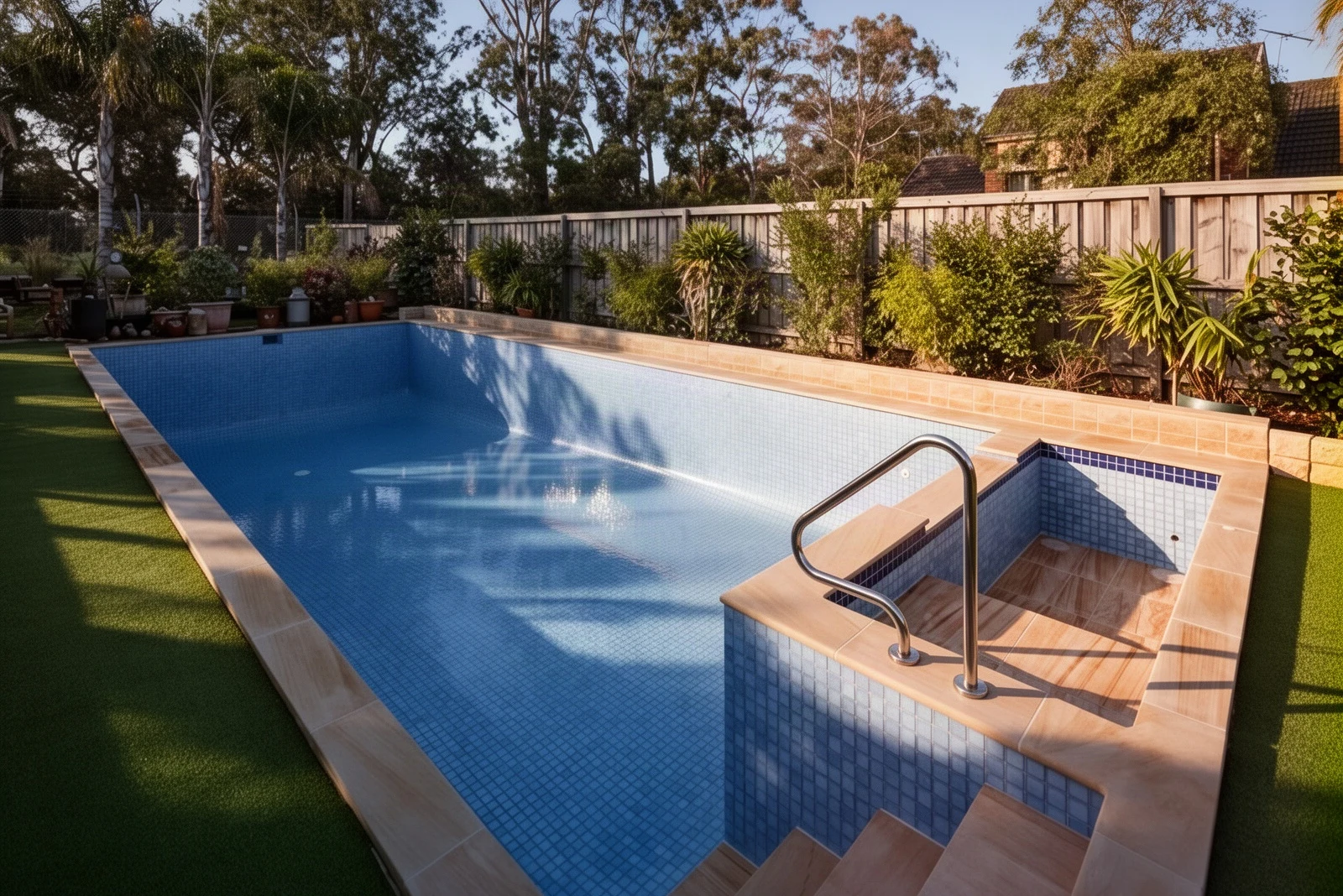
Out of repaints, so retiled, with sandstone paving around it.
Eagle Rock

Grey tile across pool and spa, seen from the air.
La Cañada Flintridge

Collected from customers on the routes we run every week.
Kevin B.Verified review
15 December 2025
Rachel M.Verified review
17 October 2025
We thought we needed a completely new pool system. Turns out it was just a few issues with the pump and filter. They saved us a lot of money by fixing what actually needed fixing.
Carlos M.Verified review
Local Guide · 48 reviews · 22 photos
4 May 2025
Robert E.Verified review
8 March 2025
Rachel G.Verified review
3 March 2026
Marcus H.Verified review
18 October 2025

Sandra T.Verified review
2 reviews
17 April 2026
David C.Verified review
22 December 2024
Tell us what the pool needs, how big it is and your ZIP — and a price the same day.
Rewards
$100 for every friend you send us, up to two. No code, no form — they call and mention your name.

$100 credit
For every friend who calls and mentions your name
Up to two referrals, $200 in total. The name must come up on the first call. Spend it on any service.
20% off one-time work
For weekly maintenance members
Green-to-clean, acid wash, plaster start-up and repair labor, plus priority on the schedule.
Where we work
Crews leave from Studio City every morning, across the Foothills and the neighborhoods next to them.
Office · Studio City
Photograph the nameplate: make, model, horsepower and service factor tell us whether the part is on the van.
4121 Radford Ave, Ste. #214, Studio City, CA 91604Written for Foothill and Valley homeowners.

The saving is put at up to $1,100 a year — if somebody sets the schedule.


Missed weeks, a full basket, a filter nobody has opened.
From the truck
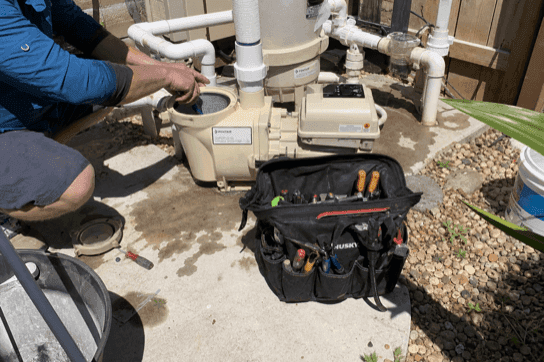
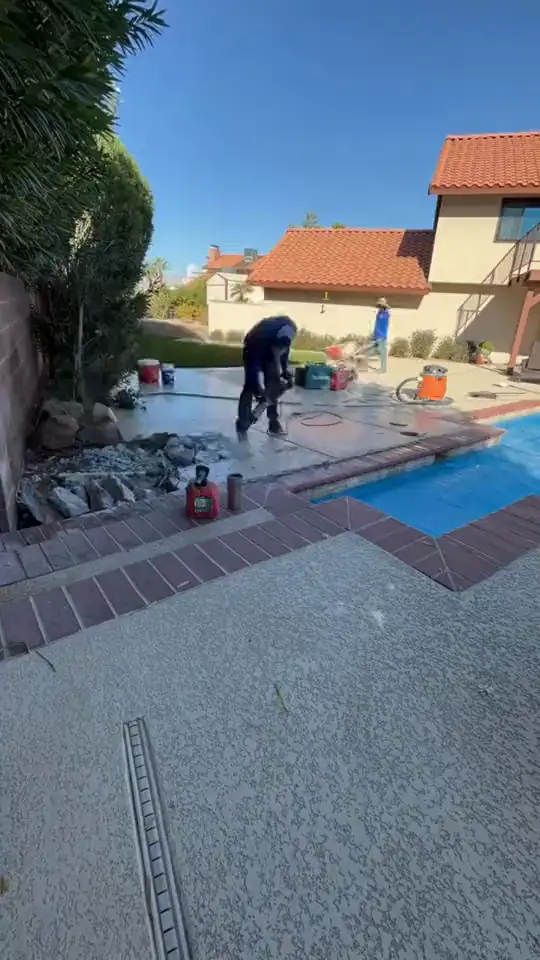
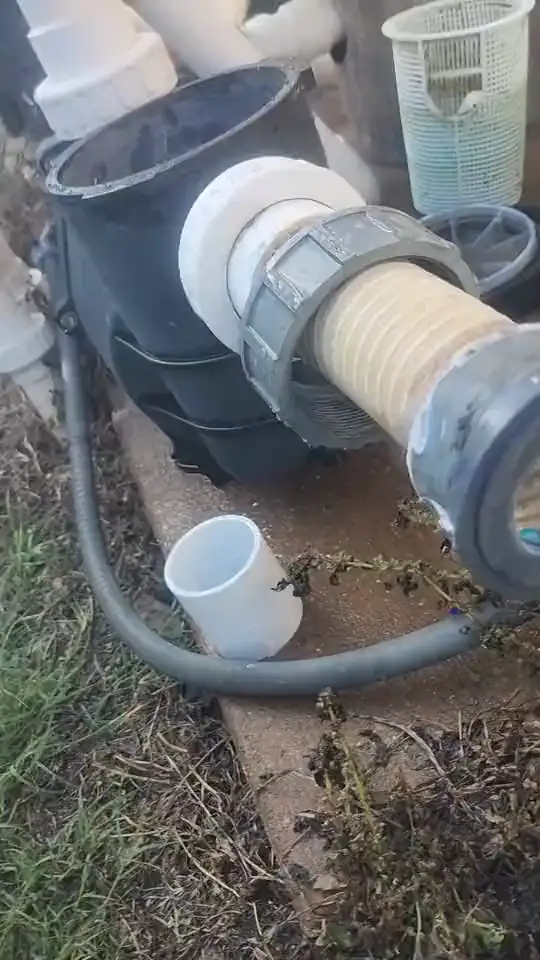
Nothing staged, nothing bought from a stock library — the same work, filmed while it happened.

It splits in two, and both halves are published. Wet-end repairs are the low end: a shaft seal at $175 to $250 in labor plus parts, a start capacitor at $175 to $225 plus parts. Replacing the whole pump is $350 to $475 in labor plus the pump itself. Labor starts at $175 an hour with a one-hour minimum, and jobs like these are quoted as a fixed price before work begins. Members on weekly service take 20% off the labor.
Usually yes, when a wear part failed — seals, O-rings, impellers, unions and capacitors cost a fraction of a pump and are meant to be replaced. It stops being worth it when the motor has gone on an old pump, the housing is cracked, or the same pump has had two repairs inside a year.
Roughly eight to twelve years is the figure quoted across the trade, but it is really a running-hours number. Los Angeles pools run year round, so they get there faster than pools in climates that shut down for winter.
A plumber handles the plumbing around it — a cracked pipe, a union, a valve. A pump failure usually needs the other two trades: the electrical side of a motor, and the pool-specific wet end. Add California's rules on replacement motors and it stops being a plumbing job.
Listen to which noise it is. A squeal that worsens as the motor heats up is bearings. A roar or gravel rattle is cavitation, so check pool level, baskets and valves first. A hum with no water moving is a jammed impeller or a dead capacitor. Only the first is expensive.
Air on the suction side. The lid O-ring is the most common cause by a wide margin, then drain plugs, union O-rings and valve stems. The rest is not enough water: a level below mid-skimmer, a packed basket, or a valve left half shut.
Not while it works. The rules govern what can be sold: replacement dedicated-purpose pool pump motors of 0.5 total horsepower and above made on or after 19 July 2021 must be variable-speed, under Title 20 of the California Code of Regulations, section 1605.3(g)(6). It bites when your motor dies, not before.
Six things account for almost every call: a worn shaft seal, failed motor bearings, a jammed impeller, a dead start capacitor, a suction-side air leak, and no pump fault at all — a blocked basket or a closed valve starving it of water. Four of the six are repairs rather than a replacement.
Pentair and Jandy are what we install — IntelliFlo3 and ePump — and we repair whatever is already bolted to the pad, Hayward and Sta-Rite included. A pump fails by part rather than by badge: a shaft seal, a capacitor, an impeller and a lid O-ring are the same job on all of them, and those parts sit on local shelves instead of arriving next week. Photograph the motor label before you call — make, model, horsepower and service factor tell us whether the part is on the van.
Usually, when a wear part failed: seals, O-rings, capacitors, baskets and lids are stock items, so the repair finishes the same time the fault is found. A whole pump is the exception, because the replacement has to be matched to the plumbing and, at 0.5 horsepower and above, to the variable-speed rule — that one is quoted first and fitted after. The diagnosis costs nothing inside our service area either way, so you learn which of the two you have before spending anything.
Cleaning, recovery, repair and renovation across Los Angeles.
Family owned, based in Studio City
The noise, where the water is, whether the basket fills, and the make and horsepower off the motor label.