
White plaster
Cement and marble dust. The shortest life of the four, and nothing in the colour hides a stain or a patch.
Renovation
A pool surface is a wear part. Fifteen to twenty years is the usual life. When acid washing stops working, the honest answer is a new surface, not another wash.

Licensed, insured and family-owned


 After
After Before
Read it yourself, barefoot
One of these is a watch item. Three together is a finish that is finished. A pool is plastered with a reserve of at least half an inch, and every wash spends part of it permanently — so while reserve is left we will say a wash is the cheap answer, and once it is gone we will say the opposite.
If tile, coping, decking or water features are also in mind, that is a remodel rather than a resurface, and far cheaper done together than a year apart. Afterwards the pool goes onto a weekly route — routine chemistry is what buys the extra five years.
Interior finish work is licensed contractor work in California: it touches the shell, the plumbing and often the electrical. Ours is R R Pools, licence #970493, classifications C-53 and C-61/D-35, running to 29 February 2028 with a $25,000 bond. Put the number into cslb.ca.gov — for every quote you collect, not only ours.
Four families, all cement-based
What separates them is what is mixed into the cement — and what that does to your feet and your chemistry.
Cement and marble dust. The shortest life of the four, and nothing in the colour hides a stain or a patch.

The same material, pigmented. Deeper water colour, but streaking shows worse and a poor start-up shows worst of all.

Plaster with crushed quartz: denser, harder, smooth with a fine grip. A good middle answer for bare feet.

Small stones in a cement matrix. Commonly quoted at fifteen to twenty-five years, and standard pebble is genuinely rough.
Pricing
Volume decides chemical demand, so it decides the price. Typical homes land between $179 and $249 a month. Chemicals included, no minimum contract.

Prices as of August 2026, for a pool in normal condition.
One-time work
Quoted on the job, because nobody can price a green pool from a web form.
Fifteen to twenty years, or ten
The spread in the published figures is mostly not about the material. It is about the water.
The crew
Four of us. The same faces every week, not whoever was free that morning.


North Hollywood

Shells we have refinished

Hollow render and rust cut out, then the whole shell tiled.
Glendale
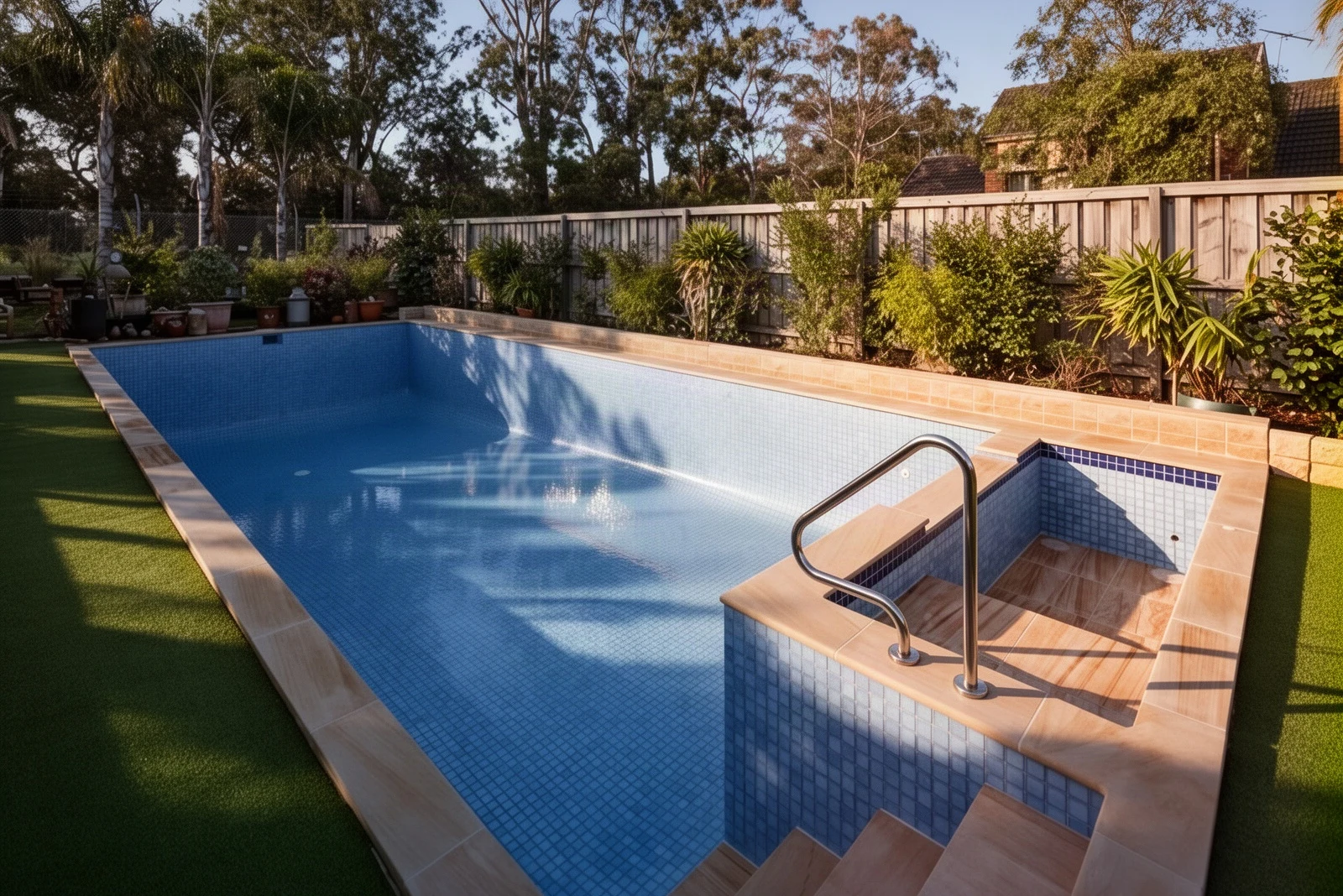
Out of repaints, so retiled, with sandstone paving around it.
Eagle Rock

Grey tile across pool and spa, seen from the air.
La Cañada Flintridge

Collected from customers on the routes we run every week.
Raymond K.Verified review
Local Guide · 52 reviews · 26 photos
20 November 2025
Karen V.Verified review
15 August 2026
Mike T.Verified review
8 July 2026
Diane F.Verified review
6 reviews · 2 photos
6 January 2025
Mark H.Verified review
Local Guide · 42 reviews · 18 photos
3 September 2025

Linda R.Verified review
4 reviews
25 May 2026
Kevin B.Verified review
15 December 2025
Jason T.Verified review
25 February 2026
Great company. Always on time, pool looks amazing and communication is easy. Highly recommend.
Tell us what the pool needs, how big it is and your ZIP — and a price the same day.
Rewards
$100 for every friend you send us, up to two. No code, no form — they call and mention your name.

$100 credit
For every friend who calls and mentions your name
Up to two referrals, $200 in total. The name must come up on the first call. Spend it on any service.
20% off one-time work
For weekly maintenance members
Green-to-clean, acid wash, plaster start-up and repair labor, plus priority on the schedule.
Where we work
Crews leave from Studio City every morning, across the Foothills and the neighborhoods next to them.
Office · Studio City
Send a photo of the floor in flat light and your calcium hardness history — two of the four answers are much cheaper conversations.
4121 Radford Ave, Ste. #214, Studio City, CA 91604Written for Foothill and Valley homeowners.

The decisions that are expensive to change afterwards.

Water has no colour of its own — the interior gives it one.

From the truck
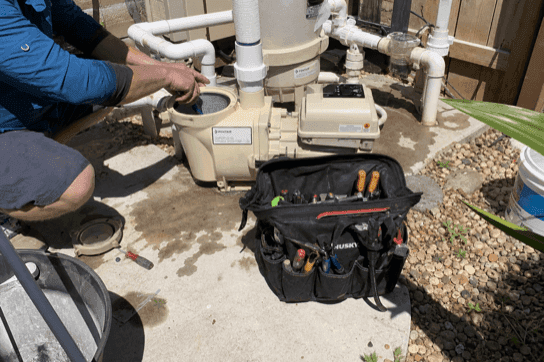
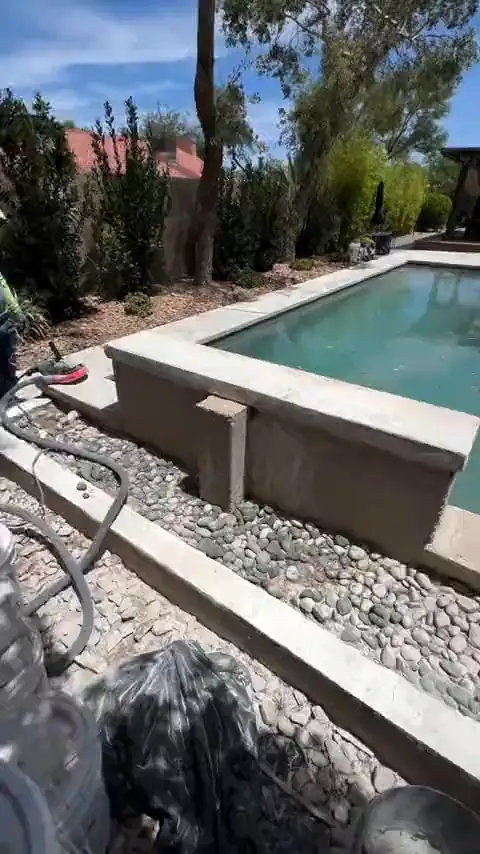
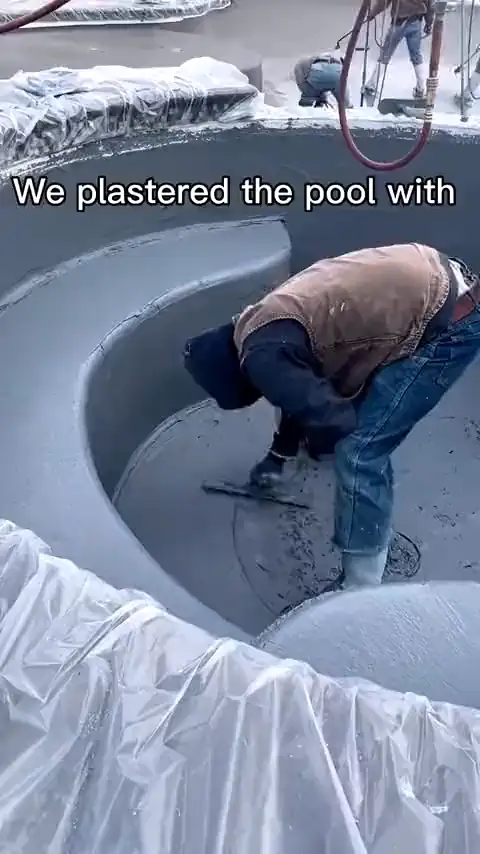
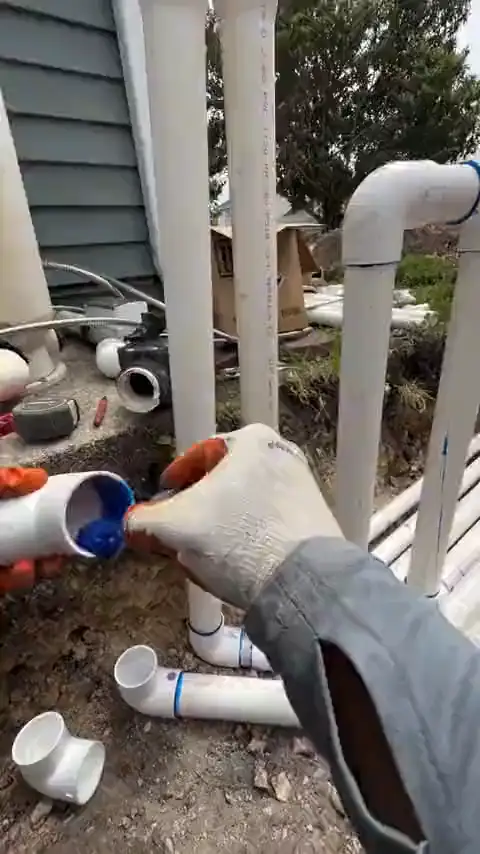
Nothing staged, nothing bought from a stock library — the same work, filmed while it happened.

Choosing a colour
Water has no colour of its own: you see the interior through six feet of it, with the sky on top. Pick the swatch, see the pool.
Pebble
Exposed aggregate: the toughest interior there is, and the one that hides a repair best.
Skye White
Pebble Tec, PebbleSheen and Pebble Fina from Pebble Technology; quartz finishes including Diamond Brite; and plain white plaster, which older pools here were built with and which many owners still call marcite. The three pebble grades differ by aggregate size — Pebble Tec is the coarsest underfoot, Pebble Fina the smoothest — and that is the choice most people actually care about, more than colour.
Almost every in-ground pool in Los Angeles is gunite or shotcrete: concrete sprayed against steel, then plastered inside. It changes the work in one important way — the finish is a separate layer from the shell, so a rough or stained interior can be replaced without touching the structure underneath. Fibreglass and vinyl pools cannot be resurfaced the same way, and the honest answer there is a different job entirely.
The final number comes after seeing the pool, because it follows the interior surface area of your shell, the finish you choose and what the chip-out reveals underneath — not a rate multiplied by a footprint. Access, the repairs the shell needs first, and whether tile and coping are in scope all move it. Where a Los Angeles job usually starts, and what pushes it either way, is set out on the resurfacing cost page.
Fifteen to twenty years is the usual industry reference for a plaster finish. Published estimates run wider — ten to twelve years for standard white plaster, fifteen to twenty-five for pebble. Treat it as a reference point rather than a guarantee: the difference between the ends of that range is mostly water chemistry.
Sometimes. A localised chip or pop-off on a surface that is otherwise smooth and holding chemistry is a patch, especially while the finish is young enough for the patch to justify itself. What a patch cannot do is rescue a worn finish: fresh plaster against fifteen-year-old plaster is a different colour on day one and stays one.
Sometimes, and it is a real decision rather than a shortcut. Where the existing coat is firmly bonded it can be prepared, bond-coated and plastered over. Where it is delaminating, hollow-sounding or already carrying several coats, it has to come out first. Each added coat also narrows the tile line.
Patching a single chip with a repair kit is a homeowner job. Resurfacing is not. A whole shell has to be plastered in one continuous pass, troweled or exposed inside a window of about an hour, and filled without stopping. It also means draining the pool, and it is licensed contractor work in California.
It stops being cosmetic and becomes a running cost, then a structural one. A porous, etched surface holds algae and stains, so chemical use climbs every year. As the finish thins and delaminates, water starts reaching the shell and the rebar behind it. There is a window in which replacing the finish is the cheapest thing on the table, and it closes.
They are the same job described two ways: replastering is one kind of resurfacing. The choice that actually matters is what goes back on — plain white plaster, coloured plaster, quartz or pebble. They differ in life, in how they feel underfoot and in what the water ends up looking like.
Resurfacing is priced by the interior surface area, not by the volume, so two 40,000-gallon pools can be quoted differently depending on shape, steps, benches and spa. We measure before quoting. For weekly service, where volume does decide the tier, a pool of that size starts at $219 a month.
It is worth it when the finish is what has failed and the shell behind it is sound, which is the usual case here. A porous, etched interior feeds an algae and stain cycle that costs more in chemicals every year, and the new surface ends it and puts another fifteen to twenty years between the water and the concrete. It is not worth it as a cure for a leak, a cracked beam or corroding steel — those are fixed first, or the new interior is undermined from behind and you pay for it twice.
Longer than the plastering, which is the part people time. Draining, chipping out the old finish, whatever repairs the chip-out reveals and the preparation are the days at the pool; the plaster itself then goes on in one continuous pass and the refill starts immediately. After that comes the part nobody budgets for: a 28-day start-up programme on the water chemistry, with nobody in the pool for the first 14 days. The dates are in the quote before we start.
Cleaning, recovery, repair and renovation across Los Angeles.
Family owned, based in Studio City
A clear picture of the floor in flat light is usually enough to say whether this is a resurface, a wash, a stain treatment or a patch.


