
Leaf load and ash
Sets how often skimmer, pump and leaf-canister baskets fill, and how often the filter comes apart to be washed.
Thirty-five communities, run as routes rather than as a radius on a map — which is why the day of the week matters when you ask.

Licensed, insured and family-owned


Where we work
An alphabetical list of city names tells you nothing. A pool in La Cañada and a pool in Encino are not the same job.
Foothill communities
Altadena, Pasadena, La Cañada Flintridge, La Crescenta, Sierra Madre, Arcadia, Monrovia, Alhambra, Montrose, South Pasadena, San Marino, San Gabriel, Sunland and Tujunga. The leafiest pools we service, where baskets and filters do the most work.
San Fernando Valley
Studio City, Sherman Oaks, Encino, North Hollywood, Burbank, Toluca Lake, Valley Village and Universal City. The hot end of the service area, and heat is a chemistry problem before it is a comfort problem.
Eastside and Central Los Angeles
Glendale, Eagle Rock, Los Feliz, Silver Lake, Echo Park, Highland Park, Glassell Park, Mid-City and Downtown Los Angeles. Older streets, older pools, and equipment that fails from age rather than neglect.
Westside and the hills
Beverly Hills, Hollywood, Hollywood Hills and West Hollywood. Slope changes the work more than the postcode: long plumbing runs, stairs to the deck, and gates that have to be arranged rather than assumed.
How the schedule really works
A radius on a map is a marketing drawing. A route is a real day: one loop, with the chemicals and spare parts for the pools on it already on the truck.
Every address here sits on a route that runs on a particular day — which is why the useful question is not whether we cover your city but which day we are on your street.
The day is when the gate needs unlocking, and when a heater fault or a party cleanup gets fitted in without a special trip. Ask for it when you ask for the price.


Two identical pools ten miles apart
What separates them is usually one of these.
Sets how often skimmer, pump and leaf-canister baskets fill, and how often the filter comes apart to be washed.

Inland sun eats free chlorine and burns through stabilizer, which is why the weekly panel reads the whole set rather than two numbers at the gate.

Long runs between pad and water make pumps and heaters work harder, and hide leaks better.

Top-up water leaves its calcium behind, so hardness climbs all summer — scale on the tile line first, then inside heaters and salt cells.
Worth asking anyone, us included
Our office is in Studio City, and the routes run out from there into the Valley, over the hill and east along the foothills.
The crew
Four of us. The same faces every week, not whoever was free that morning.


On the routes above
Glendale, Eagle Rock, La Cañada Flintridge and La Crescenta sit on four different days.

Hollow render and rust cut out, then the whole shell tiled.
Glendale
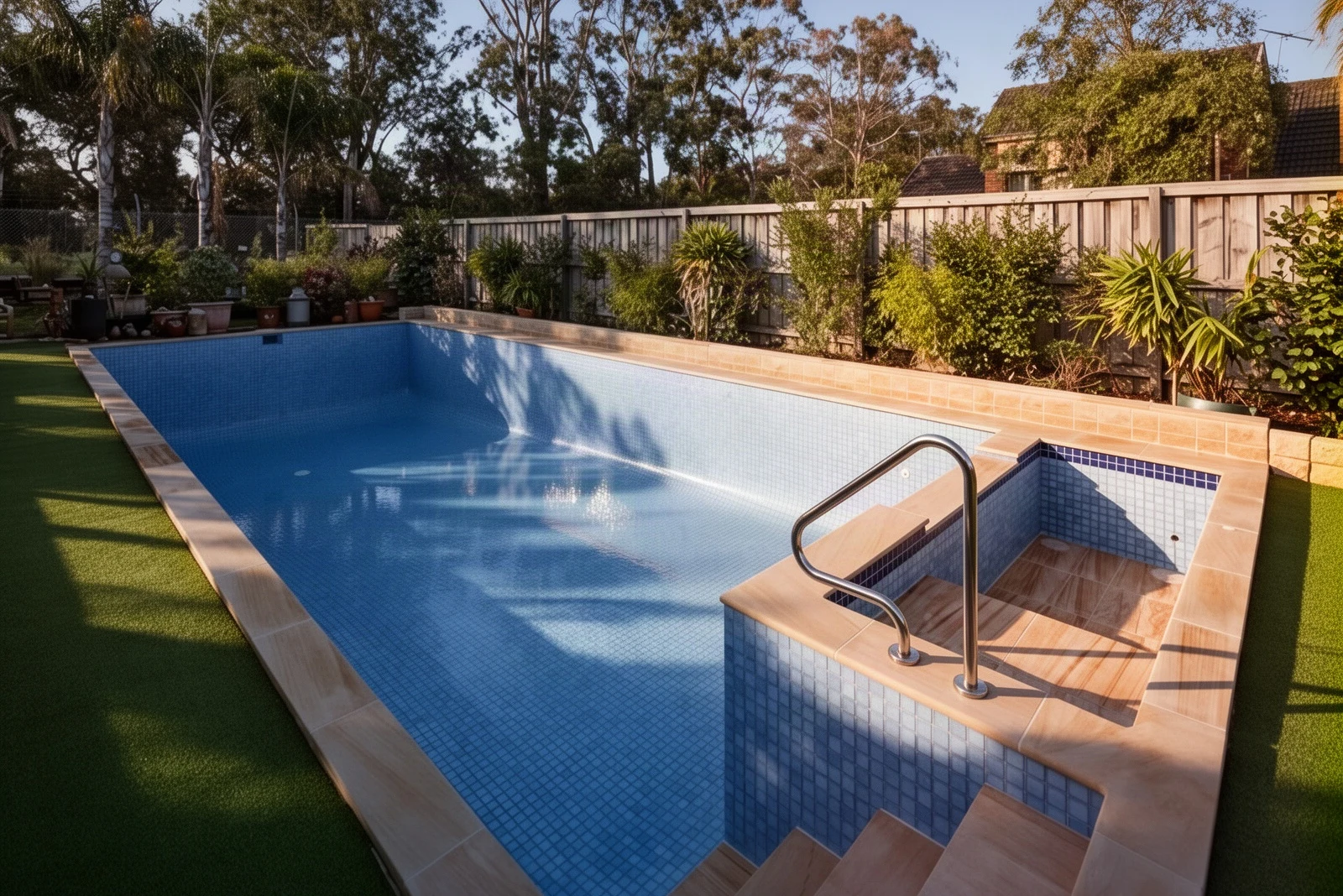
Out of repaints, so retiled, with sandstone paving around it.
Eagle Rock

Grey tile across pool and spa, seen from the air.
La Cañada Flintridge

Mark H.
Local Guide · 42 reviews · 18 photos
3 September 2025

Linda R.
4 reviews
25 May 2026
Kevin B.
15 December 2025
Jason T.
25 February 2026
Great company. Always on time, pool looks amazing and communication is easy. Highly recommend.
Ashley P.
11 reviews
4 March 2026
Thomas W.
Local Guide · 27 reviews · 9 photos
10 February 2025
Rachel M.
17 October 2025
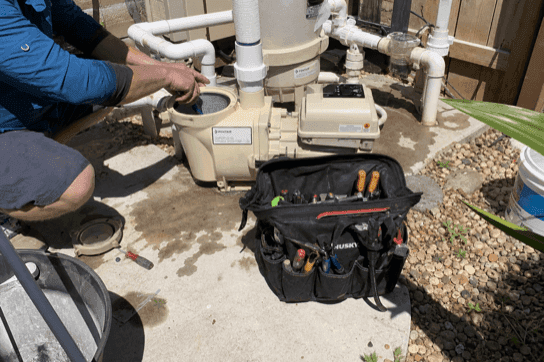
We thought we needed a completely new pool system. Turns out it was just a few issues with the pump and filter. They saved us a lot of money by fixing what actually needed fixing.
Jennifer C.
Local Guide · 15 reviews · 4 photos
7 September 2025
Tell us what the pool needs, how big it is and your ZIP — and a price the same day.
Rewards
$100 for every friend you send us, up to two. No code, no form — they call and mention your name.

$100 credit
For every friend who calls and mentions your name
Up to two referrals, $200 in total. The name must come up on the first call. Spend it on any service.
20% off one-time work
For weekly maintenance members
Green-to-clean, acid wash, plaster start-up and repair labor, plus priority on the schedule.
Where we work
Twenty of the thirty-five have a page of their own. The rest are on the same routes.

Send your ZIP or cross streets. We come back the same day with the day we would be there — and what weekly service would cost on your pool.
Or call (818) 740-6099
The pool sets the price, not the name of the community.
Written for Foothill and Valley homeowners.


Missed weeks, a full basket, a filter nobody has opened.

Consistency is what keeps clarity from slipping in the first place.
From the truck
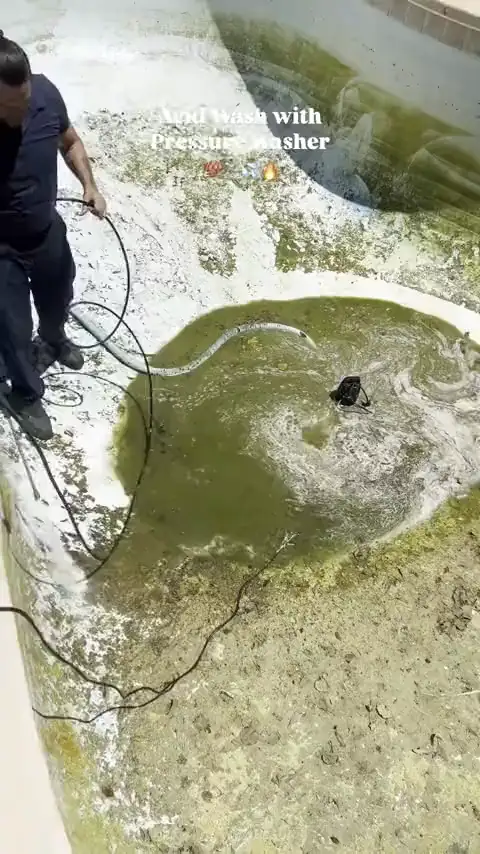
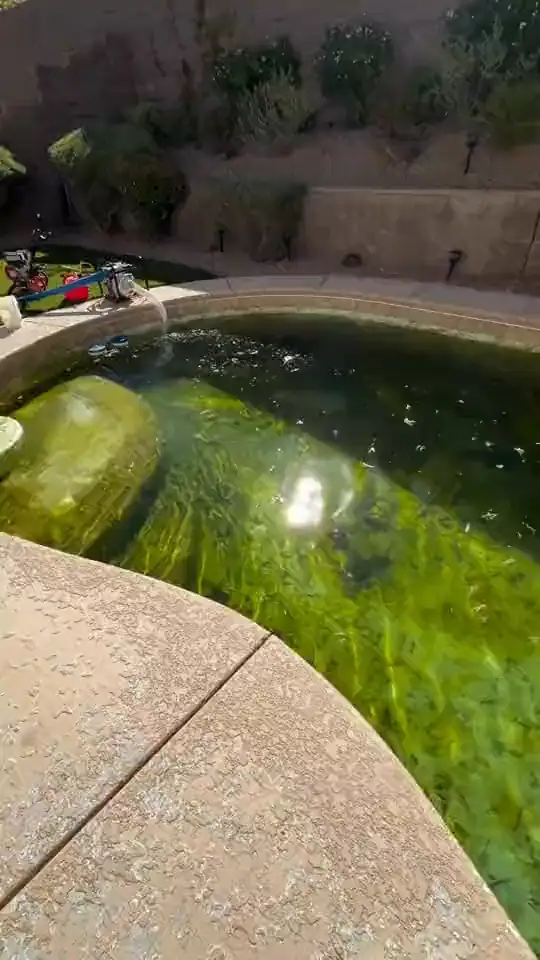
Nothing staged, nothing bought from a stock library — the same work, filmed while it happened.


Possibly, and it is worth asking. The list is the communities our routes run through, not a boundary. Neighborhood boundaries in Los Angeles are vaguer than any list makes them look, and plenty of streets sit a few blocks outside a name on this page and already sit on a route that passes them. Send the address rather than the neighborhood and we will check it against the routes.
It depends which route your address falls on, so we answer per address rather than per city. Ask for it at the same time as the price.
The name of the community does not set the price. The pool does: gallons and surface area, spa and features, salt or chlorine, filter cleans, and how much time access takes. Those cluster geographically, which is why Foothill pools often price above Valley pools of the same size.
Yes. A spa is a second body of water with its own chemistry and equipment, and the same weekly plan covers both.
Yes — as a green-to-clean recovery first, then a route stop once the water is clear. And if an address does not work for us, we will say so rather than book you and quietly miss weeks: a pool serviced whenever the schedule allows is worse off than a pool on someone else's route.
No. Weekly service starts at $159 a month for a pool up to 15,000 gallons and runs to $249 a month for pools over 40,000, with standard chemicals included, and the price is the same in every community on this page. The pool decides the number, not the address. One-time work is quoted on the job: green to clean from $349, acid wash from $749, equipment repair at $175 an hour.
Cleaning, recovery, repair and renovation across Los Angeles.
If your street is not on the list
Ask anyway, and be ready for a straight answer either way.