
Article
Pool Plaster Cracks in Los Angeles: Which Ones Matter
Hairline crazing stays in the plaster; a crack that runs into the tile or bleeds rust is in the shell. How to tell them apart, patch a small chip, and what repairs cost.
Cloudy, green, salty or simply the wrong temperature — what each one means and what actually fixes it.
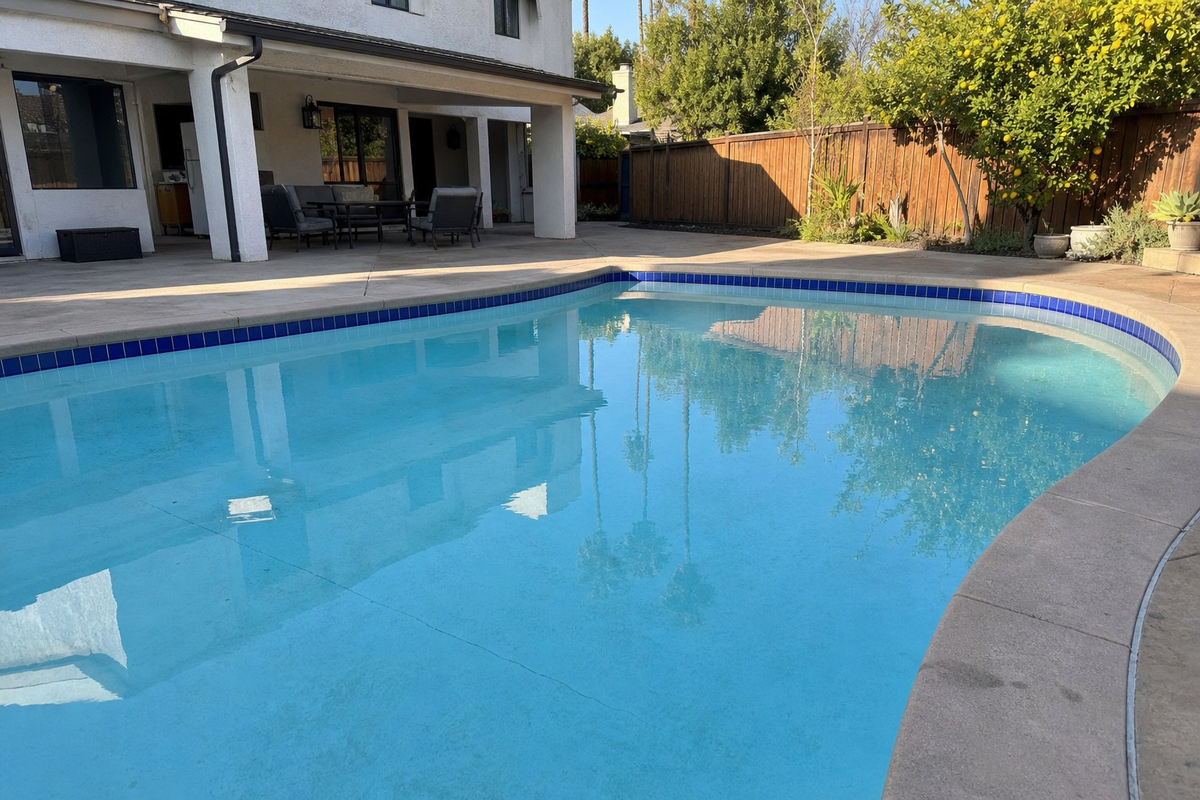
Hairline crazing stays in the plaster; a crack that runs into the tile or bleeds rust is in the shell. How to tell them apart, patch a small chip, and what repairs cost.
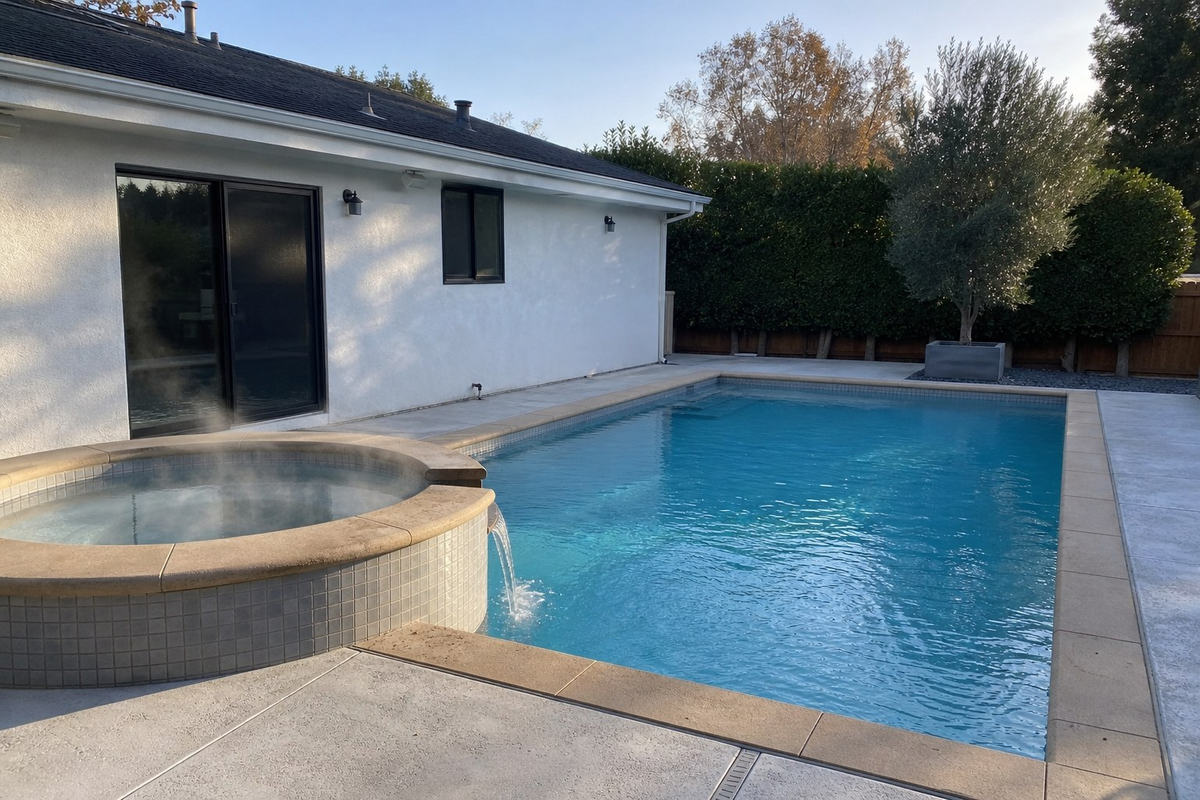
Most LA hot tubs are spas built onto the pool and share its water. Spa numbers, sanitizer after every soak, filter rinses, when to drain a stand-alone tub and what spa care costs.
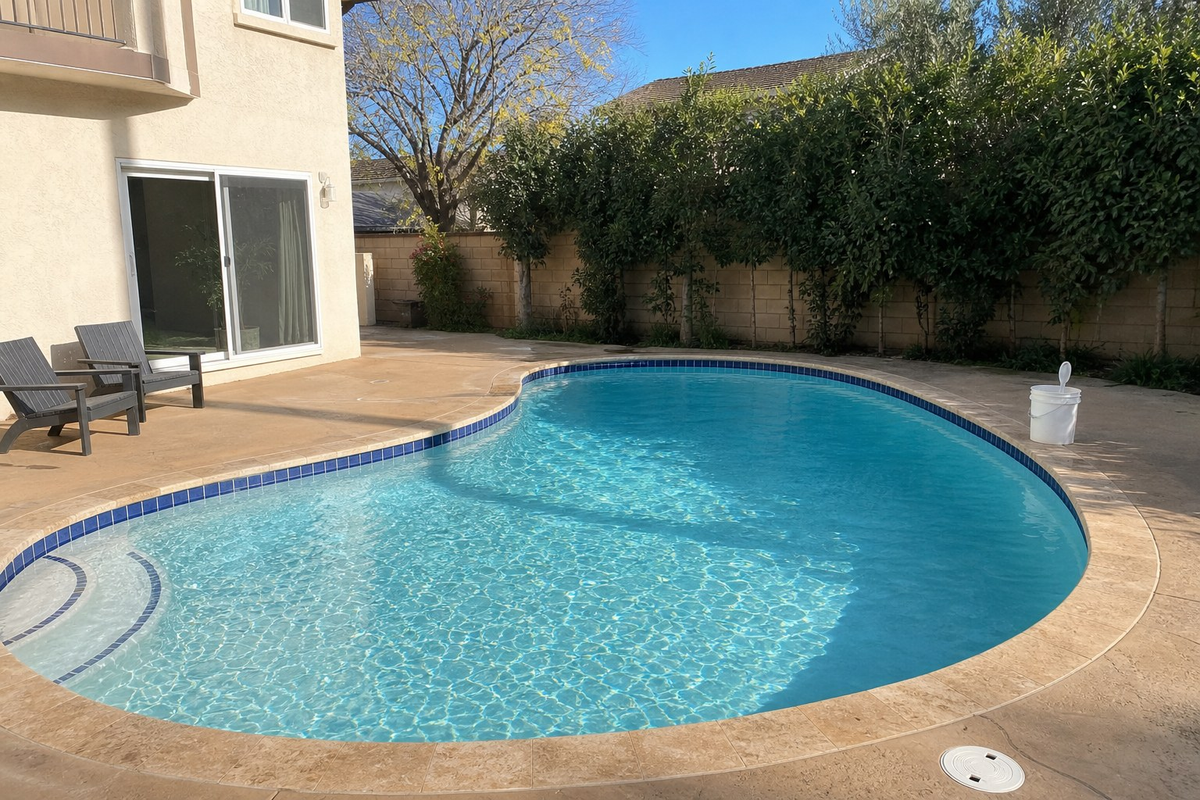
Borates slow the pH climb and make algae slower to start, but they don't sanitize. Boric acid or borax, pounds per pool, how to add them and when to skip them.
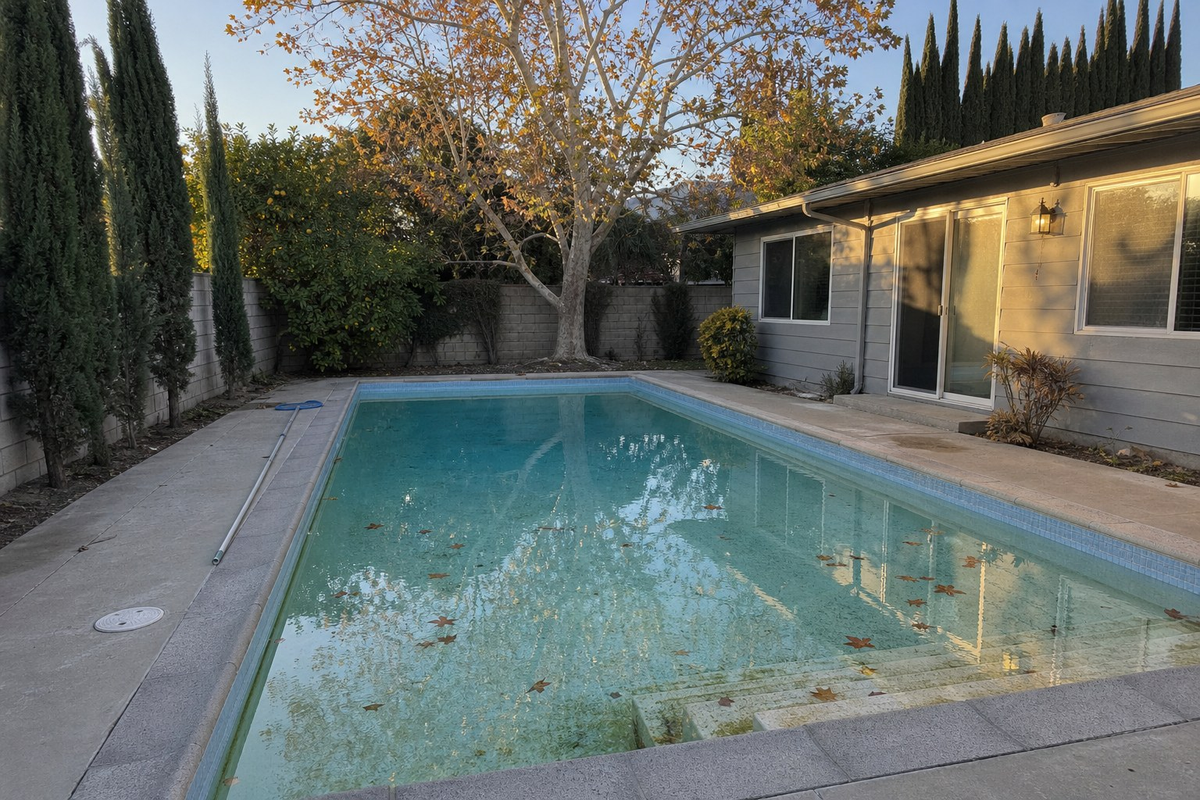
Water boatmen come for the algae film on the plaster, backswimmers come for the boatmen. Brush, net, hold chlorine and switch off the lights, plus what to do about bees, frogs and worms.
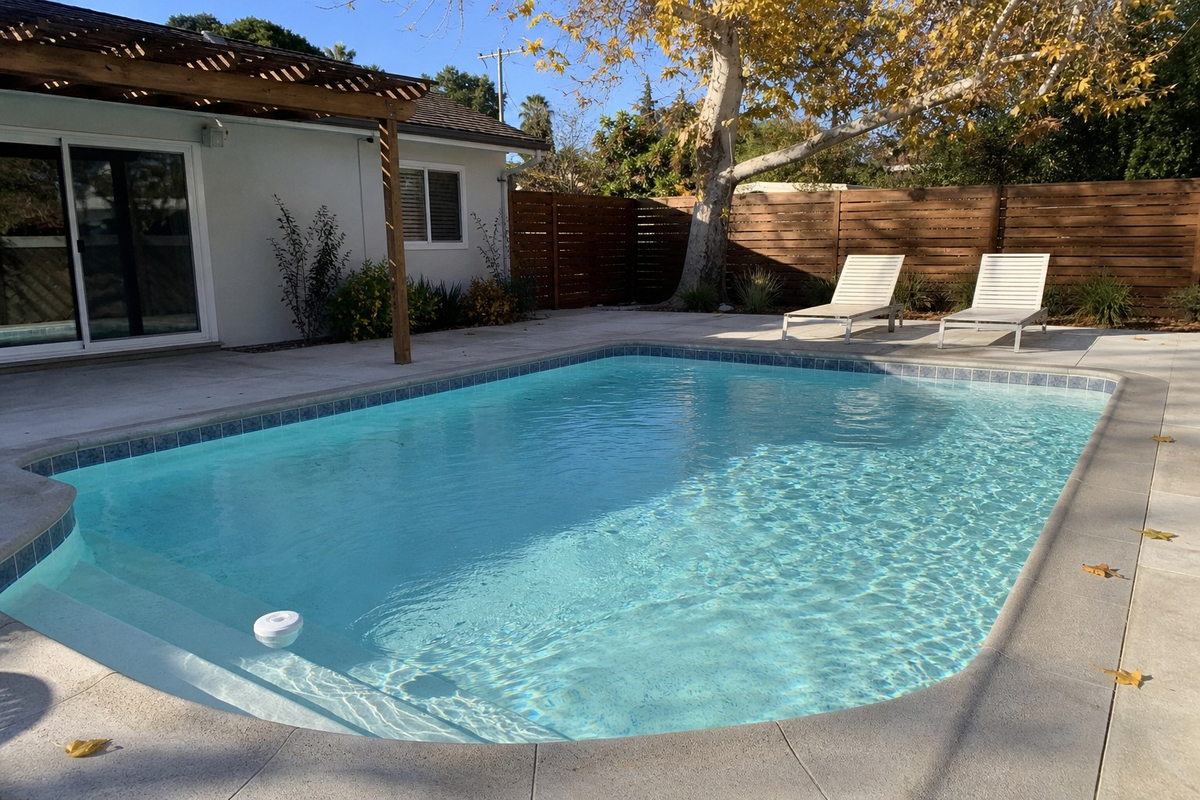
Shut off the floater, feeder or salt cell first, then choose a speed: sun and time for free, a neutralizer in small steps, or a partial drain as the last resort. Plus why a test can read zero at 15 ppm.
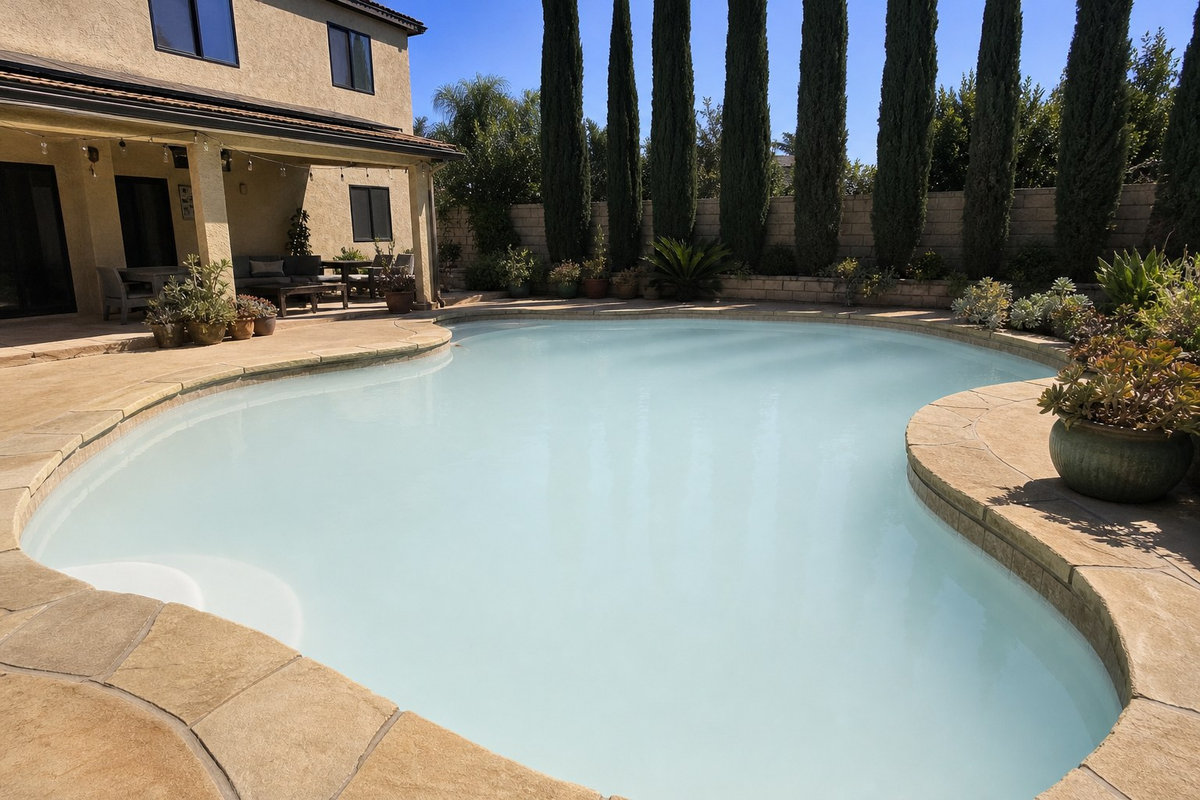
Floc sinks milky water to the floor for a slow vacuum to waste; clarifier lets the filter catch it over days. Which one your filter can handle, both routines, and the overdose trap.
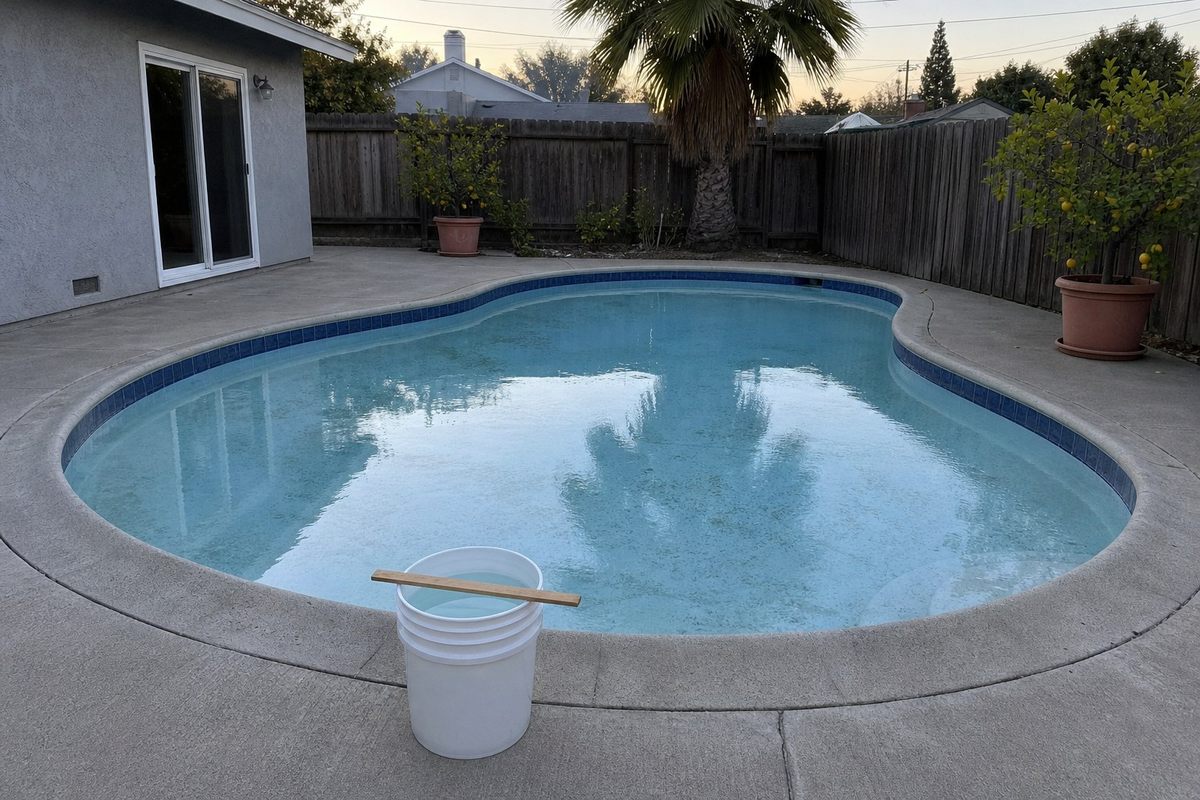
Read combined chlorine, pick a shock that won't pile calcium or stabilizer into hard LA water, dose it against your stabilizer and check the result overnight.
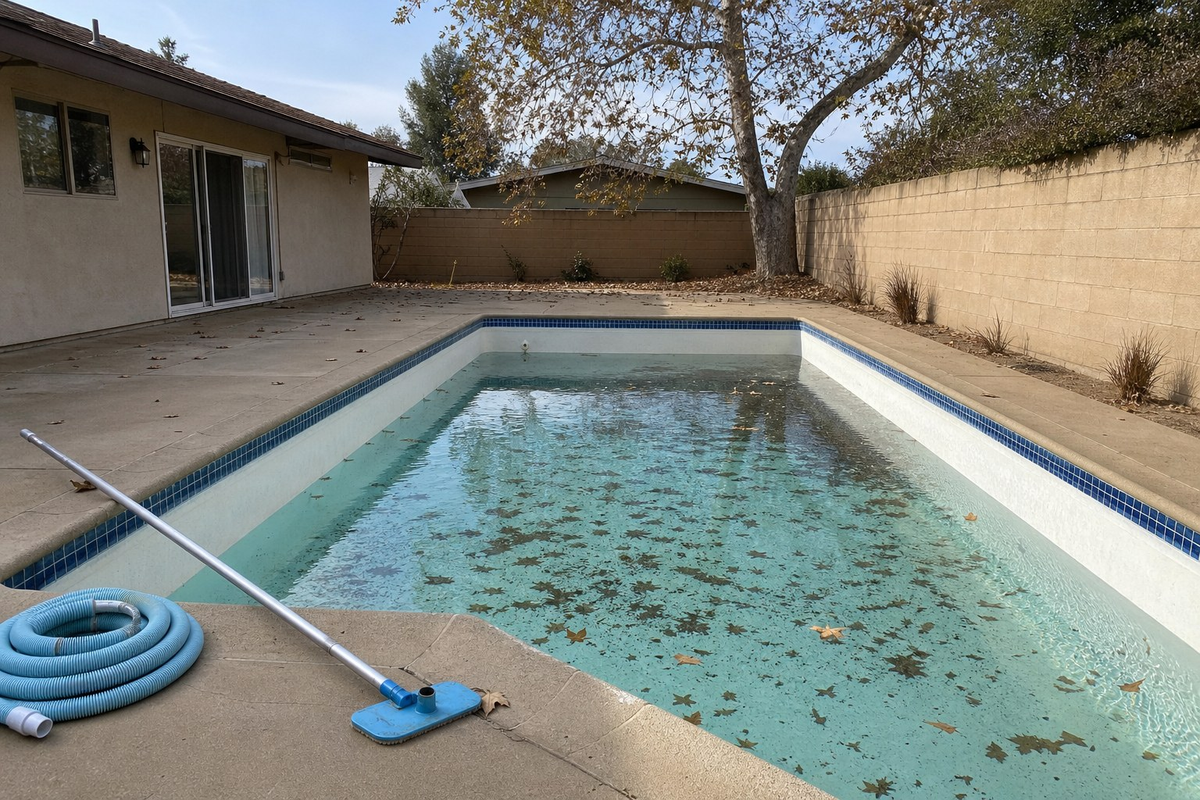
Prime the hose so the pump keeps its prime, send dust and ash to waste or through the filter by filter type, and clear the floor in slow lanes.
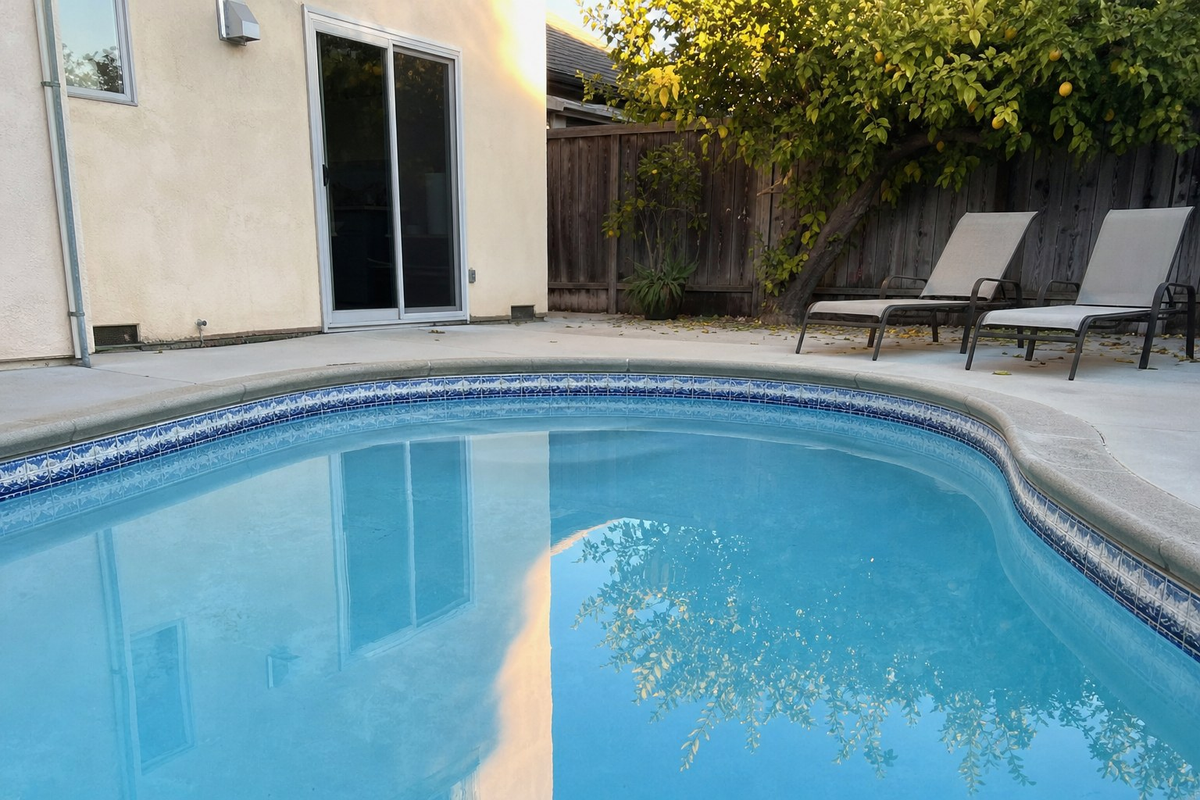
LA tap water brings calcium of its own. Test the hose, work out how much to replace, when to live with 450, and how to raise a low reading.
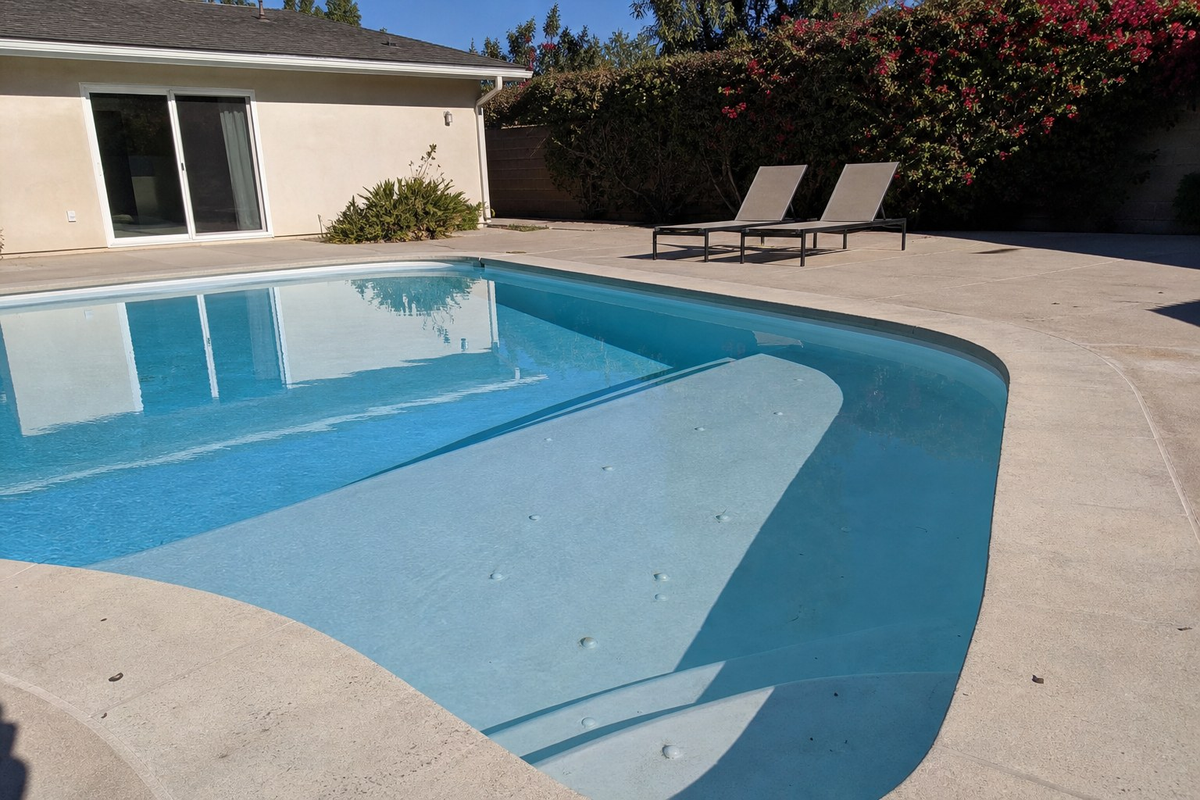
White bumps on the steps grow out of cracks in the plaster. How to tell them from scale, sand them off, and when a patch is enough.
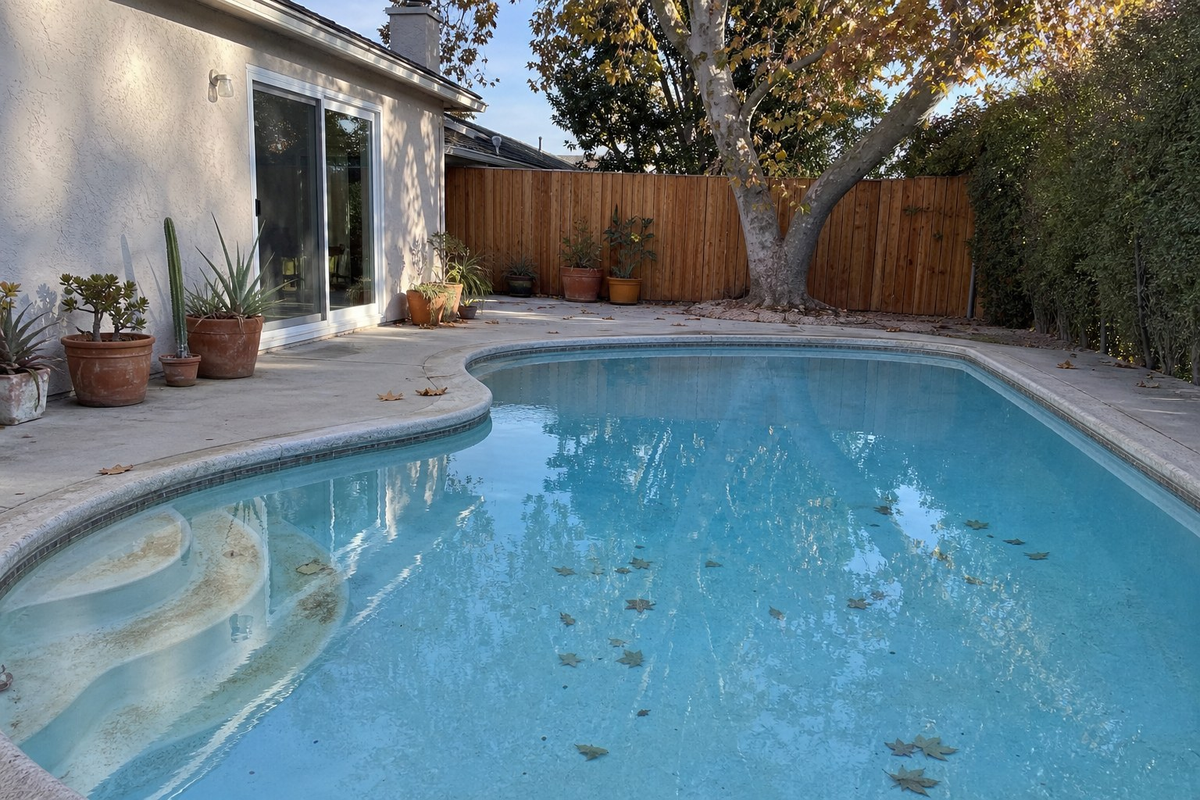
Two spot tests that tell leaf from metal, chlorine for organic marks, ascorbic acid for iron and copper, and when it is an acid wash.
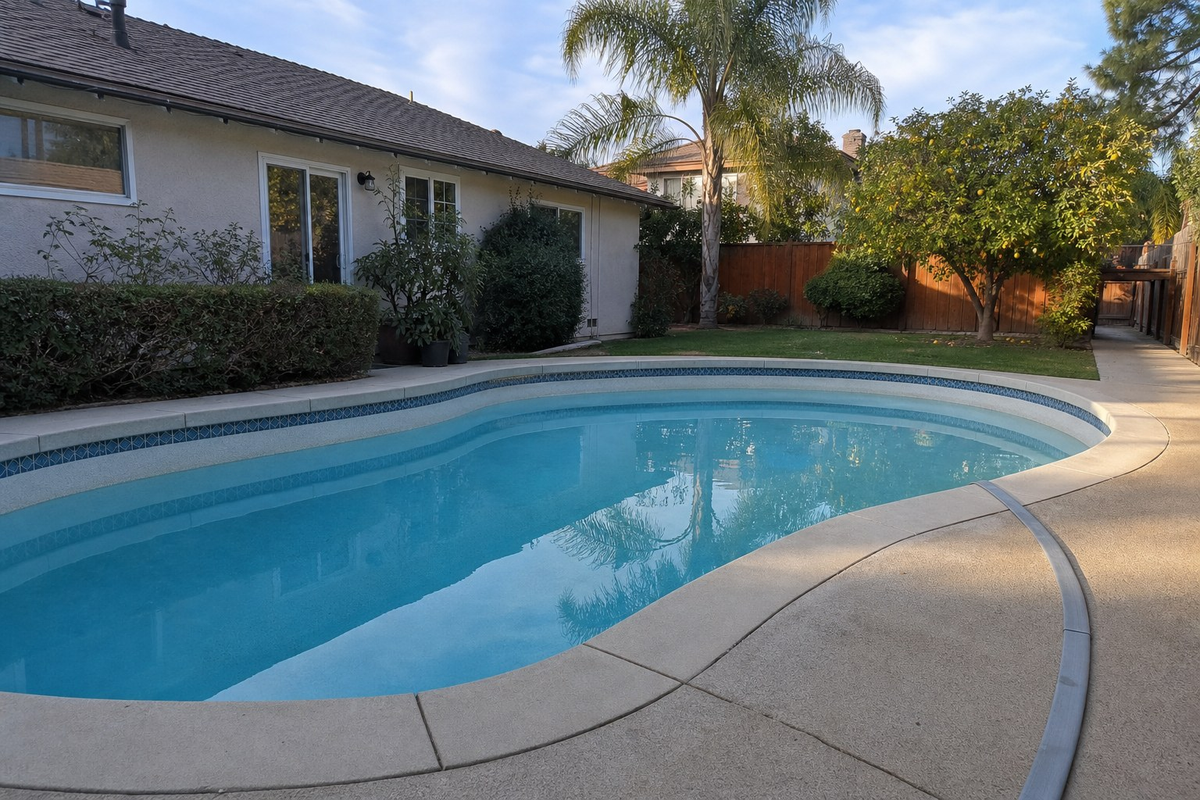
Whether you need to drain at all, what groundwater does to an empty shell, where the water may go, and how to refill.
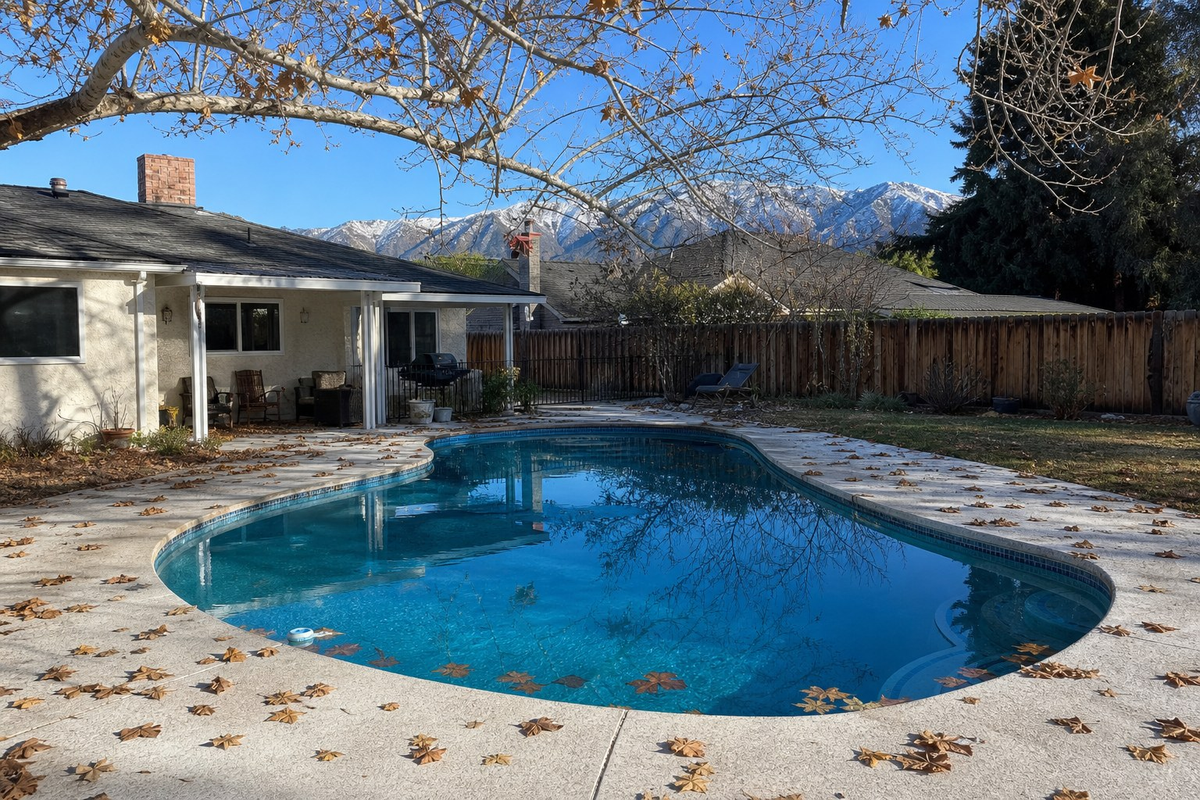
LA pools never close, so winter is a shorter list. Why you should not drain it, what changes with cold water, and the few nights that freeze.
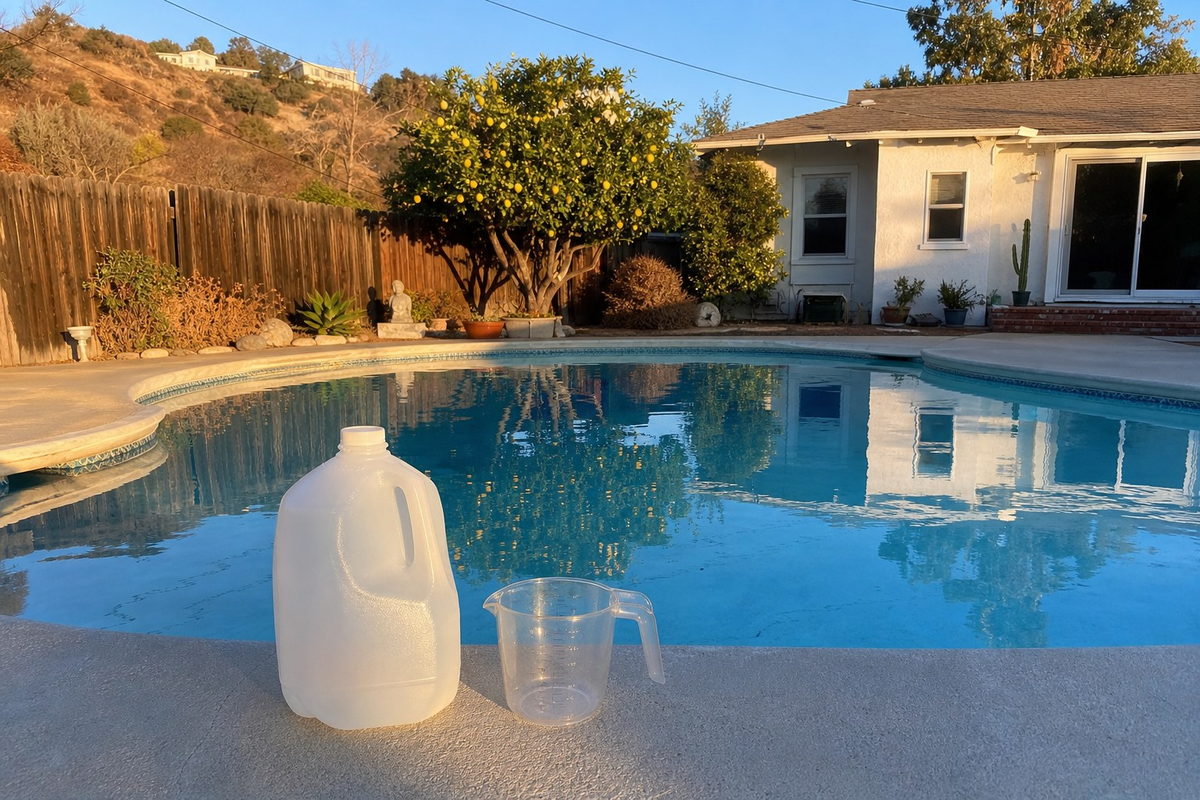
Liquid chlorine adds no stabilizer and no calcium. How to work out the dose from the label, when to pour it, and how to store a jug.
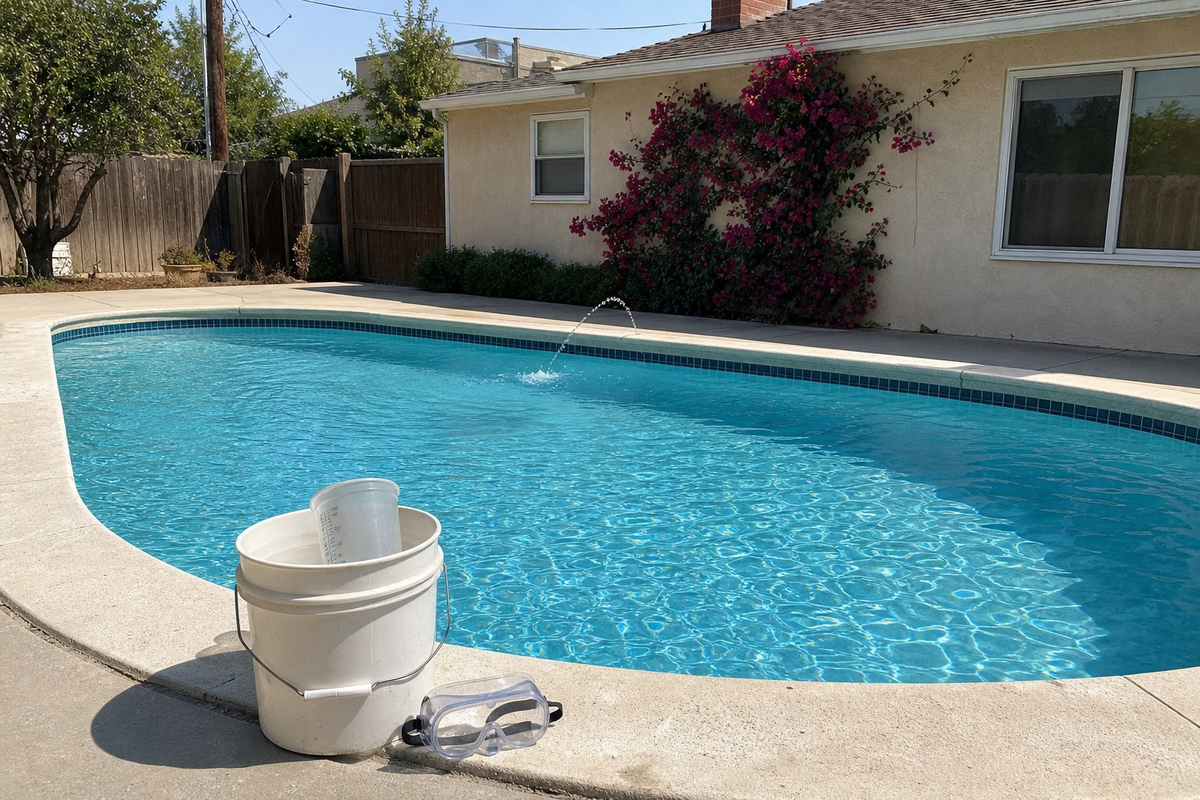
If pH climbs back a few days after every correction, alkalinity is usually the cause. The difference between the two, and the acid-and-aeration method that fixes high readings.
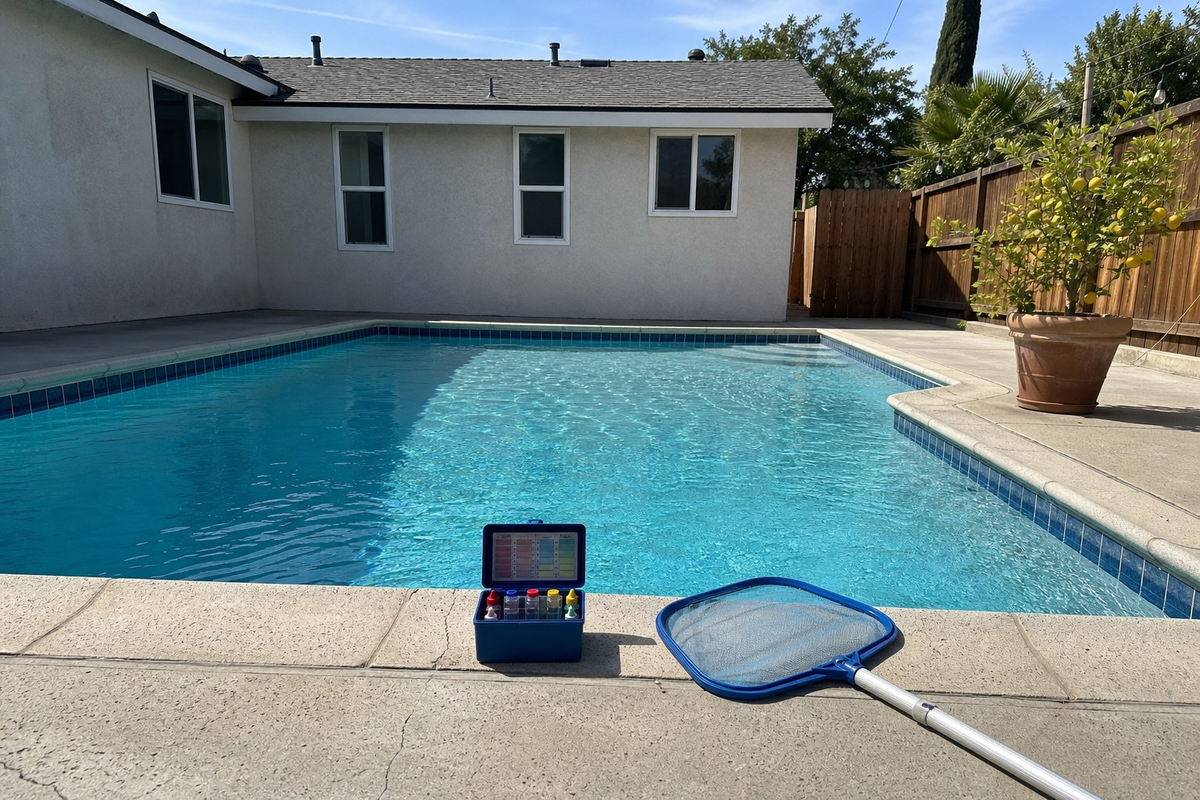
Five readings decide whether a pool stays clear, and they push on each other. The ranges, the order of repair, and what hard LA tap water does to pH.
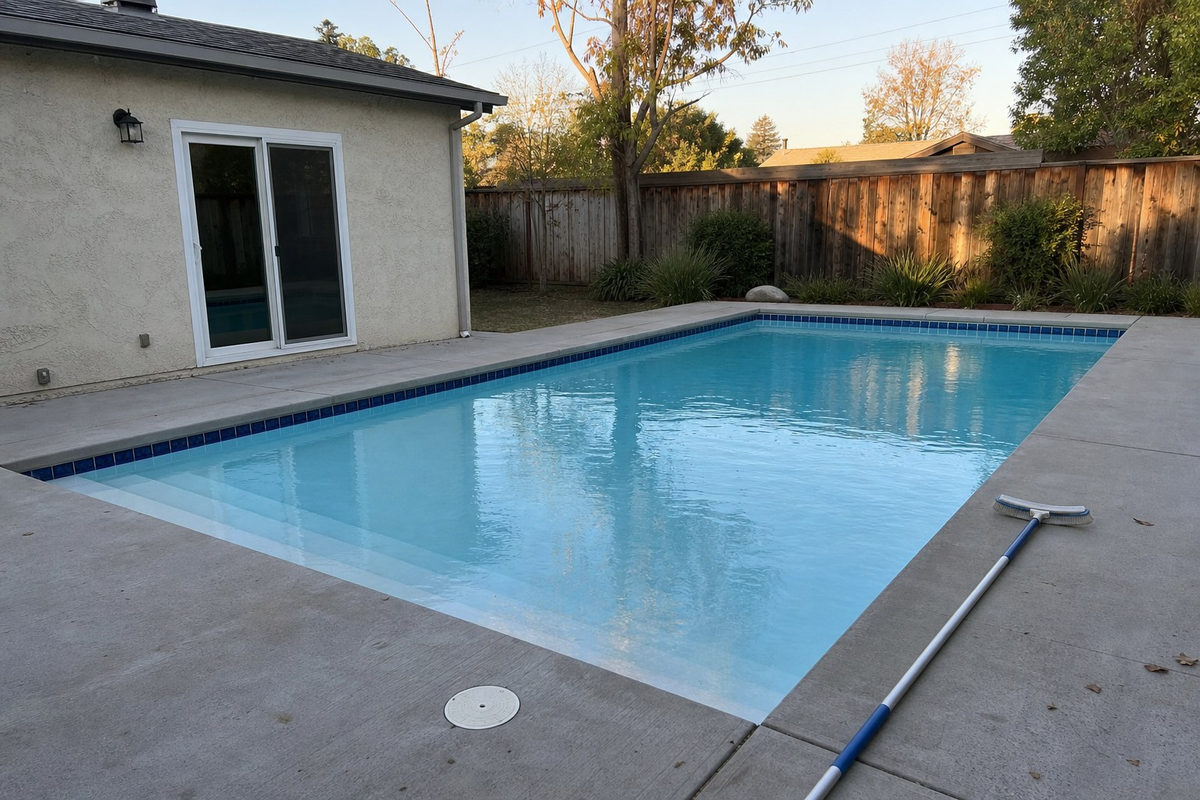
Pebble lasts about twice as long and costs about twice as much. What each surface does in LA water, what it asks of your care, and which one fits your pool.
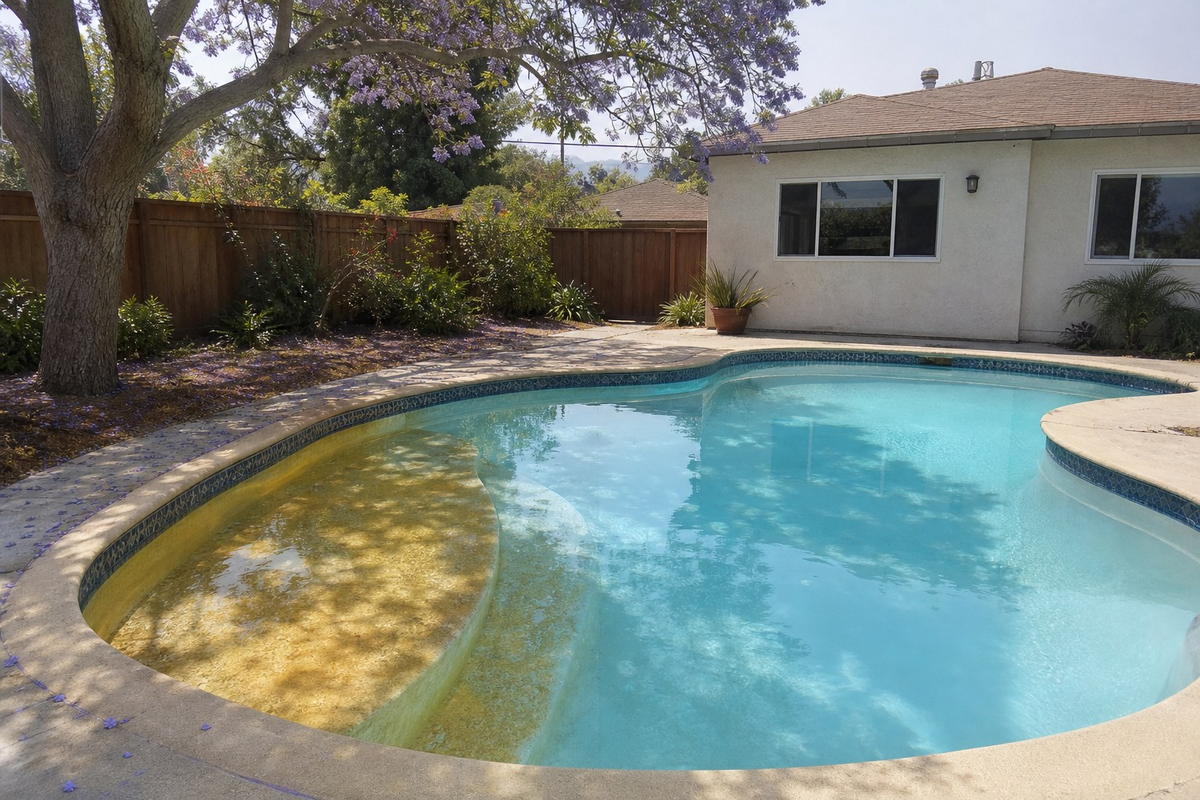
Yellow dust that brushes off and is back by morning. How to tell it from pollen, why a normal dose of chlorine fails, and what to treat besides the water.
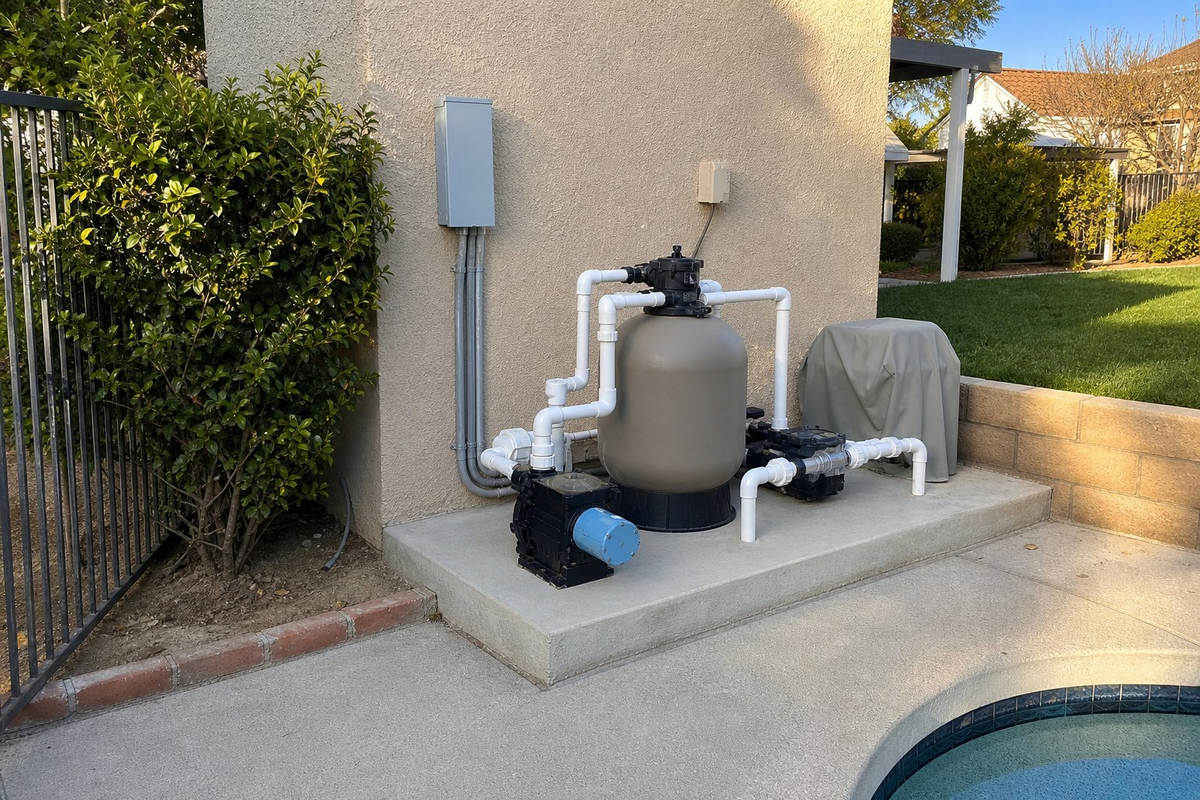
A salt system makes its own chlorine and nothing else. What to test each week and month, how to clean a scaled cell, and how to add salt.
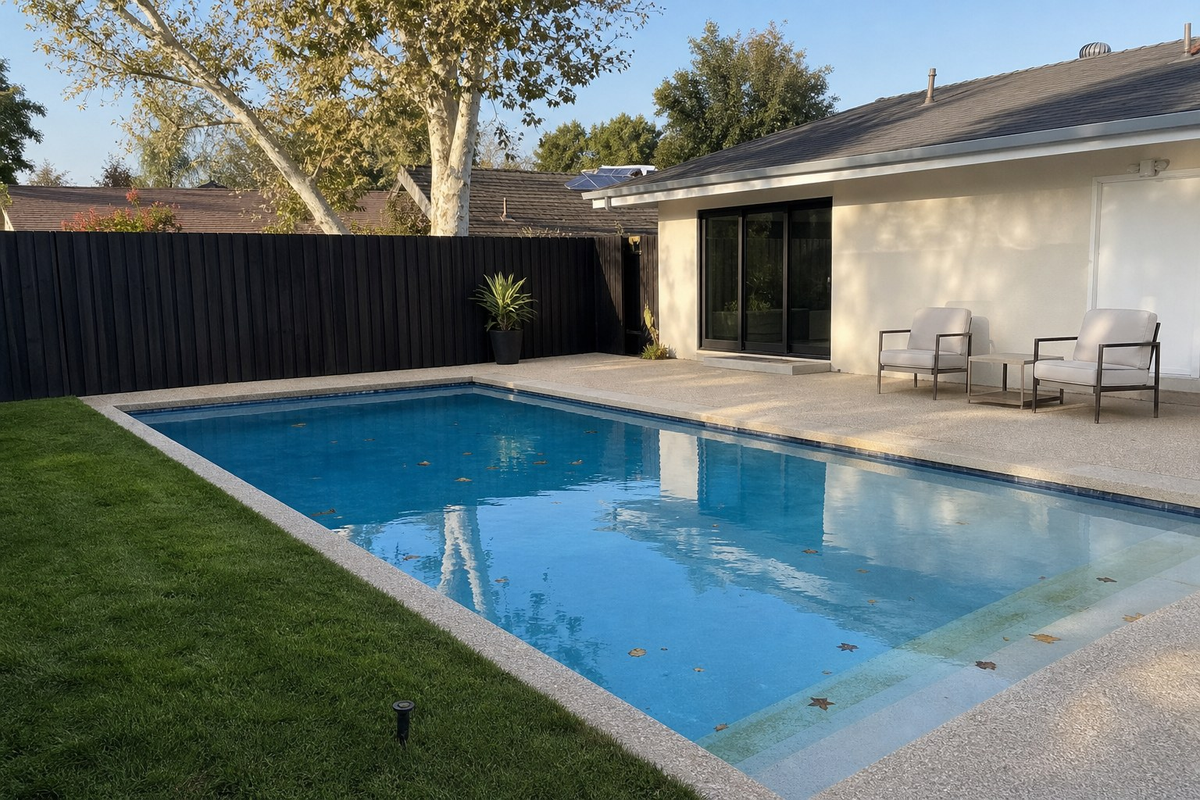
Phosphate feeds algae, but chlorine decides whether it grows. The reading worth treating, where Valley and foothill pools pick it up, and the order to remove it.
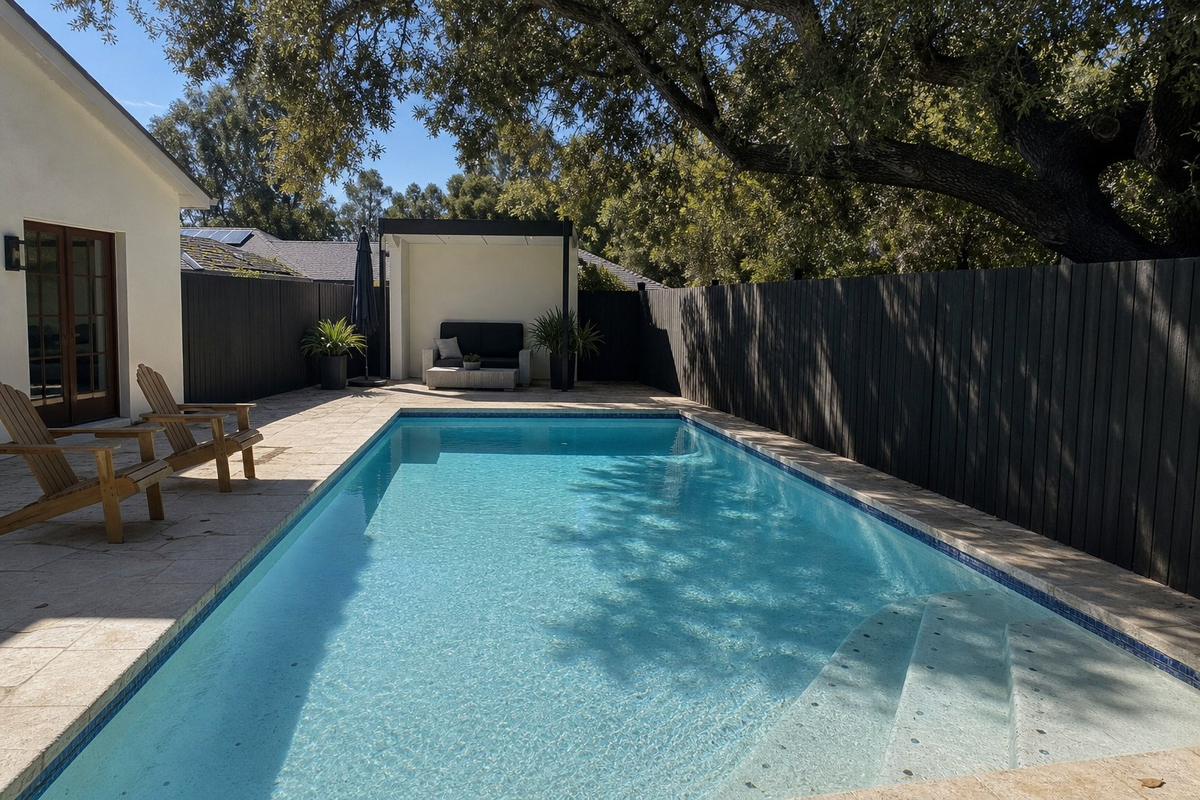
Dark spots on the steps that shrug off shock. How to tell algae from a stain, the order that kills it, and when the plaster needs an acid wash.
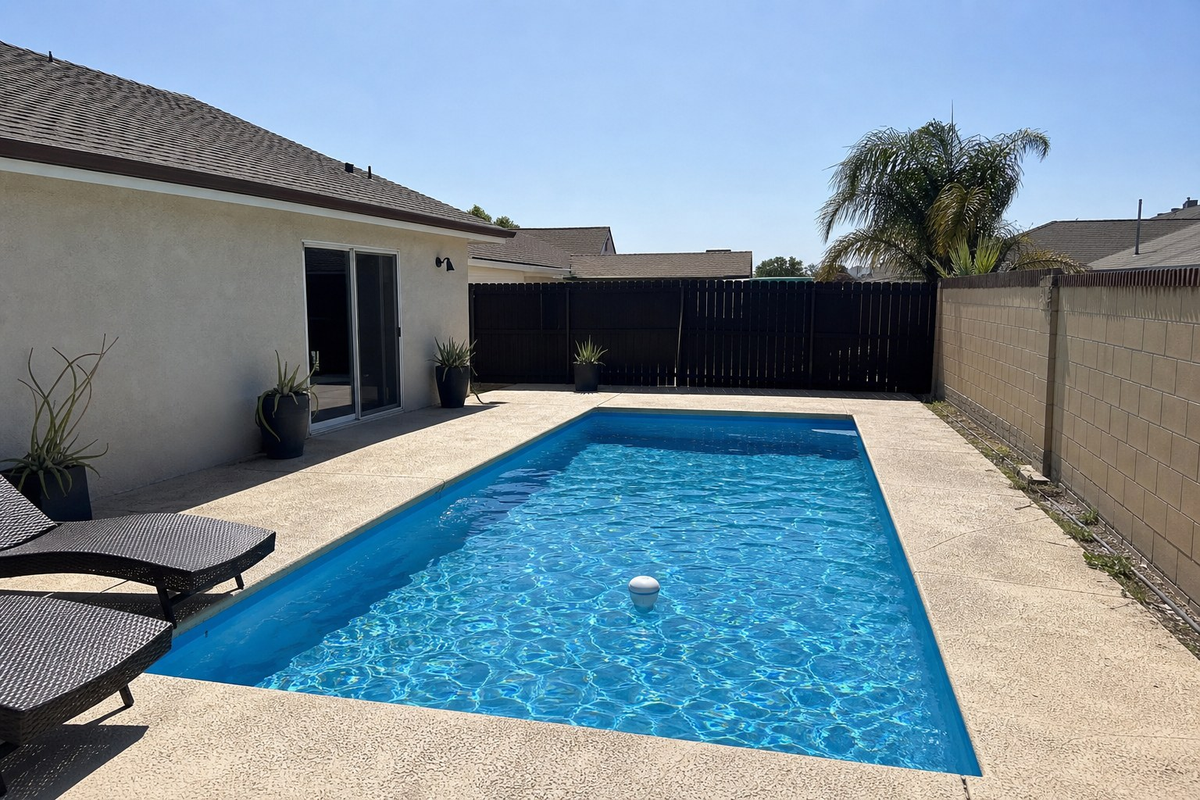
Cyanuric acid keeps the sun off your chlorine until there is too much of it. The level to aim for, where the extra comes from, and how to lower it.
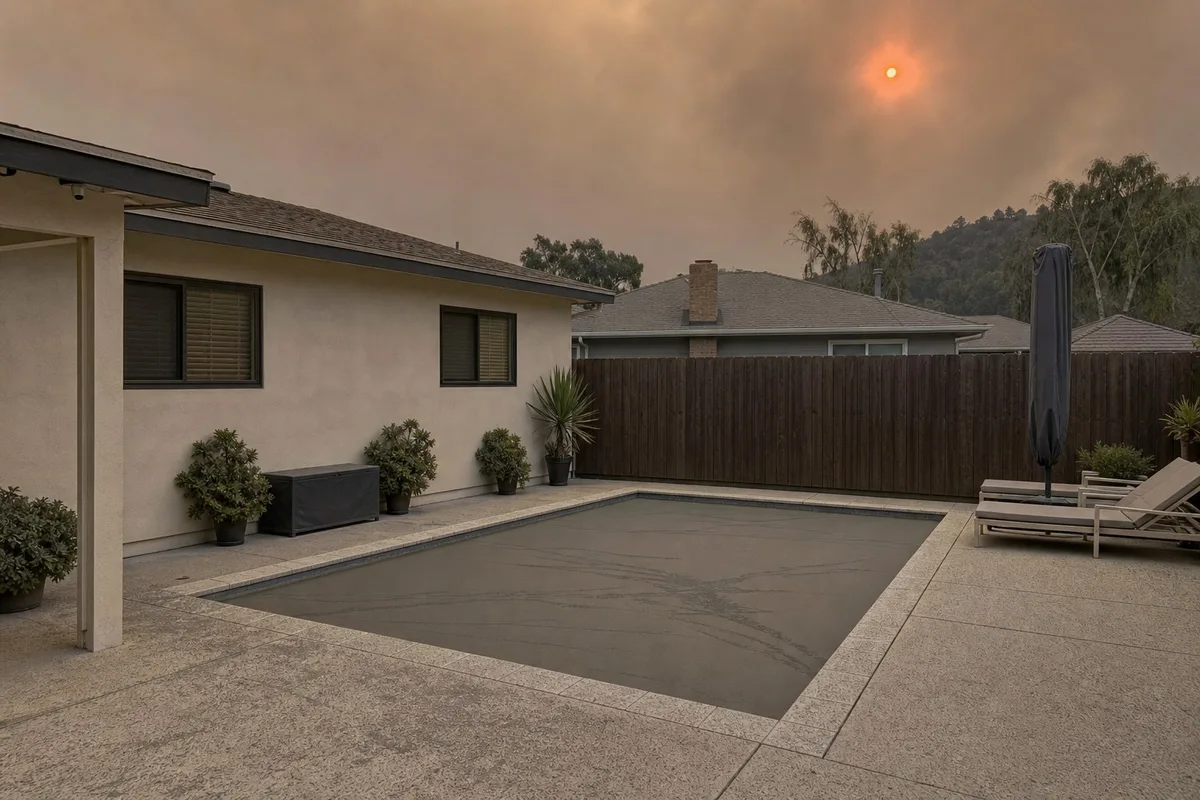
Ash is alkaline, carries phosphate and goes straight past a skimmer. What to do while it falls, and the order to work in afterwards.
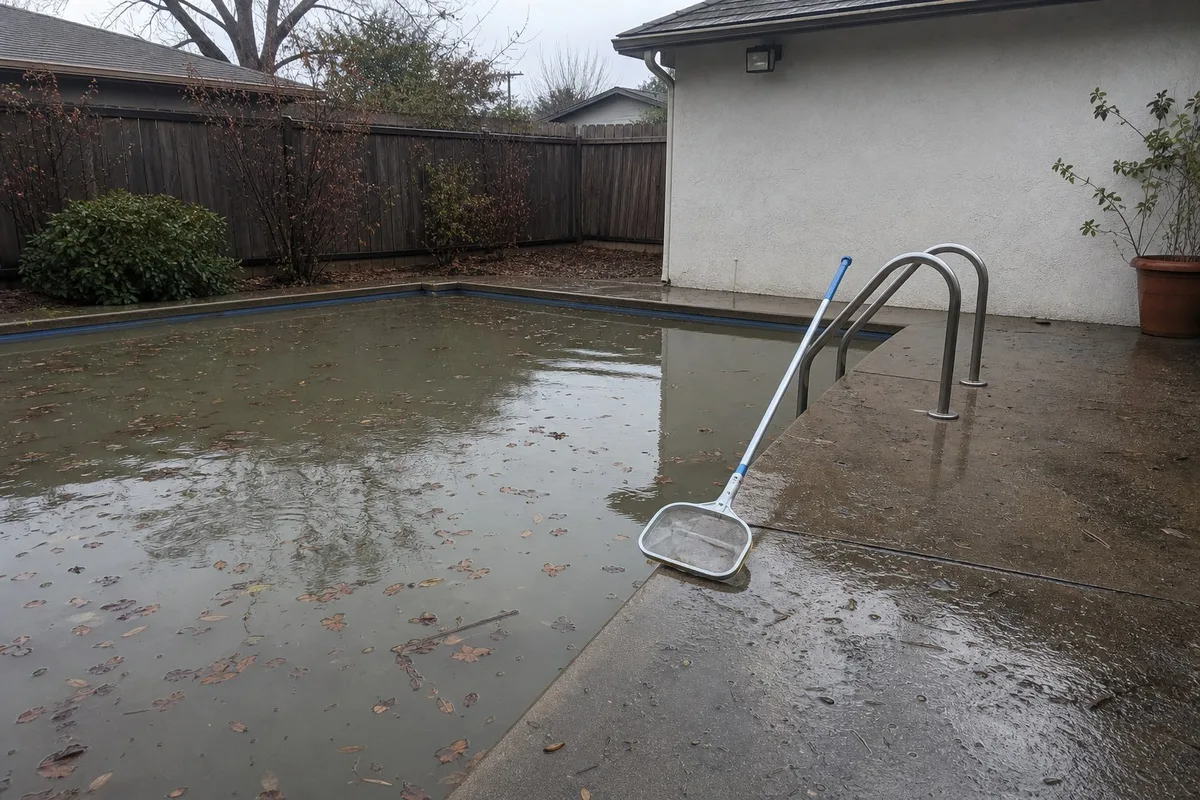
Rain drops the chlorine, lifts the level over the skimmer and fills the baskets. The order to work in, and where the overflow may legally go.
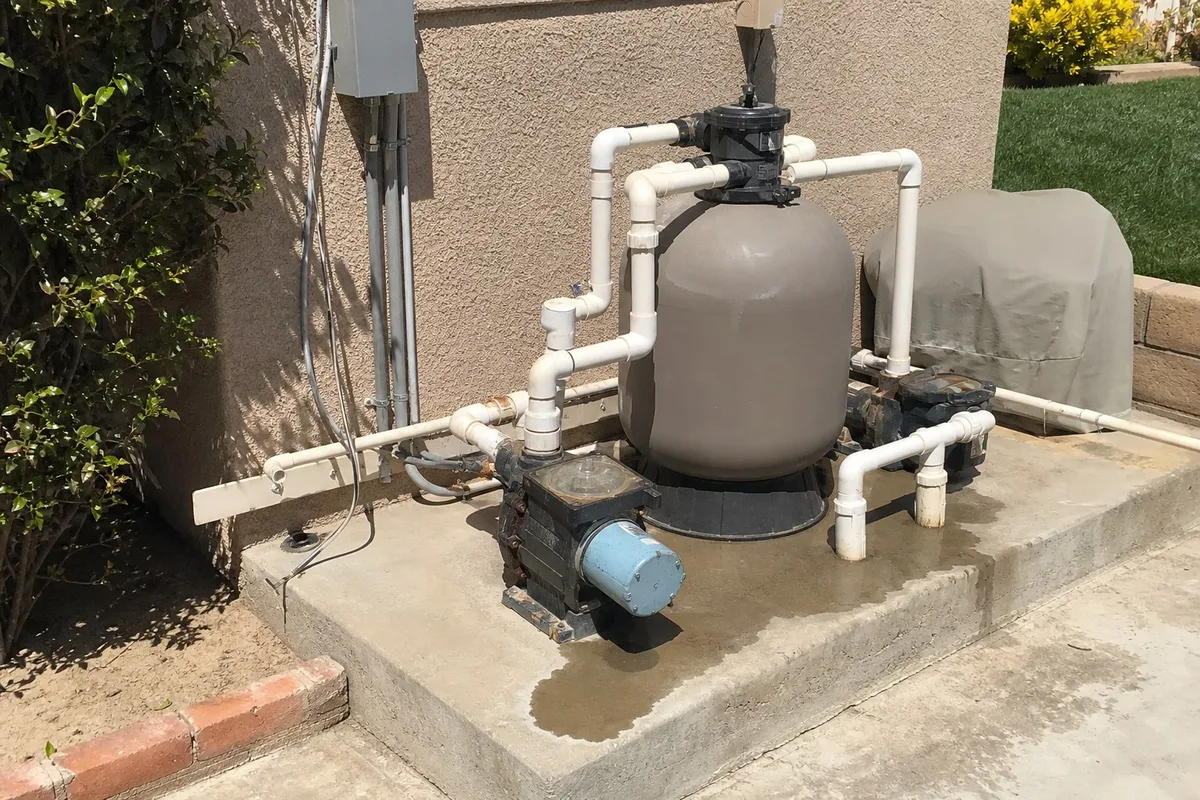
What the swap really costs here: equipment, labour, and the California rule that decides which pump you are allowed to fit.
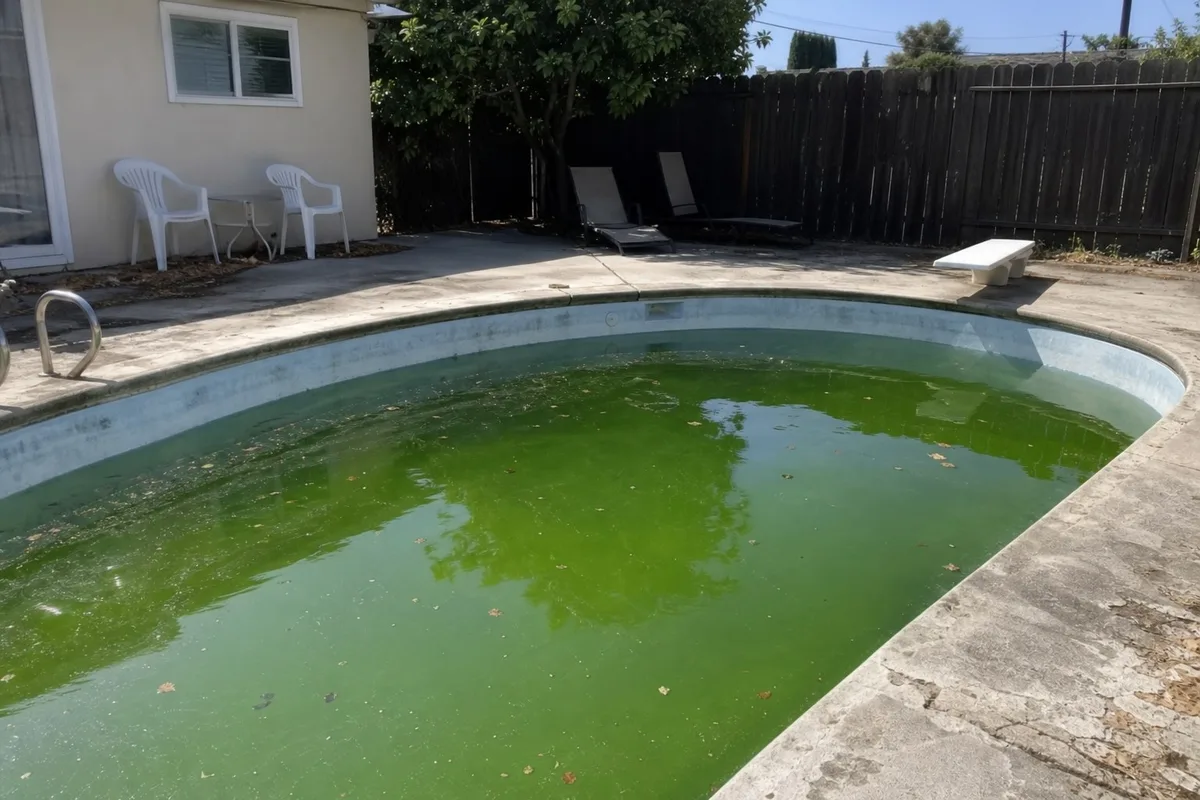
Shock doses by water colour, how long each takes, why draining is the wrong shortcut in LA, and when to call a pro.

Cloudy pool water has four common causes and four different fixes. How to tell which one you have before you dump in more chemicals.

Saltwater pools are still chlorine pools. What actually differs: feel, running cost, equipment life and what breaks.

Every degree of pool heat costs money and changes water chemistry. Where comfort, energy use and pool health actually meet.
Most of what goes wrong on a pool is on the equipment pad, and most of it is visible months before it stops working.
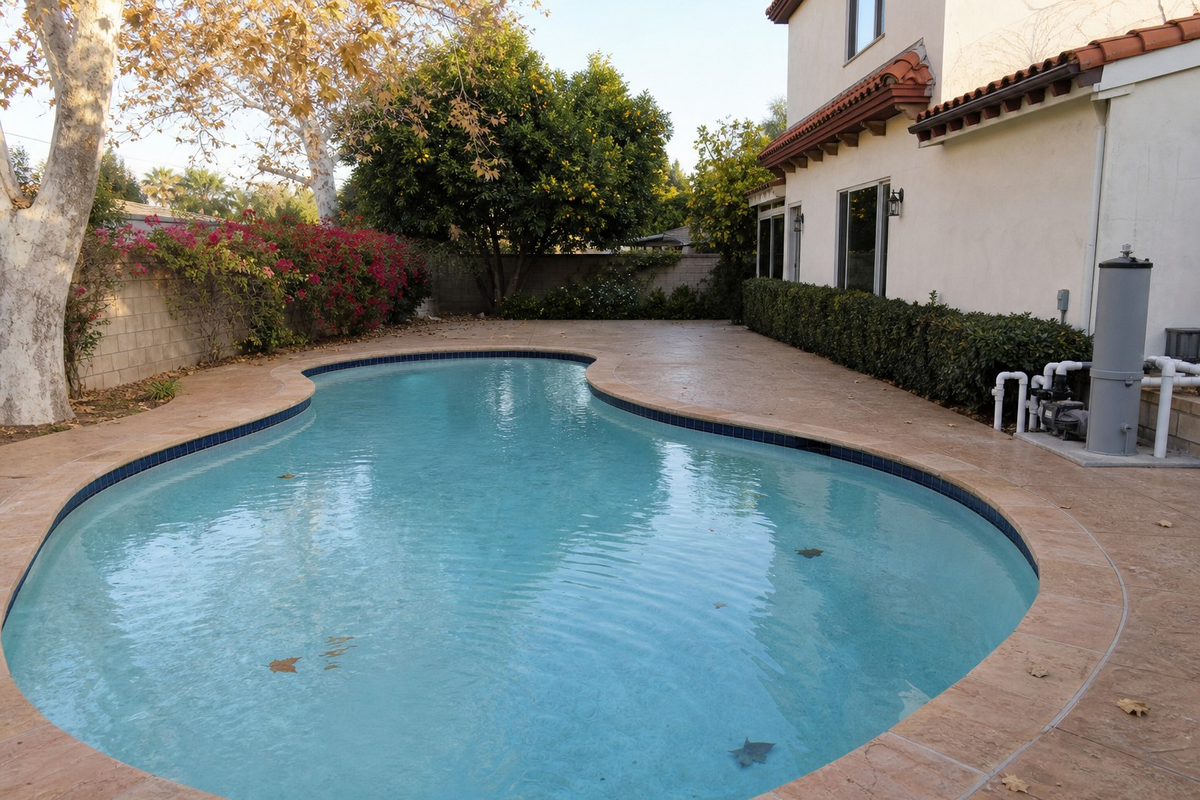
Work the hours out from one turnover a day, adjust for heat, leaves and the salt cell, run a variable-speed pump long and slow, and check the timer after every outage.
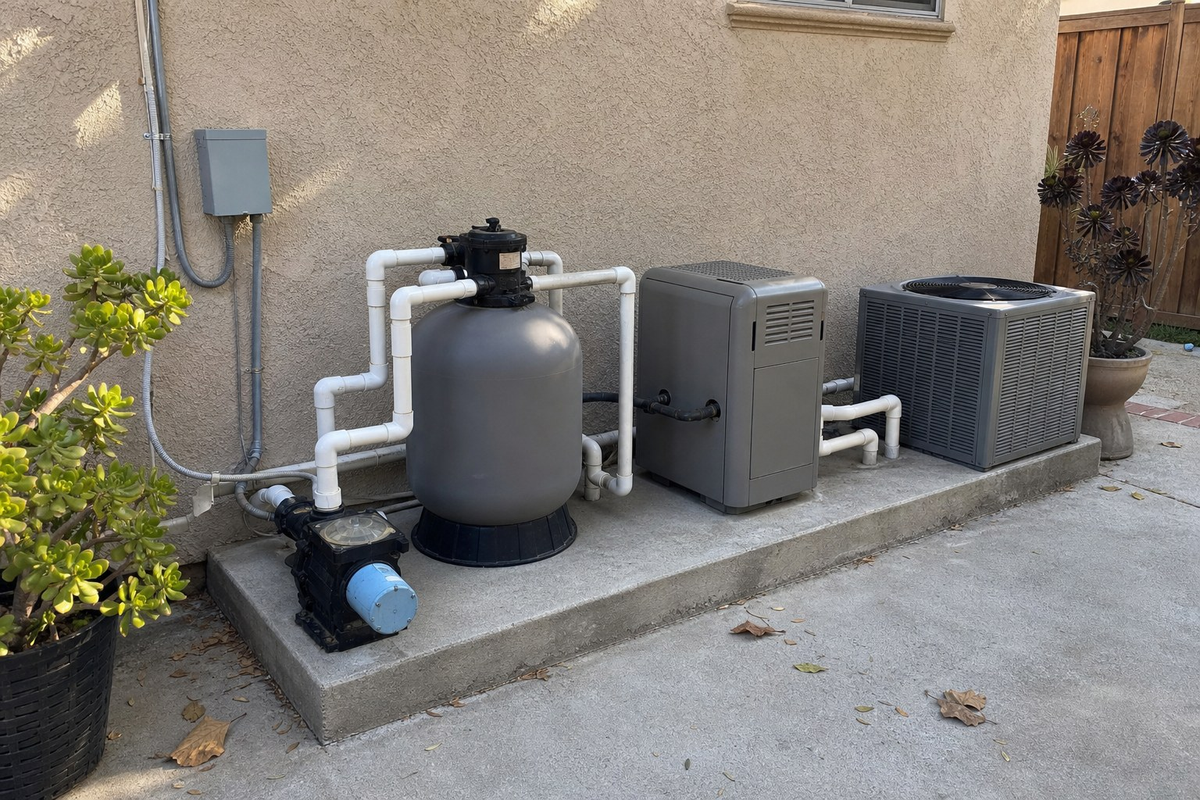
Gas warms the pool in an afternoon, a heat pump holds it cheaply. Hours, therms and kWh for a 20,000-gallon pool, and what cold Valley nights change.

Most of what a pool service protects you from is on the equipment pad, not in the water. How often pumps, heaters, filters and automation should actually be inspected.
Pool equipment rarely fails all at once. Five signs the pad is quietly adding to your power bill and your repair risk.

What a robotic cleaner costs to own, where it struggles under foothill trees, and the jobs no cleaner of any kind does.
What a visit should include, what it should cost, and the quiet signs that yours has stopped doing the work.

Five things Los Angeles and Foothill homeowners should be able to expect from a pool service — and how to tell before you sign up.

The quiet signs that a pool service has stopped doing the work — and what to check on your own pad this week.

Cleaning is what you see. Management is chemistry, equipment and planning — and it is the part that decides your repair bills.

How often a pool really needs service in Los Angeles, and why the honest answer depends on trees, sun and how the pool is used.

When an ongoing maintenance membership is worth it and when a one-time service is the right call.
A bigger price tag does not automatically mean more attention. What actually drives how much care a pool needs is complexity.
The decisions you live with for twenty years, and the words you need to read a quote.

The decisions made during construction that you will live with for twenty years — surface, plumbing, equipment and access.
The pool is rarely in the home inspection. Seven things to check before you inherit someone else's deferred maintenance.

Pool water has no color of its own — the interior finish does. Nine finishes shown twice: the material dry, and a finished pool built with it.

The questions people actually ask before a pool renovation: cost, timing, what can go wrong, what is optional and what is not. Answered straight.

Every pool term a homeowner is likely to meet, explained in plain English: coping, bond beam, waterline tile, quartz finish, VGB, start-up and the rest.
Mark H.
Local Guide · 42 reviews · 18 photos
3 September 2025

Linda R.
4 reviews
25 May 2026
Kevin B.
15 December 2025
Jason T.
25 February 2026
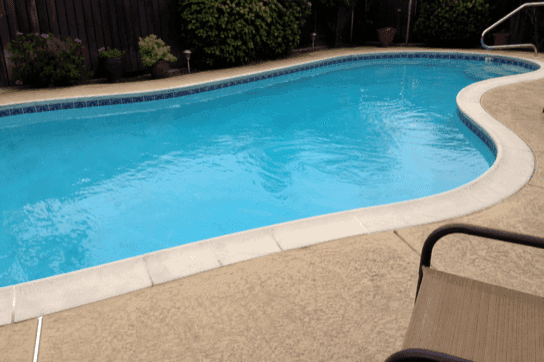
Great company. Always on time, pool looks amazing and communication is easy. Highly recommend.
Ashley P.
11 reviews
4 March 2026
Thomas W.
Local Guide · 27 reviews · 9 photos
10 February 2025
Rachel M.
17 October 2025
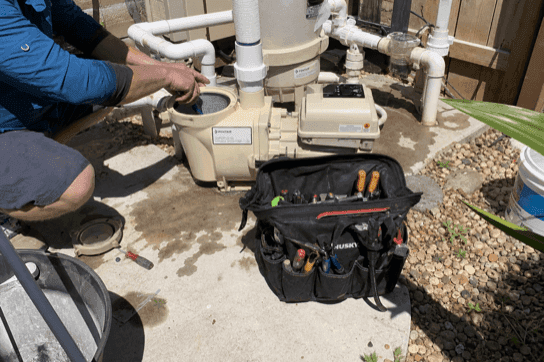
We thought we needed a completely new pool system. Turns out it was just a few issues with the pump and filter. They saved us a lot of money by fixing what actually needed fixing.
Jennifer C.
Local Guide · 15 reviews · 4 photos
7 September 2025
Family owned, based in Studio City
Describe it and we will tell you which service it is — including when the answer is nothing yet.