
Pool tiling
Rust repair and full tiling
Hollow render and rust cut out, then the whole shell tiled.
Glendale
Renovation
Measured to the inch, diagonals included, with the old liner still in place. A liner is manufactured to fit one pool and cannot be adjusted on site. We also convert vinyl-lined pools to concrete.

Licensed, insured and family-owned


Why the measuring matters
If the pool is due for its second or third liner, ask us to price both: the conversion often makes more sense than people expect. Converting is a similar process to New Pool Construction and considerably cheaper, because the excavation and the plumbing runs already exist.
If you have a concrete pool that needs updating instead, the rest of the site covers that work: Pool Tiling: costs and quotes and Rust Repair.
Swimming pool surface options
Click an option for more detail.
Vinyl to concrete
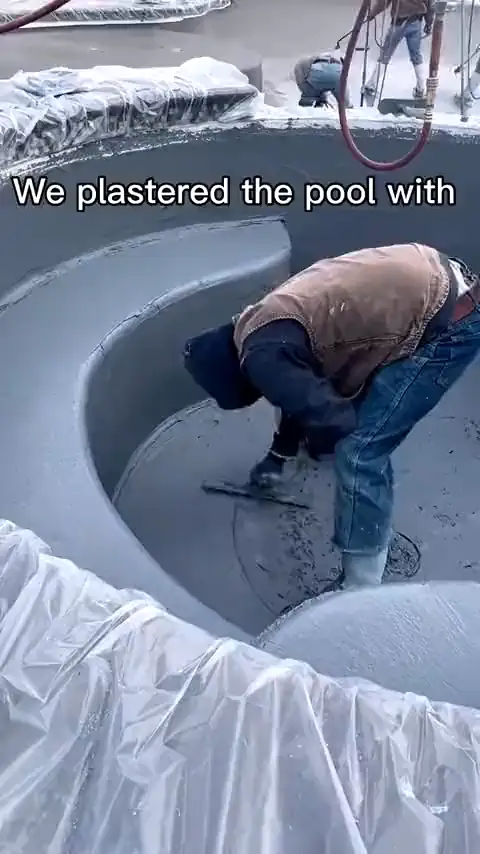
In most cases an in-ground vinyl pool can be rebuilt as a concrete one in the same hole.
The crew
Four of us. The same faces every week, not whoever was free that morning.


The same crews build the shells
Hollow render and rust cut out, then the whole shell tiled.
Glendale
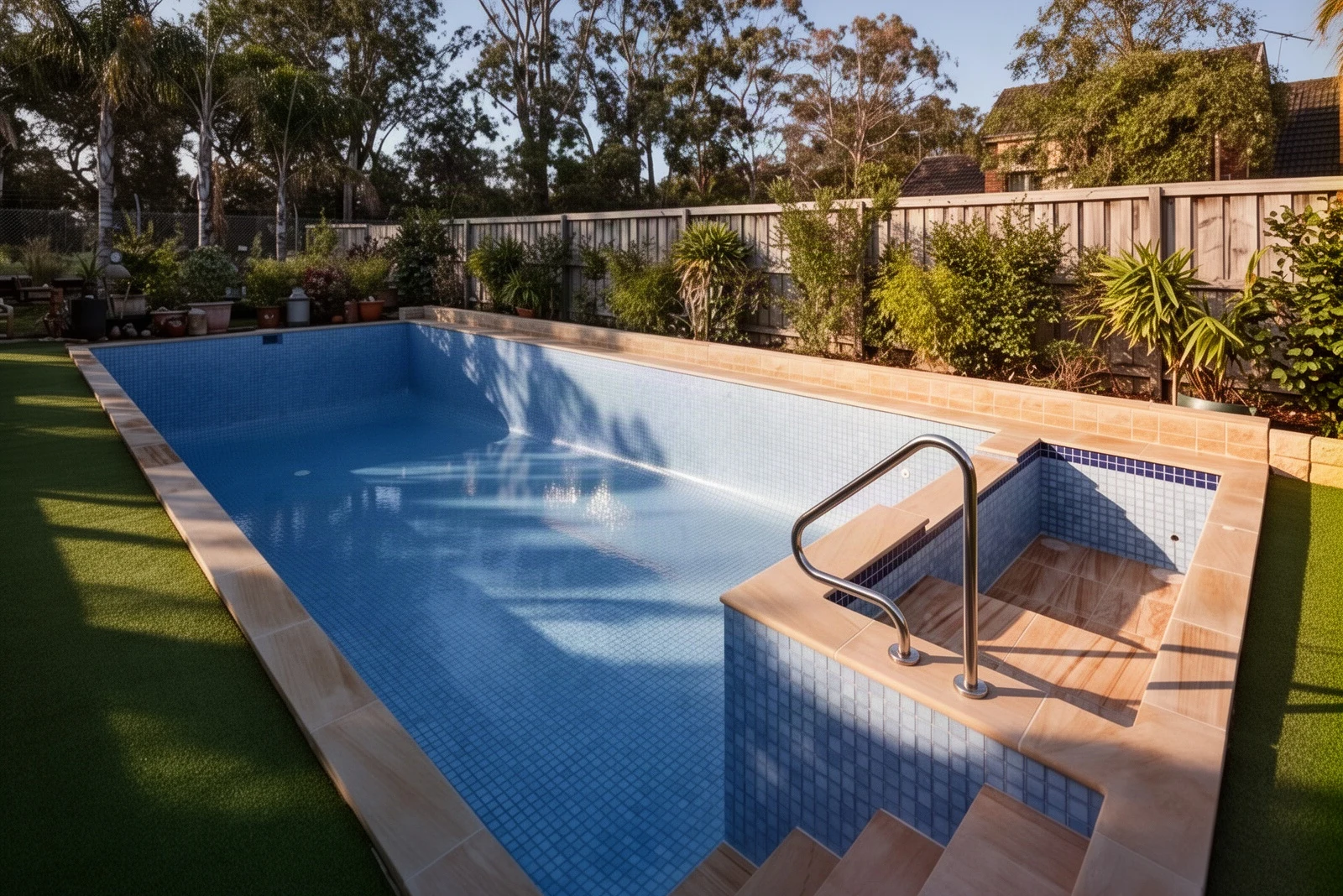
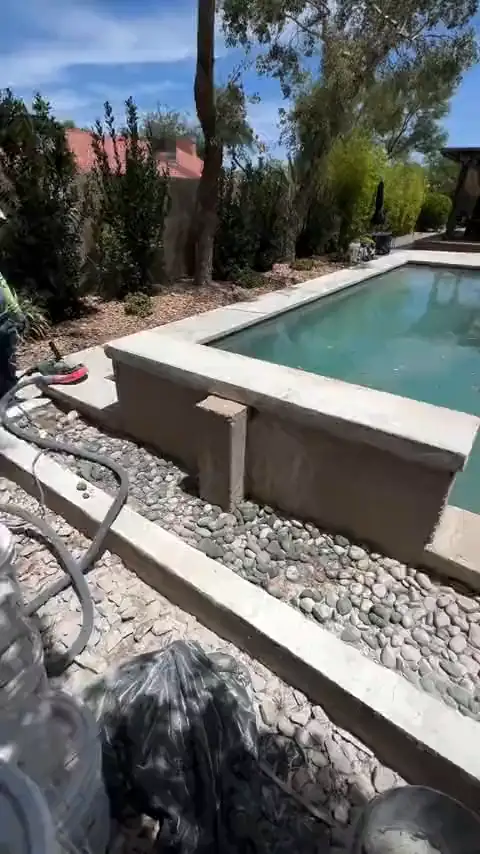
Out of repaints, so retiled, with sandstone paving around it.
Eagle Rock

Grey tile across pool and spa, seen from the air.
La Cañada Flintridge

Collected from customers on the routes we run every week.
Thomas W.Verified review
Local Guide · 27 reviews · 9 photos
10 February 2025
Raymond K.Verified review
Local Guide · 52 reviews · 26 photos
20 November 2025
Karen V.Verified review
15 August 2026
Diane F.Verified review
6 reviews · 2 photos
6 January 2025
Mark H.Verified review
Local Guide · 42 reviews · 18 photos
3 September 2025

Linda R.Verified review
4 reviews
25 May 2026
Kevin B.Verified review
15 December 2025
Jason T.Verified review
25 February 2026
Great company. Always on time, pool looks amazing and communication is easy. Highly recommend.
Tell us what the pool needs, how big it is and your ZIP — and a price the same day.
Rewards
$100 for every friend you send us, up to two. No code, no form — they call and mention your name.

$100 credit
For every friend who calls and mentions your name
Up to two referrals, $200 in total. The name must come up on the first call. Spend it on any service.
20% off one-time work
For weekly maintenance members
Green-to-clean, acid wash, plaster start-up and repair labor, plus priority on the schedule.
Where we work
Crews leave from Studio City every morning, across the Foothills and the neighborhoods next to them.
Office · Studio City
Tell us the shape of the pool and whether it has steps, a bench or a radius corner.
4121 Radford Ave, Ste. #214, Studio City, CA 91604Written for Foothill and Valley homeowners.
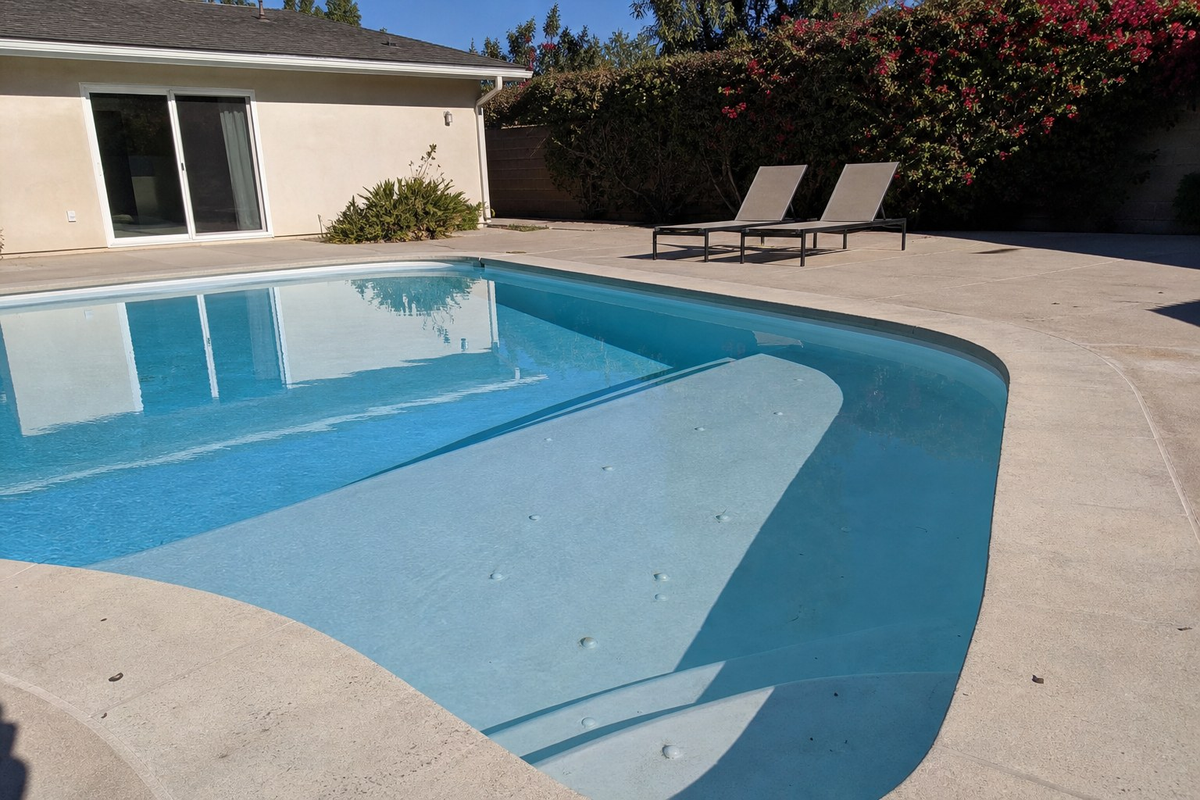
Why white bumps grow out of cracks and loose plaster, how to tell them from scale, and when a patch is enough.
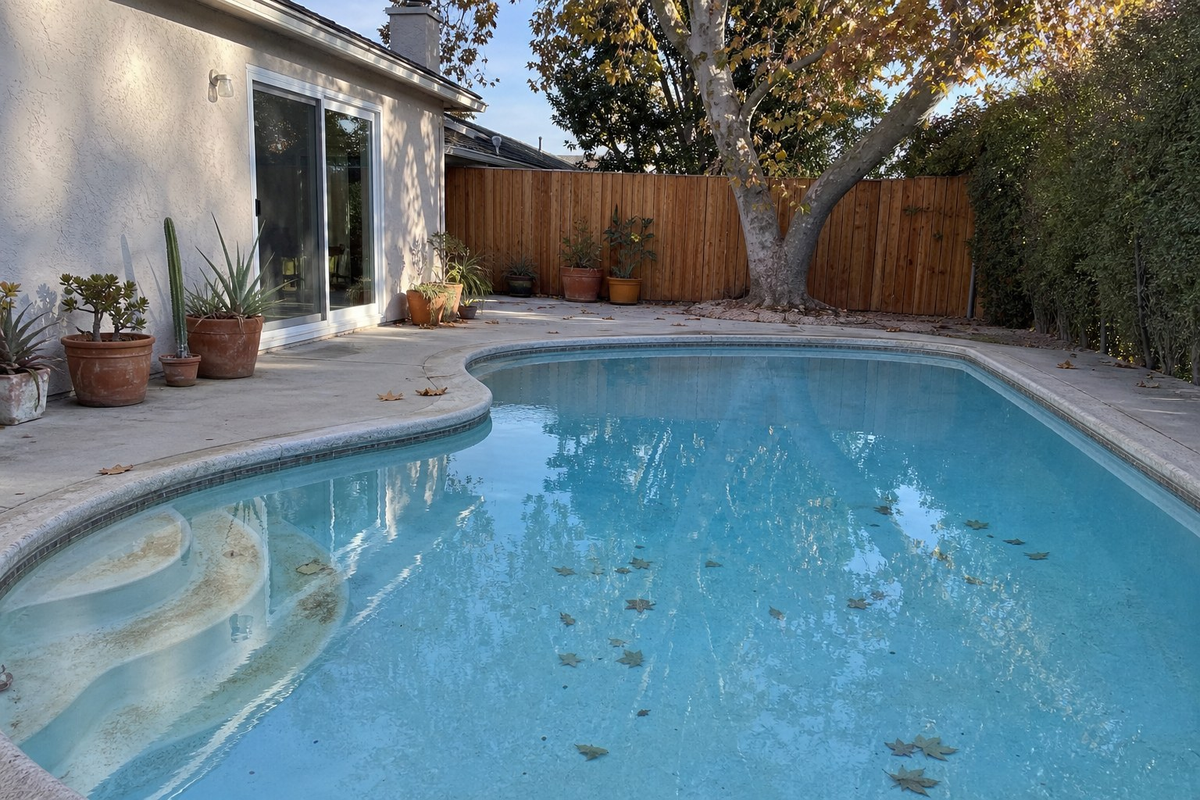
Two spot tests that tell leaf from metal, then chlorine or ascorbic acid with the water in, and where home methods stop.
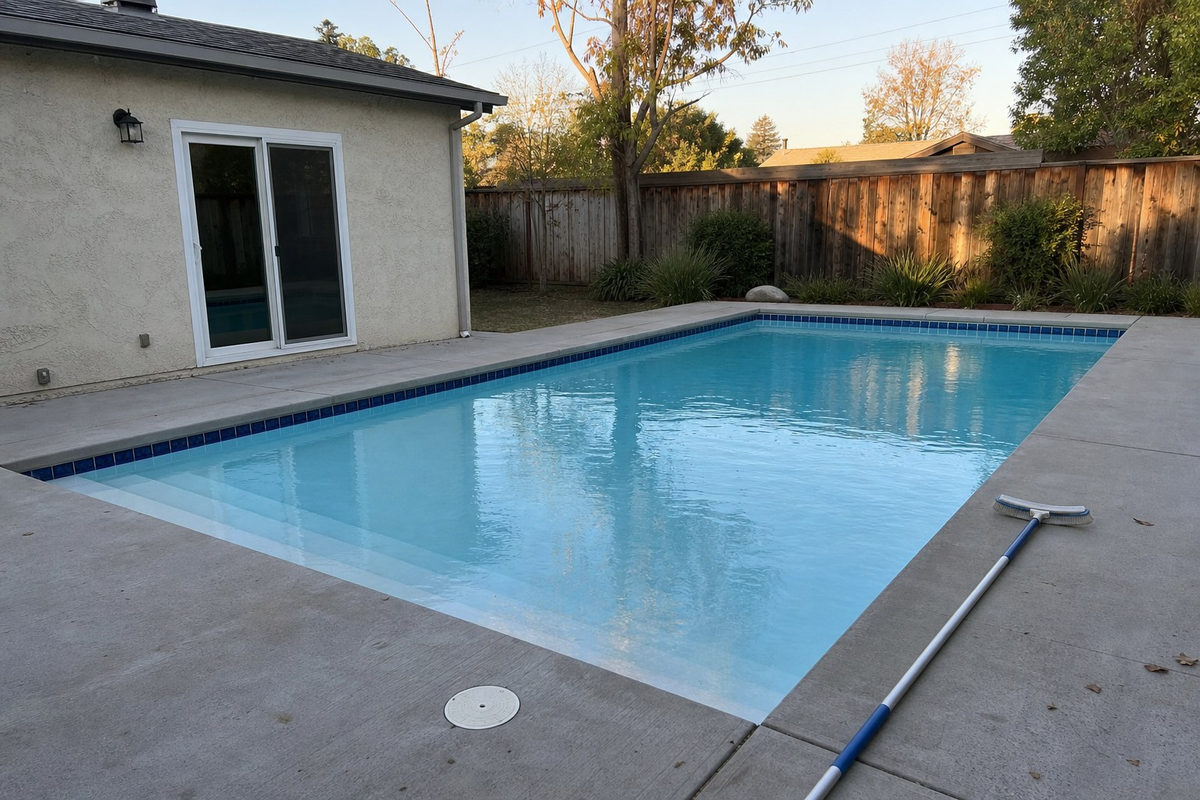
How long each finish lasts, what it asks of your care, and what the gap costs.
From the truck
Nothing staged, nothing bought from a stock library — the same work, filmed while it happened.

No. Vinyl is a flexible membrane and tile needs a rigid substrate. Anyone offering to tile over vinyl is offering you a floor of loose tile within a season.
In most cases, yes: an in-ground vinyl pool can be rebuilt as a concrete one in the same hole. If you are already facing a liner replacement, it is worth having the pool inspected for conversion first, because the two decisions are close enough in cost that most people want the numbers side by side.
A liner is manufactured to fit one specific pool and cannot be adjusted on site. Anything that is not a plain rectangle — a step in an odd place, a radius corner, a bench — needs a full set of measurements to the inch, diagonals included, taken with the old liner still in place. Measured wrong, it arrives five weeks later and does not fit, and there is no remedy but ordering another.
We do not publish a rate for liner work, because liners are uncommon enough in Los Angeles that every one is quoted from its own measurements rather than off a price list. For a sense of the market, local cost guides put a Los Angeles liner replacement at an average of about $1,842, with most jobs falling between $1,350 and $2,500 — those are other people's numbers, not ours, and they assume a pool with nothing awkward in it. Send the shape, the measurements and a photo of the steps and we will price your pool. Looking costs nothing.
Often. Converting is a similar process to building a new pool and considerably cheaper, because the excavation and the plumbing runs already exist. If the pool is due for its second or third liner, ask for both numbers side by side.
Eight to twelve years is the usual industry reference for an in-ground liner, and Los Angeles sits at the short end of it: sun is what kills vinyl, and the waterline gets it all day here. The warnings come before the leak — the pattern fading out, the material going brittle at the tile line, wrinkles that no longer pull flat, the bead slipping out of its track. Once a liner has stretched and hardened, patches stop holding, and that is usually the point at which people ask what a conversion costs instead.
Not by the nominal size, which is why a figure found online rarely matches the quote. The price follows the measured surface — walls plus floor — the depth profile, and every feature the liner has to be cut around: steps, a bench, a radius corner, skimmer and return openings. A 16 by 32 with a flat floor and a straight step wall is the cheap version of that pool; the same footprint with a deep end and a moulded step is not. What comes off the same drain is worth pricing at once: the bead track, the gaskets and any foam behind panels that have gone rough.
Three, in practice. The same thing again — a new liner made to your measurements, the cheapest option and the one that repeats every eight to twelve years. The liner plus what sits behind it: new bead track, new gaskets and foam over wall panels that have gone rough, which is worth doing when the wall is what wore the last liner through. Or ending the cycle by converting the shell to concrete in the same hole, on the same plumbing, with an interior that is resurfaced rather than replaced. On a second or third liner, ask for the first and the third side by side.
Cleaning, recovery, repair and renovation across Los Angeles.
Family owned, based in Studio City
A new liner, and the same pool rebuilt in concrete. Most people want the two numbers side by side.