

Water
How to clean a green pool in LA
Shock doses by water colour, how long it takes, and why you should not drain.
Article
Black algae is the one that survives shock. It roots into the plaster and hides under its own coating, so chlorine alone slides off it. What works is a steel brush, a lot of chlorine held for days, and patience.
Black algae is not an alga in the usual sense. It is a colony of cyanobacteria, dark blue-green up close and black from the deck, and it grows as raised spots from pinhead to quarter size. Each spot builds layers over itself. The outer layer shields the living part from chlorine, and the part underneath grows into the pores of the plaster.
That is why a pool can get a full shock, go crystal clear, and still have the same spots on the steps a week later. The water was treated. The spots were not.
Dark spots on plaster have more than one cause, and two of them are treated in opposite ways. Before buying anything, spend five minutes on these checks.
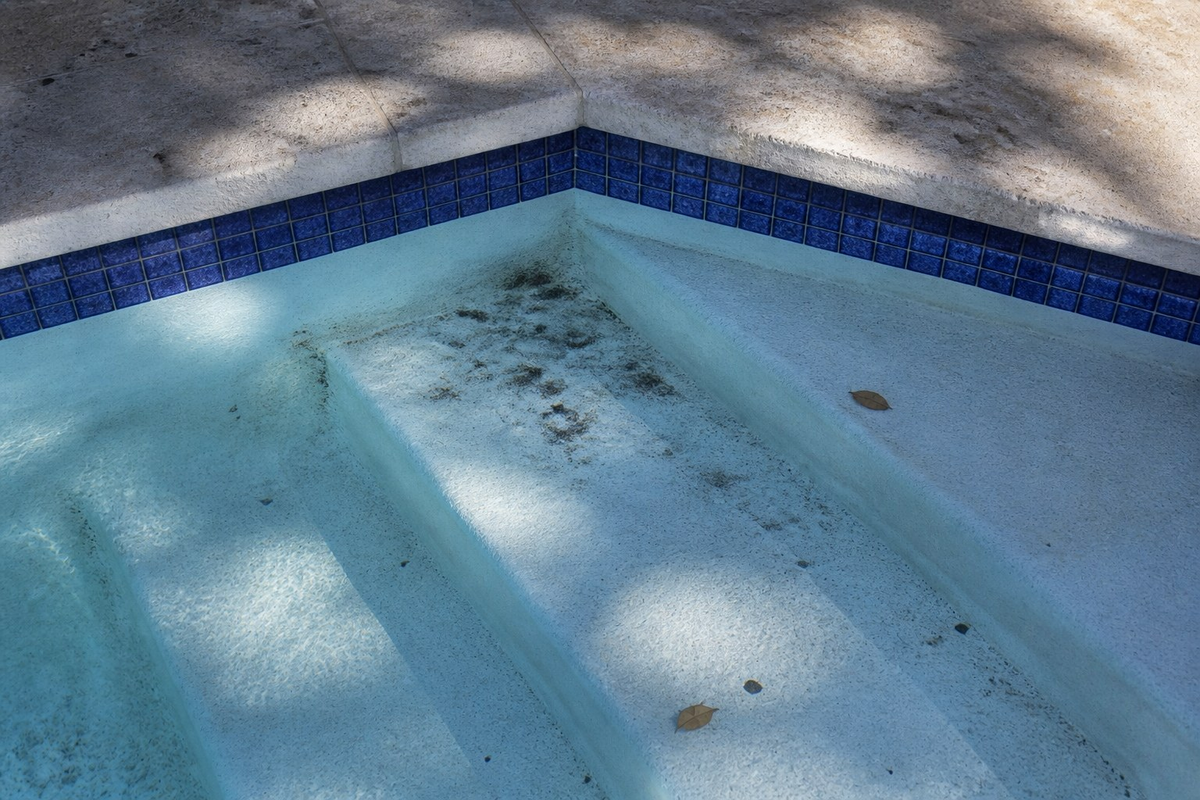
It needs three things to take hold: a rough surface, a spot the chlorine barely reaches, and a stretch of weak chlorine. Plaster, pebble and quartz finishes give it the surface. Vinyl and fiberglass are smooth enough that it rarely roots there.
Plan on a week of work for a few dozen spots, and two for a pool where they cover the steps and the deep end. Keep everyone out of the water from the first step until chlorine is back to normal.
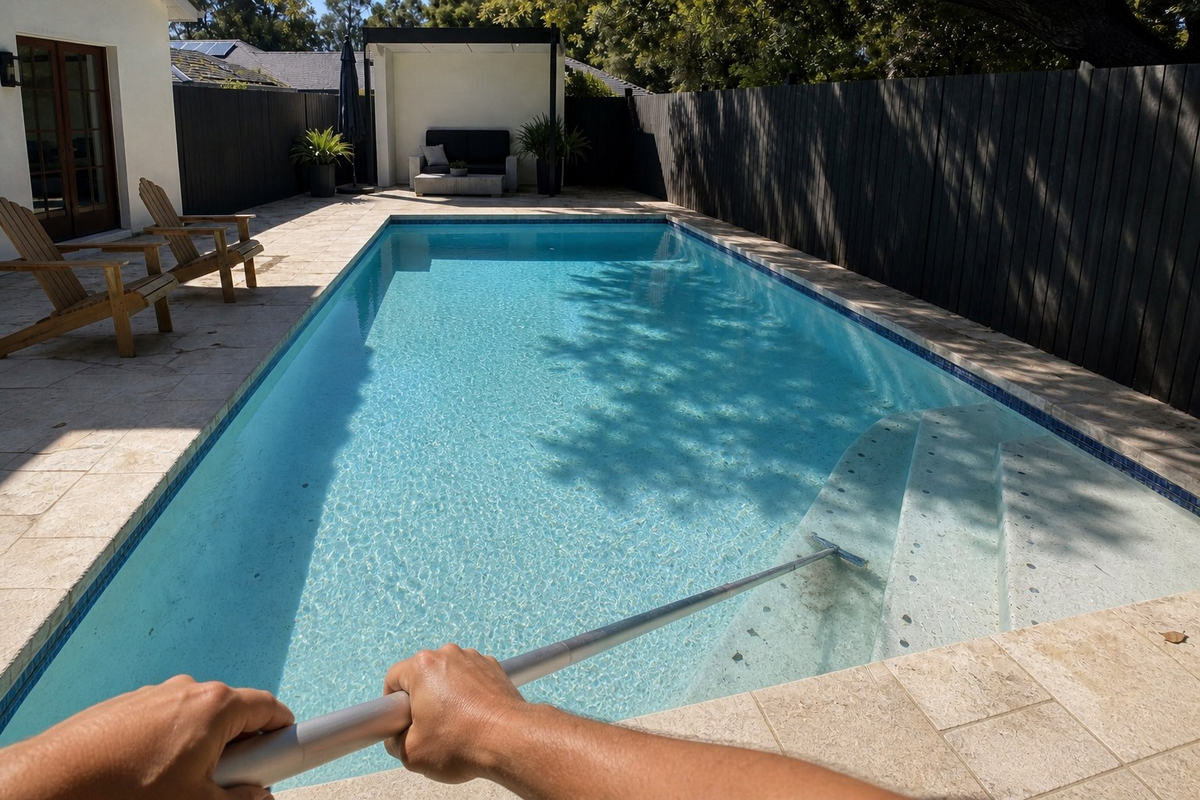
Keep brushing for a week after the last spot disappears. The part in the plaster pores outlives the part you can see, and a spot that comes back in the same place is a spot that was never fully killed.
Not by itself. Shock without brushing clears the water and bleaches the top of each spot, which makes it look beaten. The colony under the coating survives and is back in two or three weeks. Shock is half the treatment; the brush is the other half.
Green algae is a different case. It floats in the water, so shock and a good filter deal with it, and the green pool clean-up guide covers doses by water colour. If your pool is green and spotted at the same time, clear the green first, then work the spots.
Two or three rounds of brushing and holding chlorine, and the same spots return? Then the colony lives deeper in the plaster than a brush reaches. Old, rough, etched plaster is where this happens most.
The next step is draining the pool and washing the plaster with acid. An acid wash removes a thin layer of the surface, and the roots go with it. It is also the answer for dark shadows algae leaves behind after it dies. Draining is not a treatment on its own, though: an empty pool with live spots will have them again after the refill. If the plaster is worn through in places, an acid wash only buys a year or two, and resurfacing is the real fix.
On weekly service, brushing and chlorine are part of the visit, and the monthly price starts at $159. An outbreak that is already established is quoted separately, like other heavy algae work, because it takes extra trips during the week to brush and redose. Algae recovery without draining runs $349–$749 for a residential pool, and an acid wash starts at $749. Both are on the price list.
Not sure if you are looking at algae or a stain? Send a close photo of the spots with a coin next to one for size, or call (818) 740-6099.
Wait. The spots are rough enough to scrape feet, and algae in the pool means chlorine has been too low to keep germs down as well. During treatment chlorine sits far above swimming level anyway. Swim again once free chlorine is back to 2–4 ppm with pH balanced.
There is no one-day fix. The quickest route is the full sequence the same evening: clean filter, pH at 7.2, every spot scrubbed with a steel brush, chlorine raised and held, then brushing twice a day. Small outbreaks clear in four to seven days that way.
A handful of spots caught early: about a week. A pool where they cover the steps and floor: two weeks or more, and some will need a second round. Keep brushing for a week after the last spot is gone.
The last round did not kill the part rooted in the plaster, or the conditions that let it start are still there: a shaded corner with poor circulation, stabilizer too high, or chlorine dropping to zero between visits. Fix both, or it returns.
Only when brushing and chlorine have failed two or three times, and then to acid wash the plaster, not just to refill. Draining a pool in Los Angeles County also means dechlorinating first and sending the water to the sewer clean-out, never the street. The acid wash page explains when it is worth it.
Send a close photo with a coin for size. We will tell you if it is black algae or a metal stain before anyone buys a chemical. Or call (818) 740-6099
Written for Foothill and Valley homeowners.
Shock doses by water colour, how long it takes, and why you should not drain.
The range for chlorine and salt pools, why tablets push it up, and how to bring it down.

Los Angeles and the foothills
That is black algae doing what it does. We scrub it, hold the chlorine where it needs to be, and come back mid-week to do it again until it stays gone.