

Water
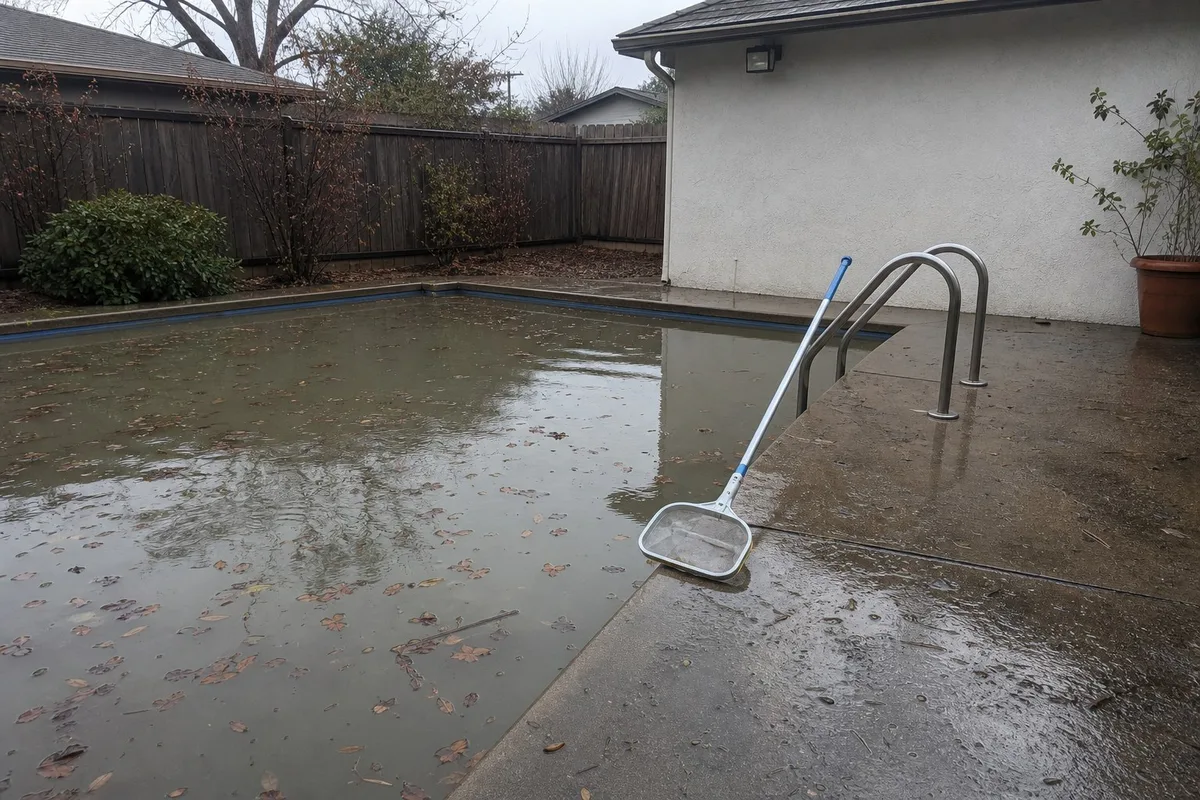
What to do with the pool after rain
The order to work in after a storm, and where the overflow is allowed to go.
Article
Cyanuric acid keeps the sun from burning off your chlorine. Too little and chlorine is gone by lunch; too much and it stops killing algae. Here is the range, and what to do on either side of it.
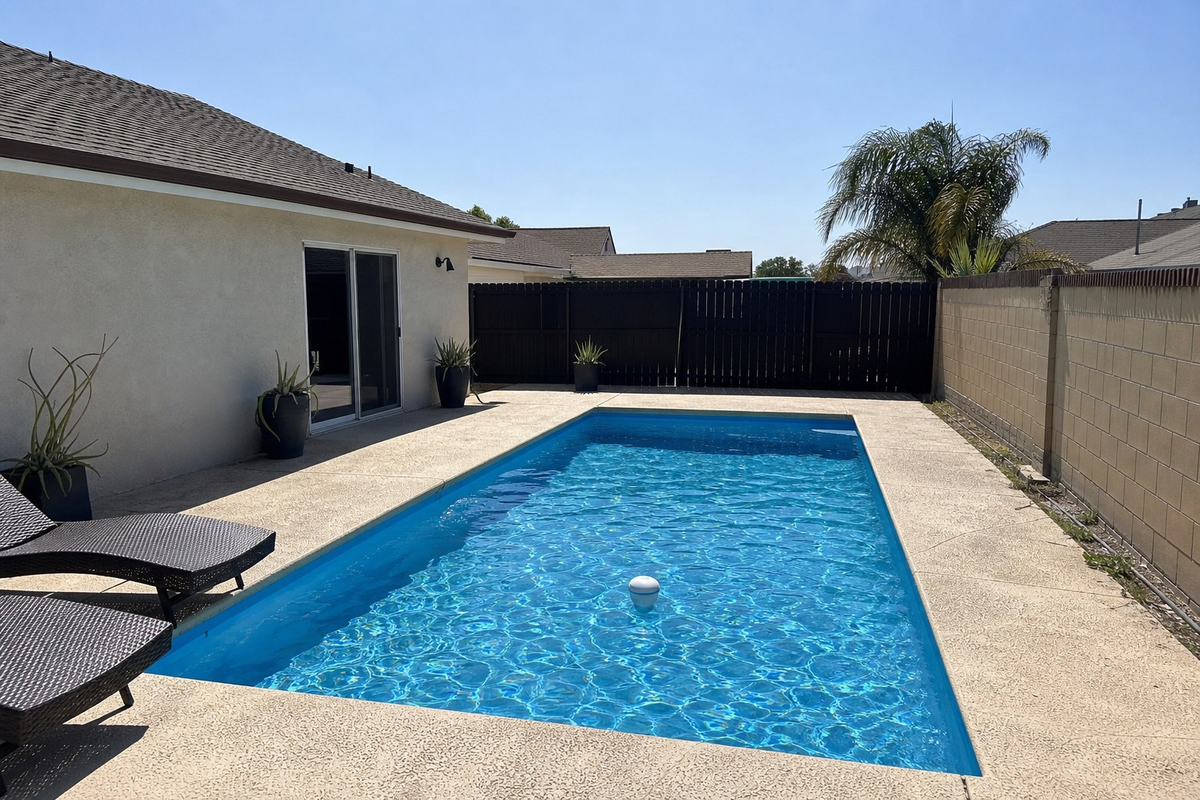
Stabilizer, conditioner and cyanuric acid (CYA) are the same chemical sold under three names. It bonds loosely to free chlorine and shields it from ultraviolet light. Without it, a sunny afternoon in the Valley can destroy most of the chlorine in an open pool in two or three hours.
So stabilizer is not optional for an outdoor pool in Los Angeles. The trouble is that it never leaves the water once it is in. It does not evaporate, the filter does not catch it and chlorine does not burn it off. Every pound you add stays until water is replaced, and that is how most pools we take over end up with too much of it.
A shaded pool in Sierra Madre or La Cañada needs less than an open one in Encino, because less sun reaches the water. Stabilizer does nothing at night and nothing indoors.
The chlorine held by stabilizer is protected, and it is also slower. The more CYA in the water, the more of your chlorine sits in that protected, sluggish form, so the free chlorine reading has to rise with it. Pool technicians work to a simple ratio: free chlorine should be at least 7.5% of the CYA level.
People call the last case chlorine lock. Nothing is locked. The chlorine is simply outnumbered by the stabilizer holding it, and adding more of the same tablets makes it worse.
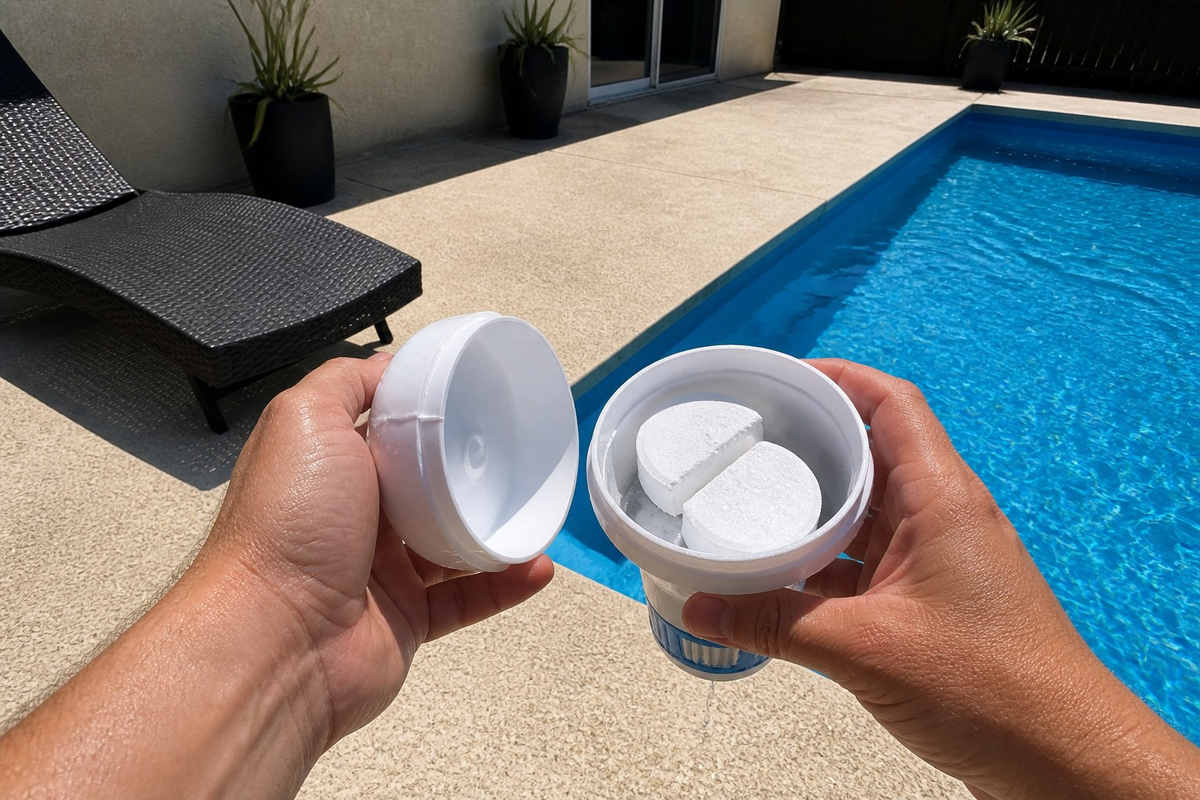
Trichlor tablets, the white pucks in floaters and in-line feeders, are about half cyanuric acid by weight. For every 10 ppm of chlorine they add, they leave roughly 6 ppm of CYA behind. Dichlor granules, sold as quick-dissolving shock, leave about 9 ppm for every 10 ppm of chlorine.
In a Valley summer a pool can use 3–4 ppm of chlorine a day. Fed only by tablets, that puts roughly 12–17 ppm of stabilizer into the water every week. A pool that starts June at 40 can be past 100 by September, and nothing about the water looks different until algae appears.
Rain and splash-out dilute it a little. So does backwashing a sand or DE filter. In Southern California, though, a dry year with a floater and an auto-fill topping up evaporation only ever concentrates it. That is the pattern in North Hollywood and across the Valley: the chlorine reading looks right, and the pool goes green anyway.
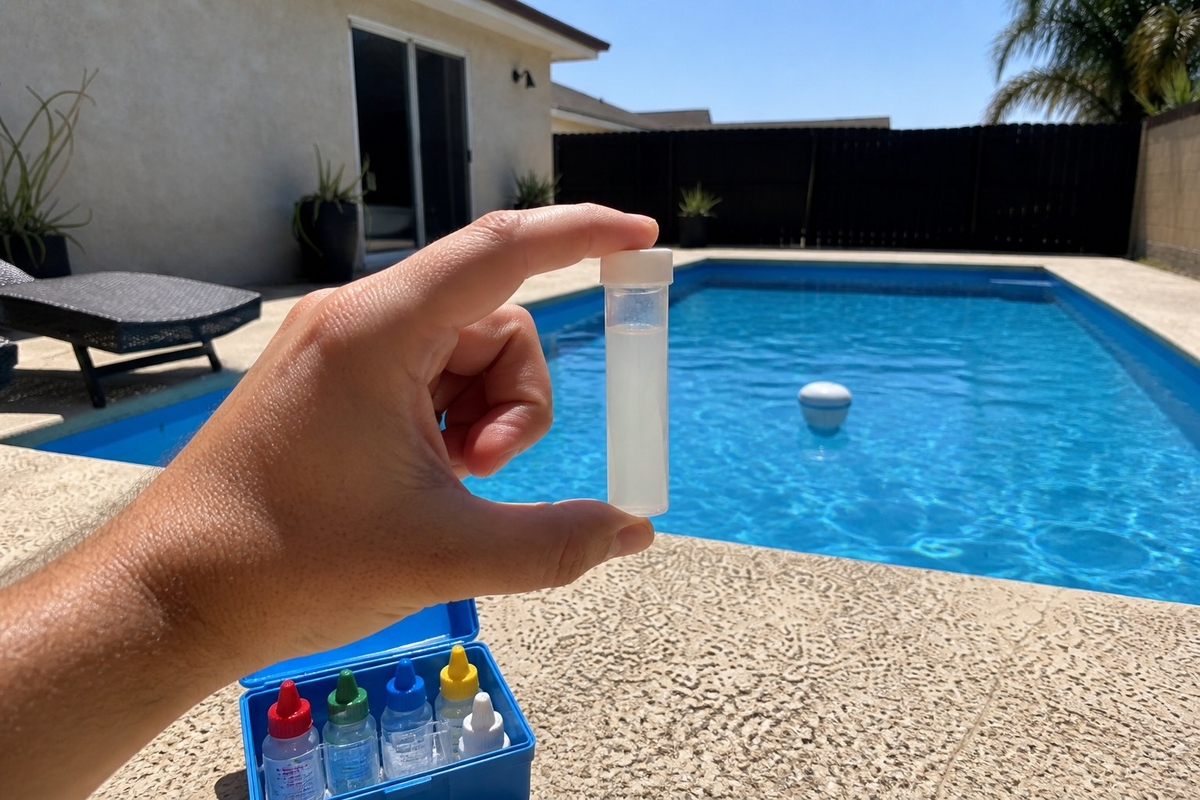
Strips give a colour band that is hard to read above 50, which is exactly the range that matters. A drop kit uses a turbidity test instead: you mix pool water with a reagent that turns it cloudy, then pour it into a tube until a black dot on the bottom disappears. The line where it vanishes is your CYA.
High CYA also throws off one other reading. Part of it shows up as alkalinity, so a pool with 100 ppm of stabilizer reads about 30 ppm higher on total alkalinity than it really is. Subtract a third of the CYA before you add acid to bring alkalinity down.
About 13 ounces of granular cyanuric acid raises 10,000 gallons by 10 ppm. A typical 15,000-gallon LA pool going from 10 to 40 ppm needs just under 4 pounds. Liquid stabilizer costs more per pound and works the same day; granules take up to a week to dissolve fully.
If you switch to liquid chlorine or a salt system after years of tablets, check the CYA before adding any. The pool may already have enough for the next five years.
Replace water. That is the method that works every time, and the arithmetic is simple: to go from 100 to 50 you replace half the pool; from 120 to 40, two thirds. Remove the percentage equal to one minus target divided by current.
Enzyme products that claim to remove cyanuric acid exist, and they are slow, temperature-dependent and expensive per ppm. For a pool at 150 they are not the answer. Reverse-osmosis trailers that filter the water on site are another route, used where drought rules restrict refilling.
A salt cell makes unstabilized chlorine, so a salt pool only gains CYA when someone adds it. It loses it only through water replacement, which means a salt pool that is set right in spring usually stays there. When a salt pool goes cloudy or faintly green, the two things to check are cell output and whether the stabilizer has dropped after rain or crept up because somebody dropped tablets in. Both show up on a salt system inspection. The choice between the two systems is covered in saltwater vs chlorine pools.
On our weekly visits cyanuric acid is part of the full chemical panel, and stabilizer at normal usage is included in the monthly price, which starts at $159 for a pool up to 15,000 gallons. Bringing a badly overdosed pool back down is quoted separately, because it is a drain and refill rather than a dose. The price list shows both.
If your pool keeps turning green with chlorine showing, send us a photo of the water and the last test result, or call (818) 740-6099. If it has already gone green, the green pool clean-up comes first and the stabilizer gets fixed as part of it.
Yes. Stabilizer, conditioner, CYA and cyanuric acid are all names for the same chemical. Some products are pure cyanuric acid; stabilized chlorine tablets and dichlor shock contain it as well.
Any pool supply store and most home improvement stores carry granular stabilizer in 4 lb bags and buckets, and liquid stabilizer by the gallon. Check the label for the percentage of cyanuric acid: granules are close to 100%, liquid is a suspension with less per pound.
Granular costs less per ppm and does the same job; it just takes up to a week to dissolve. Liquid goes to work the same day and is easier to dose in small amounts. For a pool that is only a little low, liquid is less fuss.
Only by diluting it when the pool overflows or you lower the level afterwards. A heavy storm that makes you drain a few inches will bring it down by a few ppm. After the first big rain, it is worth testing before you add more.
Stabilizer itself is not harmful at pool levels. The risk is that chlorine is working too slowly to keep germs and algae down. If CYA is over 100 and chlorine is low, keep swimmers out until the water is partly replaced or free chlorine is raised to match.
Send the last test result and a photo of the water. We will tell you whether it is stabilizer, phosphate or the equipment before anyone drains anything. Or call (818) 740-6099
Written for Foothill and Valley homeowners.
The order to work in after a storm, and where the overflow is allowed to go.
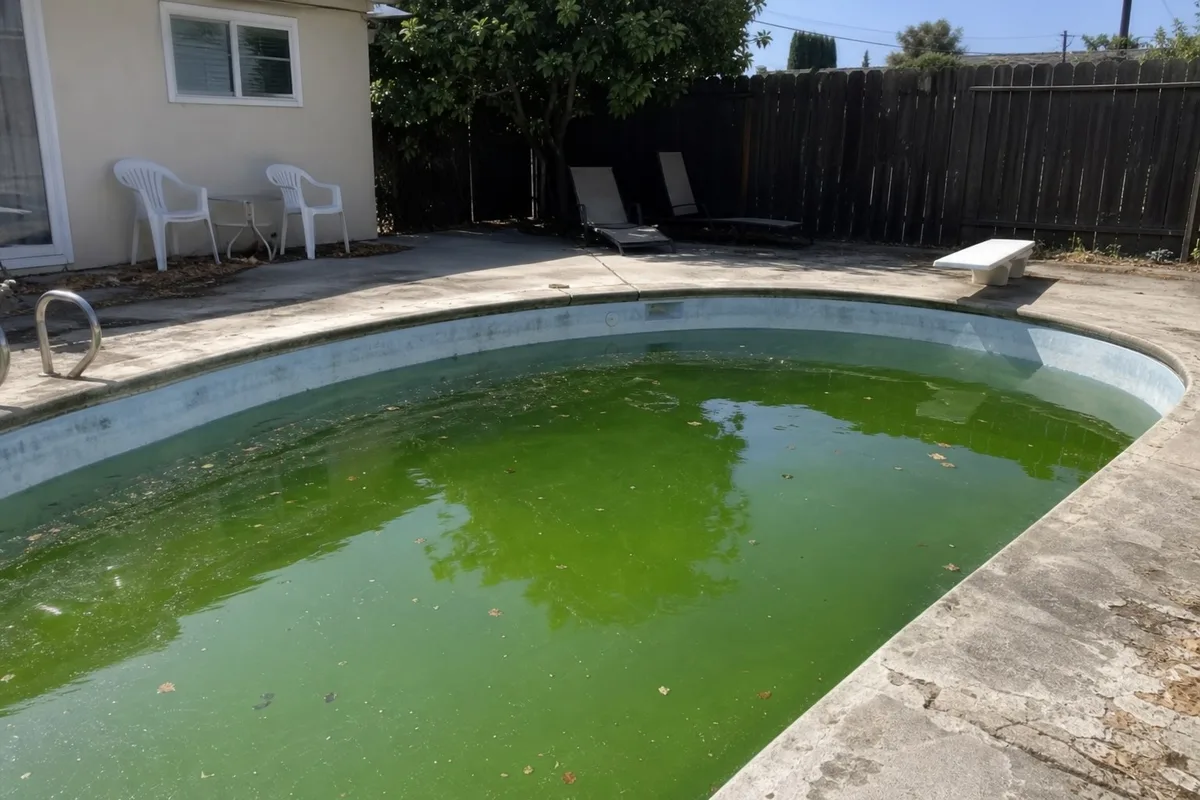
Shock doses by water colour, how long it takes, and why you should not drain.
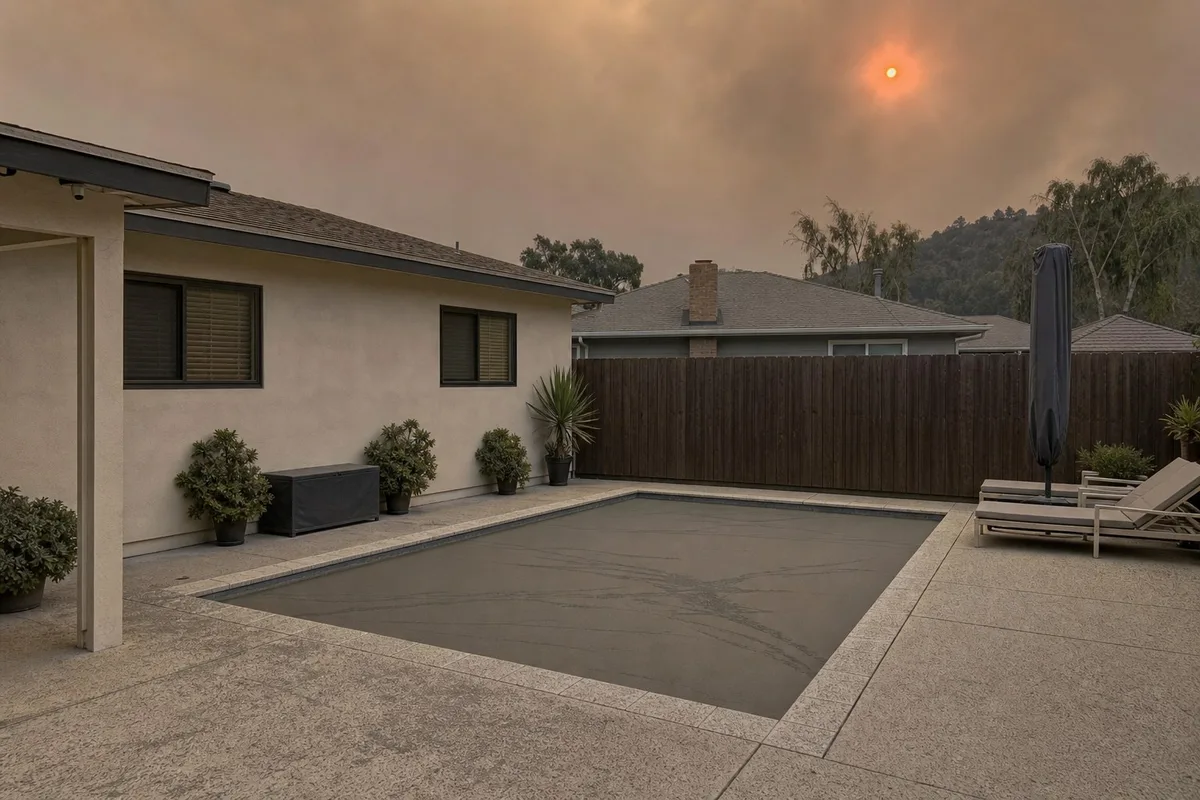
Ash is alkaline and carries phosphate. The order to work in once the air clears.
Los Angeles and the Valley
Then the stabilizer is probably high. We test it on the first visit, tell you how much water has to change, and switch the pool to a chlorine that stops adding to the problem.