


Studio City · Los AngelesOpen 7 days · free quote and diagnosis · no minimum contractGuides & articlesReviewsRefer a friend
Article
Heat Pump vs Gas Pool Heater in Los Angeles: Which One Fits
A gas heater warms the pool in an afternoon. A heat pump takes a day or two and then holds it cheaply. Which one is right depends on when you swim, not on which is newer.
Daniel Ramirez, Owner11 November 2026
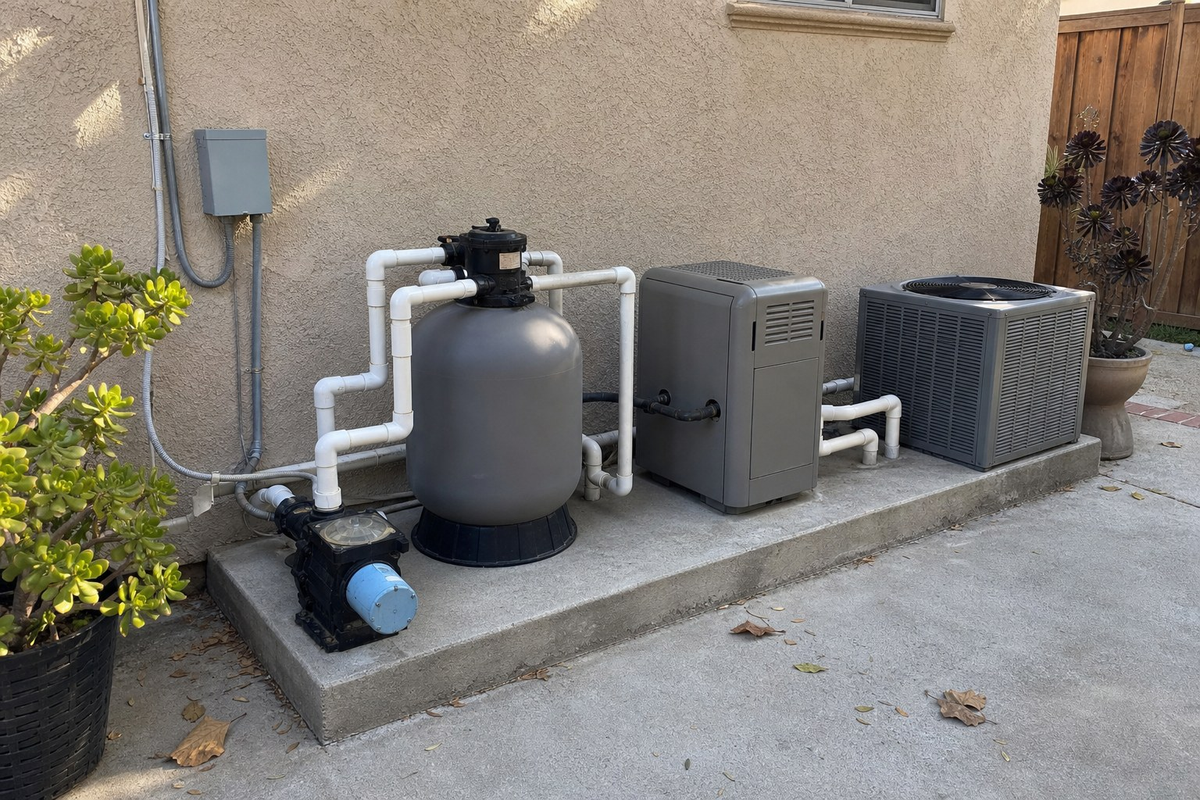
People ask which heater is better and get answers written for Florida or Long Island. Los Angeles sits in between: warm enough that a heat pump works most of the year, cool enough at night in the Valley and the foothills that it struggles in December. Gas is still what we find on most pads here, as our heater repair page says. That is history, though, and it does not tell you what to put in next.
How each one makes heat
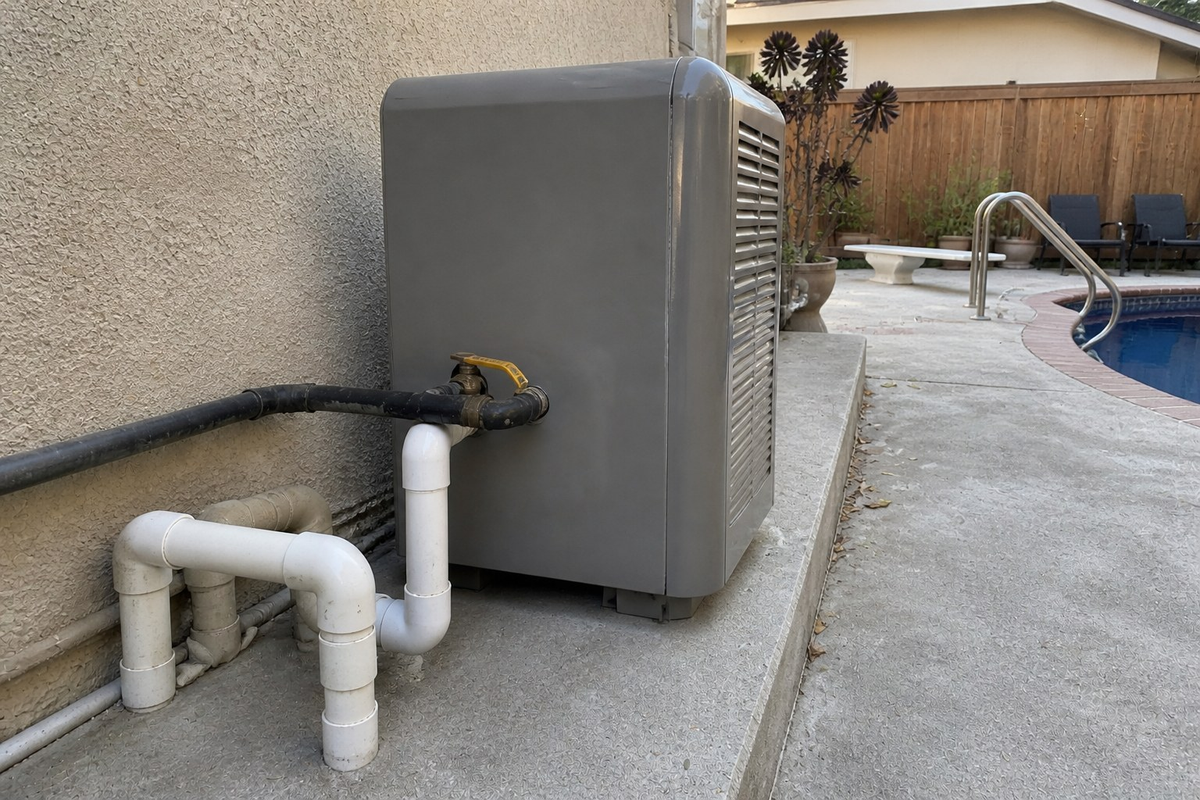
A gas heater burns natural gas or propane under a copper heat exchanger and the pool water runs through it. It puts out the same heat on a 45°F night as on a 75°F afternoon. Pentair rates its gas heaters at 82% thermal efficiency or higher, so most of what you pay for ends up in the water.
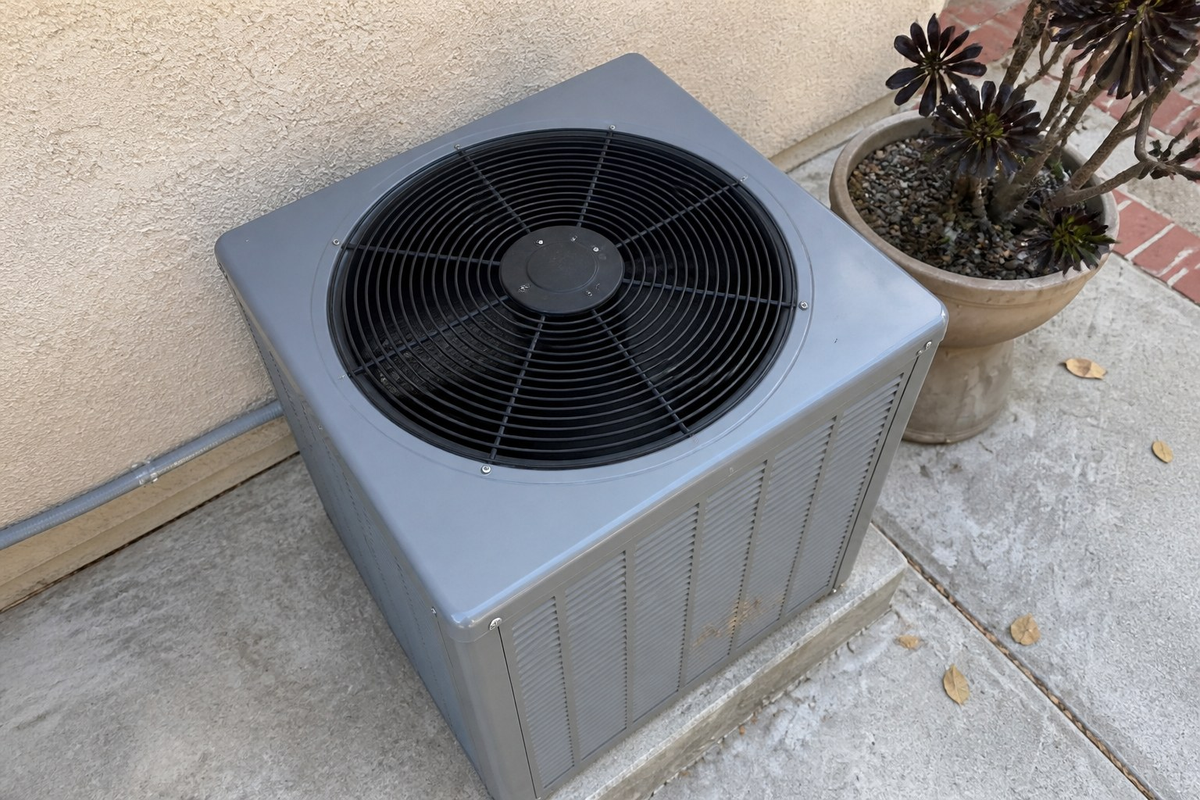
A heat pump is an air conditioner run backwards. A fan pulls outdoor air across a coil, a compressor concentrates that warmth, and the water picks it up. Because it moves heat instead of making it, one unit of electricity delivers five or six units of heat in warm air, which is where the 500% to 600% figures in sales literature come from. The catch is the air. As it cools, output drops, and below about 50°F most pool heat pumps stop being much use.
Hours to heat a 20,000-gallon pool
Most LA back yard pools hold 15,000 to 25,000 gallons, so take 20,000. Raising it 10°F, say from 70°F to 80°F, takes about 1.67 million BTU, because a gallon of water needs 8.34 BTU per degree. Here is the arithmetic for two common sizes, before any heat escapes:
- 400,000 BTU gas heater: about 330,000 BTU an hour into the water, so roughly 5 hours for +10°F, burning about 20 therms of gas. The same on a 45°F night.
- 110,000 BTU heat pump: about 110,000 BTU an hour in warm air, so roughly 15 hours for +10°F, using about 100 kWh of electricity. On a 45°F night it delivers a fraction of that.
Real pools lose heat the whole time, mostly from the surface, so both numbers run longer in practice. The heat pump loses more of the race because it runs longer, through the cool part of the night. Put the rates from your own gas and electric bills next to 20 therms and 100 kWh and you have the cost of one warm-up for your house, which is more useful than any national average.
When a heat pump wins
A heat pump is the cheaper way to keep a pool warm, as opposed to making it warm. If you swim from April through October and want the water at 80°F every day, it runs a few hours a day in warm air and costs little to do it. It also suits pools that are never allowed to cool down, because the slow first warm-up happens once a season.
- Your swimming season is spring to autumn, and nobody expects 82°F water in January.
- There is room in the electrical panel for a dedicated 240-volt circuit; installers quote 50 to 60 amps for the larger units. Older houses in the Valley sometimes need a panel upgrade first, and that changes the sums.
- The pad has open air around it. A heat pump boxed into a narrow side yard breathes its own cold exhaust and slows down. It also hums like an AC unit, so a spot under a bedroom window is worth avoiding.
- Water chemistry gets neglected now and then. Most pool heat pumps use a titanium exchanger, which low pH does not eat the way it eats the copper inside a gas heater.
When gas wins
Gas makes sense when you heat on demand. A family that warms the pool for a birthday weekend, or swims on a sunny Saturday in February, wants heat in hours and does not care what the heater does the other twenty days of the month, because it is off.
- You have an attached spa. A spa is a fast lift to a high temperature, and in the time a 400,000 BTU gas heater takes to do it, a 110,000 BTU heat pump has done about a third of the job.
- You want to swim in winter. Valley and foothill nights drop into the 40s from December to February, which is exactly where a heat pump fades. Our winter pool care guide covers what else changes in those months.
- A gas line already reaches the pad. Swapping an old gas heater for a new one is the simplest job on this page. Running a new line from the meter is not, since the pipe has to be sized for the heater's full draw.
Larger pads sometimes carry both: the heat pump holds the pool through the season and a gas heater takes the spa, or the pool on the odd cold weekend. It costs more up front and is the setup that never leaves you waiting.
What installation costs
National cost guides quoted in November 2026 put an installed heat pump at roughly $4,500 to $10,000 and an installed gas heater at $2,500 to $6,000. Those are not our prices and not LA quotes; they show the gap. What moves a real quote is the house more than the heater: a new 240-volt circuit or a panel upgrade for a heat pump, a new or larger gas line for gas, and whether the pad needs extending to fit the unit with space around it.
We fit and service both kinds, and the models we put in are on our equipment page. If you already have a heater that has stopped, look at it first: a typical repair is $300 to $650 in labor plus parts, and a heater locked out by a dirty filter costs a filter clean and nothing more. Past twelve to fifteen years the heat exchanger alone costs more than a new heater, and that is when this comparison becomes a real decision.
Lose less heat, whichever you choose
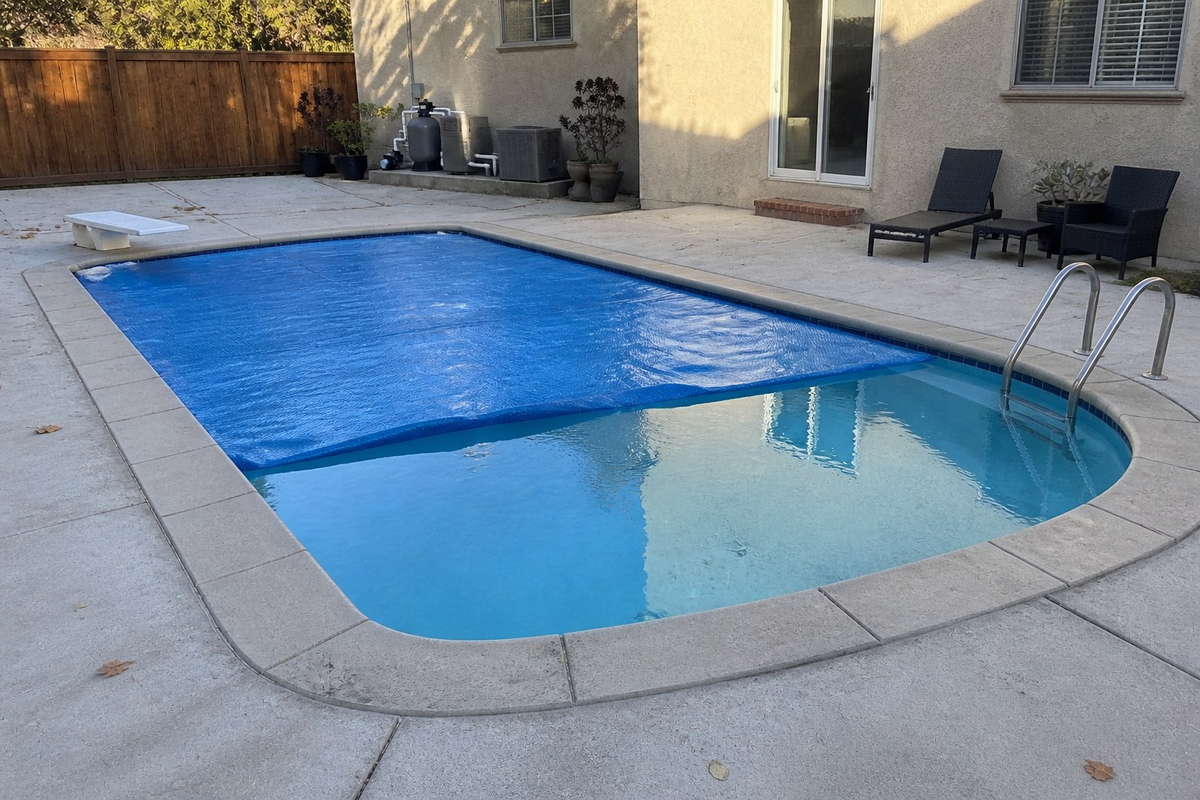
Most of the heat a pool loses goes out through the surface overnight. A solar cover, the blue bubble sheet sold by the roll, cuts that loss for both kinds of heater, and it matters more for a heat pump, which cannot make the loss back quickly. Setting the thermostat a degree or two lower saves more than people expect; our article on pool water temperature goes through the trade-off.
Keep the water balanced too. Hard LA water scales a heat exchanger faster than in most of the country, and scale slows heating on both types. pH at 7.4 to 7.6 and calcium in range, as the pool chemistry guide sets out, is cheaper than any heater.
Not sure what your pad can take? Send a photo of the equipment and the electrical panel, or call (818) 740-6099. Diagnosis is $0 inside our service area.
Pool heater questions we get
Are heat pumps efficient for heating pools?
In warm air, yes: one unit of electricity moves five or six units of heat into the water. The efficiency falls as the air cools, and below about 50°F most pool heat pumps do little. In Los Angeles that means they are strongest from April to October.
How long does it take to heat a pool with a heat pump?
For a 20,000-gallon pool, a 110,000 BTU heat pump needs about 15 hours of running to add 10°F in warm air, before heat loss. In practice a cold pool takes a day or two to come up, which is why heat pumps are run to hold a temperature rather than to make one.
How much does it cost to run a pool heat pump?
It depends on your electric rate, so work it in kilowatt-hours. Adding 10°F to a 20,000-gallon pool takes about 100 kWh; holding it warm in summer takes far less each day. Multiply by the rate on your bill. A gas heater doing the same warm-up burns about 20 therms.
How long does a pool heat pump last?
National guides give heat pumps 10 to 15 years. For heaters in general we see seven to twelve years in Los Angeles, with water chemistry the biggest variable: low pH and hard-water scale shorten any heater's life.
How much does it cost to install a pool heat pump?
National cost guides in November 2026 put it at roughly $4,500 to $10,000 installed, against $2,500 to $6,000 for gas. Those are not our prices. The electrical side moves it most: a new 240-volt circuit, or a panel upgrade in an older house.
Choosing a heater, or fixing the one you have?
Send a photo of the pad and the electrical panel, and tell us when you swim and whether there is a spa. We will say which heater suits the house before anyone quotes a unit. Or call (818) 740-6099
More on heater work
Written for Foothill and Valley homeowners.
Equipment
5 signs your equipment is costing too much
The quiet signals that a pump or heater is on its way out.

Water
Pool water temperature: comfort and cost
Every degree of heat costs money and changes the chemistry.
Los Angeles and the Valley
Heater not keeping up?
We repair gas heaters and heat pumps, and fit new ones when repair stops making sense. Diagnosis is $0 in our service area.