

Water
Calcium nodules on pool plaster
Why white bumps grow out of cracks and loose plaster, how to tell them from scale, and when a patch is enough.
Article
Five readings decide whether a pool stays clear, and they push on each other. Here are the ranges, the order to fix them in, and why hard Los Angeles tap water keeps moving the numbers.
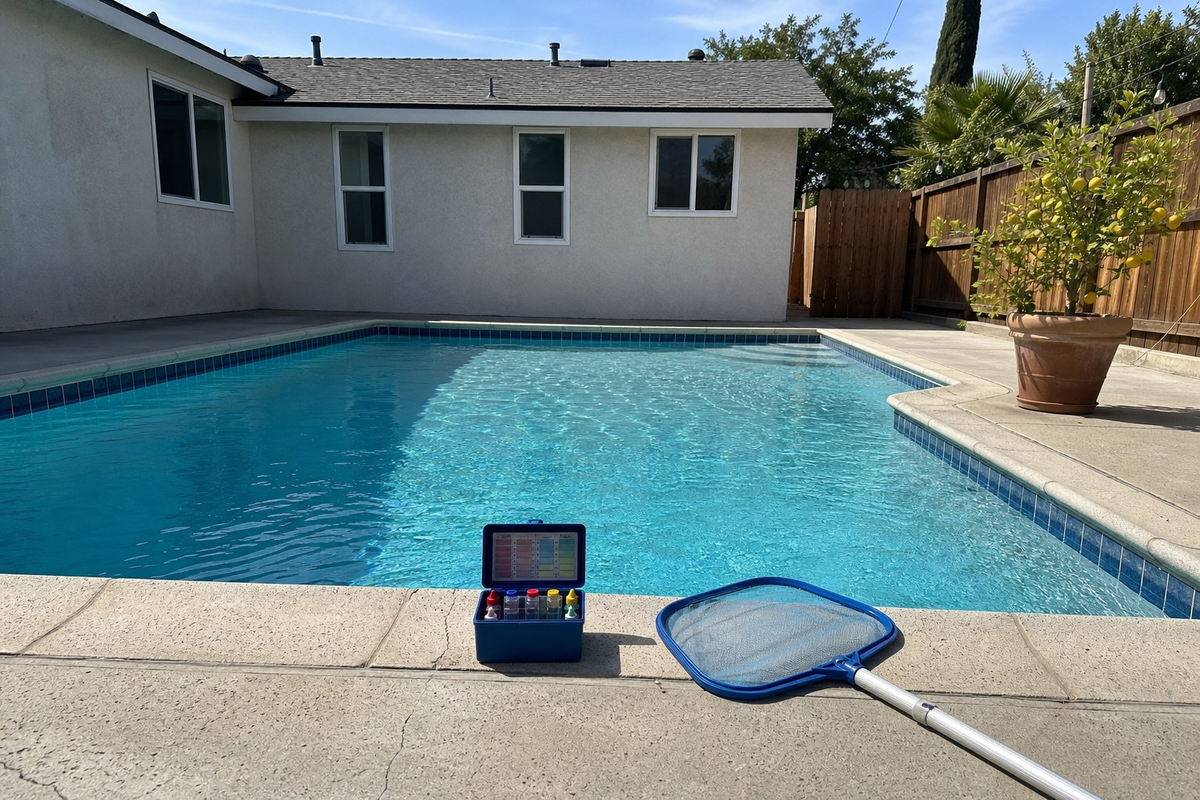
Pool chemistry comes down to five numbers: free chlorine, pH, total alkalinity, calcium hardness and cyanuric acid (stabilizer). Chlorine does the cleaning. The other four decide whether the chlorine works, whether the water eats your plaster or coats it in scale, and whether swimmers' eyes sting.
They are linked. Alkalinity holds pH steady, stabilizer slows chlorine down, and calcium keeps water from pulling it out of the surface. Change one with no thought for the rest and you chase the readings around the pool for a month.
These are the industry ranges for a plaster pool with chlorine. A salt pool shifts a few of them, and the salt article has its own targets.
Chlorine and pH weekly, and twice a week in July and August when a hot pool burns through chlorine in a day. Alkalinity weekly as well, since it is what keeps pH from jumping. Calcium and stabilizer move slowly, so once a month is enough, plus after a heavy rain or after you refill part of the pool.
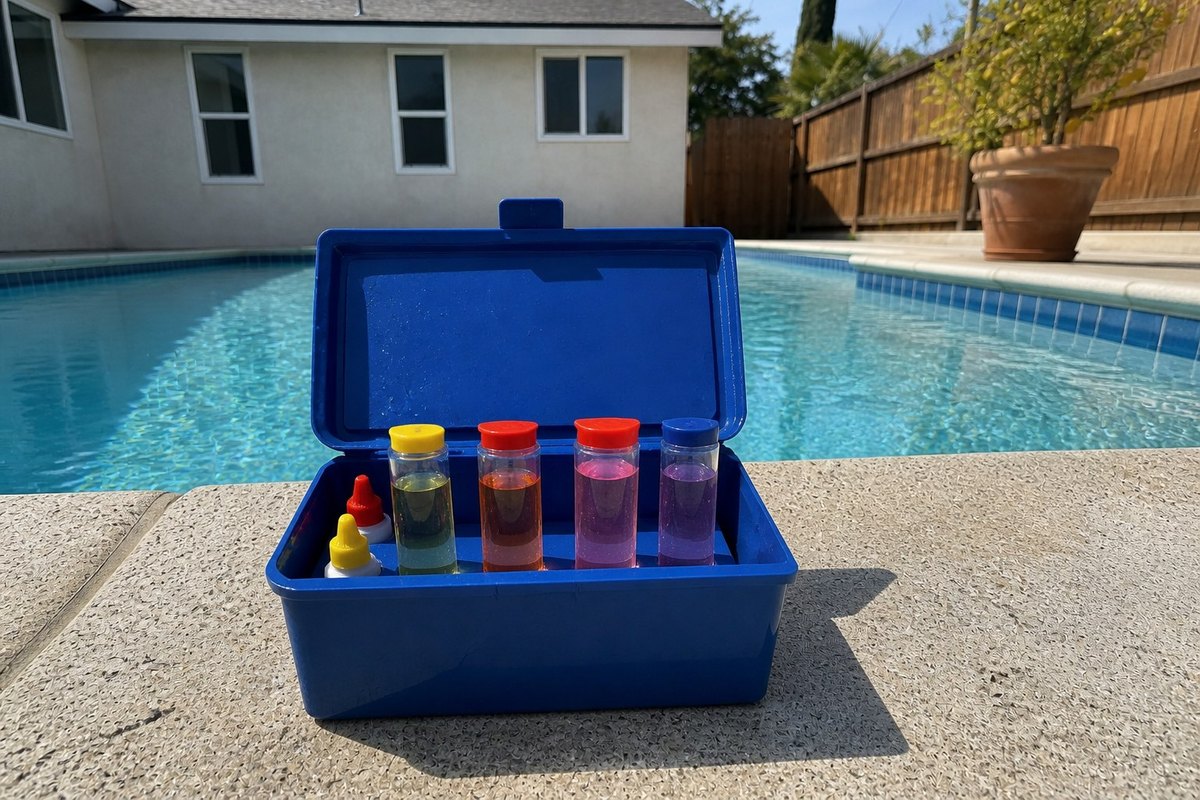
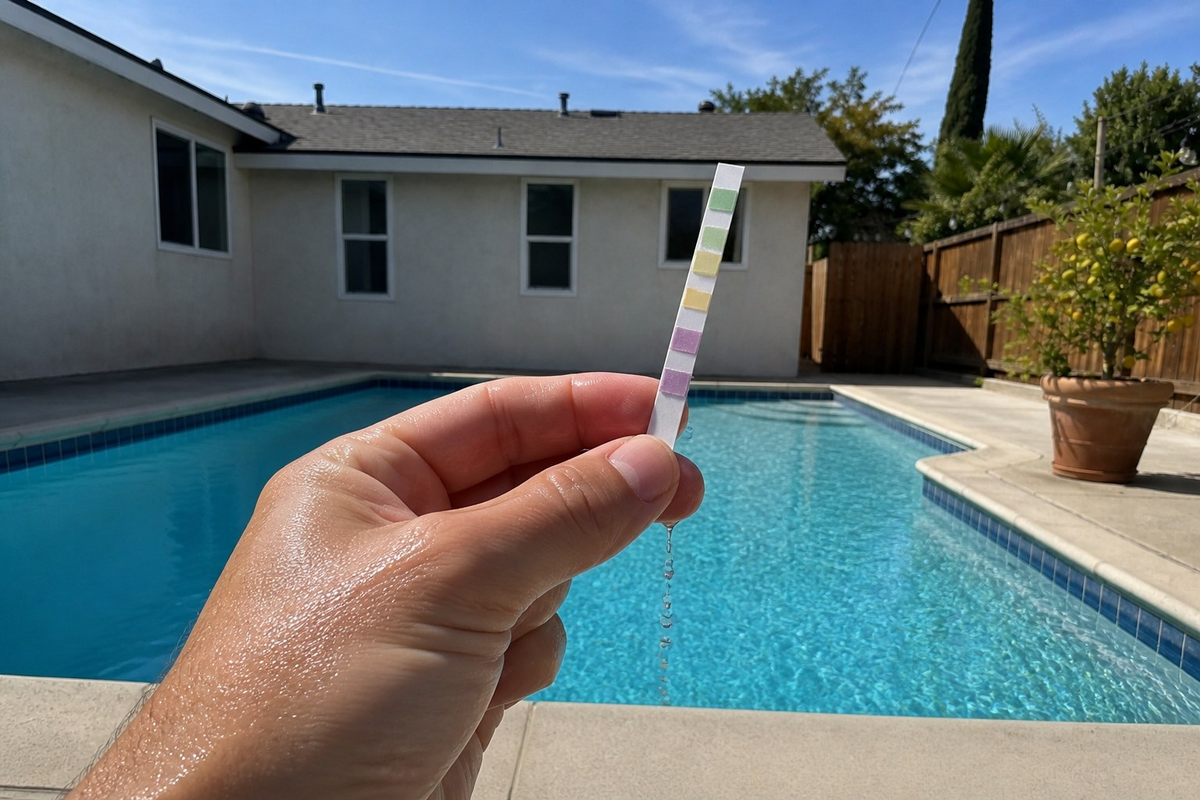
Test strips are fast and fine for a weekly look. A drop kit costs a little more and reads chlorine and pH more exactly, which matters when a number sits near the edge of its range. Take the sample from elbow depth, away from the return jet, and read it in daylight.
Fix them in the order below, with the pump running, and wait at least 30 minutes between additions before you test again. Adding chlorine first is the usual mistake: if pH is high, most of that chlorine is working at half strength.
Add chemicals one at a time, pour them in front of a return jet, and never mix two products in a bucket. Acid and chlorine together release chlorine gas.
Fresh water here is hard and alkaline. Every top-off in summer brings calcium and alkalinity with it, and a pool that loses an inch a week to evaporation ends the season with more dissolved minerals than it started. That is why pH in a Los Angeles pool tends to rise by itself, and why you add acid far more often than baking soda.
Sun adds to it. Chlorine burns off fast in July, so tablets feed stabilizer into the water until it passes the range. Rain does the opposite, and a storm dilutes everything at once; the after-rain guide has the order for that case. Algae on top of the problem gets its own page, because green water is a chlorine failure first and a chemistry question second: green pool clean-up.
Clear water is not proof of balance. Low pH and low alkalinity leave the water sparkling while it dissolves the plaster slowly, and the first sign is a rough surface and rust-coloured stains by the steps. High pH and calcium look clean for weeks, then crust the tile line and cloud the water. If the water is already hazy, the cloudy water article lists the causes in order of likelihood.
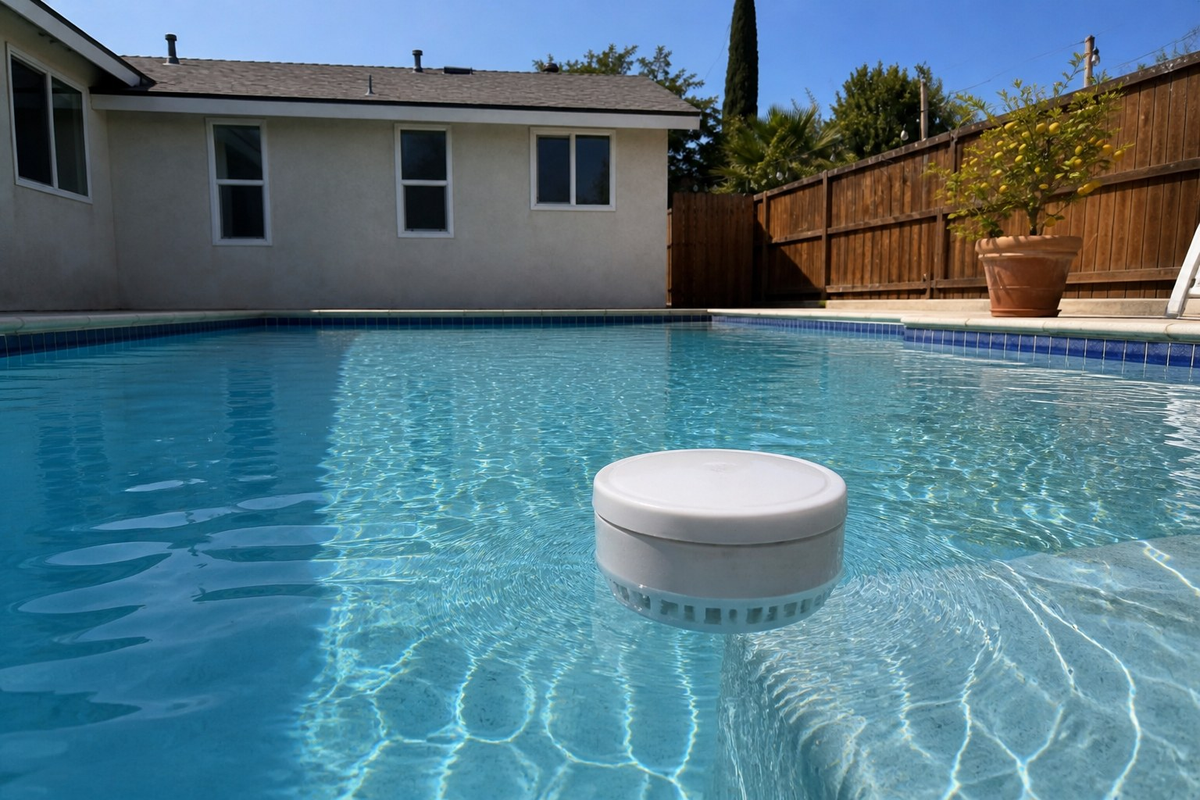
Doing it yourself, you pay for a kit or strips and for the chemicals, and none of those prices are ours: they are set by the store, the brand and the container size, so check what your local pool store charges. The yearly total depends on the pool's volume, how much sun and leaf fall it gets, and how often rain or a refill knocks it out of range.
On our weekly service the full chemical panel is part of every visit: pH, alkalinity, chlorine, cyanuric acid, calcium, phosphates, TDS and salt, each adjusted to range. Weekly service starts at $159 a month, and standard chemicals are included, as the price list shows. Specialty treatments are billed separately.
Not sure how to read your numbers? Send the test result and a photo of the water, or call (818) 740-6099.
Chlorine to sanitize, muriatic acid or a pH decreaser to bring pH and alkalinity down, baking soda and soda ash to raise them, calcium chloride for hardness and cyanuric acid for stabilizer. Specialty products such as algaecide or phosphate remover are added only when a test calls for them.
Free chlorine of 1–3 ppm for most pools. The more stabilizer is in the water, the closer to the top of that range it should sit.
Total alkalinity first, then pH, then calcium hardness, then stabilizer, and free chlorine last. Wait about 30 minutes between additions with the pump running and test again before the next one.
Too much does irritate eyes, skin and lungs, and so does water with a poor pH that lets chlorine byproducts build up. After a shock, wait until free chlorine is back to 1–3 ppm before anyone swims.
Almost never. Pools here run all year, so there is no closing, only a weekly check. If you do shut one down for a long stretch, balance the water first and keep it circulating.
Send the numbers and a photo of the water. We will tell you what to fix first, and in what order, before anyone buys a bottle. Or call (818) 740-6099
Written for Foothill and Valley homeowners.
Why white bumps grow out of cracks and loose plaster, how to tell them from scale, and when a patch is enough.
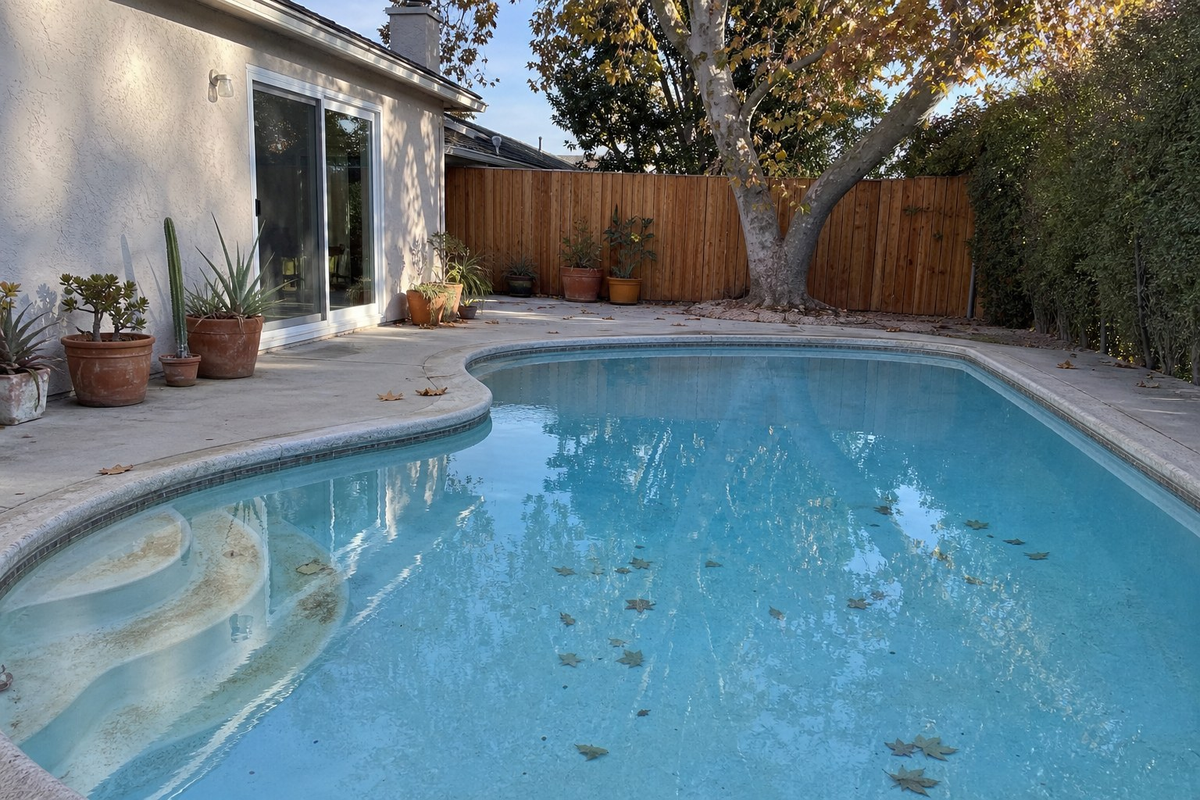
Two spot tests that tell leaf from metal, then chlorine or ascorbic acid with the water in, and where home methods stop.
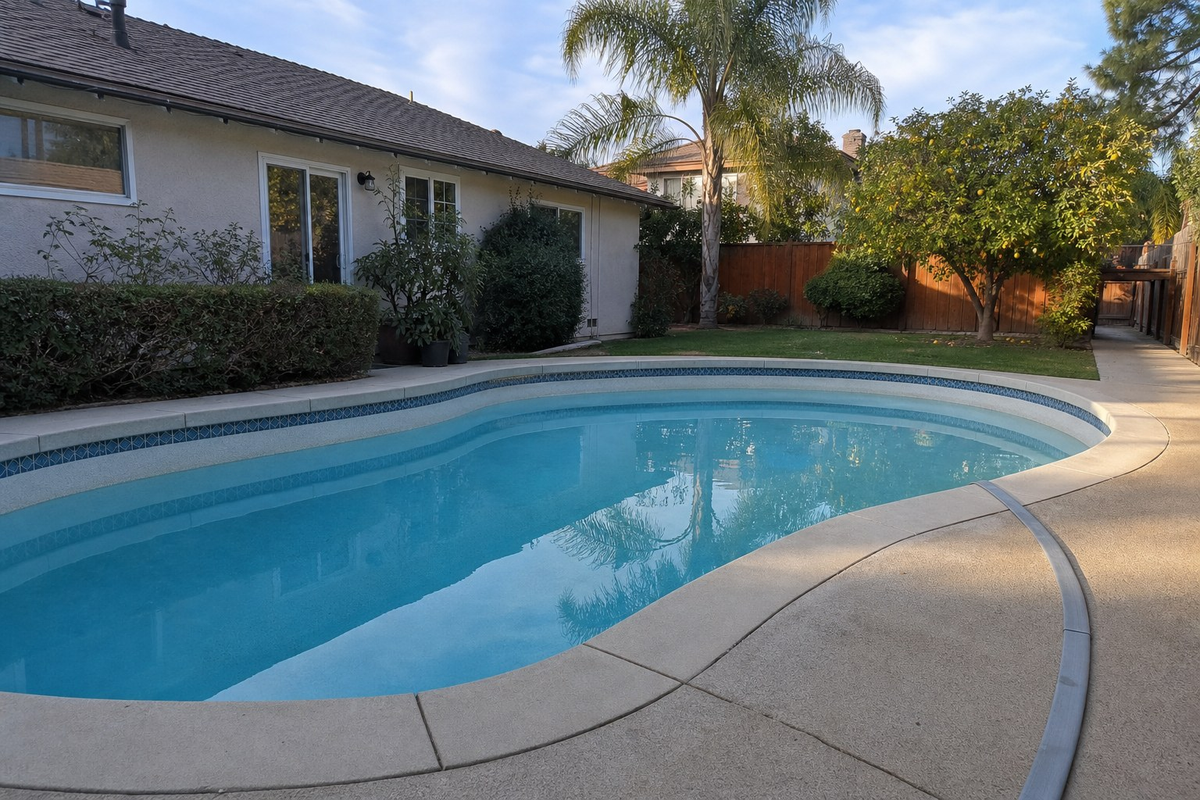
Whether to drain at all, what the ground can do to an empty shell, where the water may go, and how to refill.
Los Angeles and the Valley
We test the full panel every week, fix it in the right order, and the standard chemicals are already in the monthly price.