

Water
Liquid chlorine: dose, timing, storage
How to work out the dose from the label, when to pour it, and how to store a jug.
Article
Most winter pool advice is about closing a pool before the freeze. Here the pool stays open, so winter is a shorter list with four real changes in it.
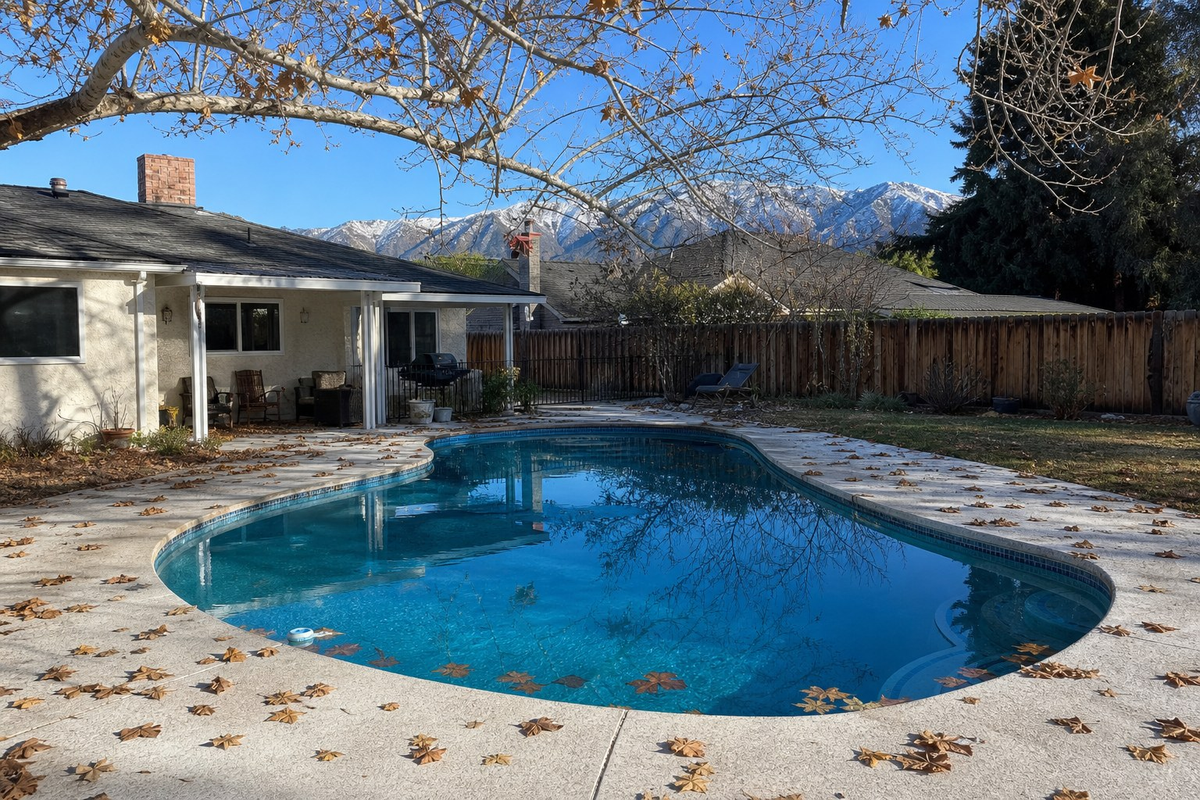
Search for winter pool care and you get pages about winterizing: lowering the water, blowing out the lines, putting a cover on until spring. That is for pools that freeze solid. A Los Angeles pool stays open all year, and doing the closing routine to it creates problems it never had.
The one winter mistake that costs real money is lowering the water or emptying the pool. Plaster is meant to sit under water. An empty shell can crack, and after a wet week the soil around it can push it up out of the ground. If a repair needs the water out, a pro plans it around the weather. See the pool after rain page for what to do when the water level rises on its own.
What does not change is testing. Cold water hides problems for a few days and then shows all of them at once, usually right after the first big rain.
Most of the basin never reaches 32°F. The foothills do, a handful of nights a winter. Water that is moving freezes later than water that sits, so on a night with a forecast low near freezing the pump should run through the night, and an automatic freeze-protection setting on the control panel does that for you. On plenty of pools it was never switched on; our La Crescenta page has more on it for foothill owners. Check the setting in November, not on the cold night.
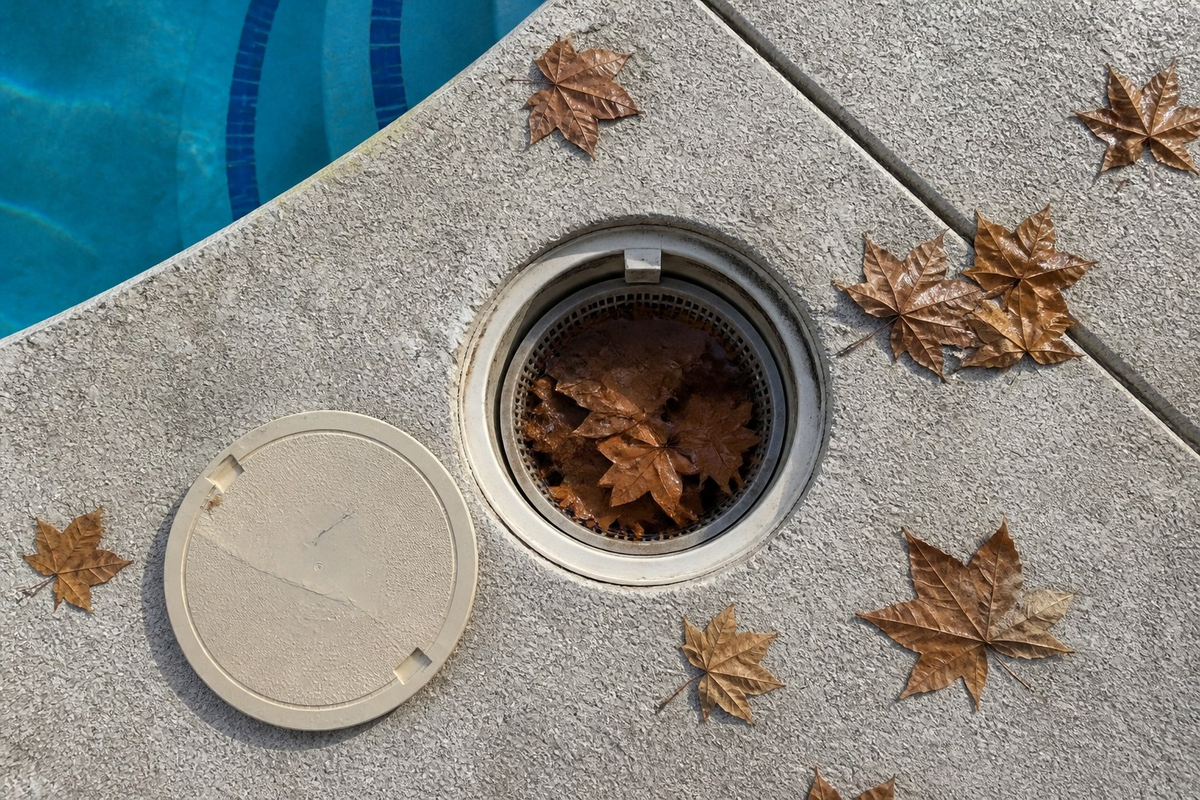
Sycamores and oaks keep dropping into December, and the first storm brings down what was left on the branches. A basket full of wet leaves slows the pump, and leaves left to sit on the floor of a plaster pool can leave brown stains that take chemistry to remove. Empty the skimmer basket more often than you do in summer, and net the surface before rain, not after.
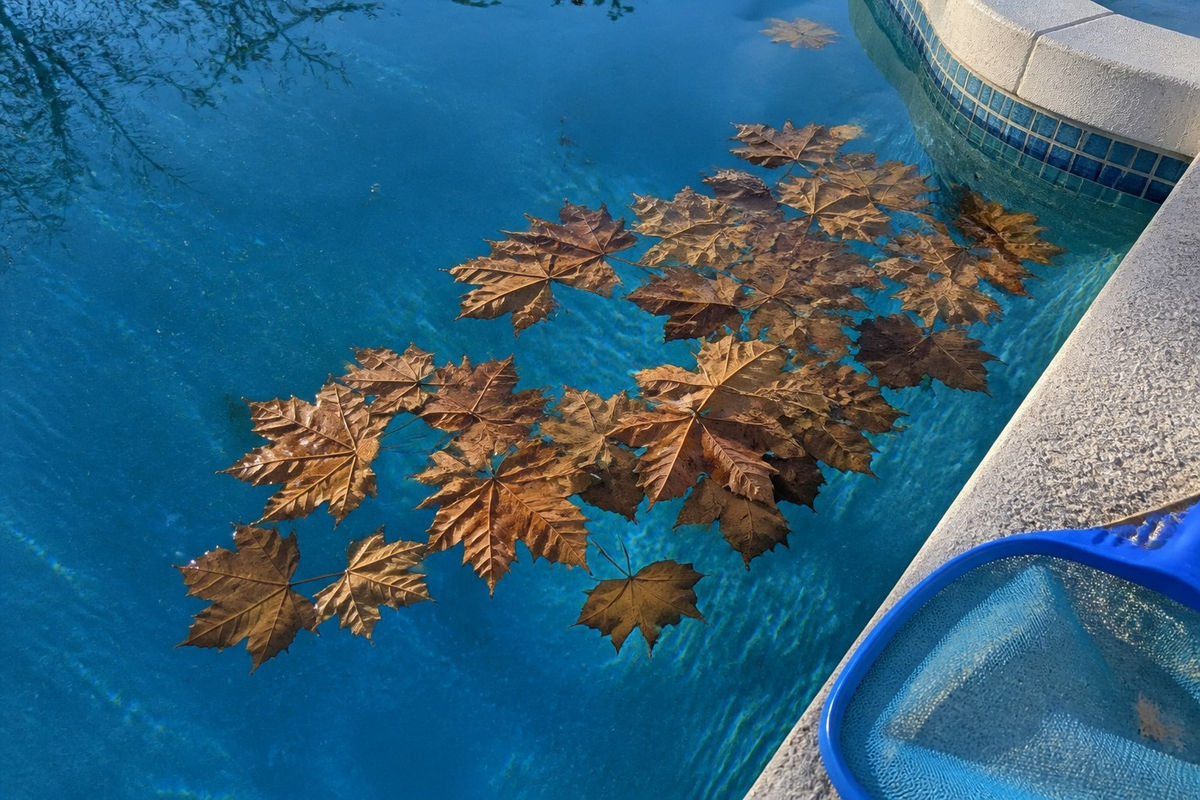
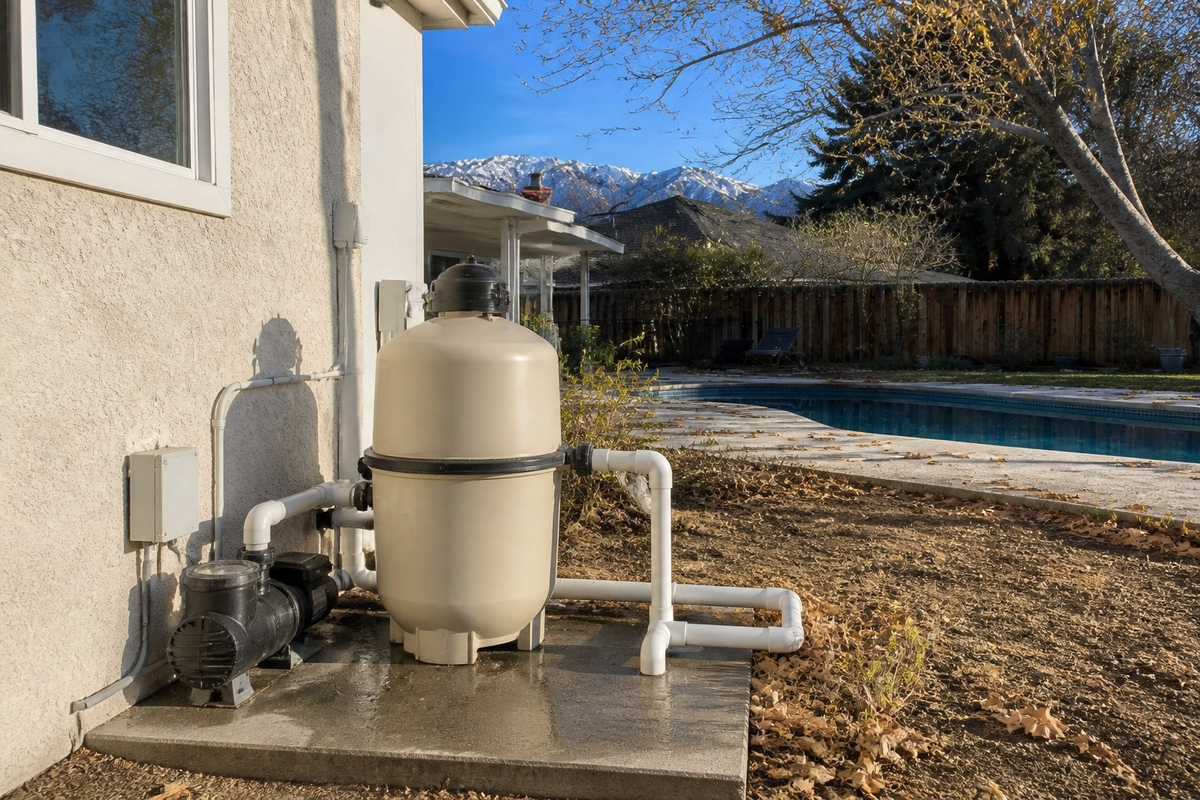
If the filter is clogging faster than usual, the filter cleaning page covers what a cleaning involves and what it costs.
A heater is the one piece of equipment that works harder in winter, and it is the one most likely to be found broken the first cold weekend. Start it for a few minutes in November, before you need it. A heater that will not light or trips out is a job for the heater repair page. A pool cover keeps heat in overnight, but it also hides a dirty pool, so lift it and look at the water once a week.
Cool water forgives a missed week better than July does. What it does not forgive is a storm landing in the middle of that week. Before you go, test and bring chlorine to the middle of its range, empty the baskets, net everything off the top and check the pump schedule and freeze setting. For a trip longer than a week, ask someone to look at it, because a pool that turns green while you are away takes longer to clear than the trip did.
Doing it yourself costs chemicals and time. Weekly service starts at $159 a month with standard chemicals included, as the price list shows, and the weekly maintenance page says the visit is the same list in January as in July: what changes is the pump timer and the leaf work.
Want someone else to watch the forecast? Send us the pool size and your last readings, or call (818) 740-6099.
You mostly do not. Pools here stay open and running. Keep the water level where it is, never drain a plaster pool for winter, cut the pump hours a little, and turn on freeze protection if you are in the foothills.
Many LA pools do well on 6 to 8 hours a day. The right number depends on the pump, the pool size and how many leaves fall in, so watch the water and add time if it clouds.
A week is usually fine in cool water if the chemistry was right when you left and no storm comes through. Two weeks is where algae and leaf stains start, and a storm shortens the margin.
Yes, more slowly. Rain, leaves and low chlorine still start it, and December storms are when most green pools in Los Angeles begin. Keep testing weekly.
It is optional. A cover keeps heat in and keeps leaves out, and it can hide a problem under it, so lift it and check the water once a week.
Tell us the pool size and what your test shows. We will say what to change for the season, before you buy anything. Or call (818) 740-6099
Written for Foothill and Valley homeowners.
How to work out the dose from the label, when to pour it, and how to store a jug.
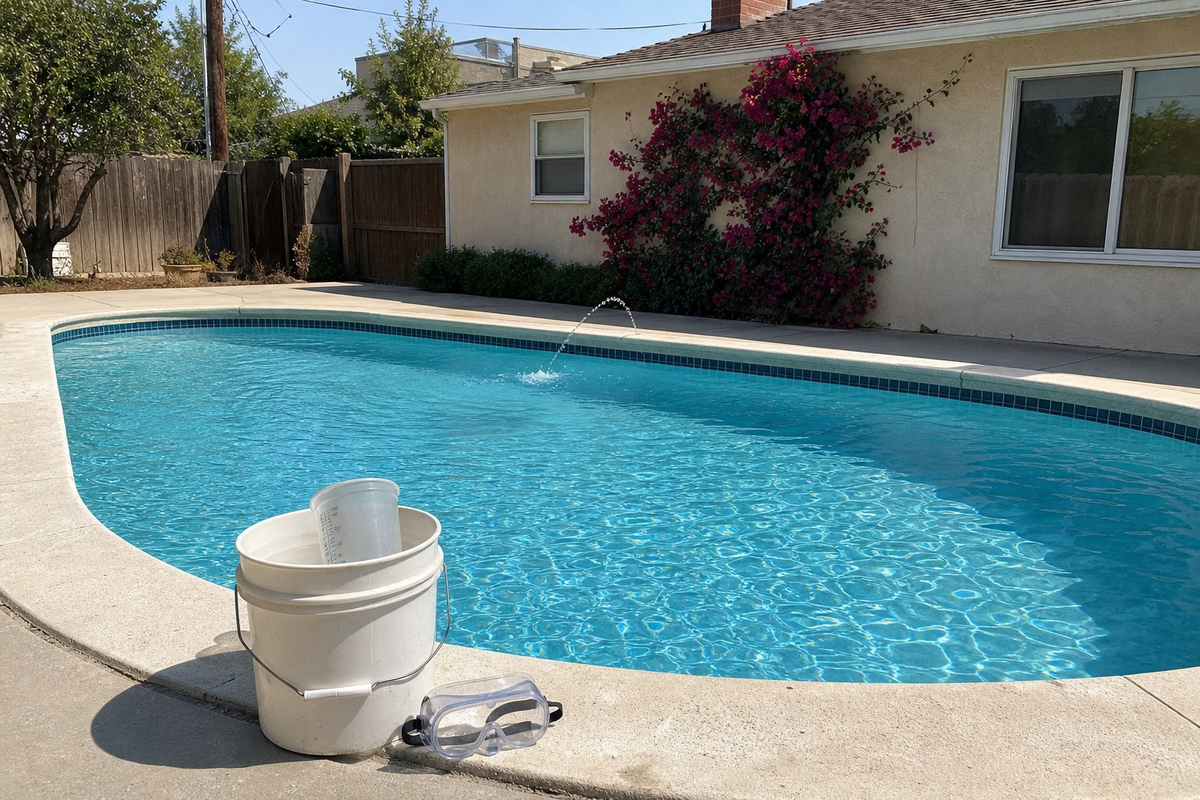
Why pH keeps coming back, and the acid-and-aeration method that fixes high alkalinity.
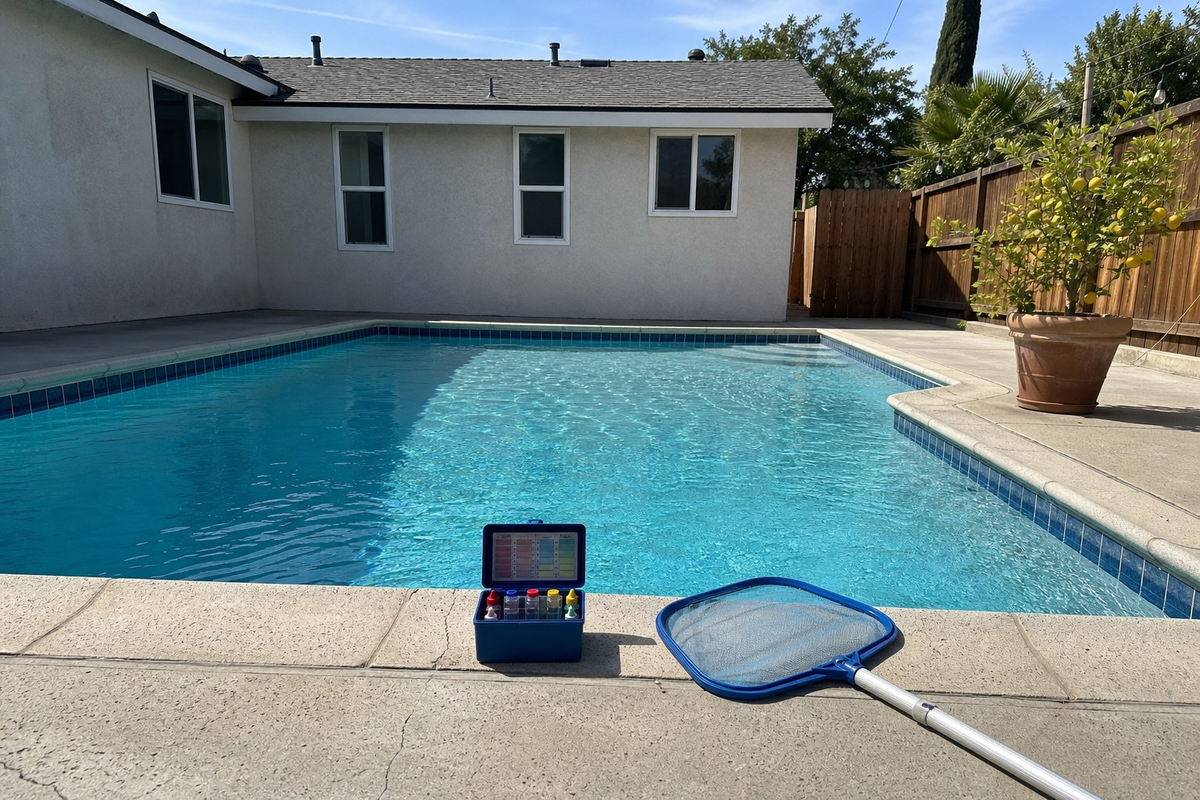
The five readings, the order to fix them in, and why LA tap water keeps pushing pH up.
Los Angeles and the Valley
We test the water and clear the leaves at every weekly visit, with standard chemicals included in the monthly price.