

Water
Pool stabilizer: how much, and how to fix it
The range for chlorine and salt pools, why tablets push it up, and how to bring it down.
Article
A salt system makes its own chlorine, and that is the only job it takes off your list. Here is what still needs doing each week and each month, and what Los Angeles water does to the cell in between.
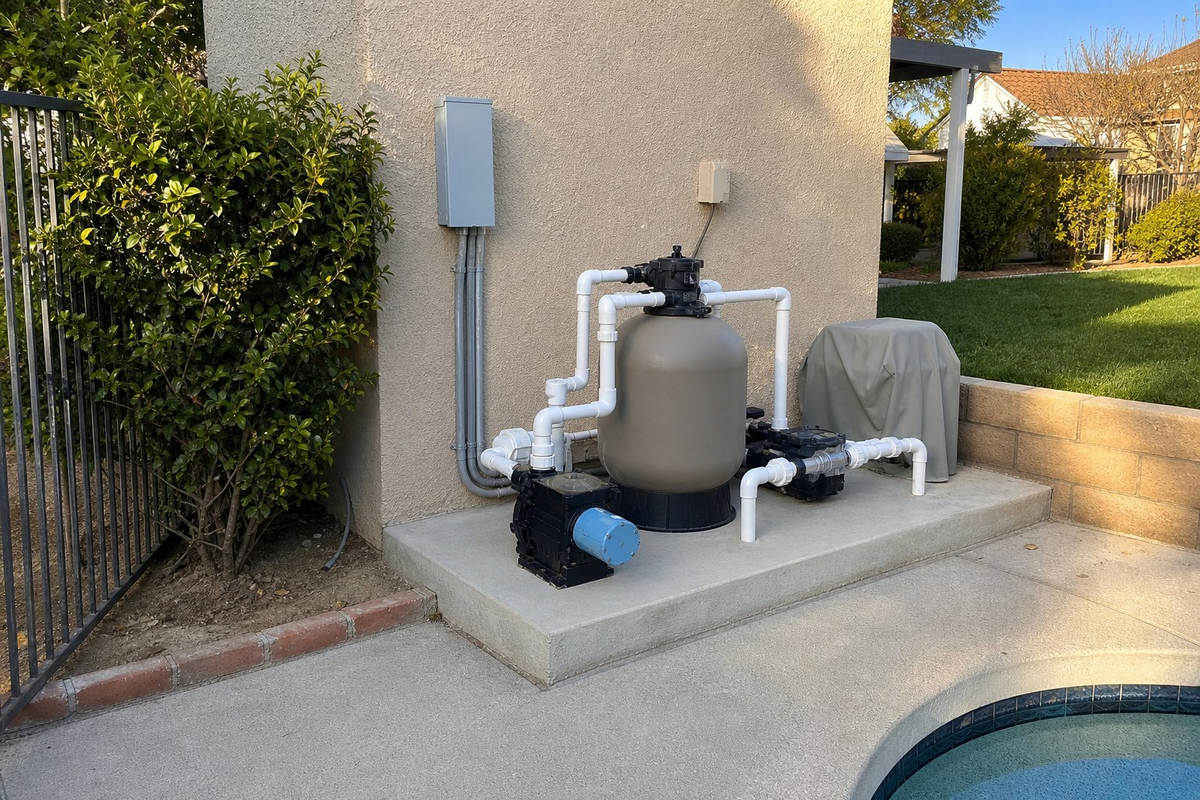
A saltwater pool is a chlorine pool. The water holds about a tenth of the salt of the sea, and the cell turns a little of it into chlorine every hour the pump runs. What you stop doing is carrying chlorine home from the store. What you keep doing is everything that decides whether the cell can keep up.
Most trouble in a salt pool comes from skipping that second half. The water looks fine, the display says the cell is on, and the chlorine is quietly short because the cell is scaled, the pump ran too few hours or the stabilizer drifted. The routine below catches each of those before the water changes colour.
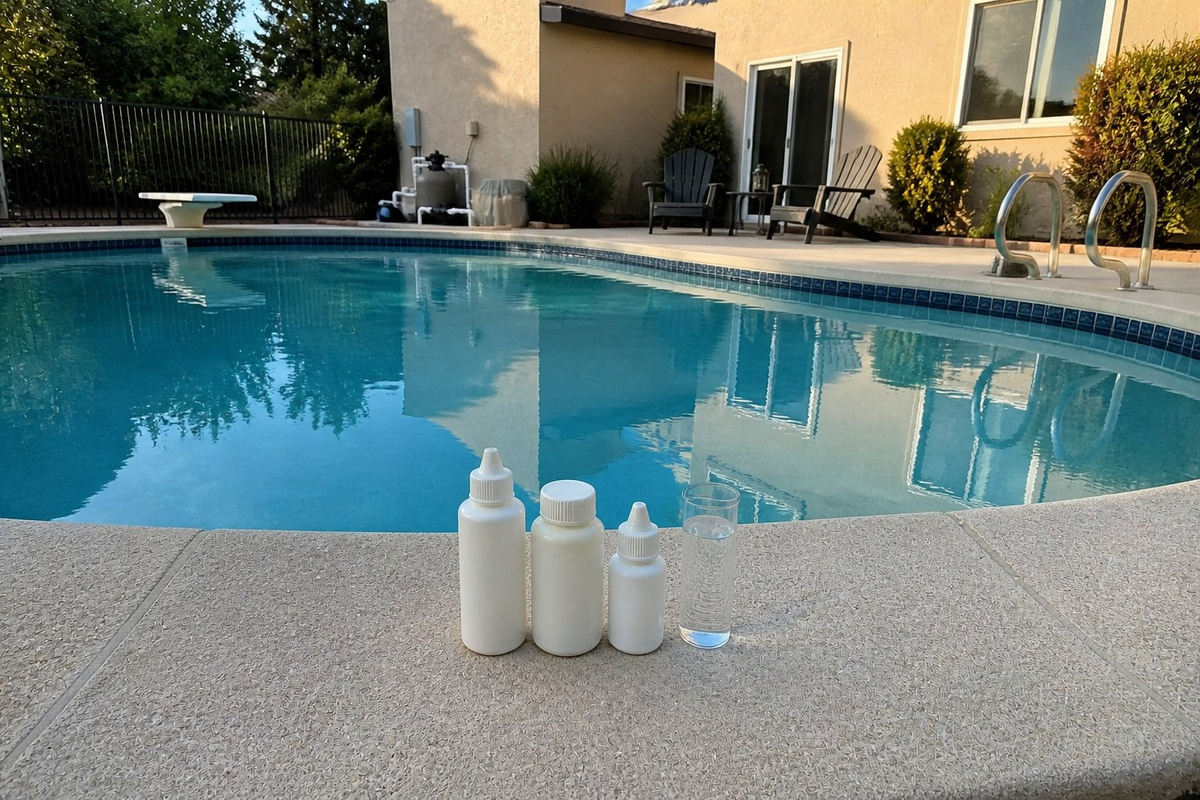
Test the salt itself, and look at the cell. The salt reading on the cell's own screen is useful for trends, but it drifts as the plates age, so a drop test or a digital meter is the check that counts.
In Los Angeles the fill water is hard, every top-up adds calcium, and the cell attracts that calcium to its plates, since making chlorine raises the pH right at the surface. A cell with a visible crust is a cell making less chlorine than its display claims.
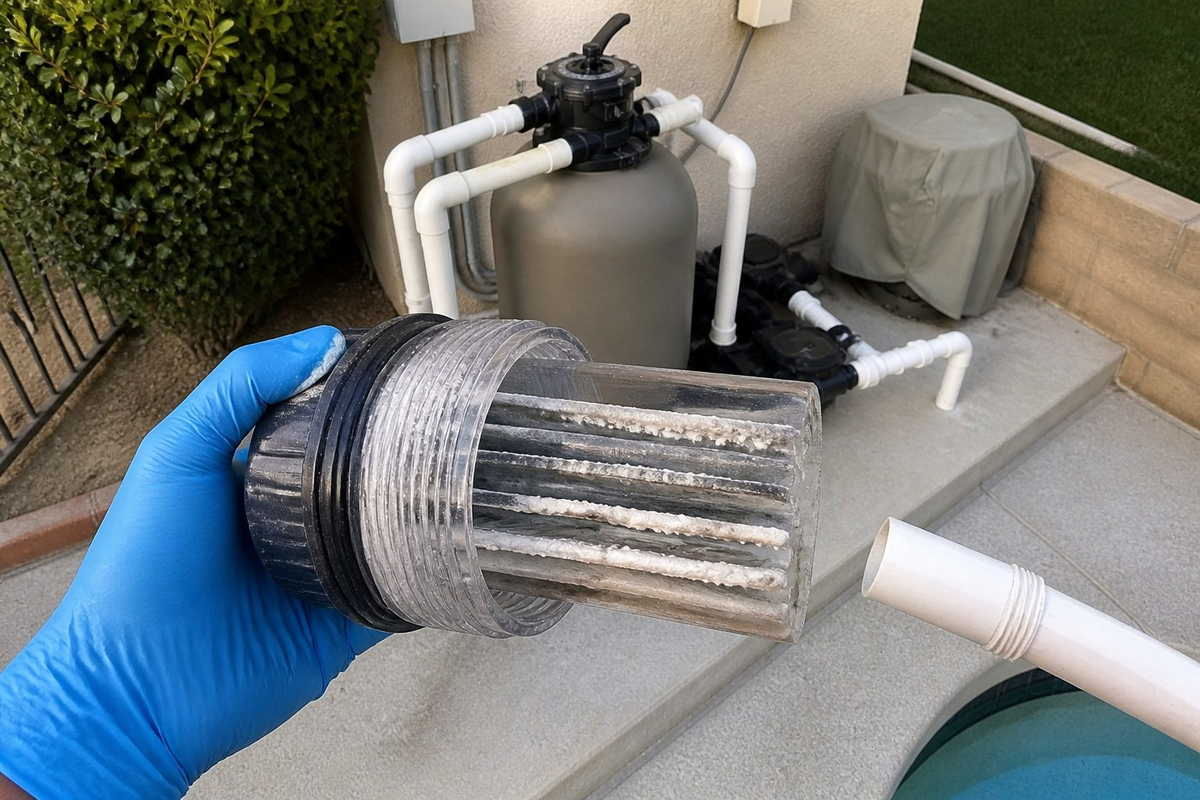
If it scales again within a few weeks, the water chemistry is the cause and the cell is the symptom. If the plates are thin and clean but the output is still low, the cell has reached the end of its life, and the salt cell repair page covers what replacing one involves and costs.
Salt does not evaporate, so it goes down only with water that leaves the pool: backwashing, splash-out, overflow after a storm, or a partial drain. A pool that has not lost water rarely needs more.
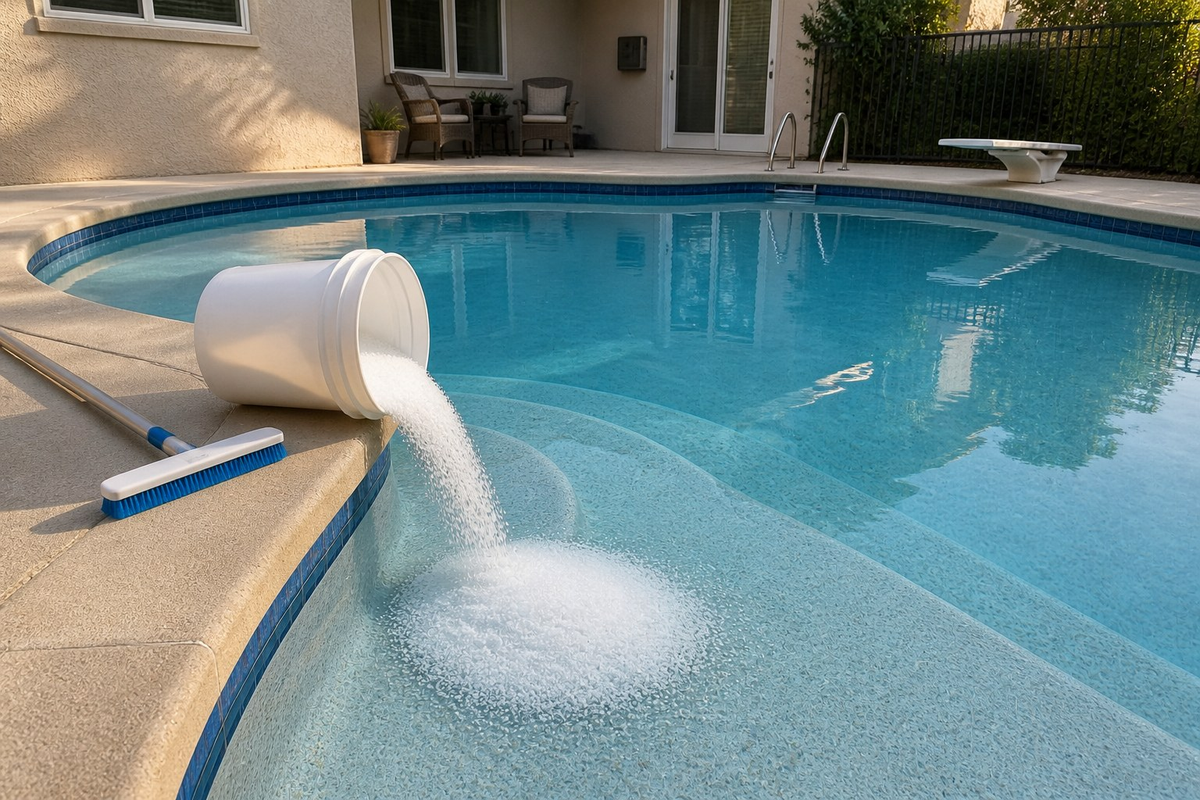
Eight and a third pounds of salt raise 1,000 gallons by 1,000 ppm. A 15 × 30 foot pool with an average depth of 5 feet holds about 17,000 gallons, so lifting it by 500 ppm takes about 70 pounds. Switch the cell off first, pour the salt along the shallow end, brush it around until it dissolves, and run the pump for 24 hours before testing again. Add less than the full amount and retest, because it is easier to add than to remove.
Salt itself is cheap compared with the equipment, and the number that matters is pounds per 1,000 ppm, as above. The cost is in time: the weekly tests, the monthly cell check and the occasional cleaning.
Our weekly service is $159 a month for pools up to 15,000 gallons and $179 for 15,000–25,000 gallons, chemicals included, and it covers checking the salt and the cell along with the rest of the equipment. The full price list shows what else is included.
Not sure your cell is keeping up? Send the salt reading and a photo of the water, or call (818) 740-6099.
Test chlorine and pH weekly, empty the baskets, keep the filter clean and check the salt and the cell monthly. Skimming and brushing are the same as in any pool. For a pool that has already gone green, start with the green pool guide.
Long enough for the cell to make the chlorine the pool uses, usually 8 to 10 hours a day in summer for a pool this size, less in winter. The cell works only while the pump runs, so a shorter run time means less chlorine.
For a salt pool it usually is, because the failures are quiet. The display says the cell is on while scale cuts the output, and a weekly visit finds that before the water changes colour. Our service starts at $159 a month.
Rarely, once or twice a year in most pools. Salt leaves only with water, so it drops after heavy rain, a lot of backwashing or a partial drain. Test it monthly and add only when the reading is below the cell's range.
Send the salt reading and a photo of the water. We will tell you if it is the cell, the chemistry or the pump hours before you buy a part. Or call (818) 740-6099
Written for Foothill and Valley homeowners.
The range for chlorine and salt pools, why tablets push it up, and how to bring it down.


What changes when the equipment and the finish are not ordinary.
Los Angeles and the Valley
We test the salt, look at the cell and read the chemistry every week, so a scaled cell is found before the water turns.