

Water
What to do with the pool after rain
The order to work in after a storm, and where the overflow is allowed to go.
Article
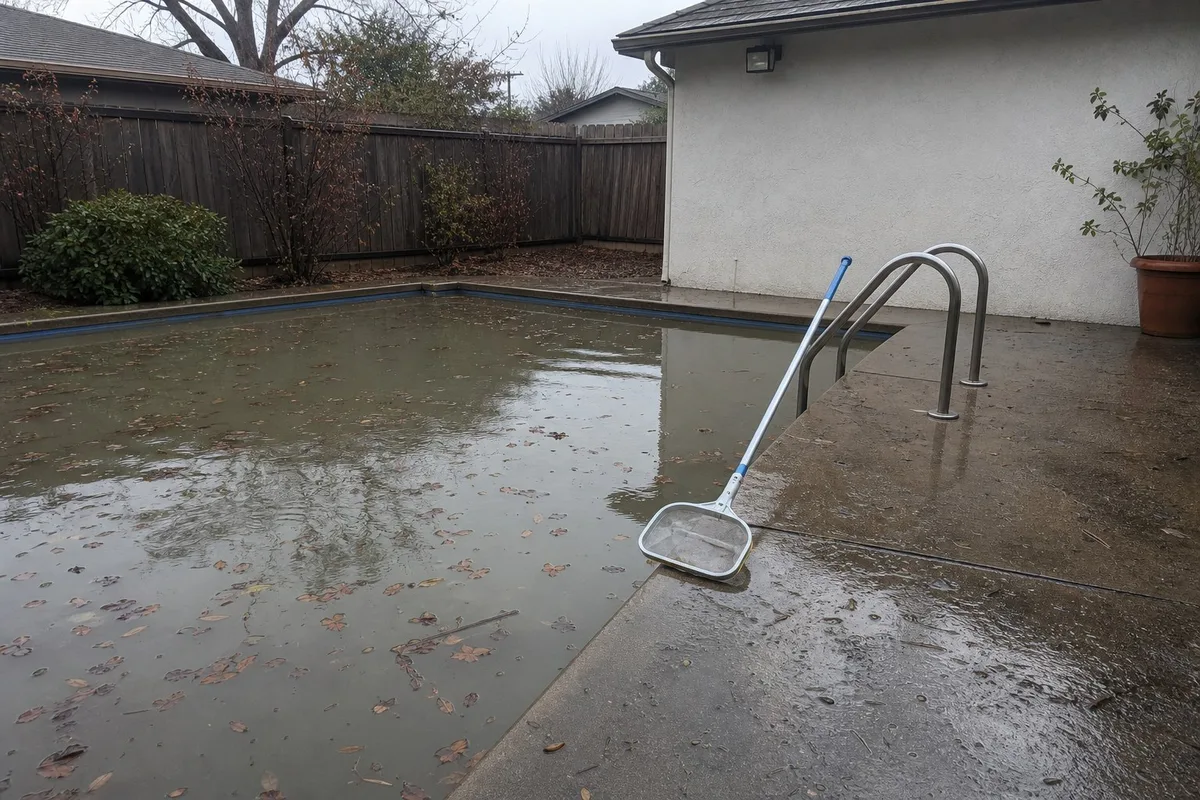
Rain dilutes the chlorine, drops the pH, lifts the water over the skimmer and drops half a tree into the basket. Here is the order to work in, and the one thing you should not do with the overflow.
Los Angeles gets its rain in a handful of heavy days rather than steady drizzle, and that is exactly what makes it hard on a pool. A single storm can undo a month of balanced water: the chlorine is diluted, the pH drops, the baskets fill, and the level rises over the skimmer so the surface stops being cleaned at all. Left alone through a wet week, that is how a clear pool turns green by the time anyone looks at it again.
The work itself takes under an hour. The order matters more than the effort.
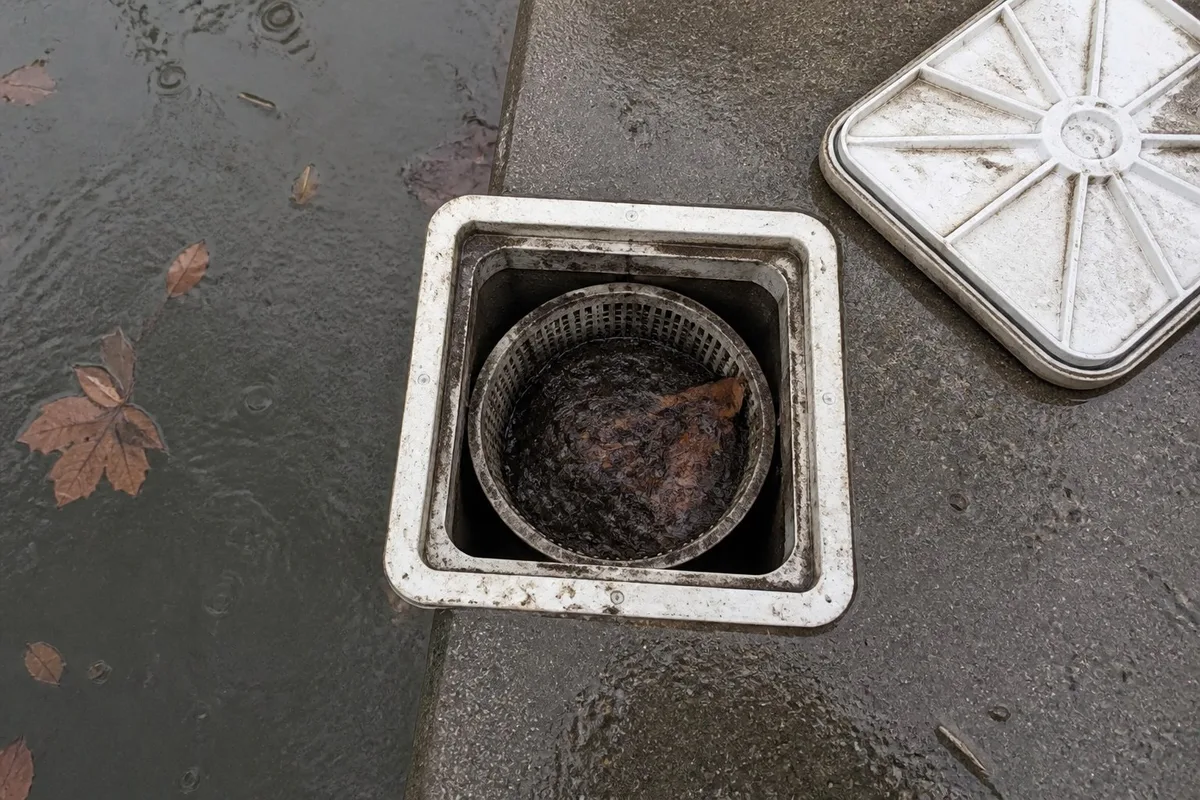
Rain is not clean water here. Between May and November nothing washes the air or the roofs, so the first real storm carries down everything that has been settling since spring: road dust, smog particulates, pollen, roof grit, and in a fire year, ash from the hills. All of it lands in the pool at once.
That is why the first storm of the season usually needs a full shock and a filter clean, while the third or fourth one in February often needs only a test and a small correction. If your water goes cloudy and stays cloudy after that first rain, phosphates are the usual reason — worth testing for, because no amount of chlorine fixes them.
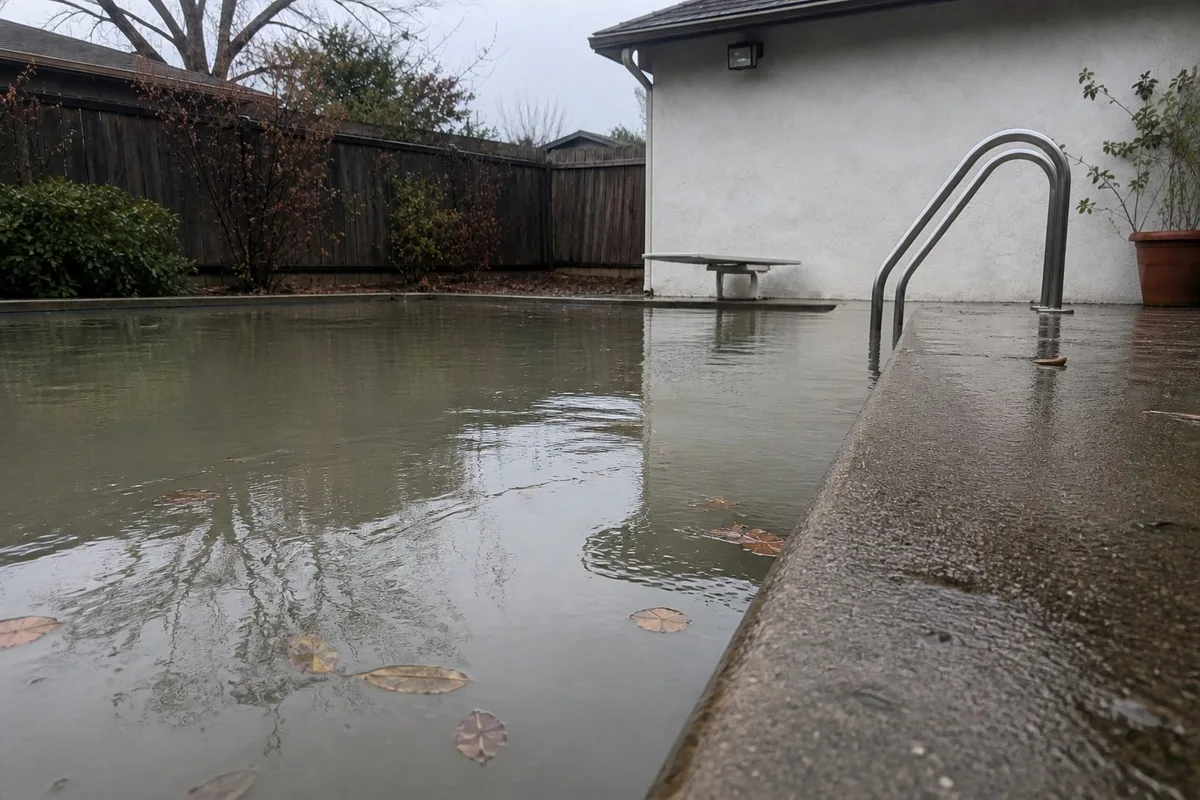
When the pool is over the coping, the instinct is to open a valve and let it run down the driveway. Do not. Pool water is chlorinated, and most cities we work in prohibit it going into a storm drain — storm drains in Los Angeles County run to the ocean without treatment, and the fines are real.
Twenty minutes of preparation saves the hour afterwards. Before a storm is forecast:
What not to do: shut the pump off for the duration. Circulation is what keeps the diluted chlorine spread through the pool, and a pump that sits idle through three wet days is how green water starts.
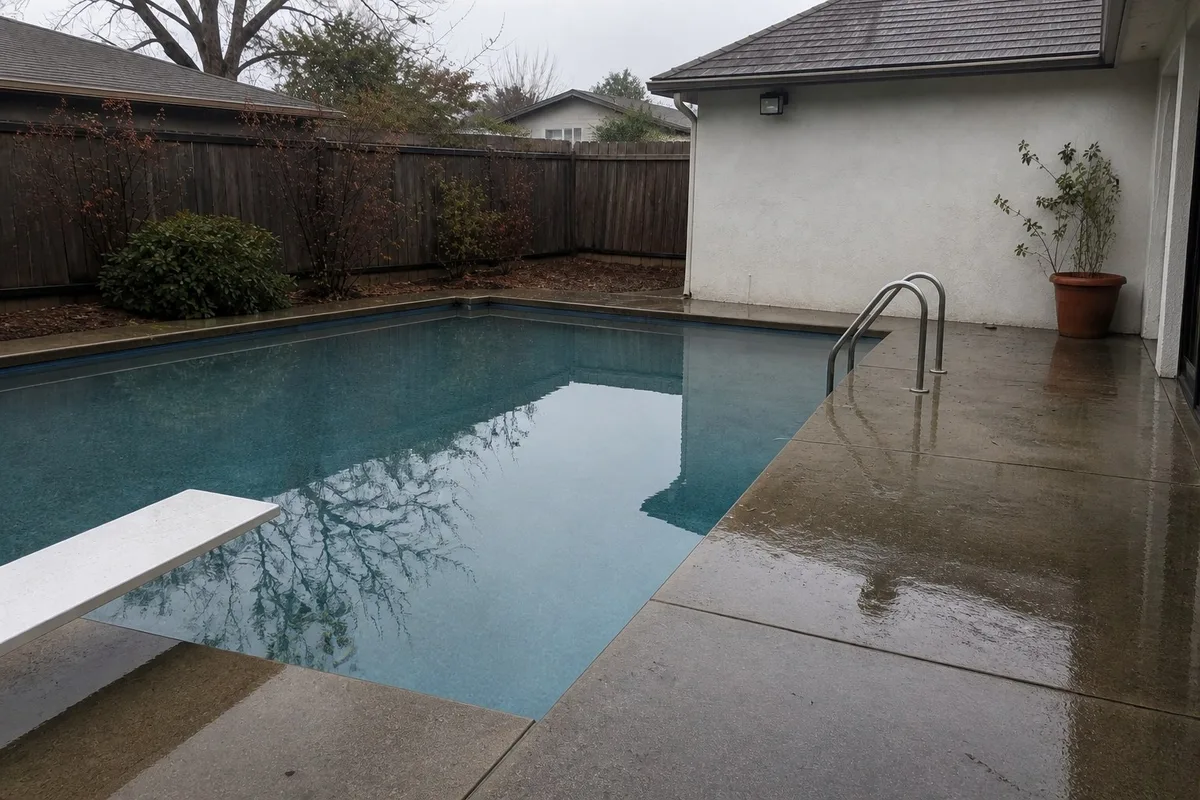
Through the wet months we get the same three calls. Water that has been cloudy for more than three days. Water that went green while nobody was swimming and nobody was looking. And a pump that will not restart after a storm — usually a tripped GFCI or water where it should not be, occasionally a motor that has taken in water and is finished.
If any of those is your week, send us a photo of the water or call (818) 740-6099. Diagnosis on equipment is $0 in our service area, and a storm clean-up is a fixed price once we have seen what is in the pool.
Almost always chlorine, usually acid or alkalinity adjuster. Test first: rainwater here is acidic, so pH and alkalinity fall while the chlorine gets diluted.
No. A light shower needs a test and a top-up of chlorine. A heavy storm, especially the first of the season, is worth a double dose of shock at dusk.
A day for light haze, two to three days for properly cloudy water with the filter running. Still cloudy after three days means the cause is the filter, phosphates or early algae rather than the rain.
No. Chlorinated water is not allowed into a storm drain in most cities we work in, and those drains run to the ocean untreated. Lower the level through a sanitary sewer clean-out, or with the filter valve on waste — the same route as backwash water.
Only if flooding threatens the equipment pad or the power is unstable. Otherwise leave it running — circulation is what keeps the diluted chlorine working through the pool.
A photo of the water and roughly how long it has looked like that is enough to say whether it needs a visit or just a correction. Or call (818) 740-6099
Written for Foothill and Valley homeowners.
The order to work in after a storm, and where the overflow is allowed to go.
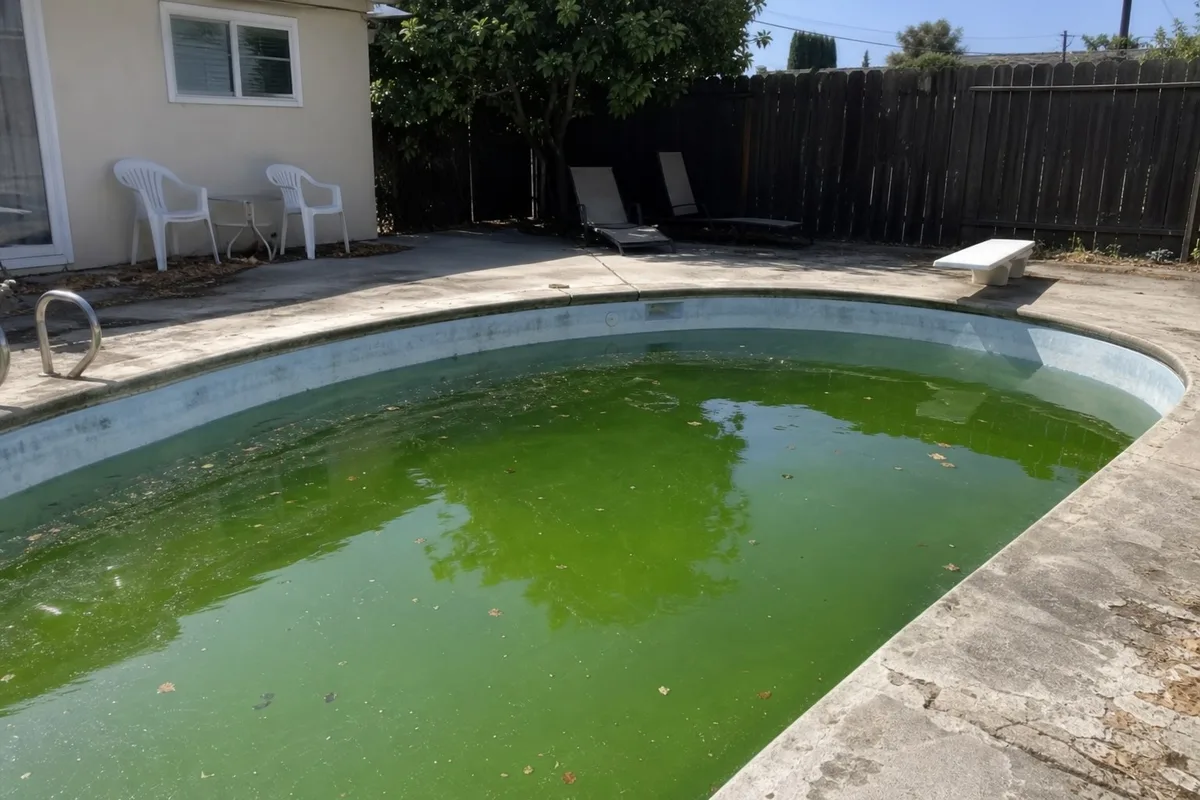
Shock doses by water colour, how long it takes, and why you should not drain.

Los Angeles and the Valley
That is no longer a rain problem. We will test it, clean the filter properly and tell you what actually kept it cloudy — before adding anything to the water.