

Water
Pool chemistry: test and fix in order
The five readings, the order to fix them in, and why LA tap water keeps pushing pH up.
Article
Mustard algae is the yellow dust that comes off in one brush stroke and is back the next morning. It tolerates ordinary chlorine levels, so a normal dose does nothing. What clears it is a full shock, a brush, and treating everything that has been in the water.
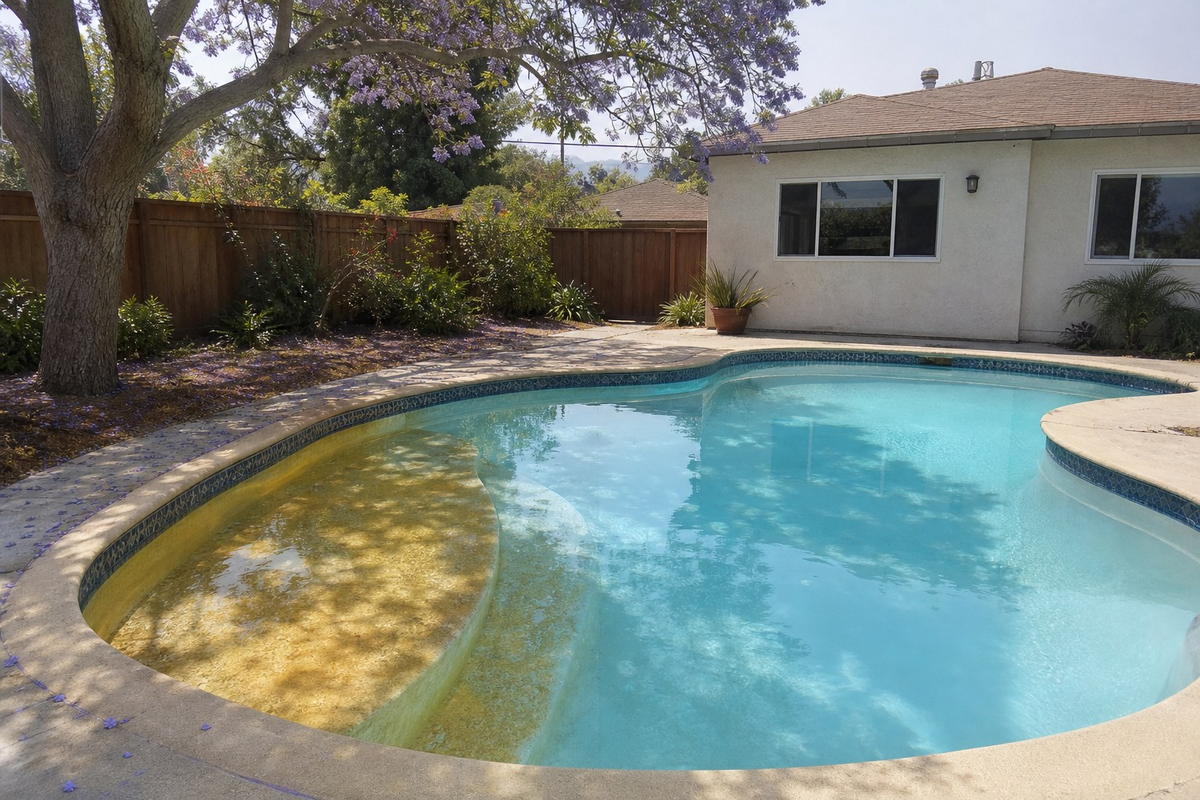
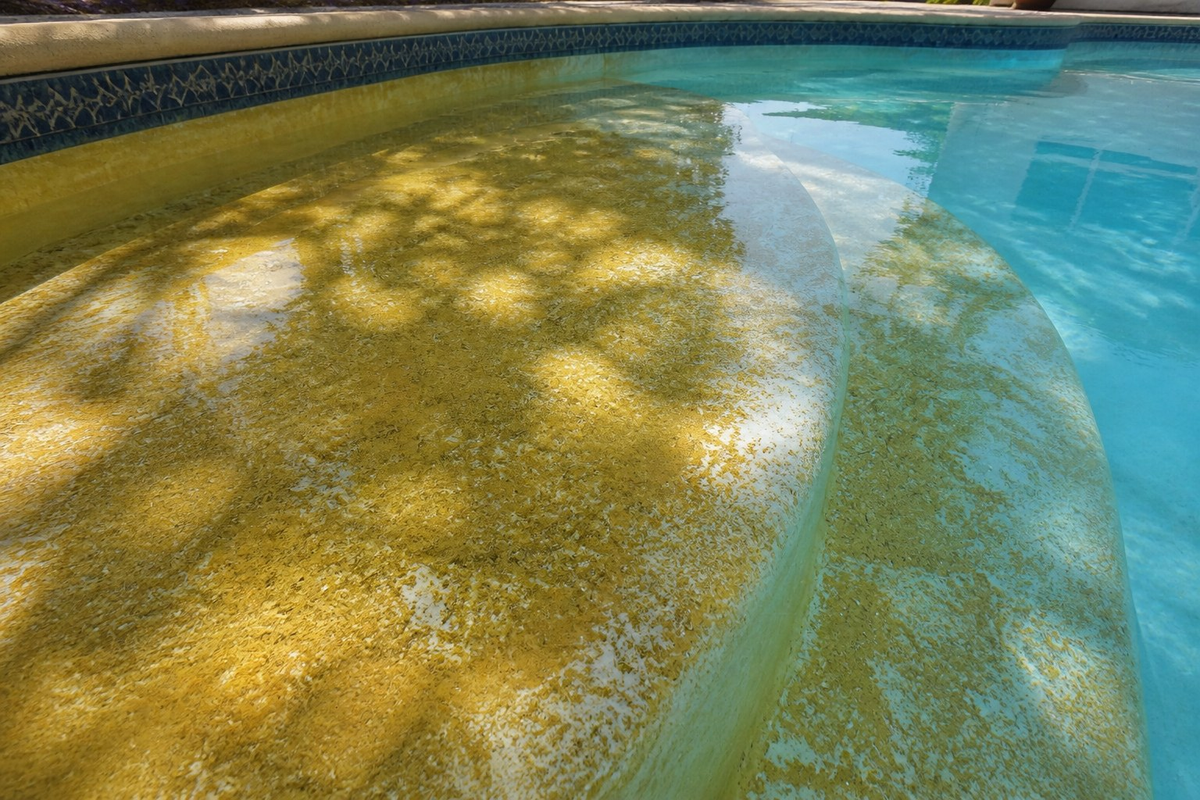
Mustard algae, also called yellow algae, is a form of green algae that grows as a dull yellow-brown film on the surface. It tolerates ordinary chlorine levels, which is why a pool with a normal reading can still have it. It rarely clouds the water. It settles on the wall that gets the least sun and sits there looking like sand or dirt.
People usually notice it after brushing. The yellow lifts off in a cloud, the wall looks clean, and by the next morning the same patch is back. That return is the giveaway.
Yellow-brown dust on a pool has two common causes, and only one of them needs treatment. Oak and pine pollen and ordinary dirt settle everywhere. Mustard algae picks a place and stays in it.
Mustard algae needs a surface, shade and low-flow water. Most Los Angeles yards supply all three somewhere, even when the rest of the pool is perfect.
Plan on three to five days. Keep swimmers out of the water until chlorine is back in the normal range.
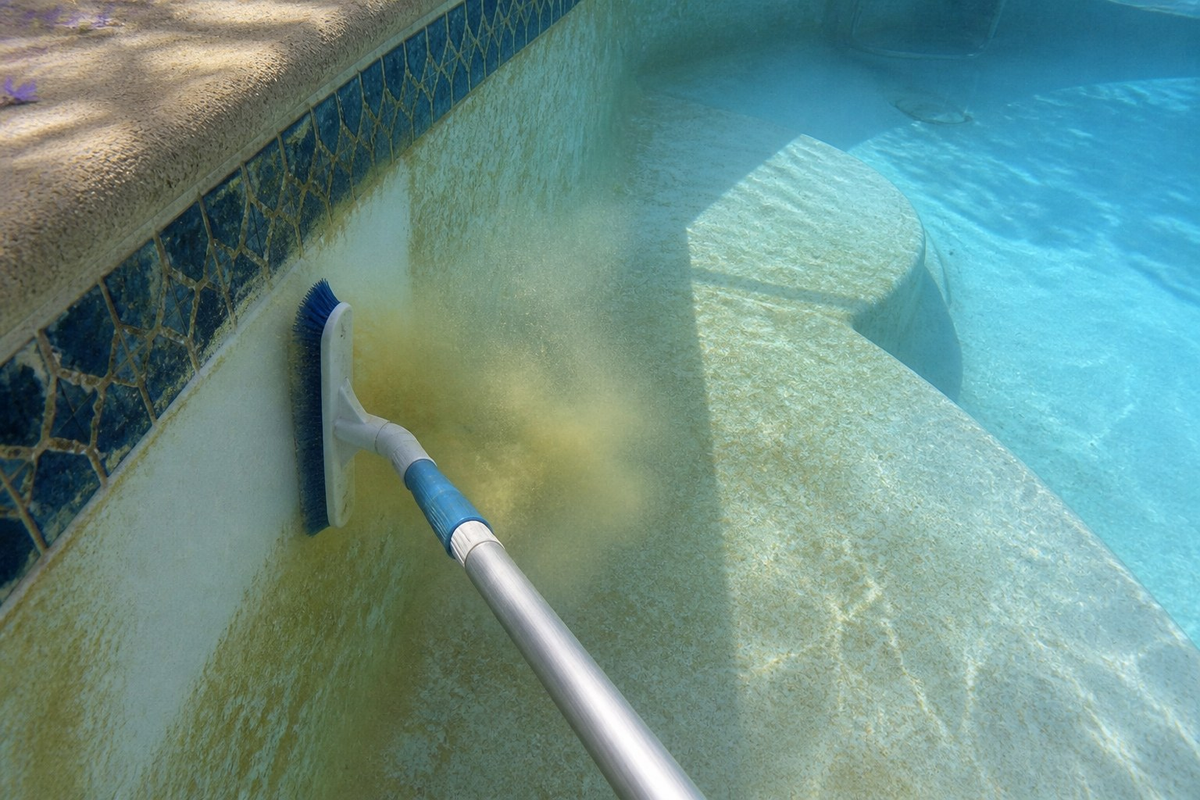
Is it clear? Brush the shaded wall once more the next day. If nothing yellow comes off and the chlorine reading holds overnight, it is dead. Dead mustard algae looks like grey-white powder or just disappears into the filter.
The common mistake is treating mustard algae as green algae. Green algae floats and goes with one shock and a clean filter. Mustard clings, shrugs off a normal dose, and is hiding on your gear. If the pool is green and yellow at the same time, clear the green water first with the green pool clean-up guide, then work through the list above.
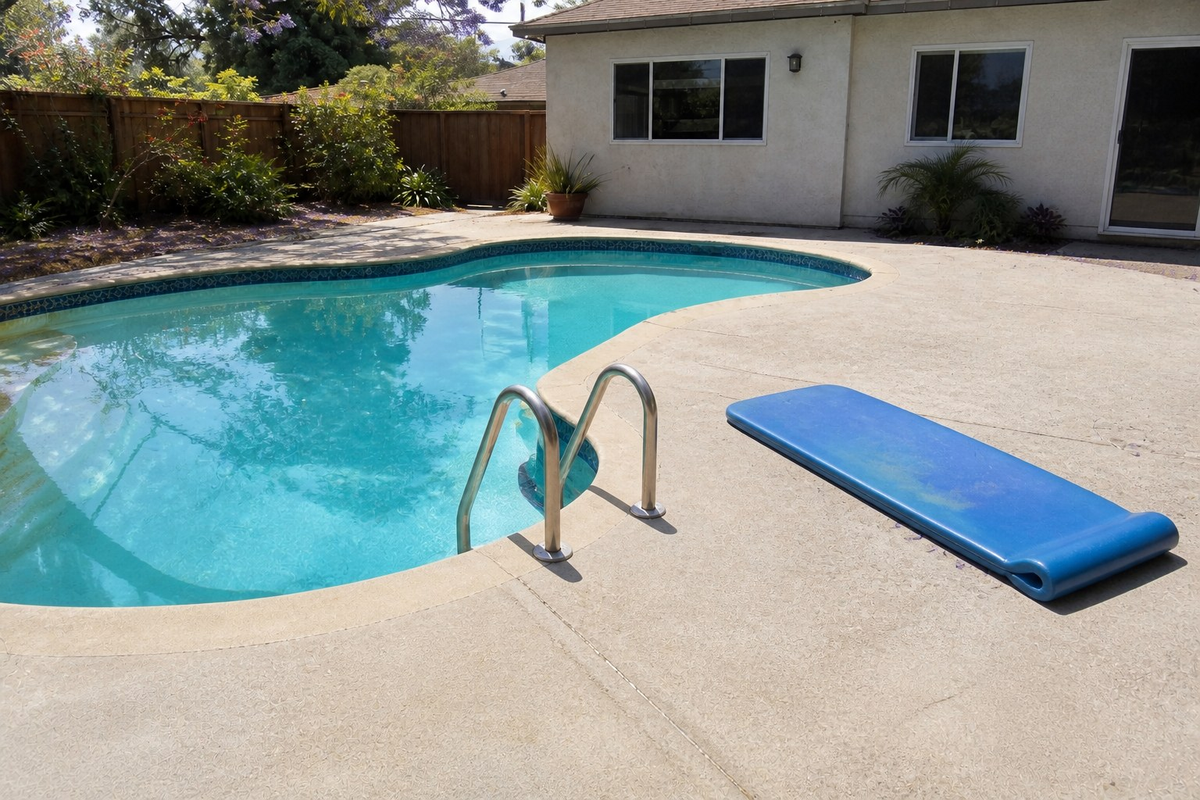
A weekly visit already includes brushing the walls and checking chlorine, from $159 a month. If the yellow has taken hold, we quote the clean-up on its own: it means a few extra trips in the same week to brush and redose. Our recovery without draining is $349–$749 for a home pool. Both numbers are on the price list. If the water is also green, the green-to-clean service covers both.
Not sure if it is algae or pollen? Send a photo of the patch and say whether it came back after brushing, or call (818) 740-6099.
Brush every patch, shock in the evening to about 40% of your stabilizer reading, hold it for two or three days, and treat the ladder, toys and net in the water. Wash swimsuits separately. Clean the filter at the start and the end.
Shade, weak circulation and low chlorine in one corner of the pool. High stabilizer makes the chlorine slow, and spores often arrive on swimsuits, floats and toys that were in another pool or lake.
A grey-white powder on the surface, or nothing at all because the filter caught it. If the wall is clear after brushing and stays clear overnight with chlorine holding, it is dead.
It is better to wait. While you are treating it the chlorine sits far above swimming level anyway. Swim again when free chlorine is back to 2–4 ppm and pH is balanced.
Usually a piece of gear was never treated, or the shaded wall still gets no brushing. A float or a swimsuit left out of the shock carries it back into clean water within days.
Send a photo of the patch and tell us if it came back after brushing. We will tell you if it is algae or pollen before you buy a chemical. Or call (818) 740-6099
Written for Foothill and Valley homeowners.
The five readings, the order to fix them in, and why LA tap water keeps pushing pH up.
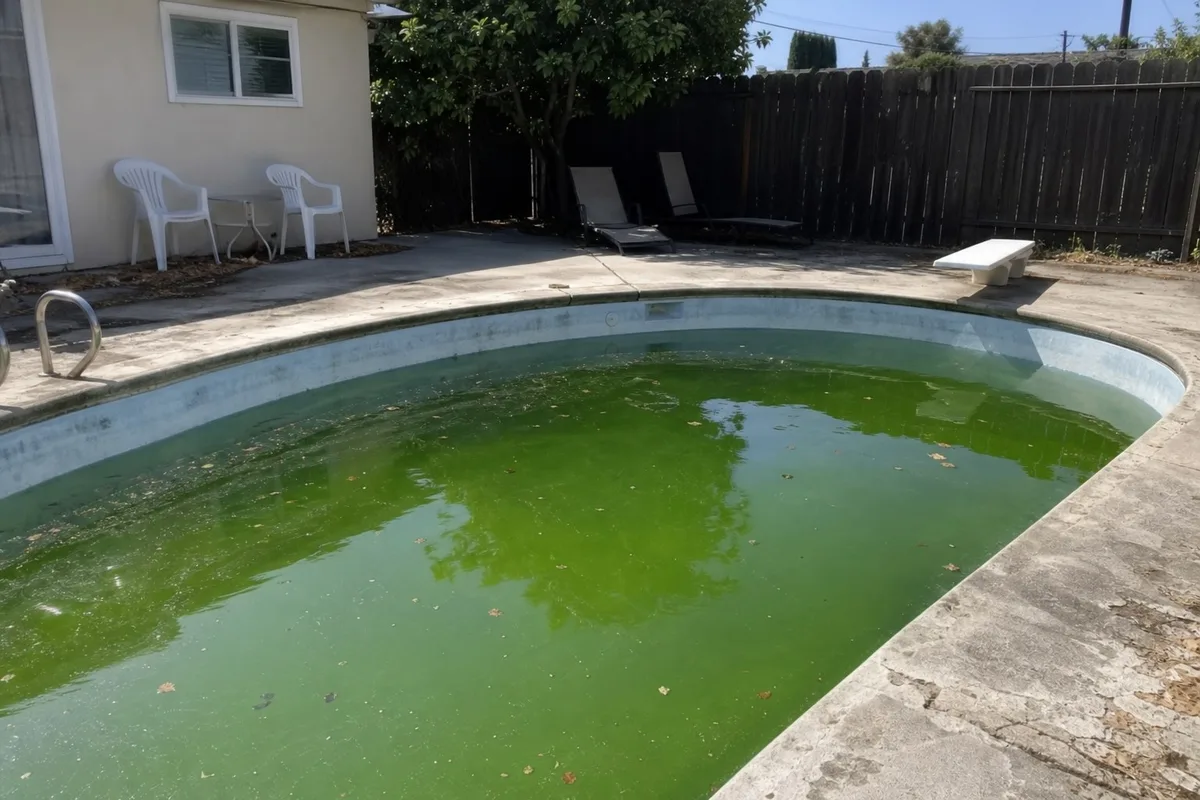
Shock doses by water colour, how long it takes, and why you should not drain.
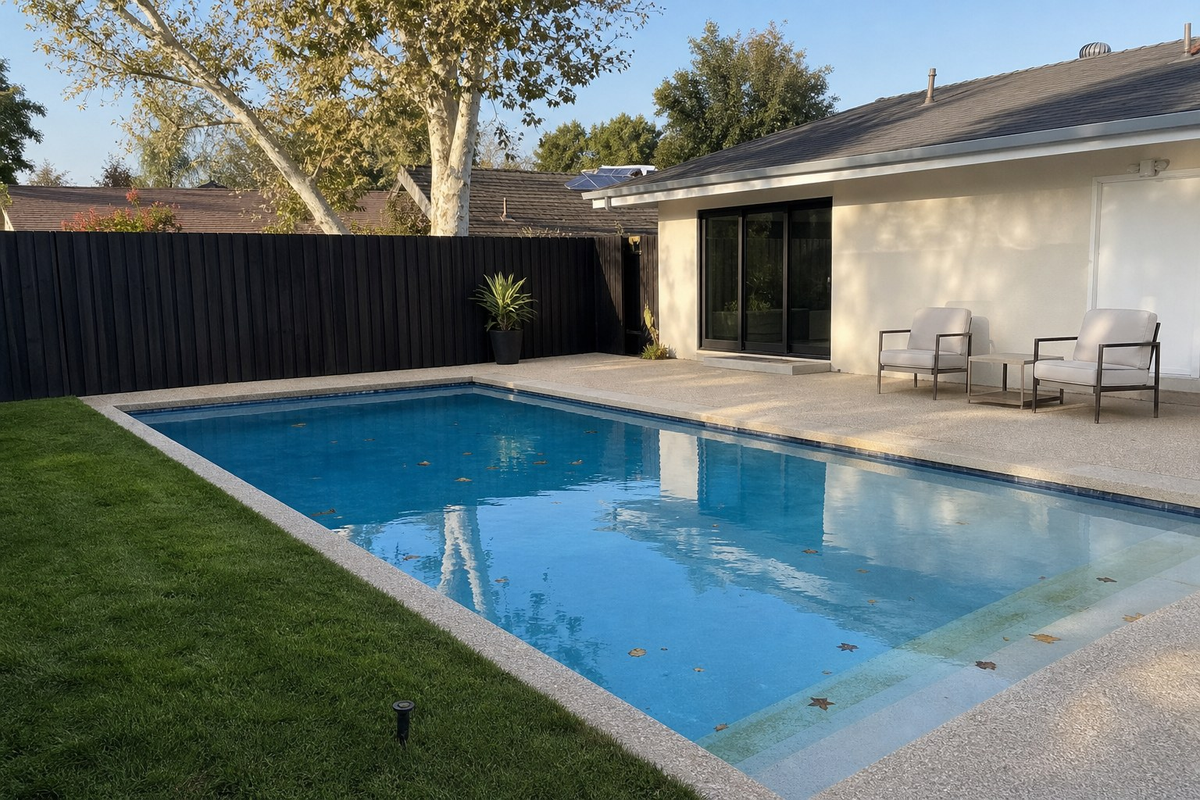
The reading worth acting on, where LA pools pick them up, and the order to remove them.
Los Angeles and the foothills
That is mustard algae doing what it does. We brush it, hold the chlorine where it needs to be, and treat the gear that keeps carrying it back.