

Water
Calcium nodules on pool plaster
Why white bumps grow out of cracks and loose plaster, how to tell them from scale, and when a patch is enough.
Article
Every pool has some phosphate, and it only causes trouble once chlorine slips. Here is the reading worth acting on, where Valley and foothill pools pick it up, and how to bring it down without clogging the filter.
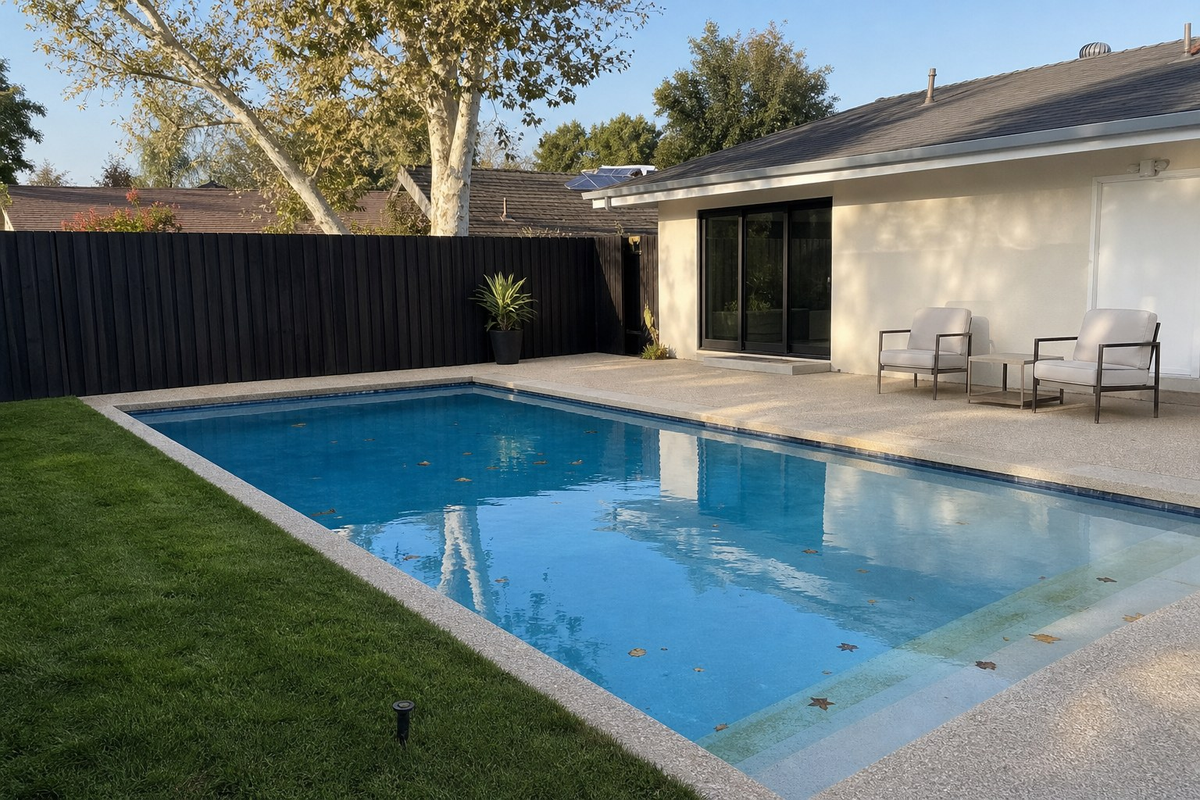
Phosphate is phosphorus bound to oxygen, the same nutrient sold in a bag of lawn fertilizer. In a pool it does nothing to swimmers, plaster or equipment. Its one effect is on algae: once chlorine stops holding algae back, phosphate lets a bloom grow faster and come back sooner.
That is the part the remover ads leave out. A pool with chlorine where it belongs stays clear at 1,000 ppb (parts per billion), and a pool with none goes green at 100. The reading tells you how fast things go wrong when the sanitizer fails. It does not tell you that they will.
Not every time. Read the number together with what the water has been doing this season.
It gets in a little at a time, and most of it rides in on something you can see.
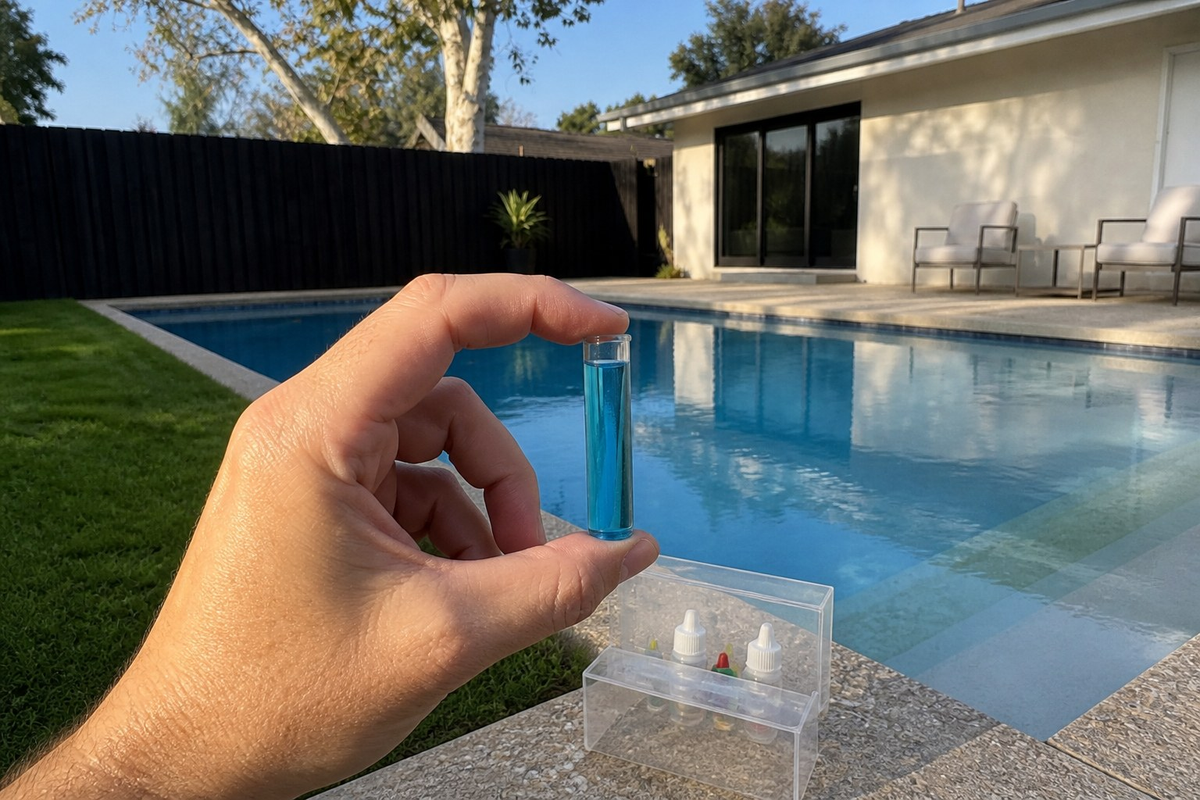
Standard strips and the usual chlorine-and-pH kit skip phosphate. It needs its own test, a strip or a drop kit that turns the sample blue, darker for more. Most pool supply stores will also run it free on a bottle of your water.
Two things throw the reading off. Phosphate tests read wrong when chlorine is far above normal, so test before a shock and not the morning after. And a test taken right after a dose of remover shows phosphate the filter has not caught yet. Give it a week.
Most removers on the shelf are lanthanum-based. Lanthanum locks phosphate into particles so fine they cloud the water, and then the filter has to catch them. So the filter decides how well the remover works, and the remover goes in last, not first.
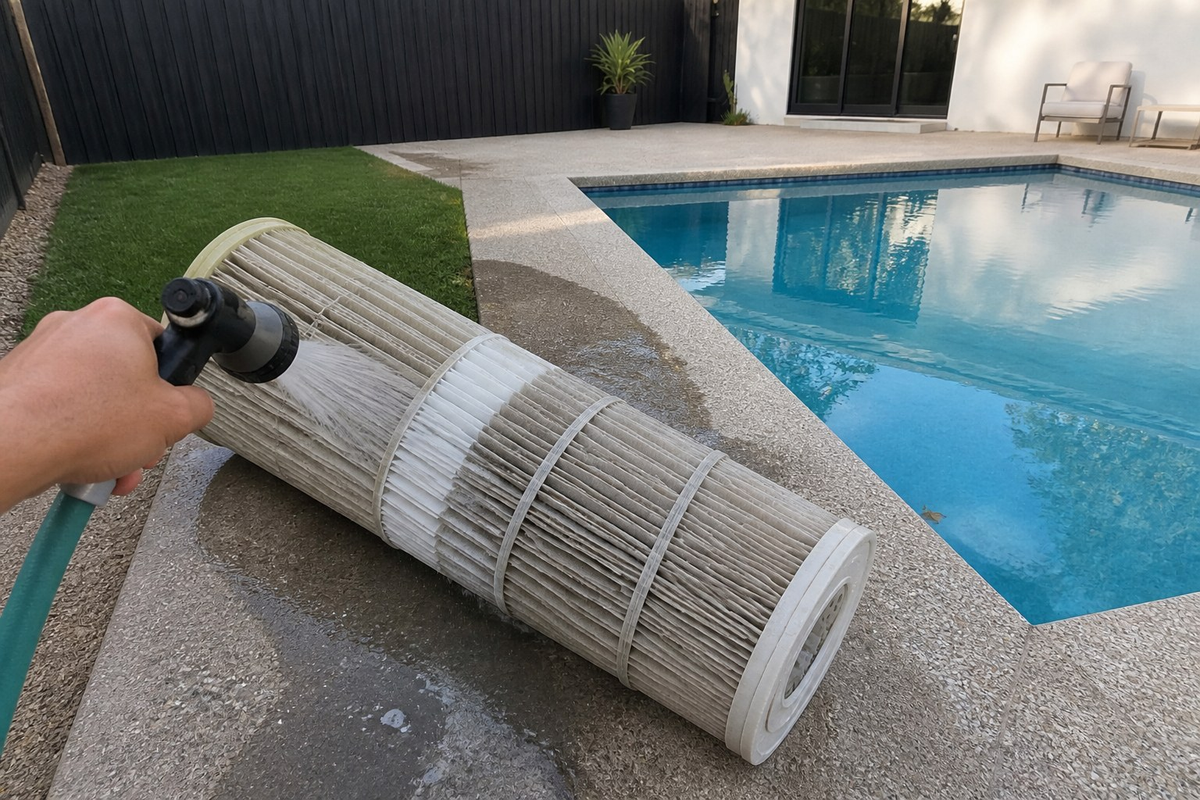
Mostly cloudy water and a filter that clogs fast. Lanthanum that finds nothing left to bind floats as a milky haze until the filter strains it out, and a heavy dose can load a cartridge within hours. If the pool turns milky after treatment, keep the pump running, clean the filter whenever the pressure gauge climbs 8–10 psi above its clean reading, and add nothing more. Swim again once the water is clear.
Remover is a store product, so these numbers are retail prices from stores and online shops in November 2026, not ours: about $19–$40 for a quart, around $110 for a gallon of concentrate. What moves the total is the reading, the size of the pool and whether it needs a second round because the source kept running.
On our weekly service, phosphate is on the chemical panel at every visit, so it gets caught while it climbs rather than after the pool turns. Weekly service starts at $159 a month, and remover is billed separately on the visits that need it, as the price list shows.
Not sure what your number means? Send the test result and a photo of the water, or call (818) 740-6099.
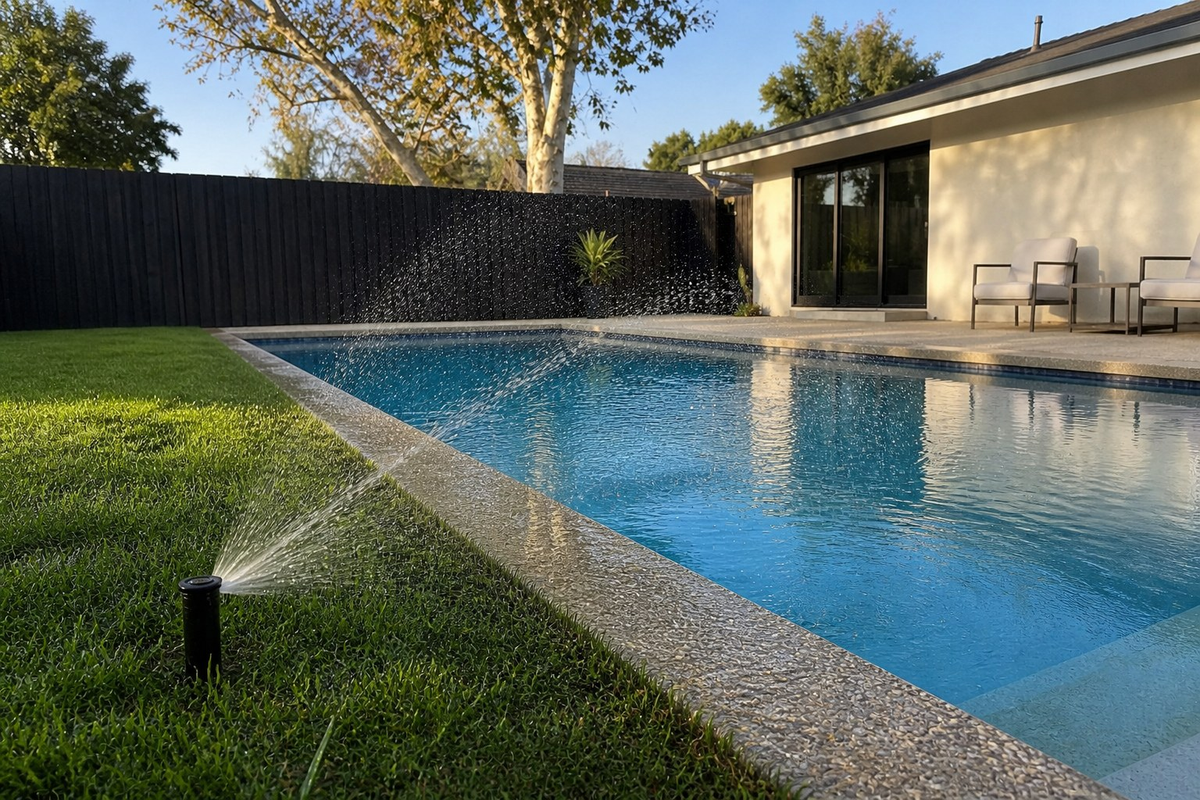
Every pool collects some. In Los Angeles the usual sources are fertilized lawns and sprinklers next to the pool, leaves rotting on the floor, wind-blown dust and ash, tap water from systems that add phosphate, and some stain and scale products.
If you do it yourself, the remover is the main cost: about $19–$40 a quart at retail, more for a large pool or a high reading. On our weekly service phosphate is tested every visit and remover is billed separately when it is needed.
When the reading is over 1,000 ppb, or over 500 ppb in a pool where algae keeps coming back. Under 500 ppb with chlorine in range, there is nothing to fix.
No. Chlorine kills algae but does not touch phosphate. Only a remover and the filter take it out, or partly draining and refilling with fresh water.
Not by themselves. The remover does, for a day or two, while the filter catches what it bound. Cloudy water with no treatment behind it has other causes, covered in the cloudy water article.
Send the number and a photo of the water. We will tell you if it needs treating at all before anyone buys a bottle. Or call (818) 740-6099
Written for Foothill and Valley homeowners.
Why white bumps grow out of cracks and loose plaster, how to tell them from scale, and when a patch is enough.
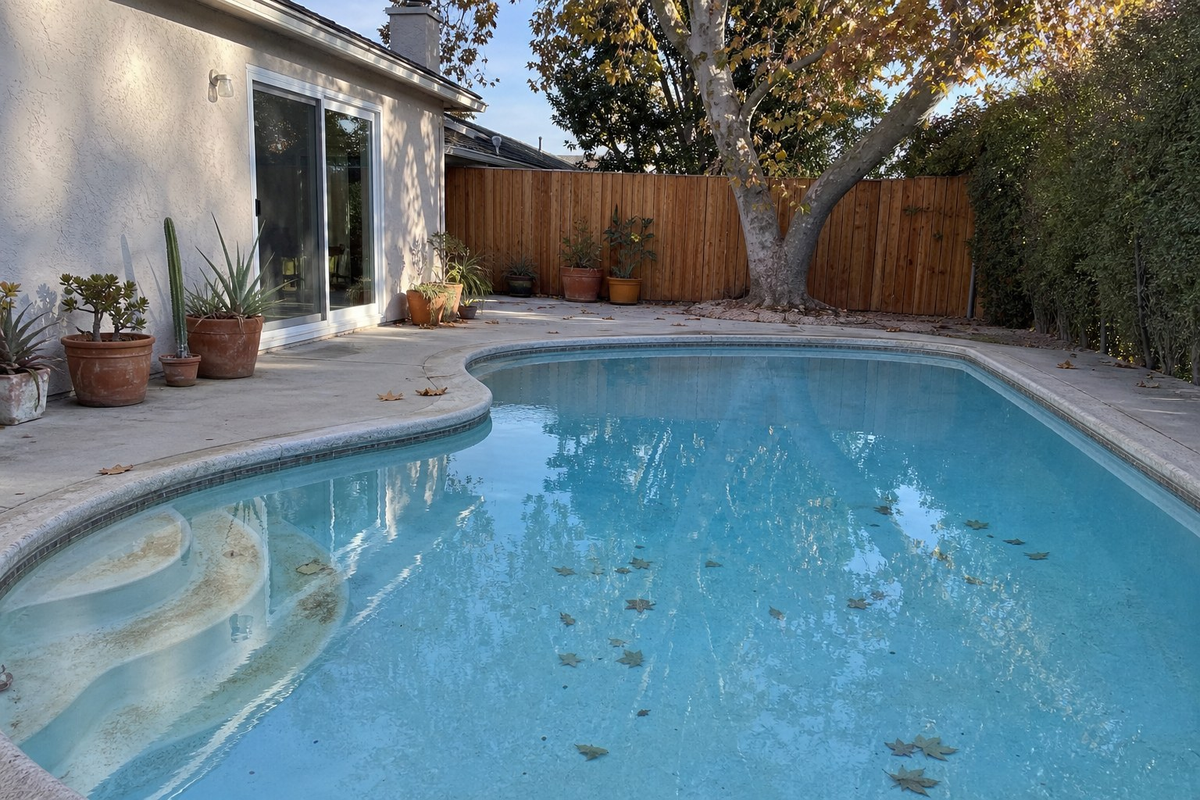
Two spot tests that tell leaf from metal, then chlorine or ascorbic acid with the water in, and where home methods stop.
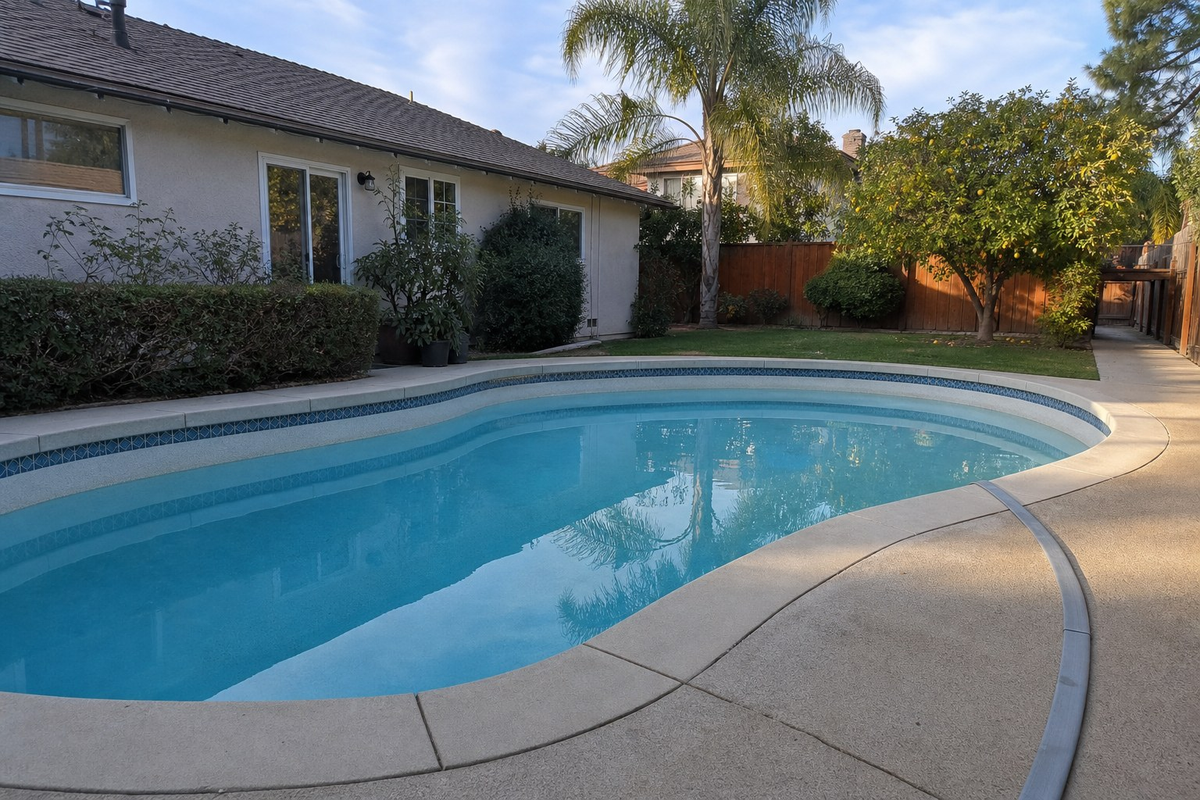
Whether to drain at all, what the ground can do to an empty shell, where the water may go, and how to refill.
Los Angeles and the Valley
We test phosphate every week along with the rest of the panel, find what is feeding the water, and treat it only when the number says so.