

Water
Calcium nodules on pool plaster
Why white bumps grow out of cracks and loose plaster, how to tell them from scale, and when a patch is enough.
Article
Pebble lasts about twice as long and costs about twice as much. That is the short answer. The rest decides which one suits your pool: what each surface does in LA water, and what it asks of you every week.
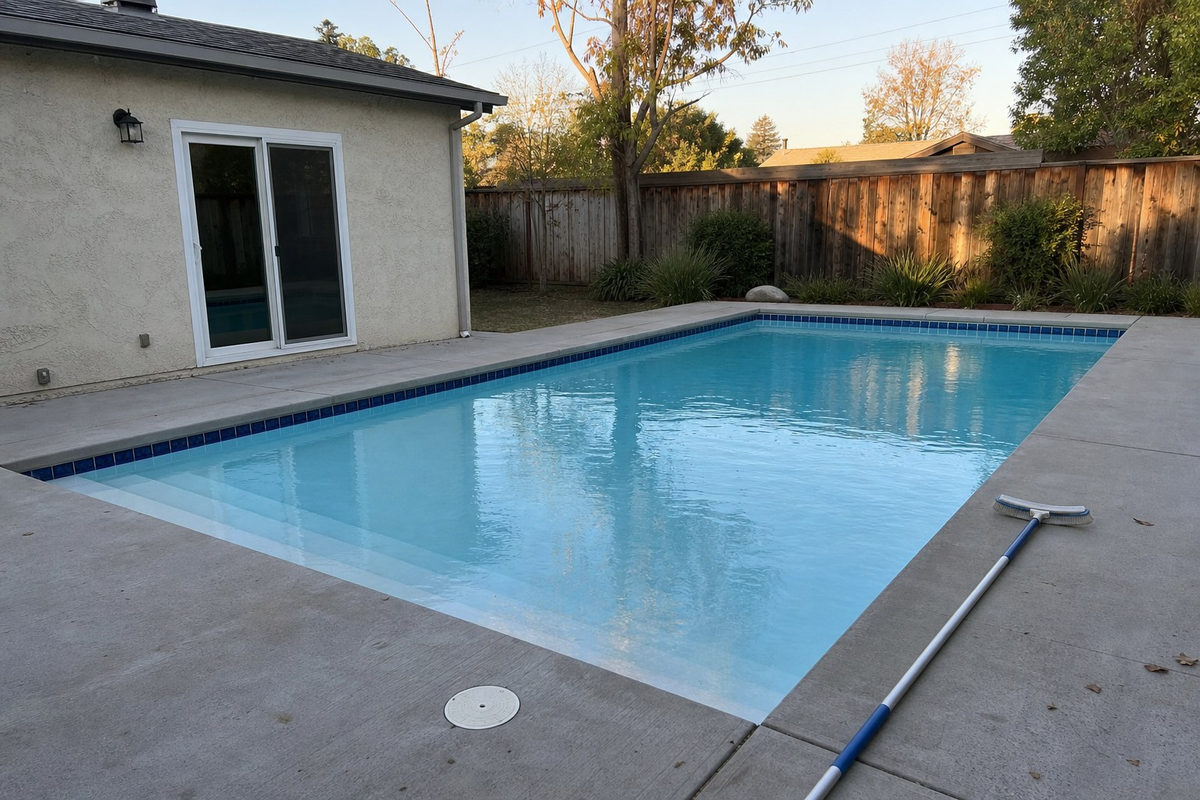
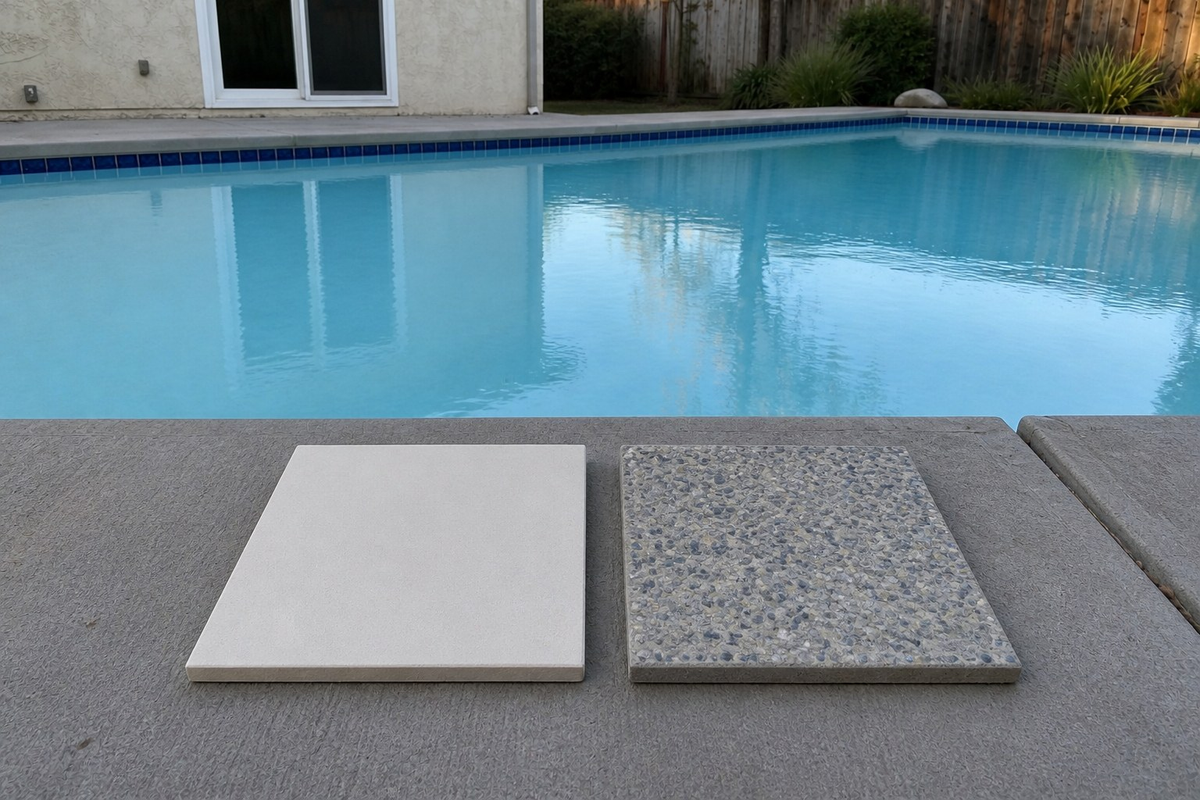
Plaster is cement mixed with marble dust, troweled on in a thin smooth coat. Pebble is the same cement with small round stones in it, washed back after it sets so the stones show. Pebble Tec is one brand of pebble finish, and the name is used for the whole kind. Other makers sell pebble too, so ask which product a quote is for.
Both are cement-based, both go on over the same shell, and both are laid by the same sort of crew. What differs is how they wear. We maintain pools with each, and the difference shows up in the water long before it shows on a price list.
The ranges below are what pool builders publish in search results in 2026. They are not our warranty, and a pool with poor water chemistry beats any of them downward.
Plaster wears because it is soft. Water that runs a little acidic or a little short of calcium pulls lime out of the surface, and what is left is rough, chalky and stained. Pebble has hard stones at the surface instead of a thin cement skin, so the same water costs it far less. For the full range of options, see the resurfacing page.
This is where people change their minds in the showroom.
A pebble finish is forgiving of the water, but it is not maintenance-free. Plaster is demanding about chemistry. Pebble is demanding about brushing.
Plaster needs the water kept in range, always. Calcium hardness and pH have to stay where the surface can live with them, because water that dissolves lime out of the plaster is the cause of the chalky, rough patches. The first month matters most: fresh plaster is brushed daily and the water is held to tight targets, as the plaster start-up service describes. Scale that forms along the waterline needs periodic removal, and a bad one calls for an acid wash.
Pebble needs a brush more often. Algae roots in a rough surface where it cannot in a smooth one, so green-black spots return sooner on pebble and a weekly brushing counts for more. It also needs the chemistry balanced, but it tolerates a bad week much better than plaster. Builders say it resists acid etching, and that is the main reason it lasts longer.
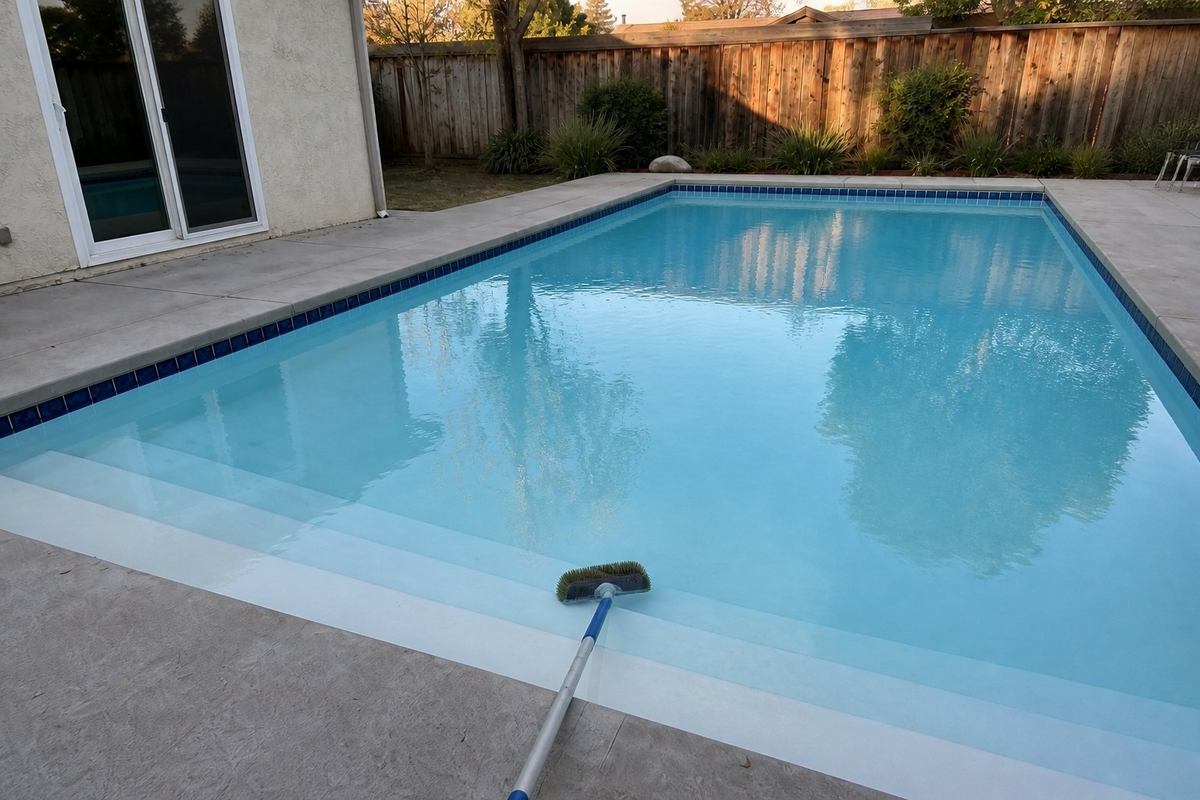
Stains are the other difference. Plaster takes metal stains from leaves left lying on the floor and from copper in the water, and shows them. Pebble takes the same stains and the pattern masks them. On both, the fix is to remove leaves before they sit and to keep the water in balance, which is a weekly job on the weekly service.
Search results in November 2026 quote about $3 to $6 per square foot for plaster and $6 to $10 or more for pebble. These are the market's numbers, not ours. A 15 × 30 foot pool with an average depth of 5 feet has about 900 square feet of surface, so the gap between the two comes to roughly $2,700 to $3,600 at those rates.
A whole job also includes draining, chipping out the old surface, preparation and start-up, so the total is higher than the finish alone. Our own resurfacing starts at $7,500, and most projects land between $10,000 and $20,000. What moves it is the size of the pool, the current surface, access, repairs and any wider renovation. The resurfacing cost page has the detail.
The cost that decides it is over time. If plaster is redone every 8 years and pebble every 20, a pool you keep for two decades pays for plaster twice and a bit more, and pebble once.
Not sure which one yours is? Send a photo of the pool floor and wall and the year it was last done, or call (818) 740-6099. The surface usually tells us enough.
Builders quote 15 to 25 years or more, against 7 to 10 for plaster. Good water chemistry and regular brushing are what get a pool to the top of the range.
White plaster is cement and marble dust. Colored plaster is the same mix with pigment, and quartz plaster adds crushed quartz for a harder, denser surface. All three are laid as a thin smooth coat over the shell.
It sits between plain plaster and pebble, and like both it is priced by the square foot of surface. We do not publish a separate rate for it. Our resurfacing starts at $7,500, and a quote after photos gives you the number for your pool.
Lighter blends give light blue water, and darker blends give deep blue or green. Colors on a screen are not colors in water, so ask for a sample, and look at it wet and in daylight. The water color guide shows the effect.
If you will keep the pool longer than the 8 to 10 years a plaster surface lasts, usually yes. If you may sell within five years, plaster is the better spend.
Send photos and the dimensions. We will tell you what the surface needs and quote it free. Or call (818) 740-6099
Written for Foothill and Valley homeowners.
Why white bumps grow out of cracks and loose plaster, how to tell them from scale, and when a patch is enough.
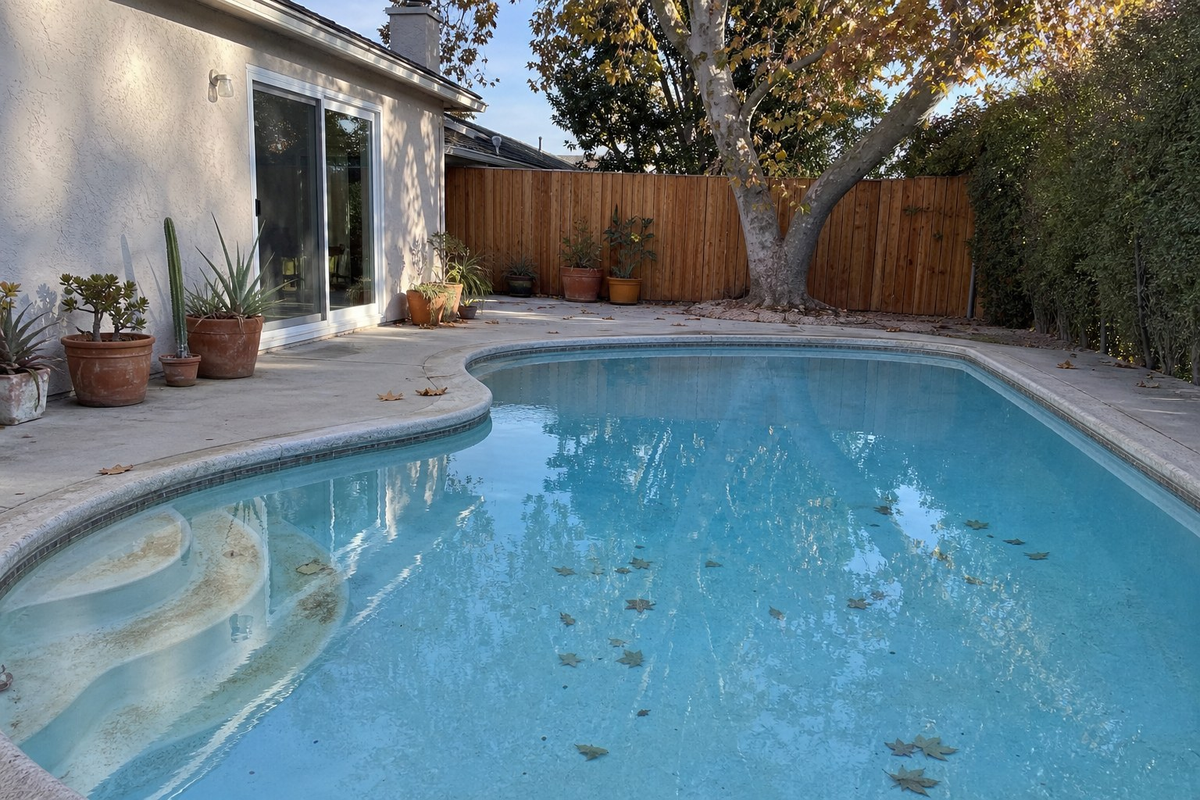
Two spot tests that tell leaf from metal, then chlorine or ascorbic acid with the water in, and where home methods stop.

The decisions that are expensive to change afterwards.
Los Angeles and the Valley
Send photos of the pool and its dimensions. We will tell you what the surface needs and give you a free quote.