

Water
Removing pool stains without draining
Two spot tests that tell leaf from metal, then chlorine or ascorbic acid with the water in, and where home methods stop.
Article
Hard white bumps on the steps of a pool replastered a few years ago rarely come from the water. They grow out of the plaster, and they keep growing until the crack under them is closed.
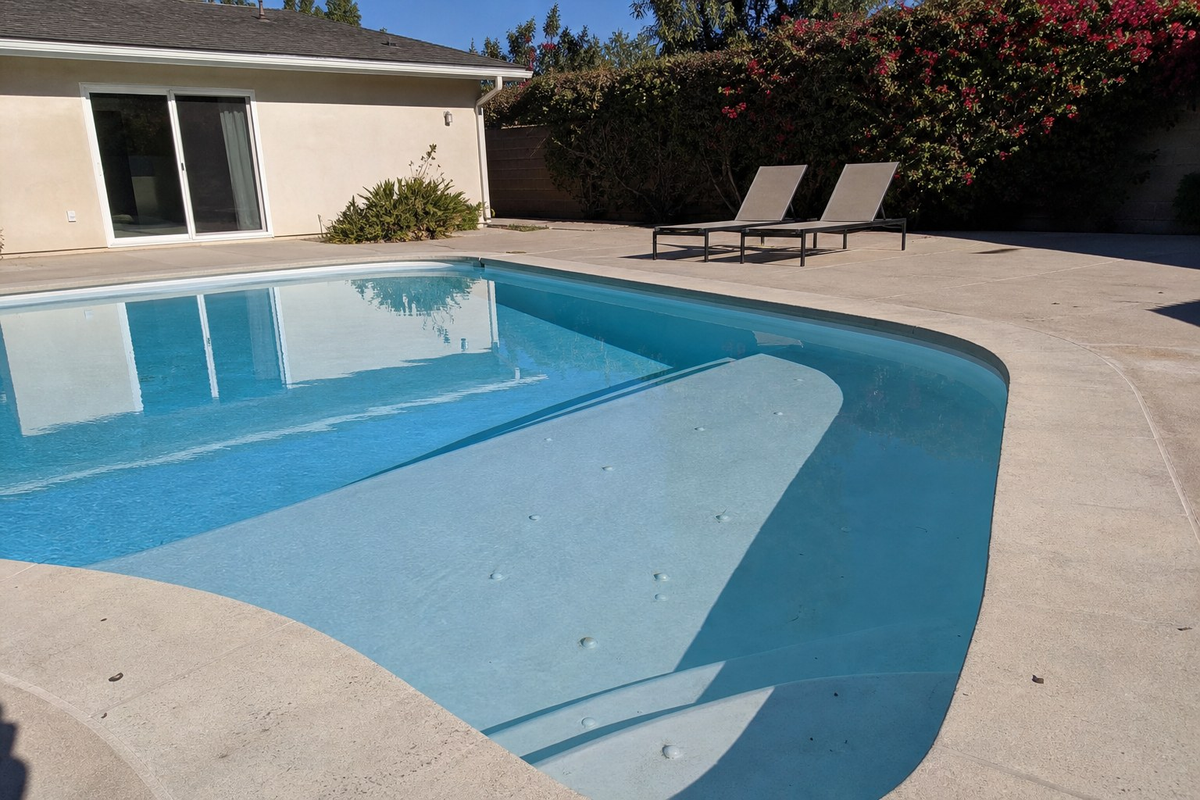
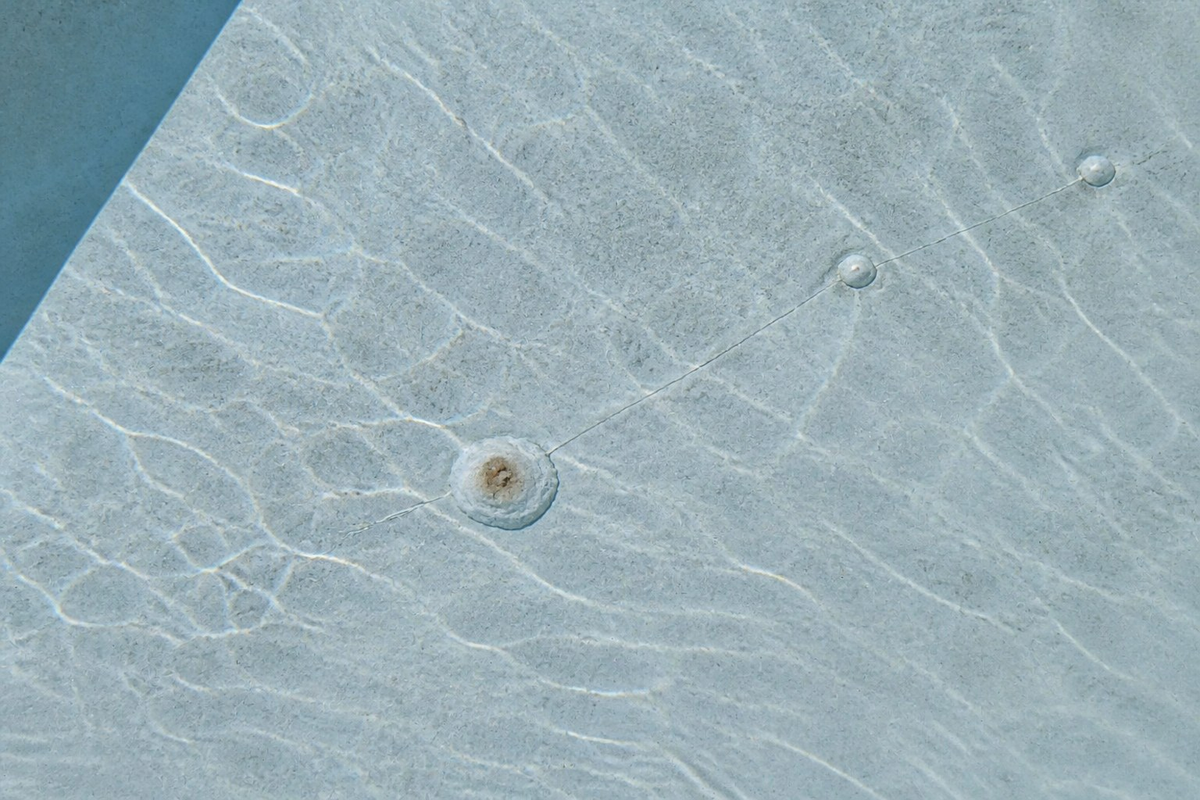
Most people find the first one with a bare foot. A rough little mound on a step, about the size of a pea, sometimes with a brown dot in the middle, and brushing does nothing to it. That is a calcium nodule, which pool techs also call a calcium volcano. The white crust that hard water leaves along the tile is a separate problem, covered on our pool chemistry page. This page is about the bumps your test kit had no part in.
Plaster is cement, and cement holds calcium hydroxide in its pores. Where the plaster has cracked, or has come loose from the shell behind it, pool water gets in and dissolves some of that calcium. Then it seeps back out through the same opening. At the mouth of the crack it meets the pool water and the carbon dioxide in it, and the dissolved calcium turns into calcium carbonate: hard, white and insoluble at normal pH. Layer after layer, a cone builds up around the hole. Hence the volcano.
The CPO training material that tops the search for this names two causes: cracking from plaster that dried out too fast, and bond failure, also called delamination, which shows up mostly in pools that were replastered. The onBalance pool guides put nodules at a quarter to half an inch across, with the size set by how large the loose patch behind them is. A brown or rust center means the water has reached metal, often a tie wire or the rebar in the shell, and that is worth taking seriously.
Crust on the waterline tile is a tile cleaning job and comes off the tile itself. Flat brown or rust spots that sit level with the plaster are stains, and the two spot tests in our stain removal guide tell you which kind.
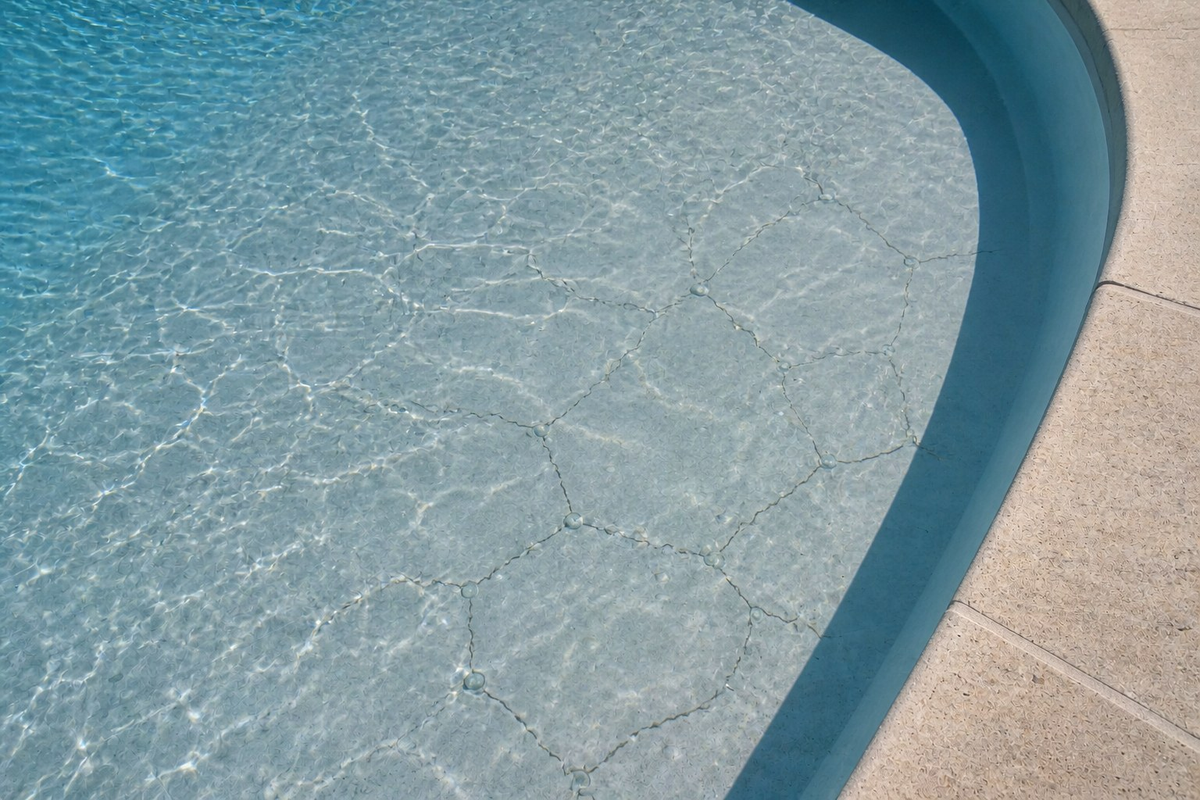
Fine cracks in a pattern like dry mud are called crazing, and in Los Angeles they are the usual starting point. Plaster cracks this way when it dries in the sun, on the day it goes on or years later when a pool stands empty through an August afternoon. It is why a drained shell gets refilled the same day, as our guide on draining a pool explains, and why new plaster is brushed daily through its first month on the plaster start-up.
A few nodules on firm plaster can come off by hand. It takes the sharp edge off a step and makes the pool look right again. Expect them back, though, wherever water still gets in behind the plaster.
A handful of nodules on one step, with smooth plaster around them that sounds solid when you tap it, is local damage. A patch cuts out the loose section and fills it with new plaster. It stops water reaching the shell and buys more seasons, though it never disappears: new plaster against plaster that has had years of sun always shows.
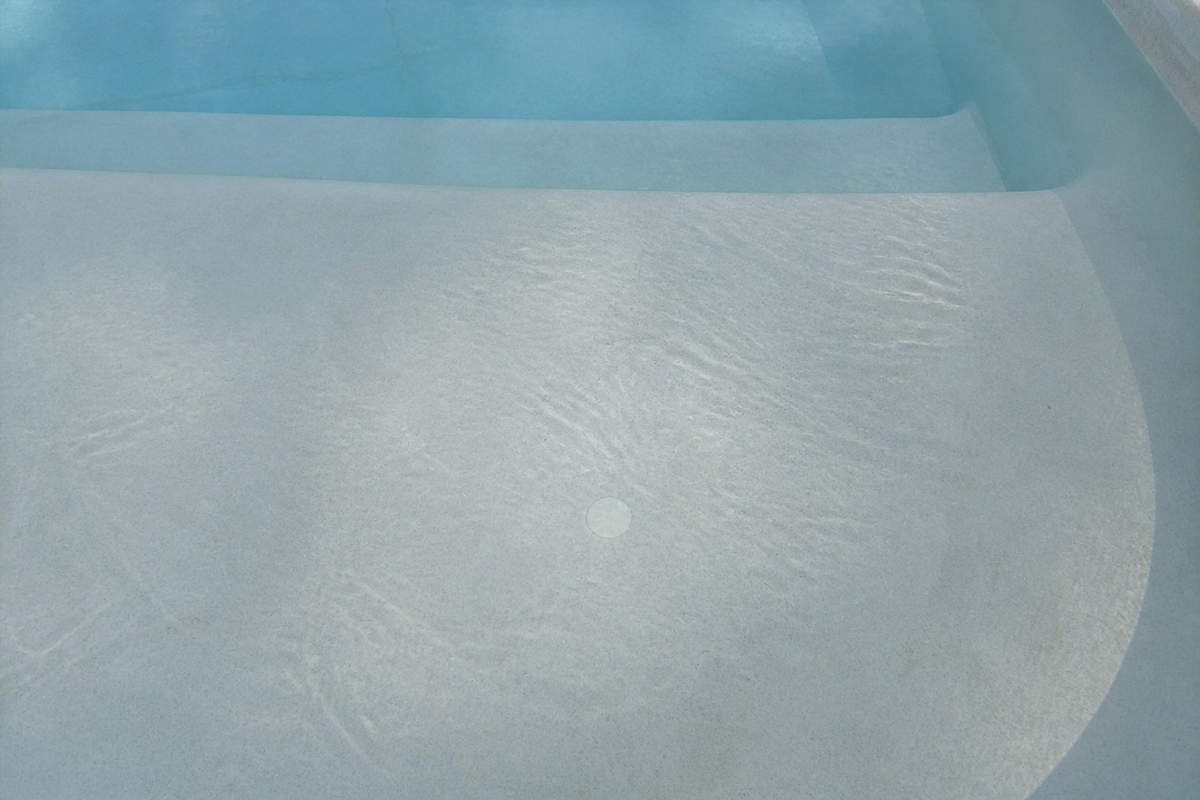
Nodules spread over the floor, hollow sounds in several places, rust in the centers and plaster that has gone rough mean the bond is failing over a wide area. Patch one spot and the water finds the next. That is where resurfacing starts to make sense, and with delamination the old coat has to come out rather than be plastered over. Fifteen to twenty years is the usual life of a finish, so a pool replastered three or four years ago that is already growing nodules points to how the plaster went on. Dig out the paperwork from that job before you pay for the next one.
Replastering anyway? Our Pebble Tec and plaster comparison covers how each finish ages in LA water.
Doing it by hand costs a pumice stone, a tube of epoxy putty and an afternoon on the steps. A patch is priced by how much loose plaster has to be cut out, which nobody can tell from above the water, so it is quoted after someone taps the floor. A full resurface starts at $7,500, and most projects land between $10,000 and $20,000, as our resurfacing cost page sets out. After new plaster, the 28-day start-up is $595 for a pool up to 25,000 gallons.
We can usually tell nodules from scale from one picture taken straight down at the step, with the year the pool was last plastered. Send it here or ring (818) 740-6099; diagnosis is $0 inside our service area.
In two different ways. Hard LA tap water brings calcium in with every top-off, and with pH running high it settles as crust on the tile. Nodules come from the plaster: water seeps behind a crack, dissolves calcium out of the cement and leaves it at the opening.
Fifteen to twenty years is the usual life. Water kept in balance stretches it, and water that runs low in calcium or pH etches it and shortens it. Nodules in the first few years point to how the plaster was applied, not to its age.
Granular shock usually does, because it is calcium hypochlorite and adds calcium every time. Liquid chlorine adds none, which is why our liquid chlorine guide recommends it for hard LA water. Neither one causes nodules.
It dissolves calcium carbonate, so it softens nodules and the usual waterline crust. Each time it also takes a little of the plaster surface, and it does nothing to the crack feeding the nodule. Calcium silicate scale ignores acid and has to be blasted off the tile.
Mostly at the start. Plaster that never dries in the sun and is brushed daily through its first month cracks less. In an older pool, keep it full: a shell left empty on a hot day is how crazing starts.
Send a close photo with a coin for size and tell us when the pool was last plastered. We will tell you whether it is nodules, scale or a stain, and whether a patch will do. Or call (818) 740-6099
Written for Foothill and Valley homeowners.
Two spot tests that tell leaf from metal, then chlorine or ascorbic acid with the water in, and where home methods stop.
How long each finish lasts, what it asks of your care, and what the gap costs.

The decisions that are expensive to change afterwards.
Los Angeles and the Valley
We tap the floor, find out how much plaster has let go, and tell you whether it is a patch or a new finish. Diagnosis is $0 in our service area.