

Water
Calcium nodules on pool plaster
Why white bumps grow out of cracks and loose plaster, how to tell them from scale, and when a patch is enough.
Article
Most stains on plaster come off with the water still in the pool. What decides it is knowing what the stain is made of before you buy a single bottle.
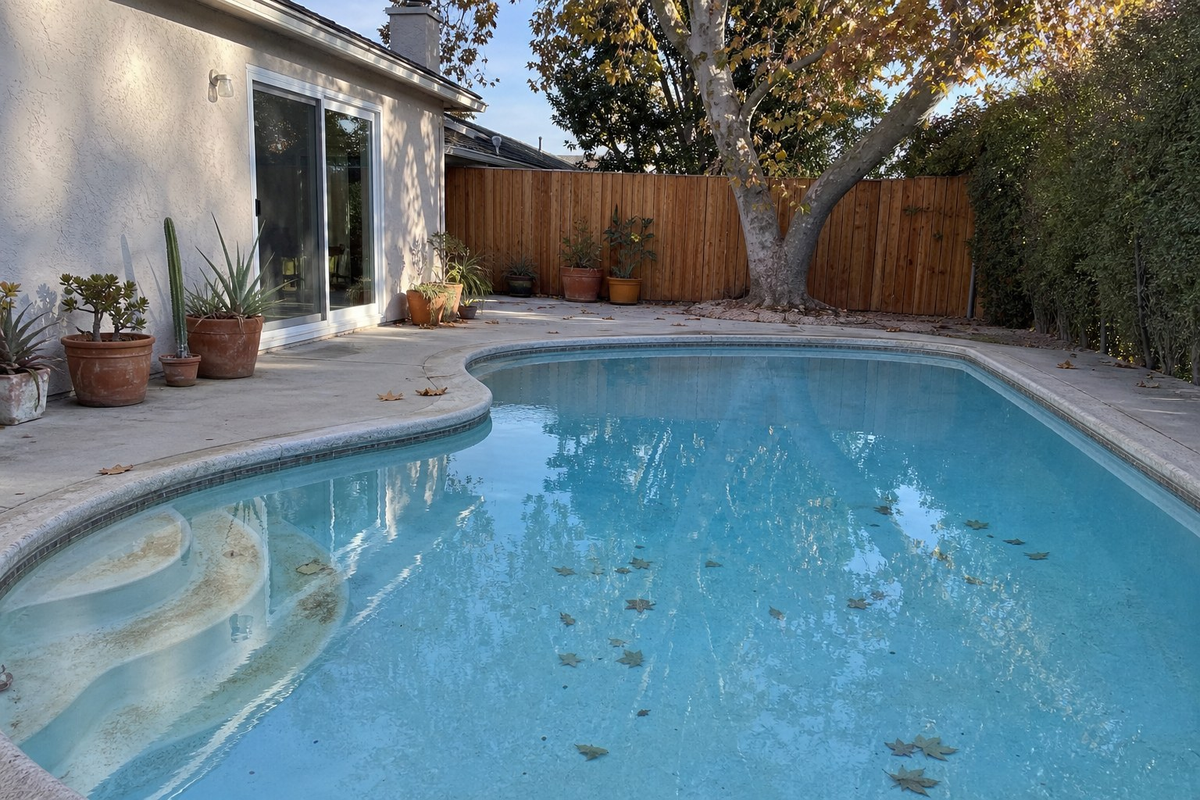
Stain removers are sold by color, and that is how people end up pouring the wrong one in. A brown mark can be a leaf, iron or old algae. The fix for one does nothing for the others, and chlorine poured on a metal stain can make it darker. Our acid wash page sorts the causes for a pool that is about to be drained. This page is for the step before that: finding out at home, with the water in, and treating what can be treated.
Pick a stain you can reach, ideally on a step, and try these one at a time:
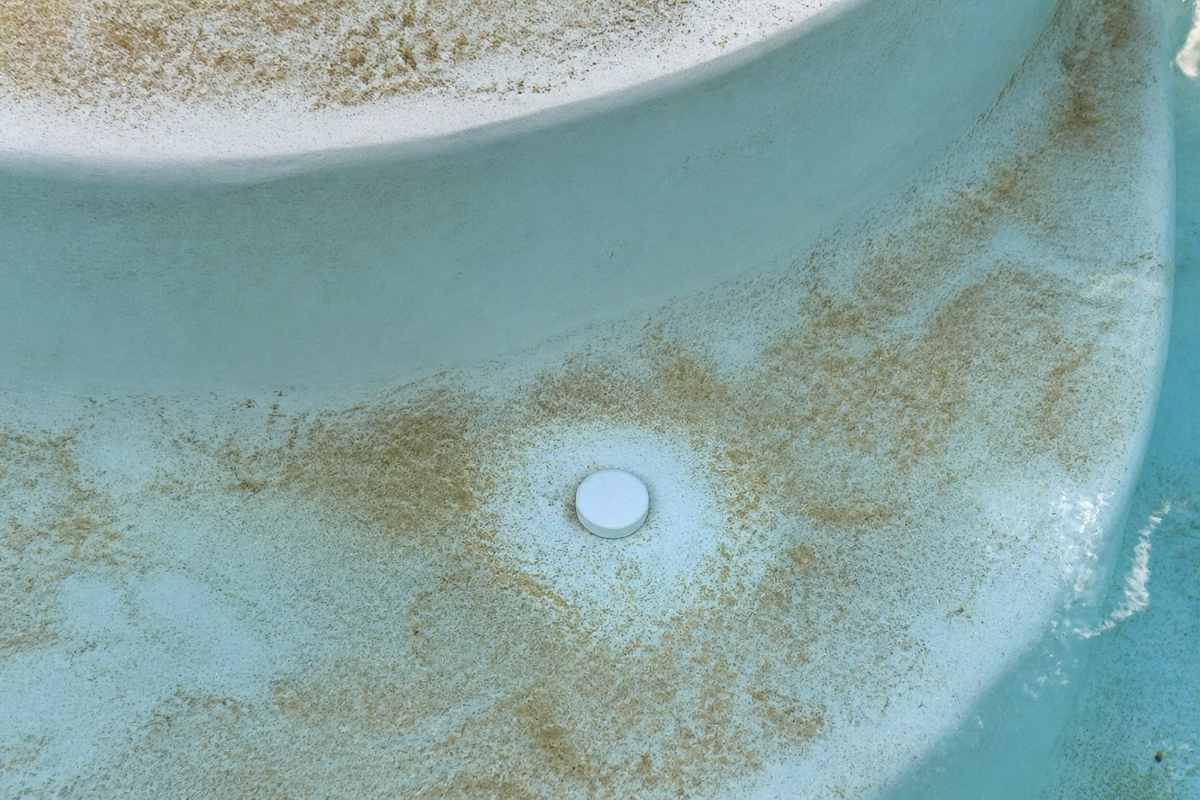
Nothing moved? Then it is probably not a stain in the water's sense at all. A white or gray crust is scale, and a gray, blotchy finish that ignores both tests is plaster that has aged. Skip ahead to where home methods stop. On a vinyl liner, leave the granular chlorine out: it bleaches the liner where it lands.
Color is a clue, not a verdict, which is why the tests come first. Still, it narrows things down:
Leaf stains are the easy ones. Net the leaves out first, since every leaf on the floor keeps printing itself into the plaster. Then raise the chlorine to a shock level for your stabilizer reading, as the pool chemistry page explains, and brush the marks once a day. Most fade within a few days.
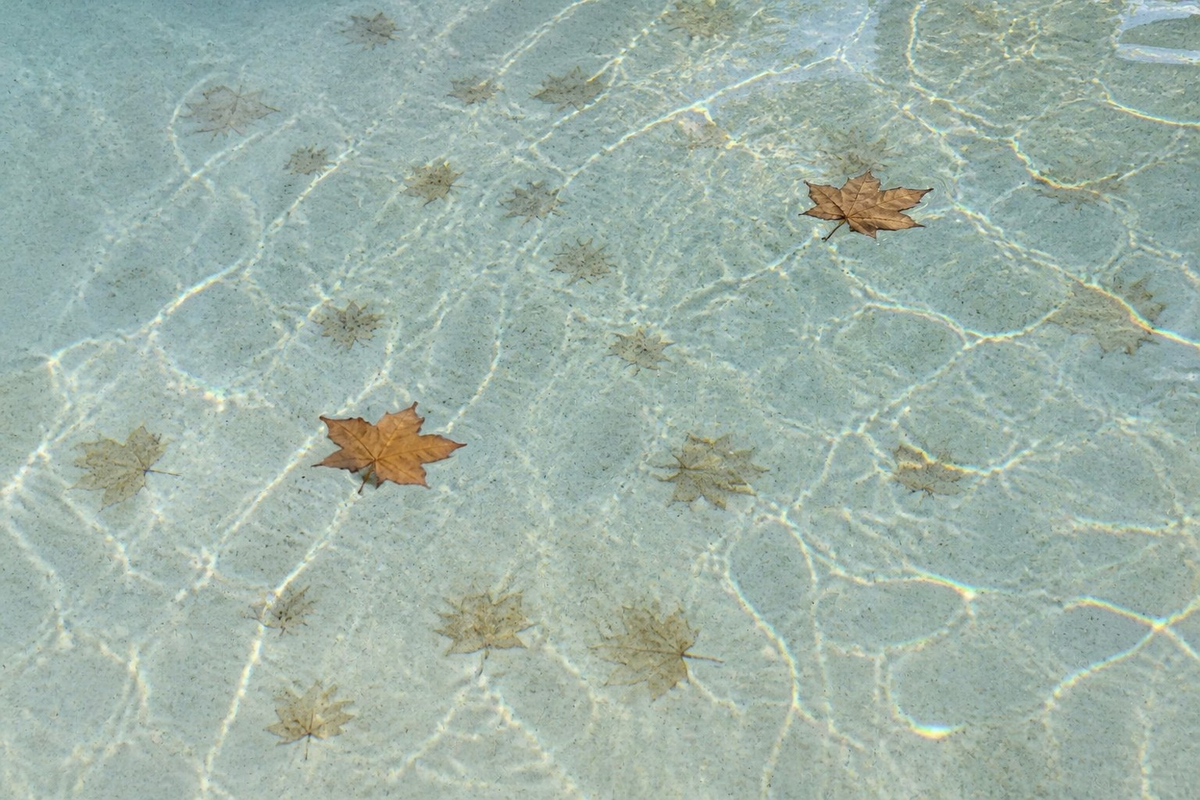
Autumn is when this shows up in Los Angeles, with sycamores dropping into pools across the Valley from October. A stain that has sat for months may be set into the pores. If daily brushing at shock level gets you nowhere after a week, the next step is a chlorine wash on the drained pool, which our acid wash page describes, and it removes no plaster.
Ascorbic acid is vitamin C in bulk, sold as a pool stain treatment. It pulls the metal off the plaster and back into the water. The order matters, because the metal has to be held there afterwards or it settles right back:
Then rebalance to the usual pH of 7.4 to 7.6. Saltwater pools work the same way, with the cell off until the chlorine goes back up.
A stain you lift without finding its source comes back. Copper in Los Angeles pools has a short list of suspects. Low pH eats the copper heat exchanger inside a gas heater, and the first sign is teal on the plaster near the returns, a reason to have the heater checked. Copper algaecide and ionizers add it on purpose, so heavy use leaves its mark.
Iron is different. LA tap water carries little of it, so iron staining points to something rusting in the pool: a hairpin or screw on the floor, a corroding ladder anchor, or steel inside the shell. A rust spot that returns in the same place after treatment is reinforcement working its way out, and that is a job for rust repair, not more vitamin C.
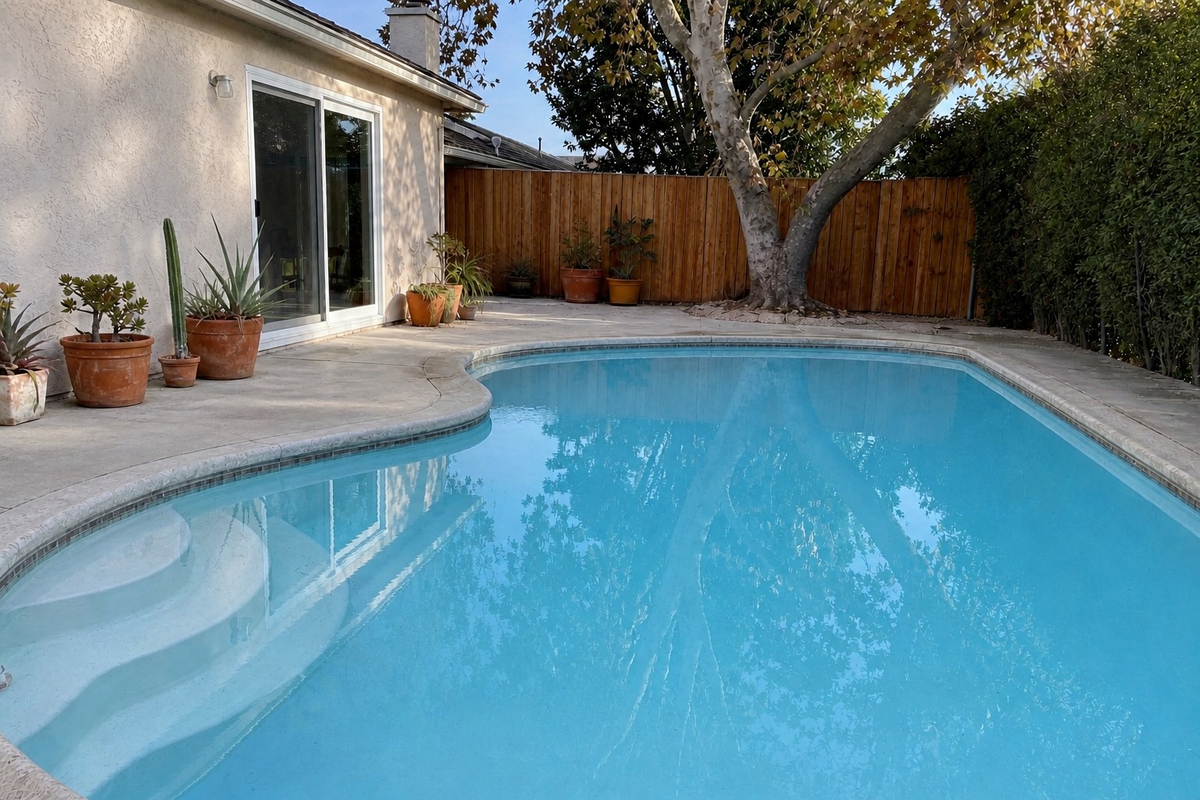
If you do end up draining, our guide on how to drain a pool covers the ground, the sewer clean-out and the same-day refill.
Treating it yourself means buying ascorbic acid and sequestrant, and both labels count in 10,000-gallon steps. A common LA yard pool of 20,000 gallons takes two steps of each, a big one three or four. Weekly customers see metal and stain treatments as a separate line, outside the monthly price on our price list. Plaster that needs washing is a different bill: an acid wash starts from $749, with a typical private pool between $749 and $1,250.
Not sure what you are looking at? Diagnosis is $0 inside our service area. Send a close photo of the stain with a coin for scale, or call (818) 740-6099.
Not in the water. Soap foams and leaves a film the filter has to strip out, so keep it out of the pool. Vinegar is a weak acid that the pool dilutes to almost nothing. On a waterline mark you can reach, a brush and a proper tile cleaner do more.
In household amounts, very little. It nudges pH and alkalinity down a touch and adds nothing that lifts a stain. Pool acid and ascorbic acid are the products made for those jobs.
Yes. Once the pool is refilled, the same two tests and treatments work on old stains, though set-in marks take longer. In a drained pool, staining set into the plaster is what an acid wash removes, and the shell should be refilled the same day.
No, but it lowers pH and uses up chlorine. That is why the salt cell goes off during treatment and the chlorine comes back slowly afterwards, with pH returned to 7.4 to 7.6.
Usually not. Organic stains answer to chlorine and brushing, and metal stains to ascorbic acid with the water in. Draining is for staining set into aged plaster, which takes an acid wash.
Send a close photo with a coin for size and your last test readings. We will tell you whether it is leaves, metal or the plaster itself before you buy anything. Or call (818) 740-6099
Written for Foothill and Valley homeowners.
Why white bumps grow out of cracks and loose plaster, how to tell them from scale, and when a patch is enough.
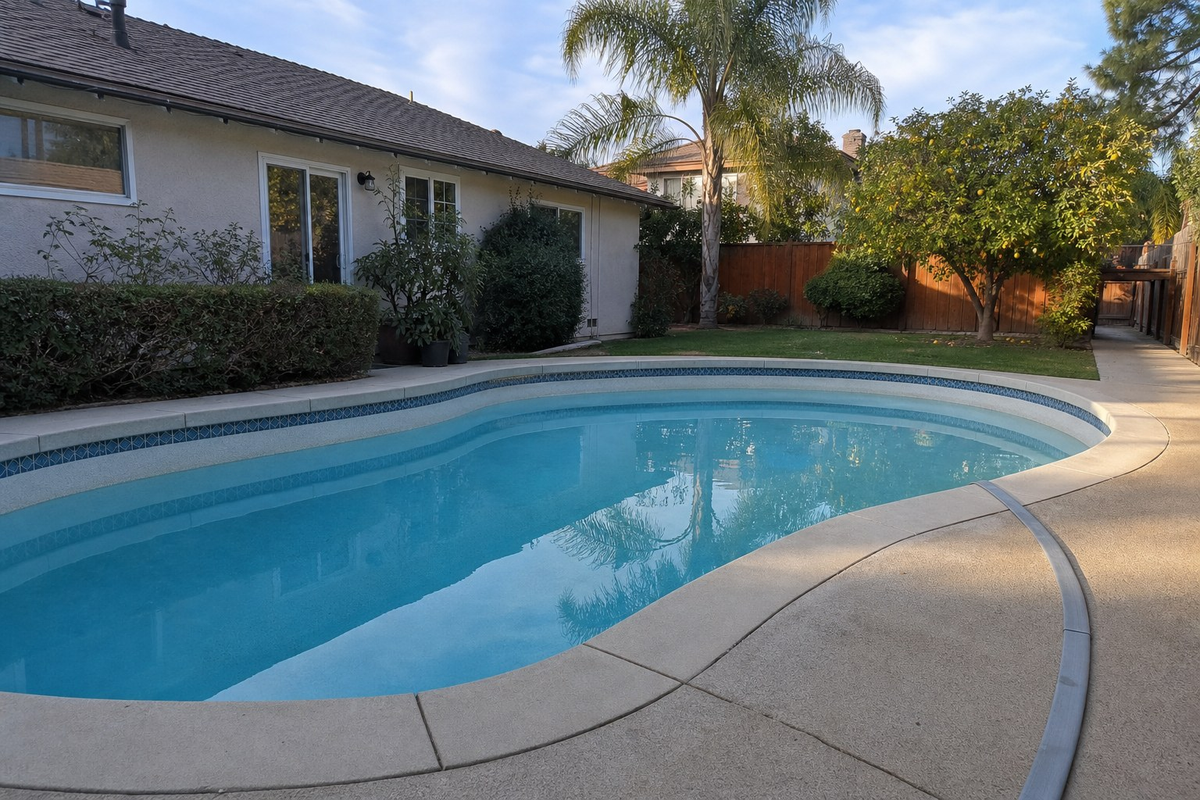
Whether to drain at all, what the ground can do to an empty shell, where the water may go, and how to refill.
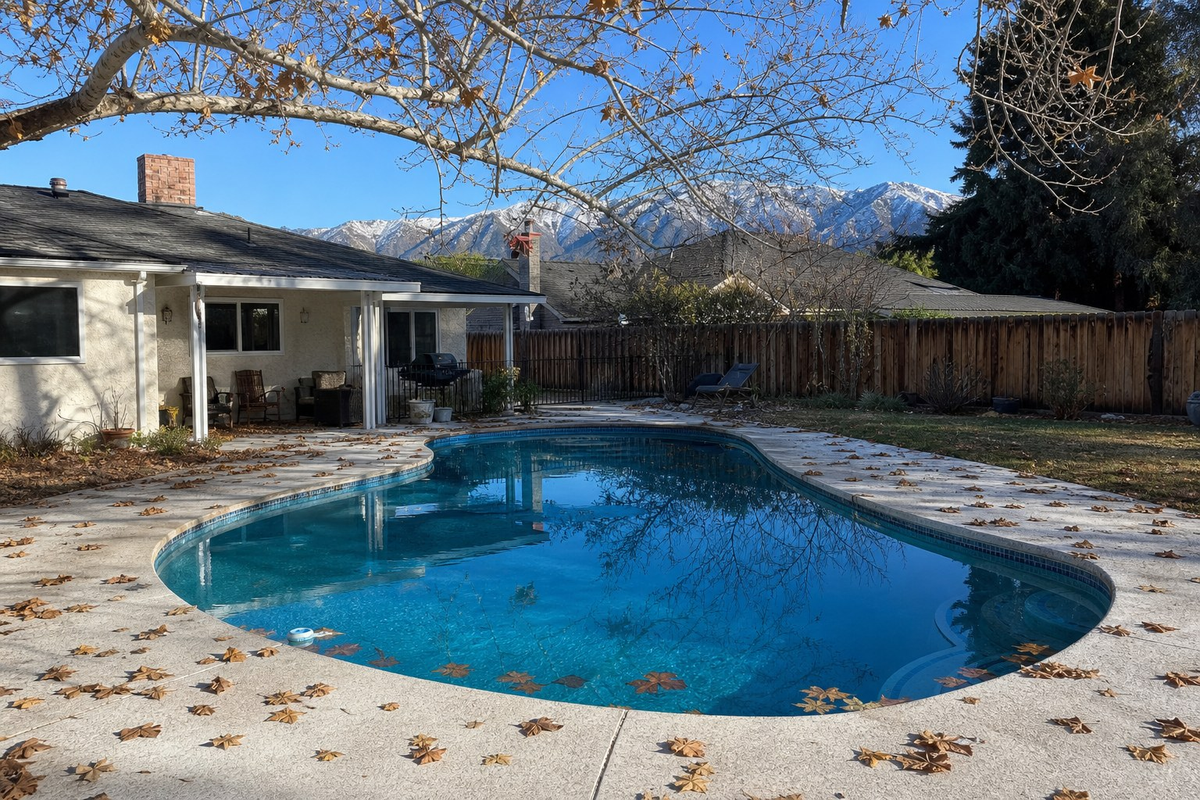
Why you should not drain it, the four things that really change, and the few nights that freeze.
Los Angeles and the Valley
We test, treat with the water in where it works, and wash the plaster where it does not. Diagnosis is $0 in our service area.