

Water
How to clean a green pool in LA
Shock doses by water colour, how long it takes, and why you should not drain.
Article
Ash is alkaline, it carries phosphate, and it is too fine for a skimmer to catch. Here is the order to work in once the air clears — and what to do while it has not.
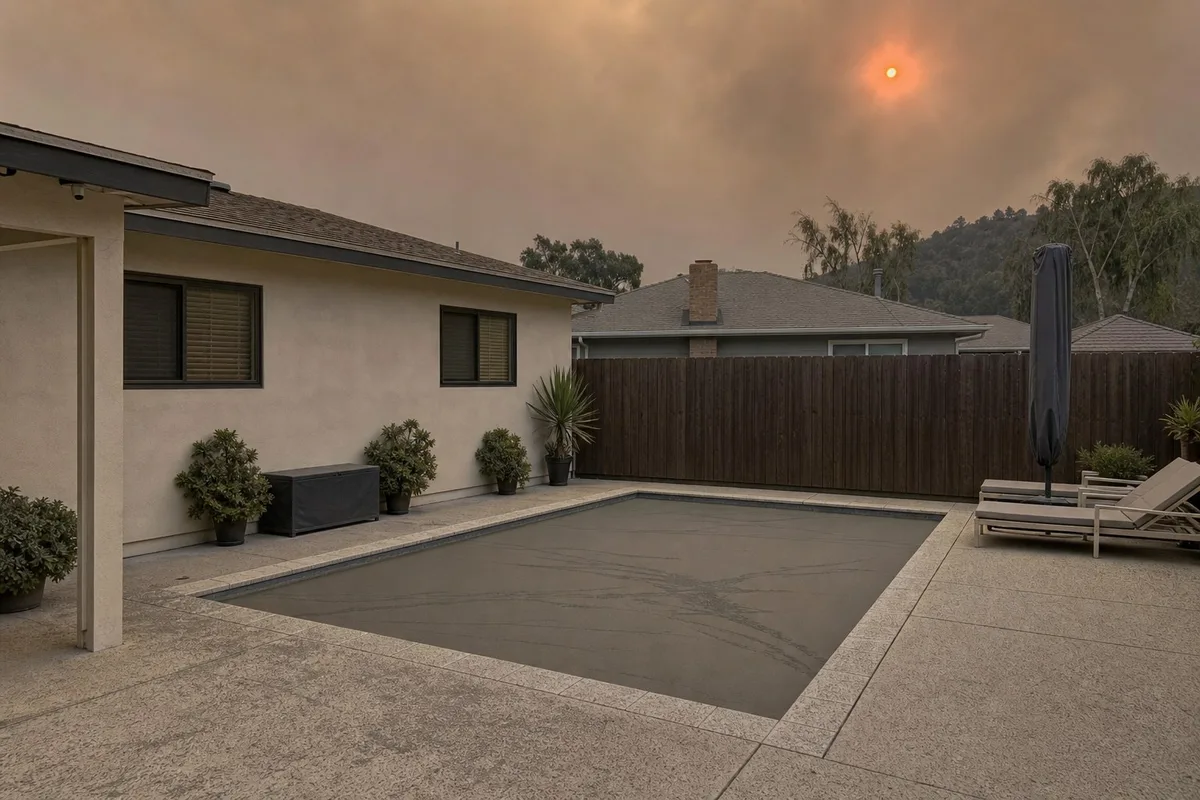
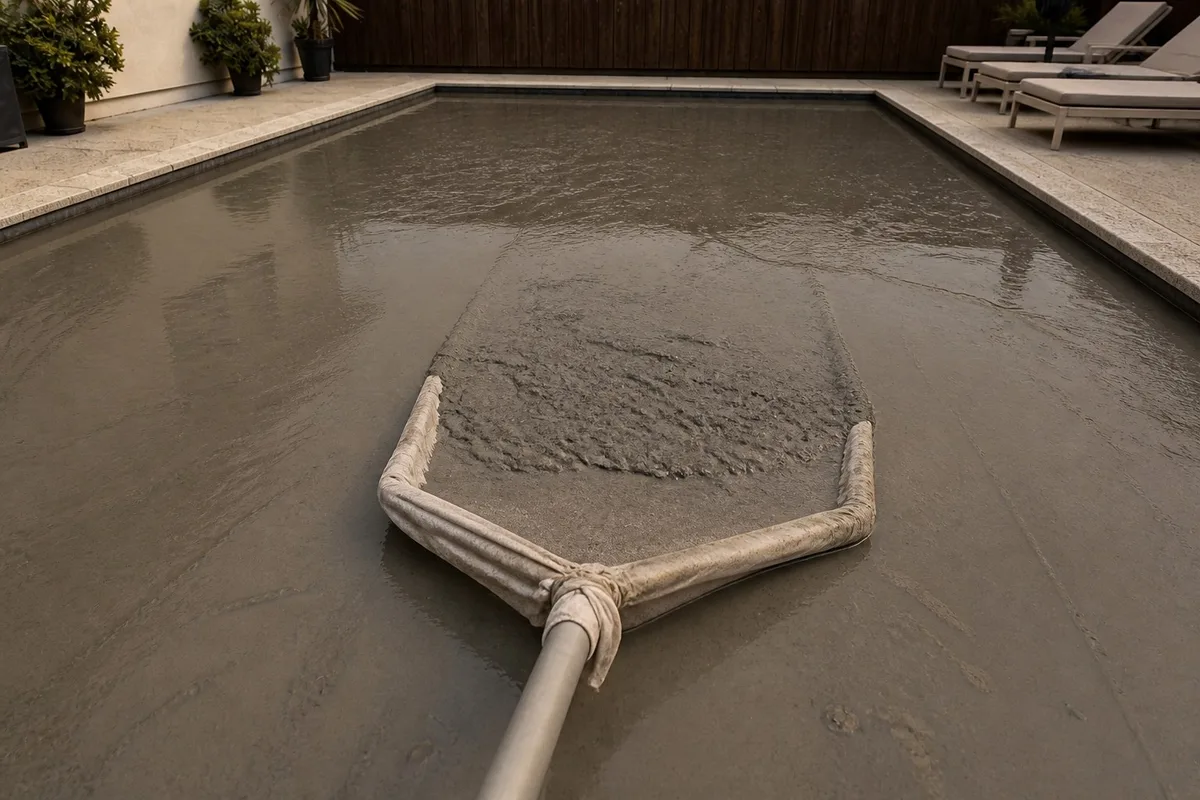
The fire season here runs from the first dry Santa Ana winds in September through to the rains, and a pool does not have to be anywhere near the flames to be affected. Ash travels tens of miles on those winds, and it is fine enough to pass straight through a skimmer basket and settle on the floor.
What follows is what our technicians do, in the order they do it. None of it is urgent in the first hours — but the longer ash sits in the water, the more of it dissolves, and dissolved ash is a chemistry problem rather than a cleaning one.
Do not start cleaning in smoke. Ash that is airborne is what you should not be breathing, and the pool will still be there tomorrow. If you have to be outside, an N95 is the minimum.
If aircraft dropped retardant anywhere near your street, you may find a pink or rust-coloured residue on the deck and in the water. That material is ammonium phosphate — agricultural fertiliser, in effect.
Phosphate is algae food, and chlorine does nothing to it. A pool that has taken retardant needs a phosphate test, a phosphate remover and a filter clean afterwards, because the remover works by binding the phosphate into something the filter can catch. Shocking it harder instead is money into the water.
Wood ash is alkaline, so a heavy fall pushes both pH and total alkalinity up. High pH makes chlorine lazy: the same reading on the test strip does far less sanitising at 8.0 than it does at 7.5. Meanwhile the organic fraction of the ash consumes chlorine outright and adds phosphate on the way.
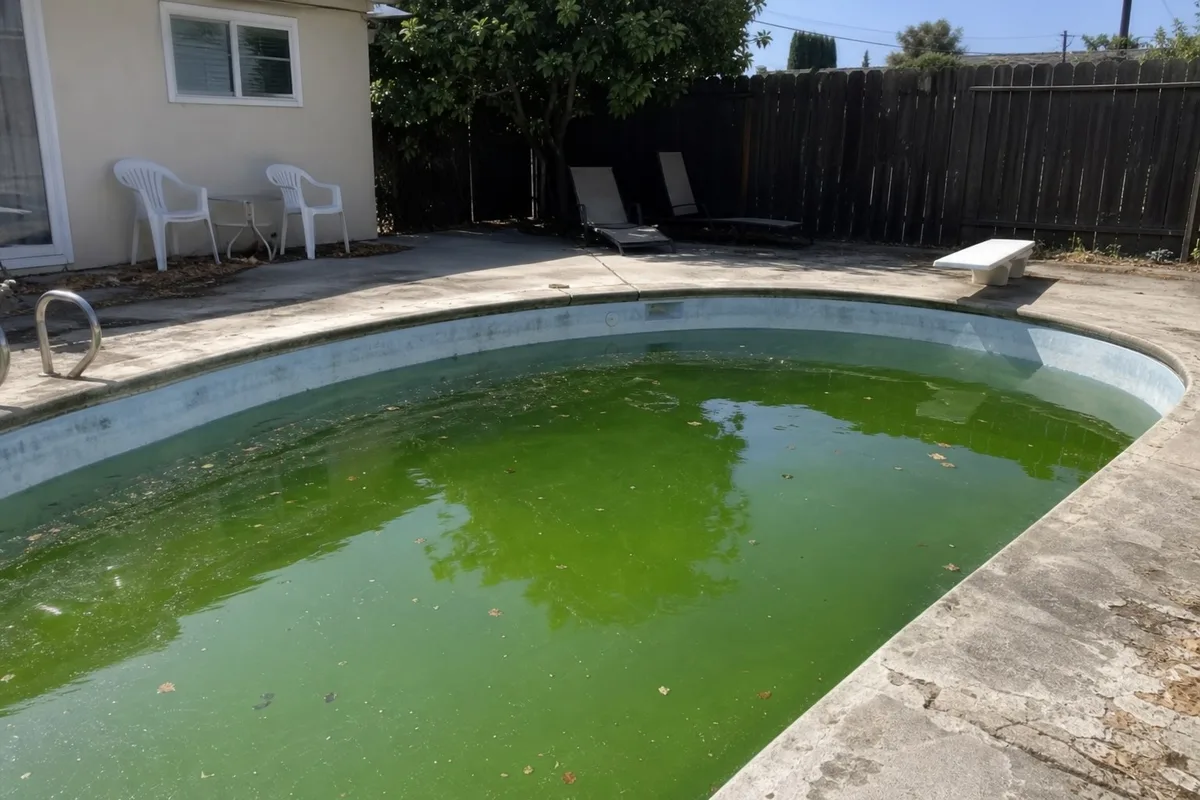
That combination — chlorine being eaten, chlorine that remains working at half strength, and fresh algae food in the water — is why pools go green after a fire rather than during it. If yours already has, that is a different job and cleaning the ash out first is part of it.
In the foothills this happens at a lower level all year round, fire or no fire — wind-borne ash and grit are the standing problem on our Altadena service pages for a reason. And when the first rain finally arrives, it washes everything that has been sitting on the roofs and hillsides into the pool at once, which is its own clean-up.
Occasionally the water is past saving: phosphate that will not come down, alkalinity that cannot be corrected without dumping acid in by the gallon, or a pool that took burnt debris rather than ash. Then it is a partial drain and refill rather than a clean.
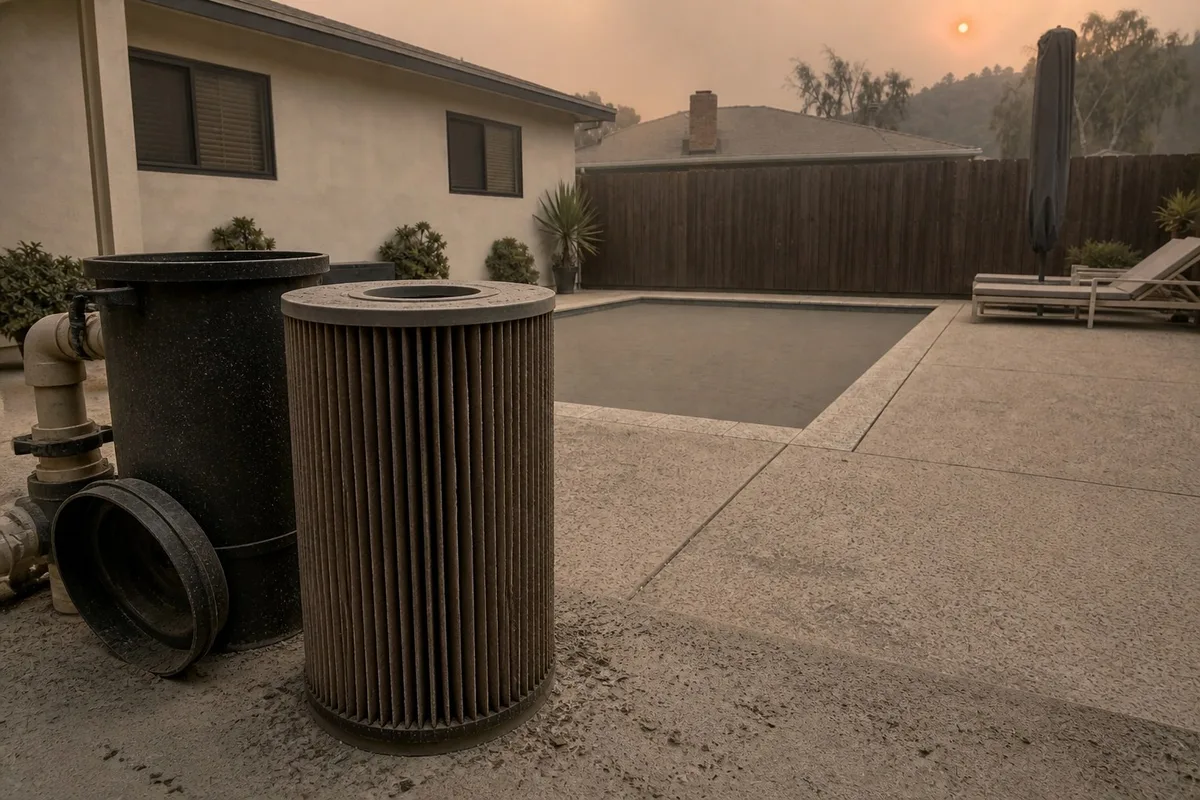
A pool that was near the fire line needs the equipment checked before anything is switched on. Heat warps and melts plastic — pump housings, valve bodies, cartridge housings — and a heat-damaged pump run dry finishes itself in minutes. Look at the pad before you look at the water.
Pools are also a water source during a fire, and crews and aircraft do draw from them. If yours was used, the level will be down, the pump may have run dry, and there may be debris in the water that was never airborne. That is a repair visit before it is a cleaning one — diagnosis is $0 in our service area.
Grey, hazy water after a fire is not just unpleasant to look at. Chlorine that cannot hold a reading means the water is not being sanitised at all, and burnt material carries things nobody should be swimming in. The rule we give clients: clear enough to see the main drain, chlorine holding a stable 1–3 ppm for 24 hours, pH back in range. Until all three are true, keep everyone out.
Through fire season the calls follow a pattern: water still grey after the third clean, a filter that will not come back, chlorine that vanishes overnight, or a pump that has been through something. Any of those is past the point where more chemicals help.
Send us a photo of the water or call (818) 740-6099. A storm or fire clean-up is a fixed price once we have seen what is in the pool, and current prices are worth confirming by phone — the price list is a guide, not a quotation.
No. Ash consumes chlorine, so water that looks merely dirty is usually water that is not being sanitised, and burnt material carries more than soot. Wait until the water is clear, the pH is back in range and chlorine holds 1–3 ppm for a full day.
It raises it. Wood ash is alkaline, so a heavy fall pushes both pH and total alkalinity up, and high pH makes the chlorine you already have far less effective. Correct alkalinity first, then pH.
Usually not. Most ash-affected pools come back with skimming, vacuuming to waste, a proper filter clean and rebalancing. A partial drain is for water that will not come back into range — and a complete drain is a job for someone who knows the ground conditions, because an empty shell can float or crack.
Test for phosphate, dose a phosphate remover, then clean the filter — the remover binds the phosphate so the filter can catch it. Chlorine does not touch phosphate, so shocking harder will not help. A filter clean afterwards is part of the job, not optional.
No, unless the equipment itself is threatened or the power is unstable. Circulation is what keeps chlorine working through water that is being loaded with ash. Empty the baskets daily instead and watch the filter pressure.
A photo of the water and how close the fire came is enough to say whether this is a clean-up or a repair. Or call (818) 740-6099
Written for Foothill and Valley homeowners.
Shock doses by water colour, how long it takes, and why you should not drain.


Los Angeles and the foothills
Then it is the filter, the phosphate or the chemistry, and not the ash any more. We will test it, clean the filter properly and tell you what is actually holding the water grey before adding anything to it.