

Water
Pool chemistry: test and fix in order
The five readings, the order to fix them in, and why LA tap water keeps pushing pH up.
Article
The small bugs rowing around your pool are almost always water boatmen, and the ones swimming upside down are backswimmers that came to eat them. Boatmen come for a thin film of algae on the plaster. Chlorine alone won't move them. Brush off the film, net what's there and keep chlorine steady, and both kinds fly off within days.
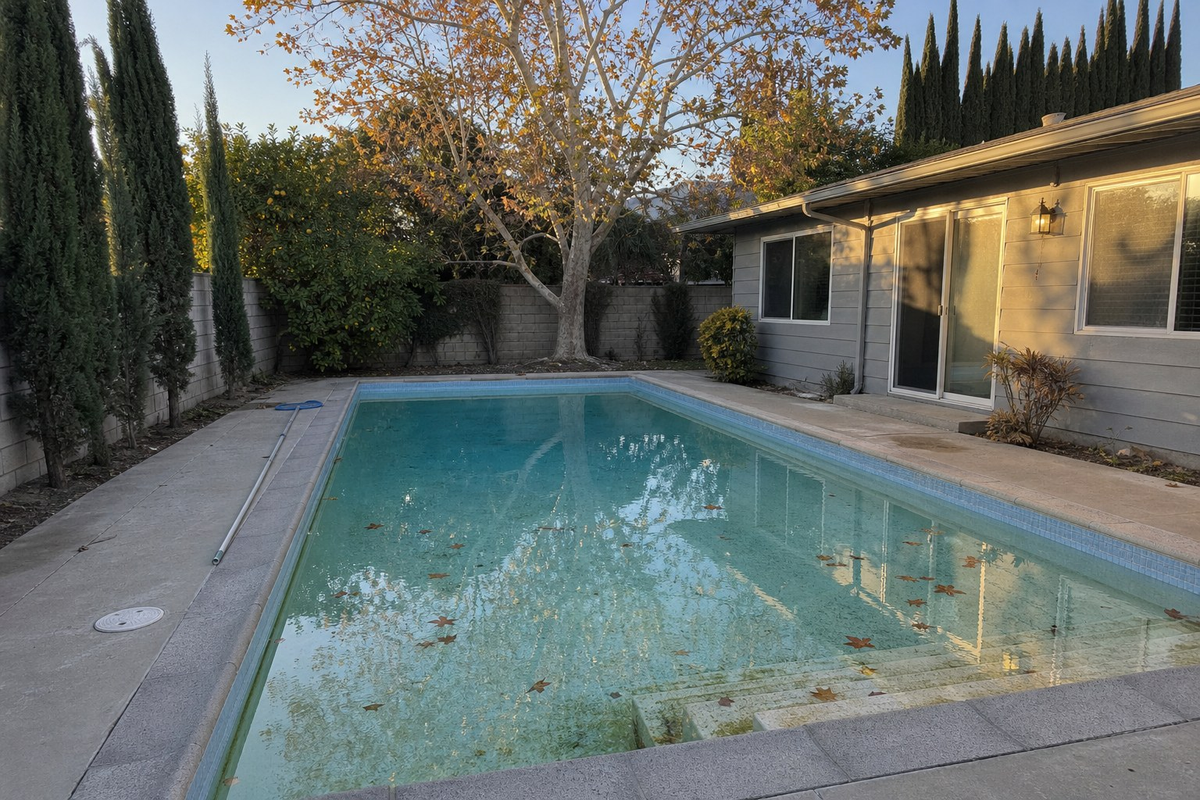
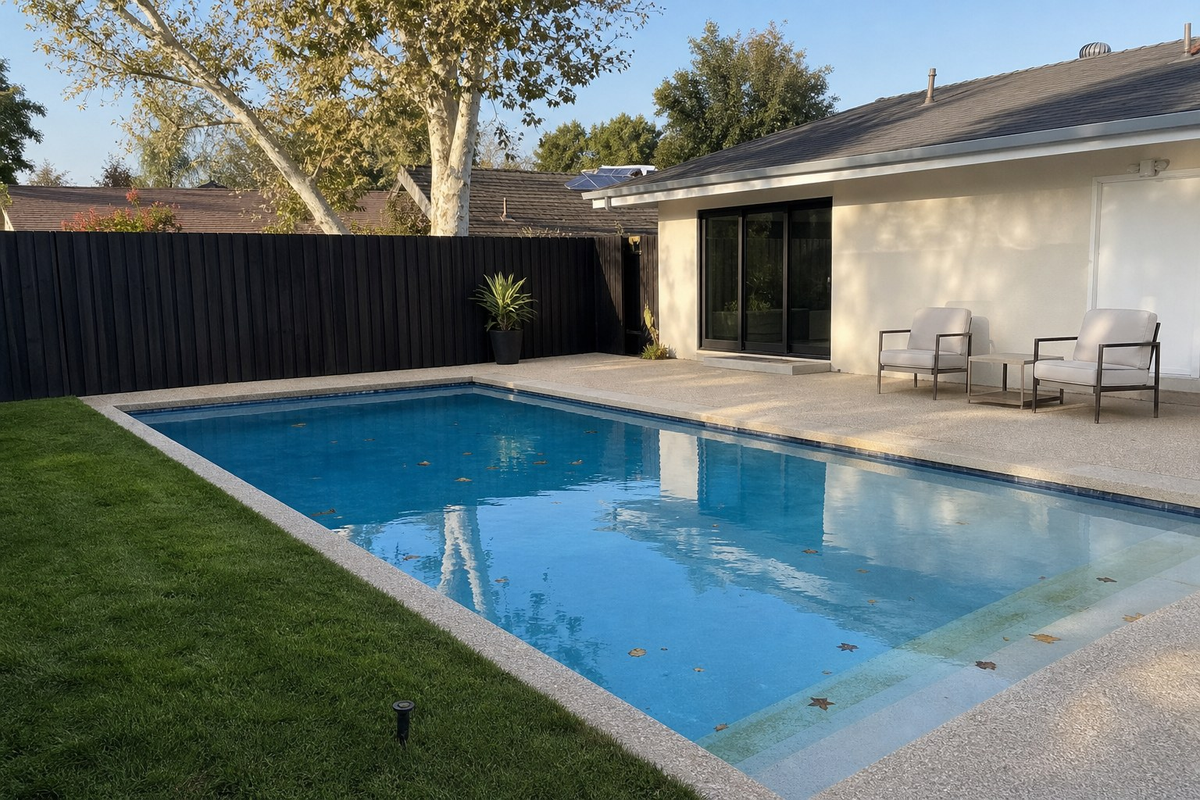
Late autumn is when a lot of LA pools pick up bugs. Pump hours come down after summer, sycamore and oak leaves sink to the floor, and the steps that never get sun grow a film you can barely see. To a water boatman flying over the Valley, that film is lunch. The fix is about the pool, not the bugs.
Look at how the bug swims before you do anything. Most of what lands in a Los Angeles pool falls into one of these groups.
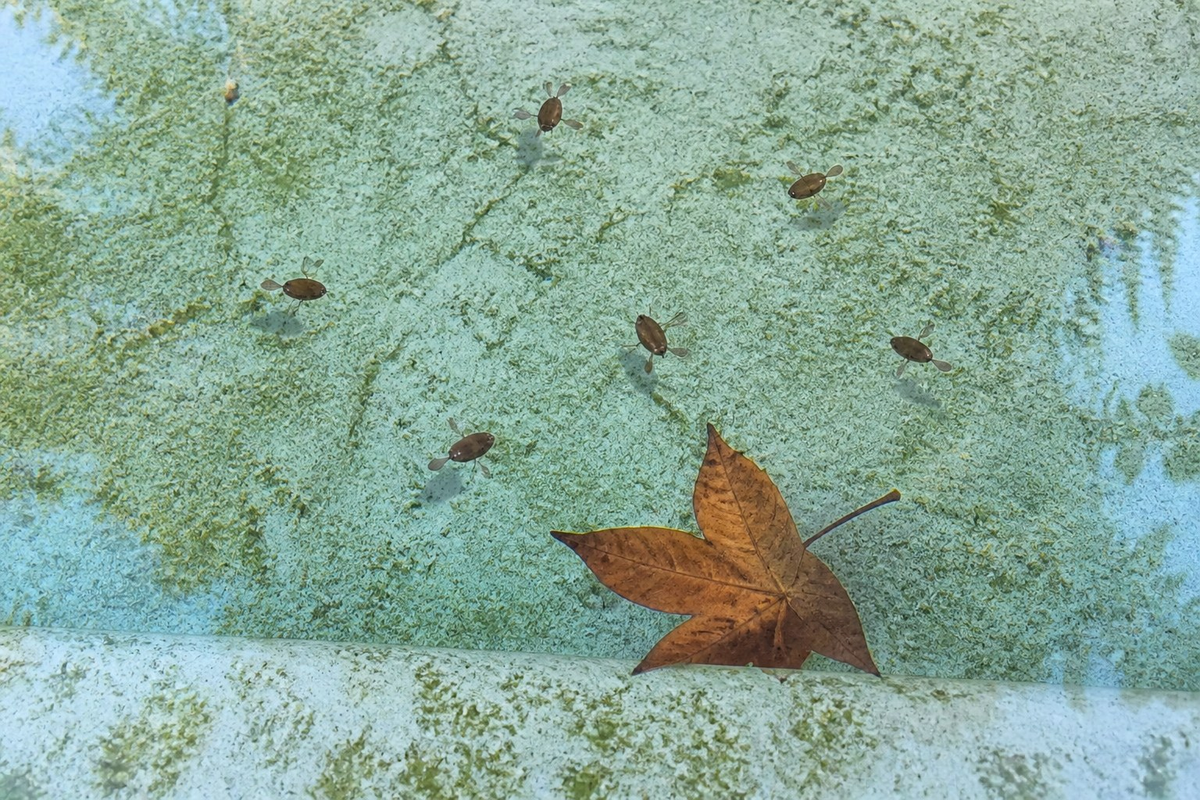
Boatmen and backswimmers breathe air. They come up, trap a bubble against their bodies and dive with it, so they spend most of their time wrapped in their own air supply instead of in your water. A dose of chlorine that would kill algae in hours barely bothers them.
So pouring in more chlorine to kill the bugs misses. What chlorine does well is kill the film they're eating, and that is the part that makes them leave. Boatmen fly in and fly out. Once there's nothing on the plaster, they go looking elsewhere, and the backswimmers follow their food.
Expect fewer boatmen within a couple of days and very few within a week. If they keep coming back to the same corner, the film there is surviving, and that corner needs more brushing or a return jet pointed at it.
You'll read on forums that a squirt of dish soap kills them by breaking the surface tension they rely on. It does, and it also foams, coats the filter and throws off the water for days. We don't use it. Netting and brushing take ten minutes and leave nothing behind.
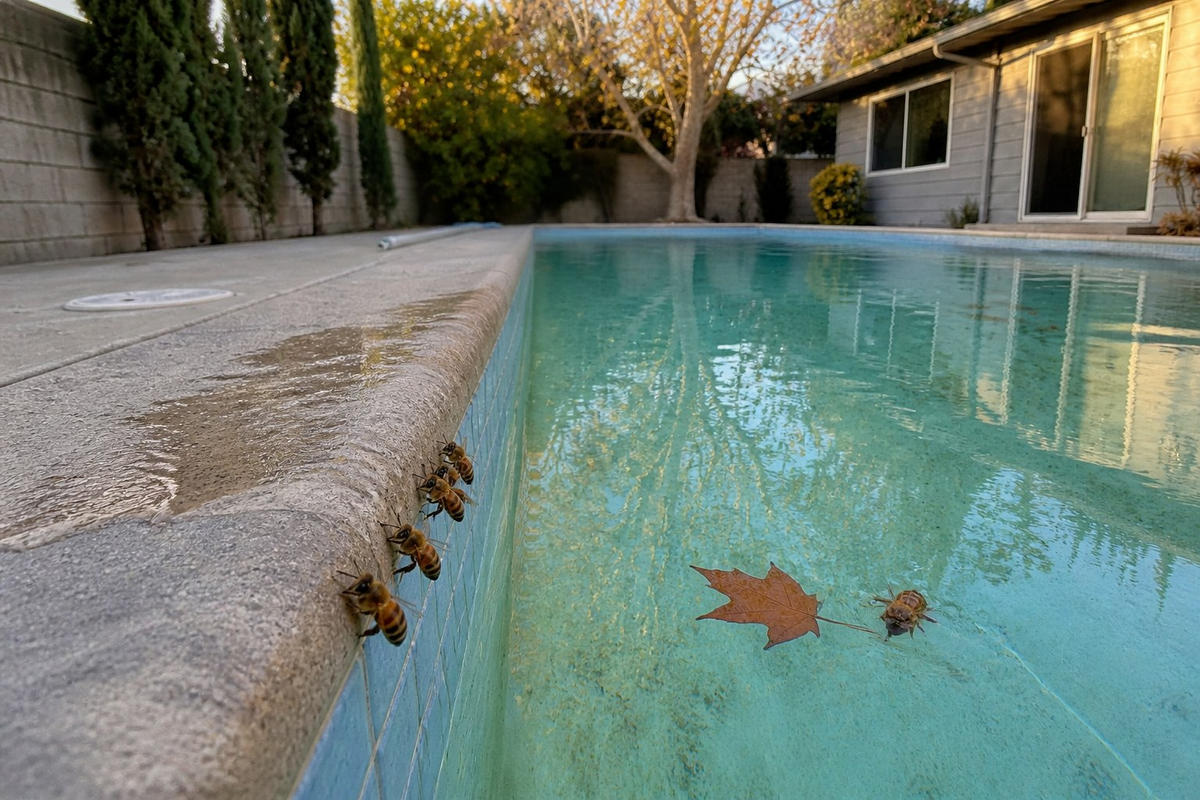
Honeybees come to pools to drink, not to nest. They land on the wet tile at the waterline, and in the dry months before the first rains a single pool can draw a steady line of them. Some slip in and drown, and swimmers step on the ones floating near the edge.
Chlorine doesn't put them off. What works is giving them easier water somewhere else: a shallow dish with pebbles in it at the far end of the yard, kept full, starting before they've learned your pool. Moving it closer to the pool for a day or two and then away again can help shift the habit. If you see a cluster hanging on a branch or bees going in and out of a wall, that's a swarm or a hive and a job for a local bee removal service, not for the hose.
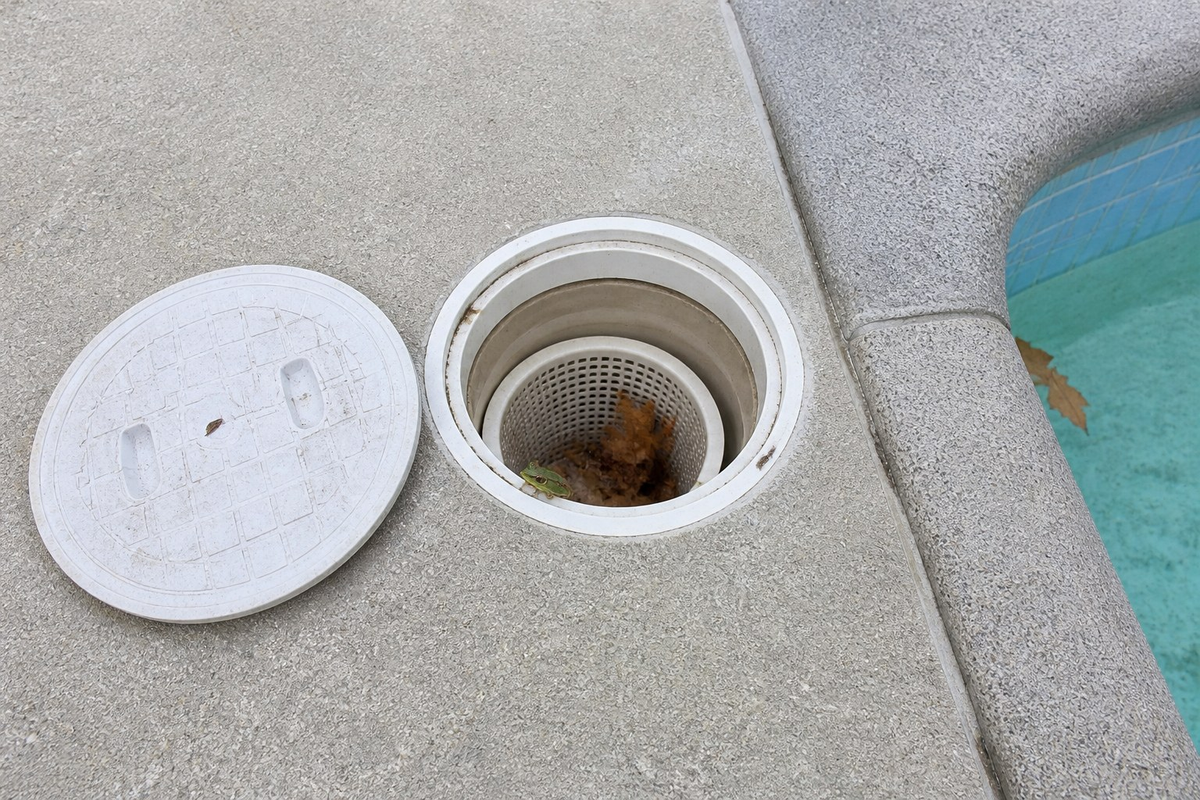
Small green tree frogs live in LA gardens and hop into pools at night. A smooth wall and a high coping leave them no way out, and the skimmer pulls them in. Check the skimmer basket before you reach in, and lift frogs out to a damp, shady bed. A small floating ramp hung over the edge gives them a way out on their own.
Pool worms are three different things. Earthworms crawl onto the deck after rain or sprinklers and wash in. Thin red wrigglers on the floor are midge larvae, and they only show up where algae has a hold. A long, hair-thin dark worm that twists in knots is a horsehair worm; it grows inside crickets and leaves them in water. None of them harm swimmers. Net them out, and treat red wrigglers as a sign the algae needs dealing with.
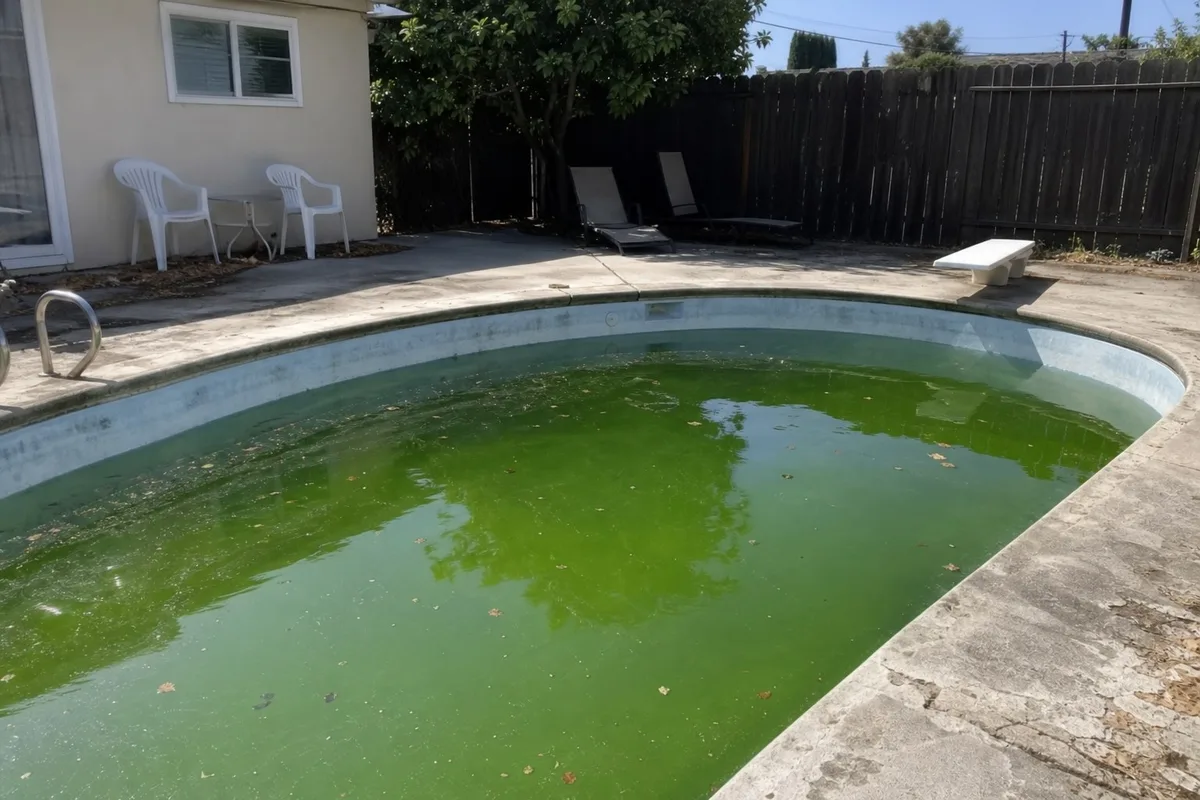
A green pool is a different problem. Mosquitoes breed in it, Los Angeles County vector control treats neglected pools for exactly that reason, and the bugs are the least of it. We bring those back without draining through green-to-clean, $349–$749 for a residential pool.
Most bug problems never get that far. Our weekly visit covers the net, the vacuum, brushing, the baskets and a full test panel, from $159 a month with standard chemicals included; sizes are on the price list. Bugs keep coming back? Tell us what you see and where or call (818) 740-6099. Standard diagnosis is free inside our service area.
In Los Angeles, mostly water boatmen, which row right side up and eat algae film, and backswimmers, which swim upside down and eat the boatmen. Diving and whirligig beetles turn up too. Mosquito larvae only survive in a pool without a working pump and chlorine.
Very little. It's a weak acid, so a jug lowers pH slightly in a pool of thousands of gallons, and it doesn't kill water bugs or algae. Pool acid made for the job lowers pH far more predictably, and the bugs leave once the algae film is brushed off.
Nothing that belongs in a pool. A net removes them in minutes. Dish soap kills them by breaking the surface tension, but it foams and clogs the filter. Brushing off the algae they eat and keeping chlorine at 1–3 ppm makes them leave for good.
Water boatmen are harmless and don't bite. Backswimmers can bite if they get trapped against your skin, and it stings like a bee, but they carry no disease. Neither one makes the water unsafe; they're a sign of algae film, not of bad water.
Usually earthworms washed in from the deck after rain or sprinklers. Thin red wrigglers on the floor are midge larvae living in algae, and a long hair-thin worm is a horsehair worm left by a cricket. None harm swimmers; net them out and deal with any algae.
Tell us what the bugs look like, where in the pool they gather, how many hours the pump runs and whether the steps look green. We will tell you what is feeding them. Or call (818) 740-6099
Written for Foothill and Valley homeowners.
The five readings, the order to fix them in, and why LA tap water keeps pushing pH up.
Shock doses by water colour, how long it takes, and why you should not drain.
The reading worth acting on, where LA pools pick them up, and the order to remove them.
Los Angeles and the Valley
Our weekly visits brush the film off before anything comes to eat it, net and vacuum, empty the baskets and test the water. Standard diagnosis is free in our service area.