

Water
Hot tub maintenance in LA
Attached spa or stand-alone tub, spa water numbers, why chlorine vanishes after a soak, filter rinses and when to drain.
Article
Shocking means lifting free chlorine far above its everyday level for one night, long enough to burn off what the normal dose can't keep up with. The size of that dose depends on your stabilizer reading, and the product you pick decides what stays in hard LA water afterwards.
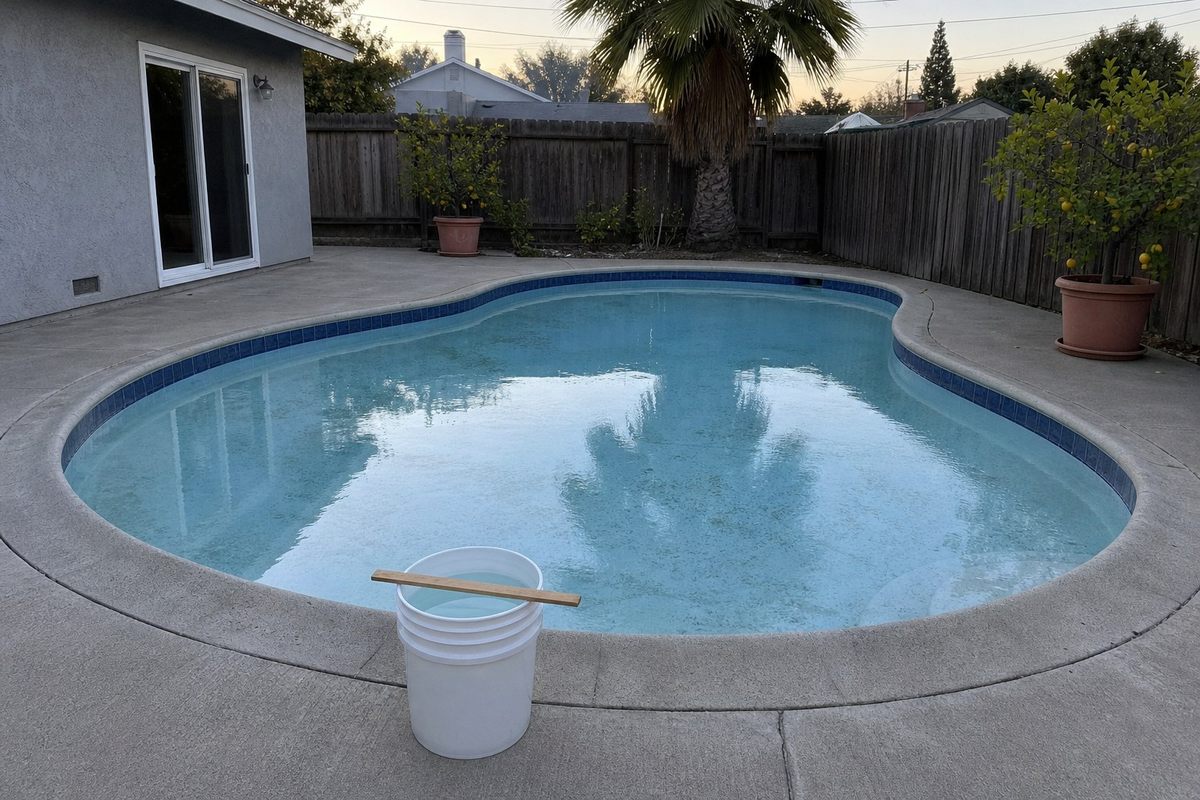
The first storms of November and a week of leaves after a Santa Ana wind do the same thing to a Valley pool. The chlorine reading drops, the water loses its sparkle, and a swimmer comes out smelling of chlorine even though the test says there is barely any. Each of those is a sign the pool is using chlorine faster than you add it. A shock catches up in one evening.
A DPD test kit gives two chlorine readings. Free chlorine is what is still available to kill bacteria and algae. Total chlorine adds the chlorine that has already latched onto sweat, sunscreen, urine and leaf debris. Subtract one from the other and you get combined chlorine, the chloramines. They are what stings eyes and gives off that indoor-pool smell, so a strong chlorine smell means too little working chlorine, not too much.
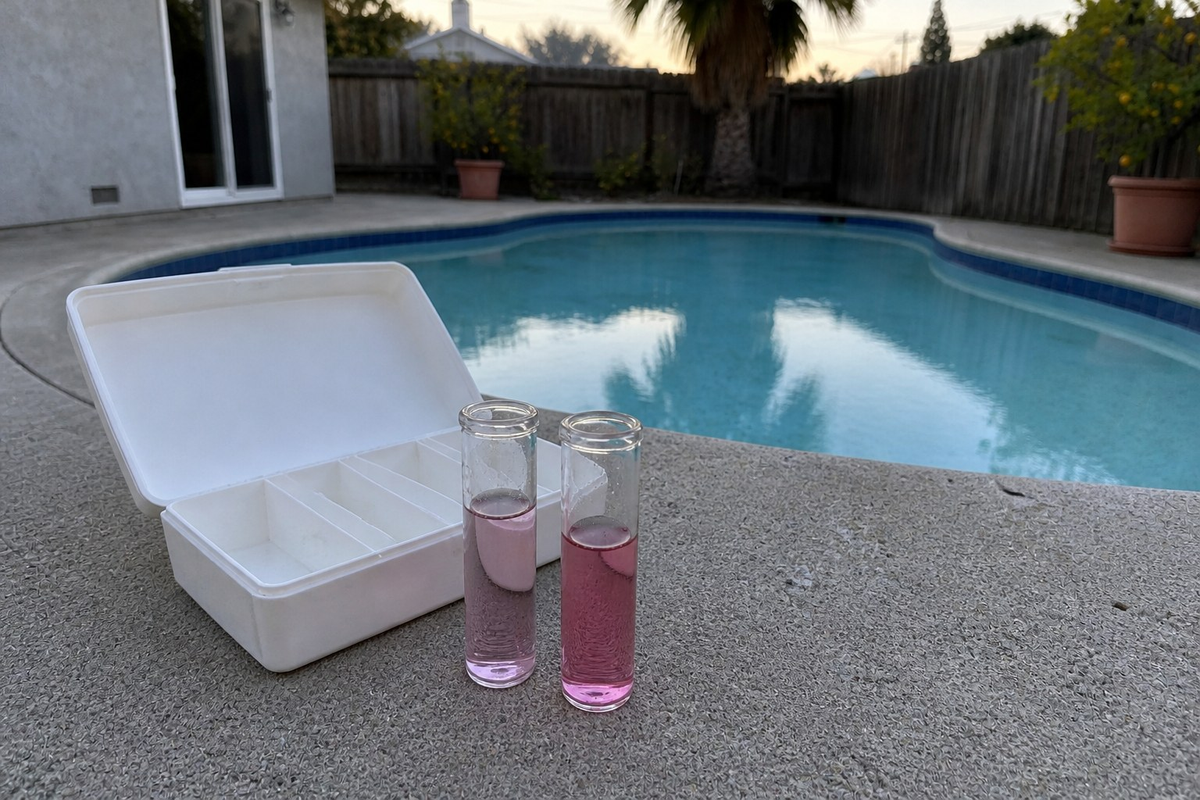
The yellow OTO drops show only total chlorine, and strips read both in steps too coarse to see a 0.5 ppm gap. If you test at home, a DPD kit with the FAS-DPD drop count is worth the money.
A shock on a fixed schedule "every Saturday" is a habit from pool stores. A pool that holds 1–3 ppm free chlorine with no combined chlorine doesn't need one, and every pound you add brings something with it, which is the next section.
All chlorine shock kills the same way. The difference is the passenger that comes with each pound, and Los Angeles tap water is already hard, so the passenger matters here more than in most places. Per pound in 10,000 gallons:
Bags are labelled for one pound per 10,000 gallons. With cal-hypo that lifts free chlorine by about 8 ppm, and in a pool with stabilizer at 30–40 ppm that is a good dose for a party or a dull week. The same pound does much less in a pool where tablets have pushed stabilizer to 80, because stabilizer holds part of the chlorine in reserve where it can't act.
The working rule on pool forums such as Trouble Free Pool: to kill algae, take free chlorine to about 40% of your stabilizer reading and hold it there until the overnight test passes. Stabilizer 40 means a shock level of about 16 ppm. Stabilizer 80 means 32, and at that point it is usually cheaper to lower the stabilizer than to keep pouring.
To get gallons, multiply length × width × average depth in feet by 7.5. A 15 by 30 foot pool averaging 5 feet holds about 17,000 gallons, so one pound of 65% cal-hypo there adds about 4.6 ppm. Two pounds adds about 9 ppm for a routine shock; algae with stabilizer at 40 takes about three and a half.
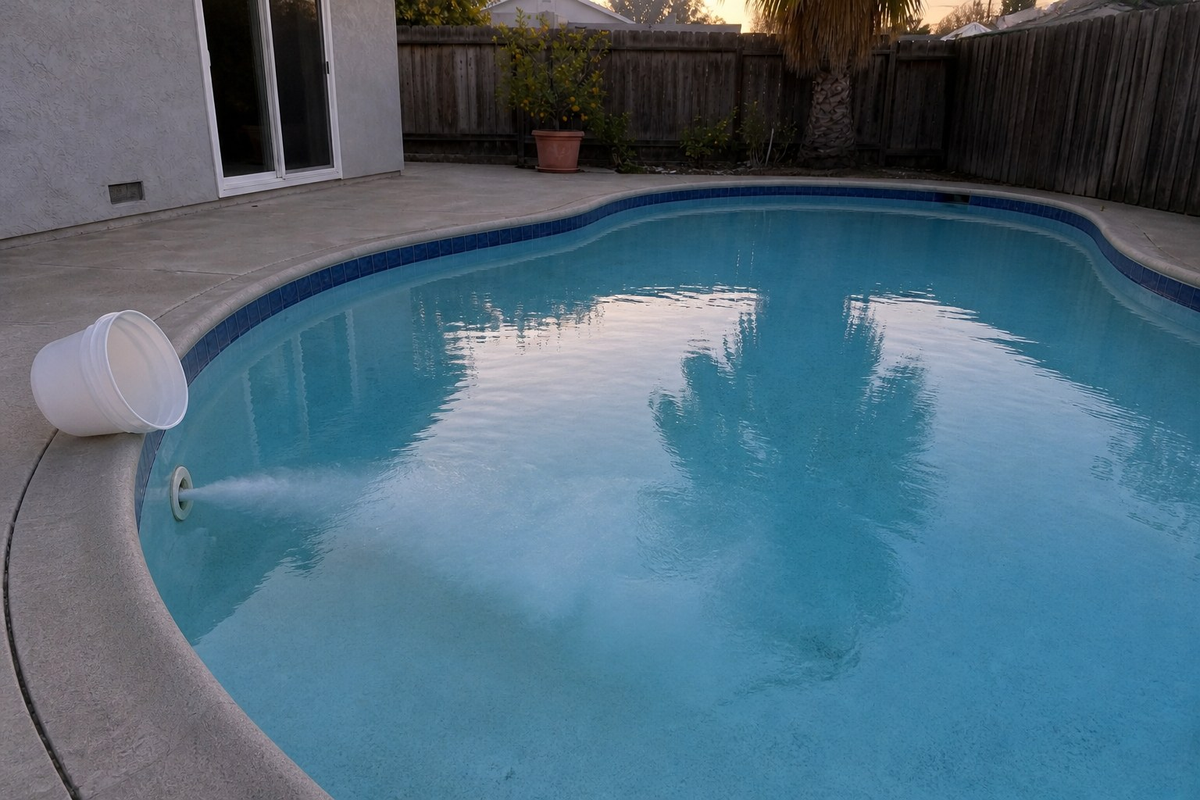
Vinyl liners and fiberglass get pre-dissolved shock only, or liquid. A grain of cal-hypo resting on vinyl bleaches a white spot through the pattern in a few minutes.
Test free chlorine at dusk right after the shock has mixed, then again at dawn before the sun reaches the water. Overnight there is no sunlight, so whatever the pool loses is being eaten. A drop of 1 ppm or less, with combined chlorine at 0.5 or under, means the job is done. A bigger drop means something is still alive or still rotting in there. Top back up to shock level and test again the next night.
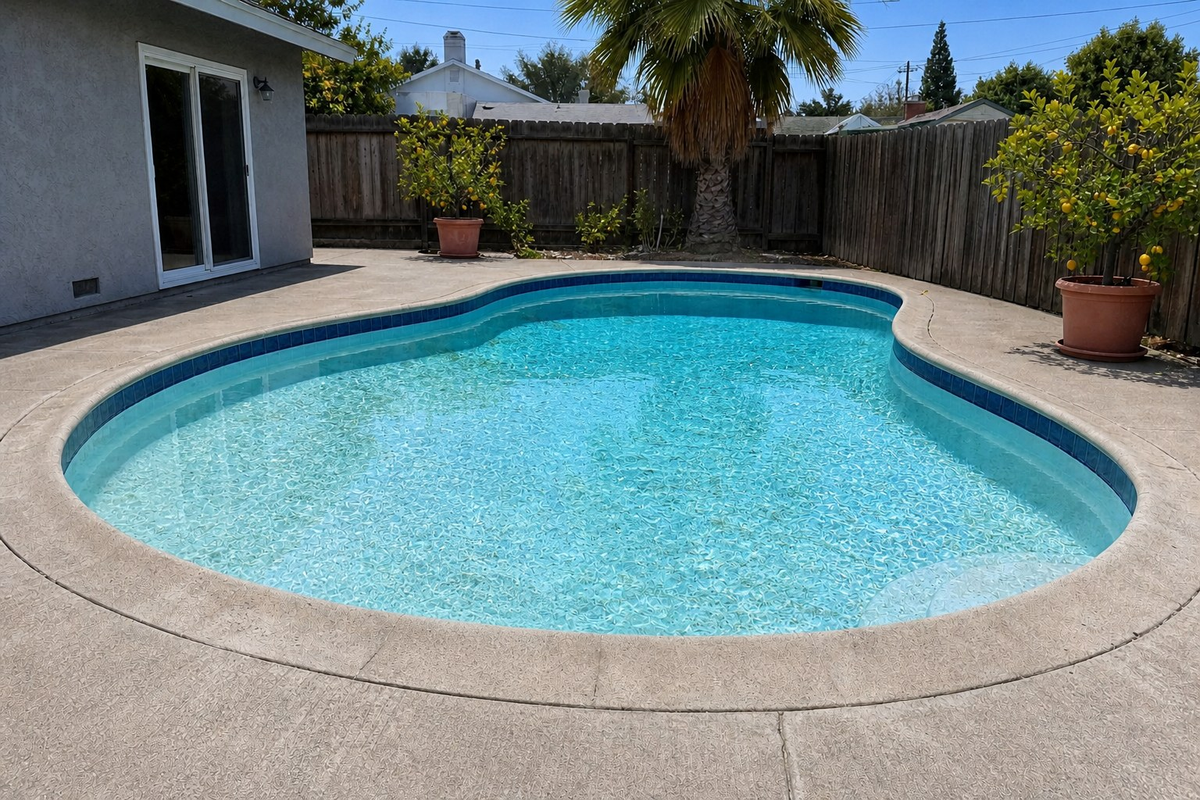
Swim when free chlorine is back in the 1–3 ppm range, or a little higher if your stabilizer is high. After a routine pound per 10,000 gallons, that is the next afternoon. If three nights of shocking still fail the overnight test, or the water is already green, the job has outgrown a bucket: our green pool cleanup guide doses by the colour of the water and adds brushing and filter work.
Doing it yourself, the cost is the bag. Retail prices listed in search results in November 2026, not ours: one-pound bags of cal-hypo from about $1.60 each in a 24-pack to about $7 each for a premium six-pack, and a 16-ounce bag of dichlor at $6.48. A 17,000-gallon pool needs two to four pounds per shock, so shocking every week through summer adds up faster than the per-bag price suggests.
With us, a shock after a party week or a storm is not a line on the invoice. Weekly service runs from $159 a month with standard chemicals included (see the full price list), so the pound or the gallon it takes is already paid for. A pool that has already turned green is a separate job, green-to-clean, from $349.
Shocking every week and still losing chlorine by Tuesday? Send your readings or call (818) 740-6099. Standard diagnosis is free inside our service area.
Liquid chlorine can go straight in, poured in front of a return jet with the pump running. Granular shock should be dissolved in a bucket of pool water first, especially on vinyl or fiberglass, and never added through the skimmer. Check pH first; above 7.8 the shock works far more slowly.
One gallon of 12.5% liquid chlorine raises free chlorine by about 12.5 ppm in 10,000 gallons. For a routine shock in a pool with stabilizer at 30–40 ppm, aim for about 10 ppm above the normal level; for algae, about 40% of the stabilizer reading.
It is bulky for the chlorine it carries, it loses strength sitting in a hot garage, and it nudges pH up a little with each dose. In exchange it adds no calcium and no stabilizer, which suits hard Los Angeles water.
CDC guidance: for a formed stool, remove it, raise free chlorine to 2 ppm with pH at 7.5 or lower, and keep it there for 25 minutes before reopening. Diarrhea is a much bigger job: CDC calls for 20 ppm held for about 13 hours in a pool without stabilizer, and longer with stabilizer in the water.
When free chlorine has come back down to the 1–3 ppm range, or slightly above with high stabilizer. After a routine shock at dusk that is usually by the next afternoon.
Send us your free, total and stabilizer readings. We will say whether it needs a shock, a stabilizer fix or a look at the filter. Or call (818) 740-6099
Written for Foothill and Valley homeowners.
Attached spa or stand-alone tub, spa water numbers, why chlorine vanishes after a soak, filter rinses and when to drain.
Boric acid or borax, how many pounds for 30–50 ppm, how to add it and when borates aren't worth it.
Why the reading climbs in autumn, why a test lies above 10 ppm, and how to bring it down with sun, neutralizer or a partial drain.
Los Angeles and the Valley
Our weekly visits test the water, dose what it needs from our truck and brush the pool. Standard diagnosis is free in our service area.