

Water
Water bugs in a pool
Which bugs row and which swim upside down, why chlorine misses them, and how brushing off the algae film sends them away.
Article
Vacuuming a pool by hand takes about half an hour once the hose is primed. The decision that matters comes before you start: whether the dirt goes through your filter or straight out to waste.
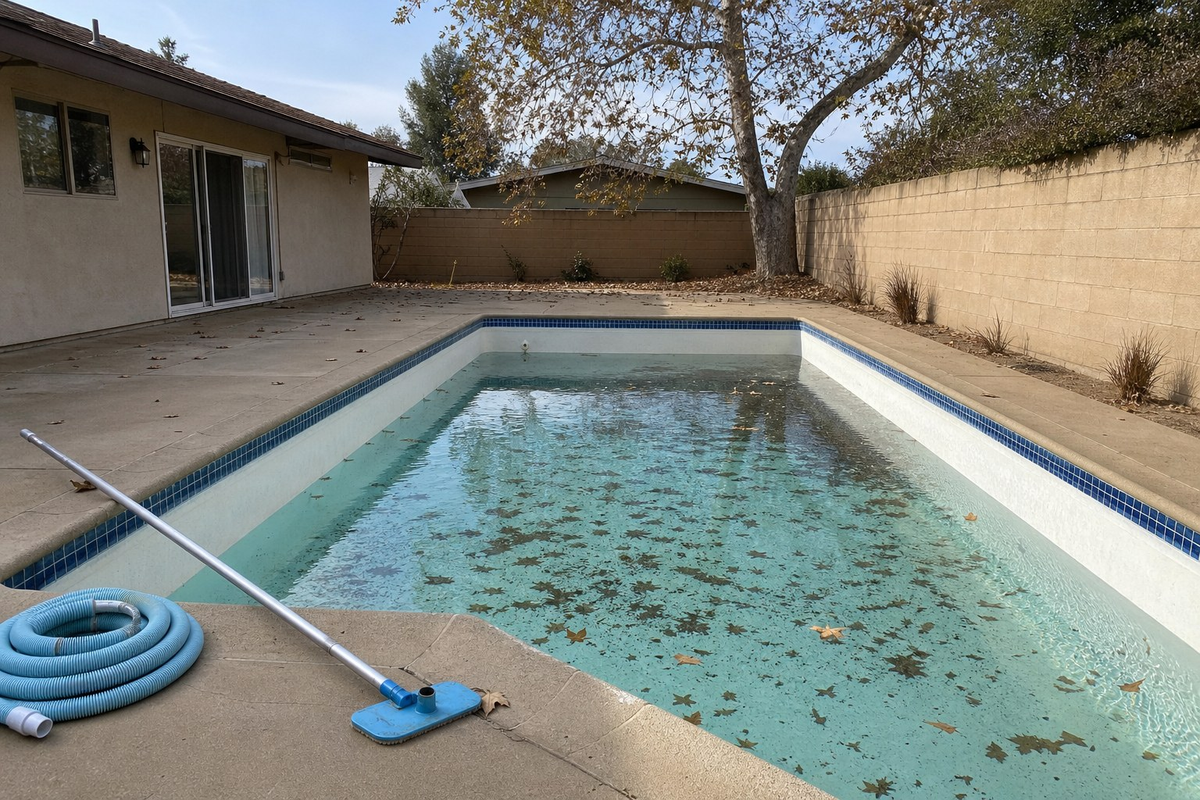
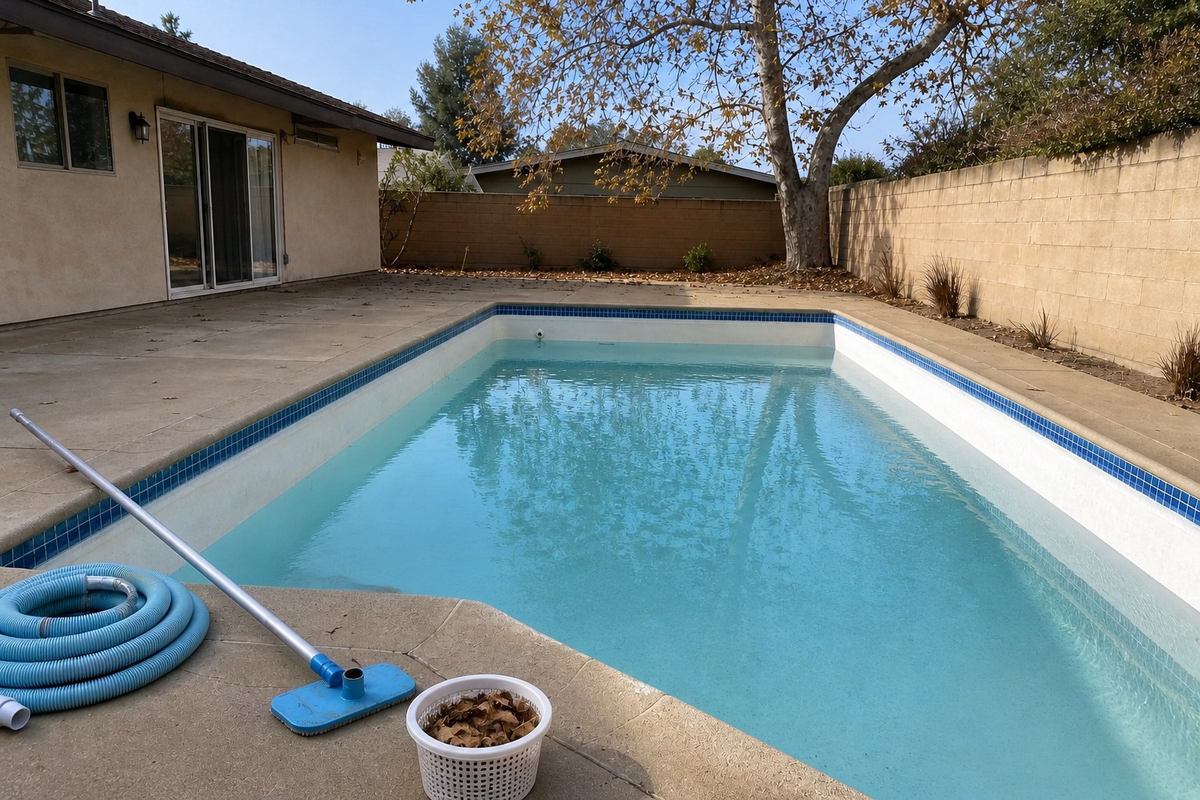
A Santa Ana week leaves the same mess on half the pools in the Valley: sycamore and ficus leaves on the floor, and under them a grey film of dust that the skimmer never sees. A net lifts what floats. Anything that has sunk needs a vacuum, and if it sits for a week it starts to stain the plaster and feed algae. Here is how to do it by hand with the gear most pools already have.
Turn off an automatic cleaner first if you have one. A suction cleaner on a dedicated wall port pulls on the same pump, and the two fight each other. If you're weighing a robot so you can skip this job, our robot vs suction cleaner comparison covers what each handles and what it leaves behind.
This is the step most people get wrong. A hose full of air, pushed into the skimmer, sends a slug of air to the pump. The pump loses prime, runs dry and can cook its seal. With the pump running:
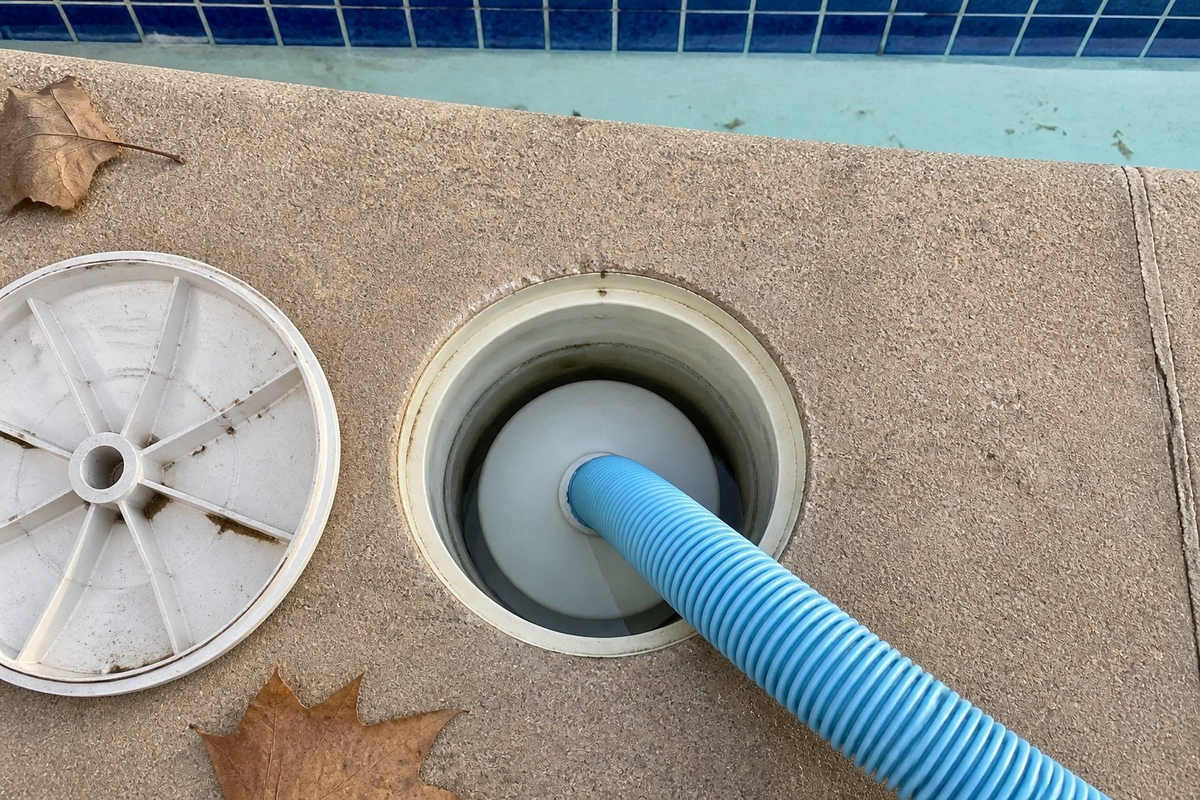
Older LA pools often have a separate vacuum port in the wall a foot below the tile. It pulls harder than the skimmer because nothing else shares the line. If yours has one, use it, and close the skimmer valve at the pad partway so the suction goes to the hose.
Leaves, grit and sand from the kids' feet can go through the filter. Fine stuff can't, or not for long: wind dust, wildfire ash, dead algae and the white powder left after a plaster job pass straight through or clog the filter in minutes. Those go to waste, which means the water leaves the pool instead of coming back. What you can do depends on the filter.
To waste water is chlorinated, so it goes to the sewer clean-out on your property, the same route as backwash, and never to the gutter. Our guide to draining a pool explains why and where the clean-out usually sits.
Brush the walls and steps first and let the pool sit for an hour, so what you knock loose lands on the floor. Then start at the shallow end and work toward the main drain in straight, overlapping lanes, like mowing a lawn. Go slowly. A fast stroke lifts the dust into a cloud that settles again behind you, and you'll be back at it tomorrow.
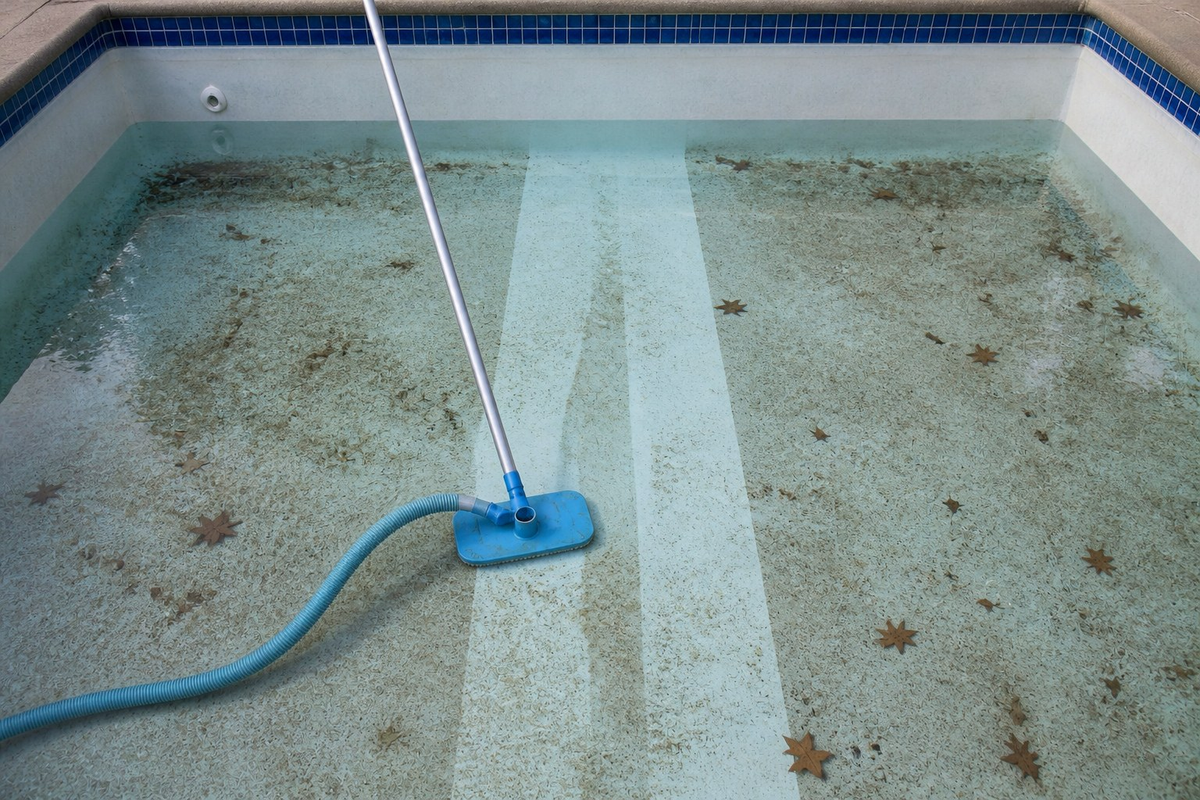
Keep the head flat on the floor. Tip it up and it gulps air, the pump loses prime, and you start over from the priming step. If the suction drops halfway, the skimmer basket or the pump basket is full of leaves: stop, empty both, prime again. On a pool with heavy leaf fall, a leaf canister on the hose catches them before they ever reach the skimmer.
Each inch off a 15 by 30 foot pool is about 280 gallons. If your pump moves around 50 gallons a minute, ten minutes on Waste takes out roughly 500 gallons, close to two inches. Watch the level in the skimmer mouth. Drop below its opening and the skimmer sucks air, so stop, top up with the hose and continue.
LADWP bills water by the HCF, 748 gallons, so a typical waste session costs less than one unit plus its sewer share. The fresh water does shift the chemistry a little. Test after a big session and adjust chlorine and pH, using the targets on our pool chemistry page.
A green pool comes back with shock rounds first and a vacuum to waste once the algae is dead, as our green pool cleanup guide lays out. Ash after a fire calls for its own order of work, set out in the ash cleanup page. Brown or green marks that stay put after a pass are stains, not dirt, and the stain removal guide tells leaf from metal with two spot tests.
Doing it yourself costs the gear and an afternoon a week in leaf season. On our weekly service the floor is vacuumed as needed on every visit, along with the full test panel, brushing and baskets, and the plan runs from $159 a month, chemicals included, as the price list shows. A cartridge filter clean after a heavy vacuum is $149 as a one-off.
If the floor fills up again within a day or the pump keeps losing prime, something else is going on. Write to us here or ring (818) 740-6099. Standard diagnosis is free inside our service area.
Attach the head to the pole and the hose to the head, fill the hose with water at a return jet, then plug the open end into the skimmer or vacuum port with the pump running. Work the floor slowly in overlapping lanes from the shallow end to the deep end.
They do different jobs. Waste sends vacuumed water out of the pool without passing it through the filter, for dust, ash or dead algae. Backwash reverses the flow through a sand or DE filter to flush out what it has already caught. Cartridge filters do neither; the cartridge is taken out and rinsed.
Net out floating leaves, brush the walls and steps, wait an hour for the dust to settle, then vacuum. Marks that stay after vacuuming are stains and need chlorine or ascorbic acid rather than suction.
Yes. The pump provides the suction. Turn it off only to move the multiport valve between Filter and Waste, then switch it back on.
Vacuuming almost never calls for a drain. When plaster does need washing with the pool empty, our drain and clean starts from $749; for the water route and when an empty shell is risky, see the draining guide.
Tell us your filter type and what keeps landing on the floor. We will say whether it is the vacuum, the filter or the pump. Or call (818) 740-6099
Written for Foothill and Valley homeowners.
Which bugs row and which swim upside down, why chlorine misses them, and how brushing off the algae film sends them away.
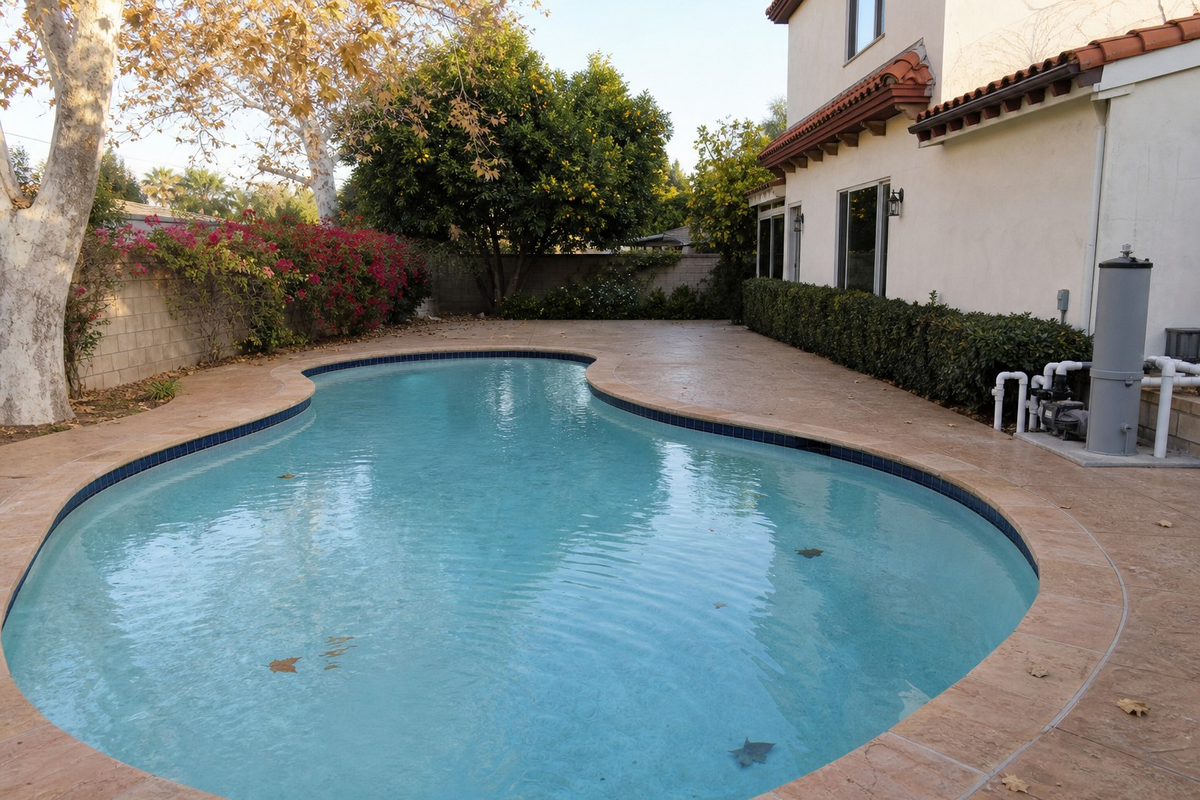
Hours from one turnover a day, what adds or removes them, a variable-speed schedule, and what each hour costs in kWh.
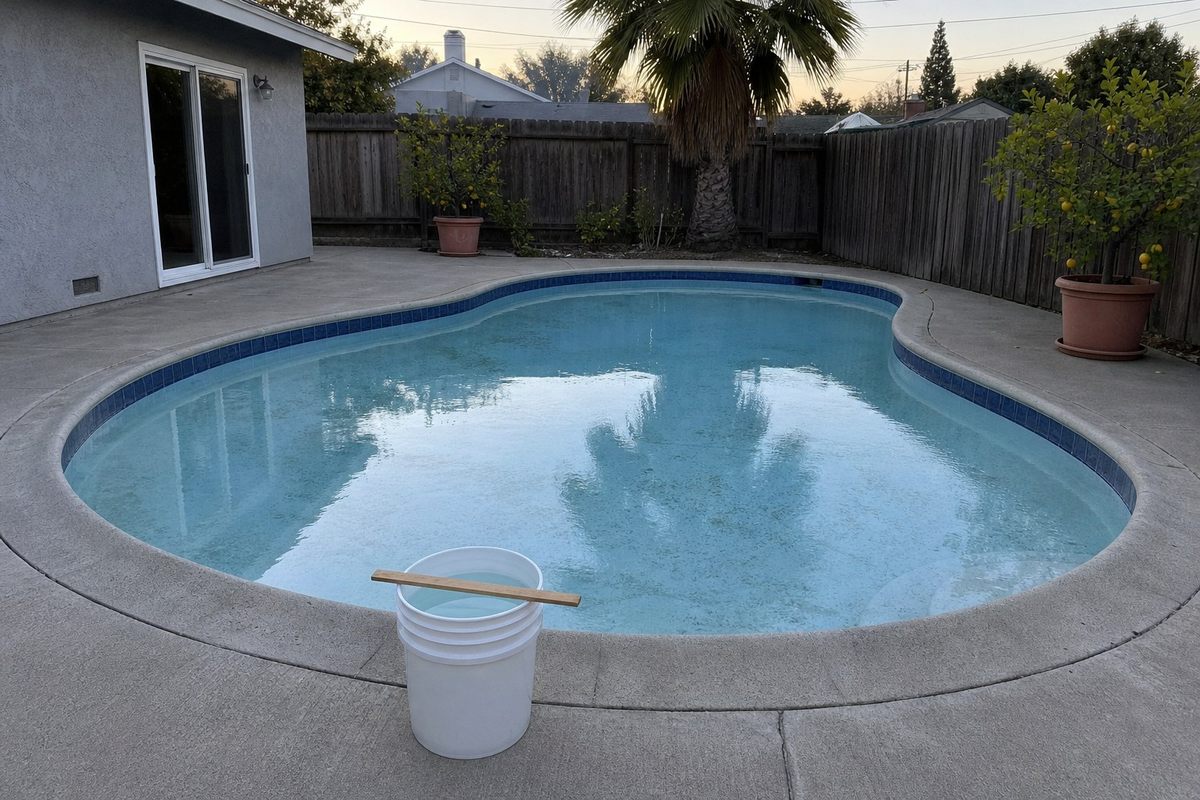
When a shock is due, what each kind leaves in hard LA water, how high to go for your stabilizer, and the overnight test.
Los Angeles and the Valley
Our weekly visits net, brush and vacuum the pool and run the full water test. Standard diagnosis is free in our service area.