

Equipment
What a pump replacement costs in LA
Equipment, labour, and the California rule that picks the pump for you.
Article
Run the pump long enough to push the whole pool through the filter at least once a day. For most LA pools on a single-speed pump that works out to 8 to 10 hours in summer and 6 to 8 in winter. A variable-speed pump runs longer at low speed and still uses far less power.
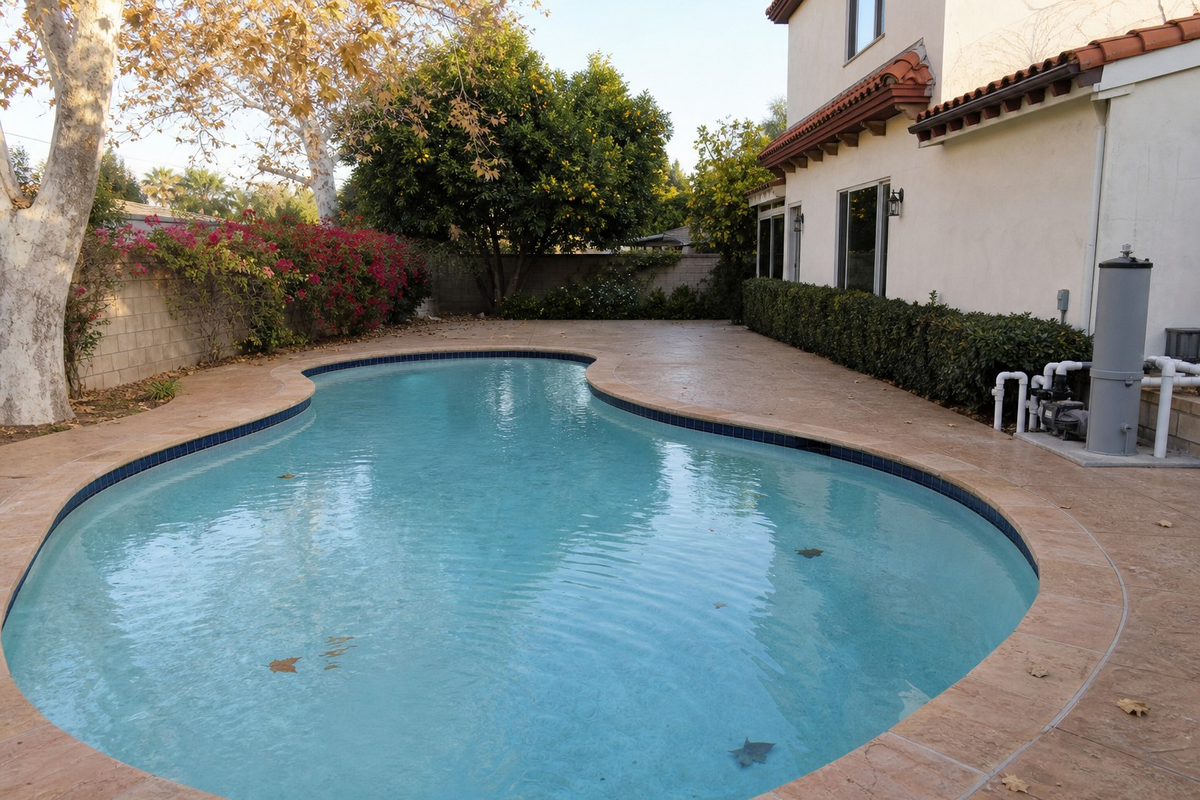
Most pump schedules in Los Angeles get set once, on a hot day, and never touched again. By late November the water is ten degrees cooler, the sun is lower, and the pool needs less filtering than it did in August. The clocks also went back an hour on November 1. A mechanical timer doesn't know that, so the pump that used to start at 9 now starts at 8 by the kitchen clock.
So the question is worth asking twice a year. Here is where the hours come from, what pushes them up or down, and what each hour costs.
One turnover means every gallon in the pool has passed through the filter once. A residential pool wants at least one turnover a day. You can work out your own number with two figures.
Six hours is the floor in that example, with clean water and nobody swimming. The 8 to 10 hours we use for LA summers adds room for heat, swimmers and leaves. A dirty filter lowers the flow and stretches every number above, which is one more reason filter cleaning belongs on the calendar.
A rule from pool forums says one hour of pump time for every 10°F of air temperature: 9 hours on a 90°F day, 6 on a 60°F one. It lands close to what we see across the Valley and the Foothills. Then adjust for your own yard.
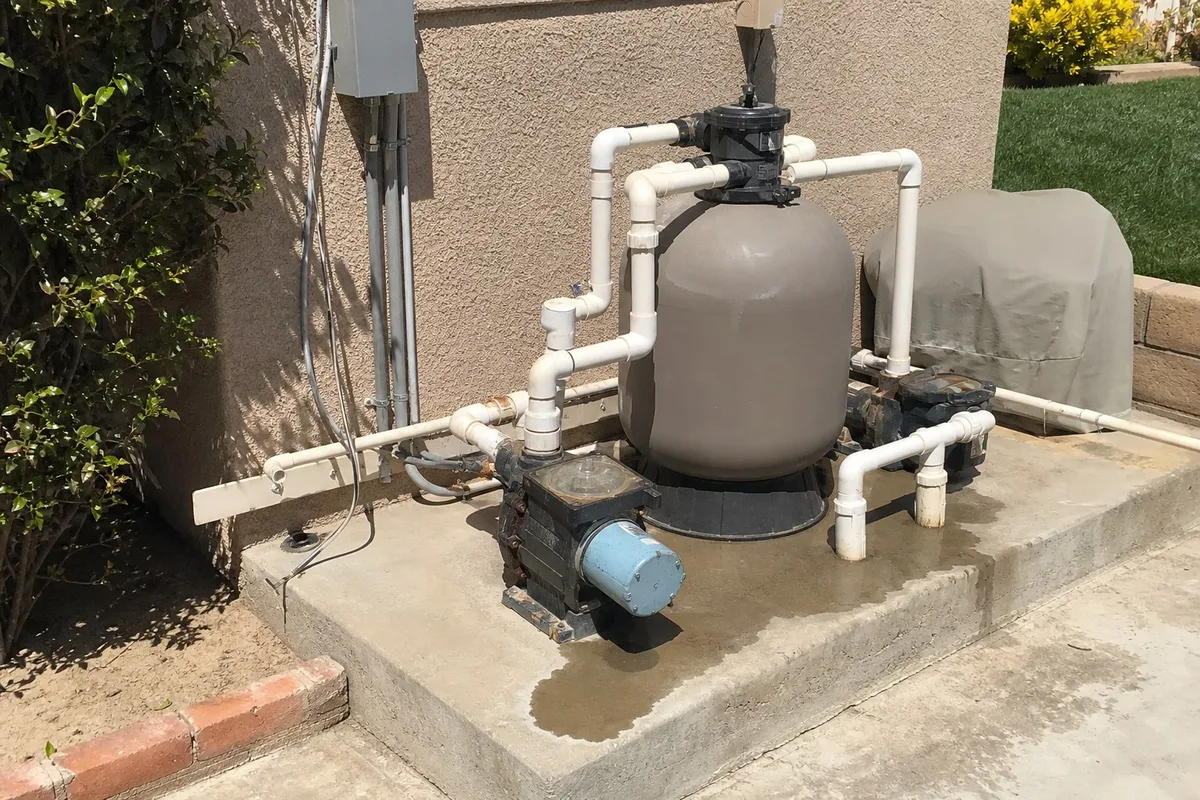
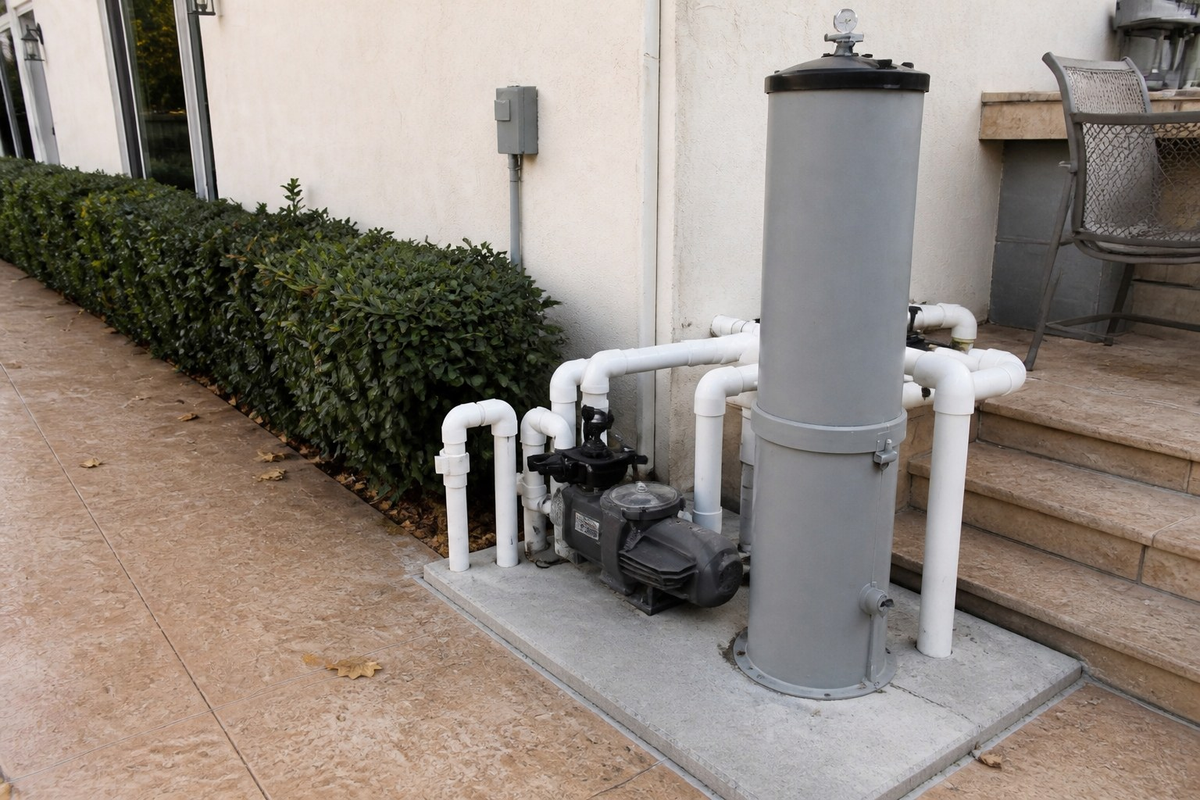
Since 2021, California has required replacement pool pump motors of 0.5 horsepower and up to be variable-speed, so most LA pads either have one or will get one when the old motor dies. They change the arithmetic. Water moved goes down in step with speed, but power drops much faster: at half speed the pump moves about half the water for about 13% of the power, according to the curves on our IntelliFlo page.
Doubling the hours at half speed gives you the same turnover for roughly a quarter of the electricity. That's why a variable-speed pump set up properly runs 12 to 16 hours a day, mostly slow. A schedule we'd start from in an LA summer:
The low speed has a floor. Go too slow and the salt cell reports low flow, the heater won't fire, or the skimmer weir stops moving. Turn it up until all three are happy, and no further.
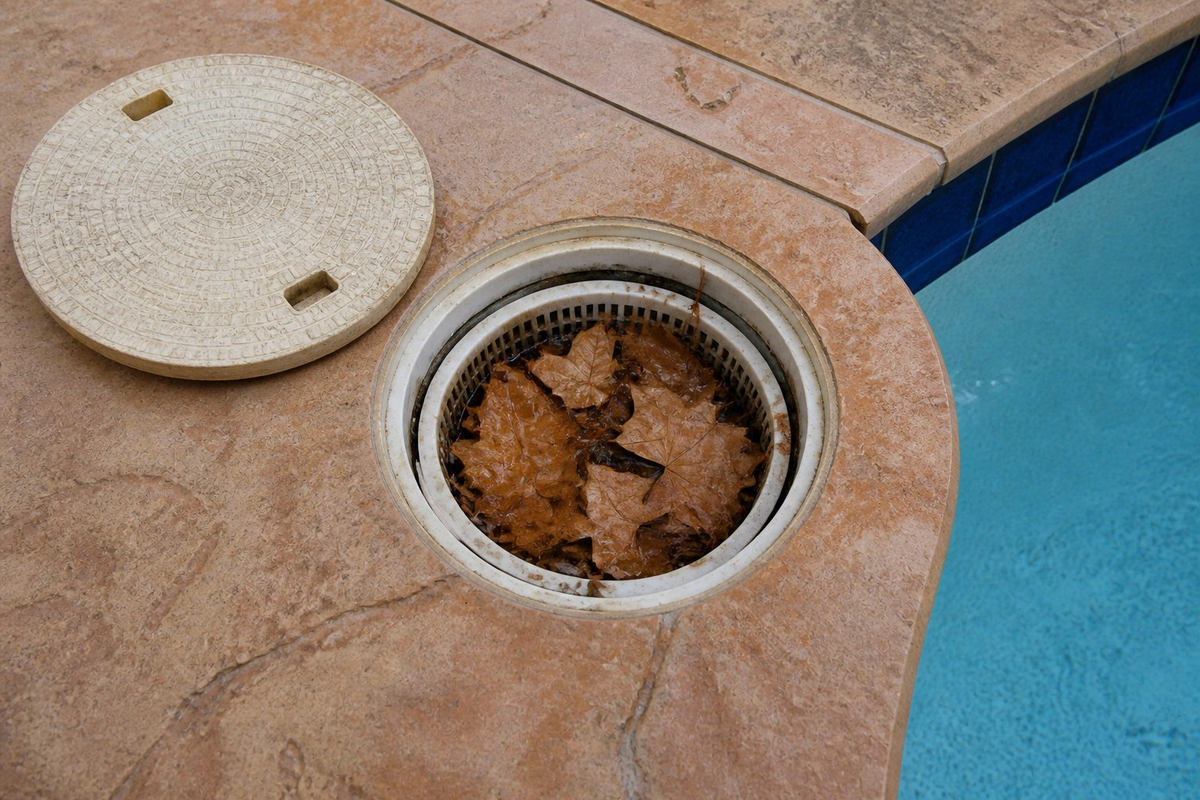
Chlorine gets used fastest in sunlight and while people swim, so most of the filtering belongs in daylight. Running only at night leaves the afternoon water standing still exactly when it needs moving. The exception is a shock: add it at dusk with the pump running for a few hours afterwards, as our shock guide lays out.
Electricity pulls the other way. If your LADWP or Edison bill is on a time-of-use plan, it lists the peak hours, and the long low-speed block should sit outside them. Morning to early afternoon suits both the water and the bill on most plans.
The unit is the kilowatt-hour: the pump's power in kilowatts times the hours it runs. An older 1.5 horsepower single-speed motor draws somewhere around 2 kilowatts; the exact figure comes from the nameplate, amps times volts divided by 1,000.
Multiply by the price per kWh on your own bill. The manufacturer puts the saving of an IntelliFlo at up to $1,100 a year against a standard pump; that figure is theirs, not ours. If your single-speed motor is old and running long hours, our pump replacement cost guide shows what the swap costs and how fast it pays back.
Too many hours cost money and nothing else. Too few show up in the water, starting with the corner the return jets don't reach.
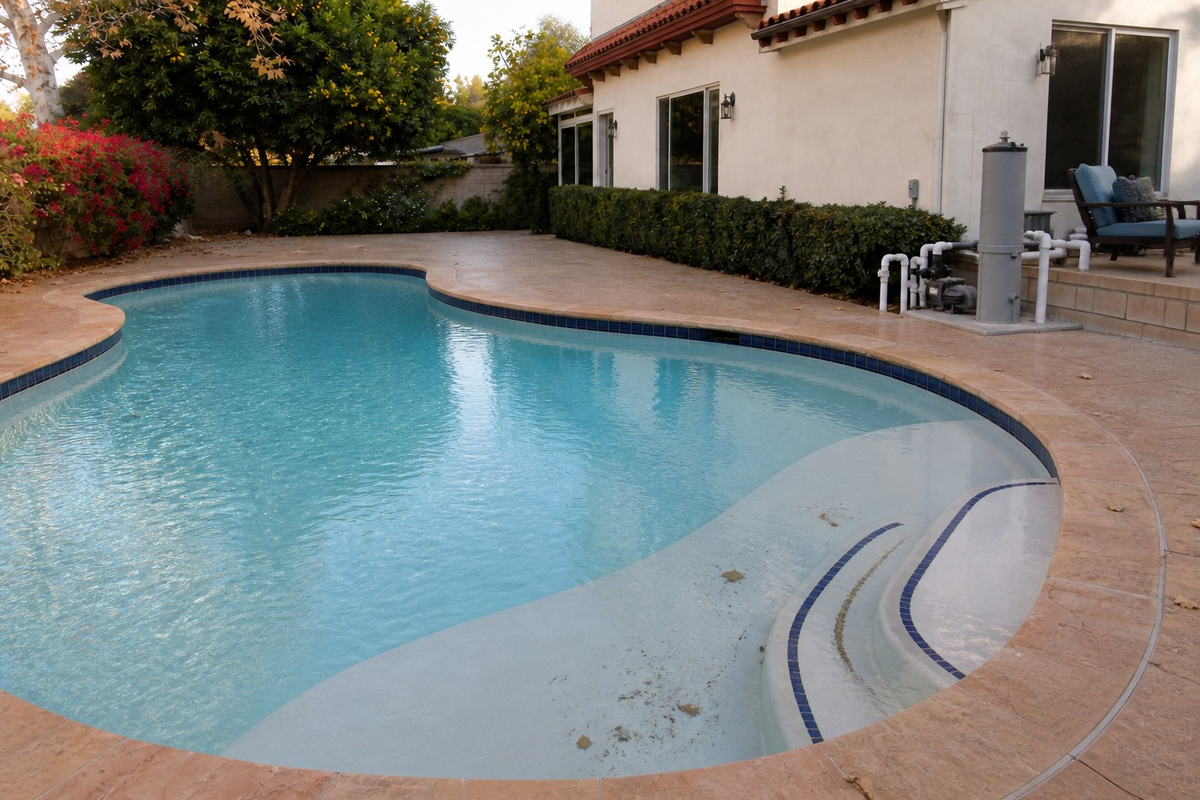
A schedule that was right in July runs at the wrong hours by November. Setting pump speeds and timer clocks for the season is part of our weekly visit, and controllers that won't hold a schedule are automation repair. Weekly service starts at $159 a month with standard chemicals included; pool sizes are on the price list. Not sure your hours make sense? Send your pump model and current schedule or call (818) 740-6099. Standard diagnosis is free inside our service area.
Long enough for one full turnover a day: pool gallons divided by the pump's flow in gallons per minute times 60. For most LA pools on a single-speed pump that means 8 to 10 hours in summer and 6 to 8 in winter. Variable-speed pumps run longer at low speed.
On a single-speed pump, yes: an older 1.5 horsepower motor drawing about 2 kW uses around 48 kWh a day, three times an 8-hour schedule. A variable-speed pump at low speed can run around the clock for less than a single-speed pump running 8 hours.
Mostly during the day, when sun and swimmers use up chlorine and leaves land on the water. If you're on a time-of-use electricity plan, keep the long low-speed block outside its peak hours. Shocks go in at dusk with a few hours of pump time after.
In a Los Angeles July, evaporation alone can take about a quarter inch a day, less in winter. If the level drops faster than that, a bucket test tells evaporation from a leak; our leak detection guide walks through it.
Yes, for fewer hours. Many LA pools do well on 6 to 8 hours a day from December to February. Leave freeze protection on if your controller has it, especially in the Foothills, where winter nights get close to freezing.
Tell us the pump model, whether it's single or variable speed, the current schedule and roughly how big the pool is. We will suggest hours and speeds for the season. Or call (818) 740-6099
Written for Foothill and Valley homeowners.
Equipment, labour, and the California rule that picks the pump for you.

The quiet signals that a pump or heater is on its way out.
Los Angeles and the Valley
Our weekly visits set pump speeds and clocks for the season, empty the baskets and look over the whole pad. Standard diagnosis is free in our service area.