
Pool tiling
Rust repair and full tiling
Hollow render and rust cut out, then the whole shell tiled.
Glendale
Before you pay to retile
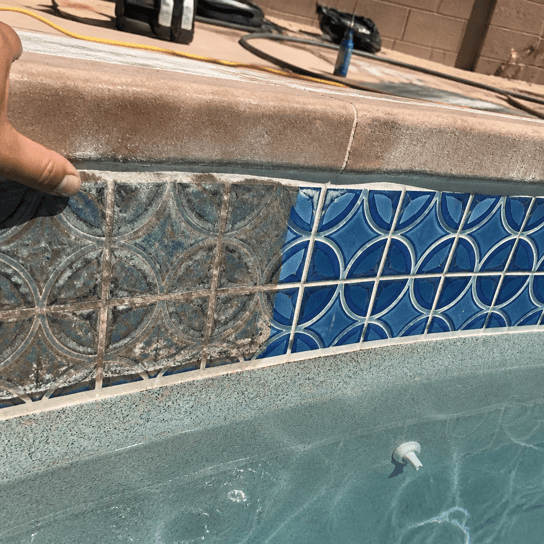
That grey band is calcium, not dirt, and it does not brush off. Hard water leaves it on every pool in this city. Taken off properly the tile underneath is the tile you bought — and retiling turns out not to be necessary.

Licensed, insured and family-owned


Three ways, and they are not interchangeable
Los Angeles water is hard, and the line where water meets air is where the calcium comes out of it. Every pool here grows that band; the only variable is how fast. Salt pools and heated pools grow it faster, and a pool that runs a spa grows it fastest of all.
Cleaning is tried before retiling because it is a fraction of the cost and it usually works. The decision between them is made with a fingernail on the tile, not from a photograph: if the tile is sound and the deposit sits on top of the glaze, it comes off. If the glaze is already etched underneath, cleaning takes the band away and leaves a dull stripe.
Where the tile is loose or the grout has gone, cleaning is money spent twice — the honest answer there is new tile, and often the waterline band alone rather than the whole pool. A resurfacing already planned is the moment to do both together, because the pool is down anyway.
The crew
Four of us. The same faces every week, not whoever was free that morning.


Waterlines we took back
Hollow render and rust cut out, then the whole shell tiled.
Glendale
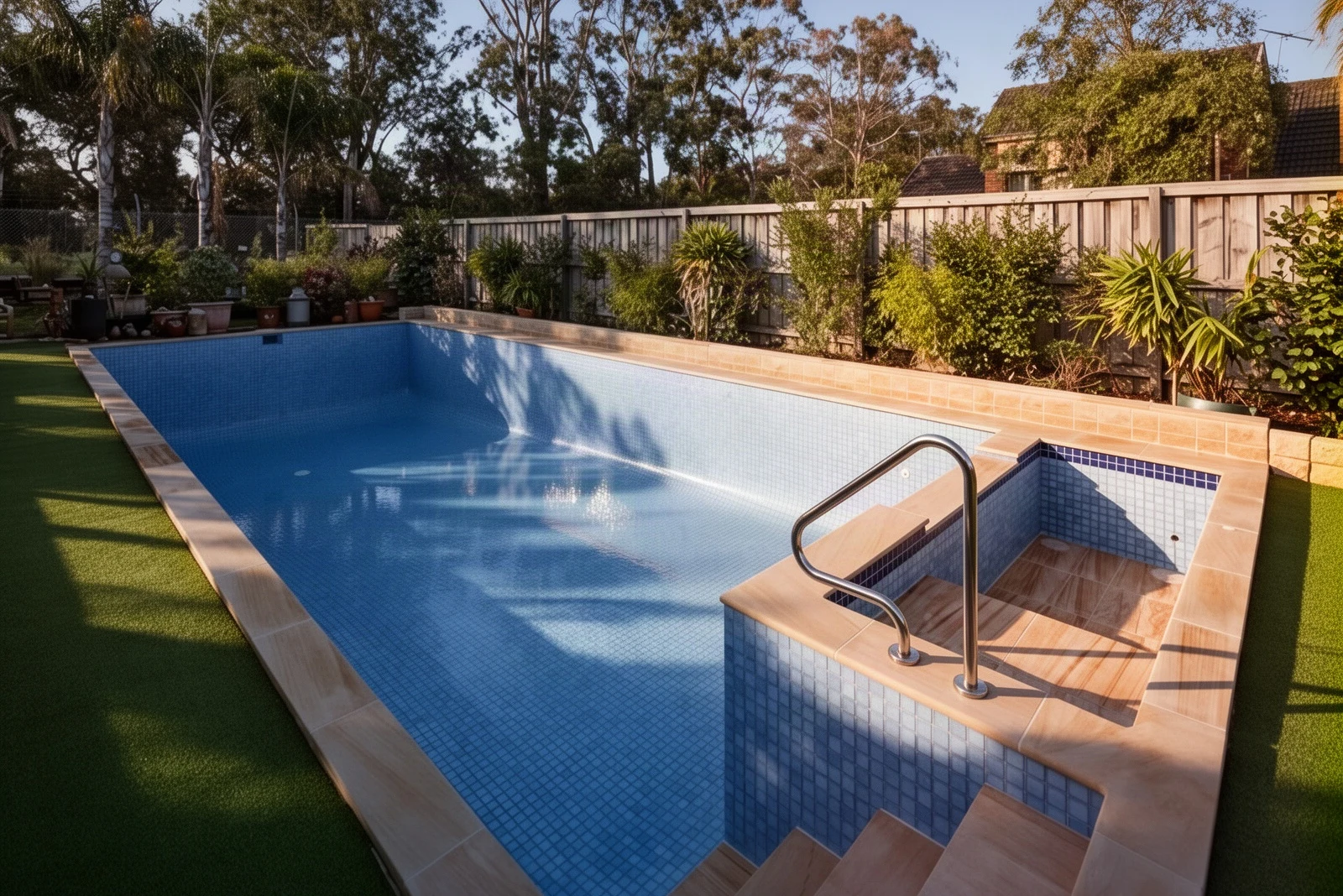
Out of repaints, so retiled, with sandstone paving around it.
Eagle Rock

Grey tile across pool and spa, seen from the air.
La Cañada Flintridge

Collected from customers on the routes we run every week.
Catherine B.Verified review
Local Guide · 29 reviews · 14 photos
24 January 2026

Tom W.Verified review
13 March 2026
Ellen P.Verified review
14 reviews
20 October 2024
Brian N.Verified review
Local Guide · 18 reviews · 5 photos
21 August 2026
Diane F.Verified review
6 reviews · 2 photos
6 January 2025
Mark H.Verified review
Local Guide · 42 reviews · 18 photos
3 September 2025

Linda R.Verified review
4 reviews
25 May 2026
Kevin B.Verified review
15 December 2025
Tell us what the pool needs, how big it is and your ZIP — and a price the same day.
Rewards
$100 for every friend you send us, up to two. No code, no form — they call and mention your name.

$100 credit
For every friend who calls and mentions your name
Up to two referrals, $200 in total. The name must come up on the first call. Spend it on any service.
20% off one-time work
For weekly maintenance members
Green-to-clean, acid wash, plaster start-up and repair labor, plus priority on the schedule.
Where we work
Crews leave from Studio City every morning, across the Foothills and the neighborhoods next to them.
Office · Studio City
Send a close photo of the waterline and tell us what the tile is — glass, porcelain or stone.
4121 Radford Ave, Ste. #214, Studio City, CA 91604Related pages.

When cleaning is not the answer: new waterline tile, or a fully tiled interior.


From the truck
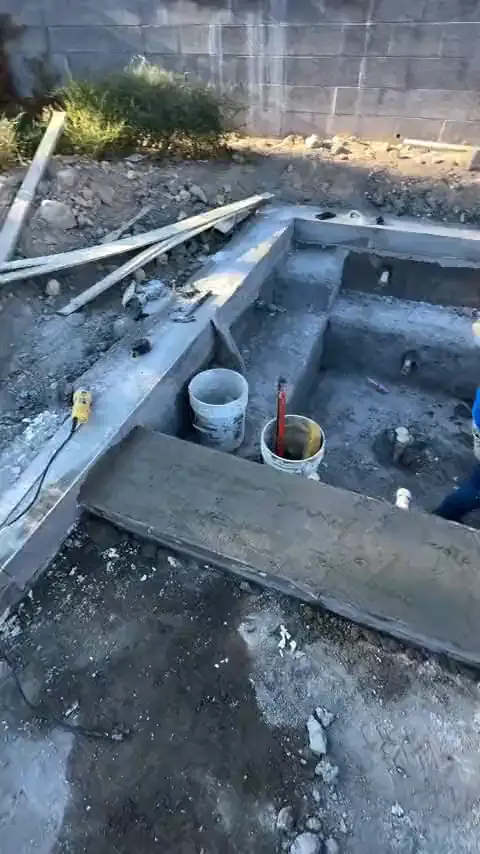
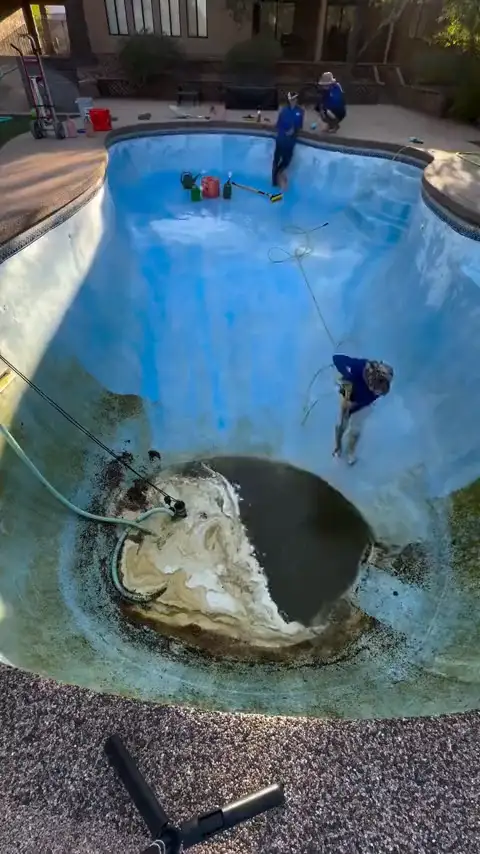
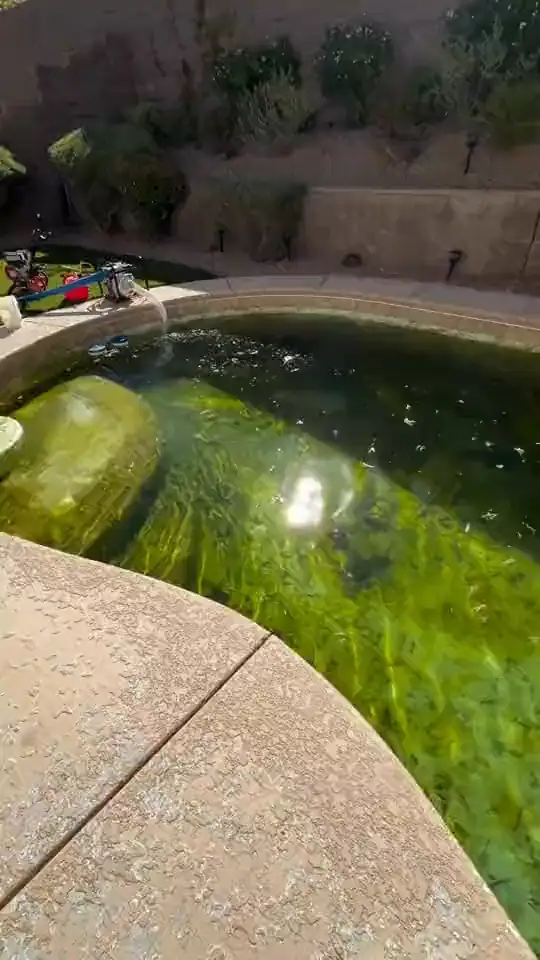
Nothing staged, nothing bought from a stock library — the same work, filmed while it happened.

Calcium carbonate, left behind where the water meets the air. It is the same deposit that furs a kettle, and hard Los Angeles water grows it on every pool in the city. It is not dirt and it is not algae, which is why brushing and chlorine do nothing to it.
A light film, yes: a pumice block sold for pools and a tile cleaner, working wet, a foot at a time. Keep the block wet or it scratches. What you should not reach for is a wire brush or neat acid — the brush marks the glaze and the acid attacks the grout before it touches the calcium, and both make the next band stick harder than the one you removed.
Soft media fired at low pressure at the deposit: it breaks the calcium off and stops at the glaze, which is harder. Done properly it takes nothing off the tile. Done with the wrong media or too much pressure it hazes glass and chips old ceramic, which is why the media is chosen after looking at the tile rather than before.
Across the city it is usually quoted by the linear foot — around $8 to $12 a foot, most companies with a minimum of about $1,000, and the average pool landing near $750. Published ranges run from $400 for a short waterline to well past $1,200 where the band has built for a decade. What moves it is length and thickness, not the postcode, and we quote it after seeing a photo of the tile rather than over the phone.
By a long way, and that is the reason to try it first. Retiling a waterline means chipping the old band off, preparing the substrate and setting new tile with the pool down; cleaning is a day with the water still in it. Retiling is the right answer when the tile is loose, the grout has failed, or the glaze underneath is already etched — and that is a decision made by hand on the tile.
A year or two on a pool held at sensible chemistry, sooner on a salt pool, sooner still on one that runs a spa. Calcium hardness and pH are what decide it, which is the unglamorous case for weekly service: water held in range grows the band slowly enough that cleaning is occasional rather than annual.
Two different schedules, and mixing them up is what lets a band build. The waterline gets brushed every week with the service, which keeps a film from setting. The calcium clean itself is every year or two on most pools here, sooner on salt and heated ones. The test is a fingernail: if it catches on the deposit, brushing has stopped working and it is a job for media. Waiting longer is not a saving — a thicker band takes longer to blast, and past a point it etches the glaze underneath and cleaning no longer gives the tile back.
No. The water is dropped a few inches below the tile band, the band is cleaned, and the pool is topped back up the same day; a light film is done with the pool still full. An empty pool in wet ground is a risk in itself, and there is no reason to take it for a waterline job. Draining only enters the picture when the tile is being replaced or the interior is being resurfaced at the same time.
Different deposit, different job. Deck and coping tile collects sunscreen and body oils, an algae film in the shaded corners, and on travertine and cast concrete the white bloom of efflorescence pushing out from underneath. It comes off with a pH-neutral masonry cleaner, a stiff brush and a low-pressure rinse. What ruins it is neat acid and a 3,000 psi tip: both open the surface up so it stains faster the next time. Ask for it alongside the waterline clean rather than as its own visit — the equipment is already there.
Cleaning, recovery, repair and renovation across Los Angeles.
Family owned, based in Studio City
How thick the band is and what the tile is made of — enough to say whether it cleans or needs replacing.