

Water
Pool borates: what they do
Boric acid or borax, how many pounds for 30–50 ppm, how to add it and when borates aren't worth it.
Article
Most hot tubs in LA backyards are spas built onto the pool, sharing its pump, filter and water. Those need less than the guides suggest. A stand-alone acrylic tub is a different job: a few hundred gallons at 102°F, sanitizer after every soak, a filter rinse every week or two and fresh water every few months.
Search for hot tub care and you get checklists written for a portable tub on a deck in Ohio. Some of that applies here and some doesn't. Start by working out which kind you own.
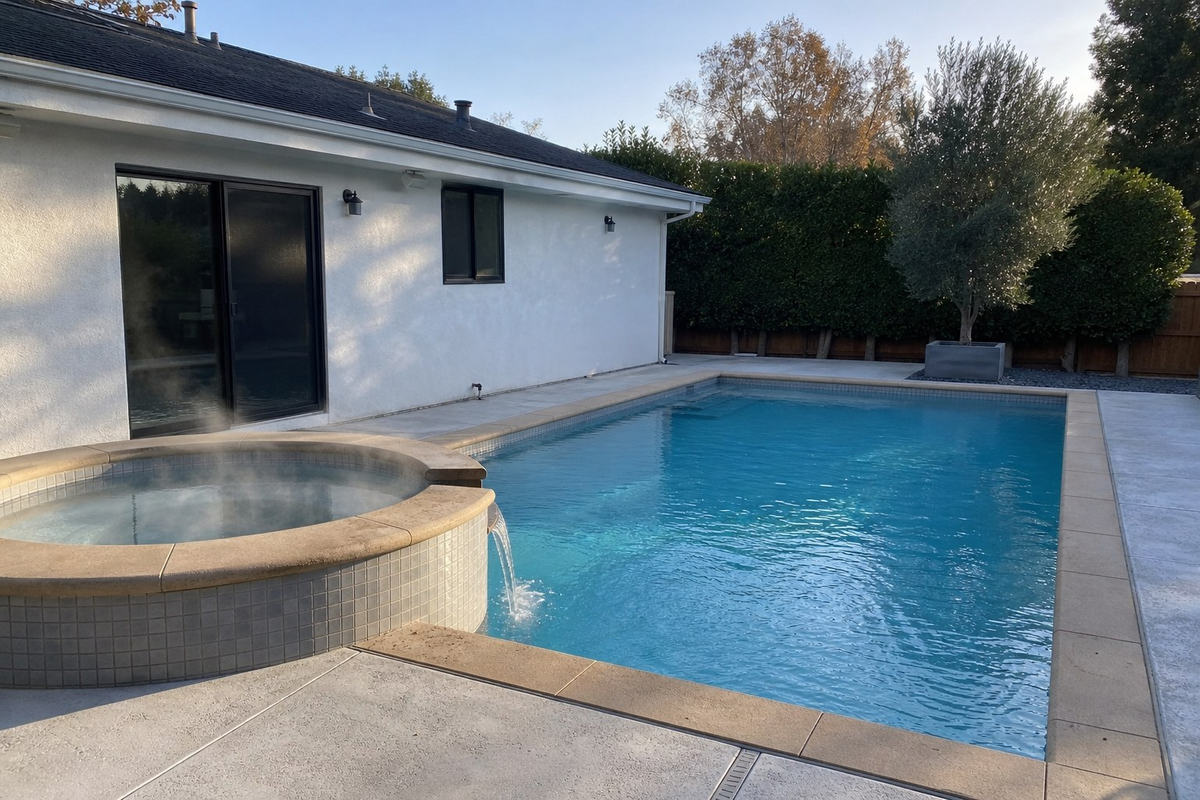
An attached spa is the round or square basin raised at one end of a plaster pool, with water spilling over its edge or out of a spout. A valve switches the equipment between pool mode and spa mode. In spa mode the pump pulls from the spa, the heater lifts it to soaking temperature and the jets run; in pool mode the spa simply becomes part of the pool. Same filter, same chlorine, same water.
A stand-alone hot tub is a molded shell with its own pump, heater, small cartridge filter and insulated cover. It holds roughly 300 to 500 gallons and nothing connects it to the pool. Everything below applies to it in full. For an attached spa, the chemistry section and the cleaning section matter; the filter and drain sections mostly don't, because those jobs belong to the pool.
Bromine is a good sanitizer for a covered tub. Keep it out of an attached spa: once it spills into an outdoor pool, sunlight burns it off and stabilizer can't protect it the way it protects chlorine, so the pool loses sanitizer every afternoon. Stick with chlorine wherever the spa shares water with the pool.
Four adults in 400 gallons is the same crowding as forty people in a 4,000-gallon pool. Sweat, sunscreen, body lotion and the soap left in swimsuits all go into the water at once, and at 102°F chlorine reacts with them fast. A tub that read 4 ppm before a Saturday evening soak can read close to zero by Sunday morning. That's normal, and it's why spa sanitizer goes in after each use, not on a weekly schedule.
For a stand-alone tub, use dichlor granules dosed by the label for your gallons, with the jets running and the cover open for twenty minutes. Skip trichlor tablets: in a few hundred gallons they push pH down and stack up stabilizer within weeks. For an attached spa, switch back to pool mode after the soak so the spillover mixes spa water into the whole pool, then test the pool the next day. If chlorine runs low every Monday after a weekend of spa use, the pool needs a bigger dose on Sunday night, and the liquid chlorine guide has the amounts per gallon.
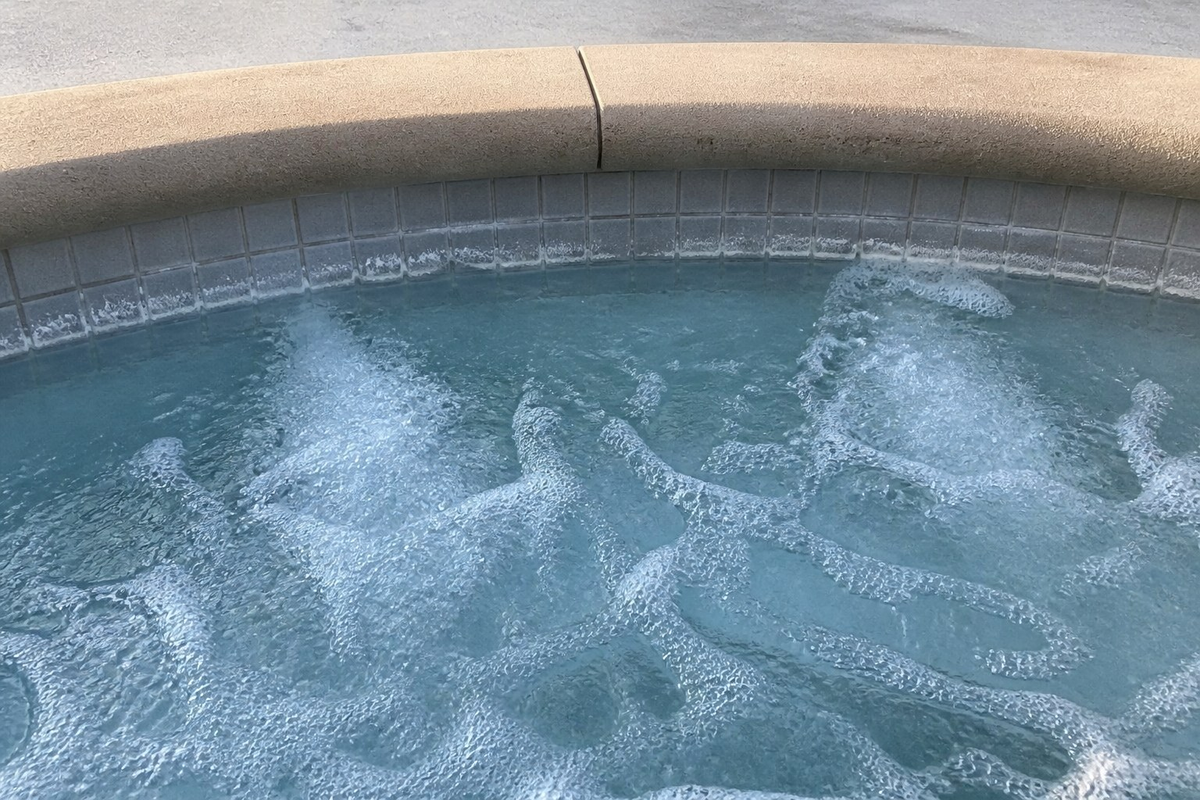
Once a week, a stand-alone tub also gets an oxidizer shock: a non-chlorine product, or a bigger dichlor dose, after the last soak of the week. Keep the cover on between uses. It holds heat and keeps out leaves and the dust that blows in during Santa Ana weeks.
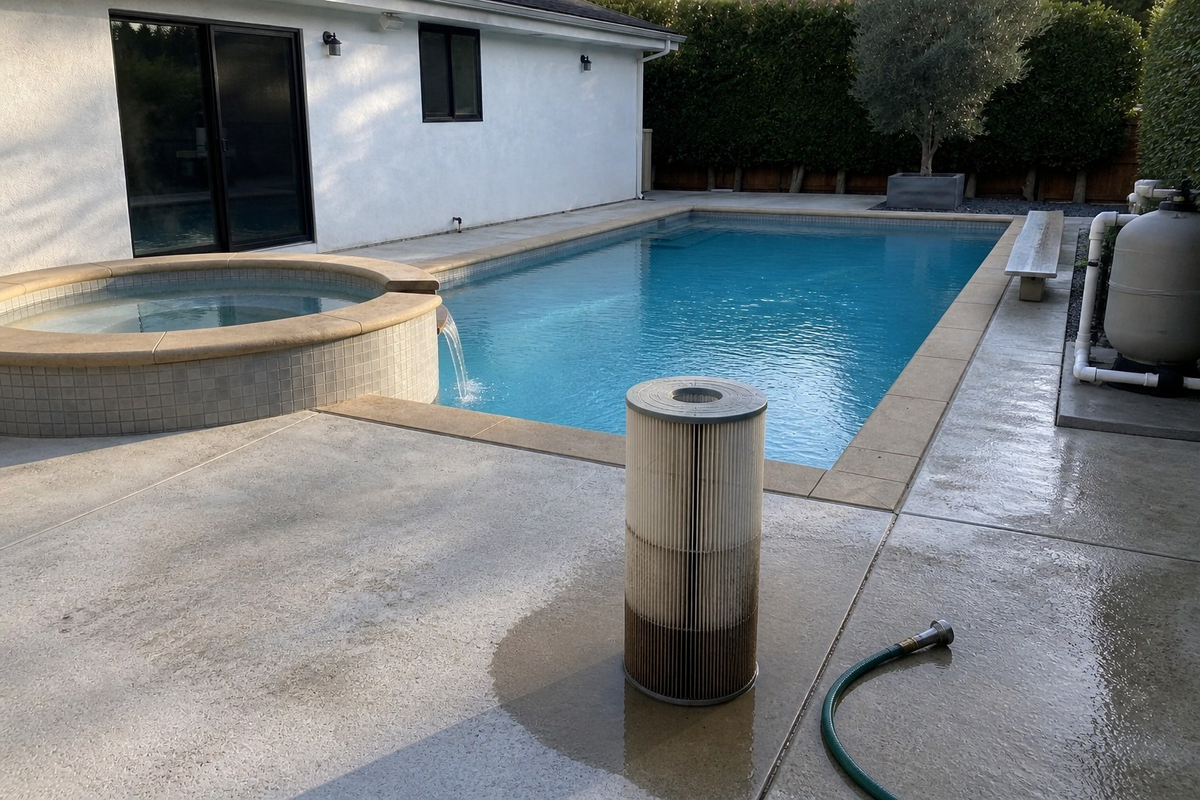
A stand-alone tub's cartridge is small and works hard. Rinse it every one to two weeks: power off, lift it out, and spray between the pleats with a garden hose from top to bottom at an angle. A pressure washer tears the fabric. Every one to three months, soak it overnight in a cartridge cleaner to strip the oils a hose leaves behind, rinse it well and let it dry before it goes back. Most cartridges last one to two years. Two spare cartridges in rotation mean one is always dry and clean.
Home remedies come up a lot. Dish soap is a bad one: whatever stays in the pleats comes back as foam. A diluted white vinegar soak loosens the calcium scale that LA tap water leaves on pleats; rinse it out completely afterwards.
An attached spa has no filter of its own. It runs through the pool's filter, so cleaning that filter is the spa's filter care too. That job, with prices by filter type, is on our filter cleaning page.
Sanitizer can't remove what dissolves into the water and stays there: minerals, leftover chemical salts, traces of soap. In a hot tub those build up quickly, and in LA they start higher, because evaporation at 102°F takes water and leaves the hard tap water's calcium behind. Once the level is high enough, chemicals stop holding and the water turns dull or foamy whatever you add.
The industry rule of thumb is gallons divided by three, divided by the number of people who use the tub on an average day. A 450-gallon tub used by two people a day works out to 75 days, about every two and a half months. A tub used once a week lasts closer to four months. Before draining, run a jet line flush through the water for the time the label gives; it lifts the film inside the plumbing that otherwise reseeds the fresh fill.
The water goes where pool water goes: into the sewer clean-out on your property, never the street or the gutter. Our pool draining guide explains why. An attached spa is never drained on its own; its water changes when the pool's does.
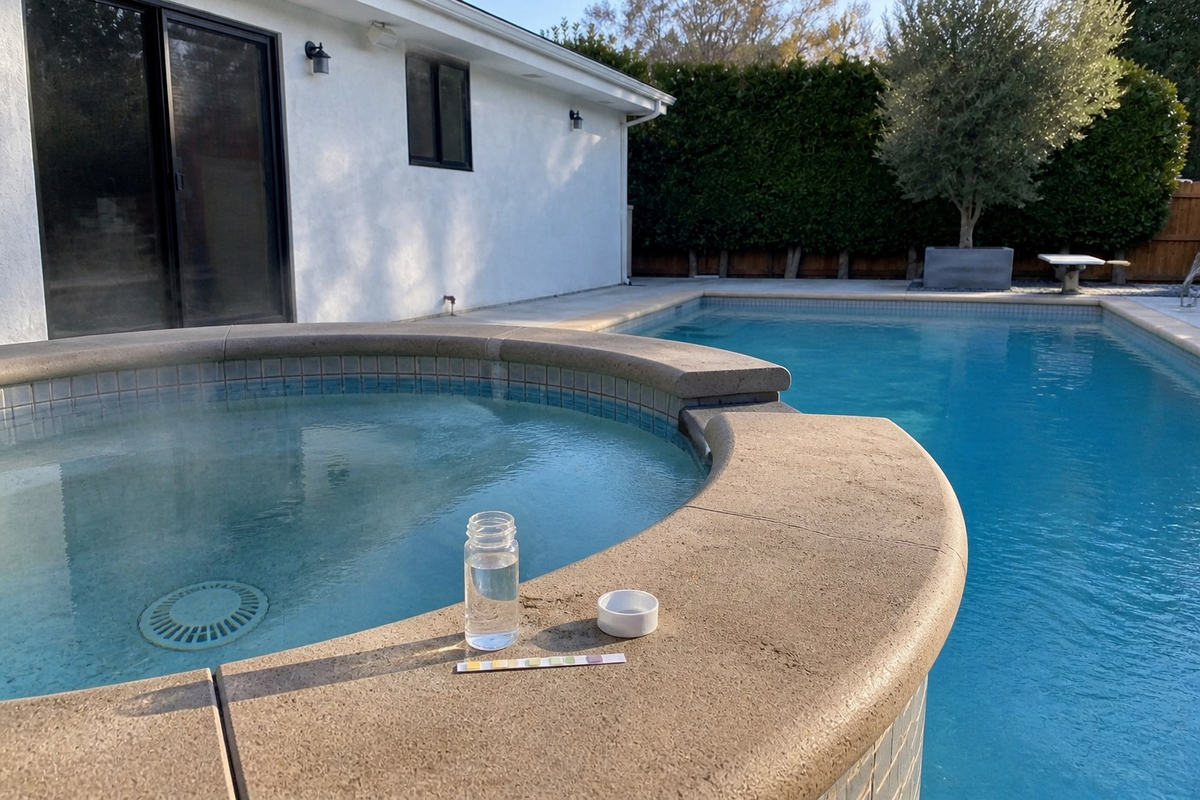
Foam comes from what people bring in: lotion, hair products and detergent left in swimsuits. Anti-foam drops knock it down for an evening and change nothing. Rinse off before getting in and rinse swimsuits in plain water after washing them. If foam returns days after a fresh fill, check calcium, since very soft water foams more easily.
Cloudy water points to low sanitizer, a dirty filter or high pH, in that order of likelihood. Fix sanitizer and pH, rinse the filter, and give it a day with the pump running. Water that stays cloudy after that has reached the drain-and-refill point. A pool that turns cloudy along with its spa is a pool problem, covered in our cloudy pool water article.
Guides and answers in our November 2026 search put professional hot tub service at about $1,200 to $2,400 a year, and one answer quoted around $75 a visit in Virginia. Those are other companies' figures, not ours, and they move with location and how often someone comes.
Ours: weekly service starts at $159 a month with chemicals included. A spa on the same property as the pool adds $35 a month; a large spa with its own equipment or circulation adds $45 to $60. Two deep filter cleans a year are included. The full table is on the price list. A spa that heats slowly or not at all is a separate job for heater repair. Not sure what your spa needs? Tell us what the water is doing or call (818) 740-6099. Standard diagnosis is free inside our service area.
Testing and sanitizer two or three times a week and after heavy use, a filter rinse every one to two weeks, a deep filter soak every one to three months, and a drain and refill every two to four months for a stand-alone tub. An attached spa is serviced with the pool on its weekly visit.
Rinse a stand-alone tub's cartridge with a garden hose every one to two weeks and soak it in cartridge cleaner every one to three months. Replace it every one to two years, or sooner if the pleats tear or stay stiff after cleaning. An attached spa uses the pool's filter.
The fuzz soaks up some of the body oil and lotion floating on the surface. It helps a little in a small tub and costs almost nothing, but it doesn't replace sanitizer or filter cleaning. Swap it out once it looks grey.
Run a jet line flush, drain the tub, wipe the shell with a non-foaming spa surface cleaner, rinse and clean the filter, then refill through the filter housing and balance pH before adding sanitizer. Between drains, wipe the waterline weekly and keep the cover on.
Guides in our November 2026 search put electricity at roughly $15 to $50 a month for a well-insulated tub with a good cover. Those are other companies' estimates, not ours. A worn cover, a tub kept at 104°F and evening rates push it higher.
Tell us whether the spa is attached to the pool or stand-alone, how many people use it in a week, what chlorine and pH read after a soak, and whether it foams. We will tell you what to change. Or call (818) 740-6099
Written for Foothill and Valley homeowners.
Boric acid or borax, how many pounds for 30–50 ppm, how to add it and when borates aren't worth it.
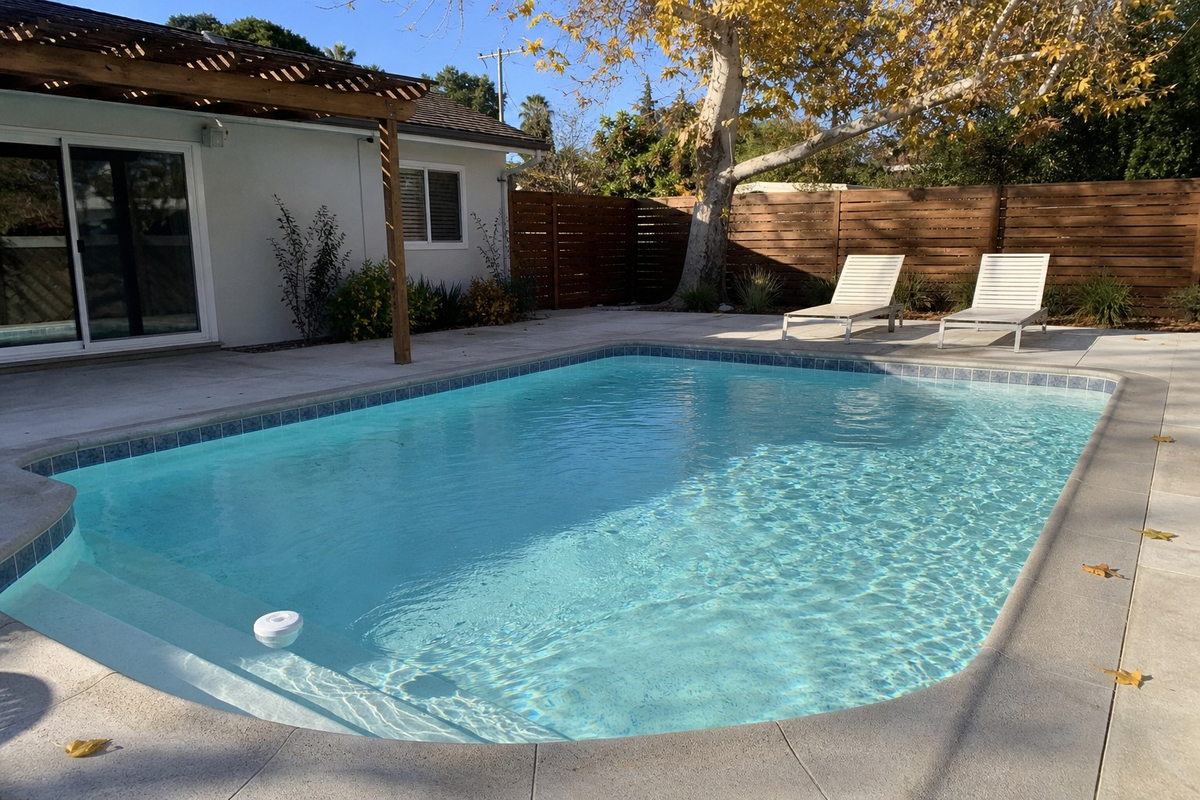
Why the reading climbs in autumn, why a test lies above 10 ppm, and how to bring it down with sun, neutralizer or a partial drain.
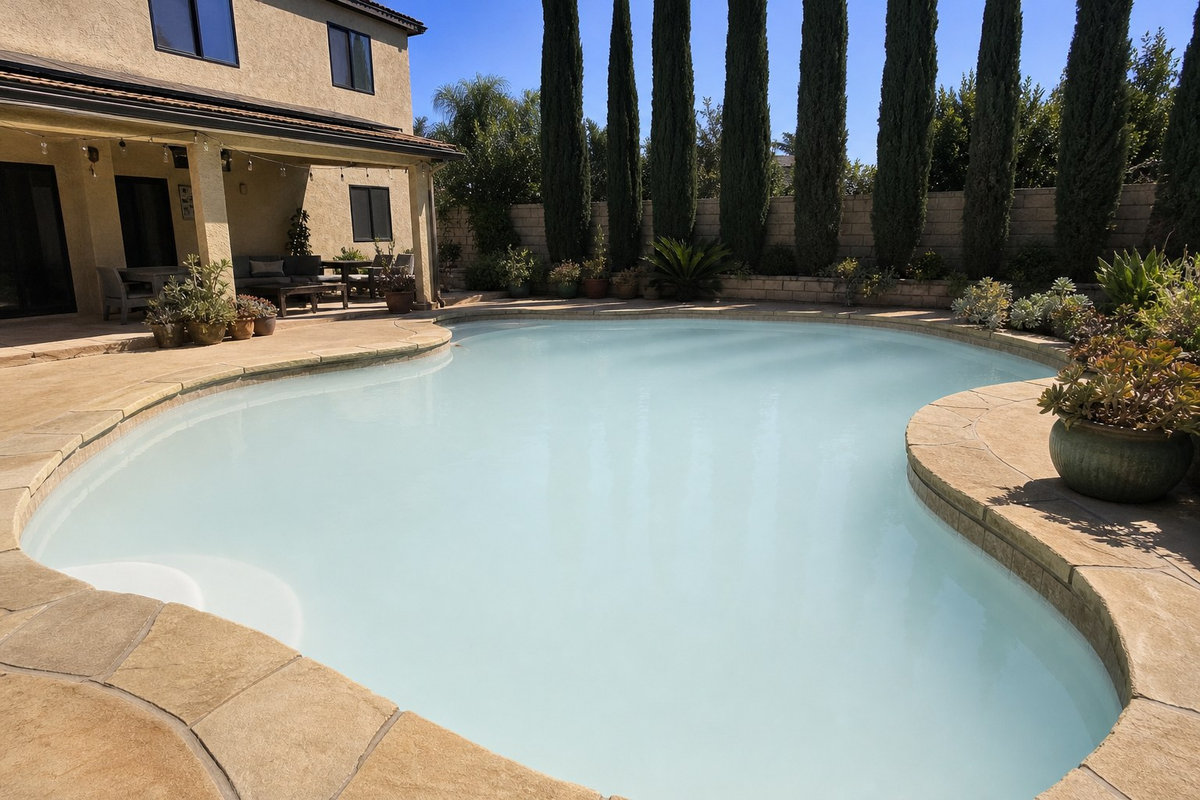
Which product fits a cartridge, sand or DE filter, how to floc and vacuum to waste, and why extra clarifier makes water cloudier.
Los Angeles and the Valley
Our weekly visits test and balance the pool and the spa together, brush the spa walls and tile line along with the pool's, and look over the equipment both share. Standard diagnosis is free in our service area.