

Water
Hot tub maintenance in LA
Attached spa or stand-alone tub, spa water numbers, why chlorine vanishes after a soak, filter rinses and when to drain.
Article
Stop the source first, then pick a speed. Sun and time bring a few extra ppm down for free by the next day. A neutralizer does it within an hour but overshoots easily. Draining is the last resort, because the water you send out has to be dechlorinated anyway.
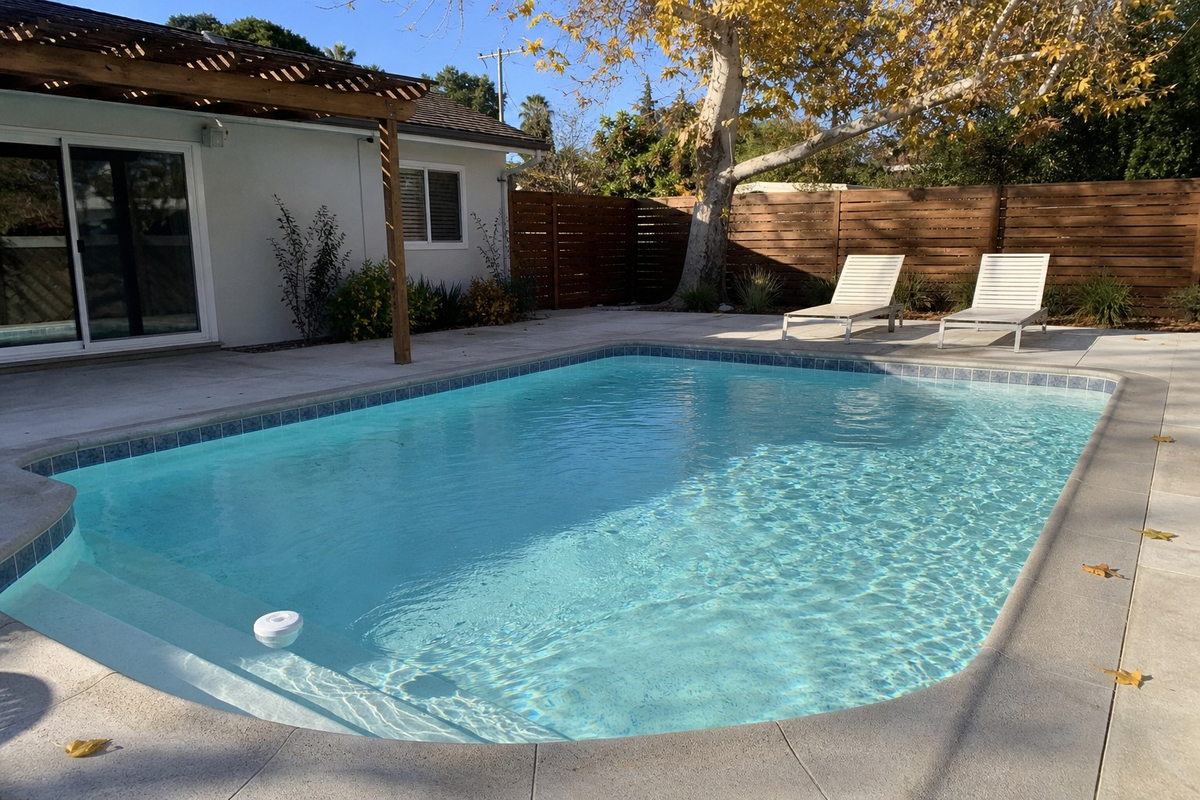
High chlorine creeps up in November. The floater got loaded with tablets in August, the salt cell is still on its summer setting, and nobody changed anything. But the water has cooled, the sun drops behind the trees by mid-afternoon, and chlorine that used to burn off by evening now stays. A pool that held 3 ppm all summer can test at 7 without a single new dose.
The target is 1 to 3 ppm free chlorine, a little higher if your stabilizer is high; the full set of numbers is on our pool chemistry page. Up to about 5, nothing is urgent. Stinging eyes, a swimsuit fading by August and a chlorine smell are a different story: the smell usually means chlorine is used up, not too high, and our guide to shocking a pool explains the combined chlorine behind it.
Test strips stop at 10 ppm, so a strip at full colour only tells you the chlorine is somewhere above that. Drop kits have their own trap. Well past 10 ppm, chlorine bleaches the pink DPD reagent: the sample flashes pink and goes clear in seconds, and a clear vial reads as zero. People then add more chlorine to a pool that already has too much.
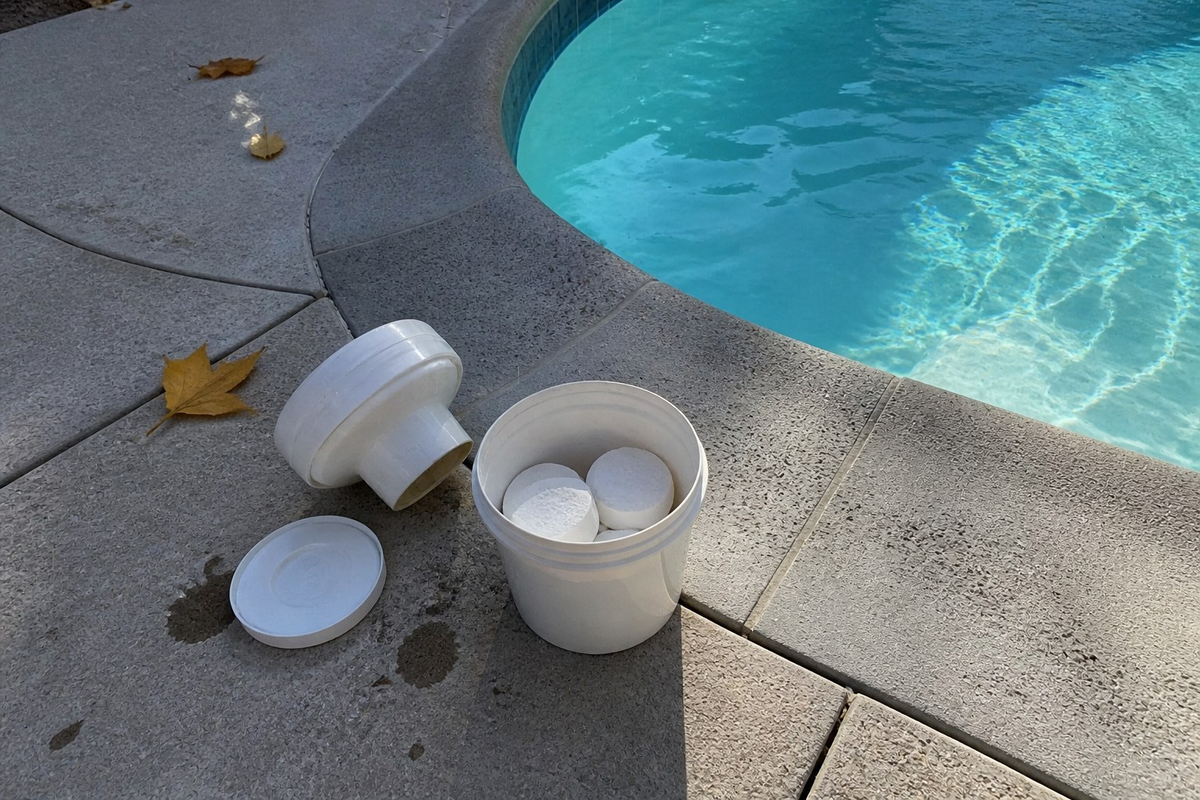
If the colour fades as you watch, mix the pool sample half and half with distilled water, test that, and double the result. Take the sample at elbow depth, away from the return jets and away from the floater. A floater parked in the corner by the steps can make that end read twice the rest of the pool.
Whatever else you do, the reading won't stay down while something keeps feeding it. Find every source and shut it off.
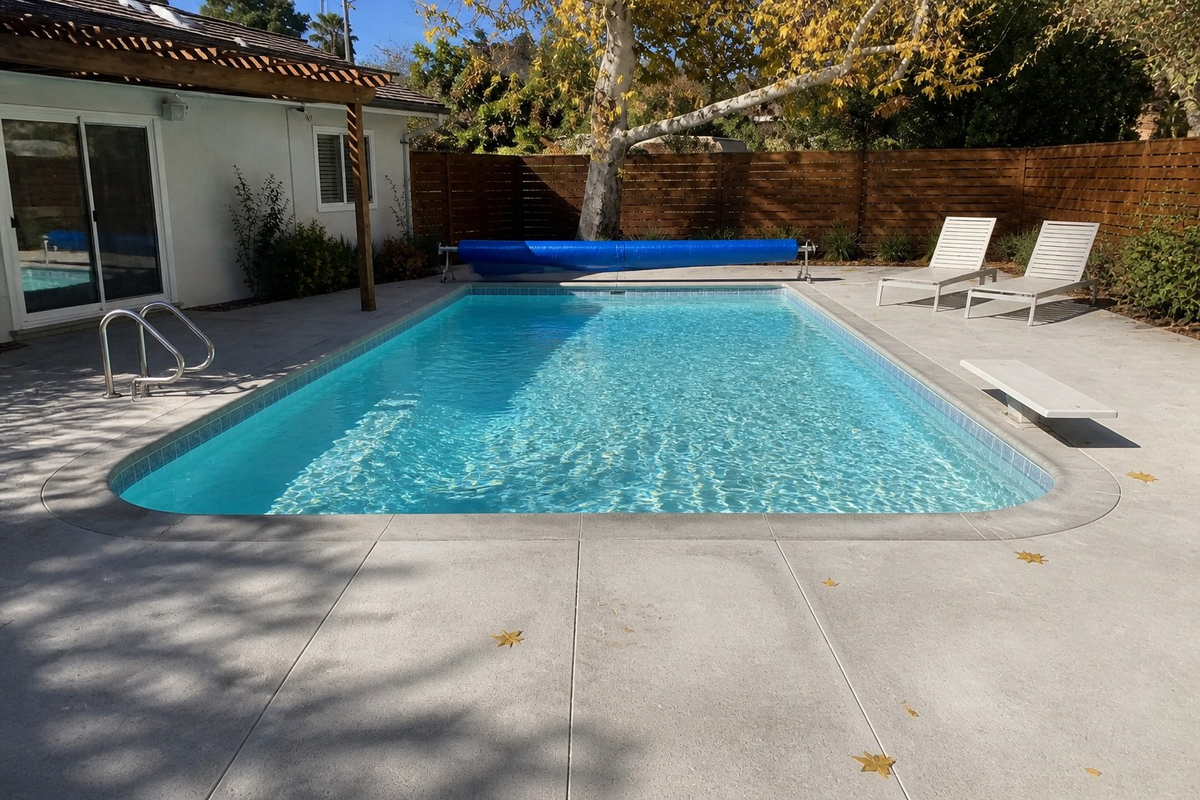
Sunlight breaks chlorine down, and it costs nothing. Roll back the solar cover, run the pump on its usual schedule, and test the next afternoon. After a routine shock at dusk, a pool with stabilizer at 30 to 40 ppm is usually back to 1 to 3 ppm the next afternoon; that is the sun doing the work. In late November the days are shorter and the light weaker, so give it two or three sunny days instead of one.
Stabilizer slows this down, because shielding chlorine from the sun is exactly its job. If yours is above 80 ppm from a summer of tablets, the sun barely moves the reading, and the high stabilizer is the bigger problem; the stabilizer guide covers bringing it down. Swimming, leaves and warm water use chlorine too, so a few days of normal use help a little.
A party tomorrow, or a reading above 10 with kids who want to swim: that is when a neutralizer earns its price. Pool stores sell sodium thiosulfate granules for this, and they work within an hour of circulation.
Aim to land at 3 to 4 ppm rather than exactly 1. If you hit zero, the next chlorine you add disappears into the leftover neutralizer, and the pool sits unprotected while you chase it. Thiosulfate can also nudge pH down a little, so bring it back to 7.4 to 7.6 if the test says so.
Dilution works in simple proportion: replace a quarter of the water and the reading falls by a quarter. On the same 17,000 gallon pool, a quarter is about 4,250 gallons, roughly 15 inches off the top, which is around 5.7 HCF (748 gallons each) on an LADWP bill before the sewer share.
The catch is where that water goes. It is the most chlorinated water you have, it can't go to the gutter, and our draining guide has you dechlorinate before anything goes into the sewer clean-out. So you would neutralize it anyway. Draining earns its place when something else is high too: stabilizer above 100, or salt far over the cell's range, where new water is the only fix.
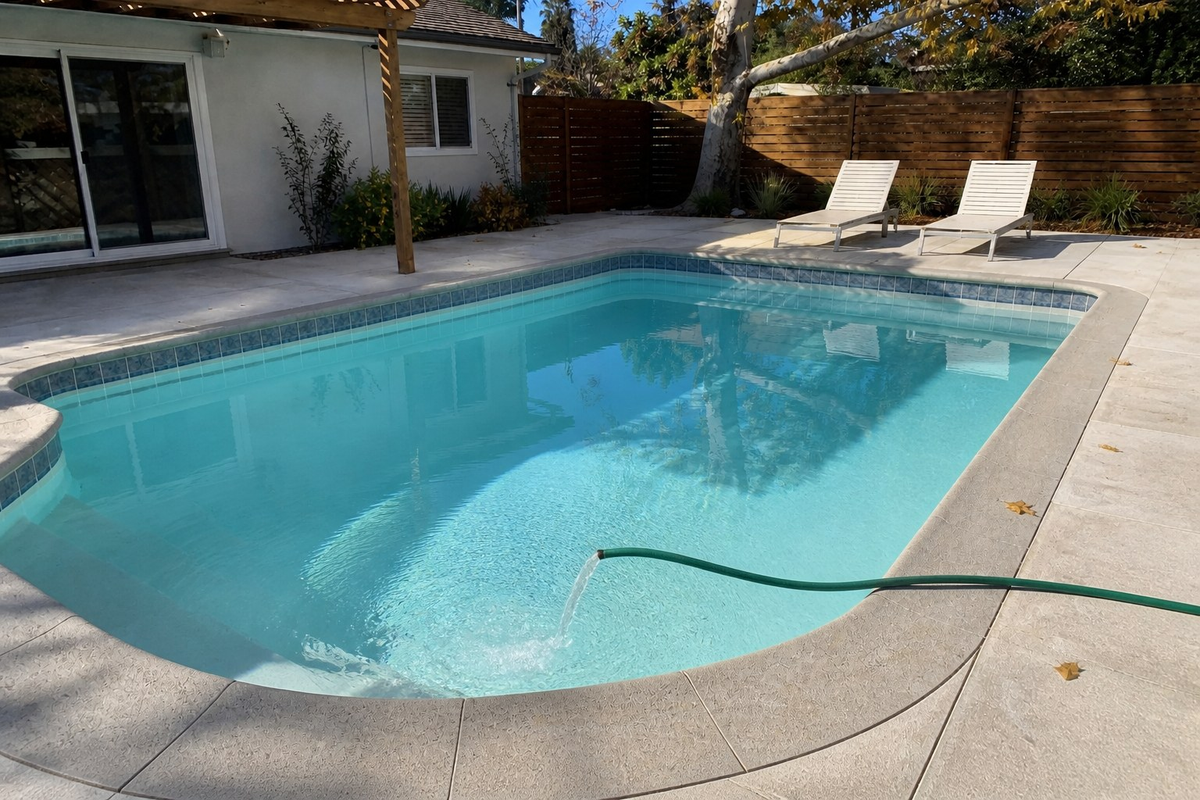
Back in 1 to 3 ppm, or a little above it with high stabilizer, is normal swimming water. Between 5 and 10, eyes sting sooner and swimsuits fade faster, so wait a day if you can. Above 10, stay out: the CDC's model code for public pools caps free chlorine at 10 ppm.
Retail prices listed in search results in November 2026, not ours: a tub of 90% sodium thiosulfate at $29.76, 5 pound containers at $33.19 each in a pack of eight, and $42.99 for a single 5 pound container elsewhere. A household dose is a few ounces, so one container lasts years. Sun and time cost nothing, and a partial drain costs water and a day.
A reading drifts high when the season changes and the dose stays put. Our weekly visits look at the floater, the feeder and the salt cell percentage every time, and the plan starts at $159 a month, standard chemicals included; pool sizes and add-ons are on the price list. Want a second opinion on a reading? Send your numbers and a photo of the test or call (818) 740-6099. Standard diagnosis is free inside our service area.
Free chlorine of 1–3 ppm is the normal range, a little higher if stabilizer is high. Above 5 eyes and swimsuits start to notice. Above 10 ppm stay out of the water: that is the cap the CDC's model code sets for public pools.
With the source shut off and the cover open, a few extra ppm usually burn off by the next afternoon in summer, and over two or three sunny days in November. A neutralizer works within an hour of circulation. High stabilizer slows the sun method down a lot.
No. Baking soda raises alkalinity and pH. Higher pH makes chlorine act more slowly, but the reading stays where it was, and the water ends up with high pH as a second problem.
No. A chlorine shock raises it: one pound of 65% cal-hypo adds about 8 ppm to 10,000 gallons. Non-chlorine shock adds no chlorine, so it won't push the reading higher, but it isn't a way to bring it down.
Sodium thiosulfate, sold in pool stores as chlorine neutralizer. Add half the label dose with the pump running, wait an hour and retest. Overdosing leaves leftover neutralizer that eats the next chlorine you add.
Send us your free chlorine, pH and stabilizer readings, how the pool is chlorinated and a photo of the test. We will say whether to wait, neutralize or check the feeder or salt cell. Or call (818) 740-6099
Written for Foothill and Valley homeowners.
Attached spa or stand-alone tub, spa water numbers, why chlorine vanishes after a soak, filter rinses and when to drain.
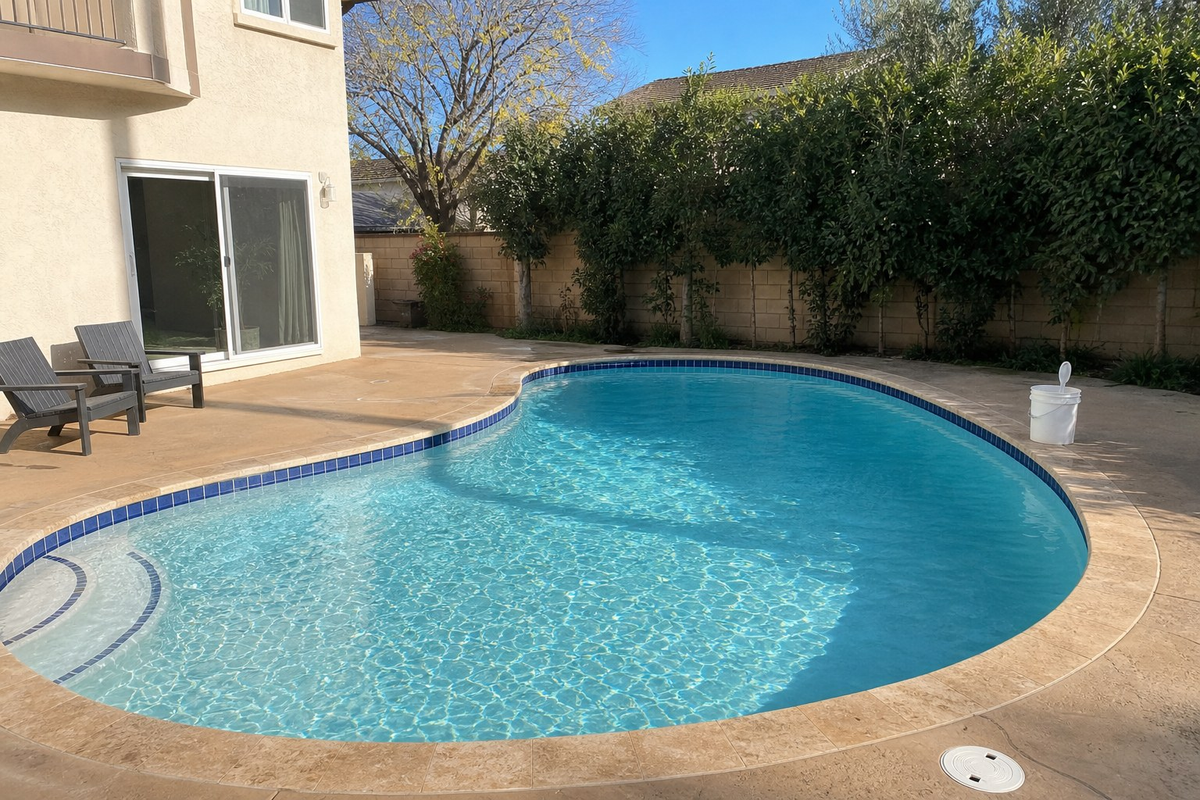
Boric acid or borax, how many pounds for 30–50 ppm, how to add it and when borates aren't worth it.
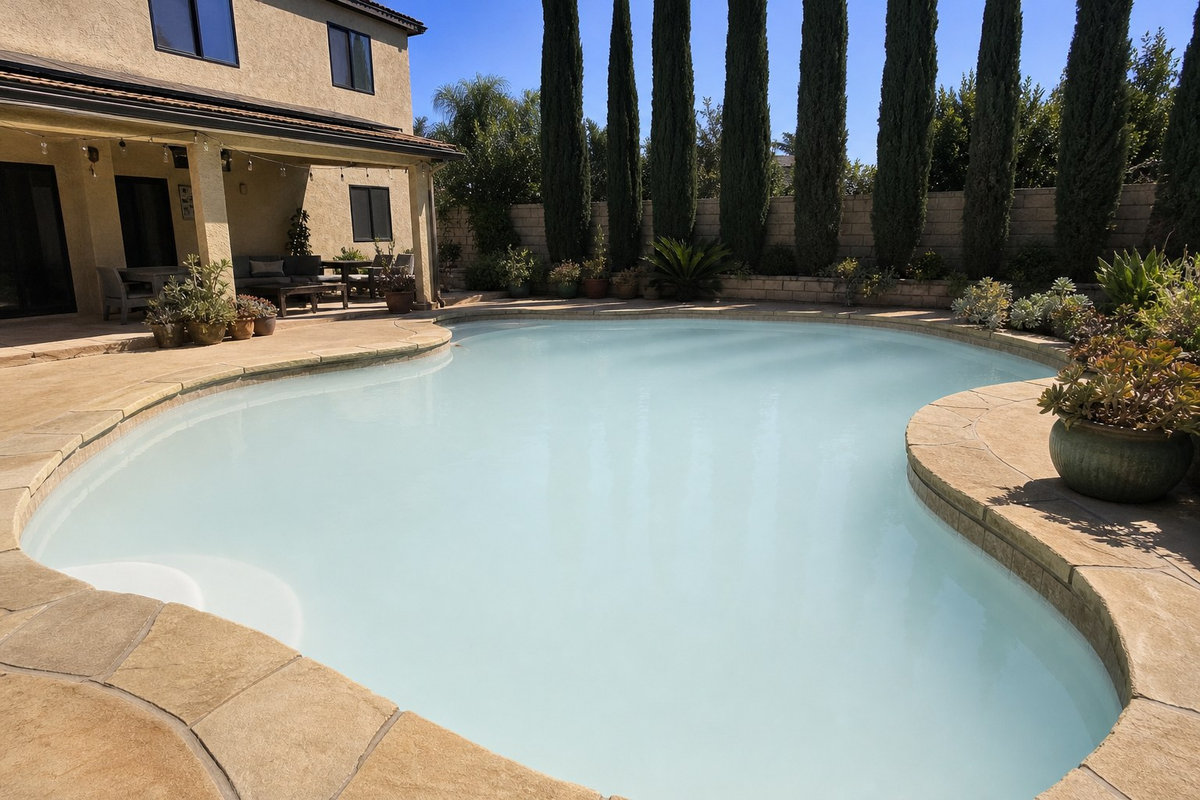
Which product fits a cartridge, sand or DE filter, how to floc and vacuum to waste, and why extra clarifier makes water cloudier.
Los Angeles and the Valley
Our weekly visits test the water, set the feeder or salt cell for the season and adjust the dose before it drifts. Standard diagnosis is free in our service area.