

Water
Hot tub maintenance in LA
Attached spa or stand-alone tub, spa water numbers, why chlorine vanishes after a soak, filter rinses and when to drain.
Article
Both products clump the fine particles that make pool water milky. Floc makes the clumps heavy enough to sink overnight, and you vacuum them out of the pool. Clarifier makes them just big enough for your filter to catch over a few days. Which one you can use depends mostly on the filter you have.
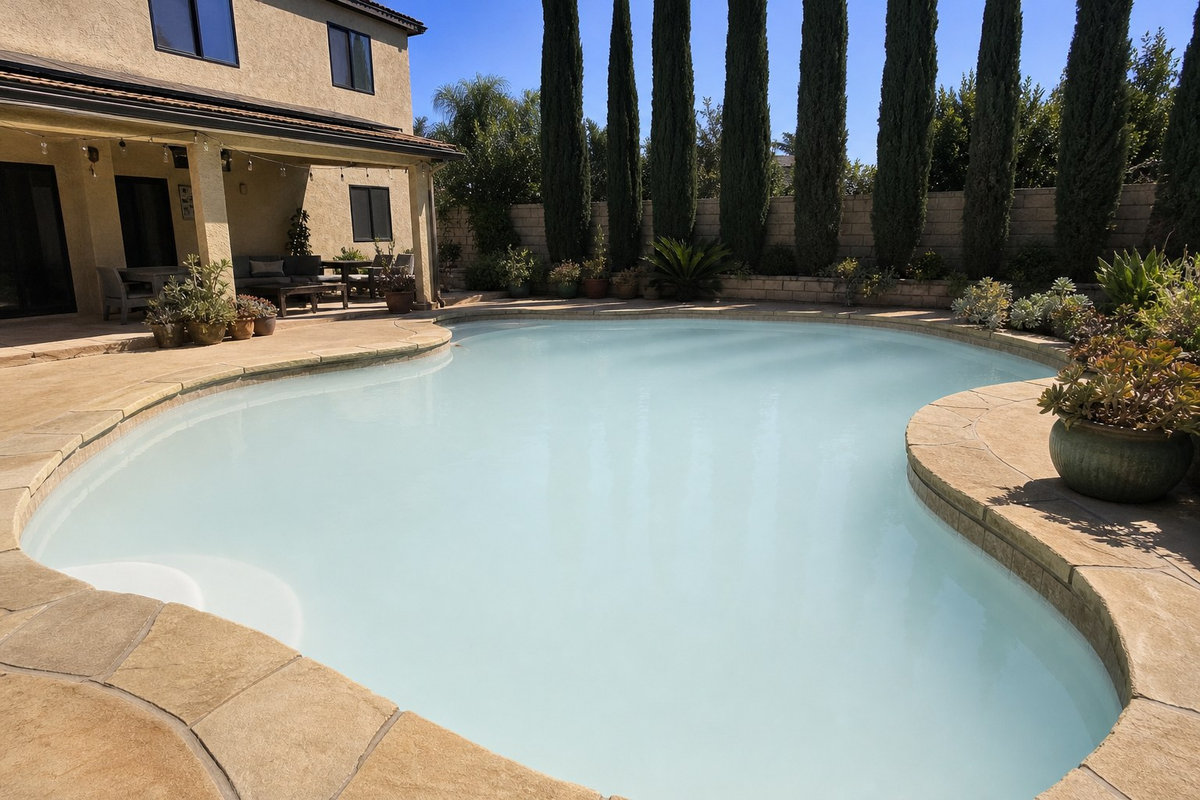
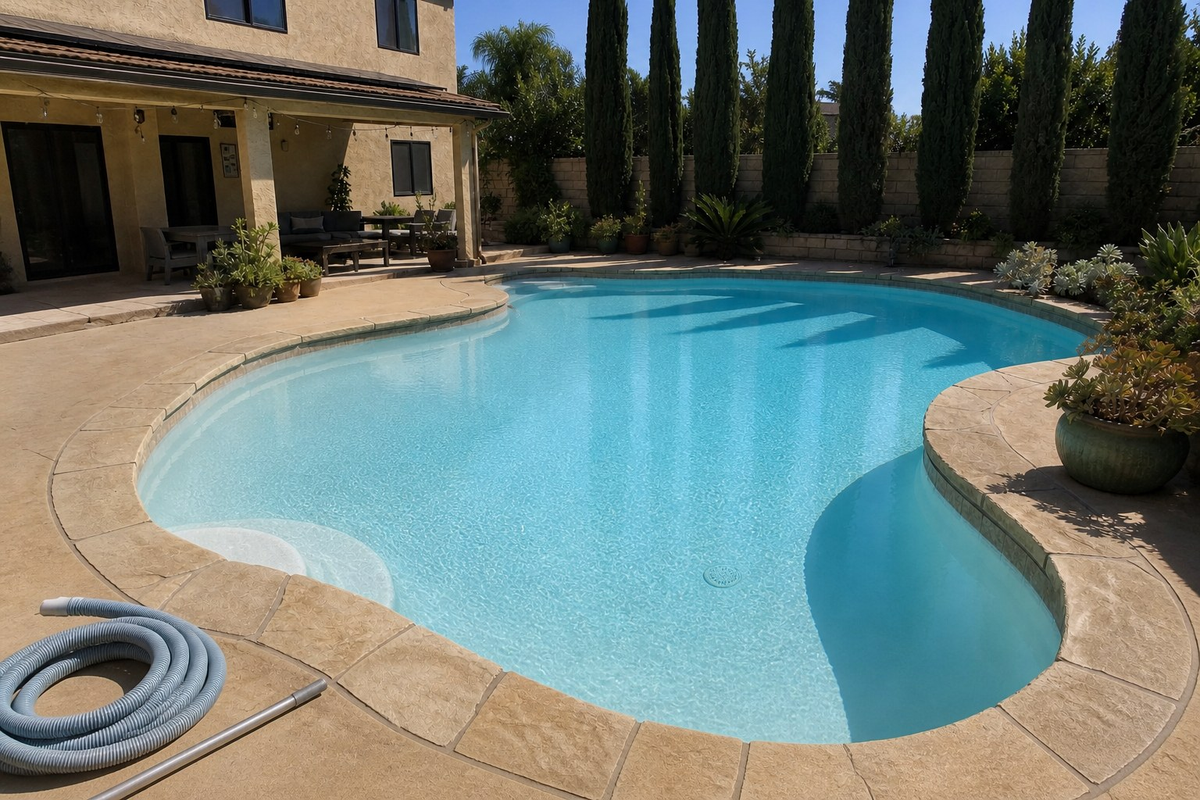
A dry Santa Ana week leaves a film of dust on every patio in Tarzana, and a good part of it ends up in the pool. Then the first November rain washes the rest in. The water turns the colour of diluted milk, the floor disappears, and the pool store sells you a bottle.
Before you open it, check chlorine, pH and the filter pressure. Haze is a symptom, and our guide to cloudy water sorts out which cause you have. With free chlorine near zero, a floc will drop the haze, and the algae that made it will be back within a week. Fix the chlorine first, using the targets on our pool chemistry page, then decide whether the leftover cloud needs help.
The particles behind milky water are tiny, far smaller than the gaps in sand and small enough to slip through a cartridge. They also carry the same electric charge, so they push each other apart and stay suspended for weeks.
So floc is fast and costs you water and an hour of slow vacuuming. Clarifier costs nothing but time and a dirtier filter at the end.
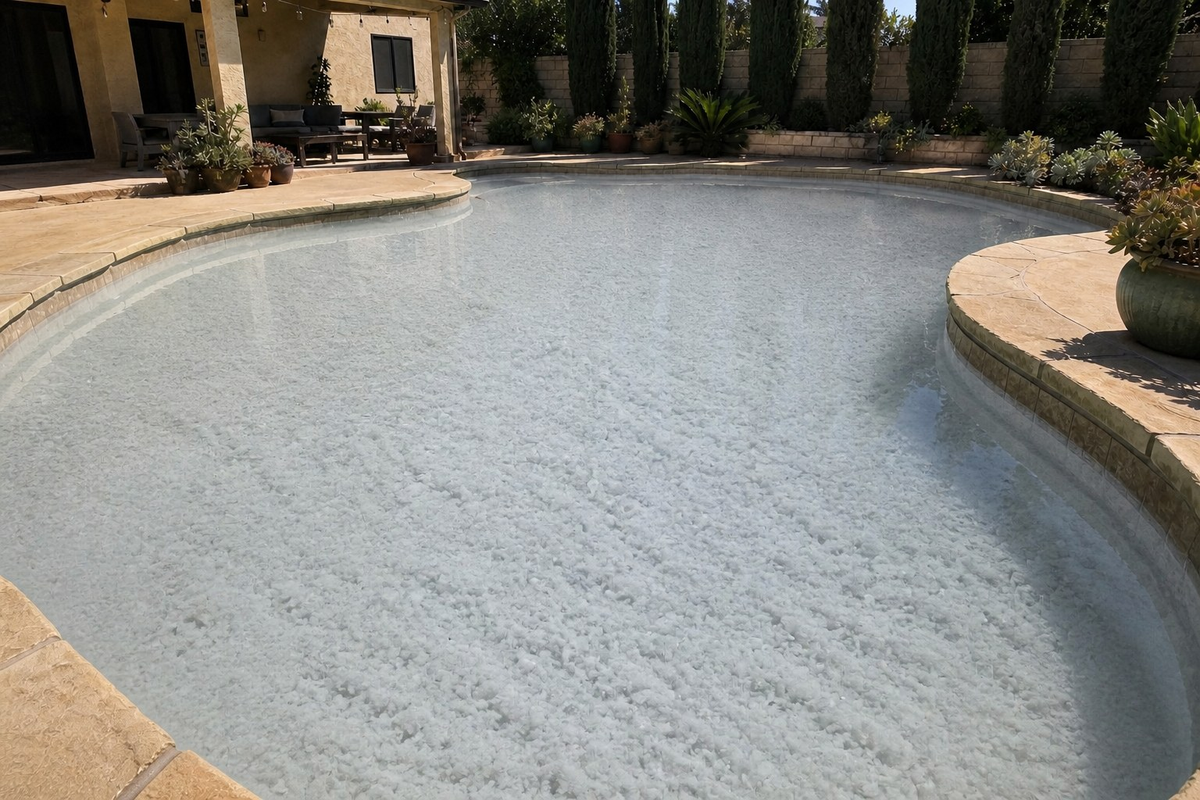
Then vacuum it out on Waste. The general routine of priming the hose and working in lanes is in our vacuuming guide. Floc changes three things. Move the head at half your usual speed, because the flakes lift at the slightest push and you would have to wait for them to settle again. Start at the shallow end, where the layer is thinnest, and finish at the drain. And never vacuum floc through the filter, not even for a minute: sand lets it straight back in, DE and cartridges clog.
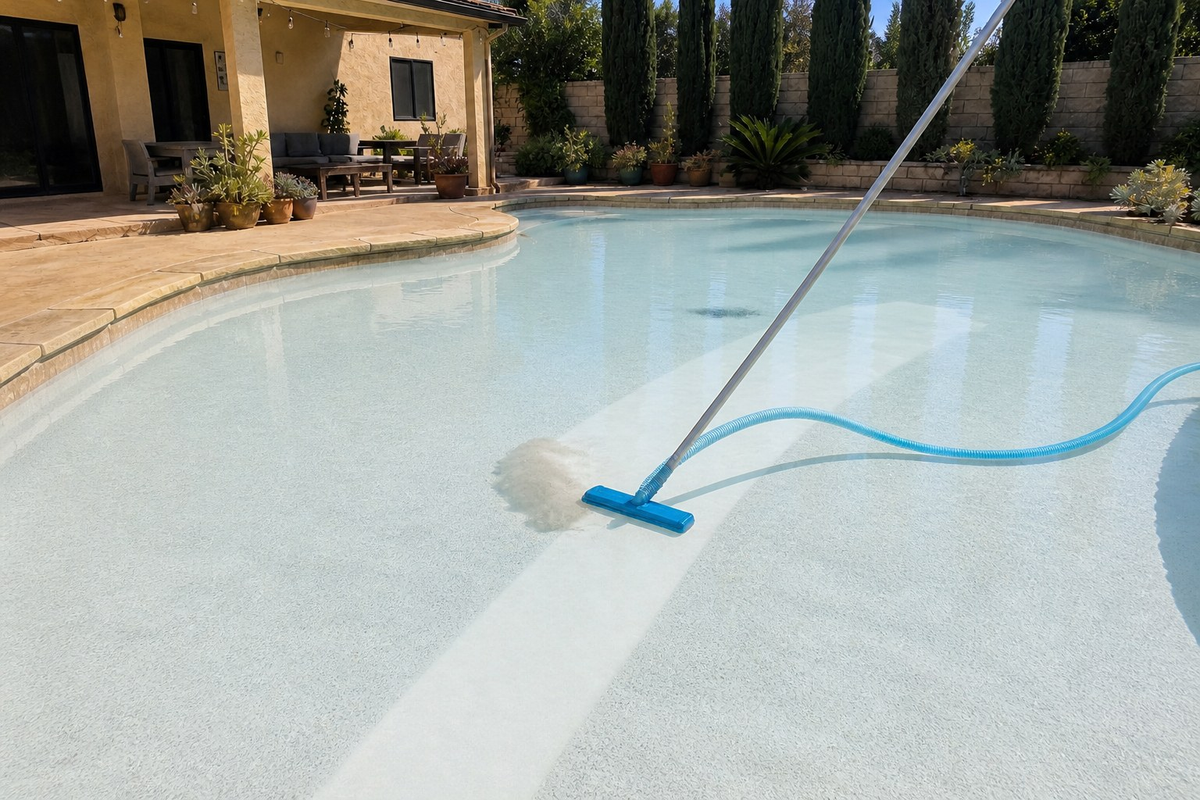
When the floor is clean, switch the pump off, set the valve back to Filter, and backwash a sand or DE filter once to clear what got near it. Top up with the hose and retest chlorine and pH: you have swapped some pool water for tap water.
Without a Waste setting, the honest answer is to use clarifier and be patient. If the water is too cloudy for that, there are two ways to get floc out. A submersible pump with a vacuum attachment sends the water to the sewer clean-out through its own hose. Or a plumber adds a waste tee before the filter, which our vacuuming guide mentions for heavy loads. Vacuuming floc through the cartridge in short bursts and rinsing between them works on paper; in practice the pleats load up after a few feet and the pump starts sucking air.
More clarifier does not mean faster. Overdosed, the polymer coats the particles completely, they repel each other again, and the water gets cloudier than before. The surplus also gums up cartridge pleats and DE grids. If you have overdone it, stop adding anything, keep the filter running, and clean it once the water starts to clear.
Each inch off a 15 by 30 foot pool is about 280 gallons. A slow floc vacuum on that pool takes two to four inches, roughly 600 to 1,100 gallons, which on an LADWP bill comes to about one to one and a half HCF (748 gallons each) plus the sewer share. In a drought summer with watering restrictions it is worth asking whether clarifier and three days would do.
Retail prices listed in search results in November 2026, not ours: a 100 ml bottle of liquid floc at $10.99, a quart of liquid floc from about $11 up to $25, 8 pounds of granular floc on sale at $29.95, and $35.99 at the top of one supplier's range. One dose is a few dollars of product; the water and the hour of vacuuming are the larger part of the bill.
On our weekly service, from $159 a month with standard chemicals included (see the full price list), a cloudy week after a storm is handled on the visit. A one-off filter clean, which a clarifier job may end with, is $149 for a cartridge and $179 for DE. A pool that has already gone green is a separate job, green-to-clean, from $349.
Water still milky after a clarifier and a clean filter? Send your readings and a photo or call (818) 740-6099. Standard diagnosis is free inside our service area.
Clarifier for light haze and for any pool with a cartridge filter. Floc for heavy cloudiness when you have a sand or DE filter with a Waste setting and can afford to send a few hundred gallons out. Floc clears in a day with work; clarifier clears in one to three days on its own.
Set the multiport valve to Recirculate, add the floc and circulate for one to two hours, then turn the pump off for 8 to 24 hours. Vacuum the settled layer slowly on Waste, never on Filter, then set the valve back to Filter and backwash once.
Yes. An overdose makes the water cloudier, because the coated particles start repelling each other again, and the surplus clogs cartridges and DE grids. Stop adding, keep the pump running and clean the filter as the water clears.
Whatever your product's label says for your pool's gallons. Products differ by ten times: one liquid floc calls for 1 ounce per 5,000 gallons, granular alum is dosed in pounds. Extra floc doesn't settle faster and can leave a haze of its own.
Clarifier, or simply a longer filter run with a clean filter. On a sand filter, a cup or two of DE added through the skimmer lets the sand catch finer particles for a few days. None of these replace fixing low chlorine, which is behind most cloudy water.
Send us your chlorine and pH readings, your filter type and a photo of the water. We will say whether it needs floc, clarifier, a filter clean or a chlorine fix. Or call (818) 740-6099
Written for Foothill and Valley homeowners.
Attached spa or stand-alone tub, spa water numbers, why chlorine vanishes after a soak, filter rinses and when to drain.
Boric acid or borax, how many pounds for 30–50 ppm, how to add it and when borates aren't worth it.
Why the reading climbs in autumn, why a test lies above 10 ppm, and how to bring it down with sun, neutralizer or a partial drain.
Los Angeles and the Valley
Our weekly visits test the water, keep the filter clean and deal with a cloudy week before it turns into a floc job. Standard diagnosis is free in our service area.