

Water
Hot tub maintenance in LA
Attached spa or stand-alone tub, spa water numbers, why chlorine vanishes after a soak, filter rinses and when to drain.
Article
Borates are boron compounds you dissolve into the pool and keep at 30–50 ppm. They slow the pH climb that LA pools fight every week and make it harder for algae to get started. They don't sanitize, so chlorine stays. And they only leave with water, so one dose lasts until you drain or backwash a lot of it away.
If you add acid every week and pH is back at 7.8 by the next visit, you have probably read about borates on a forum. They are real, they are cheap per pound, and they are oversold in places. Here is what they change in a Los Angeles pool and what they leave alone.
Borate is the general name for boron dissolved in water. You put it there as boric acid or as borax, and once it dissolves it's the same thing in the pool. At 30–50 ppm it does a short list of jobs.
What borates don't do matters as much. They don't sanitize, so free chlorine still has to sit in the range on our pool chemistry page. They don't clear an algae bloom that has already started. And they don't fix high alkalinity. If pH snaps back within days of every dose, check alkalinity before you buy anything; the alkalinity and pH guide covers that fix.
Both end up as the same borate in the water. The difference is what they do to pH on the way in.
Boric acid barely moves pH, nudging it down a little. You add it and you're done, apart from a small soda ash correction if pH dips under 7.4. Borax, the laundry booster sold in supermarkets, pushes pH up hard, so it has to go in together with muriatic acid to cancel that out, in rounds, with testing in between. It also takes about half as much again by weight for the same borate level. Borax is easy to find; boric acid is far less work, and it's what we'd pick.
Branded pool borate products are one of these two, sometimes blended, at a higher price per pound. Read the label for which one you're getting, since that tells you whether you need acid alongside.
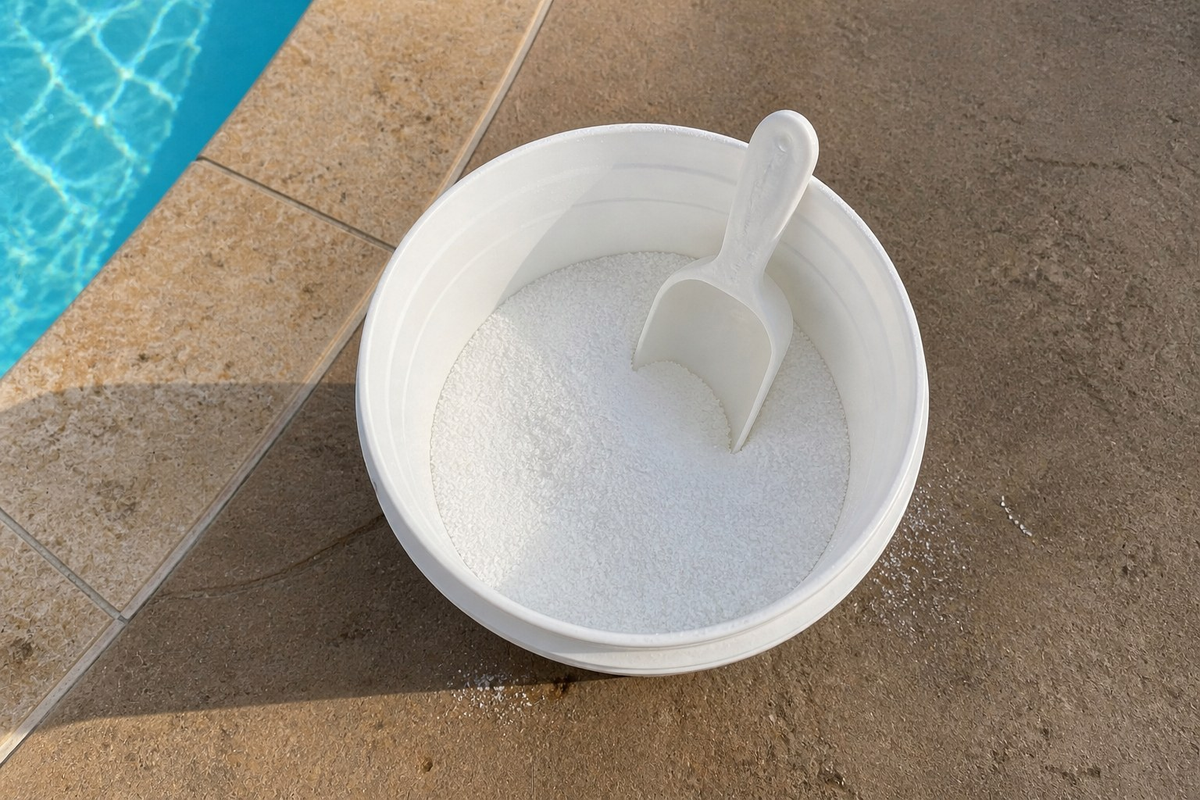
Test first. Regular test strips and drop kits don't read borates, so you need borate test strips. On a pool that has never had them, expect zero. Then work in pounds.
Thirty ppm gets you most of the pH steadiness. Fifty is where the algae effect shows up, so pick the target for the job you want done. Above 50 there's little extra to gain.
Borates show up in the alkalinity test as a few extra ppm. That's normal, and it's no reason to add more acid. If a service company tests your pool, tell them borates are in the water so they read alkalinity with that in mind.
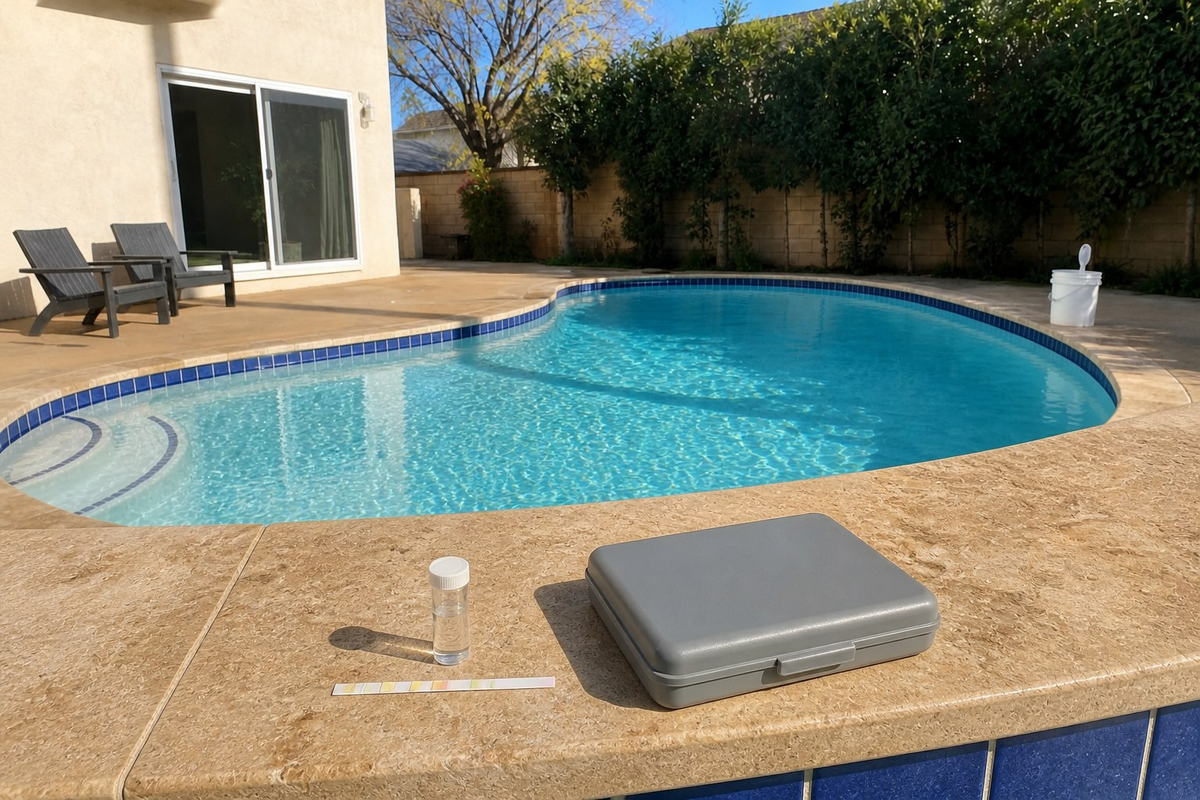
Borates don't burn off in sun or get used up by chlorine. They leave only with water: backwashing, splash-out, overflow after a heavy rain, and draining. In a dry LA year, a pool that is only topped up can hold its level for a long time, because evaporation takes water and leaves the borate behind.
Draining is where the plan breaks. Pools here get partly drained to bring calcium or stabilizer down, and the borates go out in the same share. Replace 40% of the water and you lose 40% of the borate. Before buying borates, check whether the pool is due for that. The calcium hardness guide has the sum for how much water a drain replaces.
For a salt pool, usually yes. The cell pushes pH up every day it runs, as our salt pool guide explains, and a pool with a spillway or a fountain adds more of the same. Slowing that climb means fewer acid additions and fewer weeks when pH runs high enough to crust the tile line.
For a plain chlorine pool run on trichlor tablets, less so. Tablets pull pH down on their own, and borates mostly help with a problem that pool doesn't have.
Skip them if a dog drinks from the pool. Borates are toxic if swallowed in quantity, and a pool used as a water bowl every day is the case to avoid. Keep the bags shut and out of reach as well. Skip them too if you're draining for calcium or stabilizer in the next few months; add them after the refill.
On price: online listings for borate powder we found in November 2026 ran from about $13 for a small tub to $120 and more for bulk bags. Those are retail prices, not ours. What decides your total is pounds, about 40 lb of boric acid for a typical 17,000-gallon pool at 50 ppm. Check the price per pound, not per container: branded pool borate jugs and bulk boric acid bags differ a lot in size.
If the water is already green, borates won't bring it back; the green pool guide will. Dark spots that survive brushing are a separate fight covered in the black algae guide.
Borates aren't in the standard chemical set that comes with our weekly visit, which covers chlorine, acid, baking soda, soda ash, calcium and stabilizer, with a full test panel every week. Service starts at $159 a month with those chemicals included; sizes are on the price list. Wondering whether your pool is a borate pool? Tell us what the pH does week to week or call (818) 740-6099. Standard diagnosis is free inside our service area.
It dissolves into borate and raises pH sharply, so it has to go in with muriatic acid to bring pH back to 7.4–7.6. Once balanced, the borate slows pH from climbing and helps chlorine keep algae from starting. It takes about 60 lb of borax to reach 50 ppm in a 17,000-gallon pool.
Borax is one way to add borate. In the pool, borax and boric acid end up as the same dissolved borate. The difference is on the way in: borax raises pH and needs acid alongside, while boric acid barely moves pH and goes in without that extra step.
Chlorine at shock level with hard brushing and the pump running around the clock. Borates don't kill algae; they make it slower to start in water that already holds chlorine. For a pool that has turned green, follow a full cleanup rather than adding borates.
Borax raises pH far more. Baking soda raises alkalinity a lot and pH only a little, which is why it's used to fix low alkalinity. Borax is used when you want borates in the water, and the pH it adds is cancelled with acid.
Until the water carrying them leaves. Sun and chlorine don't use them up. Backwashing, splash-out, rain overflow and draining take them out, so a pool that is only topped up keeps its level for a long time. Test monthly and after any partial drain.
Tell us whether the pool is salt or chlorine, how often you add acid, what pH reads before and after, and whether it has a waterfall or spa. We will tell you whether borates would help or whether the problem is alkalinity. Or call (818) 740-6099
Written for Foothill and Valley homeowners.
Attached spa or stand-alone tub, spa water numbers, why chlorine vanishes after a soak, filter rinses and when to drain.
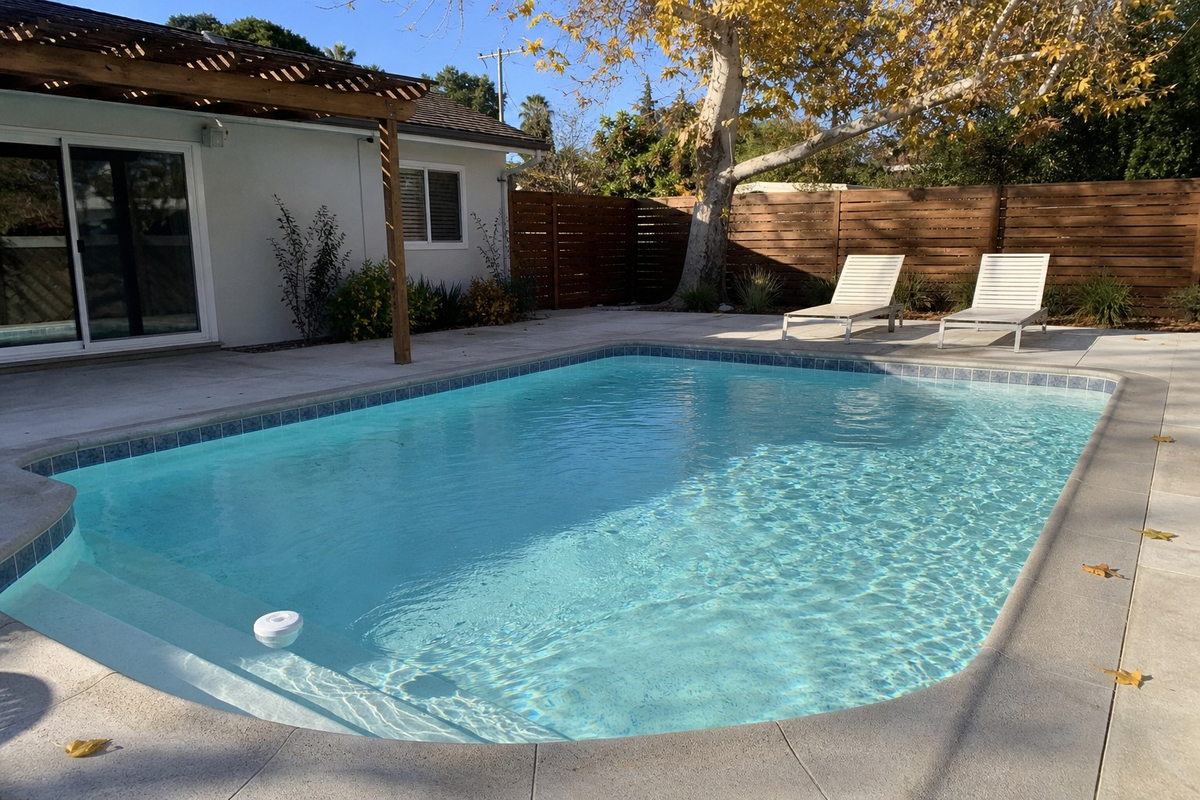
Why the reading climbs in autumn, why a test lies above 10 ppm, and how to bring it down with sun, neutralizer or a partial drain.
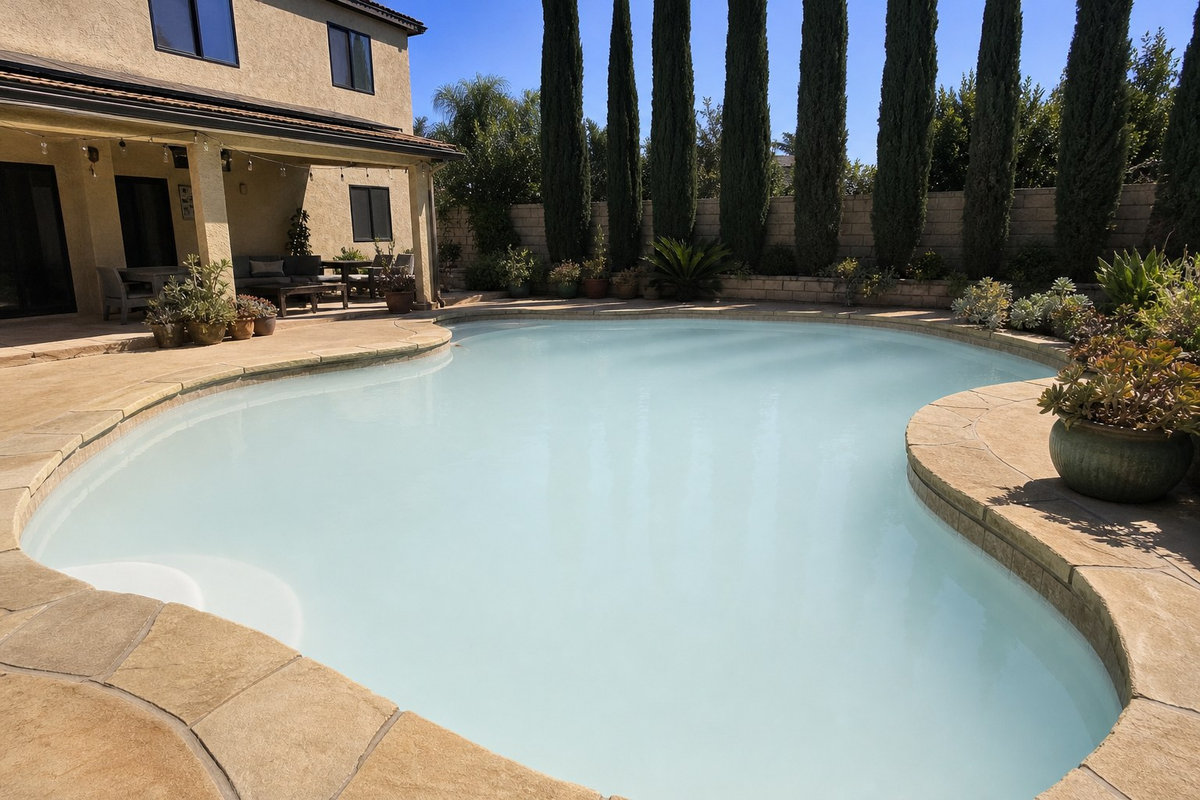
Which product fits a cartridge, sand or DE filter, how to floc and vacuum to waste, and why extra clarifier makes water cloudier.
Los Angeles and the Valley
Our weekly visits test the full panel, add the acid and correct the balance before pH runs high enough to scale the tile. Standard diagnosis is free in our service area.