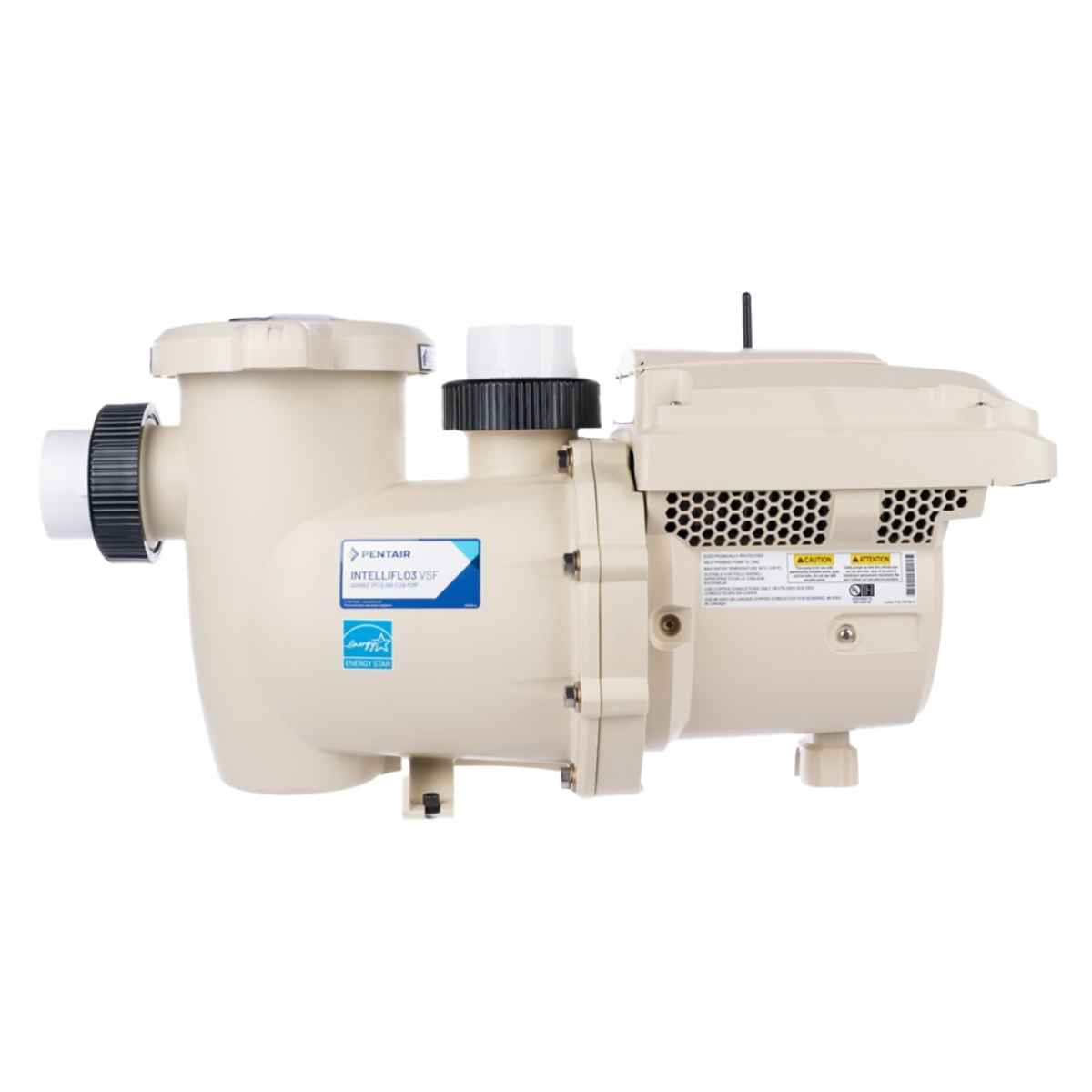
Pentair IntelliFlo3 VSF
Variable speed and flow: it holds a flow rate rather than a fixed rpm, adjusting as the filter loads up. Suits in-floor cleaners, solar loops and spa jets, and pads already on Pentair automation.

Equipment
A slower pump running longer moves the same water for a fraction of the power — which is why California stopped allowing the alternative.
Licensed, insured and family-owned


What we install
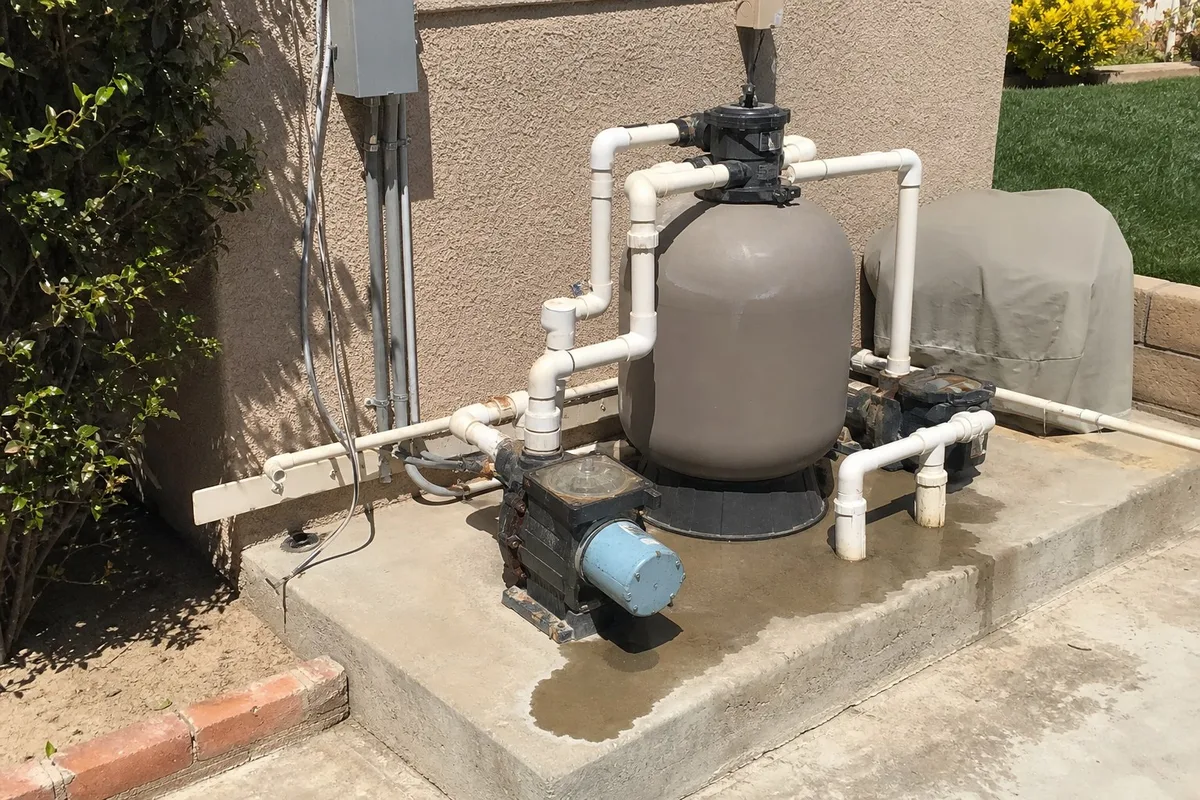
Same wet end as any other pump, with a motor you can tell how fast to turn. Which one suits your pad depends mostly on the automation already there.
Pentair IntelliFlo3 VSF
Variable speed and flow: it holds a flow rate rather than a fixed rpm, adjusting as the filter loads up. Suits in-floor cleaners, solar loops and spa jets, and pads already on Pentair automation.
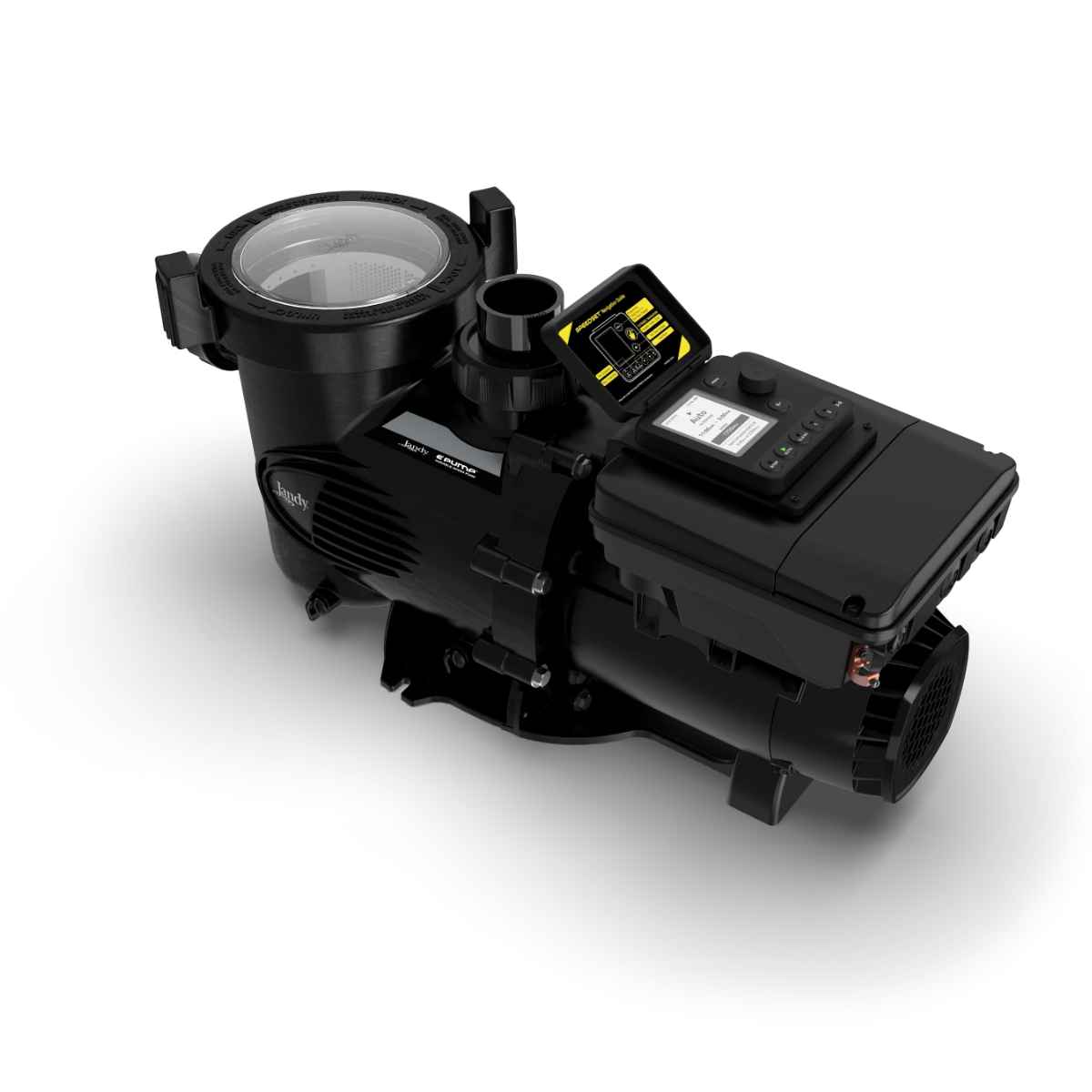
Jandy ePump 2.7 HP
Large-body variable-speed pump, 115/230 VAC, with a SpeedSet controller and two auxiliary relays built in. Suits bigger pools and pads with a spa or water features, and runs its own schedule where there is no automation panel.
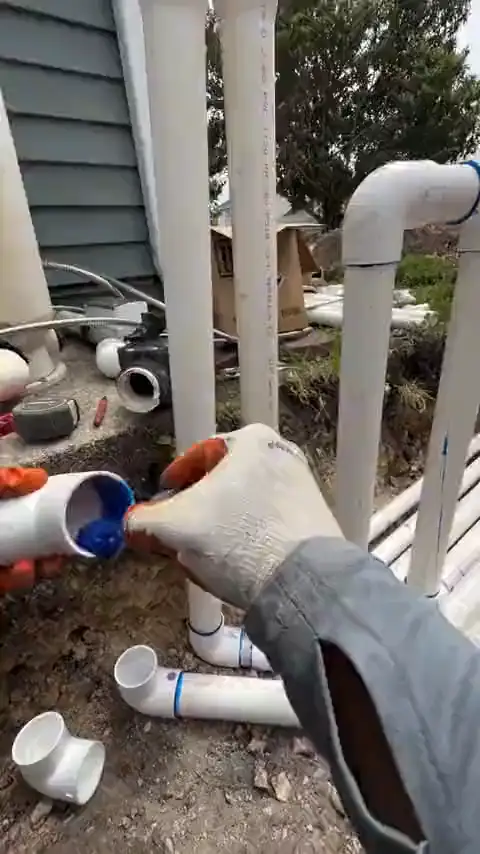
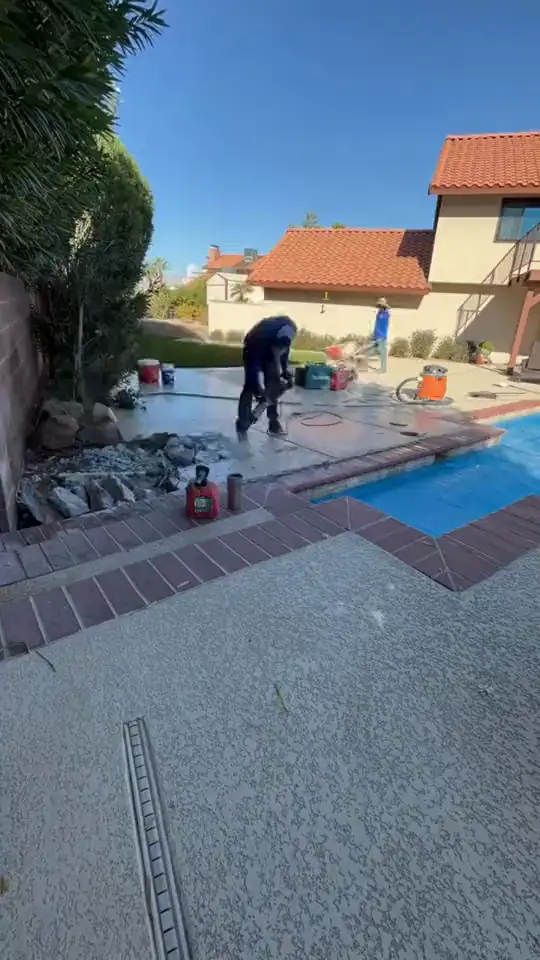
From the truck
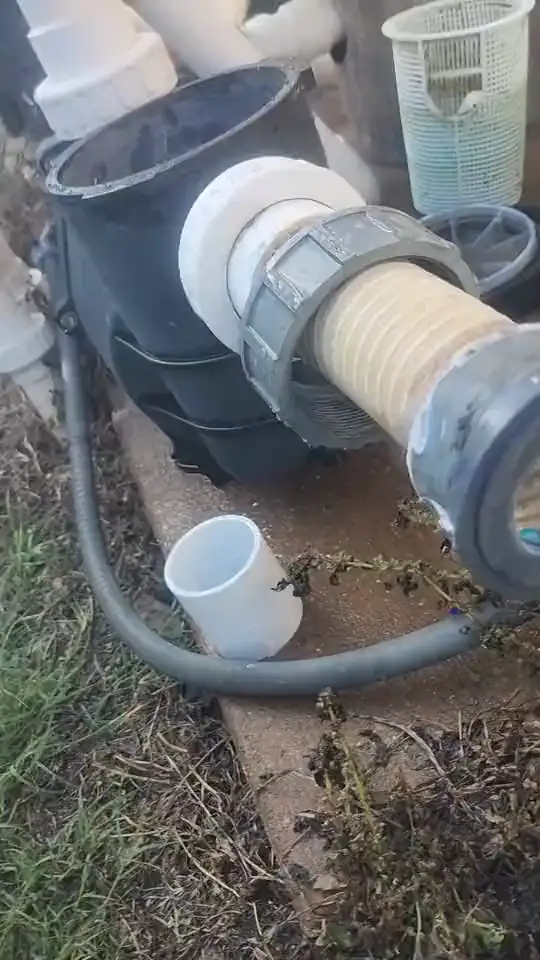
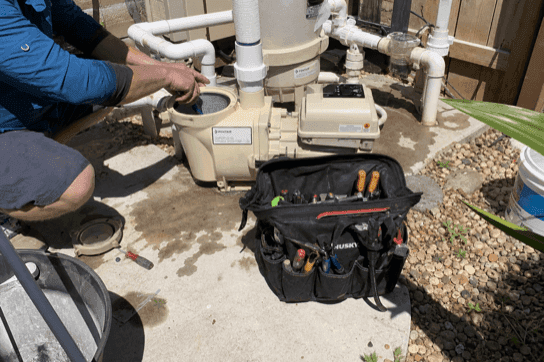
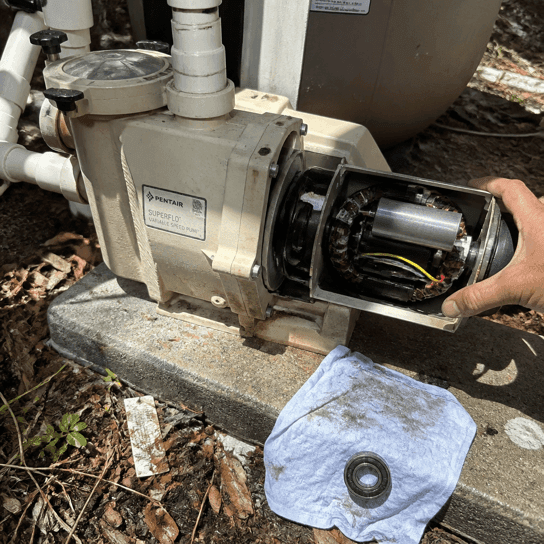
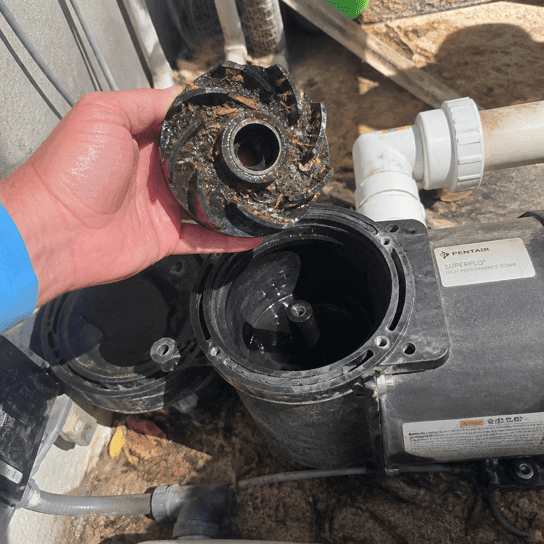
Nothing staged, nothing bought from a stock library — the same work, filmed while it happened.

The honest part
Payback is arithmetic: annual energy saving against installed cost. A nearly new pump is one case where it does not close — replacing a healthy pump means paying for one you already own. And it will not change what pool service costs, which is priced on the pool, not the pump.

The part that gets repeated wrongly, usually by someone selling a pump this week.
The Appliance Efficiency Regulations are administered by the California Energy Commission.
Why running slowly for longer costs less
Water moved rises roughly in step with motor speed. Power drawn rises with roughly the cube of it, and the gap between those two lines is the whole argument.
Collected from customers on the routes we run every week.
Kevin B.Verified review
15 December 2025
Rachel M.Verified review
17 October 2025
We thought we needed a completely new pool system. Turns out it was just a few issues with the pump and filter. They saved us a lot of money by fixing what actually needed fixing.
Carlos M.Verified review
Local Guide · 48 reviews · 22 photos
4 May 2025
Robert E.Verified review
8 March 2025
Rachel G.Verified review
3 March 2026
Marcus H.Verified review
18 October 2025

Sandra T.Verified review
2 reviews
17 April 2026
David C.Verified review
22 December 2024
Rewards
$100 for every friend you send us, up to two. No code, no form — they call and mention your name.

$100 credit
For every friend who calls and mentions your name
Up to two referrals, $200 in total. The name must come up on the first call. Spend it on any service.
20% off one-time work
For weekly maintenance members
Green-to-clean, acid wash, plaster start-up and repair labor, plus priority on the schedule.
Where we work
Crews leave from Studio City every morning, across the Foothills and the neighborhoods next to them.
Office · Studio City
Tell us the pipe size, the voltage at the pad and what controller is there, and we will say whether a swap makes sense.
4121 Radford Ave, Ste. #214, Studio City, CA 91604Written for Foothill and Valley homeowners.
Equipment, labour, and the California rule that picks the pump for you.

The quiet signals that a pump or heater is on its way out.
Three things. It gets quiet: most pump noise comes from speed, and at filtration speed it is close to inaudible from the house. The filter gets more hours: slow hours are cheap, so longer, gentler circulation skims for more of the day and gives algae fewer still hours to establish. And the motor works less hard: a permanent-magnet motor at a third of capacity runs cooler than an induction motor flat out every afternoon, and bearings and seals — what usually ends a pump's life — both dislike heat.
Pipe diameter, because a slow pump only saves if water moves freely at slow speeds, and narrow suction lines raise the speed you must run at for the same flow. Electrical supply: 115 V or 230 V at the pad, breaker size, bonding wire — and decide what happens to the old time clock, because these pumps schedule themselves and a mechanical timer cutting power upstream defeats that. And automation compatibility: where the controller and the pump cannot speak to each other, the pump runs its own schedule while the panel reports it off.
If you run a single-speed pump several hours a day and it is getting on in years, the arithmetic usually works — and you will be buying one eventually anyway. If your pump is two-speed, nearly new, or barely runs, the honest answer is often no. Have the existing one looked at first.
Long enough to turn the pool's whole volume over once a day. Because it moves less water per hour at filtration speed, that is a longer run than a single-speed pump needs — often ten to twelve hours or more — and it still costs less. The exact figure depends on your gallons and the flow at the chosen speed.
One long block at low filtration speed, plus short bursts at higher speed only for jobs that need pressure: the cleaner, spa jets, clearing the surface after a windy day. Running all day at high speed is the mistake that turns an efficient pump into an expensive one. Resetting those schedules seasonally is part of weekly service.
Three, honestly. It costs more up front. It has a drive and a control board — electronics on a wet outdoor pad, which fail in ways an induction motor cannot. And it has to be programmed: badly set, it saves nothing, and there is no warning light for that.
If you want the speed and power curves rather than our summary of them, the manufacturer's own sheet is here.
Family owned, based in Studio City
Make, age, voltage, pipe size and whether a controller has to drive it — that is enough to price a swap.