

Water
Calcium nodules on pool plaster
Why white bumps grow out of cracks and loose plaster, how to tell them from scale, and when a patch is enough.
Article
If pH climbs back a few days after every correction, alkalinity is usually the cause. Here is the difference between the two, and the acid-and-aeration method that fixes high readings without overshooting.
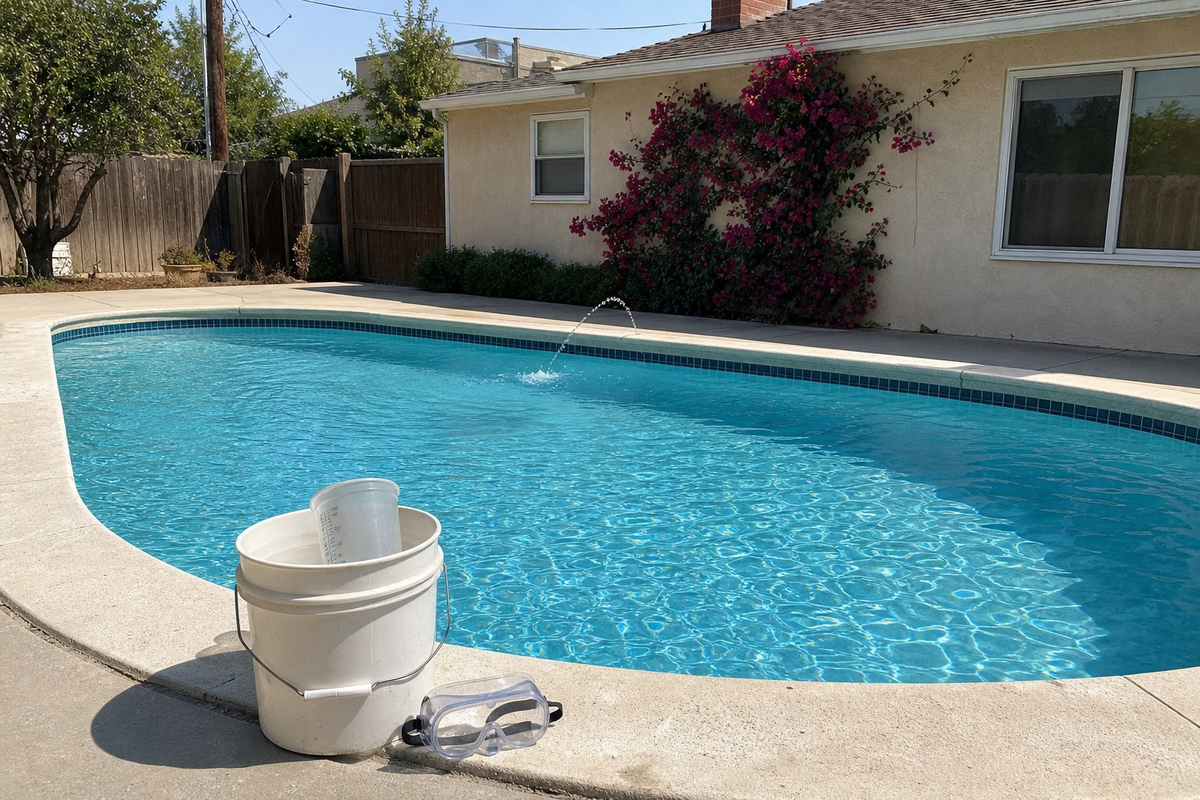
You bring pH down on Saturday and by Wednesday it is back at 7.9. That is the classic sign of high total alkalinity: the water has a strong buffer, and the buffer pulls pH back to where it likes to sit. Fix the buffer and pH stops moving.
pH tells you how acidic the water is right now. Total alkalinity tells you how much the water resists a change in pH. Think of pH as the position of a dial and alkalinity as the spring behind it: with a stiff spring, the dial snaps back after every push.
The target ranges are on the pool chemistry page: 80–120 ppm for alkalinity and 7.4–7.6 for pH. This article covers only what to do when one or both read high, and why in this city they usually do.
Tap water here arrives hard and alkaline, and every top-off adds more. Evaporation takes water out and leaves the minerals behind, so a pool that is topped up all summer starts the autumn with more alkalinity than it had in May.
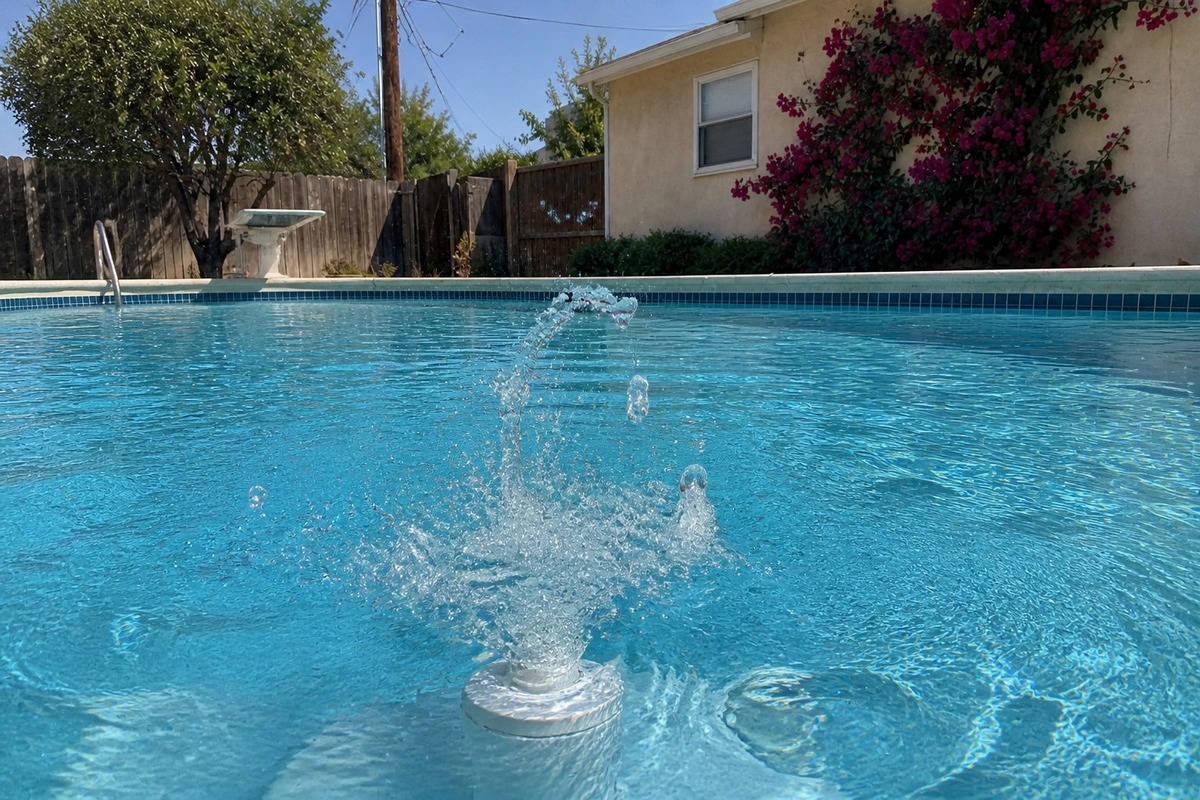
Anything that gets splashed, aerated or run through a waterfall also pushes pH up on its own, by letting dissolved carbon dioxide escape. A pool with a spillway or a spa spillover drifts upward faster than a plain one.
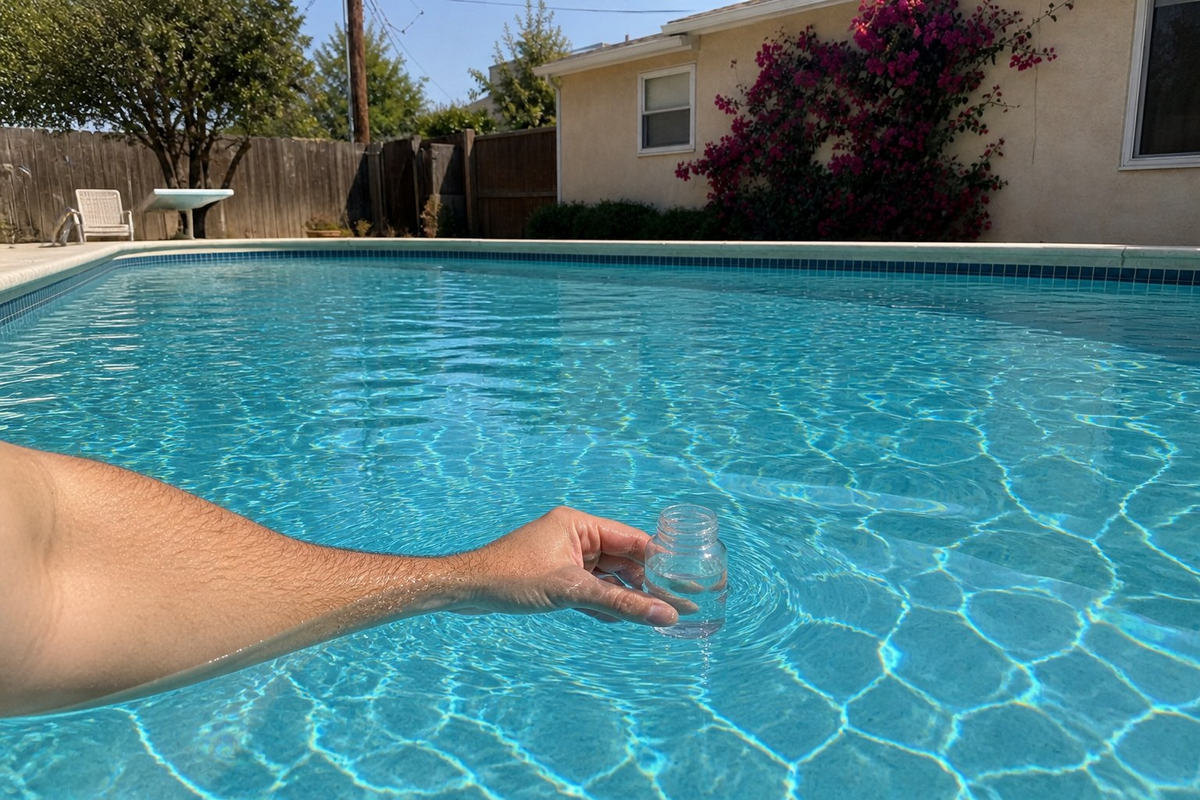
Test alkalinity and pH on the same sample, taken at elbow depth away from the return, and read both in daylight. If alkalinity is inside its range and only pH is high, you need a small dose of acid, not the full procedure below.
Acid lowers both numbers together. Air then raises pH back without raising alkalinity. Doing the two in turn is how you end with a low-enough buffer and a pH that sits in range.
Shocking barely moves alkalinity. It does move pH, and the direction depends on the product: liquid chlorine and calcium hypochlorite push it up, trichlor tablets pull it down. If you shock often, test pH afterwards instead of assuming it is where it was.
Tablets also feed stabilizer into the water as they dissolve, which is a separate drift covered in the stabilizer guide. Rain dilutes everything at once; the order for that case is in the after-rain guide.
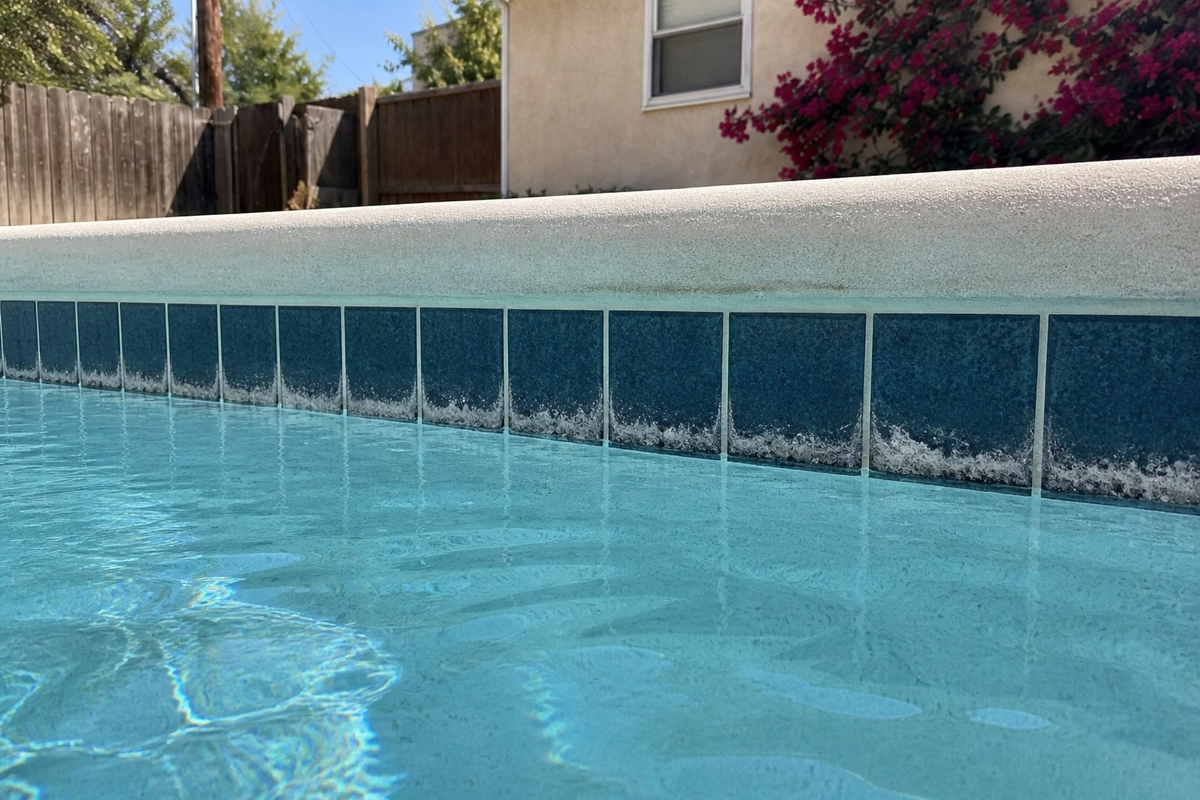
High pH slows chlorine down, so the same dose cleans less. It also lets calcium come out of the water and crust the waterline tile, and the crust gets harder every month. If you already have it, the tile cleaning page explains what removal involves.
Low alkalinity is the opposite problem. pH swings after every rain or dose, and acidic water etches plaster. Raise alkalinity with baking soda, in small amounts and with the pump running, and test again before adding more.
Doing it yourself, you pay for the acid and the test kit, and those prices are the store's and the brand's, not ours. The amount you need changes with the pool's volume and with how hard your tap water is.
Our weekly visit includes both readings, and the technician adjusts them before moving on. The monthly price from $159 already covers standard chemicals, as the price list shows. The visit itself is described on the weekly maintenance page.
Stuck on a reading that will not hold? Send us the test result and a photo of the water, or call (818) 740-6099.
If it is high, add muriatic acid or a dry pH decreaser in small doses with the pump running, wait an hour, and test again. Then aerate to bring pH back up. If it is low, add baking soda in small doses and retest.
A measured dose of acid lowers pH within the hour once it has circulated. Do not add it all at once: pour part of it, wait, and test. If alkalinity is also high, pH will drift back up, so lower alkalinity too.
It is a measure of the dissolved carbonates and bicarbonates that act as a buffer. The higher it is, the harder it is to move pH, in either direction.
Not by much. A shock changes pH more than alkalinity, and the direction depends on the product: liquid chlorine and calcium hypochlorite raise pH, trichlor lowers it.
Most often because alkalinity is high, and because water splashing, a spillway or a return jet aimed up lets carbon dioxide escape. Hard Los Angeles tap water adds more alkalinity with each top-off.
Tell us what your kit shows and how often pH drifts back. We will say whether acid will fix it or something else is pushing the number, before you buy any. Or call (818) 740-6099
Written for Foothill and Valley homeowners.
Why white bumps grow out of cracks and loose plaster, how to tell them from scale, and when a patch is enough.
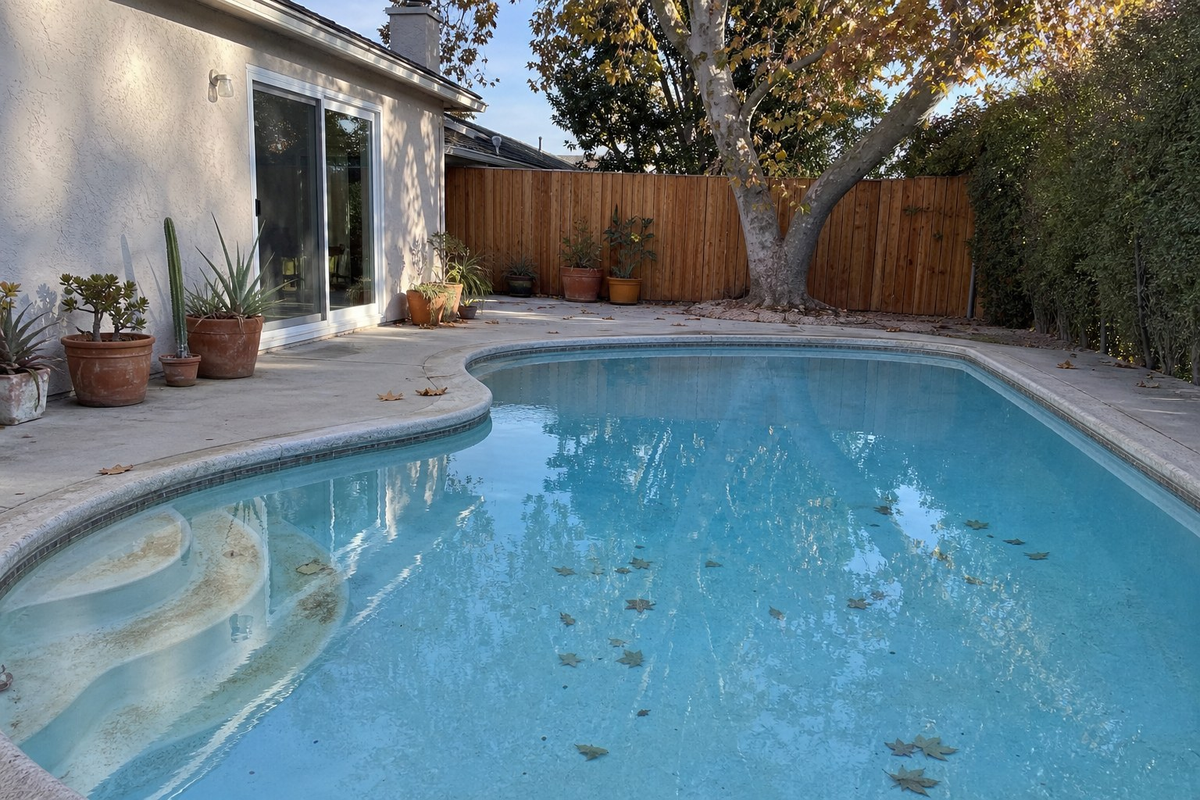
Two spot tests that tell leaf from metal, then chlorine or ascorbic acid with the water in, and where home methods stop.
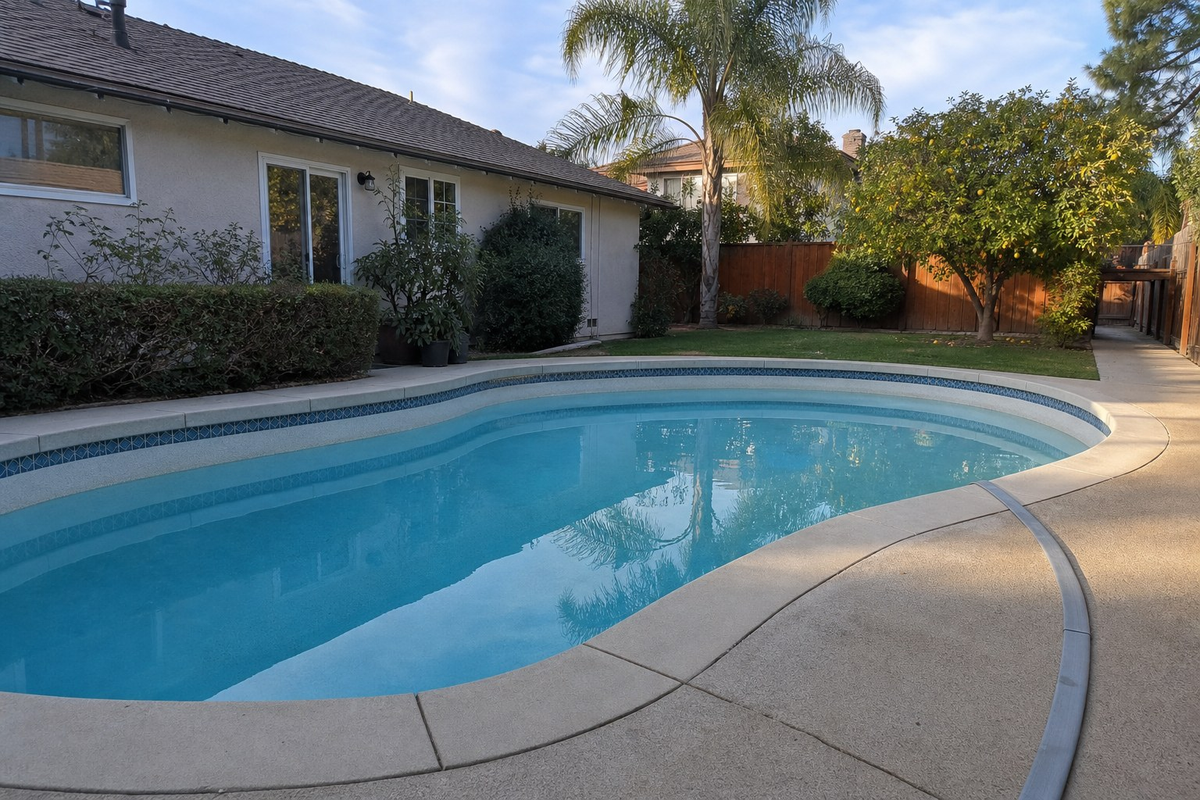
Whether to drain at all, what the ground can do to an empty shell, where the water may go, and how to refill.
Los Angeles and the Valley
We check both readings every week and keep them in range, with standard chemicals included in the monthly price.