
Weekly maintenance
Full chemical panel, brushing, baskets and the whole pad — plus run times reset as the season turns, not once a year.
Hot afternoons, cold nights and canyon wind — a hillside pool here keeps a different clock from one in the basin.

Licensed, insured and family-owned


Most calls start here
Four problems specific to the elevation and the slope.
Run times nobody changed with the season
One schedule all year means over-circulating in winter and under-circulating in August. Adjusting pumps and time clocks is on the weekly checklist for exactly this reason.
What every visit coversWind loading the pool between visits
Canyon wind drives grit and fine organic dust across the surface. That dust feeds phosphate, and phosphate is algae fuel — which is why we read it weekly.
A pump losing prime on a long uphill run
Air in the basket, a pump that primes on Monday and not on Thursday. On a hillside lot that is usually a suction-side problem along the run, not a dying motor.
Pool pump repairFreeze protection that was never switched on
A few nights each winter get cold enough at this elevation to matter. Most panels here can protect the plumbing automatically, and on plenty of pools it has never been configured.
Automation repairWhy La Crescenta is different
La Crescenta sits high enough that its pools keep a different clock from the ones down in the basin: hot afternoon, cold night, and a wind that arrives out of the canyons with no warning at all.
That daily swing is what most service routines get wrong. In 91214 water temperature and sunlight move further between afternoon and dawn than in flatter parts of Los Angeles, so a pump schedule set in June is running the wrong hours by October.
The second thing is the ground. Lots step down the slope, so the pad usually sits well above or below the water it serves — more places to lose prime, more places to hide a leak, and a pump working against lift a flat-lot pump never sees.
 After
After Before
What we do for La Crescenta pools
Slope access, long pipe runs and wind load all show up in a quote.
Full chemical panel, brushing, baskets and the whole pad — plus run times reset as the season turns, not once a year.

The local version: a windstorm dumps organics in, phosphates spike, the pool turns within days. Recovered without draining, swimmable in about two.

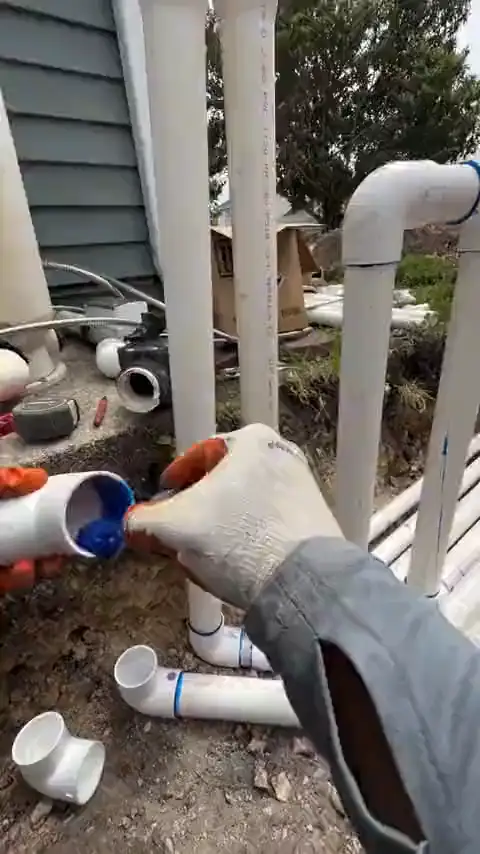
Pumps, heaters, filters, salt systems, plumbing, lights and automation. On slope lots the diagnosis starts at the pipe run, not the motor.

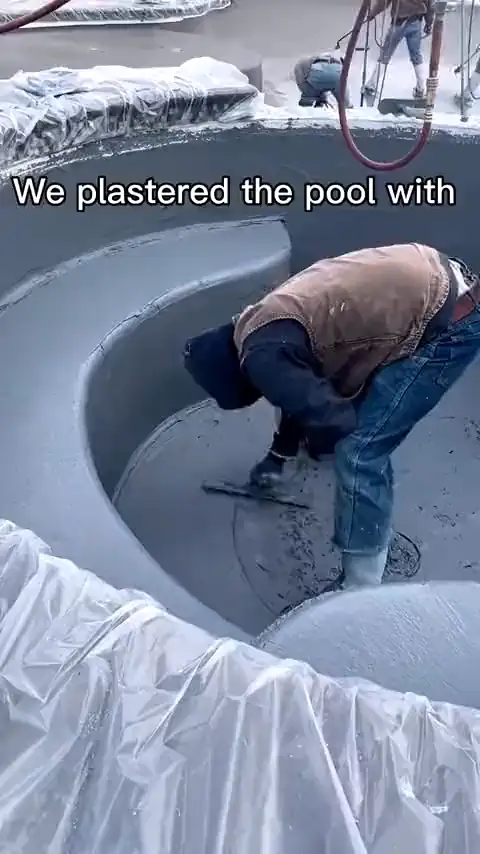
For a shell gone grey or blotchy. The pool is drained, so on a hillside site the timing has to work with the weather.

Seven days of daily work with a nylon brush. No swimming for the first fortnight, no salt for 28 days.
Pricing
Volume decides chemical demand, so it decides the price. Typical homes land between $179 and $249 a month. Chemicals included, no minimum contract.

Prices as of August 2026, for a pool in normal condition.
One-time work
Quoted on the job, because nobody can price a green pool from a web form.
Worth mentioning when you call
Your pool gets a fixed weekday and keeps it. Tell us the address and we will say which day is open.
The crew
Four of us. The same faces every week, not whoever was free that morning.


A La Crescenta job, start to finish
A concrete pool and spa in dark grey mosaic, photographed close enough to judge the work on: the steps, the corners, the spillway.
One dark grey mosaic through pool, spa and spillway — an interior that ends the resurfacing cycle rather than restarting it.
Nearby, and on the same routes
La Cañada Flintridge, Glendale and Burbank share the days that serve La Crescenta.

Hollow render and rust cut out, then the whole shell tiled.
Glendale
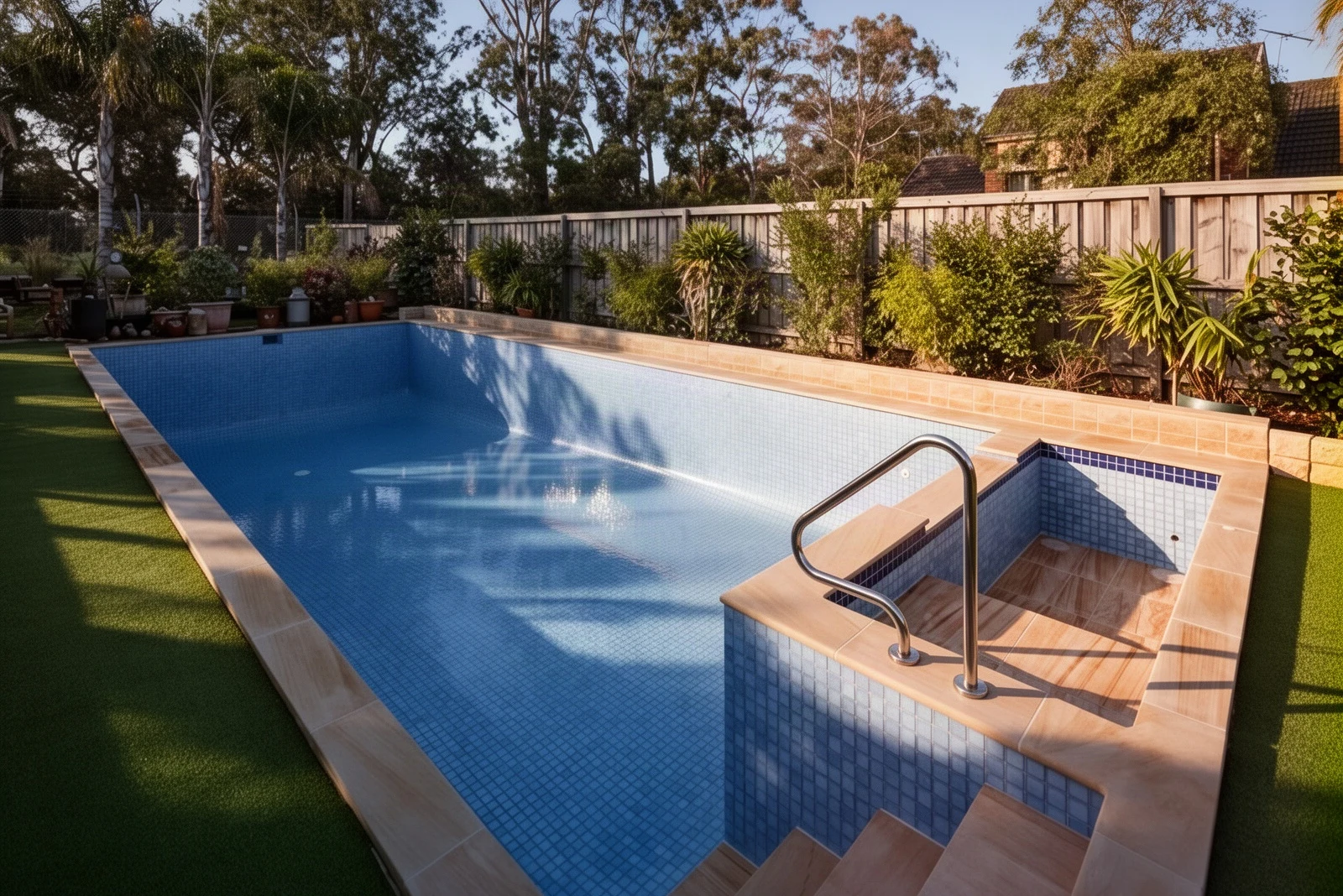
Out of repaints, so retiled, with sandstone paving around it.
Eagle Rock

Grey tile across pool and spa, seen from the air.
La Cañada Flintridge
Mark H.
Local Guide · 42 reviews · 18 photos
3 September 2025

Linda R.
4 reviews
25 May 2026
Kevin B.
15 December 2025
Jason T.
25 February 2026
Great company. Always on time, pool looks amazing and communication is easy. Highly recommend.
Ashley P.
11 reviews
4 March 2026
Thomas W.
Local Guide · 27 reviews · 9 photos
10 February 2025
Rachel M.
17 October 2025
We thought we needed a completely new pool system. Turns out it was just a few issues with the pump and filter. They saved us a lot of money by fixing what actually needed fixing.
Jennifer C.
Local Guide · 15 reviews · 4 photos
7 September 2025
Tell us what the pool needs, how big it is and your ZIP — and a price the same day.
Rewards
$100 for every friend you send us, up to two. No code, no form — they call and mention your name.

$100 credit
For every friend who calls and mentions your name
Up to two referrals, $200 in total. The name must come up on the first call. Spend it on any service.
20% off one-time work
For weekly maintenance members
Green-to-clean, acid wash, plaster start-up and repair labor, plus priority on the schedule.
Where we work
Crews leave from Studio City every morning. Open any area for what is different there.

Send your ZIP or cross streets. We come back the same day with the day we would be there — and what weekly service would cost on your pool.
Or call (818) 740-6099
Compare the pool against a bucket on the step before you call it a leak.
Written for Foothill and Valley homeowners.


The decisions that are expensive to change afterwards.

Five things to expect, and how to check them.
Not stock footage
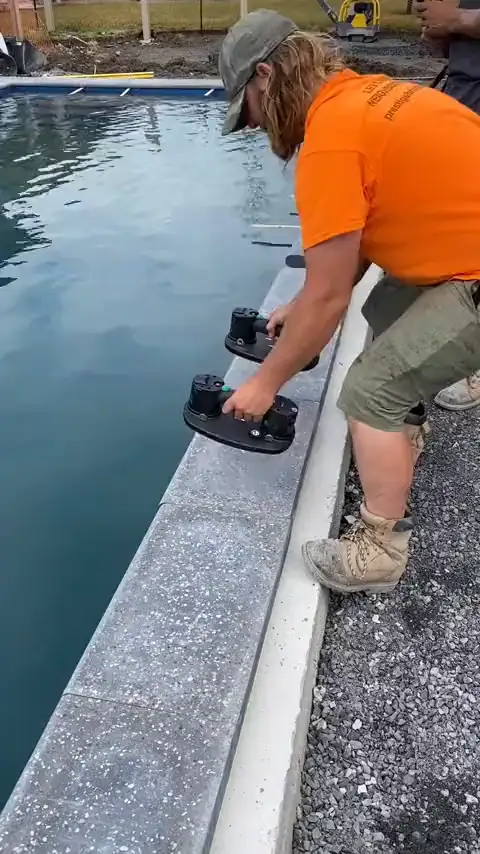
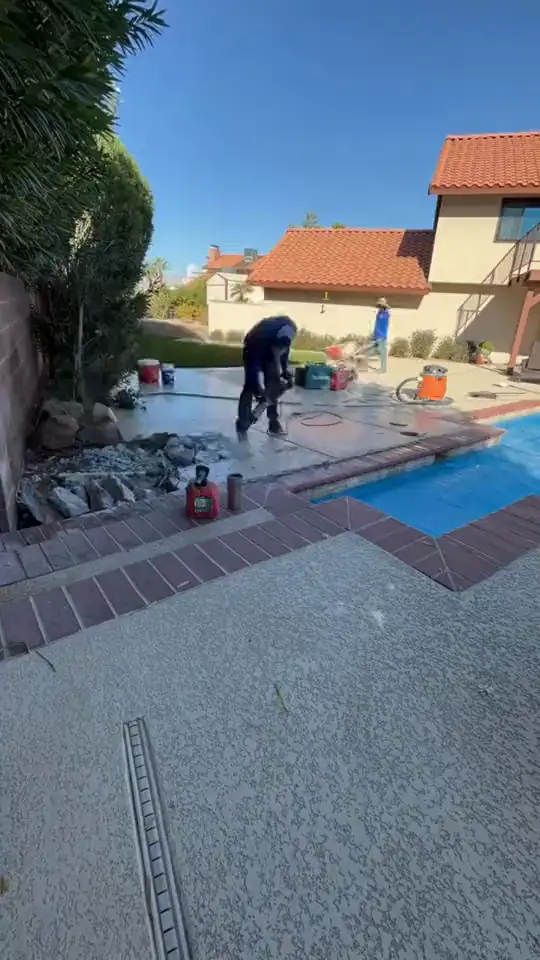
Filmed on the La Crescenta route and the streets next to it. Nothing staged, nothing bought from a stock library.
Yes, and at this elevation the gap is wider than most people assume. Cold water holds chlorine better and grows less algae, so winter circulation can come down; hot weeks need more. The mistake is not the schedule you chose — it is leaving it alone all year.
Often it is not. Dry canyon wind across a warm surface evaporates fast, and a windy week looks exactly like a slow leak. Compare the pool's loss against a bucket of water on the step over the same days; if the pool drops faster than the bucket, start looking.
Sometimes. A second visit is worth paying for when debris is the problem, because netting and baskets are what it buys. If chemistry is what keeps drifting, a second visit is an expensive way to fix something a better schedule fixes for free.
It changes what fails. Equipment below water level means a leak on the pad drains the pool rather than dribbling; equipment above means the pump has to lift, and an air leak on the suction side shows up as lost prime. Either way the pad gets inspected every visit.
Weekly service starts at $159 a month for a pool up to 15,000 gallons and runs to $249 a month for pools over 40,000, with standard chemicals included. Most customers pay between $179 and $249. La Crescenta is priced the same as everywhere else on our routes — the address does not change the number, the pool does. One-time work is quoted on the job: green to clean from $349, acid wash from $749, equipment repair at $175 an hour.
Cleaning, recovery, repair and renovation across Los Angeles.
Nearby, and on the same run
Size, whether the pad sits above or below the water, and how exposed the yard is to the canyon.


