

Water
Calcium nodules on pool plaster
Why white bumps grow out of cracks and loose plaster, how to tell them from scale, and when a patch is enough.
Article
Most cracks in pool plaster stay in the plaster. The few that go into the concrete shell look different once you know what to check, and they are the ones worth paying for.
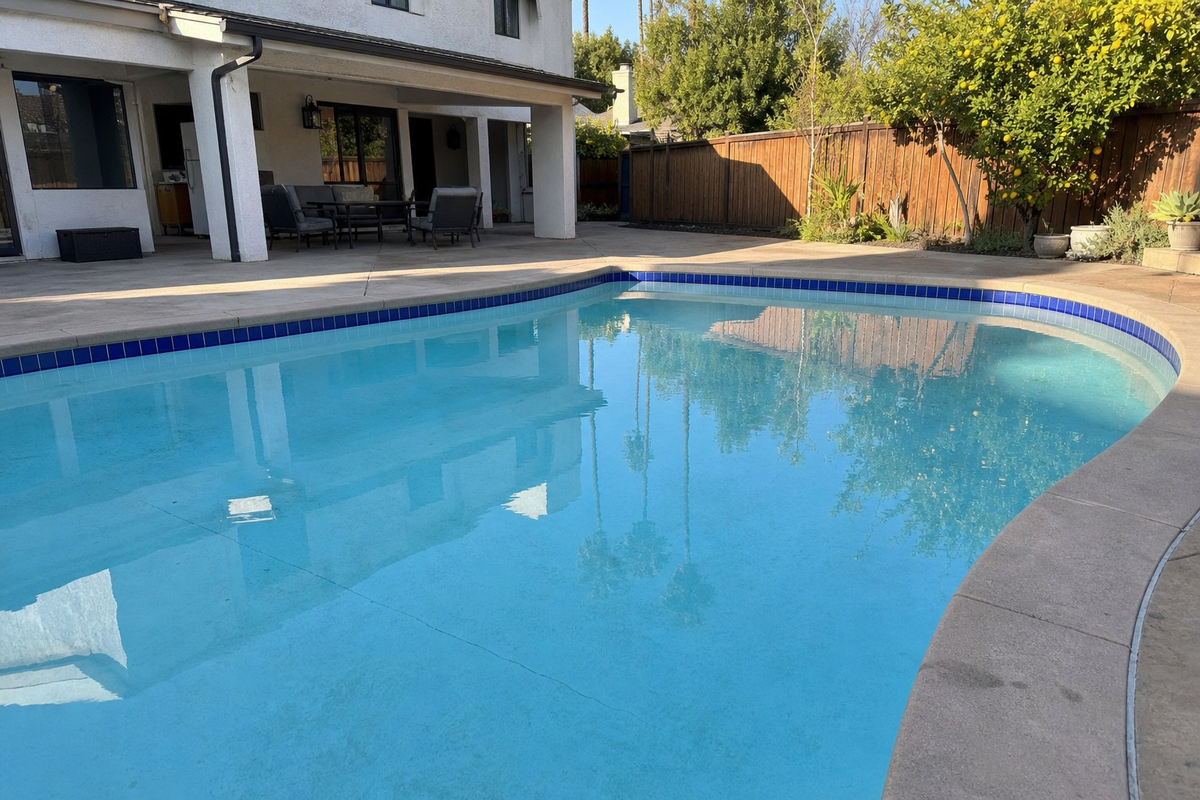
You notice it after a good brushing or on a morning with low sun: a dark line on the floor, or a web of them near the steps. Pool plaster is a layer of cement and marble dust about half an inch thick over a concrete shell, and cement cracks as it shrinks. So the question is rarely whether there is a crack. It is how deep it goes. If small white bumps are sitting on the lines, read our page on calcium nodules as well; they grow out of exactly these openings.
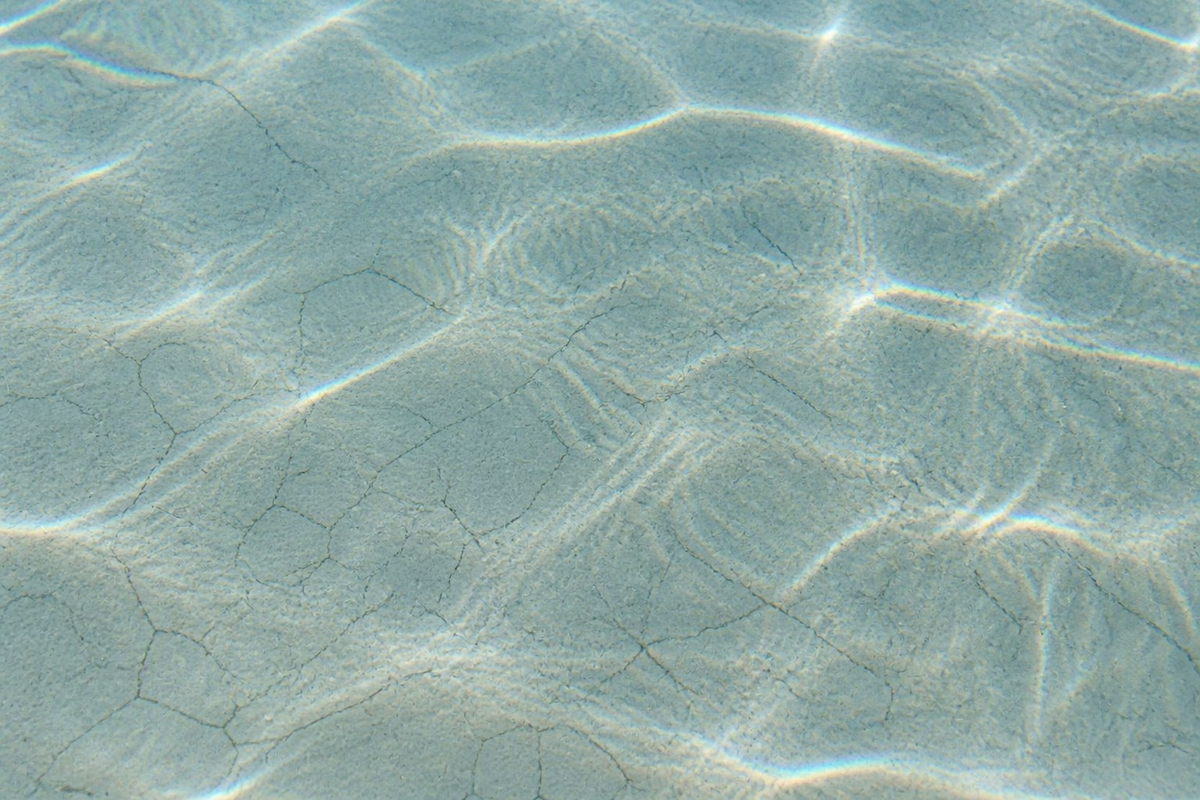
Irregular hairline cracks in a pattern like dried mud, each section a few inches across, are called crazing or check cracking. They sit in the top skin of the plaster. A fingernail drawn across them barely catches, and they do not leak. The usual cause is the surface drying faster than the plaster underneath: sun on the day it was troweled, a wet mix, or a shell left empty on a hot afternoon years later. That last one is why our guide on draining a pool refills the same day.
Crazing needs no repair. It does collect dirt and algae, and the lines turn gray or black, which makes a sound floor look worse than it is. A stiff brush along them each week keeps them pale. Balanced water keeps them from widening, since water low in calcium or pH dissolves the edges first.
Plaster cracks where it is thickest or changes direction: the inside corner of a step, the curve where wall meets floor, the ring around a main drain or a return. These are shrinkage cracks, a few inches to a foot long, and most stop growing within the first year or two. One running out from a fitting deserves a second look, because fittings are where water leaves a pool. Our leak detection guide covers the bucket test that tells normal evaporation from a loss.
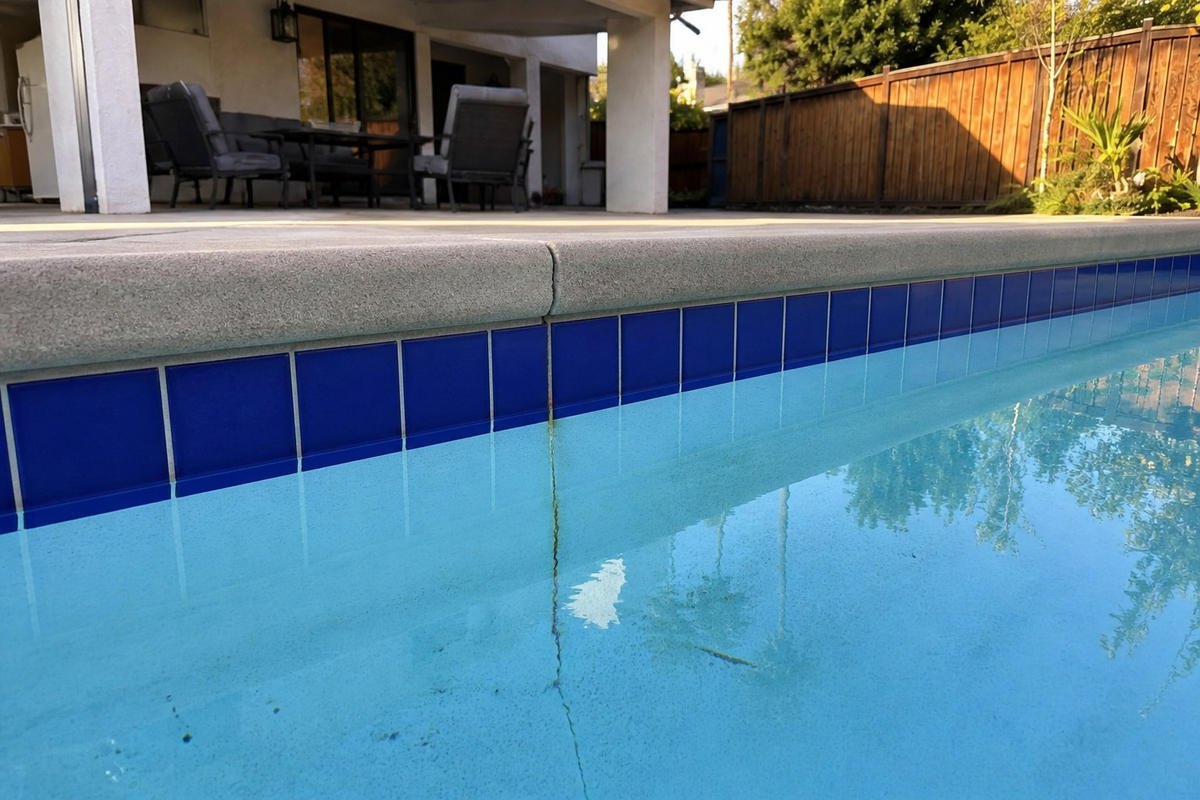
A crack in the concrete behind the plaster looks different from crazing. Signs that point that way:
Above the water, mark each end of the crack with a pencil tick and the date, and photograph it next to a coin. Look again in a month. A line that has not moved is likely old settling. One that has grown past the tick is still moving, and a patch on top will crack again along the same line. Shell repair means opening the crack and stitching or injecting it, which our renovation FAQ describes, and it is one of the jobs our leak repair crew handles.
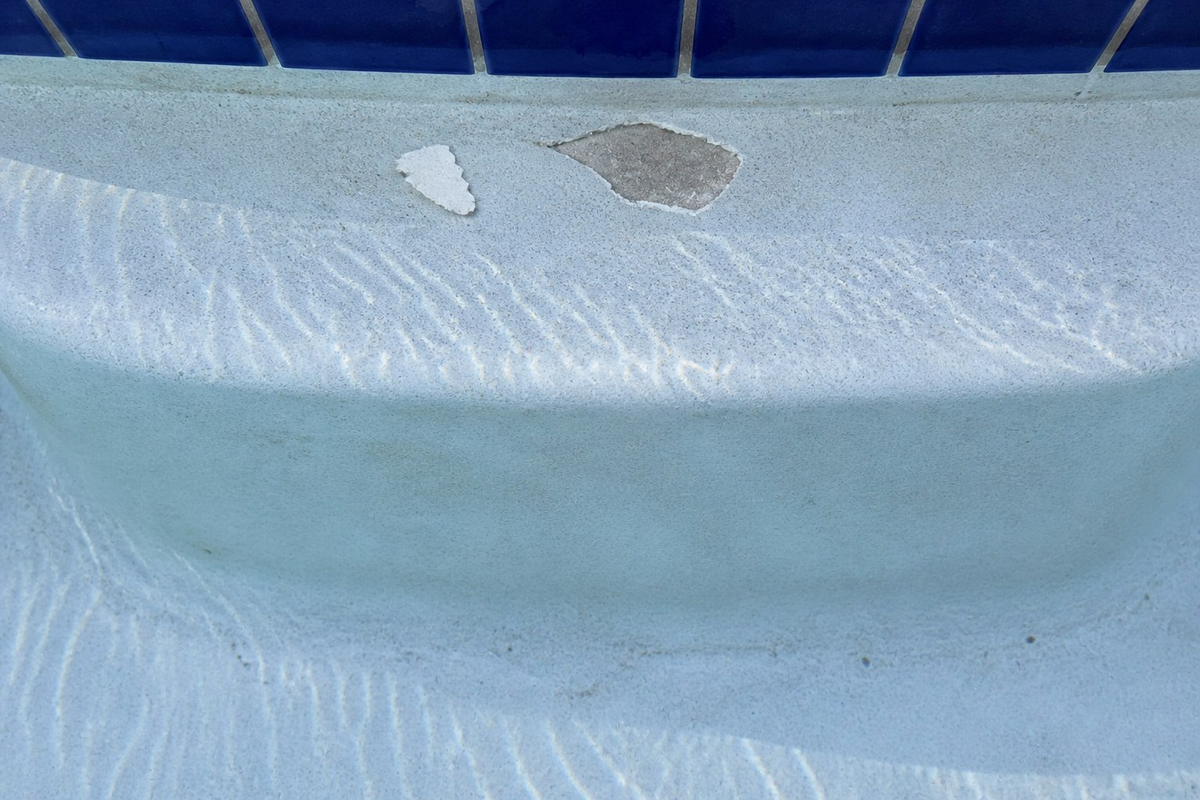
Delamination is plaster losing its grip on whatever is behind it. It shows as blisters, a hollow sound when you tap, and flakes that come away at step edges and just under the tile. It is most common in pools that were replastered over an old coat, where the bond between the layers is the weak point. The post on chipping that leads this search blames troweling technique, which fits: plaster that was worked too long or too wet bonds poorly. The tap test with the end of a pole is the same one in the nodules guide linked above.
One flake on a step edge can be patched. Hollow sounds in several places across the floor mean the bond is going over a wide area, and patches will keep losing to it. That is the point where resurfacing makes sense, and with a delaminating coat the old plaster comes out first rather than being covered.
Plaster that feels like sandpaper and looks dull or blotchy has been etched: the water has been eating the cement out of the surface. It happens when pH, alkalinity or calcium stay low, and it is the opposite of the crust that hard LA tap water usually leaves. An etched floor shows crazing more because dirt sits in the rough surface. Fix the water first; the ranges are on our pool chemistry page, and raising calcium is covered in our calcium hardness guide.
Worth trying on a chip, a short crack that has stopped moving, or a flake at a step edge. Skip it on a crack you are still watching.
A patch never matches old plaster exactly. Expect a slightly brighter spot that fades over a season or two.
Crazing costs nothing beyond brushing. A home patch is a tube of putty and an afternoon. For hired work, an Orange County pool company's price page from November 2025 puts minor plaster repairs at $500 to $2,000 and complete replastering at $4,000 to $10,000. Those are their numbers, not ours, and the replastering figure sits below our own range.
If the line turns out to be in the shell and the pool is losing water through it, we locate the leak for $0 inside our area; repair labor starts at $175 an hour from there. When delamination has spread and the whole interior has to come out, our replastering price starts at $7,500, and most projects land between $10,000 and $20,000. Cracks or flakes in a coat only three or four years old are a question for the company that put it on, since plaster normally gets fifteen to twenty years.
We can usually sort crazing from a shell crack from two pictures: one straight down at the line, one showing where it ends. Send them here or ring (818) 740-6099.
Yes, where the damage is local: a chip, a flake at a step edge, a short crack that has stopped moving. Loose edges come off first so the patch bonds to sound plaster. It will show as a brighter spot for a while. Widespread hollow areas are past patching.
Usually you leave them. Fine crazing sits in the top skin, does not leak and does not need filling. Brush the lines so dirt does not settle in them and keep pH and calcium in range so the edges do not dissolve.
A home patch costs a tube of epoxy putty. One Orange County pool company's published range for minor plaster repairs is $500 to $2,000. A crack in the shell is priced by how it has to be opened and stitched; our repair labor starts at $175 an hour, and finding the leak is $0 in our area.
Fifteen to twenty years is typical in LA. Low pH or calcium shortens it by etching the surface, and a coat that cracks or flakes in its first few years usually points to how it was mixed or cured.
A two-part underwater epoxy putty or a wet-use plaster patch kit, pressed in and smoothed flush. Only bother with a crack that is open enough to catch a fingernail and has not grown since you marked it.
Send a photo straight down at the crack with a coin for size, plus one showing where it ends. We will tell you whether it is crazing, a shell crack or plaster letting go. Or call (818) 740-6099
Written for Foothill and Valley homeowners.
Why white bumps grow out of cracks and loose plaster, how to tell them from scale, and when a patch is enough.
Two spot tests that tell leaf from metal, then chlorine or ascorbic acid with the water in, and where home methods stop.
How long each finish lasts, what it asks of your care, and what the gap costs.
Los Angeles and the Valley
We check whether it stops at the plaster or goes into the shell, and whether the pool is losing water through it. Diagnosis is $0 in our area.