
Weekly maintenance
The same full panel on a small pool as on a large one, because the dose has to be right the first time. Brushing matters more in the shaded corners.
Small pools under an almost unbroken canopy, on lots reached down a side path rather than a driveway.

Licensed, insured and family-owned


Most calls start here
Small, old and shaded is a specific combination, and it fails in specific ways.
The chemistry swings faster than anyone expects
Twelve thousand gallons is not half the trouble of twenty-four thousand — it is twice the volatility. One warm week, one party or one missed visit shows up in the chlorine reading immediately.
Deep shade hides a pool that is drifting
Under full canopy chlorine burns off slowly, so the reading holds while the organic load quietly builds. The water looks fine for weeks, then blooms in a corner that never gets flow.
Access eats the visit
A long carry down a side return with a net, a vacuum and a bucket of chemicals is time not spent on the pool. A gate locked on the day is a visit lost entirely.
Old shells and old lines reach the end together
Plaster that has been acid-washed before has less left to give, skimmer throats crack, and mature roots find old plumbing runs.
Repairable one piece at a timeWhy Sierra Madre is different
Three square miles, and over the older streets the tree canopy is very nearly continuous. That makes a pool you do not see much elsewhere in the Foothills: small, shaded almost all day, built decades ago on a modest lot.
Access decides how long a visit takes and whether it can happen at all. Narrow streets, no kerb space and a single locked side gate are the norm here, not the exception.
Volume decides how fast the water moves: a small pool reacts to a hot week, a party or a rainstorm far quicker than a large one, in both directions.
 After
After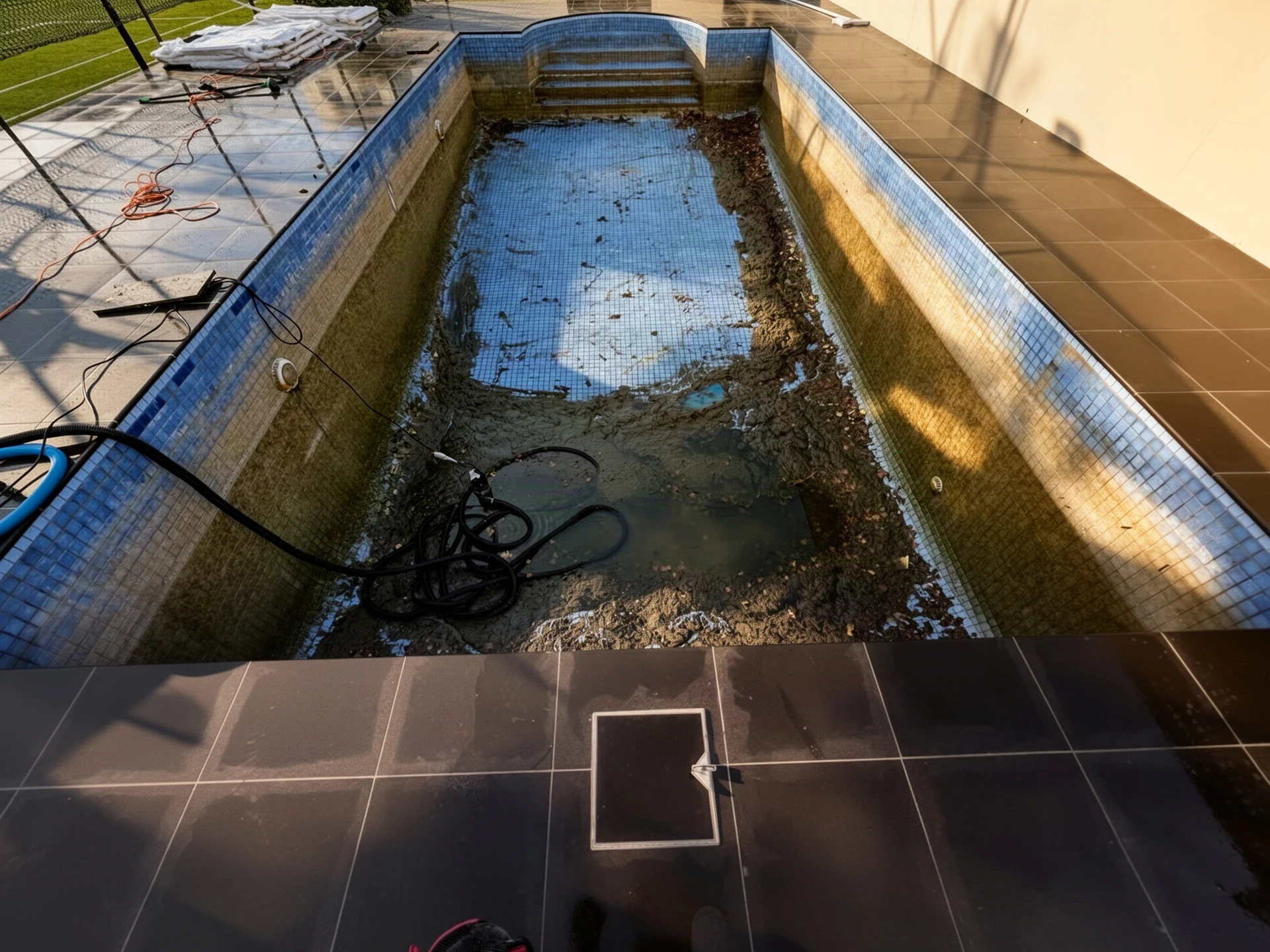 Before
What we do for Sierra Madre pools
Small pools are not cheap pools to look after — they are precise ones.
The same full panel on a small pool as on a large one, because the dose has to be right the first time. Brushing matters more in the shaded corners.

The shaded-pool version: fine all spring, green in a fortnight. About two days to recover, no draining, filter cleaned two to three times along the way.

Worth doing on an old shell only if there is at least half an inch of plaster left. On a pool that has been washed once already, that is the question to answer first.

Heaters, pumps, filters, plumbing, lights, time clocks and salt systems — including the older pads where the failed part is no longer made.

The first seven days of daily brushing and tight chemistry decide the finish. No swimming for fourteen days, no salt for twenty-eight.
Pricing
Volume decides chemical demand, so it decides the price. Typical homes land between $179 and $249 a month. Chemicals included, no minimum contract.

Prices as of August 2026, for a pool in normal condition.
One-time work
Quoted on the job, because nobody can price a green pool from a web form.
Worth mentioning when you call
Tell us the cross streets and the gate arrangement together — here the second matters as much as the first.
The crew
Four of us. The same faces every week, not whoever was free that morning.


An Arcadia job on the same route
A pool left without filtration during a house renovation, prepared and laid with the owner's porcelain mosaic.
A permanent floor that is part of the pool rather than stuck to it.
Nearby, and on the same routes
The days that cover Sierra Madre also reach Pasadena, Arcadia and Monrovia.

Hollow render and rust cut out, then the whole shell tiled.
Glendale
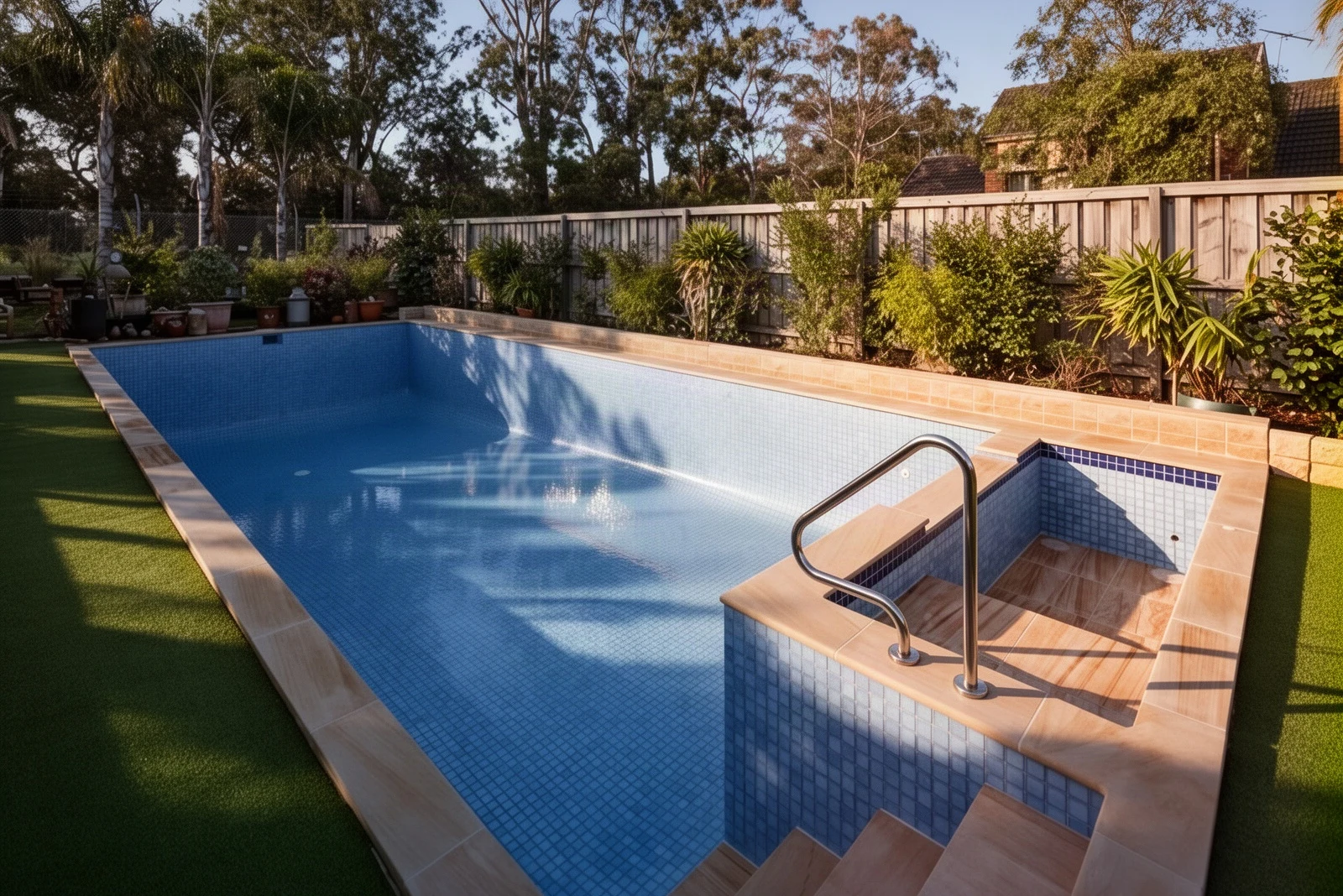
Out of repaints, so retiled, with sandstone paving around it.
Eagle Rock

Grey tile across pool and spa, seen from the air.
La Cañada Flintridge

Step by step
The nearest finished job to Sierra Madre, one town along.


Mark H.
Local Guide · 42 reviews · 18 photos
3 September 2025

Linda R.
4 reviews
25 May 2026
Kevin B.
15 December 2025
Jason T.
25 February 2026
Great company. Always on time, pool looks amazing and communication is easy. Highly recommend.
Ashley P.
11 reviews
4 March 2026
Thomas W.
Local Guide · 27 reviews · 9 photos
10 February 2025
Rachel M.
17 October 2025
We thought we needed a completely new pool system. Turns out it was just a few issues with the pump and filter. They saved us a lot of money by fixing what actually needed fixing.
Jennifer C.
Local Guide · 15 reviews · 4 photos
7 September 2025
Tell us what the pool needs, how big it is and your ZIP — and a price the same day.
Rewards
$100 for every friend you send us, up to two. No code, no form — they call and mention your name.

$100 credit
For every friend who calls and mentions your name
Up to two referrals, $200 in total. The name must come up on the first call. Spend it on any service.
20% off one-time work
For weekly maintenance members
Green-to-clean, acid wash, plaster start-up and repair labor, plus priority on the schedule.
Where we work
Crews leave from Studio City every morning. Open any area for what is different there.

Send your ZIP or cross streets. We come back the same day with the day we would be there — and what weekly service would cost on your pool.
Or call (818) 740-6099
Written for Foothill and Valley homeowners.


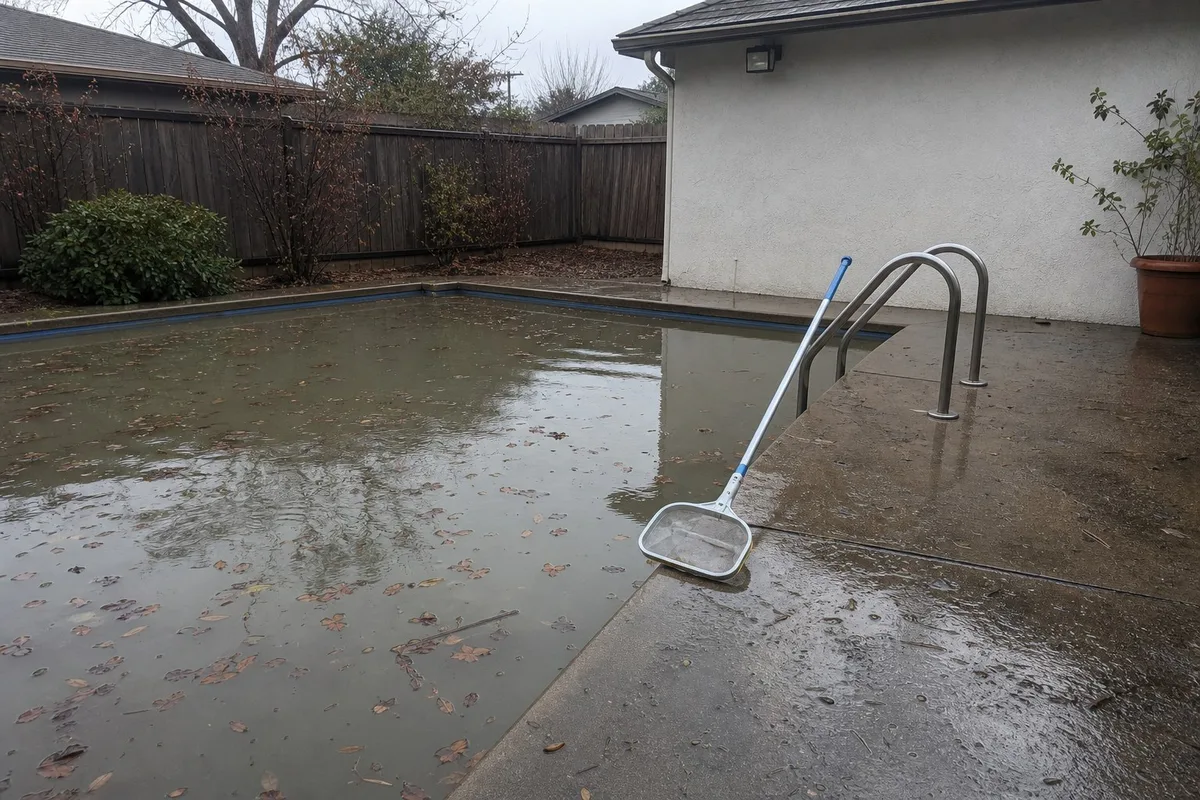
The order to work in after a storm, and where the overflow is allowed to go.
Not stock footage
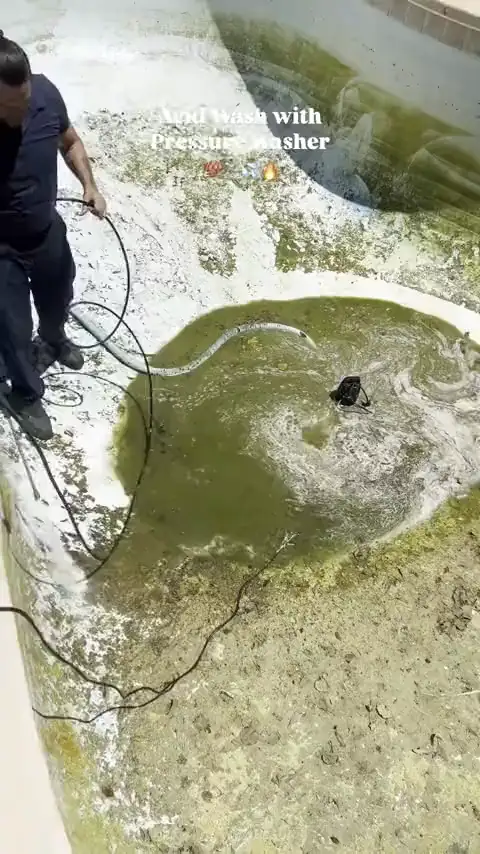
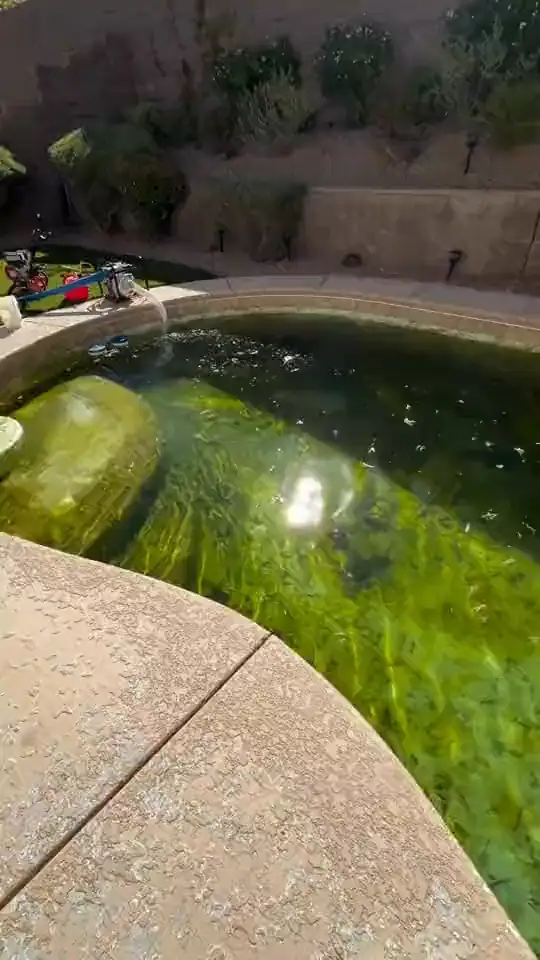
Filmed on the Sierra Madre route and the streets next to it. Nothing staged, nothing bought from a stock library.


It affects the time, not the work. What genuinely disrupts a visit is a gate that is locked on the day, a bin blocking the side return or a dog nobody warned us about. Sort those once at the start and a difficult-looking property becomes an ordinary one.
Small pools are the worst candidates for it. Less water means less buffer, so chlorine, pH and alkalinity drift further between visits, not less far. Fortnightly service usually saves money on the invoice and spends it again on chemicals and algae recovery.
The same readings, at different levels. Shade means much less chlorine lost to sunlight, so a shaded pool often needs less chlorine and less stabilizer than an open one. What it does not get is any relief from leaves, and cooler water plus low flow in the corners is exactly where algae starts.
It depends on how much plaster is left. An acid wash removes a thin layer to bring the color back to one shade, and a shell needs at least half an inch in hand to take it. Rough underfoot usually means the surface is worn through rather than stained — at that point replastering, followed by a proper start-up, is the honest answer.
Weekly service starts at $159 a month for a pool up to 15,000 gallons and runs to $249 a month for pools over 40,000, with standard chemicals included. Most customers pay between $179 and $249. Sierra Madre is priced the same as everywhere else on our routes — the address does not change the number, the pool does. One-time work is quoted on the job: green to clean from $349, acid wash from $749, equipment repair at $175 an hour.
Cleaning, recovery, repair and renovation across Los Angeles.
Nearby, and on the same routes
Send the cross streets, the rough size, how it is reached and how much shade it gets.


