
Weekly maintenance
Free and total chlorine both read, plus calcium hardness, TDS and the rest of the panel. Brushing, all baskets, whole pad.
Large pools, heavy summer use and old trees over the water — the most demanding pools in the 91006 area.
Licensed, insured and family-owned


Most calls start here
Four patterns, and all of them are predictable enough to plan around.
The chlorine smell that means too little chlorine
Heavy summer bather load makes chloramines, and chloramines are what people smell. A pool fine on total chlorine can be well short on free chlorine, so we read both.
Weekly serviceBrown staining under the oaks
Oak and sycamore drop tannin-rich leaf that stains plaster if it sits. Acorns and feathers block baskets, and a blocked basket is a pump running against resistance.
Acid washScale on the tile and inside the salt cell
Hard fill water, a big evaporating surface and a heated spa. On the tile it shows; on the cell it does not, and a scaled cell under-produces long before it reports a fault.
Salt system repairA spa used all winter, drifting between visits
The smallest body of water on the property moves fastest. Heated, used and topped up with hard water, it needs the same attention as the pool.
What the weekly panel readsWhy Arcadia is different
A big pool is not a small pool with more water in it. Chemical demand scales with gallons and brushing with surface, so a 35,000-gallon pool with a spa and a wide ledge is roughly two jobs.
Fill water here is hard and evaporation off a large heated surface concentrates it, so calcium drops onto the tile, the ledge and the inside of the salt cell. Scale is the standing cost of owning the pool.
Gallons, spa, water features and tree load all move a quote — what pool service costs in Los Angeles.
 After
After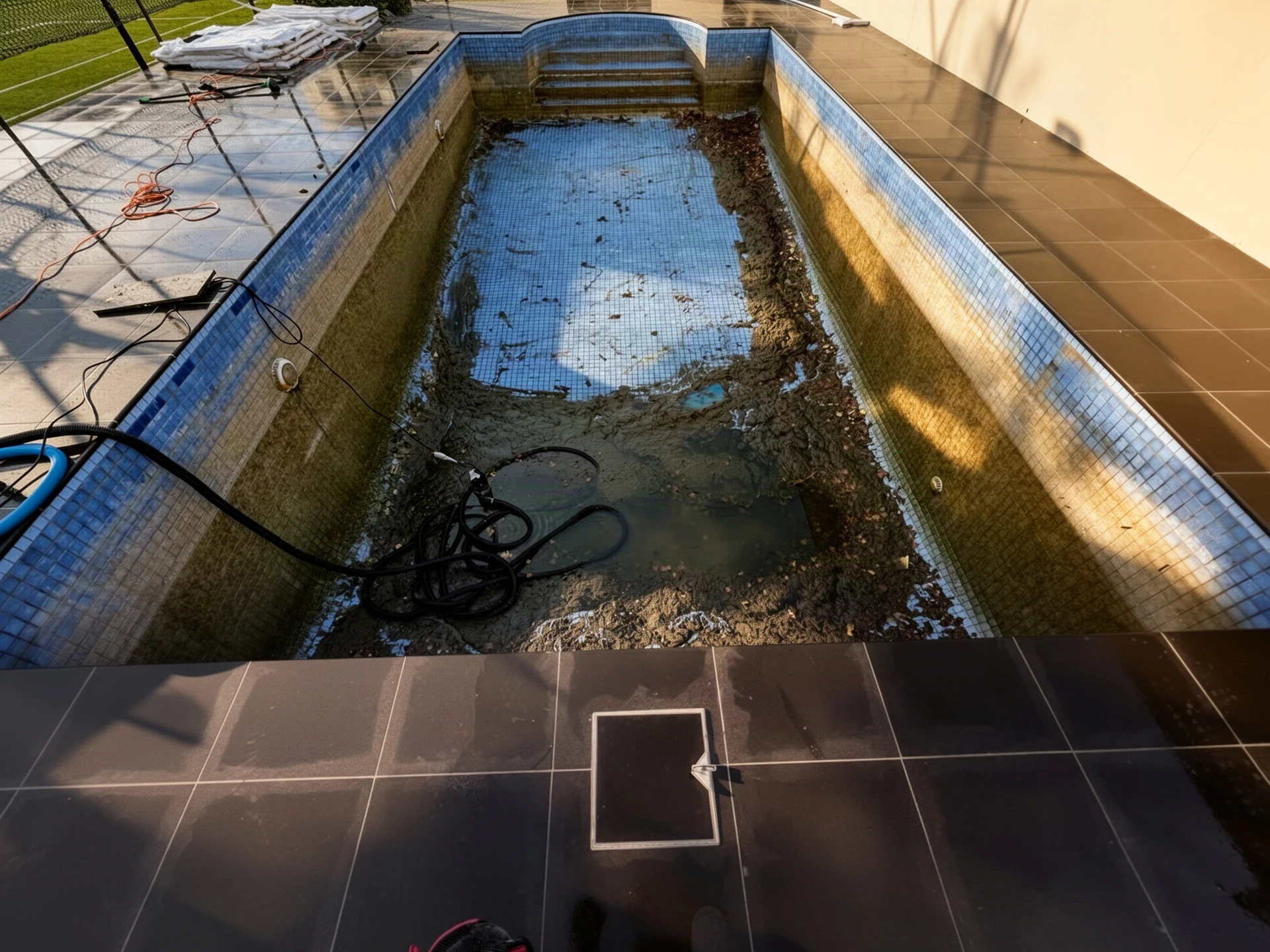 Before
What we do for Arcadia pools
Pool and spa on the same visit, and the panel read for both.
Free and total chlorine both read, plus calcium hardness, TDS and the rest of the panel. Brushing, all baskets, whole pad.

For plaster gone dull under years of scale and organic staining. Drained and washed at 50/50, on a shell with half an inch of plaster left.

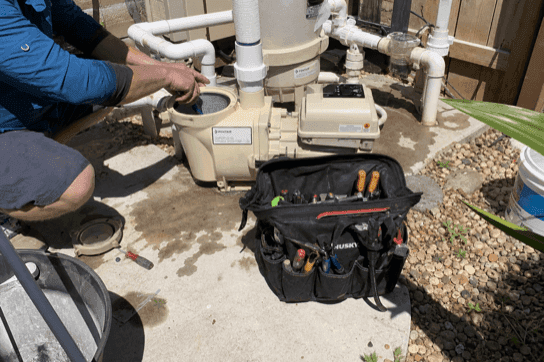
Pumps, heaters, filters, salt generators, plumbing, lights and automation. We install Pentair and Jandy, which most large Arcadia pads run.

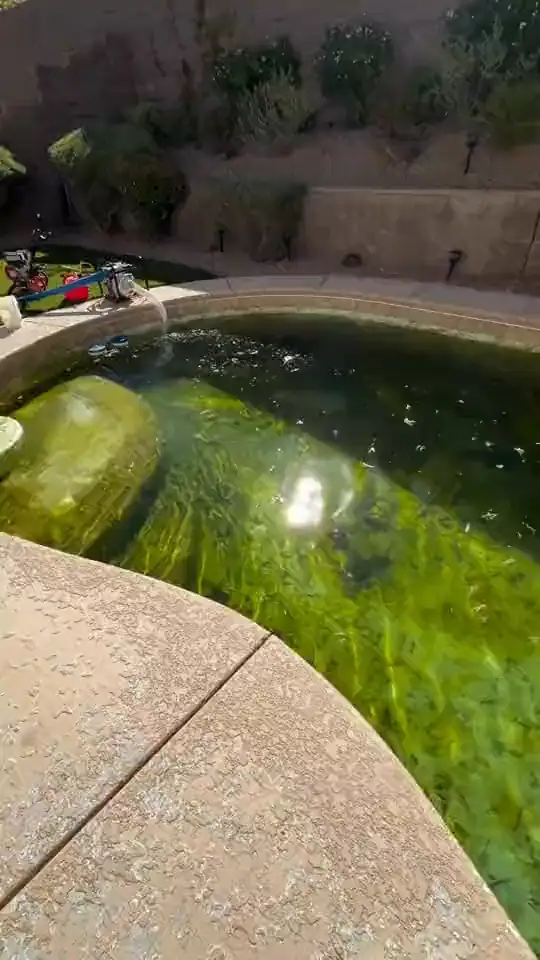
A big pool goes green slowly and comes back the same way. No draining, filter cleaned two or three times, swimmable in about two days.

Seven days of active daily work, calcium hardness held at 200–400 ppm from day one. With water this hard, the first week decides the next decade.
Pricing
Volume decides chemical demand, so it decides the price. Typical homes land between $179 and $249 a month. Chemicals included, no minimum contract.


Prices as of August 2026, for a pool in normal condition.
One-time work
Quoted on the job, because nobody can price a green pool from a web form.
Worth mentioning when you call
Fixed weekday, fixed route: the gap between visits decides how much leaf sinks and stains.
The crew
Four of us. The same faces every week, not whoever was free that morning.


An Arcadia job, start to finish
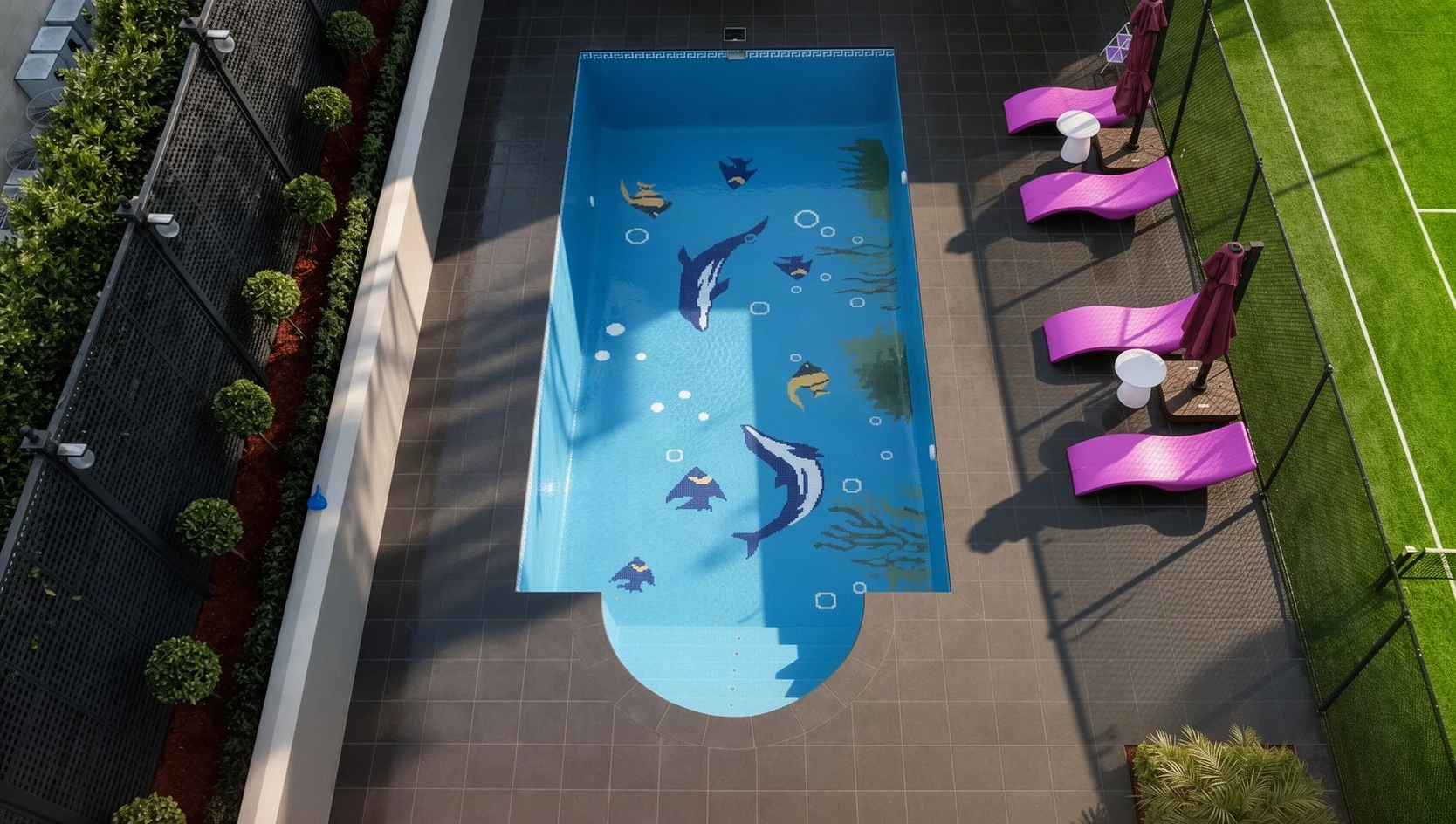
A pool left without filtration through a house renovation: stripped back, prepared and finished as a fully tiled interior with a mosaic floor.
A permanent interior that is part of the pool rather than stuck to it, and a floor that will outlast the equipment twice over.
Nearby, and on the same routes
Sierra Madre, Monrovia and Alhambra share the days that serve Arcadia.

Hollow render and rust cut out, then the whole shell tiled.
Glendale
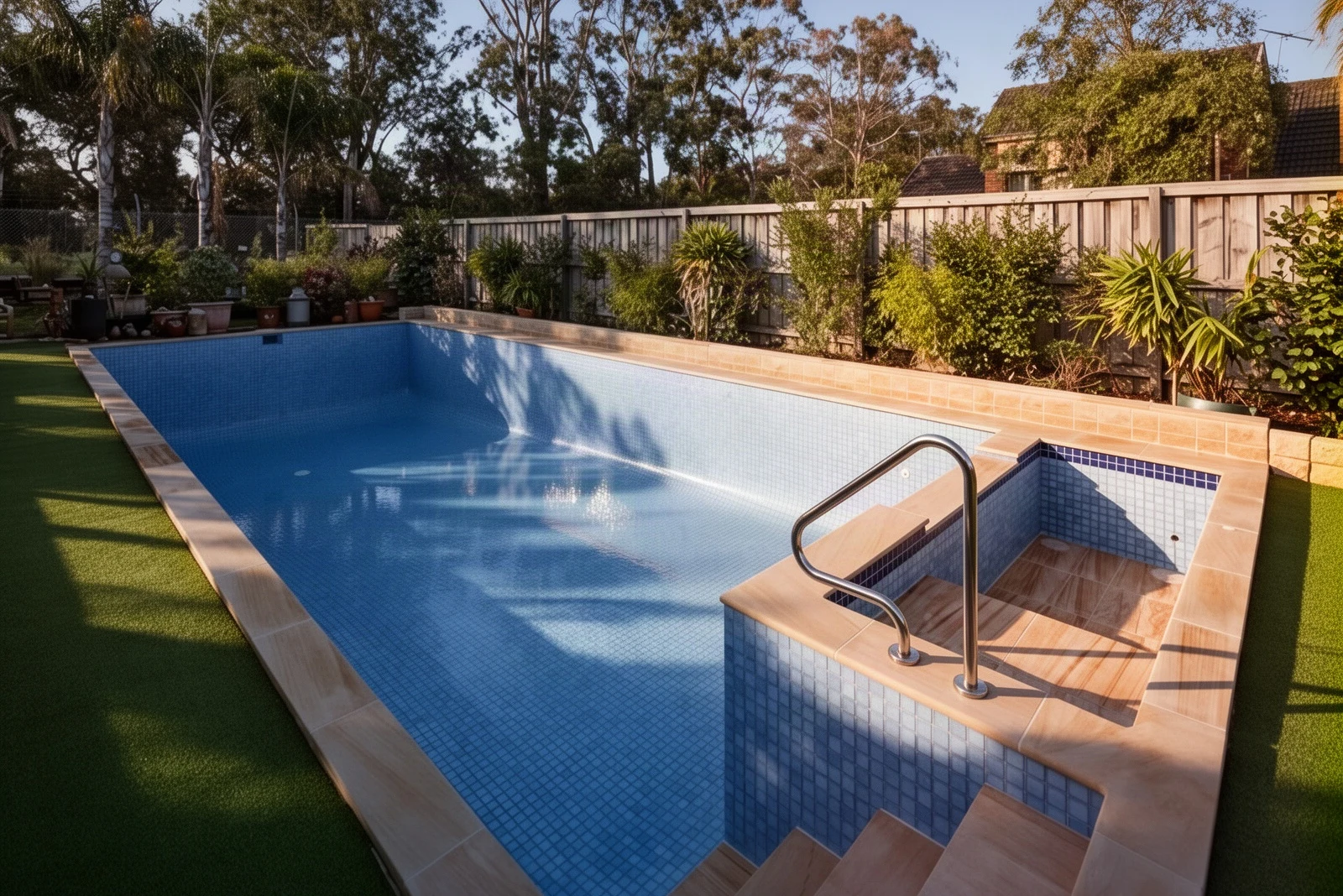
Out of repaints, so retiled, with sandstone paving around it.
Eagle Rock

Grey tile across pool and spa, seen from the air.
La Cañada Flintridge

Step by step
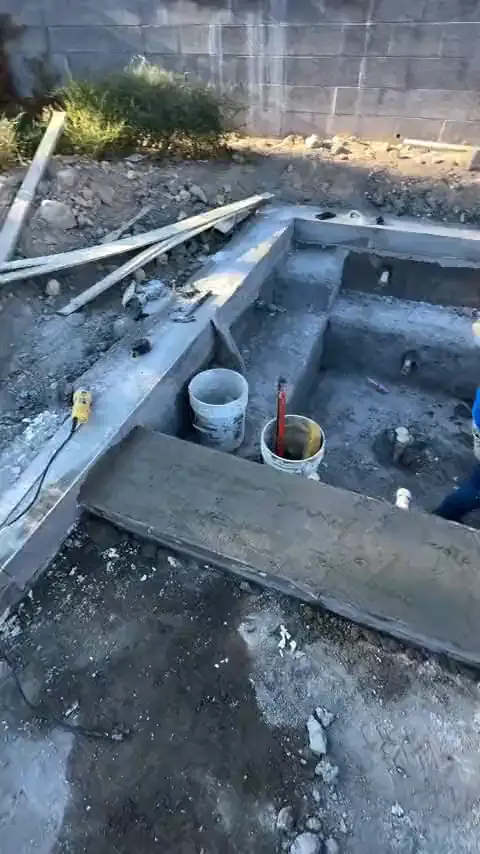
The preparation takes longer than the laying, and it is what the floor stands on.


Mark H.
Local Guide · 42 reviews · 18 photos
3 September 2025

Linda R.
4 reviews
25 May 2026
Kevin B.
15 December 2025
Jason T.
25 February 2026
Great company. Always on time, pool looks amazing and communication is easy. Highly recommend.
Ashley P.
11 reviews
4 March 2026
Thomas W.
Local Guide · 27 reviews · 9 photos
10 February 2025
Rachel M.
17 October 2025
We thought we needed a completely new pool system. Turns out it was just a few issues with the pump and filter. They saved us a lot of money by fixing what actually needed fixing.
Jennifer C.
Local Guide · 15 reviews · 4 photos
7 September 2025
Tell us what the pool needs, how big it is and your ZIP — and a price the same day.
Rewards
$100 for every friend you send us, up to two. No code, no form — they call and mention your name.

$100 credit
For every friend who calls and mentions your name
Up to two referrals, $200 in total. The name must come up on the first call. Spend it on any service.
20% off one-time work
For weekly maintenance members
Green-to-clean, acid wash, plaster start-up and repair labor, plus priority on the schedule.
Where we work
Crews leave from Studio City every morning. Open any area for what is different there.

Send your ZIP or cross streets. We come back the same day with the day we would be there — and what weekly service would cost on your pool.
Or call (818) 740-6099
A pre-party cleaning with 24 hours' notice.
Written for Foothill and Valley homeowners.


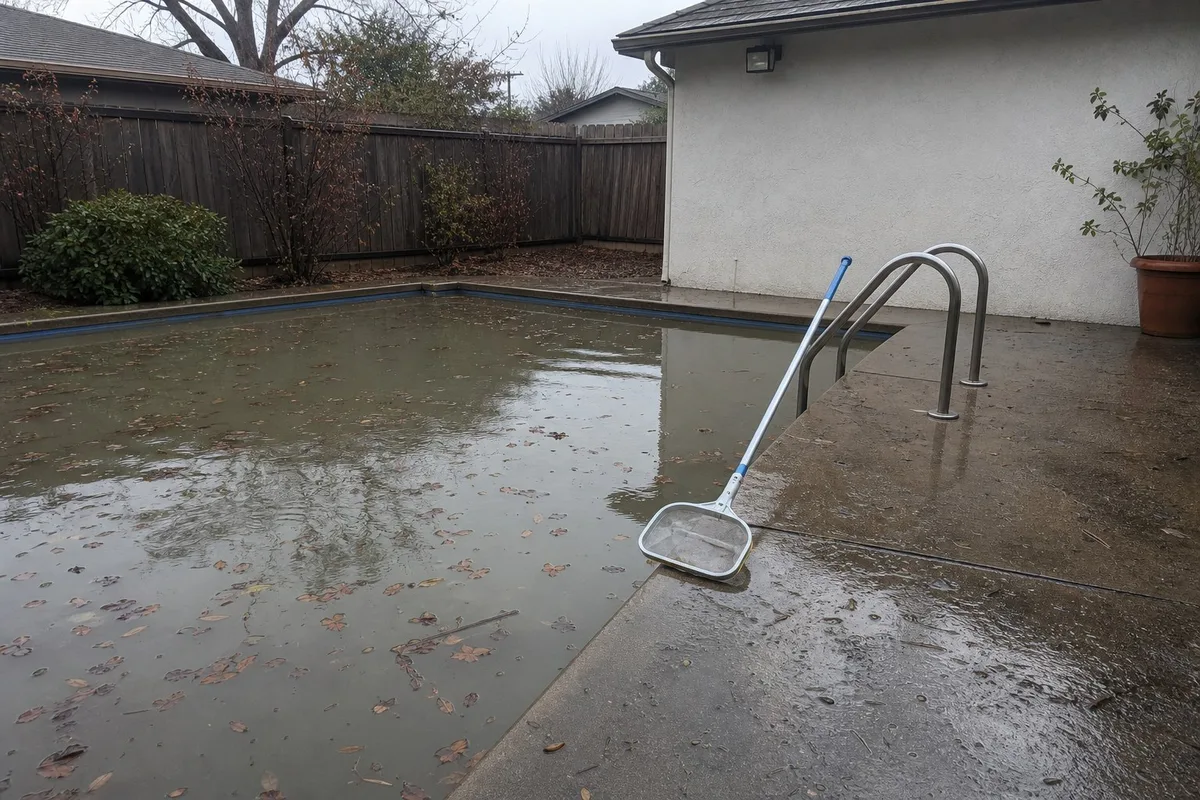
The order to work in after a storm, and where the overflow is allowed to go.
Not stock footage
Filmed on the Arcadia route and the streets next to it. Nothing staged, nothing bought from a stock library.

That smell is chloramines, not chlorine — the by-product of chlorine that has already done its work. It is a sign of too little free chlorine for the load, not too much. A test that reads only total chlorine will miss it completely.
Yes. Tannins leach out of wet leaf and mark a light surface within days if it is left sitting on the floor. Netting and vacuuming on a fixed weekly rhythm is what prevents it. Once the stain is in the plaster it is an acid wash question, not a cleaning question.
If it is in real use through summer and sits under trees, usually yes in the warm half of the year. The second visit buys debris removal and chlorine, not a second full chemical service. Many Arcadia properties run two in summer and one through winter.
Two things. Feathers pack a skimmer basket faster than leaf does, which starves the pump. Organic waste consumes chlorine, so demand rises in the same week the basket blocks. Both are handled by emptying baskets and holding free chlorine at target.
Weekly service starts at $159 a month for a pool up to 15,000 gallons and runs to $249 a month for pools over 40,000, with standard chemicals included. Most customers pay between $179 and $249. Arcadia is priced the same as everywhere else on our routes — the address does not change the number, the pool does. One-time work is quoted on the job: green to clean from $349, acid wash from $749, equipment repair at $175 an hour.
Cleaning, recovery, repair and renovation across Los Angeles.
Nearby on the same run
Approximate size, spa or water feature, salt or chlorine, and what is growing over the pool.


