
Weekly maintenance
Full chemical panel, vacuum for the grit, baskets emptied, every piece of equipment inspected — including pump speeds set for the season.
Two pool towns in one postcode: shaded flats around Old Town, newer pads on the slopes above Foothill.

Licensed, insured and family-owned


Most calls start here
Four problems: two from the canyon, one from the hillside, one from the pad.
Grit settles where the skimmer cannot reach it
Canyon sediment sinks straight past the surface, then gets drawn through the pump and abrades seals and impellers. It is a vacuum job, and it brings filter cleans forward.
Rain off the slope arrives all at once
A hillside garden sheds water to its lowest point, and often that is the pool. pH and alkalinity shift, chlorine is consumed fast, the water clouds within a day.
New automation left on the builder's defaults
Good kit, but nobody has tuned it: pump speeds too low to skim, schedules that never changed with the season, a fault code nobody has read.
Down in the flats, the opposite problem
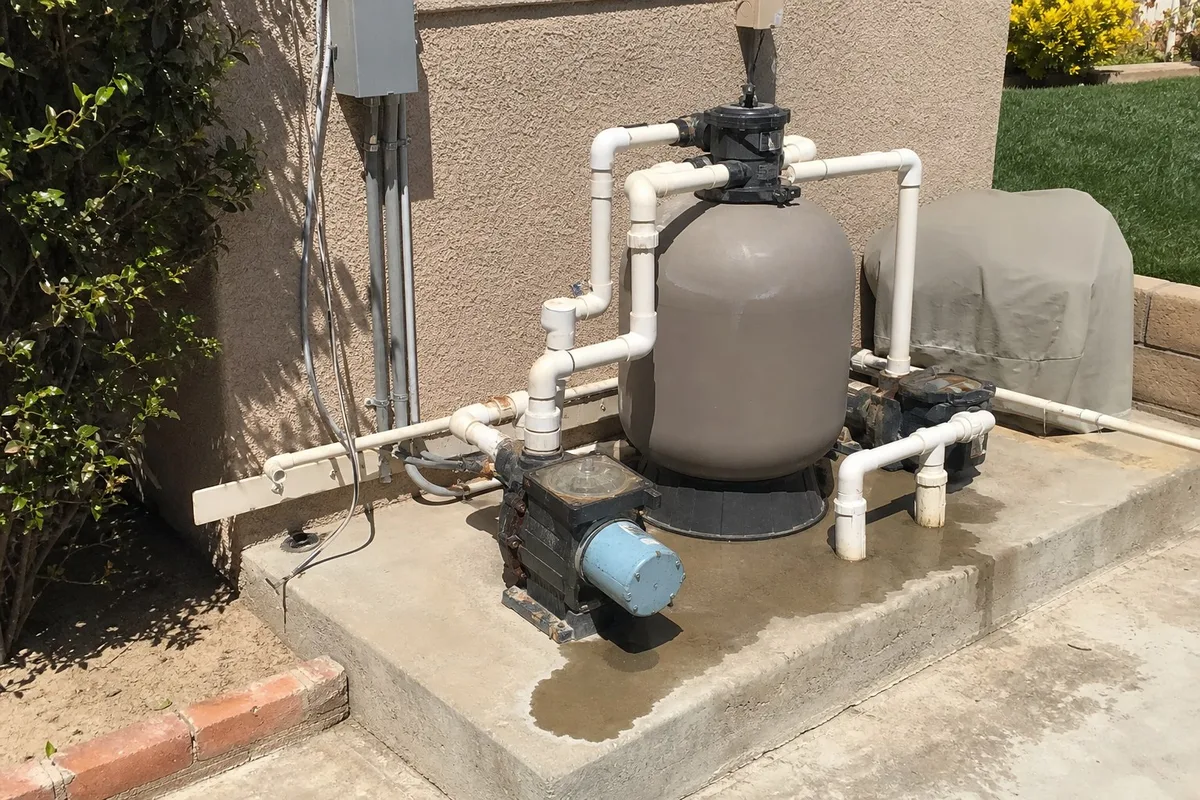
Original plaster, a single-speed pump and a mechanical time clock under a full tree canopy. Everything works, nothing is monitored, and the first sign of trouble is the pump.
We diagnose before replacingWhy Monrovia is different
On the flats around Old Town and Myrtle Avenue, pools are older, shaded by mature street trees and running equipment that has been on the pad for decades. Above Foothill the houses are newer and so are the pads — variable-speed pumps, salt cells and an app on somebody's phone.
The two halves fail in almost opposite ways, and what they share is the canyon. What comes down it is not soft leaf litter but grit: fine decomposed granite and sediment, carried by wind and washed down by rain.
It is too heavy to skim, too fine to notice until it is lying on the floor, and abrasive on its way through the equipment. In 91016 the debris question is as much about sand as about leaves. What pool service costs here.
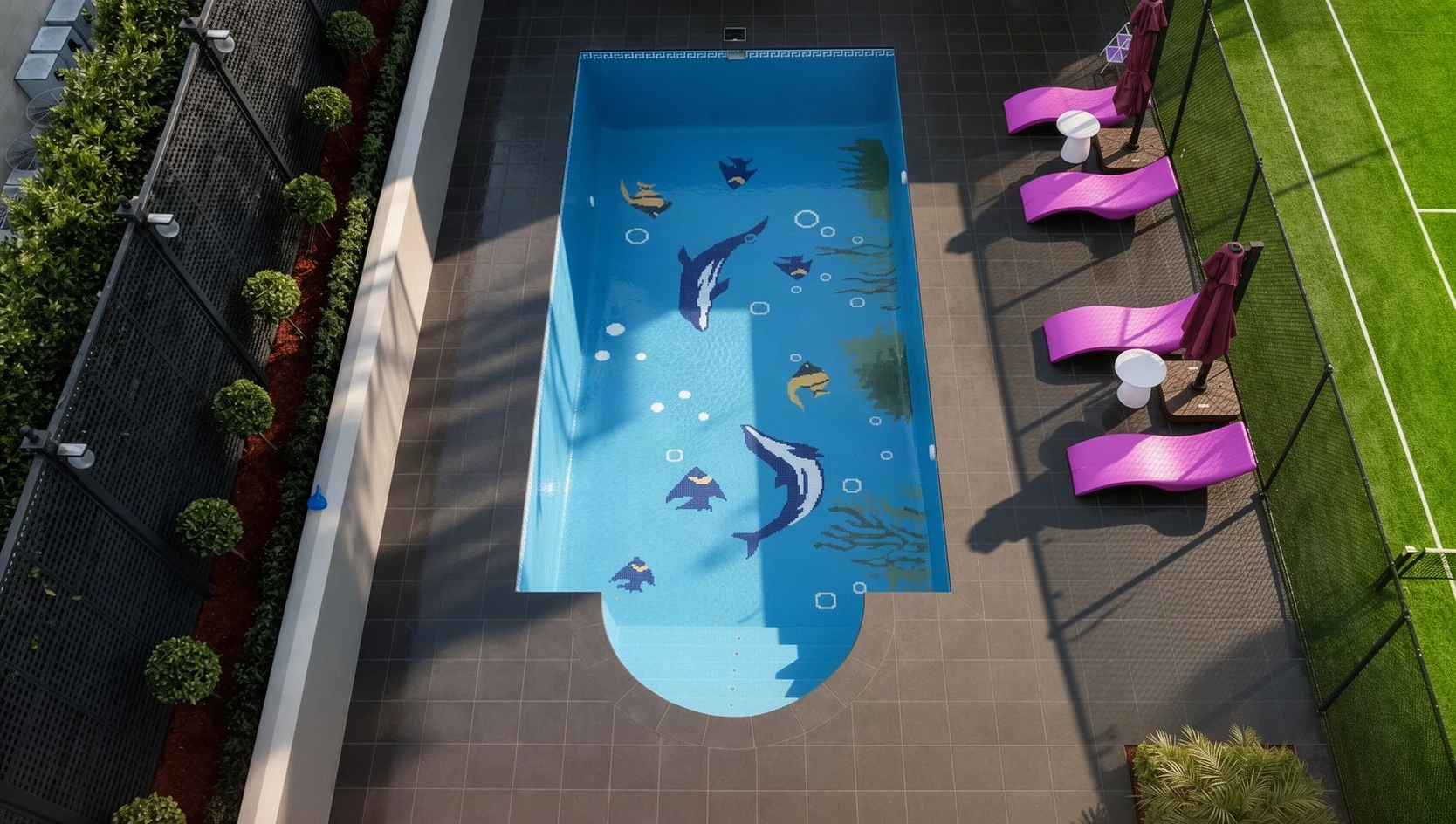 After
After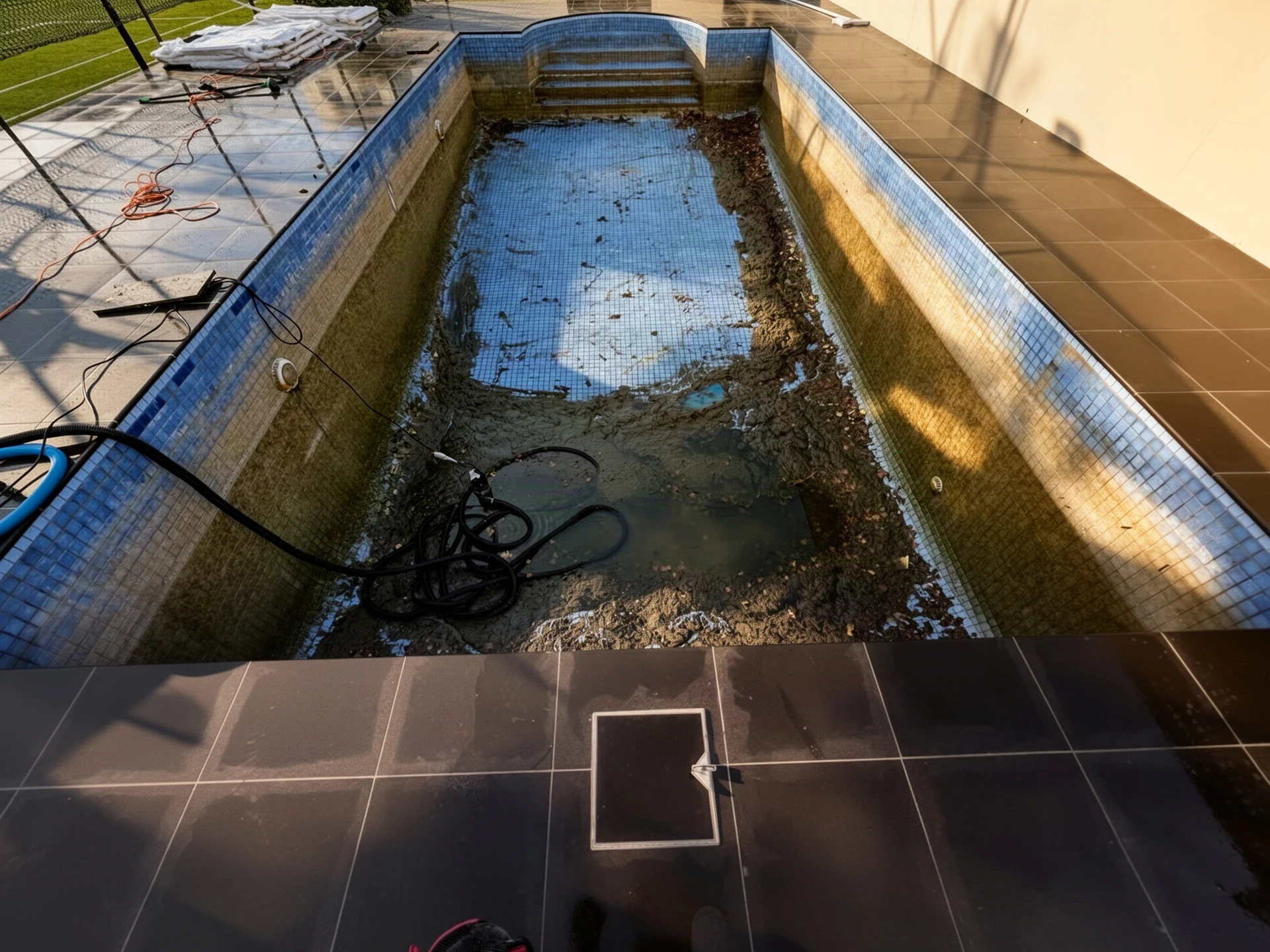 Before
What we do for Monrovia pools
What changes is what it catches. Costs are on the pricing page, with no form.
Full chemical panel, vacuum for the grit, baskets emptied, every piece of equipment inspected — including pump speeds set for the season.

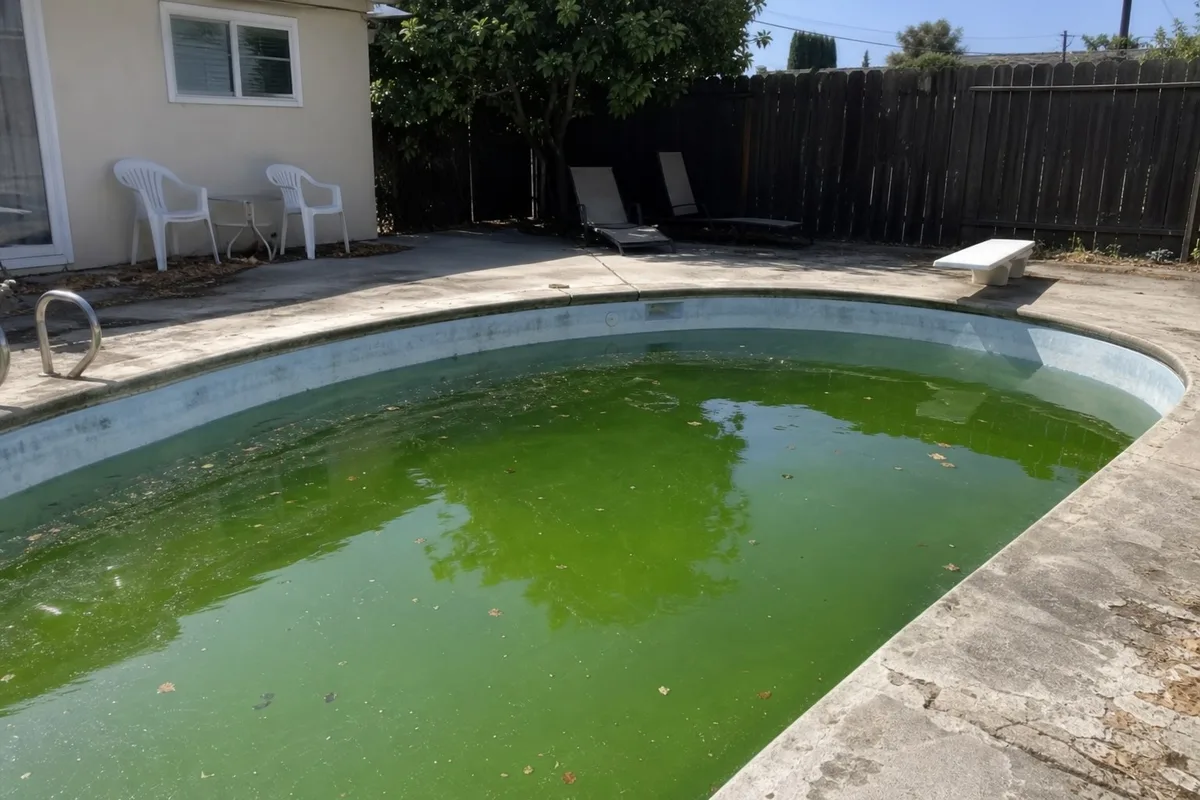
The Monrovia sequence: rain off the slope, then a warm week, then a green pool. About two days, and the pool is not drained.

Mostly an Old Town job: older plaster that grit and staining have left blotchy. It removes a thin layer, so it is done rarely.

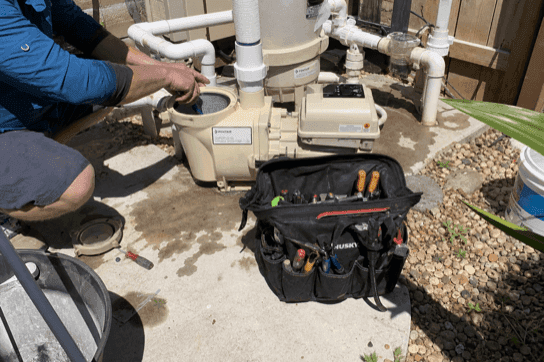
Pumps, heaters, filters, salt generators, lights, plumbing and automation. We install Pentair and Jandy, so hillside pads are familiar ground.

For the newest builds on the slopes: seven days of daily brushing, hardness 200–400 ppm, no swimming for fourteen days, no salt for 28.
Pricing
Volume decides chemical demand, so it decides the price. Typical homes land between $179 and $249 a month. Chemicals included, no minimum contract.

Prices as of August 2026, for a pool in normal condition.
One-time work
Quoted on the job, because nobody can price a green pool from a web form.
Worth mentioning when you call
The hillside streets and the Old Town flats are not always on the same day.
The crew
Four of us. The same faces every week, not whoever was free that morning.


A job on the same Foothill route
A pool left without filtration during a house renovation, cleaned out, prepared and tiled with a custom porcelain mosaic.
A permanent mosaic floor that is part of the pool rather than attached to it, on a pool that had been written off.
Nearby, and on the same routes
The eastern Foothill days also cover Arcadia, Sierra Madre and Pasadena.

Hollow render and rust cut out, then the whole shell tiled.
Glendale
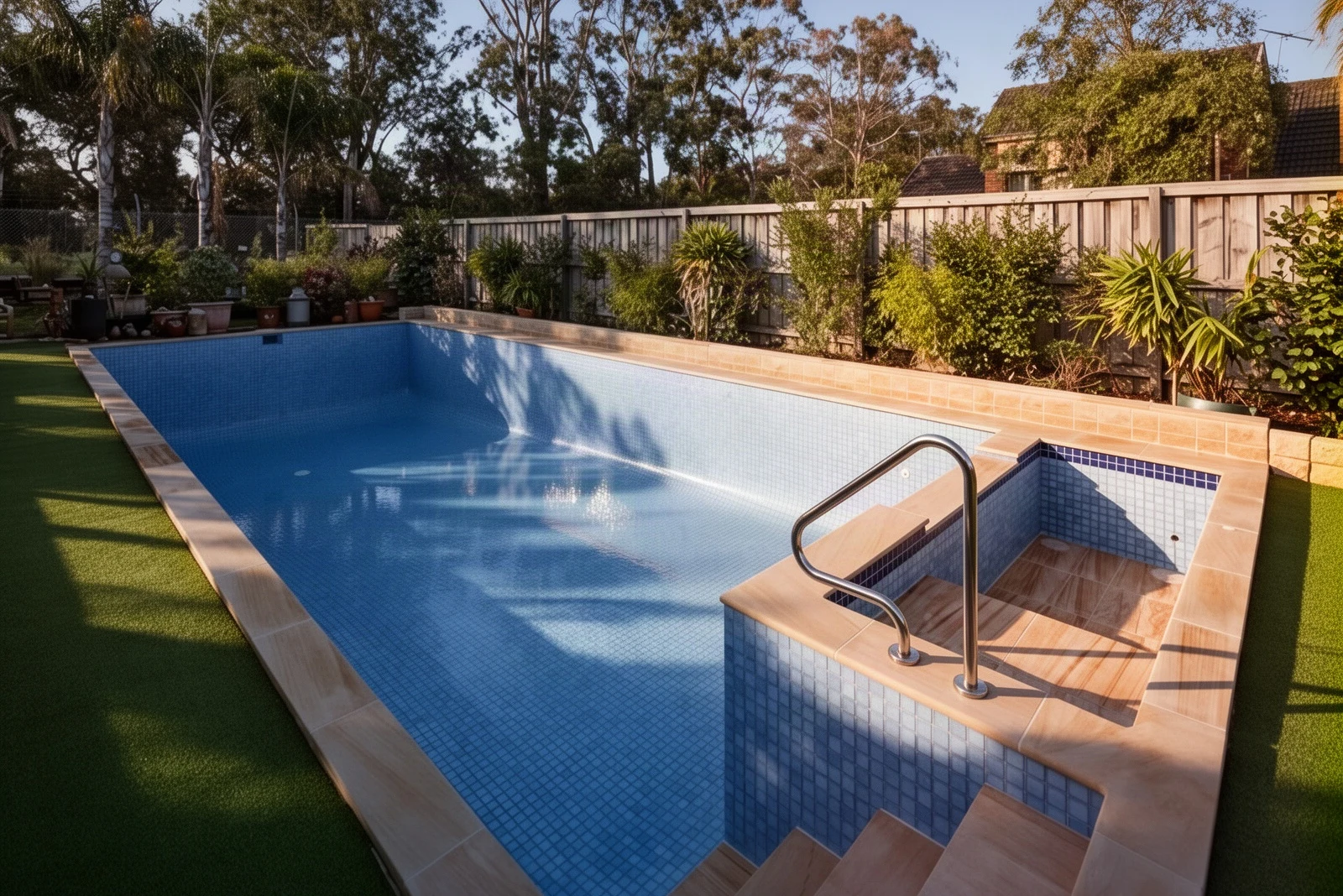
Out of repaints, so retiled, with sandstone paving around it.
Eagle Rock

Grey tile across pool and spa, seen from the air.
La Cañada Flintridge

Mark H.
Local Guide · 42 reviews · 18 photos
3 September 2025

Linda R.
4 reviews
25 May 2026
Kevin B.
15 December 2025
Jason T.
25 February 2026
Great company. Always on time, pool looks amazing and communication is easy. Highly recommend.
Ashley P.
11 reviews
4 March 2026
Thomas W.
Local Guide · 27 reviews · 9 photos
10 February 2025
Rachel M.
17 October 2025
We thought we needed a completely new pool system. Turns out it was just a few issues with the pump and filter. They saved us a lot of money by fixing what actually needed fixing.
Jennifer C.
Local Guide · 15 reviews · 4 photos
7 September 2025
Tell us what the pool needs, how big it is and your ZIP — and a price the same day.
Rewards
$100 for every friend you send us, up to two. No code, no form — they call and mention your name.

$100 credit
For every friend who calls and mentions your name
Up to two referrals, $200 in total. The name must come up on the first call. Spend it on any service.
20% off one-time work
For weekly maintenance members
Green-to-clean, acid wash, plaster start-up and repair labor, plus priority on the schedule.
Where we work
Crews leave from Studio City every morning. Open any area for what is different there.

Send your ZIP or cross streets. We come back the same day with the day we would be there — and what weekly service would cost on your pool.
Or call (818) 740-6099
Vacuum it slowly, then check filter pressure — or send us the cross streets.
Written for Foothill and Valley homeowners.
Equipment, labour, and the California rule that picks the pump for you.
Shock doses by water colour, how long it takes, and why you should not drain.
Tell it from a stain, scrub it, hold the chlorine, and know when acid wash is next.
Not stock footage
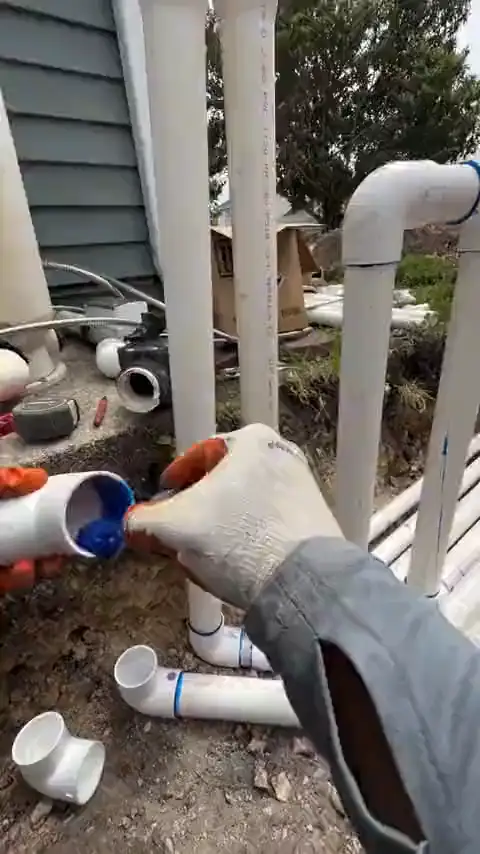
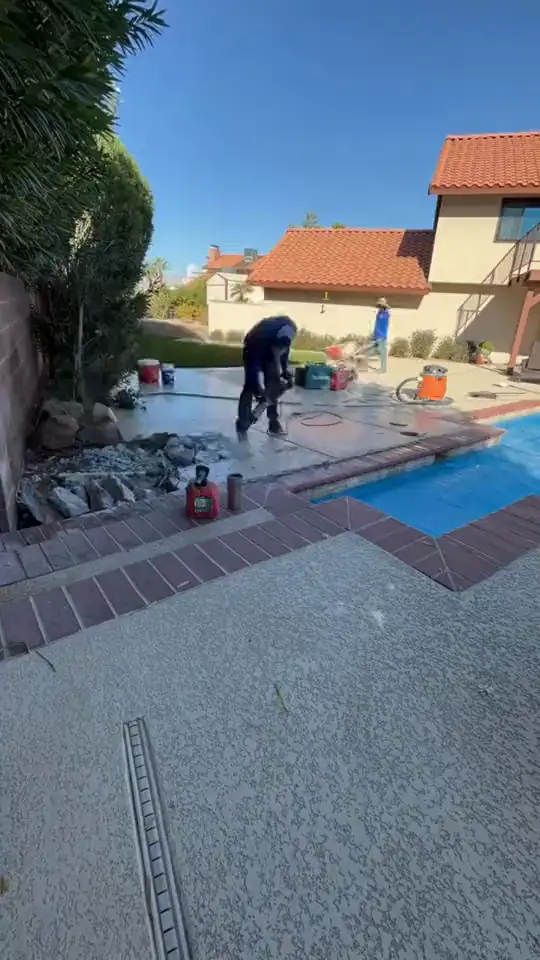
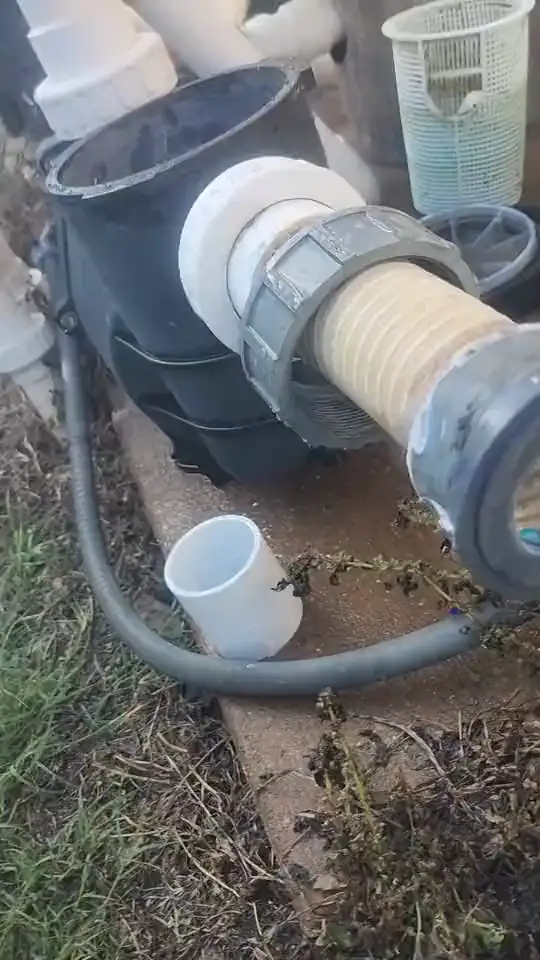
Filmed on the Monrovia route and the streets next to it. Nothing staged, nothing bought from a stock library.

Yes, and better than leaving it. Vacuum slowly — sweeping fast lifts the sediment into a cloud that resettles overnight. Then check filter pressure, because grit fills a cartridge faster than anything else. What not to do is brush it towards the main drain and let the pump swallow it.
The app controls the equipment; it does not test the water, empty a basket, brush a wall or notice a salt cell scaling. Modern pads also drift: schedules stay on last summer's times, a pump speed set for quiet running is too slow to skim, a heater lockout sits unread.
Get the debris out before it dissolves, then test rather than guess — runoff moves pH and alkalinity and eats chlorine at once. Run the filter longer for a couple of days and expect to clean it afterwards. If cloudy has become green, that is a recovery, not a clean.
After the start-up programme finishes: the first week is daily attention, the following weeks close monitoring, and salt should not go in for twenty-eight days. Weekly service picks up from there. If you are unsure which stage the pool is at, tell us the plaster date.
Weekly service starts at $159 a month for a pool up to 15,000 gallons and runs to $249 a month for pools over 40,000, with standard chemicals included. Most customers pay between $179 and $249. Monrovia is priced the same as everywhere else on our routes — the address does not change the number, the pool does. One-time work is quoted on the job: green to clean from $349, acid wash from $749, equipment repair at $175 an hour.
Cleaning, recovery, repair and renovation across Los Angeles.
Nearby, and on the same routes
Cross streets, pool size, salt or chlorine, and what is on the equipment pad.


