
Weekly maintenance
Full chemical panel, brushing, baskets and every piece of equipment inspected. Twice weekly is normal on a property in constant use.
Two kinds of pool in one zip code, and a bather load that arrives at the weekend.

Licensed, insured and family-owned


Most calls start here
Four patterns, and three of them come from load rather than neglect.
The reading on service day is not the reading on Sunday night
A pool tested Thursday can be perfect and exhausted seventy-two hours later: a dozen people and three days of August sun burn chlorine far faster than an empty pool does.
Cloudy water that has nothing to do with algae
Sunscreen, oils and hair product go into the filter and onto the tile as a scum line. The cartridge loads in a fraction of the usual time and flow drops before anyone notices.
Filter cleaningGreen arrives in days, not weeks
An unshaded pool in August, a stabilizer level that has crept up over years, and one skipped week is all it takes. Fine on Tuesday, green on the Friday somebody is arriving.
Whoever is at the house is not whoever is responsible
Breakers switched off, a valve moved, a heater left running for a week. None of it malicious, all of it invisible until the water changes.
Why Hollywood is different
Hollywood holds two different pools inside one zip code. Above Franklin they are cut into the slope: equipment below the water line, long plumbing runs, mature planting dropping into the water all year. On the flat below, the shells are older and the street trees closer.
What decides more than either is who is in the water. A large share of these houses are let — long term, monthly, or by the weekend — so load arrives in bursts, and the person standing at the pool is often not the person paying for it.
Chemistry does not average out over a month. It answers for what happened on Saturday.
 After
After Before
The services these pools use most
One or two visits a week, all year, on a property in constant use.
Full chemical panel, brushing, baskets and every piece of equipment inspected. Twice weekly is normal on a property in constant use.

The service this part of town needs most. No draining, and the filter is cleaned two to three times as the process runs.

Heavy bather load fills a cartridge quickly. High pressure and weak flow are the early warning; cloudy water is the late one.

Pumps, heaters, filters, salt systems, lights, plumbing and automation — including hillside pads where the equipment sits well below the pool.

For a shell that is stained rather than dirty. It removes a layer of plaster, so it is rare by design and needs the pool drained.

Seven days of daily attention and nobody in the water for fourteen — on a let property, blocked out of the calendar before work starts.
Pricing
Volume decides chemical demand, so it decides the price. Typical homes land between $179 and $249 a month. Chemicals included, no minimum contract.


Prices as of August 2026, for a pool in normal condition.
One-time work
Quoted on the job, because nobody can price a green pool from a web form.
Worth mentioning when you call
The property takes one day of the week and holds it — choosing that day well is worth more here than anywhere.
The crew
Four of us. The same faces every week, not whoever was free that morning.


A nearby job, start to finish
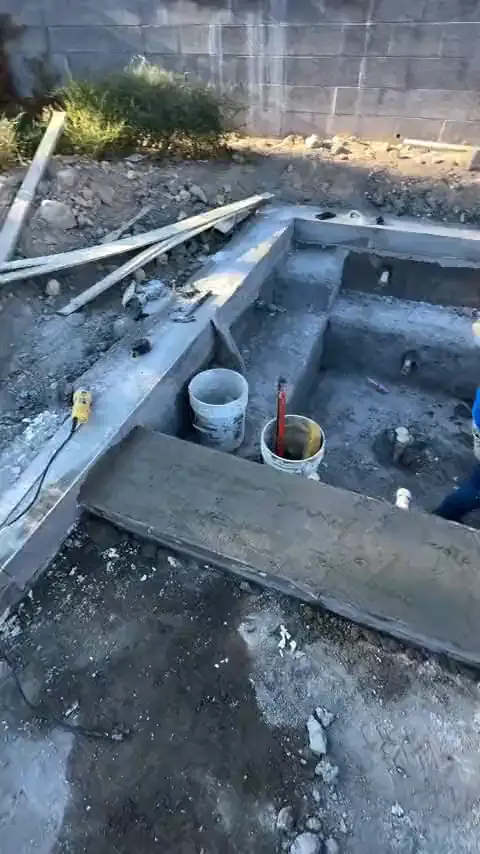
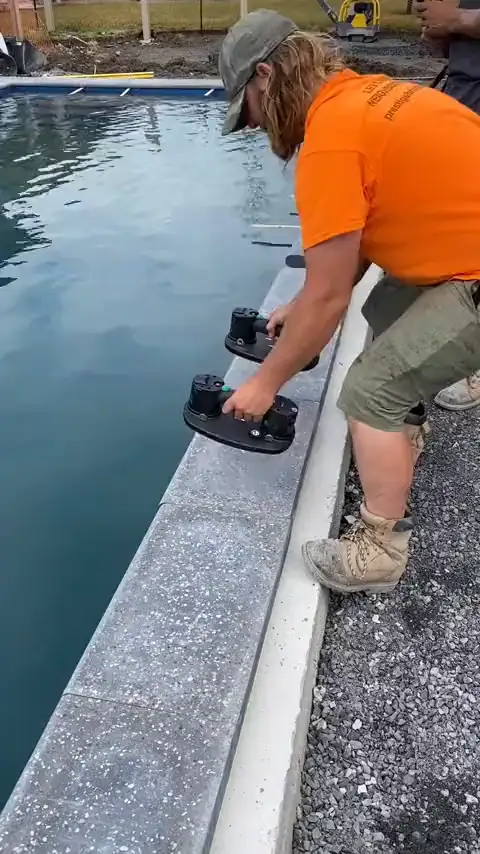
A resurfacing job that also changed how the pool gets used: new pebble interior, new waterline band, tiled step edges and three concrete stools built into the shell.
Three things in one visit: a repair that had to happen, a finish upgrade that made sense while the pool was open, and a change to how the family uses it.
Nearby, and on the same routes
Hollywood Hills, Los Feliz and West Hollywood share the days that serve Hollywood.

Hollow render and rust cut out, then the whole shell tiled.
Glendale
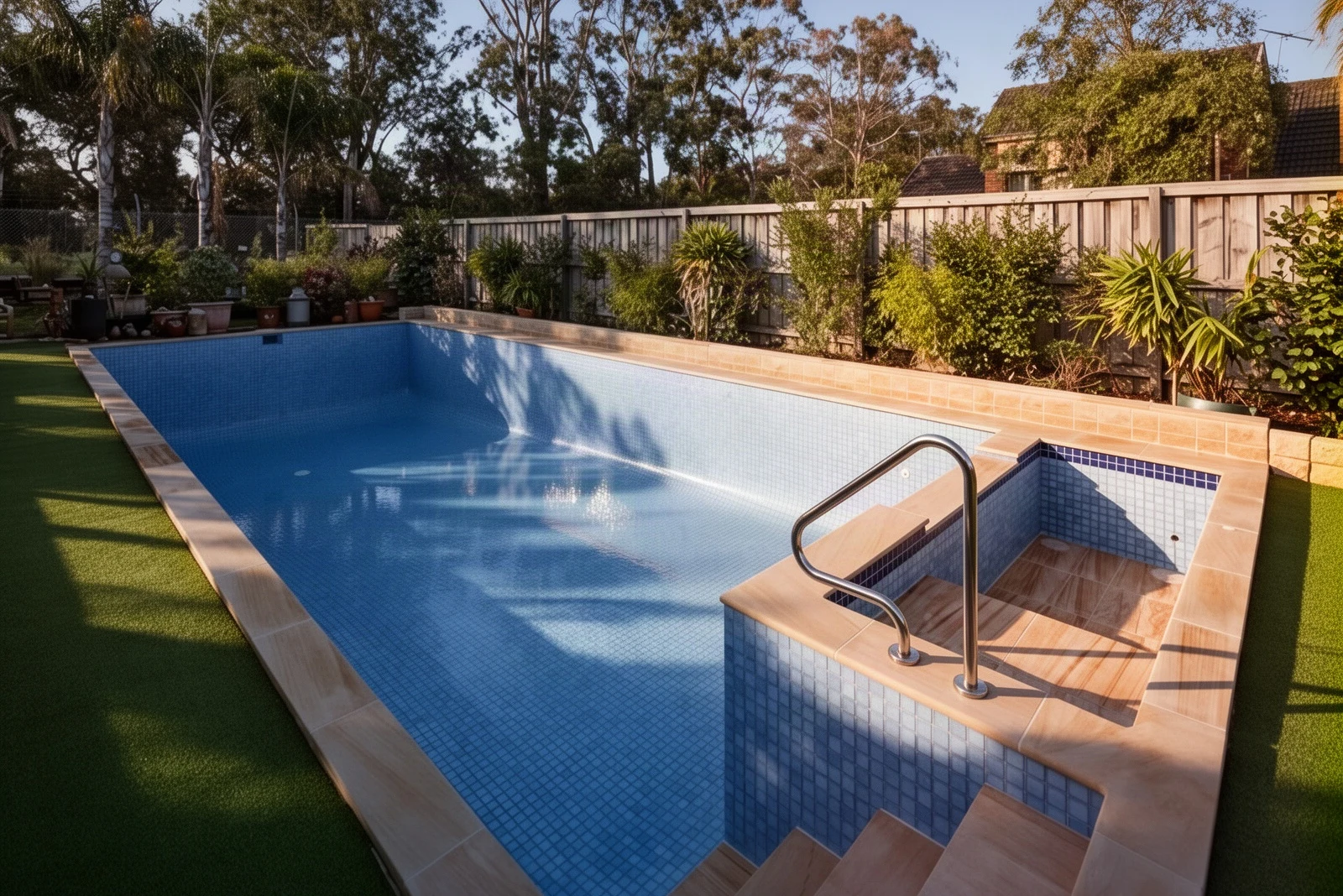
Out of repaints, so retiled, with sandstone paving around it.
Eagle Rock

Grey tile across pool and spa, seen from the air.
La Cañada Flintridge

Step by step
A Los Feliz pool cut into the slope, from the day it arrived to the finished interior.

Mark H.
Local Guide · 42 reviews · 18 photos
3 September 2025

Linda R.
4 reviews
25 May 2026
Kevin B.
15 December 2025
Jason T.
25 February 2026
Great company. Always on time, pool looks amazing and communication is easy. Highly recommend.
Ashley P.
11 reviews
4 March 2026
Thomas W.
Local Guide · 27 reviews · 9 photos
10 February 2025
Rachel M.
17 October 2025
We thought we needed a completely new pool system. Turns out it was just a few issues with the pump and filter. They saved us a lot of money by fixing what actually needed fixing.
Jennifer C.
Local Guide · 15 reviews · 4 photos
7 September 2025
Tell us what the pool needs, how big it is and your ZIP — and a price the same day.
Rewards
$100 for every friend you send us, up to two. No code, no form — they call and mention your name.

$100 credit
For every friend who calls and mentions your name
Up to two referrals, $200 in total. The name must come up on the first call. Spend it on any service.
20% off one-time work
For weekly maintenance members
Green-to-clean, acid wash, plaster start-up and repair labor, plus priority on the schedule.
Where we work
Crews leave from Studio City every morning. Open any area for what is different there.

Send your ZIP or cross streets. We come back the same day with the day we would be there — and what weekly service would cost on your pool.
Or call (818) 740-6099
With 24 hours' notice a cleaning goes in ahead of the arrival, not after it.
Written for Foothill and Valley homeowners.

Five things to expect, and how to check them.

Water has no colour of its own — the interior gives it one.

Not stock footage
Filmed on the Hollywood route and the streets next to it. Nothing staged, nothing bought from a stock library.

Before, in almost every case. Clarity and chlorine are consumed by use and sun, so the value of a visit runs forwards. Where changeovers are frequent the day that matters is the one before the next arrival — and if the gaps are short, that argues for two visits a week rather than a better single day.
For a lightly used pool, yes. For one that is empty midweek and full every weekend, often not: the water absorbs a week of demand in two days, and by the third weekend the chemistry is chasing rather than holding. We service one or two times a week all year, and will say which yours needs.
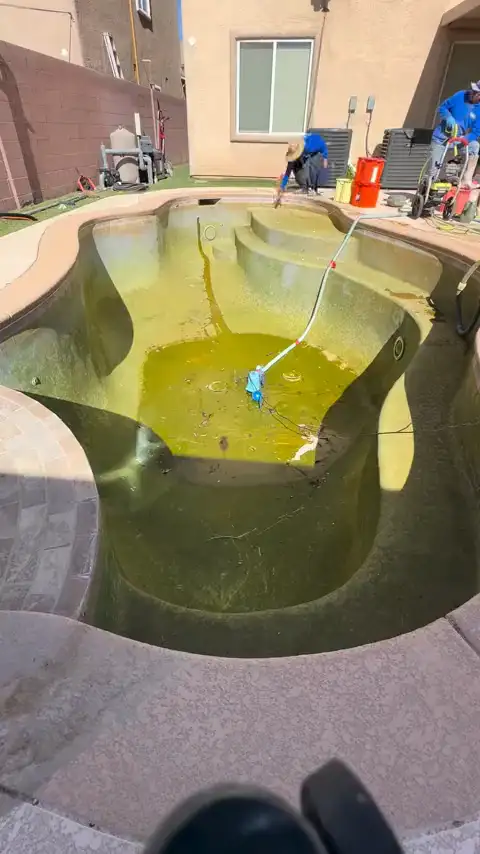
Recovery does not involve draining the pool. The water is treated, the algae killed and filtered out, and the filter itself cleaned two to three times as it loads with what it removes. Most pools are swimmable about two days in. How far gone the water is decides the number of cycles, which is why nobody can price it honestly from a photograph.
Mostly, and it is worth doing. Put the pad behind a locked cover or gate, leave the schedule set at the controller rather than on a switch anyone can reach, and have each visit note what was found and changed.
Weekly service starts at $159 a month for a pool up to 15,000 gallons and runs to $249 a month for pools over 40,000, with standard chemicals included. Most customers pay between $179 and $249. Hollywood is priced the same as everywhere else on our routes — the address does not change the number, the pool does. One-time work is quoted on the job: green to clean from $349, acid wash from $749, equipment repair at $175 an hour.
Cleaning, recovery, repair and renovation across Los Angeles.
Nearby, and on the same routes
Size of pool, hillside or flat, and whether it is lived in, let long term or booked by the weekend.


