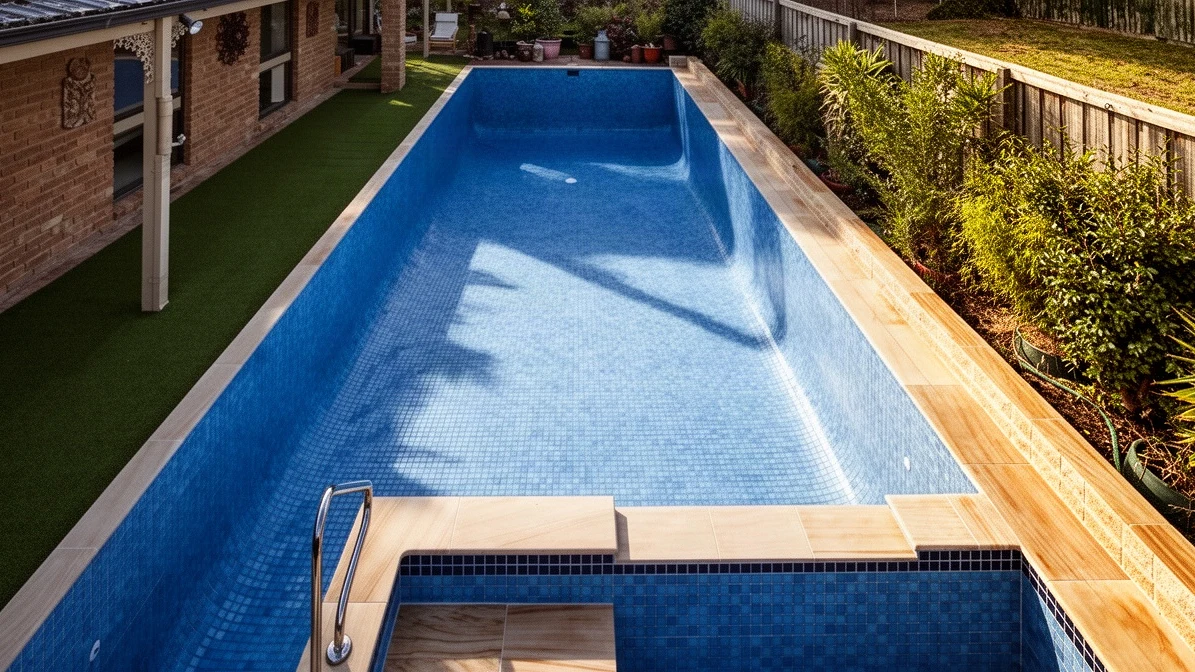
Weekly maintenance
Full chemical panel, net and vacuum, tile and walls brushed, skimmer, pump and canister baskets emptied, whole pad inspected.
Flat mid-century lots and easy pads — then sycamores that shed in spring as well as autumn.

Licensed, insured and family-owned


Most calls start here
Four recurring causes, and only one of them is the water.
Sycamore leaf mats over the skimmer
Broad and leathery, it floats instead of sinking, so one windy afternoon can choke the suction side and leave the pump pulling air. Bark and seed balls do the same in spring.
A pad assembled in instalments
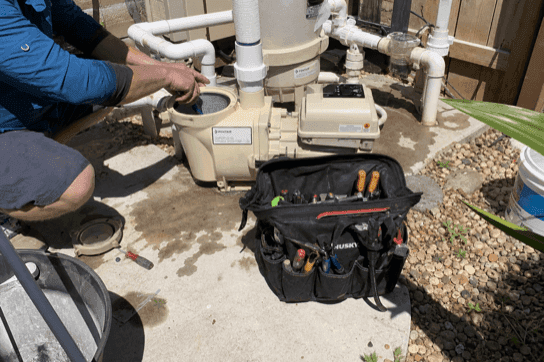
A modern variable-speed pump in front of a twenty-year-old heater. Left on the speed that saves electricity, it never gives the heater the flow its switch is looking for.
Heater repairPlaster at the end of its service life
Mid-century finishes are thin by now and blotchy where they have been washed before. The honest first step is measuring what is left, not taking off another layer.
Acid washTime clocks and controls from three eras
A mechanical dial beside a controller nobody wired to the heater, so the pool circulates at the wrong hours for half the year. Run times get reset seasonally on our visits.
Automation repairWhy Eagle Rock is different
Eagle Rock is the level ground between two hillsides, and the pools show it: a rectangle or a kidney a few steps off the back door, equipment on a slab against the side fence. Filter grids get washed where they stand.
What makes 90041 its own job is age, in two forms. The street trees are mature, and the equipment is not so much old as assembled — a pump bought one year, a filter another, a heater inherited with the house.
Both decide what the weekly visit has to watch.
 After
After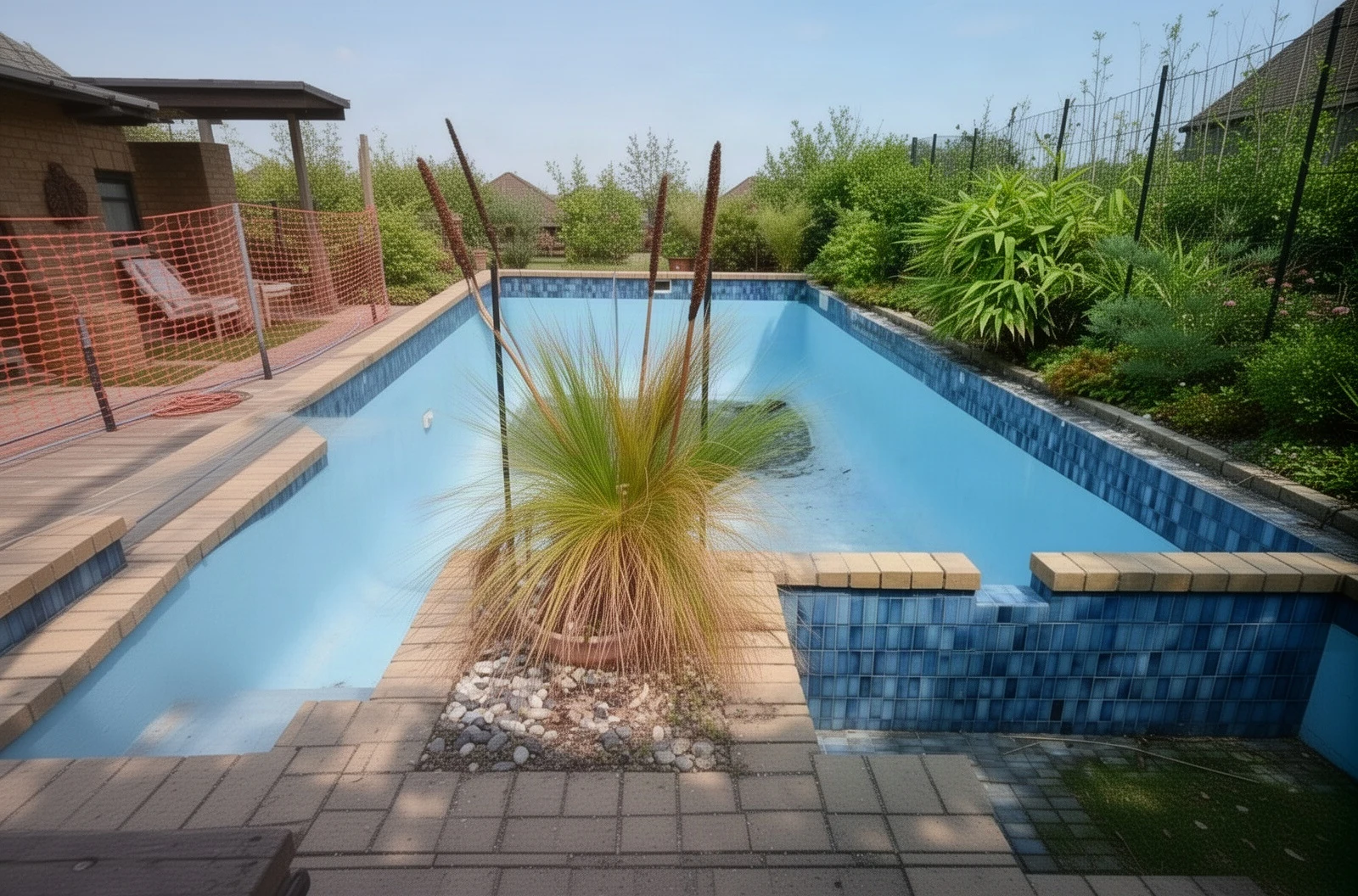 Before
What we do in Eagle Rock
On mixed-age equipment the pad inspection is the part of the visit that earns its keep.
Full chemical panel, net and vacuum, tile and walls brushed, skimmer, pump and canister baskets emptied, whole pad inspected.
Leaf litter feeds phosphate and phosphate feeds algae. No draining, filter cleaned two or three times, swimming again in roughly two days.

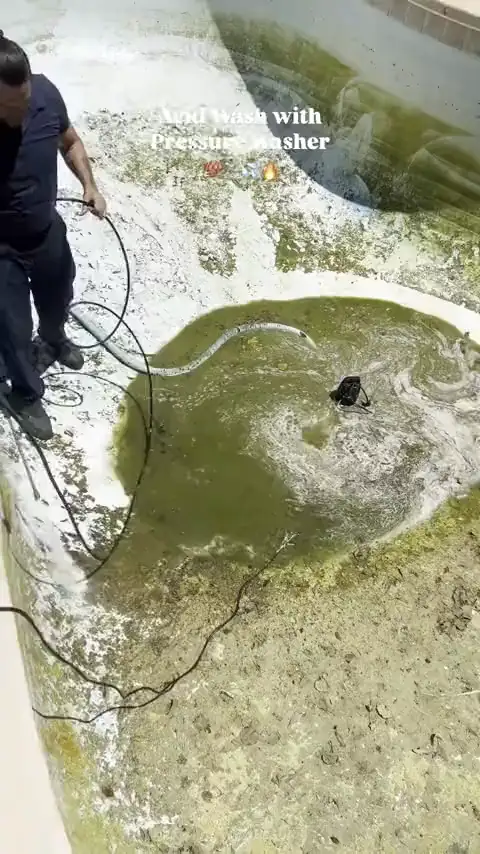
For a mid-century finish gone patchy and gray. Drained, then taken back with acid and water at 50/50 — done rarely it buys years.

Heaters, filters, pumps, salt generators, plumbing, electrics, automation, lights and time clocks. We repair before replacing wherever the part is worth saving.
Seven days of daily nylon brushing, calcium hardness 200–400 ppm, pH 7.2–7.6. Twenty-eight days before salt, fourteen before anyone swims.
Pricing
Volume decides chemical demand, so it decides the price. Typical homes land between $179 and $249 a month. Chemicals included, no minimum contract.


Prices as of August 2026, for a pool in normal condition.
One-time work
Quoted on the job, because nobody can price a green pool from a web form.
Worth mentioning when you call
Eagle Rock is compact enough that one day covers a lot of pools in a few blocks.
The crew
Four of us. The same faces every week, not whoever was free that morning.


An Eagle Rock job, start to finish
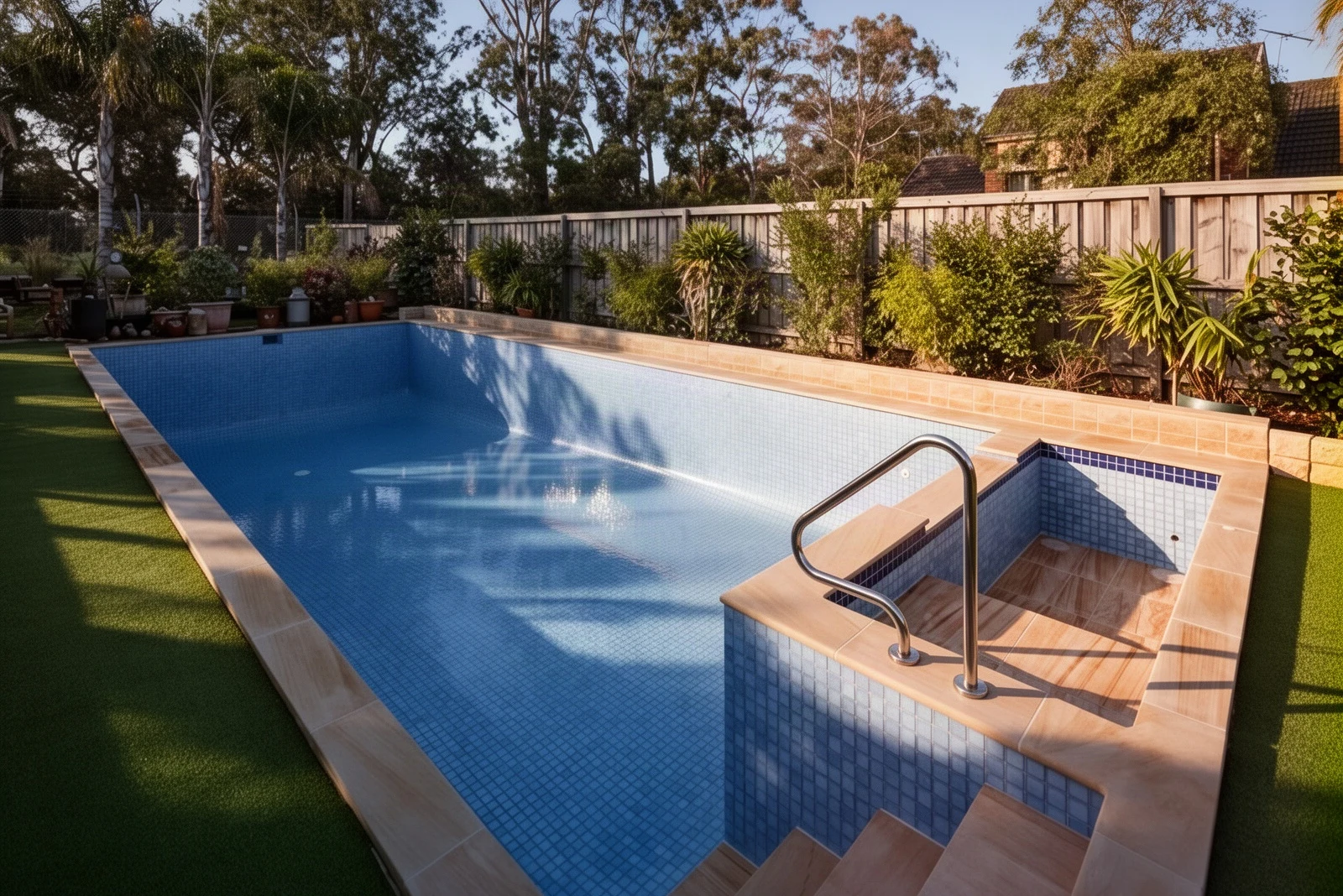
An early-eighties painted pool and spa, stripped back, rendered flat and finished in pale blue ceramic.
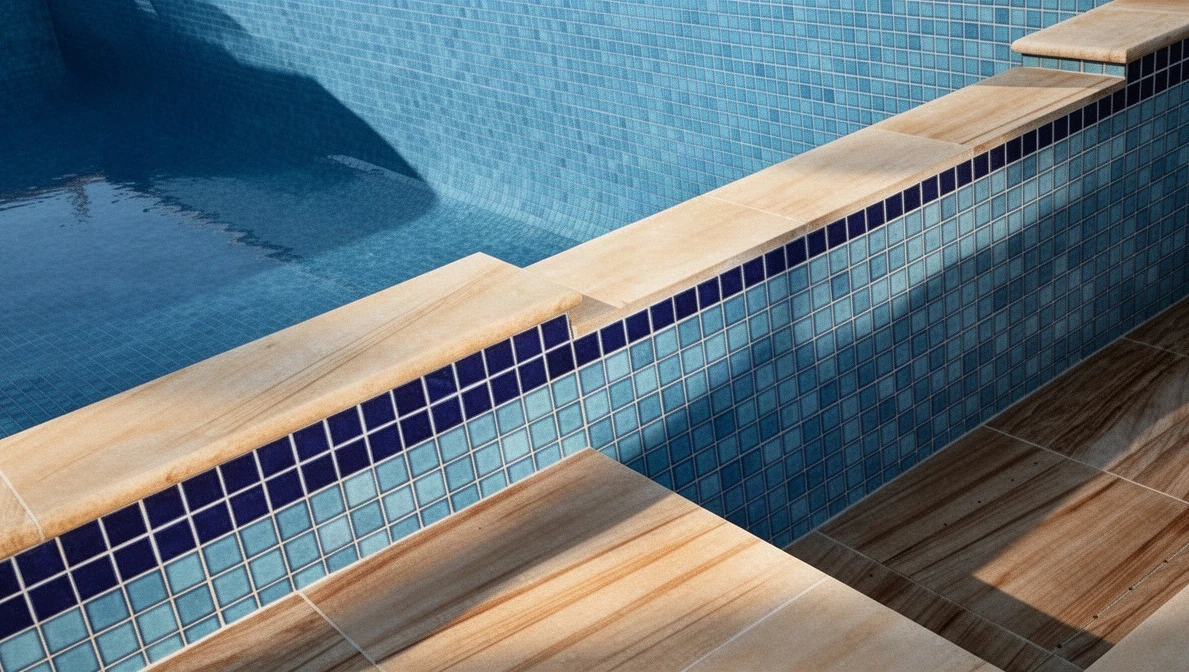
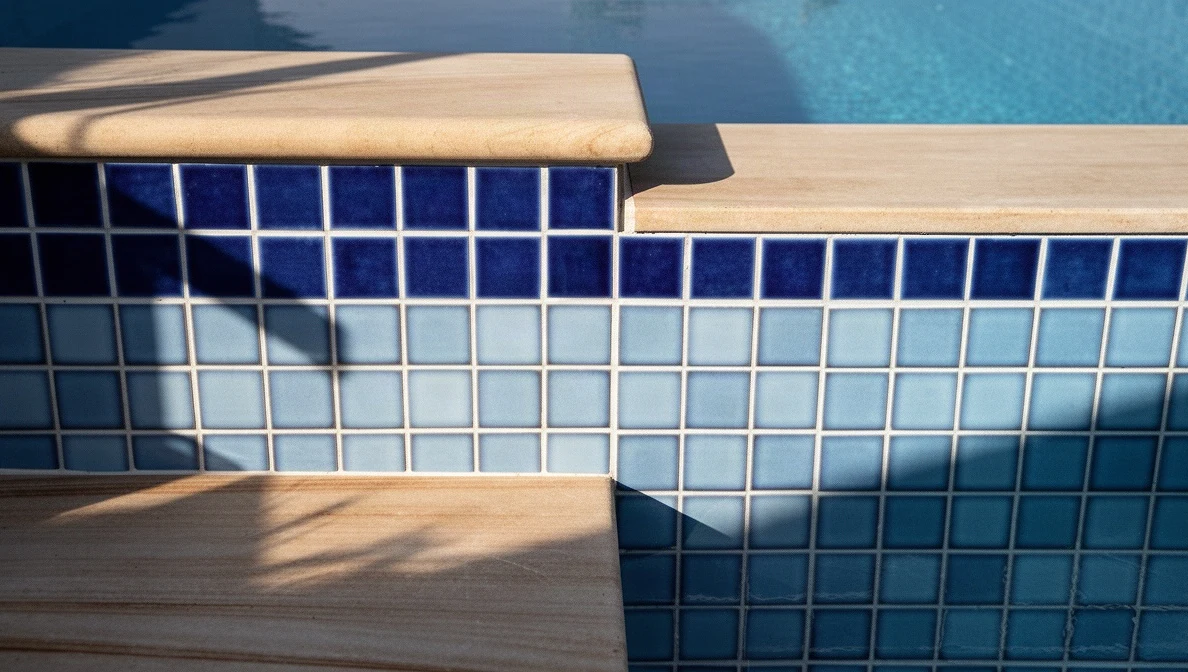
A pale blue ceramic interior with a deeper blue band inside the spa, and teak sandstone sealed and bedded to sit below the waterline.
Nearby, and on the same routes
Glendale, Pasadena and Los Feliz share the days that serve Eagle Rock.

Hollow render and rust cut out, then the whole shell tiled.
Glendale
Out of repaints, so retiled, with sandstone paving around it.
Eagle Rock

Grey tile across pool and spa, seen from the air.
La Cañada Flintridge

Step by step
The preparation under the tile decides how long the finish lasts.
Mark H.
Local Guide · 42 reviews · 18 photos
3 September 2025

Linda R.
4 reviews
25 May 2026
Kevin B.
15 December 2025
Jason T.
25 February 2026
Great company. Always on time, pool looks amazing and communication is easy. Highly recommend.
Ashley P.
11 reviews
4 March 2026
Thomas W.
Local Guide · 27 reviews · 9 photos
10 February 2025
Rachel M.
17 October 2025
We thought we needed a completely new pool system. Turns out it was just a few issues with the pump and filter. They saved us a lot of money by fixing what actually needed fixing.
Jennifer C.
Local Guide · 15 reviews · 4 photos
7 September 2025
Tell us what the pool needs, how big it is and your ZIP — and a price the same day.
Rewards
$100 for every friend you send us, up to two. No code, no form — they call and mention your name.

$100 credit
For every friend who calls and mentions your name
Up to two referrals, $200 in total. The name must come up on the first call. Spend it on any service.
20% off one-time work
For weekly maintenance members
Green-to-clean, acid wash, plaster start-up and repair labor, plus priority on the schedule.
Where we work
Crews leave from Studio City every morning. Open any area for what is different there.

Send your ZIP or cross streets. We come back the same day with the day we would be there — and what weekly service would cost on your pool.
Or call (818) 740-6099
Send the address and we will check it against the routes.
Written for Foothill and Valley homeowners.

The decisions that are expensive to change afterwards.

Five things to expect, and how to check them.

Water has no colour of its own — the interior gives it one.
Not stock footage
Filmed on the Eagle Rock route and the streets next to it. Nothing staged, nothing bought from a stock library.

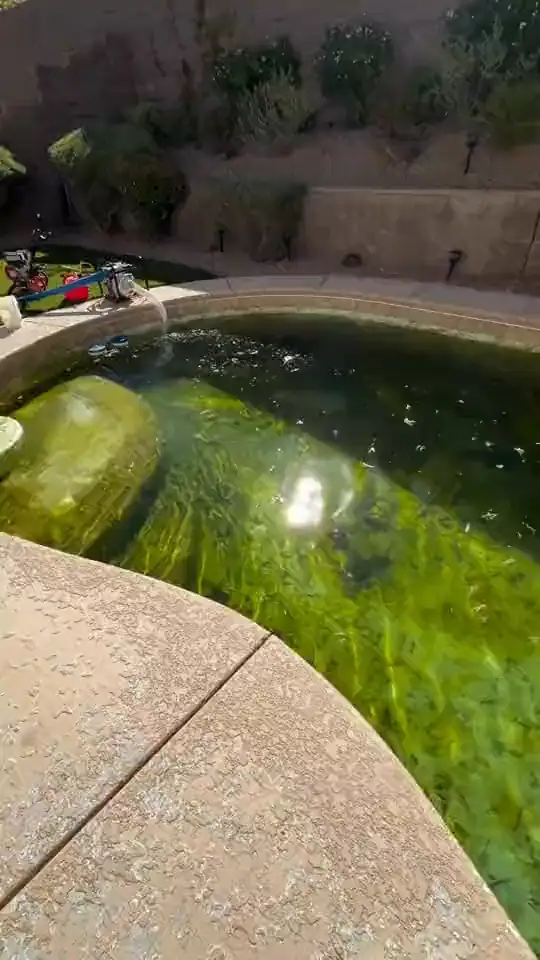

Because floating debris goes where the water goes, which is the skimmer. A leaf that sinks waits on the plaster for the vacuum; a mat of sycamore across the weir stops the skimmer working within hours and starves the pump. Baskets, not chemicals, decide how a pool here looks between visits.
It matters when the pieces disagree. A filter sized for an older pump, or a variable-speed pump run below the flow a heater needs, produces faults that look like failed equipment and are really a mismatch. The cheapest fix on a mixed-age pad is often a setting.
Whichever the remaining thickness allows. With at least half an inch of finish left, a wash can bring the color back and buy years. If earlier washes have already used the reserve, more acid takes you into the shell, and a replaster with a proper start-up is the real answer.
An easy pad helps, but access is not the biggest lever — volume, tree cover, spa and whether chemicals are included matter more, and the sycamores push the other way.
Weekly service starts at $159 a month for a pool up to 15,000 gallons and runs to $249 a month for pools over 40,000, with standard chemicals included. Most customers pay between $179 and $249. Eagle Rock is priced the same as everywhere else on our routes — the address does not change the number, the pool does. One-time work is quoted on the job: green to clean from $349, acid wash from $749, equipment repair at $175 an hour.
Cleaning, recovery, repair and renovation across Los Angeles.
Nearby, and on the same routes
Gallons, how much tree sits over the water, whether there is a spa, and when the equipment was last replaced.


